


Neil has kept, bred, and sold cage and aviary birds at Paradise Pets Swindon since 1988 — over 35 years immersed in the world of birds. The wren is one he returns to often in conversation, because it is one of the most instructive examples of a bird that is everywhere and noticed by almost nobody. Understanding it changes how you hear the garden.
I ask people this sometimes, when they are at the counter and we are talking about garden birds. Have you heard a very loud, very fast burst of song coming from somewhere low in the garden — from inside a hedge, or from the base of a wall, or from a tangle of undergrowth — and not been able to work out what it was? Almost everyone says yes. And almost none of them have connected that sound to a specific bird.
That sound is the wren.
Not a blackbird, which most people know. Not a robin, which most people can identify. The wren — the most numerous wild breeding bird in the United Kingdom, with a population of approximately eleven million breeding pairs — is the bird that fills the garden with song on almost any morning of the year, from any dense, low piece of cover it can find, and goes almost entirely unidentified by the people who hear it.
It is not that the wren is shy, exactly. It is that it is small, fast, brown, and lives close to the ground in exactly the places people do not look. The sound and the bird rarely connect in most people’s minds because they have never seen the two together at the same moment. Once you make that connection — once you hear the song and know what is making it — the wren becomes one of the most remarkable birds you will ever find in an ordinary garden.
Here is what I want people to know about it.
The Numbers — Why This Bird Matters More Than Most People Realise
The wren holds a statistic that surprises almost everyone who hears it for the first time. It is not the robin, which is the nation’s favourite. It is not the house sparrow, which tops the RSPB’s Big Garden Birdwatch charts for the twenty-third consecutive year in 2026. The most numerous wild breeding bird in the United Kingdom, by population count, is the wren.
Approximately eleven million breeding pairs. To put that figure in perspective: the house sparrow, which most people would guess is the most common bird, has around five million pairs. The blue tit — another garden regular that most people recognise — has around three and a half million pairs. The wren has more than both of them combined.
It is found in virtually every habitat in the country. Woodland, farmland, upland moorland, coastal cliffs, city parks, suburban gardens. The BTO describes it as one of our most widespread birds across Britain and Ireland. Isolated island populations — on Fair Isle, on St Kilda — have been so long separated from the mainland that they have developed into distinct subspecies, larger and darker than their mainland relatives, with songs that differ slightly from the familiar mainland call.
Eleven million breeding pairs, in every corner of the country, singing loudly from dawn to dusk for most of the year. And most people cannot name them.
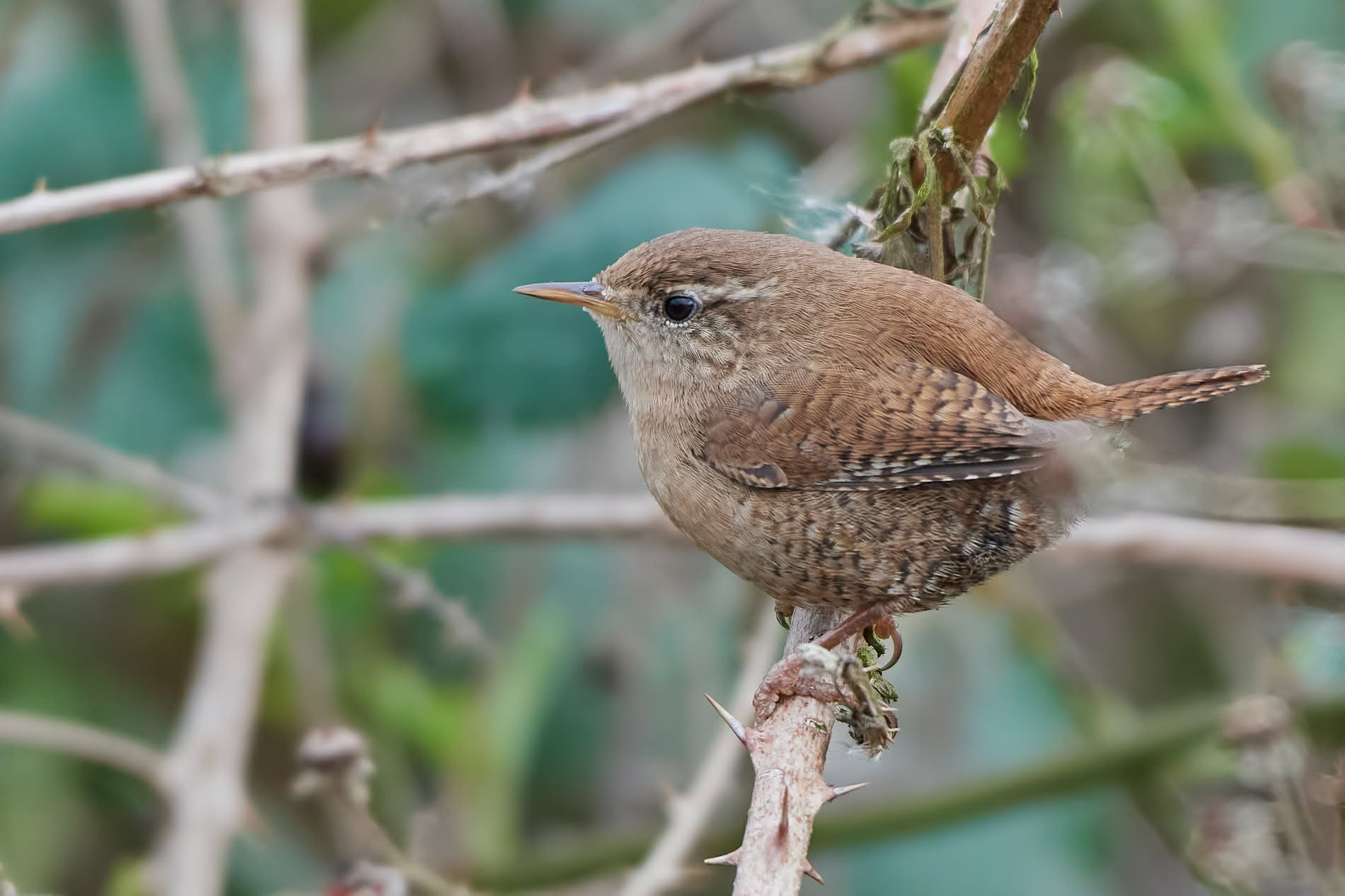
What It Looks Like — Why Nobody Sees It
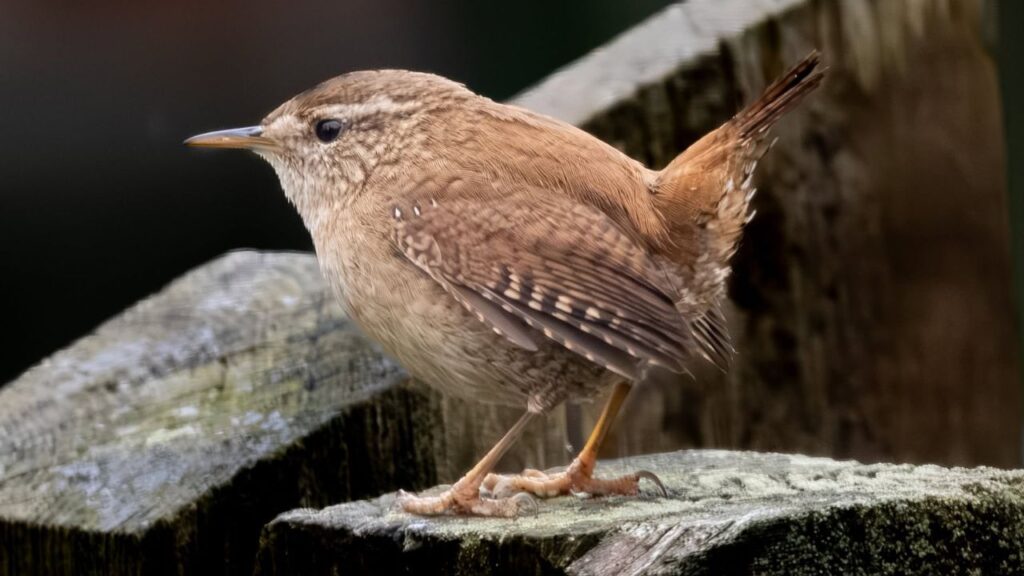
The wren is tiny. An adult weighs approximately eight to ten grams — roughly the same as a pound coin. Its body length is around nine to ten centimetres. It is one of the smallest birds in the UK, beaten only by the goldcrest and the firecrest in terms of weight.
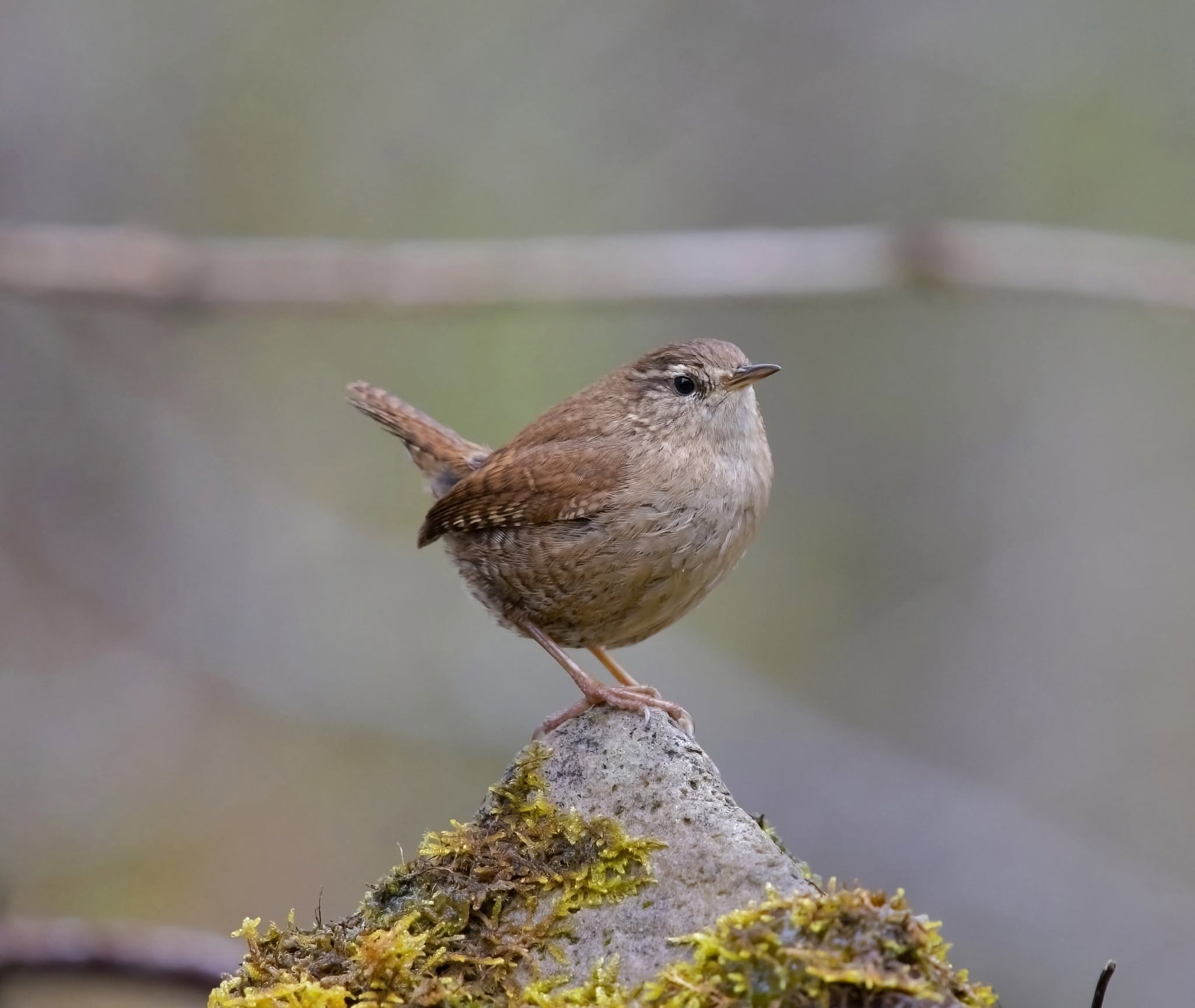
The plumage is a warm chestnut brown above, paler and more barred below, with fine dark barring on the wings and tail. There is a pale stripe over the eye — a supercilium — that gives the bird a slightly alert, slightly frowning expression if you get close enough to see it. The tail is short and very often cocked upward at an angle, which is one of the few reliable field marks visible at any distance. That upright tail, combined with the round, compact body and rapid movement, gives the wren a distinctive silhouette that, once you have seen it, you do not forget.
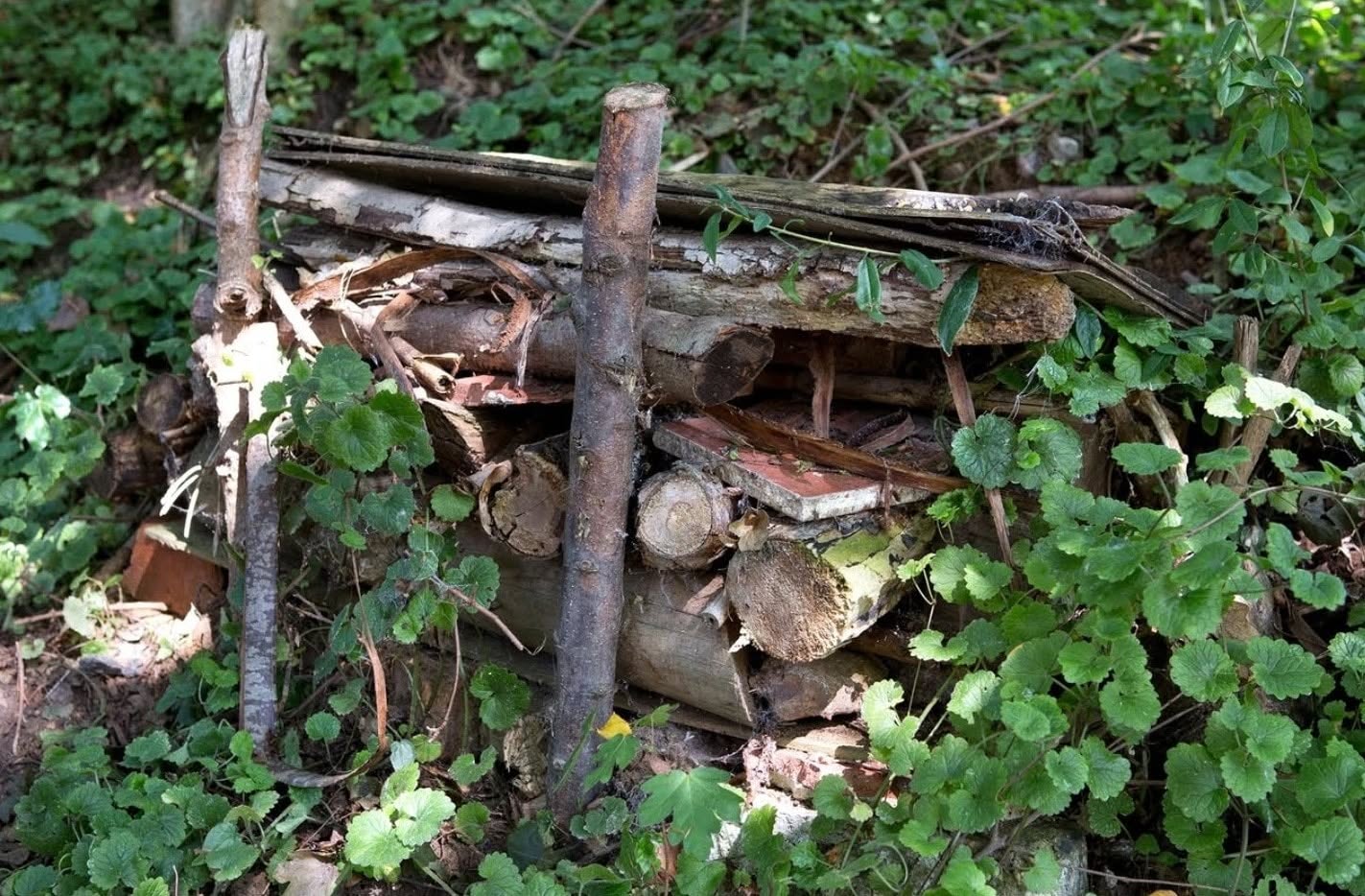
But seeing it requires knowing where to look. The wren lives close to the ground. It moves through dense undergrowth, along the base of hedges, in the tangled root systems at the bottom of shrubs, in ivy-covered walls, in log piles, in the dark spaces inside compost heaps. It is a bird of the interior — of the spaces humans do not look into — and it moves fast, flitting from one piece of cover to the next with the purposeful, mouse-like scurrying that is one of its most characteristic behaviours.
It will occasionally come up to a more exposed perch to sing. A fence post, a low branch, the top of a wall. When it does, the sight is arresting — this tiny brown scrap of a bird producing that enormous sound. But it does not stay long. It drops back into cover and disappears again before most people have had time to register what they just saw.
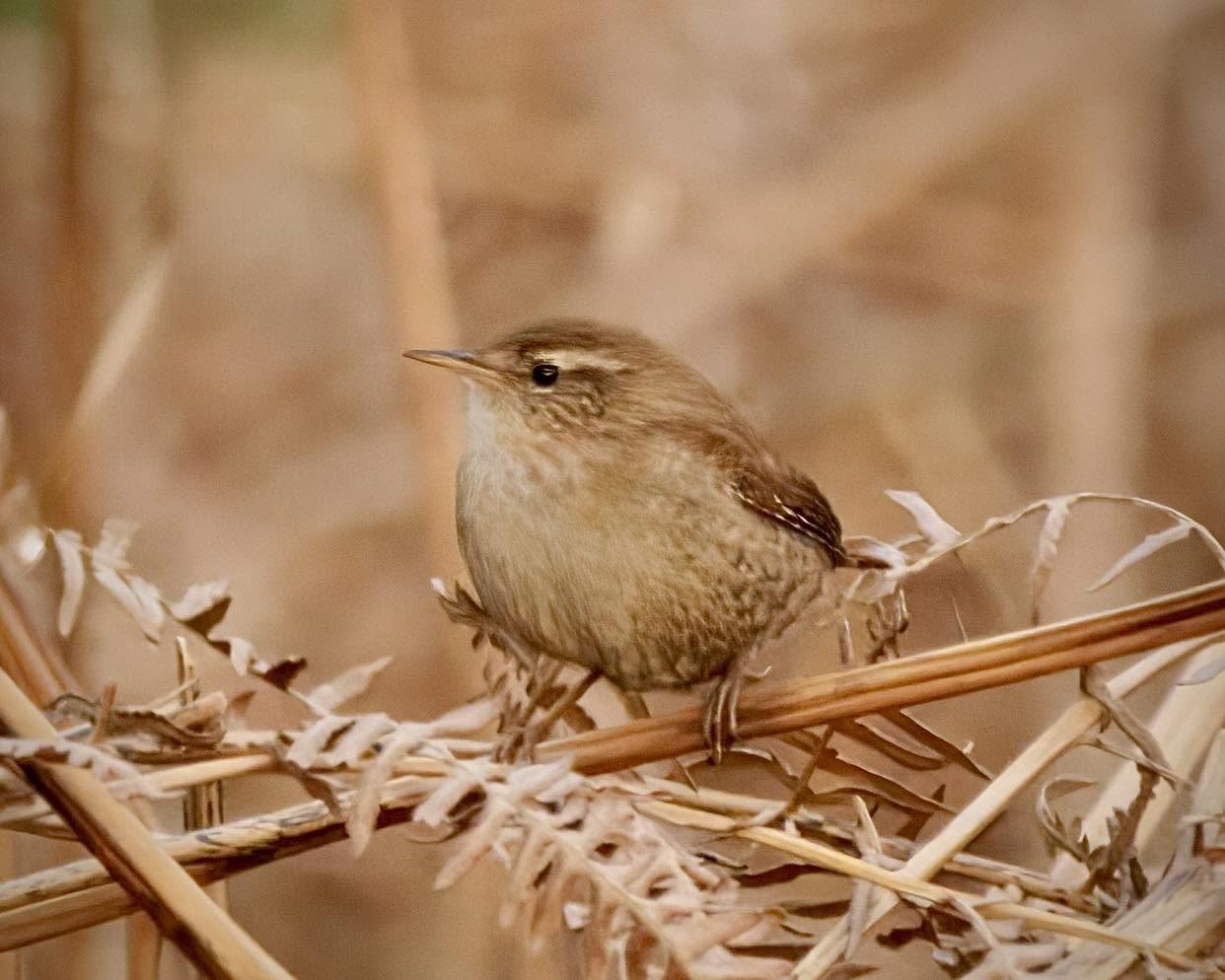
The Song — The Sound You Have Already Been Hearing
The wren’s song is one of the most distinctive sounds in the British countryside, and it is one of the most commonly heard without being recognised.
It is loud — disproportionately, almost comically loud for the size of the bird producing it. Research has measured the wren’s song at around ninety decibels — roughly equivalent to a lawnmower running close by, or a very loud conversation. Volume-for-weight, the wren is among the loudest animals on earth. The contrast between what you see, if you see it at all, and what you hear is one of the defining experiences of finding your first wren.
The song itself is a rapid, complex torrent of whistles, trills, and rattles — delivered at high speed and high pitch, with a musical quality that is clear and carrying even from a distance. It typically ends with a distinctive trilling flourish. The BTO describes it as a scolding, rapid song that fills the air around the bird even when the bird itself is invisible.
There is also an alarm call — a hard, rapid series of scolding notes, usually written as tik-tik-tik-tik, that is the sound most garden owners hear when they have walked past a wren in cover without seeing it. If you have ever heard what sounded like a very fast, very irritated ticking coming from inside a hedge as you walked past — that was a wren, registering your presence and not being at all pleased about it.
The wren sings throughout the year, not only in the breeding season. It is a dawn-to-dusk vocalist in any month. Once you learn the song, you will hear it constantly — in your own garden, in parks, along hedgerows, in woodland. The realisation of how many wrens are around you at any given moment, which only comes once you can identify the song, is one of those genuinely surprising moments in beginning to pay attention to birds.
How It Lives — The Biology Worth Knowing
The wren is insectivorous — it feeds almost entirely on insects, spiders, and other small invertebrates found in and around dense ground-level vegetation. In winter, when insects become scarce, it will supplement with seeds and berries, and it will occasionally pick up crumbs that have fallen beneath a garden bird feeder. But it is not a feeder bird in the way that tits and finches are. You do not attract wrens with sunflower hearts. You attract them by having the kind of garden they can live in — dense cover, undisturbed undergrowth, log piles, ivy on walls, compost heaps.
The male wren builds multiple nests — sometimes six or more within his territory — and displays them to the female during courtship. She chooses one to line and lay in. The nests are domed, often tucked into ivy, into a hollow in a wall, into dense vegetation. They are compact, carefully made, and easily missed even when you know to look for them.
The wren is intensely territorial. The male defends his patch vigorously throughout the year — which is why the song is heard in every season, not just spring. The territory is not large, but it is defended with a conviction entirely out of proportion to the size of the animal holding it.
The vulnerability of the wren is its size. Because it is so small, it has a very high surface-area-to-volume ratio — meaning it loses body heat rapidly. A hard British winter is genuinely dangerous for wrens. Severe cold snaps can kill large numbers of them — sometimes a quarter or more of the population in an extreme winter. After cold winters, wren numbers drop noticeably. After mild winters, they recover quickly.
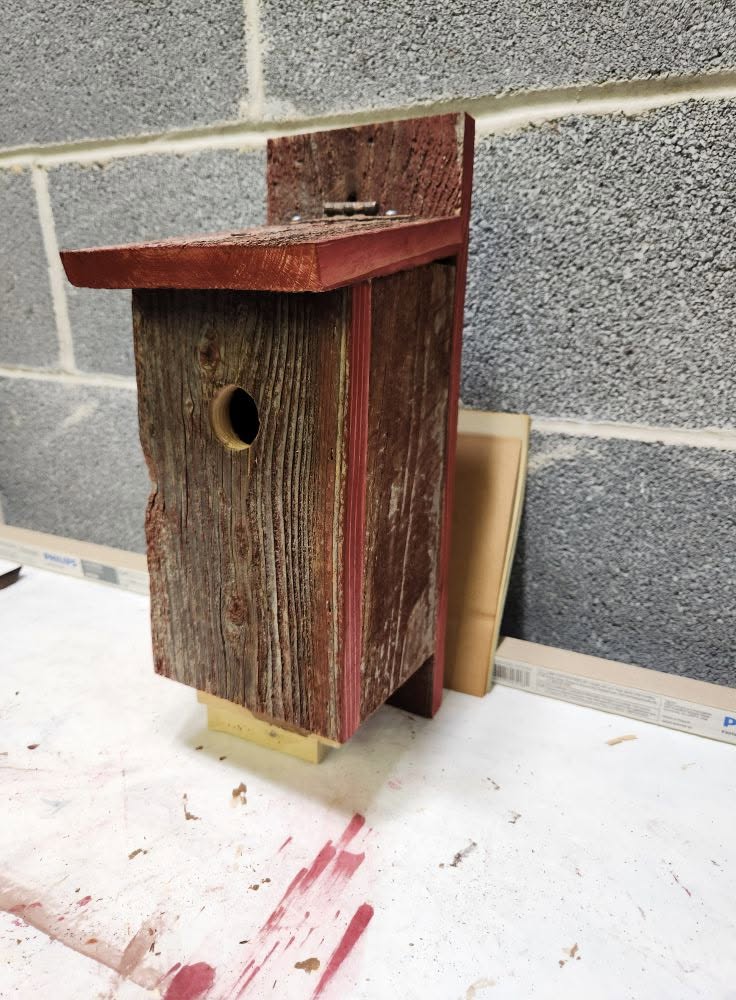
To survive cold nights, wrens do something that surprises most people. They put aside their fierce territoriality and roost communally — pressing together in a small enclosed space to share body heat. The record, recorded in Norfolk in 1969, was sixty-one wrens emerging from a single nest box on a winter morning. A ball of tiny birds, packed together in the dark, each one surviving the night because of the warmth of the others.
Why It Is So Rarely Noticed — And Why That Changes Once You Look
The invisibility of the wren in most people’s garden awareness comes down to a simple mismatch. The bird is heard constantly — its song is one of the most present sounds in any garden with adequate cover — but the habit of looking up for birds, which is where most people expect birds to be, means the wren is never where people are looking.
Wrens do not sit on top of things. They do not perch prominently in the way that robins do, or hunt from a height like a blackbird. They live at ground level and below, in the substrate of the garden — the dark spaces and dense vegetation that most garden visitors pass by without thinking about.
The connection between the enormous sound and the tiny ground-level bird is one that most people have simply never been given the opportunity to make. Once it is made, it changes how a garden sounds. The background becomes foreground. The constant torrent of wren song that was previously just noise becomes specific, located, attributable to an actual animal in a particular patch of ivy or a particular stretch of hedge.
That shift — from unregistered background sound to identified, understood presence — is one of the things that makes paying attention to birds worthwhile. It does not require binoculars or specialist knowledge. It requires knowing the song and knowing where to look. Both of those things take about five minutes to learn and last a lifetime.
How to Find One in Your Own Garden
If you have a garden with a hedge, a patch of ivy, a shrub with dense base growth, a log pile, a compost heap, or any area of undisturbed ground-level vegetation — you almost certainly have wrens. Here is how to find them.
Listen first. The song is loud, rapid, and unmistakable once you have heard it identified. There are freely available recordings of wren song on the RSPB website and the BTO’s BirdFacts pages. Listen to it once. Then go into the garden and stand still for a minute. The chances are you will hear it.
When you hear it, do not look up. Look down and along — into the hedge, at the base of the fence, into the ivy. The wren will be in cover at or below waist height in most cases. It moves fast and is small, so you are looking for movement in the undergrowth rather than a bird on a branch.
If the garden has leaf litter, a compost heap, or any area of dense ground-level vegetation that is not regularly disturbed — spend time near those areas. The wren will come to them regularly in search of insects.
Leaving undisturbed areas in the garden — not clearing every patch of dead vegetation, leaving log piles, allowing ivy on walls — is the single most effective thing you can do to maintain wren presence. A garden that is kept too tidy is a garden that wrens find less useful. The least manicured corner of the garden is, from the wren’s perspective, often the most valuable part.
What I Tell People at the Counter
When I mention the wren at the counter — and I do mention it, because it comes up naturally when people ask about garden birds — there is almost always a moment of recognition. That sound. Yes. They have heard it. They just did not know what it was.
That moment is one of the things I find genuinely satisfying about talking to people about birds. Not the exotic species, not the rare sightings — those matter too, but they are not what most people encounter. What most people encounter, every day, without knowing it, is the wren. The most common bird in the UK. Sitting in the hedge at the bottom of their garden, singing at ninety decibels, completely unidentified.
The knowledge costs nothing. Learning to hear the wren is one of the easier things you can do to change how the world around you sounds. Once you know it, you cannot un-know it. Every garden, every park, every stretch of hedgerow will be slightly different from that point on — because you will know what is in there, singing at you, demanding to be noticed.
It already has your attention. You just did not know it yet.
Come in if you want to talk about garden birds — or if you are thinking about getting a bird of your own. We are at Manor Garden Centre, Cheney Manor Industrial Estate, Swindon, SN2 2QJ — open every day. Or call us on 01793 512400.
- “It must be rare — I’ve never seen one” — The wren is the most numerous wild breeding bird in the UK. It is not rare. It is one of the most present birds in any garden with appropriate cover. The reason most people have not seen one is that they have never looked in the right place at the right time. Look low, look into cover, look for movement in the undergrowth. The bird is there.
- “That loud song must be coming from a big bird” — Volume and size are not related in birds in the way human intuition suggests. The wren weighs approximately eight grams and produces a song that can reach ninety decibels. The song sounds as though it should be coming from a thrush at minimum. It is not. Once you see the size of the bird producing it, the contrast is genuinely startling.
- “Wrens only sing in spring” — The wren sings year-round. It is one of the most consistent year-round vocalists in the UK garden. You are as likely to hear a wren singing on a cold January morning as in the middle of the breeding season. The song may be slightly less sustained outside the breeding season, but it does not disappear in autumn and winter.
- “I need to put out special food to attract wrens” — Wrens are not attracted to standard bird feeders in the way that finches and tits are. They are insectivores and they are attracted by habitat — by dense undergrowth, log piles, ivy, undisturbed ground-level vegetation. The best thing you can do for wrens is leave part of your garden wild. That costs nothing and works better than any feeder.
- “A wren in the garden is unusual” — In any garden with adequate ground-level cover, a wren is not unusual at all. It is the expected resident. If you have not seen one in your garden, you have either not looked carefully enough or the garden lacks the dense, low cover the bird needs. Address the habitat and the wren will come.
- What does the wren look like?
Tiny, round, warm chestnut brown above and paler below. Short tail held cocked upward. Pale stripe over the eye. About nine to ten centimetres long, weighing approximately eight to ten grams. Moves fast and low, close to or on the ground. - What does the wren sound like?
A loud, rapid, complex torrent of whistles and trills — disproportionately loud for the size of the bird. Ends with a trill. Alarm call is a fast, hard scolding tik-tik-tik. Both calls are heard year-round from dawn to dusk. - Where does the wren live in the garden?
Dense undergrowth, hedgerows, ivy, log piles, compost heaps, the base of shrubs — any low, dense cover close to the ground. It does not perch prominently. Look low and into cover, not up into trees. - How do I attract wrens to my garden?
Provide habitat — leave undisturbed patches of dense ground-level vegetation, maintain log piles, grow ivy on walls or fences, avoid being too tidy with leaf litter and dead growth. Standard bird feeders are not the tool for wrens. - Why do wrens gather in groups in winter?
To conserve heat. Wrens are extremely vulnerable to cold because of their tiny body size and rapid heat loss. They put aside their usual fierce territoriality on freezing nights and roost communally — pressing together in an enclosed space to share body warmth. The record communal roost in the UK was sixty-one birds in a single nest box. - Is the wren really the most common bird in the UK?
Yes — by breeding population, approximately eleven million breeding pairs. More than the house sparrow and blue tit combined. It tops the charts not because people see it often, but because it is genuinely everywhere.
Visit Us at Paradise Pets Swindon
We stock a full range of cage and aviary birds — budgerigars, canaries, cockatiels, and a rotating selection of other species — all UK-sourced and properly cared for before going to a new home. If the garden birds have sparked an interest in keeping a bird, or if you simply want to talk birds with someone who has spent thirty-five years with them, come in and find us.
We also stock gerbils and hamsters, guinea pigs, and rabbits.