


Neil has kept, bred, and sold cage and aviary birds at Paradise Pets Swindon since 1988 — over 35 years watching how people’s relationships with birds change across time. The shift toward garden bird feeding that began during the pandemic has not reversed. If anything, it has deepened. This is what he has observed — and what the data behind the trend actually shows.
I notice it in what people buy and what they ask about. The questions at the counter have changed over the past few years — not dramatically, but measurably. More people coming in who have started feeding garden birds recently. More people asking what they should put out, how to set up a feeder properly, which birds are likely to come. People who would not have described themselves as interested in birds a few years ago, who now clearly are.
It is not something I have imagined. The data supports it, and the reasons behind it are worth understanding — not just as a trend, but as something that tells you something real about what people are looking for when they put a feeder out in the garden.
Here is what I see from the counter, what the numbers say, and why it matters.
The Numbers — What Has Actually Changed
The UK bird feeder market was valued at over one hundred million pounds in 2026 and is projected to keep growing. That is a market figure — it measures commercial activity, not connection to nature — but it reflects something real about how many households are actively purchasing bird food and feeders right now.
The RSPB’s Big Garden Birdwatch, which has been running since 1979, recorded over 590,000 participants in January 2025 — making it the world’s largest garden wildlife survey. Over twelve million hours of bird watching have been contributed by the public since the survey began. The participation numbers have grown consistently in recent years.
The BTO’s Garden Bird Feeding Survey — the most comprehensive long-term dataset on garden bird feeding in the world — shows that the range of species visiting garden feeders has expanded significantly since the 1970s. Goldfinches, which were recorded at only around twenty percent of feeding stations in 1973, are now recorded at more than eighty percent. That change reflects both population responses to feeding and the sheer increase in the number of people putting food out.
Urban balcony birding — people in flats and apartments setting up window feeders and balcony feeding stations — is expanding quickly, reflecting a demographic shift in who is engaging with garden birds. It is no longer an activity concentrated in houses with gardens. Window feeders have become one of the fastest-growing product categories in the market.

These are not small numbers. Something real has been happening.
The Pandemic Was the Turning Point — And the Change Has Lasted
The COVID-19 lockdowns of 2020 and 2021 produced a documented and dramatic surge in garden bird feeding across the UK and internationally. Research published in peer-reviewed journals found that interest in bird feeding increased in 115 countries during the lockdown period — including many countries where the practice had not previously been common.
The reason is not complicated. People were forced to stay home. The garden, the window, the local park became the extent of accessible nature for many people who had previously moved through the world without paying particular attention to what was living alongside them. Forced proximity revealed something that had been there all along.
Lockdowns were also a period of high anxiety and sustained uncertainty. Research has since confirmed what many people felt intuitively during that period — that feeding birds provided a source of comfort and calm that was genuinely meaningful. Studies found that the practice enhanced feelings of personal worth and peace, and that attracting wild, unrestrained creatures to visit by simply providing food provided a kind of connection that other indoor activities did not.
More than a third of UK adults reported learning something new about local wildlife during the lockdown period. Over half reported finding solace in watching birds and hearing birdsong. These are not trivial numbers for a country that was not, historically, a nation of dedicated birdwatchers — at least not beyond the enthusiast community.
What is significant is that much of this interest has been sustained. The people who put up a feeder in 2020 and started paying attention to what came to it — many of them have continued. The investment in feeders, seed, and bird baths, which research found began with feeders and then expanded to food and then water as the habit established itself, has not largely reversed.

What People Are Actually Looking For
I have thought about this at the counter more than once, because the people asking about garden bird feeding are often not the people I would have expected a few years ago. Younger people. People in flats asking about window feeders. People who have recently moved and want to know what to put out in their new garden. People who have started noticing the birds in their garden for the first time and want to understand what they are seeing.
What they are looking for, when you strip it back, is connection. Not connection in an abstract sense — connection to something specific and alive that responds to what they do. You put food out, the birds come. You put the right food out at the right time, more birds come. You add water, different species appear. The relationship between action and response is immediate and visible in a way that very little else in modern life provides.
There is also something about birds that is accessible in a way that other wildlife encounters are not. You do not need to go anywhere. You do not need equipment beyond a feeder and some seed. You do not need expertise to start. The birds come to you. In a time when many people feel increasingly disconnected from the natural world — from green space, from seasons, from the cycles that used to structure ordinary life — a garden feeder brings a piece of that world to wherever you are.
The evidence that this matters for mental health has grown substantially. Multiple studies now support the intuition that regular contact with birds and nature is associated with improved wellbeing, reduced anxiety, and a stronger sense of connection to place. This is not soft sentiment. It is documented and measurable.

Why It Matters for the Birds — Not Just the People
I am careful not to romanticise this. More feeders in more gardens is, on the whole, a positive thing for UK garden birds — but it comes with responsibilities that not everyone who puts a feeder out is aware of.
The UK has lost thirty-eight million birds from its skies in the last sixty years. The farmland bird index has fallen by fifty-seven percent since 1970. Species that were once taken for granted — house sparrows, starlings, greenfinches, song thrushes — are now on the red list of birds of conservation concern. The causes are primarily habitat loss, intensive farming, and changes in the wider countryside that are largely outside the control of individual householders.
Gardens are not a substitute for the habitat that has been lost at scale. But collectively, the UK’s twenty-two million gardens represent one of the most significant wildlife habitats in the country. Used well — with clean feeders, quality food, and water — they can genuinely offset some of what the wider landscape is losing.
The Greenfinch is one of the clearer examples of what feeding can do. After severe population declines caused partly by trichomonosis — a disease that spreads more easily where birds congregate at poorly maintained feeders — careful, hygiene-conscious feeding has contributed to a measurable recovery. The BTO’s data shows improving numbers from their lowest point. The RSPB’s 2026 Big Garden Birdwatch recorded a 2.3 percent increase in mean Greenfinch count compared to 2025.
The conservation case for garden feeding is real. It is strongest when the feeding is done well — clean feeders, appropriate food, fresh water, and maintained hygiene. The worst thing about the surge in bird feeding interest is not that it happened. It is that many new feeders are set up with the best intentions and then not maintained properly, which creates the very conditions — damp food, crowded surfaces — that spread disease.

How to Feed Garden Birds Well — What Actually Helps
Since more people are starting to feed garden birds, and since the habit is only beneficial when it is done correctly, here is the practical version of what actually makes a difference.
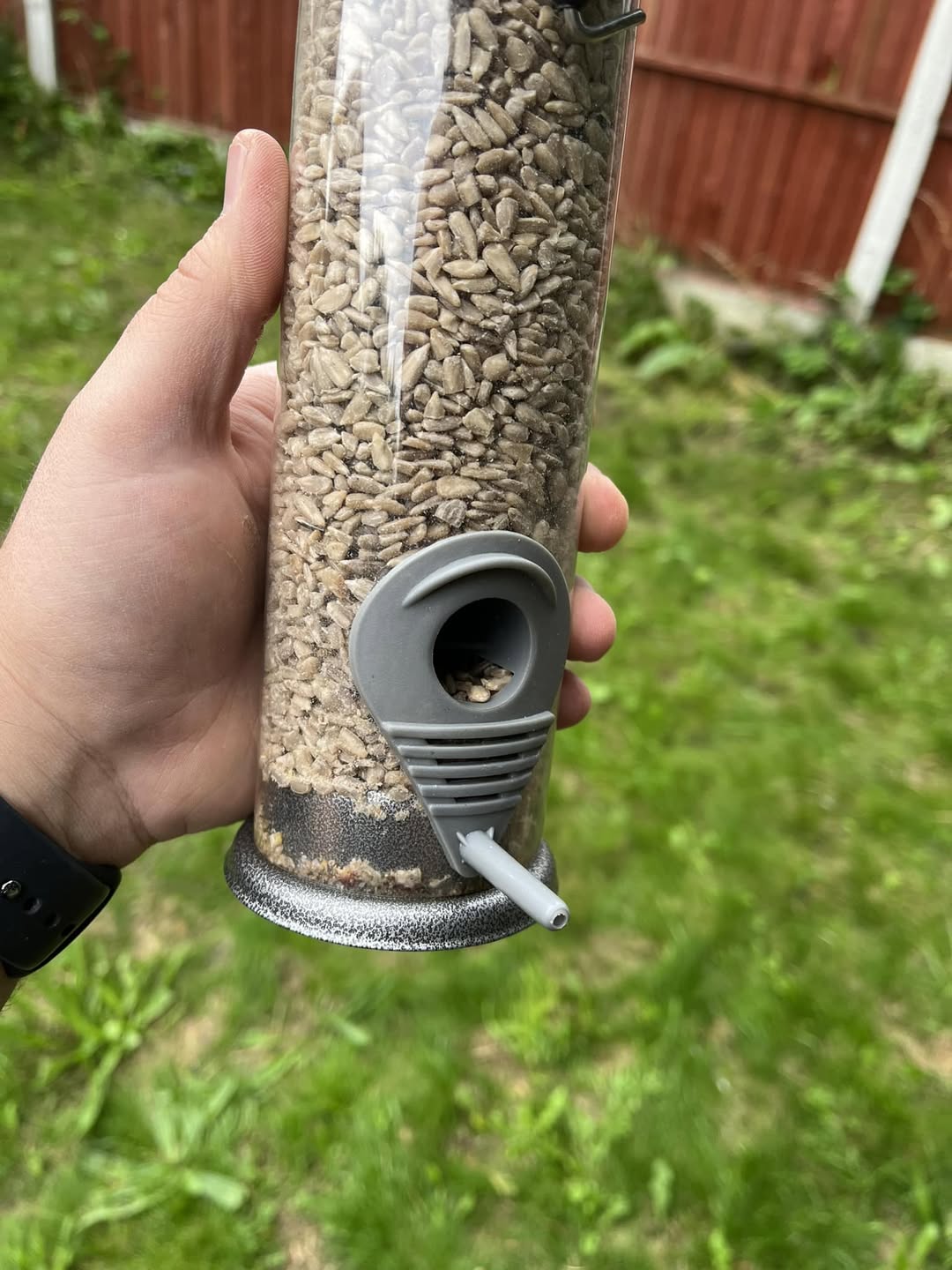
Clean the feeders regularly. This is the single most important maintenance habit and the one most commonly neglected. Mould and bacterial contamination in damp seed is a genuine health risk for birds — and a feeder that is not cleaned at least every two weeks is more likely to spread disease than to support the birds visiting it. Warm soapy water, a thorough rinse, and complete drying before refilling.
Use quality seed. The cheapest mixed seed often contains a high proportion of cereal fillers that birds pick through and discard. The discarded seed piles up under the feeder, gets wet, and creates exactly the contaminated environment that disease thrives in. Sunflower hearts, nyjer seed, and quality peanuts are more expensive and produce significantly less waste.
Provide water as well as food. A bird bath — cleaned and refreshed regularly — is as valuable as the feeder, particularly in dry summer months when natural water sources are scarce. Birds need water for drinking and bathing. The bathing matters for feather condition, not just hydration.
Position the feeder thoughtfully. Near cover — a hedge, a shrub, a tree — gives visiting birds somewhere to retreat if a predator appears. Not so close to cover that a cat can ambush birds from it. High enough from the ground that ground-based predators cannot reach it easily.
Feed year-round, not just in winter. The shift in thinking among conservation organisations is that year-round feeding — adjusted for season, with appropriate food for the breeding season and hygiene managed carefully in warmer months — is more beneficial than winter-only feeding. Breeding birds and their young benefit from reliable food through the spring and summer.
What I Stock at Paradise Pets — And Why It Connects
People sometimes ask why a pet shop that sells cage and aviary birds has a perspective on garden bird feeding. The answer is straightforward: the same people who keep a budgie or a canary are often the same people who put a feeder in the garden. The interest in birds is not divided into neat categories — it comes from the same place.
Someone who has been watching the birds on their garden feeder for the past two years, who has learned to identify a goldfinch from a greenfinch, who has started to understand how birds behave and what they need — that person is often the same person who eventually asks about keeping a bird. And the person who keeps a budgie and handles it and understands how a bird thinks and what it responds to — they often bring that understanding to how they manage the garden feeders too.
The interest in birds, whether it starts with a garden feeder or with a cage bird or with thirty years behind a counter, tends to compound. It grows the more attention you pay to it. The people who found birds during the pandemic and have kept that interest going are, in my experience, the same people who are now asking more questions, making better decisions about what they feed and how they maintain it, and noticing more about the natural world around them than they did before.
That seems worth encouraging.
Come in if you want to talk through garden bird feeding, what to put out, or anything else. We are at Manor Garden Centre, Cheney Manor Industrial Estate, Swindon, SN2 2QJ — open every day. Or call us on 01793 512400.
- “You should stop feeding in summer — the birds don’t need it then” — This was the conventional advice for a long time and it has been substantially revised. Breeding birds in spring and summer benefit from supplementary food, particularly when feeding young. The focus for summer feeding is on hygiene and appropriate food — not on stopping. Year-round feeding, done carefully, is now understood to be more beneficial than winter-only feeding.
- “Once you start feeding you can’t stop — the birds become dependent” — Birds do not become physiologically dependent on a single garden feeder in the way this concern implies. They use multiple food sources and adjust their foraging as availability changes. What matters is consistency during periods when natural food is genuinely scarce — winter particularly — rather than year-round feeding being a commitment that can never be interrupted.
- “Cheap mixed seed is fine — the birds eat whatever is there” — They eat the parts they like and discard the rest. The discarded seed piles up, gets wet, grows mould, and creates conditions that spread disease. Quality seed with less filler produces less waste, less mess, and a healthier feeding environment. The cost difference is real but smaller than most people expect once they see how much less waste there is.
- “Bird feeders attract rats” — Poorly managed feeders with large amounts of fallen seed on the ground can attract rats. A feeder positioned at appropriate height, with a seed catcher tray to reduce ground spillage, and cleaned regularly does not present a meaningful rat-attraction risk beyond what any garden with fruit trees or a compost heap already has.
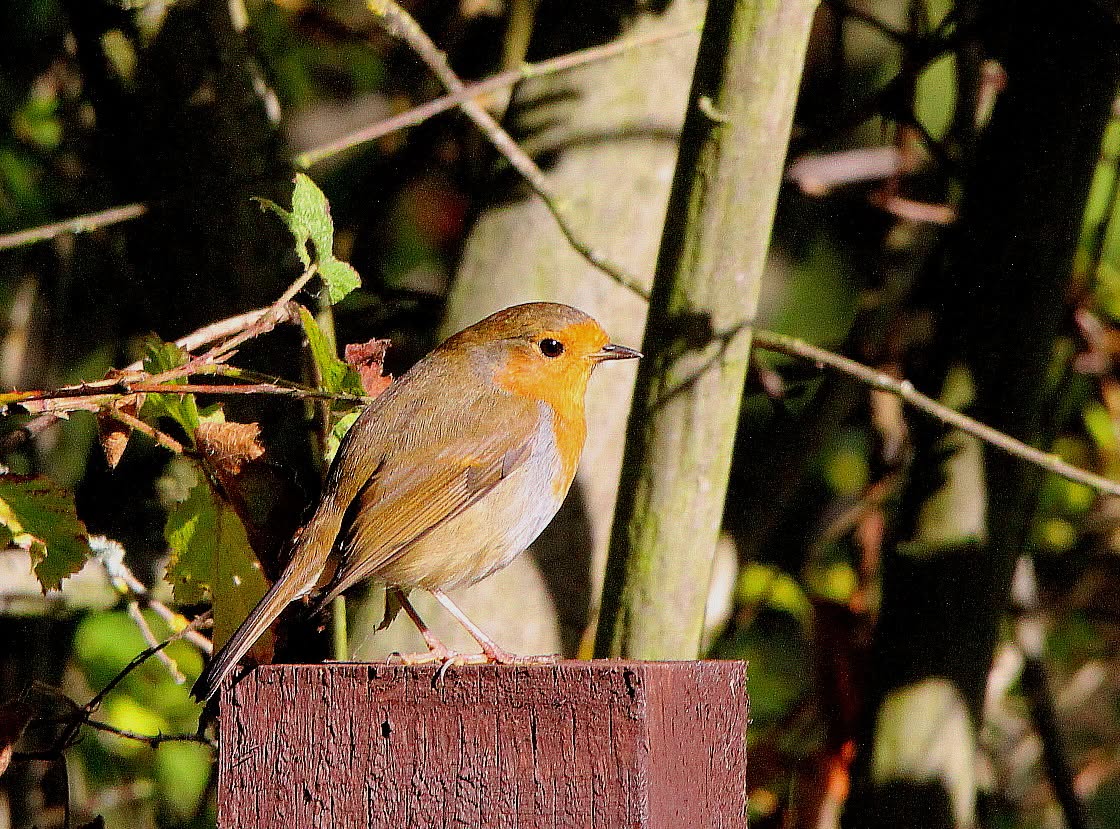
- “I only see sparrows and pigeons — there’s no point” — House sparrows are on the conservation red list. Their numbers have declined by sixty percent since 1979. A garden that supports a healthy population of house sparrows is doing something genuinely meaningful, regardless of whether more photogenic species also appear. Pigeons and sparrows are not consolation prizes.
Visit Us at Paradise Pets Swindon
We stock a full range of cage and aviary birds alongside advice on everything bird-related — from cage birds to garden feeders to what is currently visiting the birds in our own setup at Manor Garden Centre. If you have a question about birds, come in and ask it.
We also stock gerbils and hamsters, guinea pigs, and rabbits.
⭐ Customer Reviews
Amazing Bird Selection
Had a lovley visit today,staff were very friendly and very helpful,such a great petshop,their selection of birds is incredible,really impressed,thank so much to the staff at Paradise Pets

Friendly Helpful Staff
I have been coming to this place for years and they have a great stock of food for all types of pets. Have a great selection of small mammals and a lot of birds. Staff are friendly and helpful.

Great Quality Hutch
Bought a guinea pigs hutch and run combo, very happy with the service, the hutch was put in my car for me without even asking for help. The wood quality is very good, the instructions easy to follow and we are extremely happy with the fully built hutch. A good size for 2 guinea pigs

Response from Paradise Pets | Wiltshire
Thank you Melanie Latus Nice to provide services to you.
Best Bird Shop Around
It’s the best pet shop in and around Swindon. They always have an amazing selection of birds and all you need to keep them happy. I keep birds myself and the guys there are happy to answer questions and really know their stuff. I have seen budgies etc. in chain pet shops in the area looking really unhealthy and ill – I wouldn’t go anywhere else than Paradise Pets for animals.

Highly Recommended Bird Shop
I could not praise this shop enough. Really helped my Grandson buy his first bird and he’s loving it. Travelled from Somerset and was welcomed with open arms.

Great Shop with Competitive Prices
Great shop with amazing selection for small animals, hamsters, mice ect, highly recommend!
Also has a great selection for dogs & cats too & very competitive prices! 💖

