
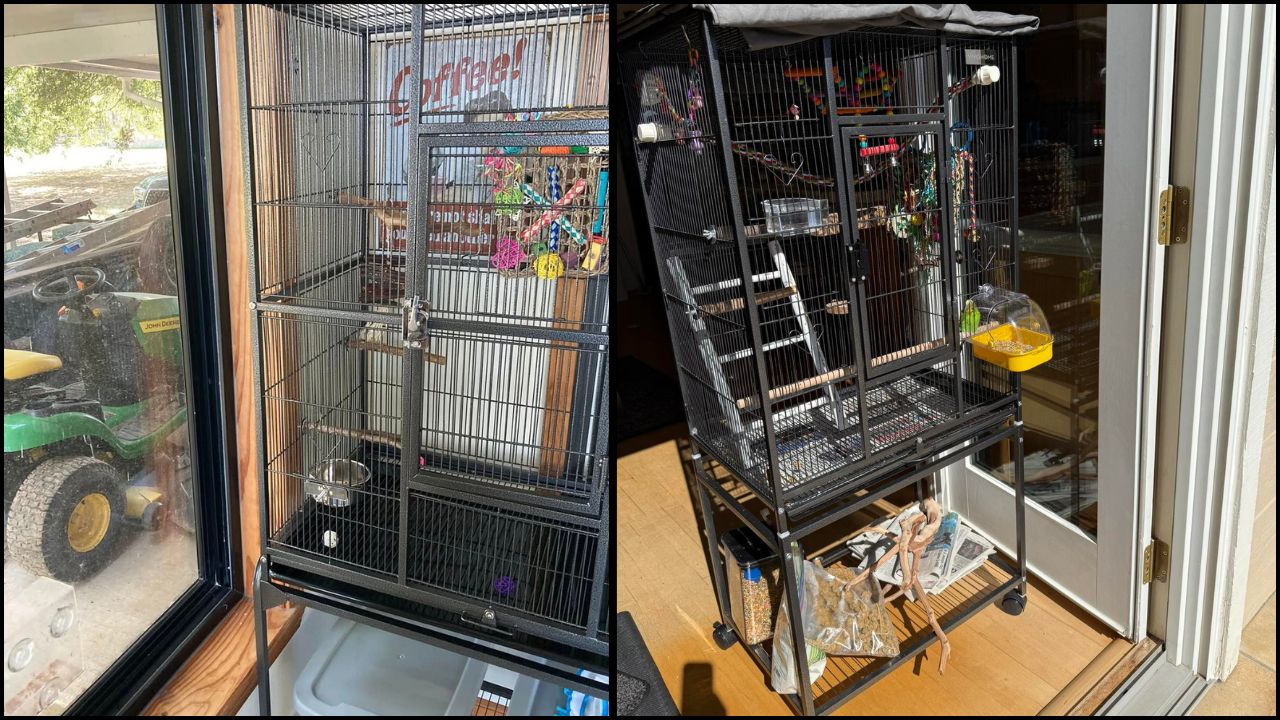

Neil has kept, bred, and sold cage and aviary birds at Paradise Pets Swindon since 1988 — over 35 years of first-hand experience with budgerigars, cockatiels, canaries, finches, and dozens of other species. Every summer he sees birds harmed by a risk their owners did not know existed. This is his honest account of what glass and sunlight actually do to a caged bird — and why the room feeling comfortable to you means nothing at all to your budgie.
A woman came in last summer with her phone out, showing me a video of her budgie. The bird was sitting low on its perch, wings slightly held away from its body, beak open. She had filmed it because something looked wrong and she did not know what.
I asked her one question. “Where is the cage?”
“By the window,” she said. “It gets lovely morning sun. I thought he’d enjoy it.”
There it is. The mistake that comes into my shop every summer in one form or another, made by owners who are not careless and not uninformed — they just do not know what glass does to heat, and what heat does to a bird behind it.
Her budgie was in the early stages of heat stress. She had not noticed because she was sitting at the other end of the room where it felt perfectly comfortable. To her, nothing seemed wrong. To her bird, three feet away behind a pane of glass in direct morning sun, the conditions were genuinely dangerous.
In 35 years of keeping and selling birds, I have had this conversation more times than I can count. And every time, the owner is surprised — not because they were being negligent, but because nobody had ever explained to them what a sunny window actually does to the space immediately behind it. So that is what I am going to do in this article. Explain it clearly, practically, and honestly — so that this summer, fewer birds end up sitting low on their perches with their beaks open while their owners sit comfortably on the other side of the room.
What Glass Actually Does To Heat — The Physics Most Owners Do Not Know
Most people have a vague understanding that greenhouses are warm. Fewer people think consciously about why — and almost nobody thinks about what it means for a bird cage positioned near a window.
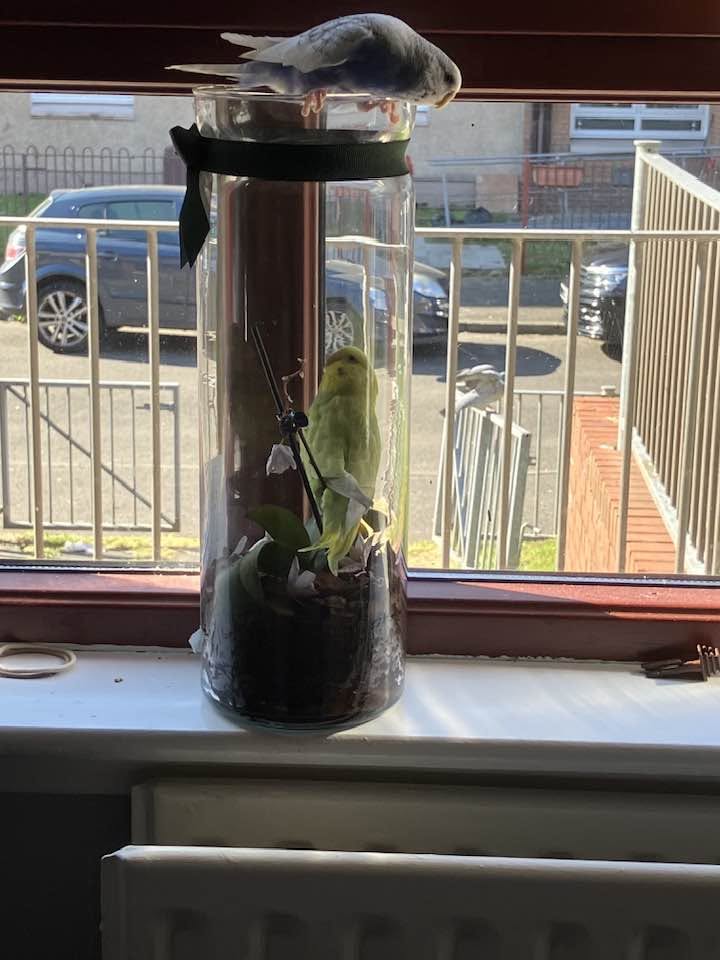
Glass transmits solar radiation. Sunlight passes through it almost unimpeded. But the heat generated when that radiation hits a surface — a wall, a cage, a bird’s feathers — does not pass back through the glass as efficiently. It is trapped. The glass lets the energy in and keeps it in. This is the greenhouse effect, in miniature, happening in the space immediately behind every sun-facing window in your home.
The result is that the temperature immediately behind a window in direct sun is significantly higher than the temperature in the rest of the room. Not a little higher. Significantly. On a 33 degree day outside, a south-facing window in direct afternoon sun can produce temperatures of 45 degrees or more in the zone immediately behind the glass. A bird cage positioned in that zone is not in a warm room. It is in an oven.
And the important thing — the thing that catches owners out every time — is that this zone is localised. Three feet from the window, the room temperature may be entirely comfortable. The person sitting on the sofa feels fine. But the bird in the cage by the window is experiencing conditions that are genuinely life-threatening, and there is nothing in the person’s own experience of the room that tells them so.
This is not a theoretical risk. It is a physics problem that plays out in UK homes every summer, every time a bright sunny day coincides with a cage positioned near a south or west-facing window.
Why Budgies And Small Birds Are Especially Vulnerable
Understanding the glass and heat problem is one part of this. Understanding why budgies specifically are so vulnerable to it is the other — because the answer is not obvious and it matters.
Small animals heat up faster than large ones. This is basic thermodynamics — the surface area to volume ratio of a small animal means that external heat reaches its core temperature quickly. A budgie weighing 30 to 40 grams heats up in warm conditions far faster than a cat, a dog, or a human would in the same environment. The thermal inertia that gives larger animals some buffer against rapid temperature change is simply not there in a small bird.
Budgies also cannot sweat. Their primary cooling mechanism is respiratory — they breathe faster to exchange heat through the respiratory tract, and they hold their wings away from their body to increase surface area for heat dissipation. In a glass-amplified heat zone, these mechanisms are not adequate. The air they are breathing in is itself hot. There is no cooler surface for heat to dissipate into. The cooling mechanisms fail, and core temperature rises.
The other factor is that budgies are caged. They cannot do what a wild budgie would do — move into shade, seek lower ground where temperatures are cooler, find a water source to drink from and bathe in. The cage removes every adaptive response available to the bird except the ones that require cooler air, which the cage by the window does not provide.
Put these three things together — rapid heating in small bodies, limited cooling mechanisms, and no ability to escape the heat zone — and you have an animal that is at serious risk in conditions that a human in the same room would barely notice.
The Signs That Your Bird Is Already In Heat Stress
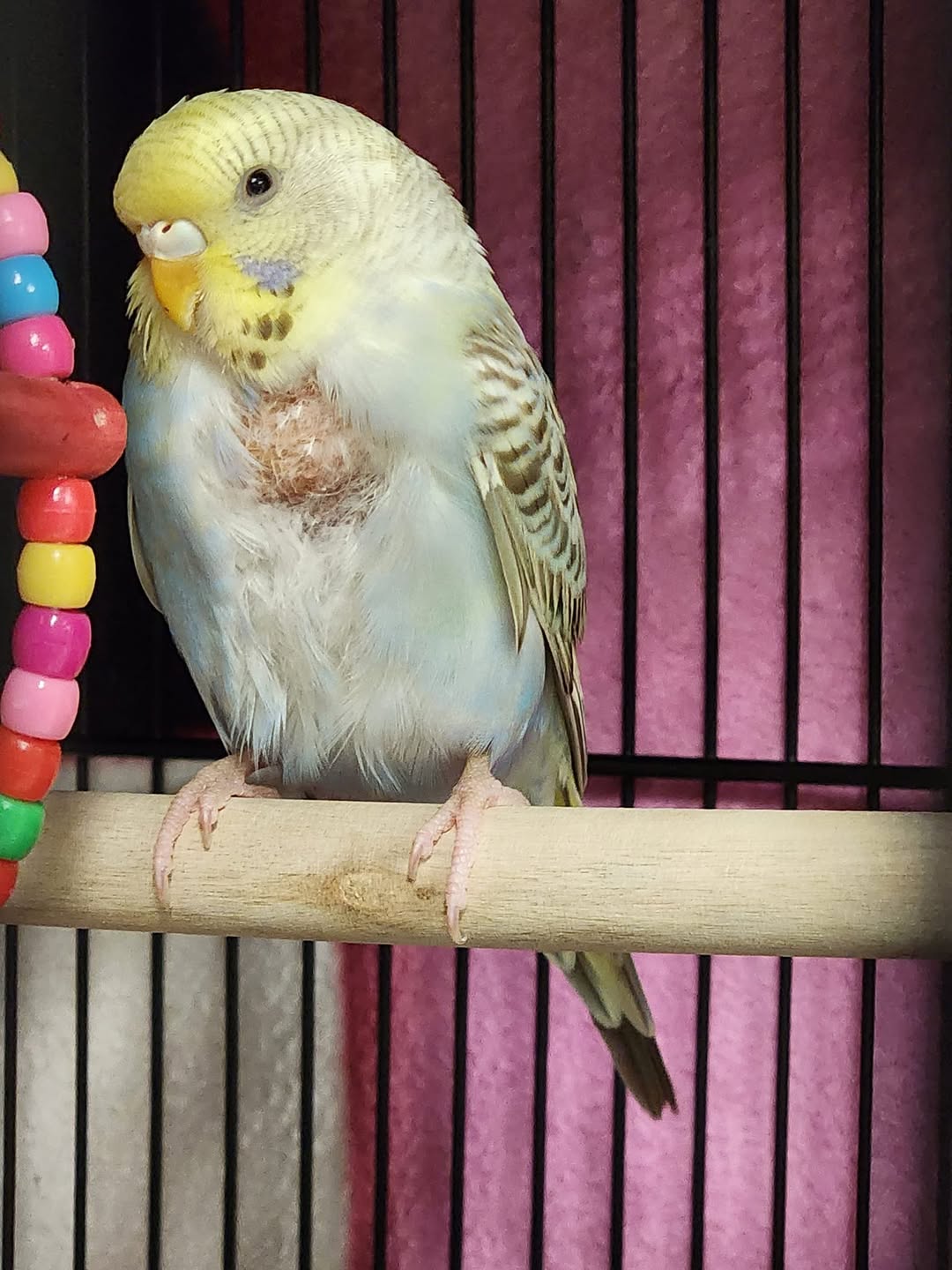
- Wings held slightly away from the body — not fully spread, but noticeably not tucked in. The bird is trying to increase the surface area available for heat dissipation. This is an early sign and it means the bird is already uncomfortable
- Open beak breathing at rest — a budgie breathing through its open beak when it has not been flying or exercising is using its respiratory tract as a cooling mechanism because normal thermoregulation is failing. This is beyond early warning
- Sitting lower on the perch or descending to the cage floor — warm air rises. A bird seeking the lowest point of its cage is trying to find marginally cooler air. A bird on the cage floor that is not normally there is in significant distress
- Rapid visible breathing — you can see the chest and tail moving with each breath at a rate that is faster than normal. A budgie at rest breathes roughly 60 to 80 times per minute. Visibly faster than that is a warning
- Glassy or half-closed eyes — an unfocused, glazed expression that is not sleep. A bird with glassy eyes in a warm environment is in physiological stress
- Unusual stillness or unresponsiveness — a bird that does not react to your approach or voice in its normal way. This is serious and needs immediate action
- Loss of balance or falling from perch — advanced heat stroke. This is an emergency. Move the bird immediately and call an avian vet
The critical thing about this list is the order. The early signs — wings held out, open beak breathing — are the ones to act on. By the time you see glassy eyes or loss of balance, the bird has been in serious heat stress for longer than you would want. The window between early signs and serious danger in a small bird is shorter than most owners realise.
What The Temperature Actually Is Behind Your Window — The Numbers
I want to give you some concrete numbers here, because I think abstract descriptions of “significantly warmer” do not convey the scale of the problem the way numbers do.
On a day when the outside temperature is 25 degrees Celsius — a warm but not exceptional UK summer day — a south-facing window in direct afternoon sun will typically produce a temperature of 35 to 40 degrees in the zone immediately behind the glass. That is already above the threshold at which a budgie begins to experience significant heat stress.
On a day when the outside temperature reaches 30 degrees — the kind of day that triggers heat health alerts — the temperature immediately behind a south or west-facing window in direct sun can reach 45 degrees or more in the hottest part of the afternoon. That is not uncomfortable for a bird. That is lethal territory.
On a day at 33 degrees — which is the kind of temperature England is now regularly reaching during summer heat events — the zone behind a sun-facing window can exceed 50 degrees. This is not speculation. This is the physics of solar radiation and glass, and it plays out in UK homes every summer.
The room you are sitting in may feel perfectly manageable. You may not even have opened a window yet. And your budgie, three feet away, is in conditions that would kill it within hours without intervention.
This is why I use the specific number in the title of this article. Not to alarm, but to make real something that is very easy to underestimate when you are sitting comfortably at the other end of the room.
The Rooms And Windows That Create The Highest Risk
Not all windows are equal, and understanding which positions create the greatest risk helps you make good decisions about cage placement throughout the year — not just on the hottest days.
South-facing windows create the highest sustained heat risk during summer, because they receive direct sun for the longest part of the day — typically from mid-morning through to late afternoon. A cage near a south-facing window in summer is in the highest-risk position for the most hours of the most days.
West-facing windows create a specific and particularly dangerous risk in the late afternoon and evening — the time of day when the outside temperature is already at or near its peak, and when many owners have relaxed their vigilance because they think the hottest part of the day has passed. Late afternoon western sun through glass onto a cage that has been in a warm room all day is one of the most dangerous combinations I can describe.
East-facing windows are lower risk in summer in the sense that the direct sun they receive is morning sun, when outside temperatures are generally lower. But on very hot days, morning sun through glass can still create conditions well above what is safe for a caged bird.
North-facing windows receive little or no direct sun in summer and are the lowest-risk position for cage placement. If you have a north-facing room that is otherwise suitable for a bird, that is the safest location during summer heat.
Conservatories deserve a specific mention because they represent the most extreme version of this risk. A conservatory is essentially a glass structure designed to maximise solar heat gain. During a UK summer heat event, conservatory temperatures regularly reach 45 to 55 degrees and beyond. A bird in a conservatory on a hot day is in immediate danger. There is no version of a conservatory placement that is safe for a caged bird in summer.
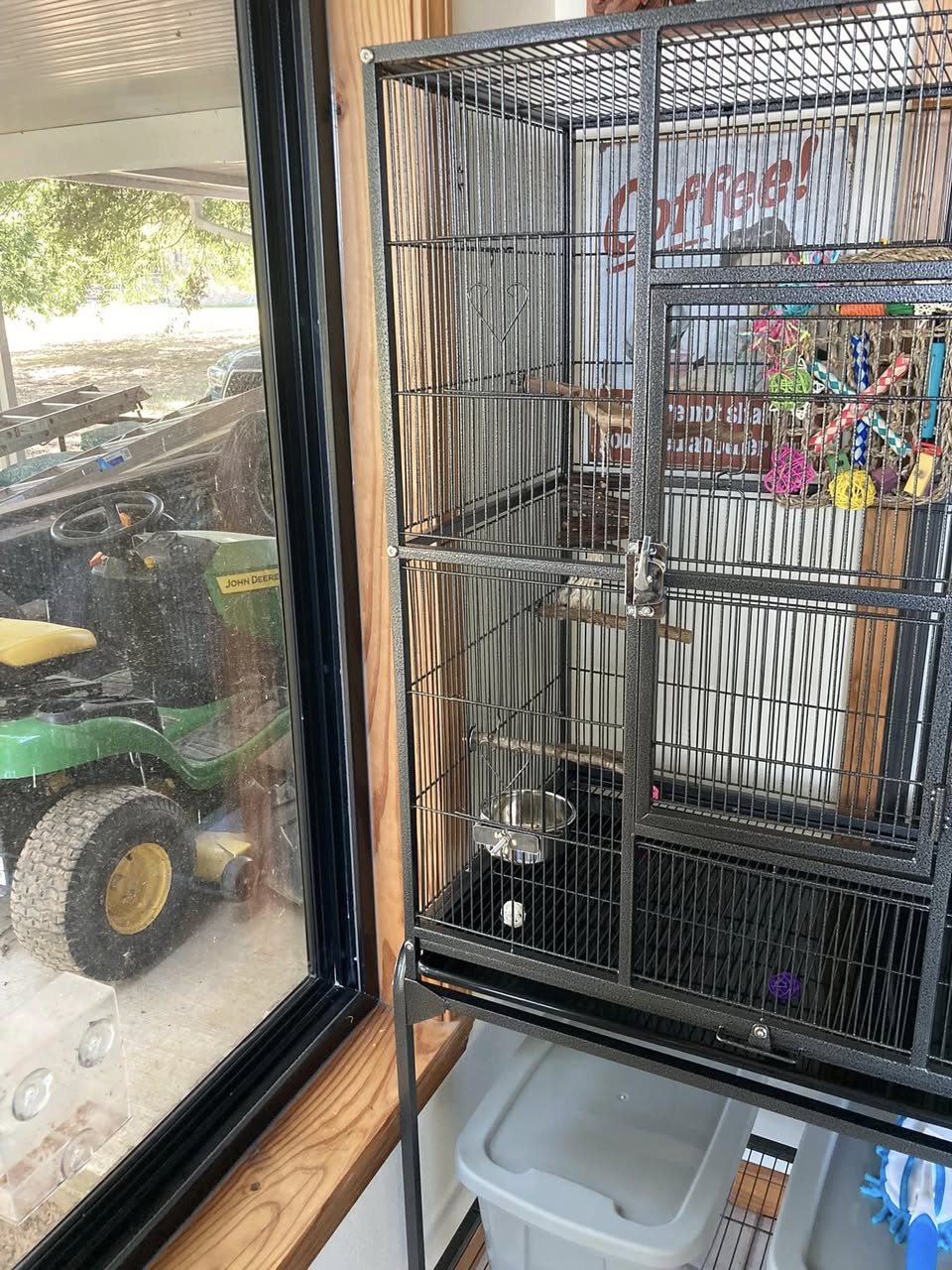
What To Do — Practical Steps For Today And Every Sunny Day
- Know which direction your windows face. This is the starting point. Stand at each window in your home and work out whether it faces north, south, east, or west. South and west-facing windows are the high-risk ones in summer. If you do not know, check on a sunny day — the windows with direct sun in the afternoon are west or south-facing.
- Move the cage away from any window that receives direct sun during the day. Not just a little away. Meaningfully away — several feet at minimum, ideally with no line of sight to the direct sun. The temperature zone behind glass drops sharply with distance, but proximity to the window still matters.
- Close curtains or blinds on sun-facing windows during the hottest part of the day. This is the simplest and most effective intervention available. A closed curtain or blind dramatically reduces the solar heat gain in the room. Do this for any room the cage is in, on any day with significant direct sun.
- Identify the coolest room in your home and move the cage there on very hot days. Usually a north-facing room, an interior room, or a room that gets only morning light. On days when temperatures are forecast to exceed 28 degrees, consider moving the cage proactively rather than reactively.
- Do not rely on the room feeling comfortable to you as a guide to what the bird is experiencing. Sit next to the cage, at the bird’s level, on a sunny day. What does it feel like there? That is the relevant reference point — not the sofa three metres away.
- Change water more frequently on hot days. Water warms quickly in heat and loses its cooling function. Fresh, cool water should be available throughout the day. Change it at least three times on hot days — morning, midday, and afternoon.
- Offer a shallow bathing dish. Many birds will bathe during heat stress as a cooling behaviour. A very shallow dish — no more than a centimetre of water — available during hot periods gives the bird the option to self-cool. Do not force it, but make it available.
- Use a fan to circulate room air — not to blow directly on the cage. A fan that moves air generally in the room lowers the ambient temperature and improves the bird’s thermal environment. A fan pointed directly at the cage creates a draught risk. The distinction matters.
The Myth That Budgies Come From Australia So Heat Is Fine
I hear this regularly and I want to address it directly, because it is one of the most persistent reasons owners underestimate the risk.
Budgies do come from Australia. The Australian interior, where wild budgies live, does get very hot. This is true. What is also true is that wild budgies in the Australian interior have access to shade, to movement, to water, to lower ground temperatures, and to the ability to fly away from any location that becomes too hot. They are not caged. They are not behind glass. They do not have a fixed position from which they cannot escape.
The heat tolerance of a wild budgie in its natural environment and the heat tolerance of a caged budgie behind a south-facing window in a UK home are entirely different things. One is an animal with a full set of behavioural and environmental options for managing temperature. The other is an animal that has no options at all except the inadequate cooling mechanisms that fail when the air temperature is too high.
When someone tells me their budgie comes from Australia so it will be fine in the heat, what they are really saying is that they have confused the environmental conditions of a wild bird with those of a pet. The two are not comparable. The origin of the species does not tell you anything useful about the thermal safety of a cage near a sunny window.
If Your Bird Is Already Showing Signs — The Immediate Response
If you are reading this and realising your bird is currently near a sunny window and is showing any of the signs in the warning section above, here is what to do right now.
Move the cage to the coolest room in your home immediately. Do not finish reading first. Move it now.
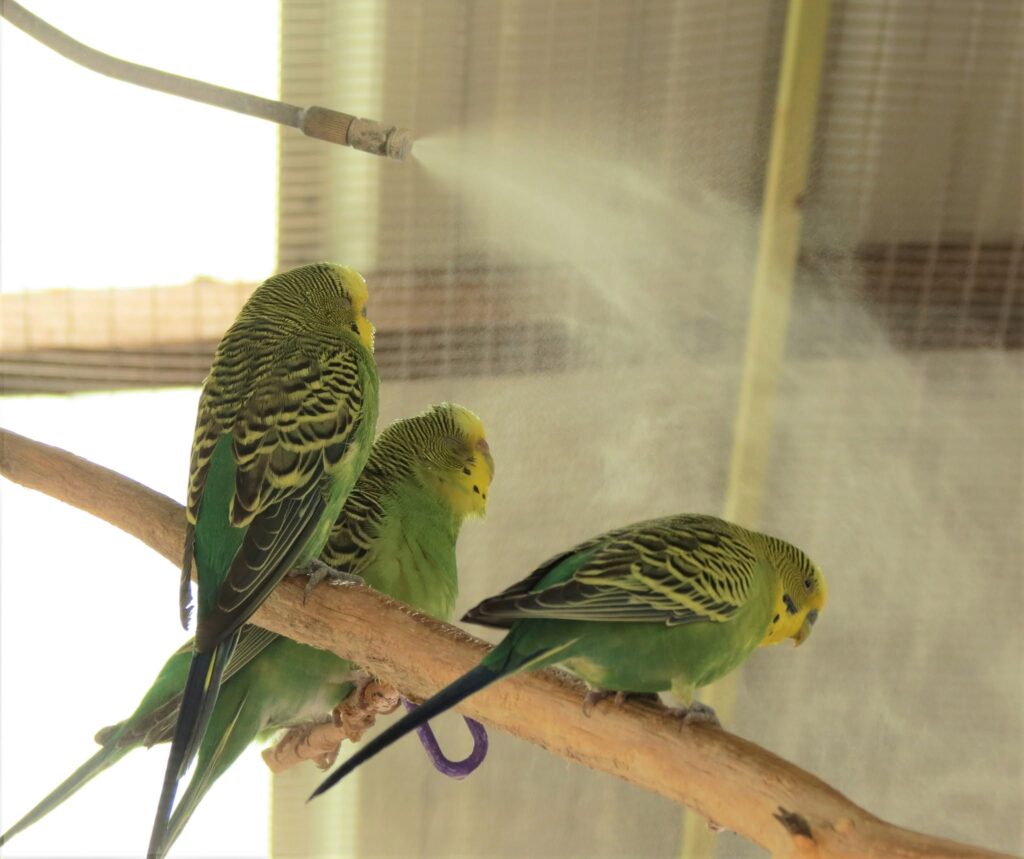
Once the bird is in a cooler location, offer cool — not cold — water. Misting the bird very lightly with cool water can help. Do not apply ice or very cold water directly to the bird — thermal shock from extreme cold on a heat-stressed bird can cause cardiac stress.
If the bird is showing serious signs — open beak breathing, glassy eyes, loss of balance, unresponsiveness — call an avian vet immediately. Do not wait to see if the bird improves. Call while you are doing the above. Heat stroke in a small bird can be fatal, and the speed of professional intervention matters.
Keep the bird in the cooler location for the rest of the day. Do not return it to the warm position once it appears to have recovered. The risk of relapse is real.
Quick Reference — Window Risk And Bird Safety
| Window Position | Summer Heat Risk | Action |
|---|---|---|
| South-facing, direct afternoon sun | 🔴 Highest — avoid year-round in summer | Move cage, close curtains during sun hours |
| West-facing, direct late afternoon sun | 🔴 Very high — especially dangerous post-3pm | Move cage, close curtains from midday |
| East-facing, direct morning sun | ⚠️ Moderate — lower on most days, higher on very hot days | Monitor; move on forecast hot days |
| North-facing, no direct sun | ✅ Lowest risk in summer | Preferred position for hot months |
| Conservatory, any orientation | 🔴 Extreme — never safe in summer | Never place a bird cage in a conservatory in summer |
| Interior room, no windows | ✅ Low risk if ventilated | Good option on very hot days with fan for airflow |
Frequently Asked Questions
My room thermostat says 24 degrees — why would my budgie be in danger near the window?
Because your thermostat is measuring the temperature of the room generally — not the temperature in the localised heat zone immediately behind the window. Solar radiation through glass creates a microenvironment that can be 10 to 15 degrees hotter than the ambient room temperature. Your thermostat reading is accurate for where the thermostat is. It tells you nothing about the temperature at the cage.
How far from the window does the cage need to be?
There is no single safe distance that applies universally — it depends on the window orientation, the time of day, and the outside temperature. The practical rule is this: if you can feel warmth from the sun when you sit next to the cage, the cage is too close. Move it until you cannot. On very hot days with direct sun, no position near a south or west-facing window is truly safe — the cage should be in a different part of the room or a different room entirely.
Can I leave the cage near the window if I open it?
Opening the window helps by introducing cooler outside air and improving ventilation — but it does not eliminate the solar radiation heat gain behind the glass, and on very hot days the outside air may itself be too warm to cool the microenvironment near the window adequately. An open window also introduces draught risk for the bird. The reliable solution is to move the cage away from the window, not to compensate for its proximity by opening it.
My budgie seems to enjoy sitting in the sun — does that mean it is okay?
A bird that is sitting in sunlight and appears comfortable may genuinely be fine — particularly during cooler parts of the day or in indirect rather than direct sun. The risk is not sunshine itself but the heat concentration created by direct sun through glass at high outside temperatures. A bird that is actively seeking a sunny spot during a mild spring morning is doing something different from a bird positioned in a glass-amplified heat zone on a 33 degree day. Watch the behaviour I described in the warning signs section. The bird’s behaviour tells you what it is experiencing more reliably than the bird’s apparent preference for the position.
What is the safest room for a budgie cage in summer?
A north-facing room with ventilation, away from direct sun at any point of the day, is the safest position in summer. An interior room with a fan providing gentle air circulation is also good. The rooms to avoid are any with south or west-facing windows that receive direct afternoon sun, and conservatories under any circumstances. Think about where the sun falls in your home throughout the day and position the cage where it never falls directly.
Where can I get honest bird advice in Swindon?
Come and see us at Paradise Pets, Manor Garden Centre, Cheney Manor, Swindon SN2 2QJ. Or give us a ring on 01793 512400. The advice is free and we have been giving it for 35 years.
One Last Thing From Me
The woman whose video I watched — her budgie was moved immediately, given fresh water and a shallow dish to bathe in, and was in a cooler room within ten minutes. He recovered fully. She came back a week later to tell me he was completely back to normal and that she had moved the cage to the other side of the room where it has been ever since.
She also told me that she had been putting him by that window for two years because she thought he would enjoy the sun. Two summers of the same risk, every warm sunny day, and she had not known.
That is not unusual. It is, in fact, the most common version of this story. The owner is not negligent. They have simply never been told what glass does to heat, or what heat does to a small caged bird. The information was not there when they bought their bird, nobody mentioned it at the shop, and nothing went wrong for long enough that they had no reason to question the setup.
This article exists to be the thing that nobody mentioned. Glass concentrates heat. Small birds are vulnerable to that heat faster than you would believe. The room feeling fine to you means nothing to a bird behind a sunny window. And the fix — move the cage, close the curtains, know your window directions — is not difficult.
Act on it this summer, before a sunny day gives you the video that brings you into the shop.
Worried About Your Bird’s Position In This Heat? Come And Talk It Through
Tell me where your cage is, which way your windows face, and what your bird has been doing on hot days. I will give you a straight assessment and tell you honestly whether the setup needs to change. Free advice, no obligation. That is what we have been doing for 35 years.