
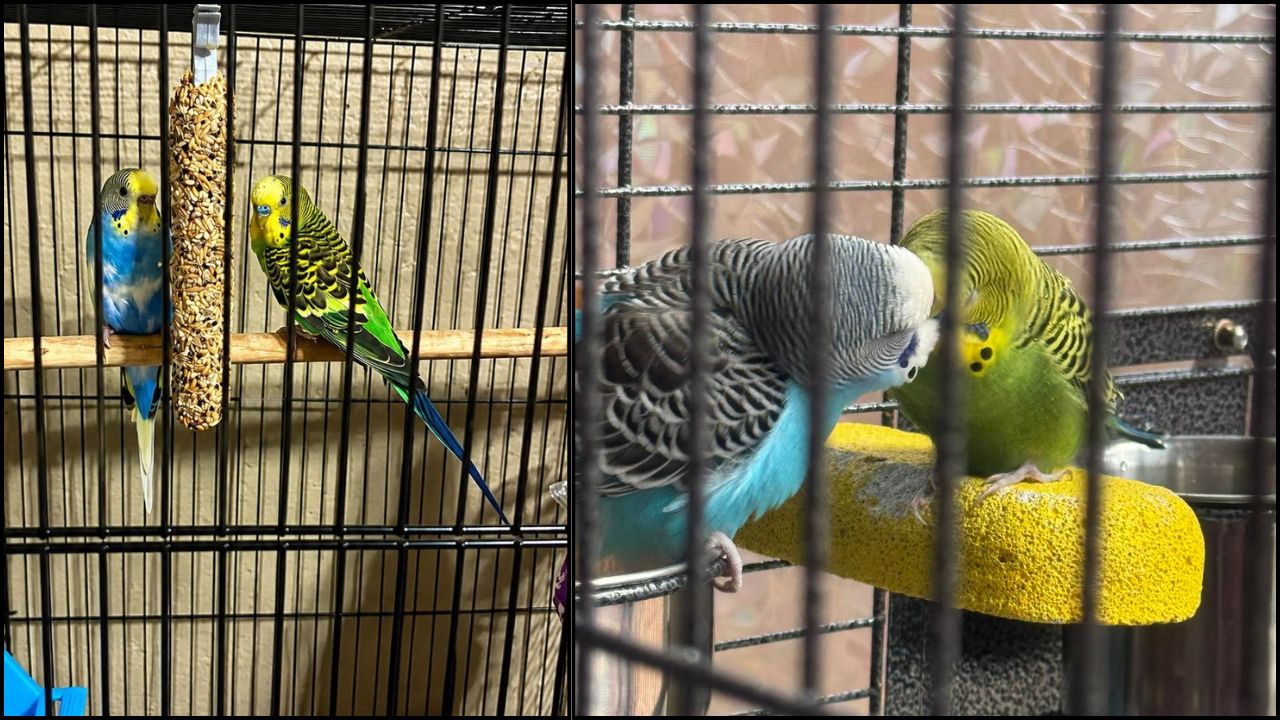

Neil has run Paradise Pets Swindon since 1988 — over 35 years of selling budgies and advising on their housing. The question of cage size has been one of the most consistent conversations in those 35 years. This article is his honest view on what the RSPCA guidelines actually mean in practice — and why the cage sold with most budgies is inadequate.
The RSPCA’s guidance on pet bird housing is now explicit about something that I have been telling customers since the day I opened this shop. They state it plainly on their website: most cages are too small to allow birds to fly freely. They say that keeping a bird in an inadequate cage for too long can make it bored and frustrated, leading to problem behaviour. They say that birds need space and the ability to express normal behaviours — and that most of the cages available in the UK do not provide it.
I agree with all of that. I have agreed with it since 1988.
What I want to do in this article is go further than the guidelines — because guidelines tell you the minimum, and I want to tell you what actually makes a difference. I want to explain what a too-small cage does to a budgie over time, why the standard cage sold in most pet shops is genuinely inadequate, and what the right cage actually looks like. Not the RSPCA minimum. Not what technically passes. What genuinely works for the bird.
After 35 years of watching what happens to birds in different cage sizes, I can tell you exactly what the difference looks like. It is not subtle.
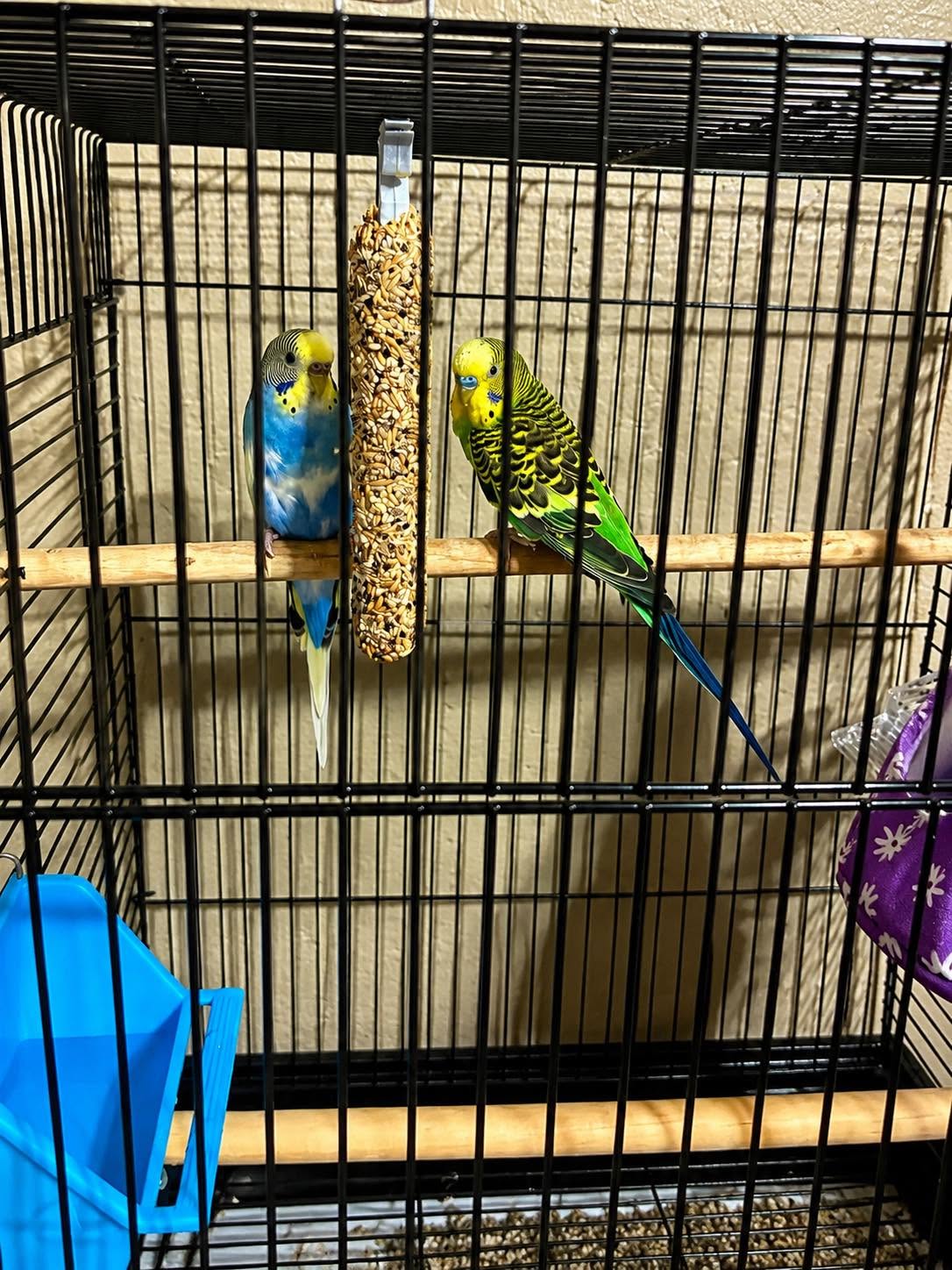
What The RSPCA Actually Says — And What It Means In Practice
The RSPCA’s housing guidance for pet birds establishes several minimum requirements. For a pair of budgies, the minimum cage width should be three times their combined wingspan. The length should allow at least two wing beats between perches. The height should be at least three times the length from head to tail of the largest bird in the cage.
Let us put those numbers into something concrete. A budgie’s wingspan is typically around 25 to 30cm. Three times the combined wingspan of a pair means the cage width should be at minimum 150cm — one and a half metres wide. The length should allow at least two full wing beats — that is another 60cm minimum of clear flying distance between perches.
Now compare that to the standard cage sold in most UK pet shops alongside budgies. The most common starter cages run between 40cm and 60cm wide. Some are wider. Almost none approach what the RSPCA guidance specifies as the minimum.
The RSPCA’s own assessment is clear: “most cages are too small to allow birds to fly freely.” This is not a fringe opinion. It is the position of the UK’s leading animal welfare charity, published on their guidance page for pet bird owners.
Why I Have Been Saying This Since 1988
I did not need the RSPCA to tell me that standard budgie cages were too small. I could see it.
When I started this shop 35 years ago, the standard advice given with a budgie purchase was a 40cm cage, a bowl of seed, and a piece of cuttlebone. I sold that setup, as every other shop did, because it was what was sold. But I watched what happened to the birds that went home in those cages, and I started having a different conversation.
A budgie in a 40cm cage cannot fly. It can hop between perches. It can move from one side to the other. But flying — the physical act of flight that is as fundamental to a bird as walking is to a dog — is simply not possible in a space that small. The wingspan alone, at 25 to 30cm, fills most of the available space. The bird cannot take a single proper wingbeat from one perch to another.
This matters for reasons that go well beyond what most owners think about.
- Flight is not optional for birds. It is how they maintain cardiovascular fitness, muscle tone, and healthy body weight. A bird that cannot fly is a bird that becomes progressively less healthy, exactly as a person who cannot walk becomes progressively less healthy.
- Confinement in a too-small space produces chronic stress. A budgie that cannot move freely, cannot escape from perceived threats, cannot perform normal flight behaviours — is a stressed budgie. Chronic stress compromises the immune system, increases susceptibility to respiratory infection, and reduces lifespan.
- Boredom in a small cage leads to every problem behaviour owners complain about. Feather plucking. Persistent screaming. Aggression. Repetitive stereotyped movements. These are the behaviours of an intelligent animal with nowhere to put its energy and no way to express its natural instincts.
- A bird that cannot fly in its cage needs significant daily out-of-cage time. The RSPCA specifies a minimum of six hours per day outside the cage for a bird in a standard indoor cage. Most budgie owners I speak to do not provide anything close to that.
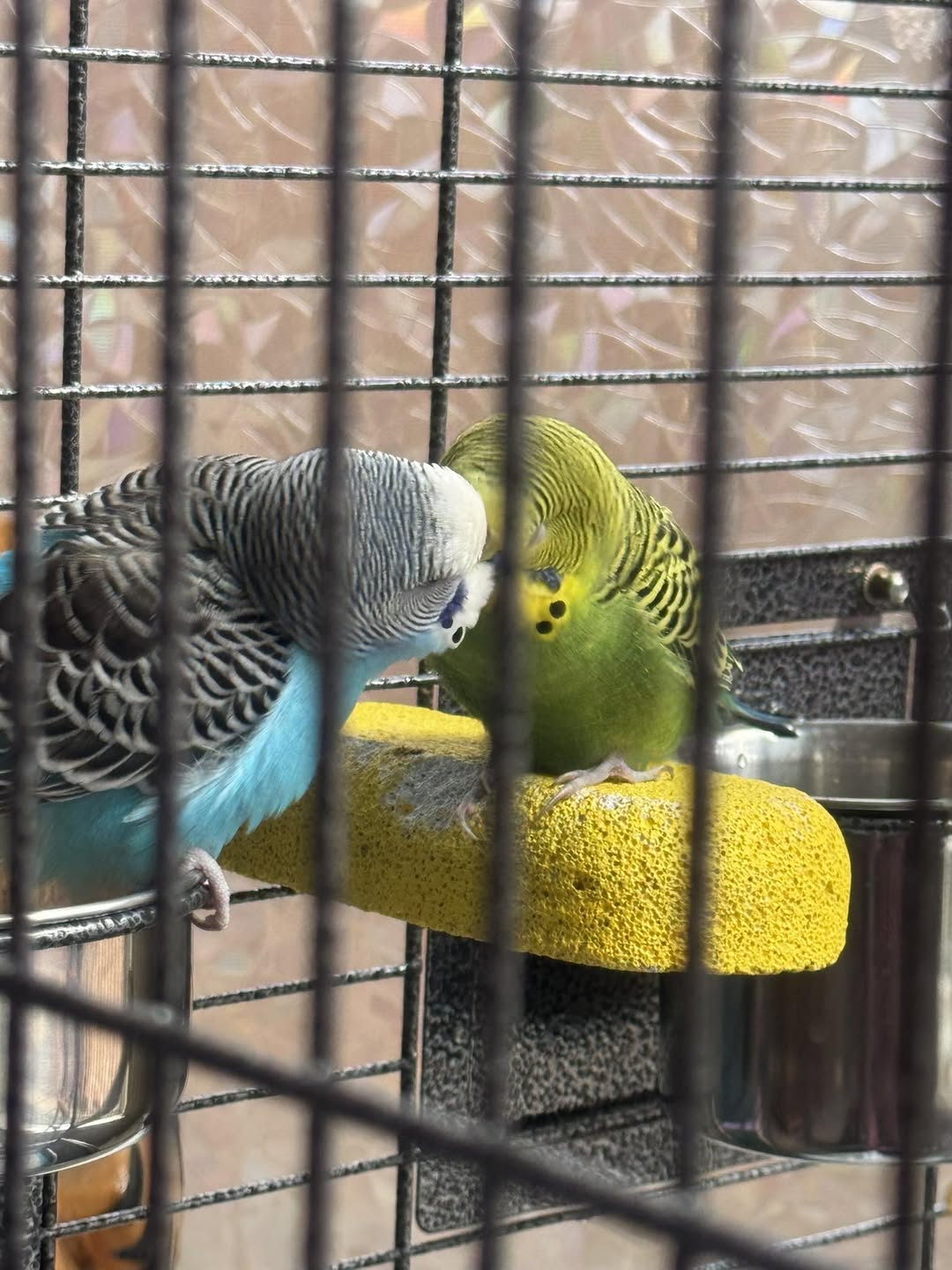
What A Too-Small Cage Does To A Budgie Over Time
I want to be specific about this because the consequences of inadequate housing are real, visible, and chronic — but they develop slowly enough that owners often do not connect them to the cage.
In The First Weeks
A young budgie brought home in a small cage typically settles reasonably well. It is new to everything and the cage, however small, is its safe space. Owners sometimes take this early settling as evidence that the cage is fine. It is not. It is evidence that the bird has not yet exhausted its capacity to adapt.
After Three to Six Months
This is when the signs begin to appear. The bird that was chirpy and active becomes quieter. Not ill — just less. Less exploratory, less vocal, less engaged. Owners often describe this as the bird “settling down” or “growing out of its baby phase.” In many cases, what they are watching is the beginning of boredom and frustration expressing themselves as reduced activity.
After One to Two Years
By this point, the consequences are more visible. The bird may have developed stereotyped movements — repetitive patterns of behaviour that indicate chronic frustration. Feather condition is often poorer than it should be. The bird’s muscle tone is weaker than a bird that has had adequate space. Some birds develop persistent vocalisations. Some become more irritable and harder to handle.
Over a Full Lifetime
The lifespan of a budgie in genuinely good conditions — adequate space, good diet, companion, out-of-cage time — is seven to ten years, sometimes more. The average lifespan of a budgie in the typical UK kept-in-a-small-cage situation is significantly shorter. Not because of any single cause, but because chronic physical restriction and chronic stress accumulate into a body that wears out faster than it should.
- The bird cannot spread both wings fully without touching the sides of the cage
- There is not enough clear horizontal space for at least two wing beats between perches
- The bird is developing stereotyped repetitive movements — repeatedly climbing the same section of bars, swinging on the same toy in the same pattern, pacing
- Feather condition has deteriorated and the bird is not going through a moult
- The bird screams persistently without obvious cause
- The bird has started feather-destructive behaviour
- The bird seems less active and engaged than it was in its first months
The Cage That Is Actually Adequate — What To Look For
I want to give you a practical guide rather than just a theoretical minimum, because there is a difference between what the guidelines specify and what I have seen genuinely work well for birds over 35 years.
- Width — the most important dimension. Budgies fly horizontally, not vertically. Width is where the flight distance comes from. For a single budgie with significant out-of-cage time, a minimum of 60cm wide. For a pair kept primarily in the cage, aim for 90cm or wider — and wider is always better.
- Length — enough for flight between perches. Position perches at opposite ends of the cage and ensure there is at least two wing beats of clear space between them. This typically means 70cm or more of clear flight distance.
- Height — less critical than width, but still matters. The bird should be able to sit on the highest perch without its tail touching anything below. For most budgies, 50cm height is adequate — more is fine, less is not.
- Bar spacing — 12mm maximum. Standard bar spacing for budgies should be no more than 12mm. Wider spacing risks heads and feet getting caught. Most commercial budgie cages get this right — it is one of the few specifications where the standard cage is adequate.
- Bar orientation — horizontal on at least two sides. Budgies climb. Horizontal bars allow climbing. A cage with only vertical bars removes one of the bird’s natural movement patterns.
- Shape — rectangular, not round. Round cages look elegant but they are genuinely poor for birds. There are no corners, which means there is no safe refuge. Birds naturally seek corners when they want to feel secure. A round cage provides no corner and produces ongoing low-level stress.
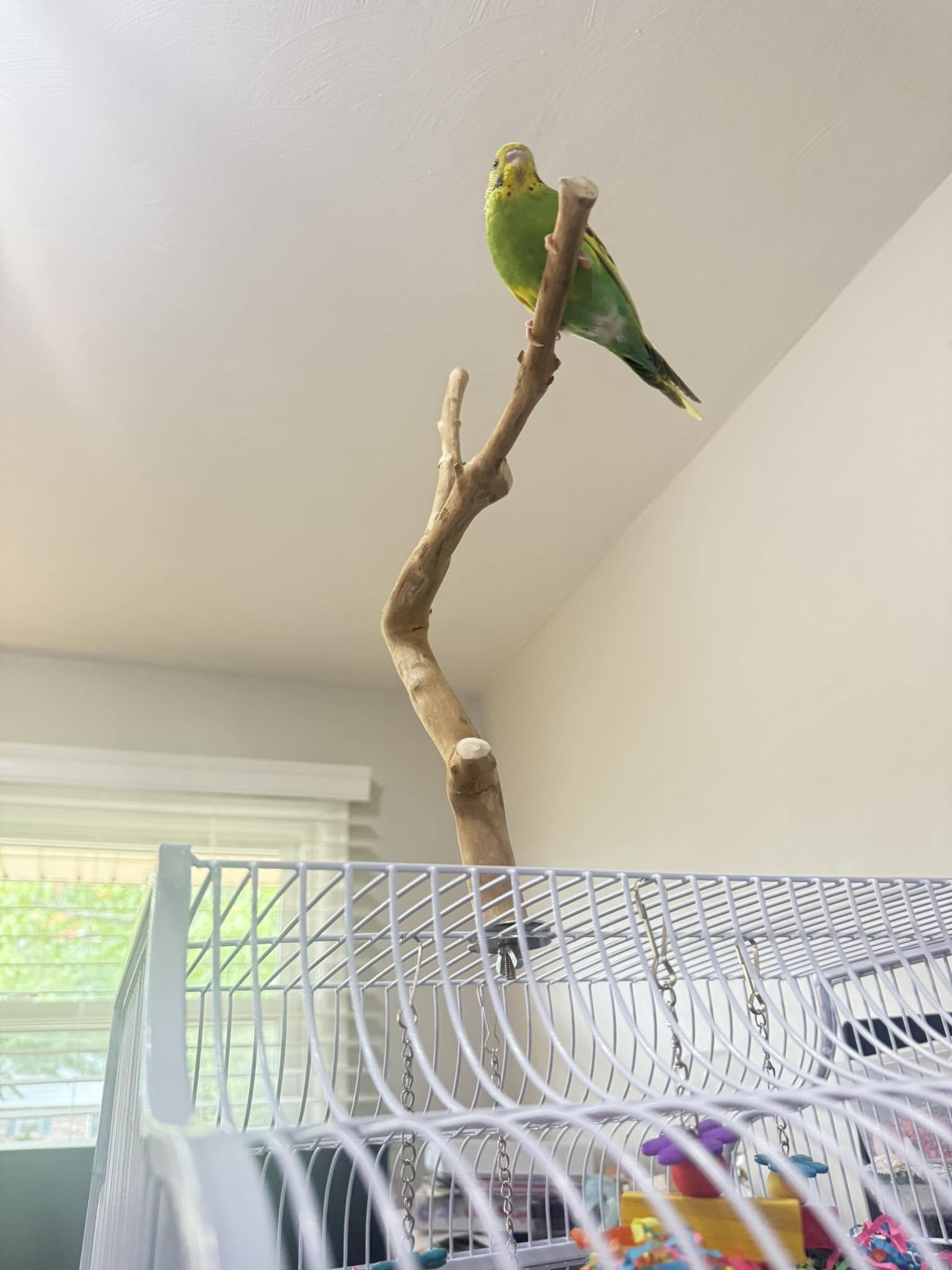
Out-Of-Cage Time — The Part of The Equation Most Owners Miss
Cage size is one half of the housing equation. The other half is out-of-cage time — and it matters just as much.
The RSPCA guidance specifies a minimum of six hours per day of free flight outside the cage. This is not a casual recommendation. It is recognition that no practical indoor cage provides adequate flight space on its own, and that birds require additional daily flight time to maintain their physical and mental health.
Six hours is a minimum, not a target. I know that sounds like a lot. But let me put it in context — a budgie wakes at roughly dawn and goes to sleep at dusk. In a UK summer that is fourteen or fifteen hours of active time. Six hours of out-of-cage time represents less than half of the bird’s active day.
- Make the room safe before opening the cage. Close all windows and doors. Cover or remove mirrors and large windows that the bird could fly into. Remove any toxic houseplants. Turn off fans. Check for any gaps behind or under furniture the bird could get stuck in.
- Non-stick cookware is the most important safety consideration. If you cook with non-stick pans while the bird is out, or if the kitchen shares airflow with the room the bird is in — this is a potentially fatal hazard. The fumes from overheated non-stick surfaces kill birds. The kitchen should be considered off-limits during out-of-cage time.
- Provide perching options around the room. Tabletop stands, specific perches near windows, familiar spots the bird learns to use. This makes the out-of-cage environment more useful and enriching.
- Build up gradually with a new bird. A bird that is not yet tame will not benefit from a room it cannot navigate safely. Tame the bird first, then extend its territory progressively as its confidence grows.
What About Aviaries — The Best Answer
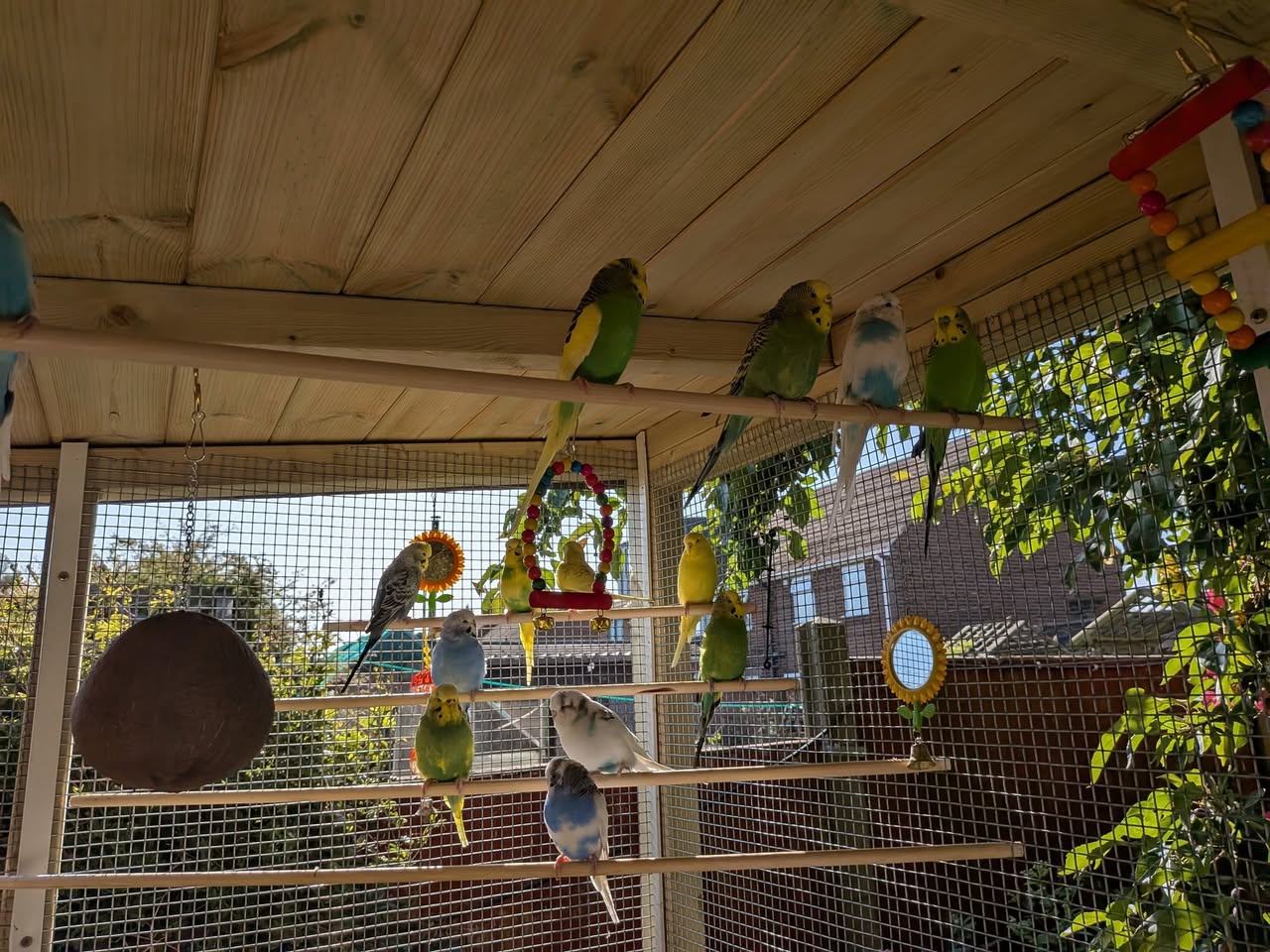
I want to mention this because for owners who have the space and the commitment, an aviary is the closest thing to genuinely good housing for a budgie — and it changes the picture completely.
The RSPCA notes that a large outdoor aviary is the best way to provide birds with the space they need. An aviary that meets the size guidelines — height, width, and depth at least four times the largest bird’s wingspan — provides genuine flight space. Birds in properly sized aviaries are measurably different from cage birds. They are fitter, more active, less prone to feather problems, and in my experience, longer-lived.
An outdoor aviary in the UK needs to address weatherproofing, and the birds need a shelter area that is insulated and protected from draughts for winter. An indoor aviary or a large flight cage that can be maintained year-round is equally good.
Not everyone can have an aviary. But for anyone who is making a long-term commitment to keeping budgies and has the space — it is worth serious consideration.
What To Do If Your Current Cage Is Too Small
If you have read this far and recognised that your budgie’s cage is smaller than it should be, the practical question is what to do about it.
- Upgrade the cage if you can. A larger cage is the most direct solution. You do not need to spend a great deal of money — good second-hand cages are available, and a properly sized flight cage does not have to be expensive. Come in and ask us what we would recommend for your specific situation.
- If upgrading immediately is not possible — maximise out-of-cage time. If the cage is small, the bird needs more time outside it, not less. Work toward the RSPCA minimum of six hours per day in a safe room with flight space.
- Enrich the cage as fully as possible. A small cage cannot be made large, but it can be made more interesting. Varied perches at different heights, rotated toys, foraging opportunities, things that change regularly. This does not replace space but it reduces the boredom that inadequate space creates.
- If the bird is showing signs of cage-related stress — stereotyped movements, feather plucking, persistent screaming — treat this as a welfare urgency rather than a background concern. These are not quirks. They are distress signals from an animal whose most basic needs are not being met.
The Perch Setup — Often As Wrong As The Cage Size
While I am talking about housing, I want to address perches specifically — because a cage with the right dimensions but the wrong perches is still inadequate.
- Vary the diameter. Different perch diameters exercise different parts of the foot. A single diameter repeated throughout the cage leads to foot problems over time. Provide at least three different diameters.
- Use natural wood where possible. Fruit tree branches — apple, pear, willow — at different diameters, untreated and washed before use. Natural wood provides abrasion for the nails and a varied grip surface that smooth dowels cannot.
- Include a concrete or mineral perch. Positioned near the food and water so the bird uses it regularly. This is one of the most effective tools for maintaining nail length naturally — reducing how often nails need trimming.
- Remove or reduce smooth wooden dowels. The standard smooth dowels that come with most cages are the worst perch option available. Replace them with natural wood and textured alternatives. They can remain as one of several options but should not be the only perch in the cage.
- Position perches for maximum flight space between them. Perches at opposite ends of the cage, as high as possible without the bird’s tail touching anything below. The clear horizontal space between perches is what allows flight. Cluttering the cage with perches in the middle reduces it.

Frequently Asked Questions
What is the minimum cage size for a single budgie?
The RSPCA guidance specifies that the cage should allow the bird to stretch its wings without touching the sides and allow at least two wing beats between perches. For a single budgie with significant daily out-of-cage time, I would say 60cm wide as a practical minimum — but wider is always better. A bird that spends most of its day in the cage needs considerably more than this.
Is a round cage okay for a budgie?
No. Round cages provide no corners, which means no safe refuge for the bird. Budgies are prey animals that use corners as secure positions — they are not equipped, psychologically, to live in a space with no angles. Round cages also often have bars that converge at the top, narrowing the usable space significantly. Avoid round cages entirely.
How many hours a day does a budgie need outside the cage?
The RSPCA guidance specifies a minimum of six hours per day of free flight outside the cage. This assumes a standard indoor cage of reasonable but not ideal size. For a bird in a smaller cage, more out-of-cage time is needed to compensate. The room must be made safe before the bird is released — closed windows and doors, no toxic fumes, no non-stick cooking happening.
My budgie seems fine in its small cage — does it really matter?
“Seems fine” is a very low bar, and it also does not account for what “fine” looks like over a five or ten year lifespan versus a two or three year one. The consequences of chronic inadequate housing accumulate slowly. The bird that seems fine at two may not seem fine at five. And more fundamentally, “not visibly distressed” is different from “having a good quality of life.” I would ask the same question of any animal in a space that does not allow it to perform its most basic natural behaviours.
Where can I get advice on cage sizes and setup in Swindon?
Come and see us at Paradise Pets, Manor Garden Centre, Cheney Manor, Swindon SN2 2QJ. Or ring us on 01793 512400. We are always happy to talk through cage setup, what to look for when buying, and what changes would make the most difference for your specific bird. Free advice, no obligation.
One Last Thing From Me
I started saying that standard budgie cages were too small in 1988. For a long time, I was one voice among many suggesting the opposite — that the standard cage was fine, that the standard advice was adequate, that what had always been done was good enough.
The RSPCA’s explicit statement on their website — that most cages are too small to allow birds to fly freely — validates something that I have watched play out over 35 years of working with these animals. The birds I have seen thrive are the ones with space. The birds I have seen decline and suffer are almost always the ones in inadequate housing.
The good news is that this is not an expensive problem to solve. A larger cage costs more than a smaller one, but the difference in what it gives the bird is not proportional to the price difference. A well-sized second-hand cage is worth more to a budgie than a brand-new cage that is half the size.
If your budgie is in a cage that does not allow it to fly — please act on this. Not because the RSPCA says so, though they do. Because it is the single most important change you can make to that bird’s quality of life.
Questions About Cage Size, Setup, or Housing? Come And See Us
We have helped owners upgrade their setups for 35 years. Whether you need advice on what to look for in a new cage, how to set up a flight room, or what changes make the most immediate difference — come in or give us a ring. Free advice, no obligation.