

Neil has kept, bred, and sold cage and aviary birds at Paradise Pets Swindon since 1988 — over 35 years of first-hand experience with budgerigars, cockatiels, canaries, finches, and dozens of other species. “Why does my budgie keep yawning?” is a question he hears regularly at the counter. This is his honest guide to what budgie yawning actually means — and when you genuinely need to worry.
A lady came in a few weeks ago with her phone out, showing me a video of her budgie sitting on his perch and yawning. “Neil,” she said, “he keeps doing this. Is something wrong with him? He looks like he’s struggling to breathe.”
I watched the video, watched it again, and told her the truth — in most cases, a yawning budgie is a completely normal budgie. But I also told her the other truth, which is that there are times when repeated yawning in a budgie is telling you something important, and you need to know the difference.
In 35 years of keeping and selling birds, I have answered this question more times than I can count. Budgie owners, particularly new ones, often panic when they see their bird yawning — it looks strange, it looks like the bird is gasping, and because budgies are small and can go downhill quickly, the worry is understandable. But yawning in budgies is not the same as yawning in people, and understanding what is actually happening makes all the difference.
This is my honest guide to why your budgie yawns, what is normal, what is not, and — critically — the signs that mean you need to see a vet.
First — What Does Budgie Yawning Actually Look Like?
Before we talk about causes, it is worth being clear about what we mean — because not everything that looks like a yawn in a budgie actually is one.
A genuine budgie yawn is a wide opening of the beak, sometimes with the head tilted slightly back, lasting a second or two and then closing again. It often happens after sleep, after eating, or at quiet moments during the day. It looks dramatic because budgie beaks are small and the movement is proportionally large, but the motion itself is smooth and the bird returns immediately to normal behaviour.
What you need to distinguish from a yawn is something different — repeated open-beak breathing, tail bobbing, stretching the neck as if trying to dislodge something, or gasping. Those are not yawns and they are not normal. I will come back to those signs in detail later, because they matter.
But if what you are seeing is the occasional wide-mouthed yawn, followed by your budgie going straight back to preening or chattering — that is almost certainly nothing to worry about.
The Most Common Reasons Your Budgie Yawns
1. It Is Simply Tired Or Just Waking Up
The most obvious reason, and by far the most common one I see — your budgie is sleepy. Budgies yawn when they wake up, just as most animals do. If you notice your bird yawning first thing in the morning, after a midday nap, or in the evening as the light drops, this is almost certainly what is happening. It is completely normal, it requires no intervention, and it is honestly rather endearing once you know that is all it is.
Budgies do nap during the day, particularly in the early afternoon. A bird that has just roused itself from a short rest will often yawn, shake itself, and then get back to the serious business of making noise.
2. It Is Adjusting Its Crop
This one surprises most people. Budgies have a crop — a small pouch in the throat area that stores food before it moves further into the digestive system. When food moves through the crop, or when a budgie is adjusting the contents, it will often yawn as part of that process. You might notice this particularly after feeding time, or when your bird has just had a good drink of water.
It can look alarming — the yawn can be wide and repeated a few times in quick succession — but if your budgie goes straight back to normal behaviour afterwards, the crop is almost always the explanation.
3. It Is Clearing Or Stretching Its Throat
Budgies will sometimes yawn simply to stretch or clear their throat and airway, much the same way a person might. A bit of seed dust, a small piece of millet, the natural movement of the air sacs — any of these can prompt a yawn. A single yawn followed by normal behaviour is nothing to be concerned about.
4. It Is Copying You
This one always gets a smile at the counter, but it is true — budgies, particularly hand-tamed ones that spend a lot of time with their owners, will sometimes yawn in response to seeing a person yawn. Yawning is slightly contagious across species, and a close-bonded budgie is not exempt. If your bird yawns when you do, that is actually a sign of a well-bonded, attentive little bird — not a sign of illness.
5. The Air Is Too Dry
UK homes in winter, particularly with central heating running, can become very dry — and budgies notice this. Dry air irritates the airway and throat, and a budgie living in a centrally heated room may yawn more frequently as a result. This is worth paying attention to — not because it is dangerous in itself, but because chronically dry air is not ideal for budgies and other signs of dryness (flaky feet, dry-looking nostrils) might appear alongside it.
A simple solution is to move the cage slightly further from radiators, or to place a shallow dish of water nearby to add a little humidity. Do not mist the bird directly or make the room damp — just take the edge off the dryness.
6. There Is Something Irritating The Air — Dust, Smoke, Or Fumes
Budgies have extremely sensitive respiratory systems — far more sensitive than ours. Cooking fumes, cigarette or vape smoke, scented candles, air fresheners, cleaning sprays, and even dusty environments can all irritate a budgie’s airway and prompt yawning, head-shaking, or sneezing.
If your budgie has started yawning more than usual and you have recently used a new cleaning product, lit candles, or changed something in the home environment, that is the first thing I would look at. Remove the source, ventilate the room, and see whether the yawning settles.
When Yawning Becomes A Warning Sign — What To Watch For
Now for the part that matters most. Because while most budgie yawning is innocent, there are situations where it is telling you something is wrong — and in a bird as small as a budgie, things can deteriorate quickly. I have seen owners dismiss signs that turned out to be serious, and I would rather you know what to look for.
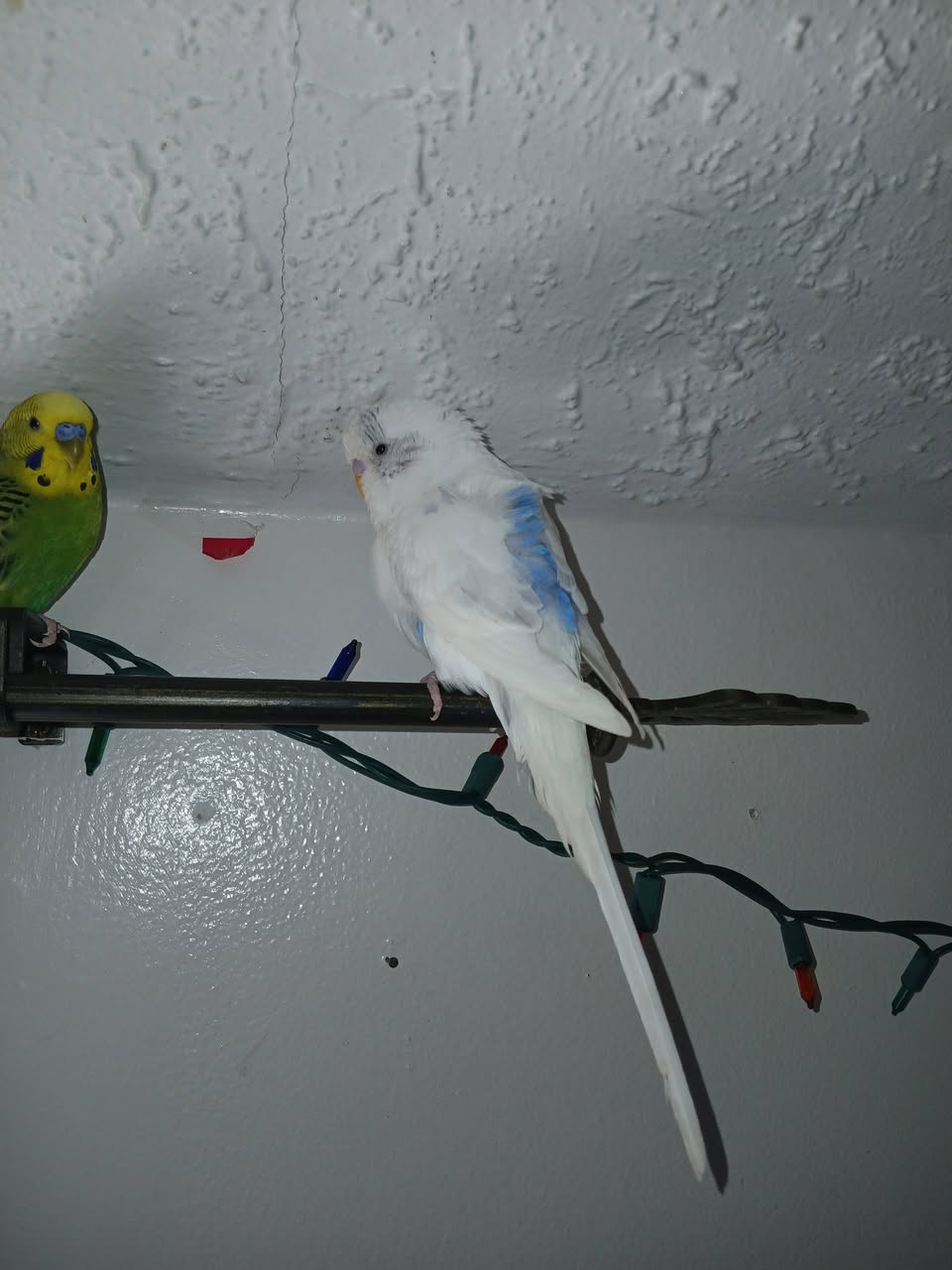
- Repeated yawning that does not stop — occasional yawning is normal; constant or compulsive yawning is not
- Open-beak breathing at rest — a healthy budgie breathes through its nostrils, not its beak. Open-beak breathing when the bird is calm and has not been exercising is a serious sign
- Tail bobbing with each breath — if your budgie’s tail is visibly pumping up and down with every breath, it is working hard to breathe. This is urgent
- Neck stretching or repeated swallowing — if your bird is stretching its neck repeatedly as though trying to dislodge something, there may be a blockage, crop issue, or throat infection
- Clicking or wheezing sounds — any unusual sound accompanying breathing — a click, wheeze, or rattle — points to a respiratory problem
- Yawning combined with lethargy or fluffed feathers — a budgie that is yawning, sitting fluffed up on the bottom of the cage, or showing no interest in food or interaction is unwell and needs veterinary attention today
- Discharge from the nostrils — wet, crusted, or discoloured nostrils alongside yawning point to a respiratory infection
- Loss of appetite or voice — any change in appetite or vocalisation alongside yawning should be taken seriously
The rule I give at the counter is this — a yawn on its own, in an otherwise bright, active, eating budgie, is almost always fine. A yawn alongside any one of the signs above means get to a vet. Budgies are prey animals and hide illness well. By the time they show clear symptoms, they have often been unwell for a while already.
The Most Common Conditions That Cause Excessive Yawning In Budgies
If your budgie is yawning repeatedly and showing other signs alongside it, these are the conditions I would be thinking about.
Respiratory Infection
The most common culprit when yawning becomes excessive. Budgies can develop bacterial, viral, or fungal respiratory infections — Aspergillosis (a fungal infection) is one of the more serious ones I have seen over the years. Signs include yawning, open-beak breathing, tail bobbing, clicking sounds, and nasal discharge. This needs veterinary diagnosis and treatment; it will not resolve on its own.
Air Sac Mites
Less common in UK pet budgies than in canaries or finches, but worth knowing about. Air sac mites (Sternostoma tracheacolum) live in the airways and cause breathing difficulties, yawning, clicking, and tail bobbing. A vet can diagnose this and treat it effectively, but it does require prompt attention.
Crop Issues — Sour Crop Or Crop Impaction
If the yawning is happening repeatedly after eating and is accompanied by the bird looking uncomfortable, regurgitating, or losing interest in food, the crop may be the issue. Sour crop (a bacterial overgrowth in the crop) and crop impaction (a blockage) can both cause repeated yawning and neck-stretching as the bird tries to clear the discomfort. Again — a vet issue, not something to manage at home.
Foreign Body In The Throat Or Crop
Rare, but I have seen it. A small piece of toy, a strand of rope, or even a seed in the wrong place can cause repeated yawning and neck-stretching as the bird tries to dislodge it. If you see your budgie making repeated swallowing or stretching motions that do not resolve, take this seriously.
Environmental Irritants
I mentioned this under normal causes, but when exposure is prolonged it crosses from mild irritation into genuine health concern. A budgie kept in a smoky home, near non-stick cookware being heated, or in a room with persistent chemical fumes can develop serious respiratory damage. Non-stick cookware in particular is something every budgie owner needs to know about — the fumes released by overheated PTFE-coated pans are lethal to birds and there is no warning before it is too late.
What Normal Budgie Breathing Looks Like — So You Know What Is Not Normal
One of the most useful things a budgie owner can do is simply know what their healthy bird looks like at rest. This sounds obvious, but most people have never really observed their bird’s breathing, and so the first time something looks different, they have no baseline.
A healthy budgie at rest breathes quietly and steadily through closed nostrils. The body moves slightly with each breath but there is no visible effort. The tail stays still. The bird holds itself upright on its perch, feathers smooth and close to the body (a slightly fluffed budgie in warm conditions is fine — a consistently fluffed budgie at normal room temperature is not).
Take a few minutes this week to sit quietly and watch your budgie breathe. It will seem uneventful, but you are building a mental picture of normal — and that picture is genuinely useful when something looks different.
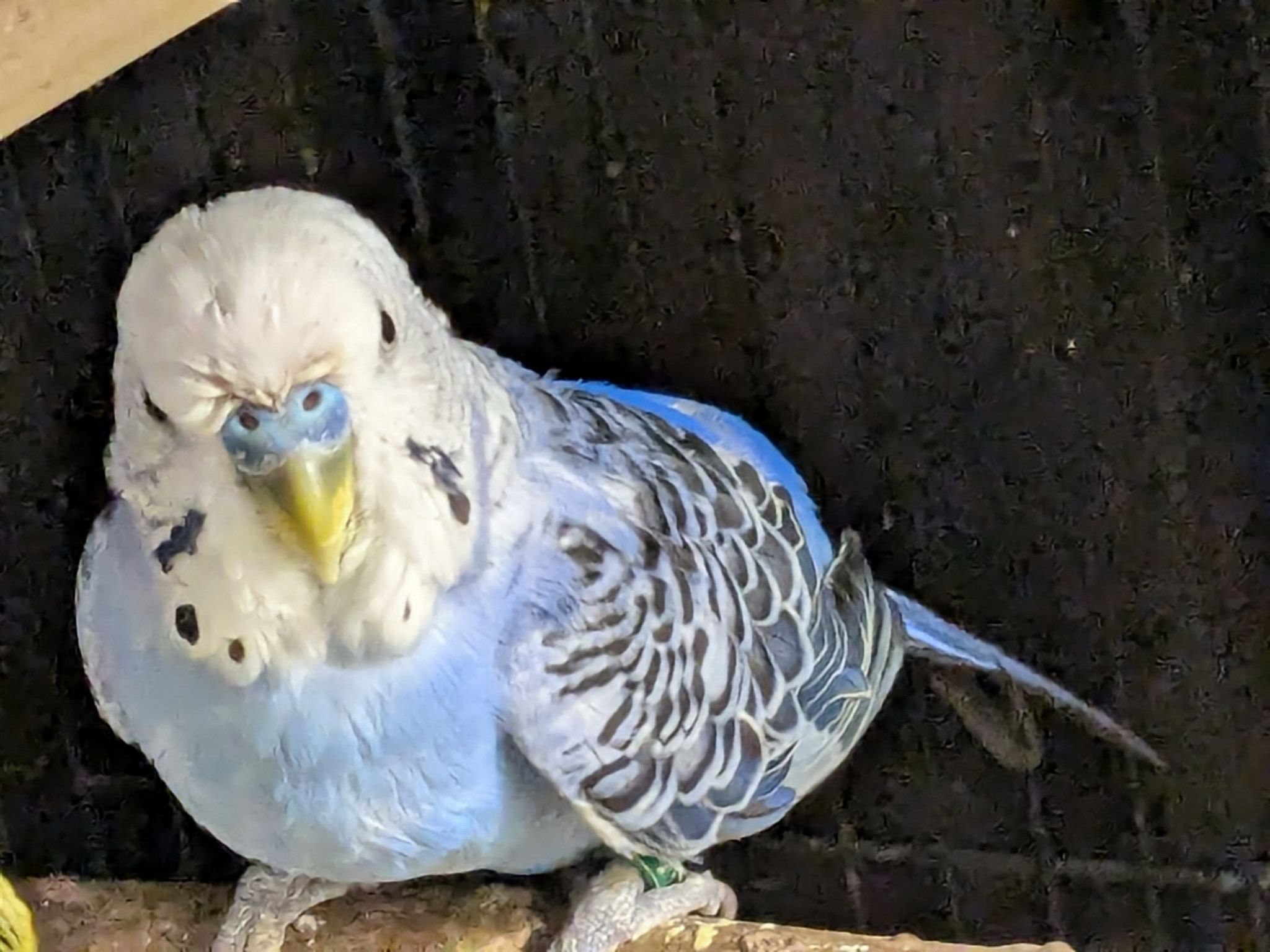
Quick Reference — Budgie Yawning At A Glance
| What You See | Likely Cause | Action Needed? |
|---|---|---|
| Occasional yawn after sleep | Normal tiredness / waking | ✅ None |
| Yawning after eating | Crop adjustment | ✅ None |
| Single yawn, back to normal | Throat stretch / clearing | ✅ None |
| More yawning since heating came on | Dry air irritation | ⚠️ Reduce dryness, move from radiator |
| Yawning after cleaning / candles | Environmental irritant | ⚠️ Remove source, ventilate |
| Repeated yawning that won’t stop | Possible respiratory / crop issue | 🔴 See a vet |
| Yawning + open beak breathing | Respiratory distress | 🔴 Vet urgently |
| Yawning + tail bobbing | Breathing difficulty | 🔴 Vet urgently |
| Yawning + fluffed / lethargic | Illness — multiple possible causes | 🔴 Vet today |
| Yawning + nasal discharge | Respiratory infection | 🔴 Vet today |
Practical Things You Can Do Right Now
Whether your budgie’s yawning turns out to be completely normal or something more, there are a few practical steps that are always worth taking.
- Watch the whole bird, not just the yawn. Is your budgie bright, active, eating, and chattering normally? Then the yawn alone is almost certainly nothing. Is anything else different? That changes the picture.
- Check the environment. Has anything changed — new cleaning products, candles, cooking smells, a new air freshener, someone smoking nearby? Remove it and see whether the yawning settles.
- Check the room temperature and humidity. Is your bird sitting near a radiator? Move the cage to a position where it gets warmth without being dried out directly by the heat source.
- Observe the breathing at rest. Sit quietly and watch. Is the breathing smooth, quiet, and through closed nostrils? Good. Is the tail bobbing, is the beak open, is there any sound? Call a vet.
- Note when the yawning happens. After sleep? After eating? Randomly and repeatedly? Timing gives you useful information and will help a vet if you need one.
- Do not wait if you are genuinely worried. A budgie that goes downhill can do so very quickly. If your instinct is telling you something is wrong, trust it and call an avian vet. Being wrong and feeling relieved is a much better outcome than waiting too long.
A Note On Finding An Avian Vet In The UK
Not all vets have experience with birds, and this matters. If you need to see a vet for your budgie, I would always recommend finding one with avian experience specifically — the assessment and treatment of birds is genuinely different from dogs and cats, and a vet who sees mostly companion animals may not be the most confident when it comes to a small bird with breathing difficulties.
Ask when you call whether the practice has experience with avian patients or a vet with a specific interest in birds. In most areas of the UK there will be at least one practice within reasonable distance that can help — it is worth knowing where that is before you need it urgently.
Frequently Asked Questions
Is it normal for a budgie to yawn a lot?
Occasional yawning is completely normal in budgies — after sleep, after eating, or at quiet moments during the day. If your budgie is otherwise bright, active, eating well, and behaving normally, the yawning alone is almost certainly nothing to worry about. It becomes a concern when it is constant, when it is accompanied by other signs like open-beak breathing or fluffed feathers, or when your bird’s general behaviour changes alongside it.
Why does my budgie keep opening its mouth?
There is an important difference between occasional yawning (which is normal) and repeated open-beak breathing at rest (which is not). A budgie that keeps its beak open when calm and not exercising is struggling to breathe through its nostrils, which points to a respiratory problem. This needs veterinary attention — do not wait to see if it settles on its own.
Could my budgie be yawning because of its crop?
Yes — crop adjustment is one of the most common causes of budgie yawning, particularly after eating or drinking. As food moves through the crop, budgies will often yawn repeatedly in a short burst and then return to normal. If the yawning after eating is accompanied by discomfort, regurgitation, or loss of appetite, however, that suggests a crop problem that needs veterinary attention.
Can dry air make my budgie yawn more?
Yes. UK homes in winter with central heating running can become quite dry, and this irritates a budgie’s airway. If your bird has started yawning more since the heating came on, try moving the cage slightly further from the direct heat source. Do not mist the bird or make the room damp — just take the edge off the dryness in the immediate environment.
What household things are dangerous to budgies?
More than most people realise. Non-stick cookware (PTFE-coated pans) heated at high temperatures releases fumes that are lethal to birds — this is one of the most serious risks in any home with a budgie. Cigarette and vape smoke, scented candles, aerosol sprays, air fresheners, cleaning products used in an enclosed room, and even incense can all cause respiratory irritation. Budgies have extremely sensitive airways and should be kept away from any kind of fumes or smoke.
When should I take my yawning budgie to the vet?
If the yawning is constant rather than occasional, or if it is accompanied by any of the following — open-beak breathing at rest, tail bobbing, clicking or wheezing sounds, nasal discharge, fluffed feathers, lethargy, or loss of appetite — see a vet today. Do not wait overnight. Budgies are small and can deteriorate quickly, and the sooner a problem is identified the better the outcome.
Where can I get honest bird advice in Swindon?
Come and see us at Paradise Pets, Manor Garden Centre, Cheney Manor, Swindon SN2 2QJ. Or give us a ring on 01793 512400. The advice is free and we have been doing this for 35 years.
One Last Thing From Me
The lady with the video came back a week later. Her budgie was fine — the yawning had been crop adjustment after his evening feed, and once she knew what to look for, she stopped worrying. But she also told me that going through the process of watching him properly for the first time had made her notice a few other things about his behaviour that she had never really registered before. She felt like she understood her bird better.
That is exactly the right outcome. Knowing your bird — knowing what normal looks like for that specific individual — is the single most useful thing you can do as an owner. Yawning is usually nothing. But the owner who knows their bird will always be the first to notice when something is different, and that matters more than any guide I can write.
If you are concerned about your budgie and want a second opinion, come and see us. We cannot replace a vet, and if your bird is showing genuine signs of illness we will tell you to get there straight away. But for the everyday questions — the things that worry new owners at all hours — we are here and happy to help. That is what we have been doing for 35 years.
Worried About Your Budgie? Come And Ask Me
Bring your questions, your concerns, and if you have one, your phone with a video of what you are seeing. I have looked at more budgies than I can count and I will give you an honest answer — including telling you when something genuinely needs a vet. Free advice, no obligation. That is how we have done things for 35 years.