
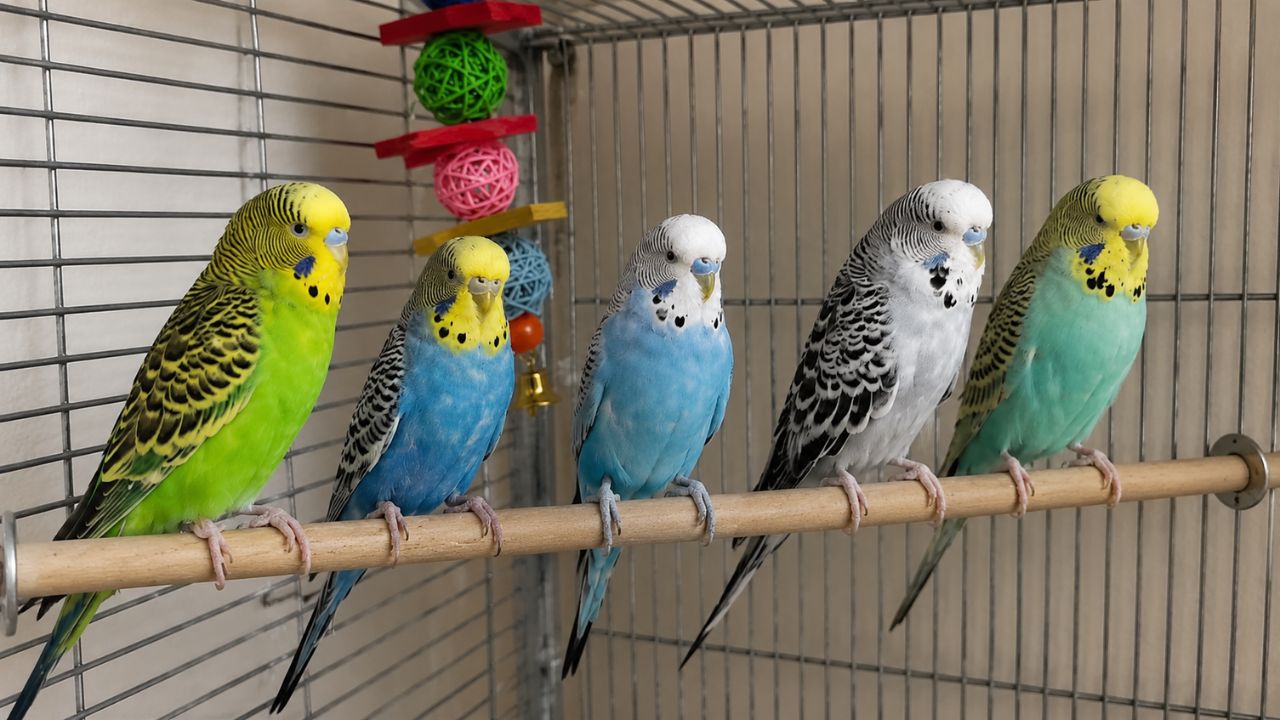

Neil has kept, bred, and sold budgies at Paradise Pets Swindon since 1988 — over 35 years of answering questions from owners who love their birds and, occasionally, find them profoundly exhausting. Screaming is one of the most common complaints, and one of the most frequently mishandled. Most screaming budgies can be significantly quietened — once the owner understands what is actually driving the noise. This is his honest guide to what it means and what to do about it.
A woman came in on a Saturday morning last year looking like someone who had not slept well for some time.
Her budgie screamed, she said. Not chirped. Not called. Screamed. A sharp, insistent, full-volume noise that he produced at regular intervals throughout the day — particularly, she added, whenever she left the room. She had tried everything she could think of. She had tried ignoring it. She had tried talking to it. She had tried covering the cage. She had, on one occasion that she was slightly embarrassed to tell me about, shouted back at it.
None of it had worked. If anything, she said, it had got worse.
I asked her one question: when the bird started screaming and she came back into the room, what did she do?
She thought about it. She usually said something to it. Told it to be quiet, or asked it what was wrong, or sometimes just said “I’m here.” She looked at me while she was saying it, and I could see her putting the pieces together before I had a chance to explain.
“That’s why it’s getting worse, isn’t it,” she said.
It was. The bird had learned, with considerable precision, that screaming produced her return and her attention. It had learned this because she had taught it — unintentionally, consistently, and very effectively — over a period of weeks. Every time it screamed and she appeared, the lesson was reinforced. The screaming had worked. So it screamed more.
This is not the only reason budgies scream, but it is the most common one I encounter, and it is the one most easily made worse by well-meaning owners. Understanding it properly changes how you respond — and changing how you respond is how the noise reduces.
First — Is This Actually Screaming, or Is This Just a Loud Budgie?
Before going into the causes, it is worth being honest about something that owners sometimes need to hear.
Budgies are not quiet birds. They are not designed to be quiet birds. In the wild they live in large, continuously vocalising flocks, and that social chatter is hardwired into their behaviour. A happy, healthy, active budgie makes noise — persistent, varied, ongoing noise. Chirping, chattering, contact calls, whistling, mimicking household sounds, and general commentary on everything happening in its field of vision.
If what you are experiencing is a consistently noisy bird that rarely stops making some sound during its active hours, that is not necessarily a screaming problem. That may simply be a budgie being a budgie. The solution in that case is partly about the environment — putting the cage in a room where the noise is less disruptive — and partly about managing your own expectations of what bird ownership involves.
What distinguishes actual screaming from normal budgie vocalisation is the quality of the sound and the context. Screaming is sharper, more insistent, and more repetitive than ordinary contact calls or happy chatter. It has an urgency to it. It is the noise the bird produces when something specific is driving it — absence, fear, boredom, pain — rather than the general vocal backdrop of a comfortable bird going about its day.
That distinction matters because the response is different. Normal budgie noise gets managed through environment. Screaming gets managed through identifying and addressing the cause.
Contact Calling — The Most Common Cause, and the Most Natural
Budgies are flock animals. In the wild they live in groups of dozens or hundreds of birds, and the flock is their entire safety and social world. Individual birds that become separated from the flock use contact calls — sharp, carrying vocalisations — to locate the group and signal their own position. These calls are answered by the rest of the flock, the lost bird finds its way back, and everyone settles.
Your budgie does the same thing in your house. When you leave the room, you have, from the bird’s perspective, left the flock. The bird calls to locate you. This is not a behavioural problem. It is the bird’s social system functioning exactly as it should.
The critical thing about contact calling is what happens next — and this is where owners create or solve the problem depending on how they respond.
If you appear, make eye contact, or say anything to the bird when it contact-calls, you have answered the call. You have confirmed that calling works, and that you are the flock member who responds to being called for. The bird will call again next time it cannot see you, because calling produced results last time.
This is not, by itself, the problem. The problem begins when the bird escalates — when contact calling is not answered consistently and it ramps up the volume and urgency, or when the owner’s inconsistent responses teach the bird that it needs to call louder or longer to get the result.
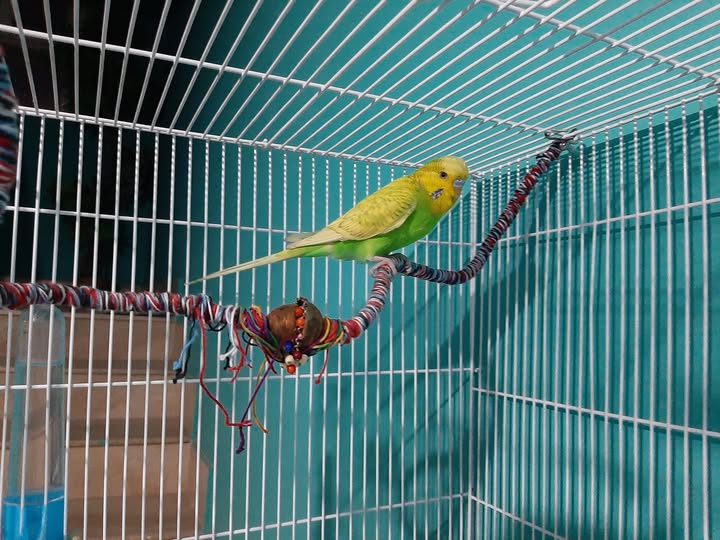
The method that most effectively manages contact calling without eliminating it — which you cannot do and should not try to do — is the counter-call. When the bird calls, call back. A whistle, a word, your voice — from wherever you are in the house. You are not going to the bird. You are answering the call, confirming you are there, and the bird knows you are still part of the flock. This significantly reduces the escalation that turns contact calling into screaming, because the bird’s need — to know where you are — is met without the bird needing to increase the volume to get a response.
- Do: Counter-call when the bird calls — a whistle, a word, your voice from the other room. Meet the communication need without going to the bird.
- Do: Be consistent. An answered call settles the bird faster than an unanswered one that gradually escalates.
- Do not: Rush into the room every time the bird calls — you are teaching it that calling produces your immediate appearance.
- Do not: Ignore contact calling entirely for long periods — an unanswered call escalates to screaming as the bird increases urgency.
- Do not: Cover the cage to stop the noise — this does not teach the bird anything useful and adds stress.
- Do not: Shout at the bird to be quiet — to the bird, a loud noise from you looks like an answering call, which reinforces the behaviour.
Attention Screaming — The Behaviour Owners Accidentally Train
This is the category the woman I described at the beginning had created, and it is worth its own section because it is genuinely extremely common.
Attention screaming is contact calling that has been reinforced — through inconsistent or immediate responses — to the point where the bird has learned that screaming specifically, rather than ordinary contact calling, produces the most reliable and rapid response from its owner. The bird is not doing this deliberately in any calculating sense. It is doing what its learning has shown it works.
The problem with attention screaming is that the obvious responses — appearing, speaking to the bird, covering the cage, shouting — all make it worse. Appearing confirms the screaming worked. Speaking to the bird rewards it with attention. Covering it creates additional stress. Shouting back mimics a loud flock response, which is not what you want to model.
The only approach that works long-term is extinction — making the screaming produce no result at all, while making calm behaviour produce positive attention. This means: do not appear when the bird screams, do not make eye contact from the doorway, do not speak to it. Go to the bird and give it positive attention when it is quiet. Reinforce quiet behaviour actively. Ignore screaming behaviour completely.
This approach requires extraordinary patience because it will, in the short term, make the screaming worse before it gets better. The bird, finding that its usual strategy is not working, will intensify the effort before giving up on it. This intensification — the extinction burst — can last days and is deeply testing. Getting through it without giving in even once is essential, because a single appearance during the burst teaches the bird that it needs to scream harder and longer to get the result.
This is a long-term process, not a quick fix. Owners who have consistently reinforced screaming for months will not undo it in a week. But it does work, given consistent effort.
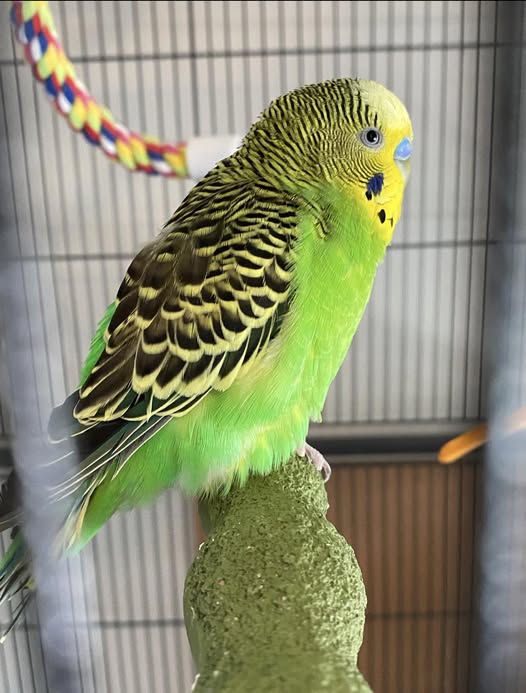
- Go to the bird while it is still screaming: You are confirming that screaming produces your appearance. Every time you do this, the behaviour is strengthened.
- Shout at the bird to stop: You are making a loud noise in response to its loud noise — to a flock animal, this looks like your contribution to the flock calling. It often escalates the noise.
- Cover the cage as a response to screaming: The bird associates the cover with screaming. It does not learn to stop. It simply learns that screaming is followed by the cover.
- Give it treats or special attention to distract it: You are rewarding the behaviour with something positive. The bird will repeat the behaviour that produced the reward.
- Give in inconsistently: Inconsistent response — sometimes you appear, sometimes you do not — teaches the bird that it needs to keep screaming until the variable reward arrives. This is the most powerful schedule for maintaining a behaviour.
Boredom and Under-stimulation — The Screaming Nobody Thinks To Blame
A budgie that does not have enough to do will make noise in ways that quieter, better-stimulated birds do not. Boredom vocalisation is particularly common in single birds kept in sparse cages without toys, foraging opportunities, or regular out-of-cage time — and it is one of the most straightforward screaming problems to address because the solution is environmental rather than behavioural.
Think about what your bird has available to it during the eight or ten hours of the day when you are busy and not actively interacting with it. An empty cage with a food bowl, a water bowl, and two plastic perches gives the bird nothing to investigate, nothing to manipulate, nothing to explore. Its entire behavioural repertoire is suppressed by the absence of anything to engage it. The noise it makes in this situation is partly contact calling, partly what I would describe as boredom frustration — the vocalisation of an intelligent, active animal with nothing to do.
Foraging toys — devices that require the bird to work at extracting food — are among the most effective enrichment tools because they engage the bird in a natural behaviour for extended periods. Rotate toys so there is always something new and unfamiliar to investigate. Provide wooden chews. Hang fresh greens from the cage bars. Offer a small mirror or soft toy to interact with. Position the cage where the bird can see normal household activity — a budgie watching what is happening in the room is a budgie that is stimulated and less likely to resort to screaming for entertainment.

Fear and Alarm Calls — The Scream That Means Something Frightened It
The alarm call is different in quality from contact calling or attention screaming — sharper, often shorter, and typically clustered in a brief burst followed by either settling or continued alarm depending on whether the threat persists.
Common triggers for alarm calls: the appearance of a cat, dog, or large bird visible from the cage — even outside the window. A sudden loud noise — a car backfiring, a door slamming, a shouted conversation nearby. A rapid movement near the cage. An unfamiliar person entering the room. The shadow of a person passing quickly outside.
A bird that alarm-calls and then settles once the trigger has passed is doing exactly what it should. The response is: remove the trigger if you can identify it, give the bird a few minutes to settle, and go about your day.
A bird that is in a state of persistent alarm — calling frequently, fluffed and defensive, not settling between calls — is either experiencing a repeated trigger you have not identified, or is in a state of chronic stress from something in its environment. Review the cage position: is it near a door that slams? Is there a cat that frequently sits near the cage? Is there a reflective surface that the bird is reacting to as a perceived intruder?
Hunger — The Practical Check Every Owner Should Do First
Before assuming a behavioural cause for unusual or increased vocalisation, check the food bowl. Not whether it looks full — whether it actually contains food rather than empty seed husks. As I explained in my weight loss article, budgies hull their seeds before eating, and a bowl full of husks looks identical to a bowl full of seed from a distance.
A bird that is calling insistently and whose bowl turns out to be full of empty husks is not exhibiting a behavioural problem. It is hungry. Blow the husks off and refill the bowl. The calling will almost certainly reduce rapidly once the bird has access to food again.
This is worth checking every time there is unexplained vocalisation before looking for more complex explanations. It is the simplest possible cause, it takes ten seconds to rule out, and more owners overlook it than should.
Hormonal and Seasonal Screaming — The One That Comes Every Spring
Budgies are seasonal breeders in the wild, and in UK households the lengthening days of late winter and spring often trigger hormonal changes in both male and female budgies — even in birds that have no breeding opportunity. The result is a bird that is more vocal, more territorial, more excitable, and sometimes significantly louder than it is at other times of year.
Female budgies in breeding condition may become more aggressive and more vocal. Male budgies may call and display more intensely. Both may become more reactive to perceived territorial intrusions — including the mirror, other birds visible through windows, or even familiar people approaching the cage.
This seasonal increase in vocalisation is normal and not a welfare concern in itself. It typically reduces as the season progresses and the hormonal state settles. Reducing the light period slightly — covering the cage an hour or two earlier in the evening — can help moderate the hormonal drive that is driving the behaviour.
If the hormonal behaviour is extreme — a bird that has become seriously aggressive, that is attempting to breed with objects to the exclusion of eating and other normal activities, or that is chronically distressed — a conversation with a vet about hormonal management may be worth having.
When Screaming Is a Health Signal — The Cause That Cannot Be Ignored
Most of what I have described above involves behavioural screaming — noise driven by social needs, learned behaviour, boredom, fear, or hormones. But screaming can also be a signal that something is physically wrong, and this possibility must not be dismissed in the rush to find a behavioural explanation.
A budgie that is screaming and also showing any of the following is not exhibiting a management problem — it is a bird in distress that needs veterinary attention:
Screaming that is accompanied by obvious physical discomfort — the bird is not moving normally, is holding a wing awkwardly, is favouring one foot, or is clearly struggling in some way. This suggests pain or injury.
A sudden onset of distress screaming in a bird that was previously quiet and settled, with no obvious environmental trigger and no recent change in household. A bird that was fine yesterday and is screaming insistently today may be experiencing something acute internally.
Screaming alongside any other symptom — fluffed feathers, tail bobbing, open-mouth breathing, changed droppings. When screaming appears alongside other illness signs, it is the cluster of symptoms that matters, not just the noise.
- Screaming plus obvious physical distress — abnormal posture, wing held low, favouring one foot: Possible injury or pain — same-day vet
- Sudden onset distress screaming with no environmental explanation: Possible acute health event — call a vet and describe what you are seeing
- Screaming plus fluffed feathers, tail bobbing, or open-mouth breathing: The combination of screaming with illness signs is urgent — do not treat this as a behavioural problem
- Screaming at night in a bird that does not normally vocalise after dark: Budgies are not naturally nocturnal — screaming at night suggests acute distress, fright, or illness
- Screaming that is new, has no identifiable trigger, and does not respond to any management approach: Rule out pain and illness before continuing with behavioural interventions
The Dawn and Dusk Chorus — The Noise That Is Just Going to Happen
I want to address this separately because it is worth being realistic about what is manageable and what is simply the nature of the bird.
Budgies have two natural peak vocalisation periods: around dawn and around dusk. These correspond to the times in the wild when flock members are waking and mobilising in the morning, and gathering and settling for the night in the evening. The dawn chorus in particular — when a budgie wakes up and begins its morning routine of calls, whistles, and general enthusiastic noise — can be significant. It is not negotiable. It is hardwired.
If your budgie wakes you at dawn, the practical solutions are: keep it in a room where you will not hear it during sleep, use a timed cover that extends the dark period slightly to delay the wake-up, or accept it as part of the deal. Attempting to train a budgie to not make noise at dawn is not a battle worth engaging with.
Similarly, an increase in vocalisation in the early evening as the bird begins its pre-roosting routine is normal and expected. The noise at these times is not screaming in the concerning sense — it is the bird’s natural rhythm expressing itself.
Quick Reference — Why Your Budgie Is Screaming
| What You Are Seeing | Most Likely Cause | What To Do |
|---|---|---|
| Screams when you leave the room, stops when you return or call back | Contact calling — natural flock behaviour | Counter-call from wherever you are. Do not rush back into the room every time. |
| Screams louder and longer each week, only stops when you appear | Attention screaming — accidentally trained | Stop responding to screaming. Go to the bird when it is quiet. Consistent — no exceptions. |
| Screams through the day in a sparse cage, single bird | Boredom and under-stimulation | Add enrichment — foraging toys, rotating objects, fresh greens. Position cage for household activity view. |
| Brief sharp burst of calling, then settles | Alarm call — something frightened it | Identify and remove the trigger if possible. Give the bird a few minutes to settle. |
| Persistent alarm, not settling between calls | Chronic stress — repeated or ongoing trigger | Review cage position and environment for persistent triggers — cat nearby, reflective surface, slamming door. |
| Increased calling, food bowl appears full | Hunger — bowl full of husks not seeds | Blow husks off and refill completely. Check daily rather than topping up. |
| More vocal than usual, spring or early summer | Seasonal hormonal behaviour | Normal — usually settles as season progresses. Reduce light period slightly if severe. |
| Loud noise at dawn every morning | Natural dawn chorus — hardwired | Move cage to a room where morning noise is less disruptive. Not a trainable behaviour. |
| Sudden screaming, abnormal posture, or movement | Possible injury or pain | Same-day vet. This is not a behavioural problem. |
| Screaming at night in a normally quiet bird | Acute distress, fright, or possible illness | Check on the bird immediately. Vet if anything seems physically wrong or distress does not settle. |
The Honest Rule — What I Tell Every Owner at the Counter
When an owner comes in describing a screaming budgie, the first thing I ask is always: what do you do when it starts?
The answer to that question tells me almost everything I need to know about whether we are dealing with a natural behaviour that needs managing or a learned behaviour that needs unlearning. Because the screaming itself is almost never the whole story. The screaming is the bird’s side of a conversation. The owner’s side of that conversation — however unintentional — is usually what has shaped the noise into the problem it has become.
The rule I give is this: the response you give to the bird when it screams is the lesson it learns about screaming. If screaming produces your attention, your voice, your appearance, or anything it finds rewarding, it will scream more. If screaming produces nothing and quiet behaviour produces positive engagement from you, the noise will gradually reduce.
This is not complicated. It is difficult — because every instinct pushes you toward appearing, toward speaking, toward making the noise stop by giving the bird what it is asking for. Getting through the difficulty without giving in is the work. But it works. I have seen it work for owners who were at the point of rehoming their bird. It takes time and it takes consistency, and the counter-call method for managing contact calling alongside ignoring the attention screaming is the combination that produces the fastest and most lasting results.
Frequently Asked Questions
Why does my budgie scream when I leave the room?
Because you are its flock. Budgies are social animals that use contact calls to locate their group, and when you leave the room you have, from the bird’s perspective, left the flock. The call is an attempt to locate you and confirm you are still nearby. The most effective management is the counter-call — calling back from wherever you are to answer the communication need without physically appearing. If you have been rushing back into the room every time the bird calls, you have taught it that calling produces your immediate return, and it will continue calling until that result is produced.
My budgie screams all day — could it be bored?
Possibly, and this is one of the more straightforward causes to address. A single budgie in a sparse cage without adequate enrichment, stimulation, or regular interaction has very little to occupy its highly active mind, and the result is often persistent vocalisation. Review what the cage contains: rotating toys, foraging opportunities, fresh greens hung from the bars, natural wood perches to chew. Position the cage where the bird can see normal household activity. Providing a companion bird, where this is practical, is the most effective welfare solution for a single bird that is chronically under-stimulated.
I shout at my budgie to stop screaming but it just screams more — why?
Because shouting back looks, to a flock animal, like a loud contribution from a flock member. You are not, from the bird’s perspective, telling it to stop. You are joining in. The loud noise you make in response mirrors what flock calling looks like, and in many cases the bird matches or exceeds the volume in response. Shouting is counterproductive for this reason — it reinforces the escalating pattern rather than interrupting it.
My budgie has suddenly started screaming for no reason — should I be worried?
A sudden onset of unusual or distress-sounding screaming in a bird that was previously settled should not be automatically attributed to behaviour. A bird that was fine yesterday and is screaming insistently today may have been frightened by something you have not identified, or may be experiencing something physically wrong. Check the environment for possible triggers — a cat visible from the cage, a new object, a changed position. If no trigger is identifiable and the bird is also showing any other symptoms — abnormal posture, fluffed feathers, open-mouth breathing — call a vet and describe what you are seeing.
Can a second budgie make screaming worse?
Sometimes, particularly during the settling-in period when two birds are being introduced and one is triggering alarm calls in the other. Once two birds are established together and bonded, a companion typically reduces overall screaming in a single bird that has been calling from loneliness or boredom — because the contact calling need is met within the pair. The exception is two birds that do not get on, where the tension between them produces persistent alarm and agitation in both. Introduction should be done gradually and with attention to compatibility.
Where can I get help with a screaming budgie in Swindon?
Come in to Paradise Pets at Manor Garden Centre, Cheney Manor, Swindon SN2 2QJ. Describe what is happening and I will give you my honest assessment of the cause and a practical approach for that specific situation. If there is any possibility it is a health issue rather than a behavioural one, I will tell you that too. Call us on 01793 512400 before visiting.
Budgie Screaming Driving You Mad? Come and Talk
If you have tried everything and the noise is still not reducing — come in. Bring a short video if you can. I have been dealing with noisy budgies for 35 years and in my experience there is almost always a specific reason and a specific practical change that makes a meaningful difference. I will tell you honestly what I think is happening and what to try.
⭐ Customer Reviews
Amazing Bird Selection
Had a lovley visit today,staff were very friendly and very helpful,such a great petshop,their selection of birds is incredible,really impressed,thank so much to the staff at Paradise Pets

Friendly Helpful Staff
I have been coming to this place for years and they have a great stock of food for all types of pets. Have a great selection of small mammals and a lot of birds. Staff are friendly and helpful.

Great Quality Hutch
Bought a guinea pigs hutch and run combo, very happy with the service, the hutch was put in my car for me without even asking for help. The wood quality is very good, the instructions easy to follow and we are extremely happy with the fully built hutch. A good size for 2 guinea pigs

Response from Paradise Pets | Wiltshire
Thank you Melanie Latus Nice to provide services to you.
Best Bird Shop Around
It’s the best pet shop in and around Swindon. They always have an amazing selection of birds and all you need to keep them happy. I keep birds myself and the guys there are happy to answer questions and really know their stuff. I have seen budgies etc. in chain pet shops in the area looking really unhealthy and ill – I wouldn’t go anywhere else than Paradise Pets for animals.

Highly Recommended Bird Shop
I could not praise this shop enough. Really helped my Grandson buy his first bird and he’s loving it. Travelled from Somerset and was welcomed with open arms.

Great Shop with Competitive Prices
Great shop with amazing selection for small animals, hamsters, mice ect, highly recommend!
Also has a great selection for dogs & cats too & very competitive prices! 💖

