
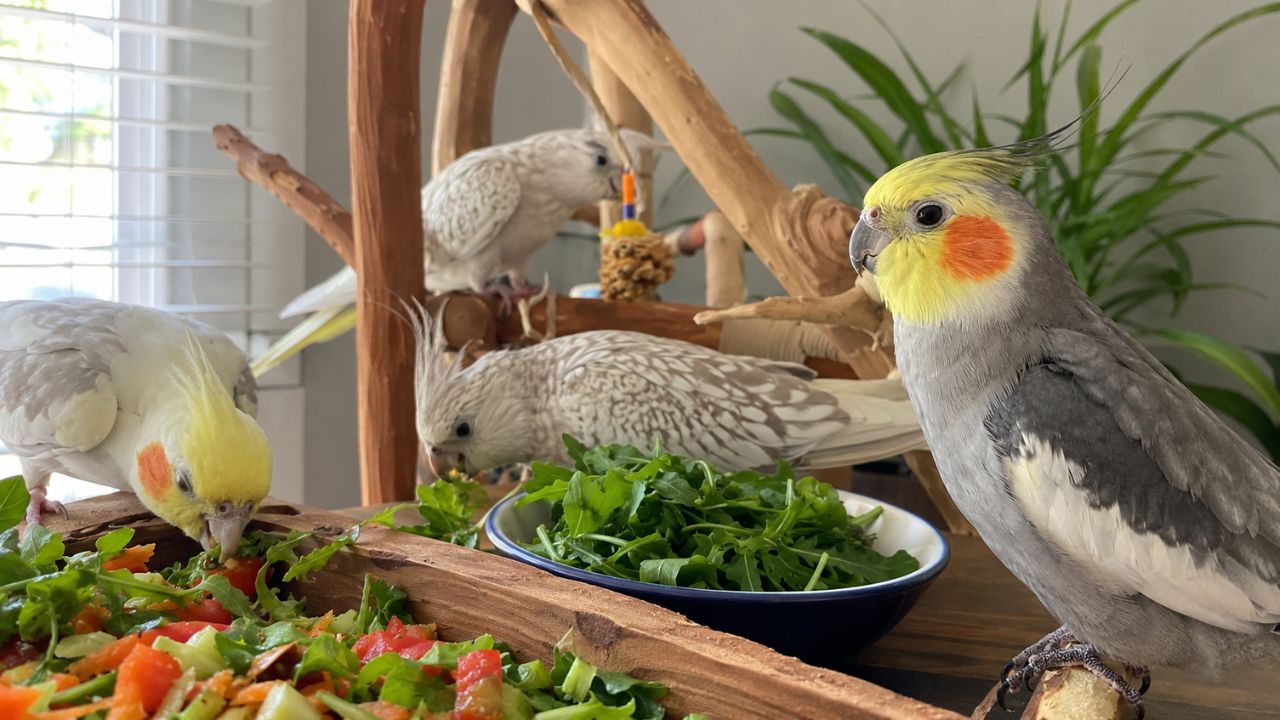

Neil has been keeping, breeding, and selling cockatiels at Paradise Pets Swindon since 1988 — over 35 years of daily first-hand experience with these birds and the people who keep them. In that time, the question he has been asked more than almost any other around feeding is some version of this: can my cockatiel eat this? The answer matters more than most owners expect, and getting it wrong has consequences that range from slow nutritional decline to rapid death. This is his honest, complete guide to what cockatiels can safely eat, what they should be eating every day, and what will genuinely kill them.
A woman came into the shop with her phone out, photo on the screen. Her cockatiel had eaten some avocado — she had read somewhere that small amounts were probably fine, and she wanted reassurance.
I told her to get to an avian vet. Not later that day. Now.
She looked surprised. It had only been a small piece. The bird seemed perfectly normal. But that is exactly the problem with avocado toxicity in birds — “seems fine” can be followed very quickly by dead. The organ failure is fast. There is no antidote. By the time symptoms appear, you are frequently already too late.
She went. The bird survived. The vet told her that another few hours and the outcome would very likely have been different.
I tell that story not to frighten people, but because it captures something I have seen play out in different forms for 35 years. Cockatiel owners are, almost without exception, well-intentioned. They want to feed their bird well. They look things up. They try to offer variety. But the information available is inconsistent, sometimes contradictory, and in a few cases dangerously wrong. And a cockatiel is not a forgiving animal when it comes to dietary mistakes — some errors are correctable and some are not.
This is the complete guide. What is safe. What is genuinely beneficial. What is borderline. And what will kill your bird. I will not hedge on the dangerous foods — I will be direct, because that is what your cockatiel needs you to be.
Why Cockatiel Nutrition Matters More Than Most Owners Realise
Before I go through specific foods, I want to explain why diet is so consequential for cockatiels — because understanding the reason changes how seriously owners take it.
Cockatiels are prey animals. Like budgies, they are hardwired to hide weakness. By the time a cockatiel looks unwell, it has typically been unwell for a considerable period. Nutritional deficiency — particularly Vitamin A deficiency, which is the single most common nutritional problem I see in pet cockatiels — can develop slowly and invisibly over months before it shows in visible symptoms. At that point the damage is already done and the bird is already compromised.
The second thing to understand is that cockatiels in the wild eat a genuinely varied diet. Australian grassland seeds, yes — but also berries, green vegetation, and whatever else is seasonally available. The idea that a seed mix is a complete and adequate diet for a captive cockatiel is a pet industry fiction that has shortened the lives of more birds than I can count. Seeds are part of what cockatiels eat. They are not the whole of it, and a bird fed primarily on seeds will, over time, develop exactly the deficiencies that come with that.
- Vitamin A deficiency is the most common nutritional problem in pet cockatiels — it causes respiratory infection, poor feather quality, immune suppression, and damage to the mucous membranes; it is almost entirely diet-related and almost entirely preventable
- Seeds are high in fat and low in the nutrients cockatiels need most — a seed-only diet is not a natural diet; it is a restricted one that excludes the variety wild cockatiels access seasonally
- Cockatiels hide illness until they cannot — by the time dietary deficiency is visible, it has typically been developing for months; prevention through correct feeding is incomparably easier than treatment
- The consequences of some dietary mistakes are not recoverable — this is not a topic where getting it roughly right is good enough; some foods will kill a bird that is otherwise healthy and well cared for
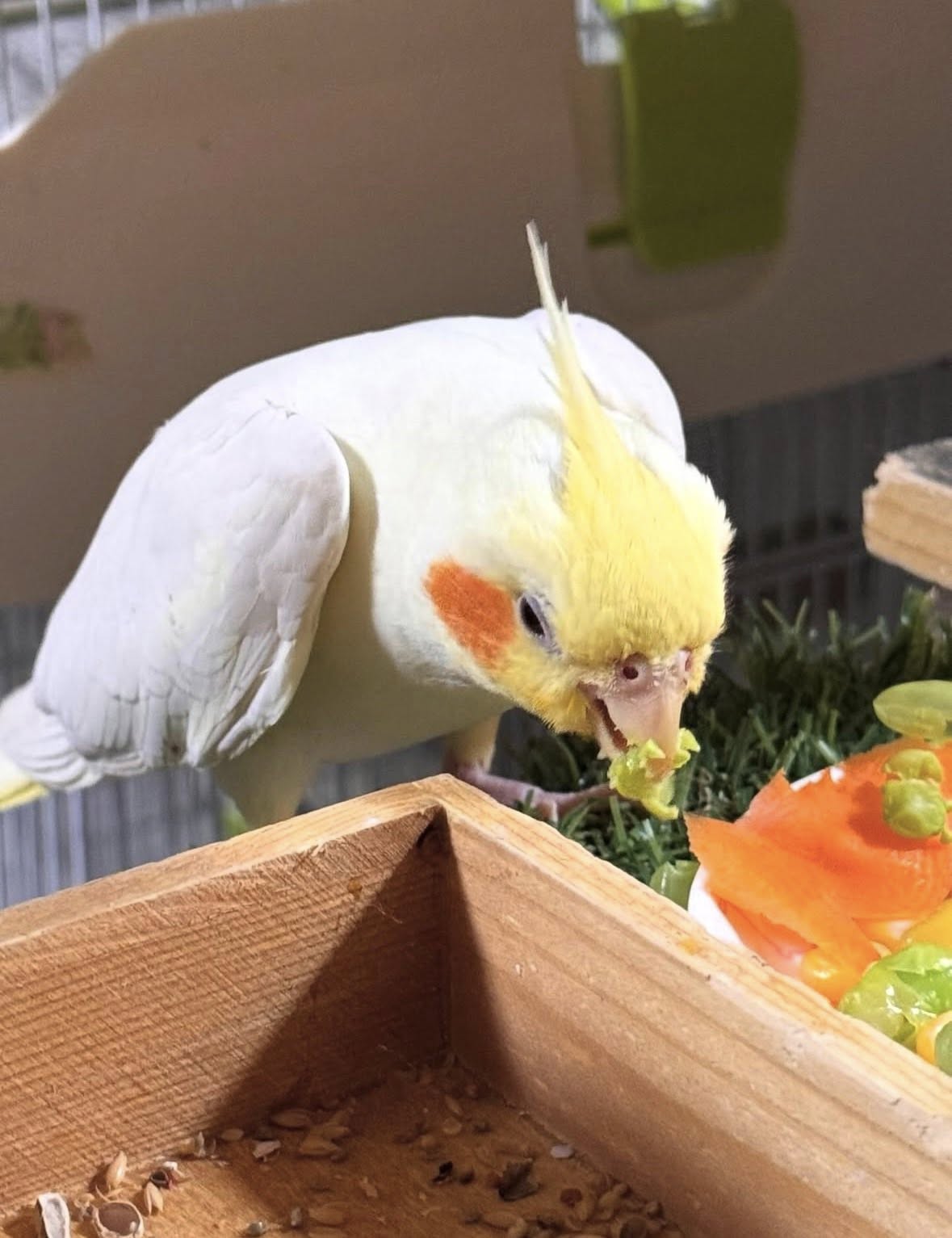
Once you understand this, the rest of the guide makes immediate sense. And so does why what you feed your cockatiel is one of the most important decisions you make as an owner — not a peripheral concern but a central one.
What A Good Cockatiel Diet Actually Looks Like — The Foundation
Before I go through individual foods, the framework matters. A well-fed cockatiel should be eating from three main categories every day. Most pet cockatiels eat from one.
Pellets — The Base (40 to 50 Percent of the Diet)
Pellets are the single most impactful dietary change most cockatiel owners can make. A good pellet is formulated to provide balanced nutrition — the vitamins, minerals, and amino acids that seeds do not provide. Cockatiels do not instinctively want them. Birds that have eaten only seed their entire lives often reject pellets initially with some determination. But they are the closest thing to a nutritionally complete food that exists for cockatiels in captivity, and the effort of transitioning a bird onto them is worth it.
- Choose a cockatiel-specific or parrot pellet without artificial colours or added sugar — Harrison’s, Roudybush, Zupreem Natural, and Lafeber’s are all reliable options; avoid brightly coloured pellets, which are marketed to owners rather than formulated for birds
- Introduce pellets gradually alongside seeds — do not remove seeds entirely and expect the bird to accept pellets out of hunger; that causes stress and the bird may not make the connection; mix pellets into the seed bowl at an increasing ratio over several weeks
- Some birds transition in days, others take months — there is no shortcut; the only technique that works is patience and consistent availability
- A bird eating good pellets does not generally need additional vitamin supplements in the water — and adding them can cause imbalances; if you are concerned about a specific deficiency, that is a conversation for an avian vet rather than something to address independently
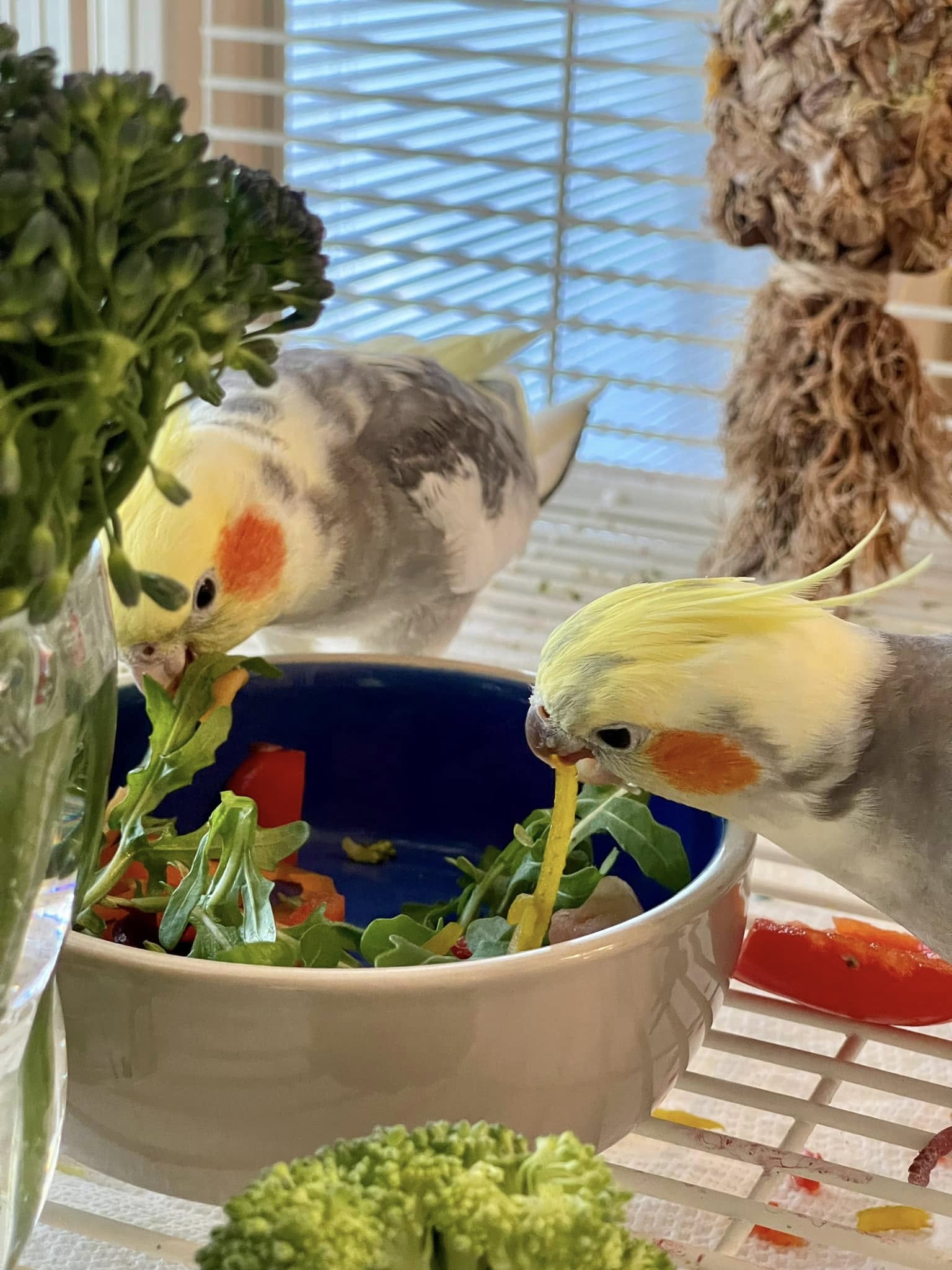
Fresh Vegetables and Leafy Greens — Daily (30 to 40 Percent of the Diet)
This is the category most owners underdo, and it is where a significant proportion of nutritional deficiency originates. Fresh vegetables and leafy greens are where Vitamin A, calcium, and a range of other essential nutrients come from. A cockatiel not eating fresh greens regularly is almost certainly deficient in something.
- Dark leafy greens are the priority — spinach, kale, rocket, bok choy, silverbeet, endive, and romaine; the darker the leaf, the more nutritionally dense; iceberg lettuce has almost no nutritional value and is not worth offering
- Carrot and sweet potato are excellent Vitamin A sources — raw or lightly steamed; sweet potato in particular is well-accepted by most cockatiels and genuinely nutritious
- Broccoli, capsicum, and courgette are all safe and useful — capsicum is notably high in Vitamin C and tends to be popular; broccoli is among the most nutritionally dense vegetables you can offer a bird
- Corn, snow peas, and sugar snap peas can all be given — fresh or defrosted frozen; not tinned, which contains salt
- Rotate variety consistently — a bird eating the same two vegetables every day is getting some nutrients and missing others; breadth of variety is where genuine nutritional coverage comes from
- Remove uneaten fresh food after a few hours — fresh food left in a warm cage spoils and can cause digestive illness; do not leave it in overnight
Seeds and Grains — A Component, Not a Staple (15 to 20 Percent of the Diet)
Seeds are not the problem. Seeds as the majority of the diet is the problem. Used correctly — as a component of a varied diet rather than the foundation of it — seeds are a perfectly appropriate part of what cockatiels eat.
- A good cockatiel seed mix should contain millet, canary grass seed, groats, and small amounts of safflower and sunflower — avoid mixes that are predominantly sunflower seed; sunflower is high in fat and cockatiels will select it preferentially while leaving more nutritious seeds untouched
- Millet spray is a useful treat and training tool but not a dietary staple; it is nutritionally limited and cockatiels will eat it instead of more nutritious food if given unlimited access
- Sprouted seeds are significantly more nutritious than dry seeds — sprouting reduces fat content and increases vitamin availability; if a bird is eating a seed-heavy diet and you cannot transition it to pellets immediately, sprouting the seeds is one of the most useful interim changes you can make
- Cooked grains — brown rice, quinoa, oats, barley — can be offered and are generally well-accepted; rinse thoroughly and cool before offering; no salt, butter, or seasoning of any kind
Safe Foods Cockatiels Can Eat — The Full List
Here is a comprehensive breakdown of what is safe for cockatiels, organised by food type. I have noted caveats where they exist, because even within safe foods there are things worth knowing.
Vegetables
- Leafy greens — spinach, kale, rocket, romaine, bok choy, endive, silverbeet, watercress, dandelion leaves (unsprayed); offer a rotation rather than a single variety daily
- Root vegetables — carrot, sweet potato (raw or cooked), beetroot (note that it will turn droppings red temporarily — this is not cause for alarm), parsnip
- Brassicas — broccoli, cauliflower, and Brussels sprouts are all fine in moderate amounts
- Other vegetables — capsicum, courgette, cucumber, corn on the cob, peas, green beans, asparagus, pumpkin, and squash are all safe and worth rotating through
- Pumpkin and squash seeds — can be offered raw and are a nutritious addition that most cockatiels enjoy
Fruit — Safe in Moderation
Fruit is safe for cockatiels but should be offered two or three times a week rather than daily in large amounts. It is high in natural sugar, which can contribute to yeast overgrowth in the digestive system and loose droppings if given excessively.
- Berries — blueberries, strawberries, raspberries, and blackberries are all safe and generally enjoyed; small size makes them easy to offer and easy for the bird to handle
- Apple — remove all seeds and the core completely before offering; apple seeds contain amygdalin which releases cyanide; the flesh is safe and most cockatiels like it
- Mango, papaya, kiwi, and pear — all safe; remove any stones or seeds
- Melon — watermelon, cantaloupe, and honeydew are all safe; remove seeds
- Banana — safe and often enjoyed; high in sugar so keep portions small
- Pomegranate seeds — safe and a useful enrichment food; most cockatiels enjoy extracting and eating them
- Peach and nectarine — flesh only; the stone must be removed entirely as it contains cyanogenic compounds
- Apple, cherry, plum, peach, nectarine, apricot, and mango pits all contain compounds that release cyanide
- The flesh of these fruits is safe; the seeds and stones are not; this is not a nuance — remove them completely before any fruit goes in the cage
- Grapes contain seeds in some varieties; check and remove before offering
- This step cannot be skipped on a busy day — it takes thirty seconds and the alternative is not worth considering
Grains and Cooked Foods
- Cooked brown rice, quinoa, barley, and oats — all safe; rinse thoroughly, cool completely, and offer with no salt or seasoning whatsoever
- Cooked egg — plain scrambled or hard-boiled, no salt, no butter, no oil; a useful protein source particularly during moult; some cockatiels accept it readily, others will not
- Plain cooked chicken in very small amounts — this surprises most owners, but cockatiels in the wild consume insects and animal protein as part of their natural diet; plain, unseasoned, well-cooked chicken is safe in small quantities; it is not a regular food but it is not harmful
- Plain cooked pasta — wholegrain varieties preferred; not nutritionally dense but safe as an occasional addition
- Wholegrain toast or bread in very small amounts occasionally — commercial bread contains salt, so this is not a regular food; a small corner occasionally is unlikely to cause harm
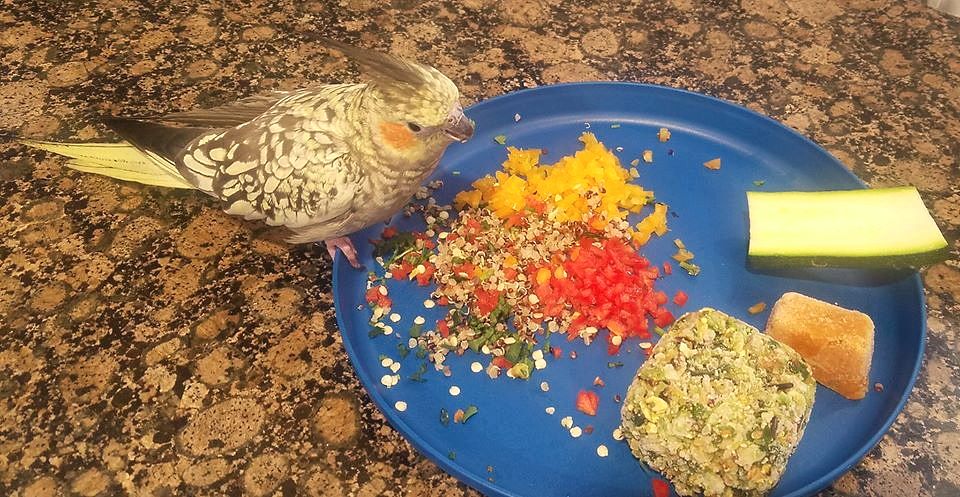
Herbs and Edible Flowers
This category is underused by most cockatiel owners and it is worth paying attention to. Many common herbs and edible flowers are not only safe but actively add nutritional value and enrichment.
- Fresh herbs — basil, coriander, dill, mint, thyme, oregano, and chamomile are all safe; parsley is safe but very high in Vitamin A so offer it as part of a rotation rather than as a daily food; most cockatiels will eat fresh herbs willingly
- Edible flowers — rose petals, nasturtium, chamomile flowers, lavender in small amounts, and dandelion flowers are all safe if unsprayed and washed; these are enrichment foods as much as nutritional ones and cockatiels often engage with them actively
- Wheatgrass and sprouted seeds — both excellent additions; most cockatiels enjoy grazing on wheatgrass and it is easy to grow at home
The Foods That Will Kill Your Cockatiel — No Exceptions
This section requires your full attention. These are not foods that are slightly unhealthy or best avoided if possible. They are foods that cause rapid and serious harm, or death. Some act within hours. Some accumulate over time and cause damage that is irreversible. All of them need to be permanently out of reach of your bird.
- Avocado — contains persin, a fungicidal toxin that causes fluid accumulation around the heart and lungs, weakness, and rapid cardiac failure in birds; there is no safe amount; there is no antidote; symptoms can appear within hours and death follows quickly; I do not care what you have read elsewhere — avocado is off the table, completely and permanently
- Onion and garlic — both contain compounds that cause haemolytic anaemia in birds; the red blood cells break down and the bird essentially suffocates from the inside; this applies to raw and cooked forms, to powdered versions, and to any food seasoned or prepared with either
- Chocolate — contains theobromine and caffeine, both of which are toxic to birds; causes vomiting, neurological symptoms, and cardiac arrest; dark chocolate is more concentrated and therefore more immediately dangerous, but milk chocolate is not safe either; there is no threshold amount below which chocolate is acceptable
- Caffeine in any form — coffee, tea, cola, energy drinks; causes cardiac arrhythmia and can be fatal; cockatiels are small animals with fast heart rates and no tolerance for stimulants of this kind
- Alcohol — even very small amounts can cause rapid liver failure in birds; this includes food cooked with wine or beer, where the alcohol has not fully evaporated
- Salt — cockatiels cannot excrete sodium effectively; salty foods cause kidney damage and kidney failure over time; this includes crisps, salted nuts, processed foods, crackers, and anything seasoned at the table
- Xylitol — the artificial sweetener found in sugar-free gum, certain peanut butters, and many processed foods; causes catastrophic hypoglycaemia in birds very quickly; check labels on any peanut butter before it goes anywhere near your bird
- Raw potato and potato skins — contain solanine, a glycoalkaloid that is toxic to birds; cooked potato in small amounts is generally considered safe but raw potato and the skins of any potato should be avoided entirely
- Mushrooms — certain varieties are outright toxic; identifying safe from dangerous is not straightforward; avoid all mushrooms rather than trying to determine which are acceptable
- Rhubarb — leaves and stalks both contain oxalic acid at concentrations toxic to birds; avoid entirely
- Tomato leaves and stems — contain tomatine, which is toxic; the fruit itself is high in acid and best limited, but the leaves and stems are a more serious concern; if you offer tomato at all, remove every piece of green before it enters the cage
- All fruit seeds and stones — apple, cherry, plum, apricot, peach, and mango pits all release cyanide compounds; the flesh is safe; the seeds are not; treat this as a non-negotiable preparation step every time
- When non-stick cookware (Teflon, PTFE-coated pans) is overheated, it releases fumes that are rapidly fatal to birds — there is no warning, no smell you would notice, and no treatment
- A cockatiel can die within minutes of exposure from a separate room with an open door between them
- Replace all non-stick cookware with stainless steel or cast iron — this is not overcaution; it is the single most important kitchen change a cockatiel owner can make
- The same applies to self-cleaning oven cycles, which reach temperatures that produce toxic fumes; remove the bird from the house entirely before running one
- Aerosol sprays, scented candles, and air fresheners used near the kitchen also pose respiratory risk; cockatiels have extremely sensitive respiratory systems and what is barely noticeable to us can be acutely harmful to them
The Questions Owners Ask Most — Answered Directly
| Food | Safe? | The Honest Answer |
|---|---|---|
| Mango | ✅ Yes | Safe; remove the large flat stone completely; the flesh is fine and most cockatiels enjoy it |
| Grapes | ✅ Yes | Safe in moderation; check for seeds and remove them; wash thoroughly; high sugar content means not every day in large amounts |
| Broccoli | ✅ Yes | One of the best vegetables you can offer; raw or lightly steamed; nutritionally excellent |
| Egg | ✅ Yes | Plain scrambled or hard-boiled; no salt, butter, or oil; useful protein particularly during moult |
| Peanut butter | ⚠️ Caution | Only if it is plain, unsalted, and xylitol-free — check the label every single time; the sticky consistency is also a choking risk; not a food worth including regularly |
| Cheese or dairy | ⚠️ Avoid | Cockatiels are lactose intolerant; small amounts of hard cheese are unlikely to cause acute harm but dairy is not appropriate for birds and there is no reason to include it |
| Tomato fruit | ⚠️ Limit | High acidity; remove all green parts without exception; offer rarely and in small amounts only; many avian vets recommend avoiding it entirely and I would not argue with that |
| Spinach | ✅ Yes — with rotation | Nutritious but high in oxalic acid, which can interfere with calcium absorption in very large daily quantities; perfectly fine as part of a varied leafy green rotation, not as the only green offered |
| Sunflower seeds | ⚠️ Limit | Cockatiels will select these over everything else given the chance; high fat, low nutrition; appropriate as a treat or training reward, not as a diet component |
| Honey | ⚠️ Avoid | Raw honey can carry Clostridium botulinum spores; commercial honey is pasteurised but there is no nutritional case for offering it to a bird; the risk is small but the benefit is zero |
| Avocado | ❌ Never | Toxic; potentially fatal within hours; no safe amount; no exceptions under any circumstances |
| Onion or garlic | ❌ Never | Toxic in raw, cooked, and powdered form; causes haemolytic anaemia; no safe amount |
| Chocolate | ❌ Never | Toxic; causes cardiac arrest; no safe amount regardless of the type or quantity |
Signs Your Cockatiel’s Diet Needs Attention
Because cockatiels hide illness, dietary deficiency often progresses silently until it has caused genuine damage. Knowing what to look for means you catch problems before they become serious.
- Dull, frayed, or poorly structured feathers coming through at moult — a well-fed cockatiel should moult into clean, tight, glossy feathers; poor feather quality at moult is frequently a protein or Vitamin A deficiency sign
- Stress bars across the feathers — faint horizontal lines running across the shaft of a feather indicate nutritional or physiological stress at the time that feather was growing
- Crusty, overgrown, or soft beak — can indicate Vitamin A deficiency or a fungal issue the immune system has not cleared; either way, a dietary and vet conversation is needed
- Nasal discharge or repeated sneezing — the mucous membranes lining the respiratory tract are Vitamin A-dependent; a deficient bird is significantly more susceptible to respiratory infection
- A prominent, sharp keel bone — run a finger gently down the centre of the chest; a cockatiel at a healthy weight will have a little muscle on either side of the keel; a sharp, protruding keel with no flesh on either side means the bird is underweight
- Sleeping excessively during the day when the bird should be active — a bird that is slumped and quiet at mid-morning, outside of its normal nap times, is a bird worth looking at carefully
- Persistent loose or discoloured droppings — note that certain foods temporarily change dropping colour and this is not cause for alarm; a persistent change unrelated to recent food is a different matter
Frequently Asked Questions
My cockatiel will only eat seeds. How do I get it to eat anything else?
Slowly, and without forcing the issue. A bird that has eaten only seed its entire life has developed a genuine preference, not stubbornness. Place a piece of broccoli or carrot in the cage every day alongside the seed bowl, even if the bird ignores it completely for weeks. Some birds respond to seeing their owner eat the same food — cockatiels are social and often want what their flock is having. Warm, slightly softened food is often more accepted than cold raw vegetables initially. The transition to pellets follows the same principle — mix them into the seed bowl at an increasing ratio over weeks. Do not remove seeds entirely and expect the bird to accept pellets out of hunger. That causes unnecessary stress and does not reliably work.
Can cockatiels eat the same food as budgies?
Mostly, yes. The principles are essentially identical — both need variety well beyond seeds, both benefit enormously from pellets and fresh vegetables, and the same toxic foods apply to both. The main practical difference is size — cockatiels are larger and can manage larger pieces of food, and they tend to eat more volume daily. The core advice is the same for both species.
Can cockatiels eat meat?
In small amounts, yes. Plain, well-cooked, unseasoned chicken or a small amount of hard-boiled egg is safe and provides useful animal protein. Cockatiels in the wild eat insects as part of their natural diet, so animal protein is not alien to their physiology. Do not offer processed meat, seasoned or marinated meat, or anything with salt or sauces. This surprises most owners but it is accurate.
How often should I give fruit?
Two to three times a week in small amounts is appropriate. Fruit is nutritious but high in natural sugar, which can contribute to digestive yeast overgrowth if given in large daily quantities. Treat it as a supplement and a variety food rather than a daily staple, and always remove seeds and stones before it goes in the cage.
Is it safe to share food from my plate with my cockatiel?
Sometimes, but only if you know exactly what is in it. Sharing a piece of plain steamed vegetable or a corner of plain toast is fine. Sharing anything that has been seasoned with salt, garlic, or onion is not. Anything cooked with wine or alcohol is not. As a general rule — if you cannot list every ingredient in what you are eating, do not share it. Plain single-ingredient foods are almost always safe. Prepared or seasoned dishes usually are not.
What is the best first vegetable for a cockatiel that has never eaten fresh food?
Corn on the cob is a good starting point. The texture is interesting, the colour is appealing, and it is familiar enough not to alarm a bird that has only seen seeds. Carrot is another reliable first vegetable. Once a bird accepts either of these, introducing leafy greens becomes easier — the concept of non-seed food being safe has already been established.
Do cockatiels need grit?
This question comes up regularly and the answer has changed in avian care thinking over the years. Cockatiels do not require insoluble grit in the way pigeons do — they hull their seeds before swallowing them rather than swallowing seeds whole. Soluble grit such as cuttlebone or calcium blocks is beneficial and should be available at all times; insoluble grit is not necessary and there is some evidence that cockatiels with underlying health problems can overeat it. Cuttlebone is the important one — provide it always.
Where can I get advice about my cockatiel’s diet in Swindon?
Come in to Paradise Pets at Manor Garden Centre, Cheney Manor Industrial Estate, Swindon SN2 2QJ — or call us on 01793 512400. Tell me what the bird is eating and I will tell you honestly whether there are things worth changing. Bring the bird if you want a second opinion. Free advice, no obligation. That is how we have done things here for 35 years.
One Last Thing From Me
The woman I mentioned at the start — the one with the avocado — came back to the shop a few weeks later. The bird had fully recovered. She had, in the time since, completely rethought how she was feeding her cockatiel. The seed-heavy diet was gone. She had moved to pellets as the base, fresh vegetables every day, fruit two or three times a week, and a much more deliberate approach to what went in the cage.
“I had genuinely no idea,” she said. “I thought I was doing everything right.”
That is what I hear more than almost anything else, and I mean it when I say it is not a criticism. The information available to cockatiel owners is inconsistent, and the pet industry has not helped matters by selling seed mix as an adequate complete diet for decades. Most owners who are getting this wrong are not being careless. They are working with incomplete or incorrect information.
Now you have the complete picture. What is safe, what is beneficial, what is dangerous, and what will end your bird’s life if it reaches the cage. Apply it consistently, and your cockatiel will be better fed than the vast majority of pet cockatiels in this country. It is not complicated. It requires no special equipment and no expensive products. It requires knowing what you are doing and then doing it.
Your cockatiel deserves that. Most of them never get it.
Questions About What You Are Feeding Your Cockatiel? Come In And Ask.
Tell me what your bird is currently eating and I will tell you honestly whether there are things worth changing. Bring the bird if you want a second opinion on its condition or weight. Free advice, no obligation. That is how we have done things here for 35 years.