
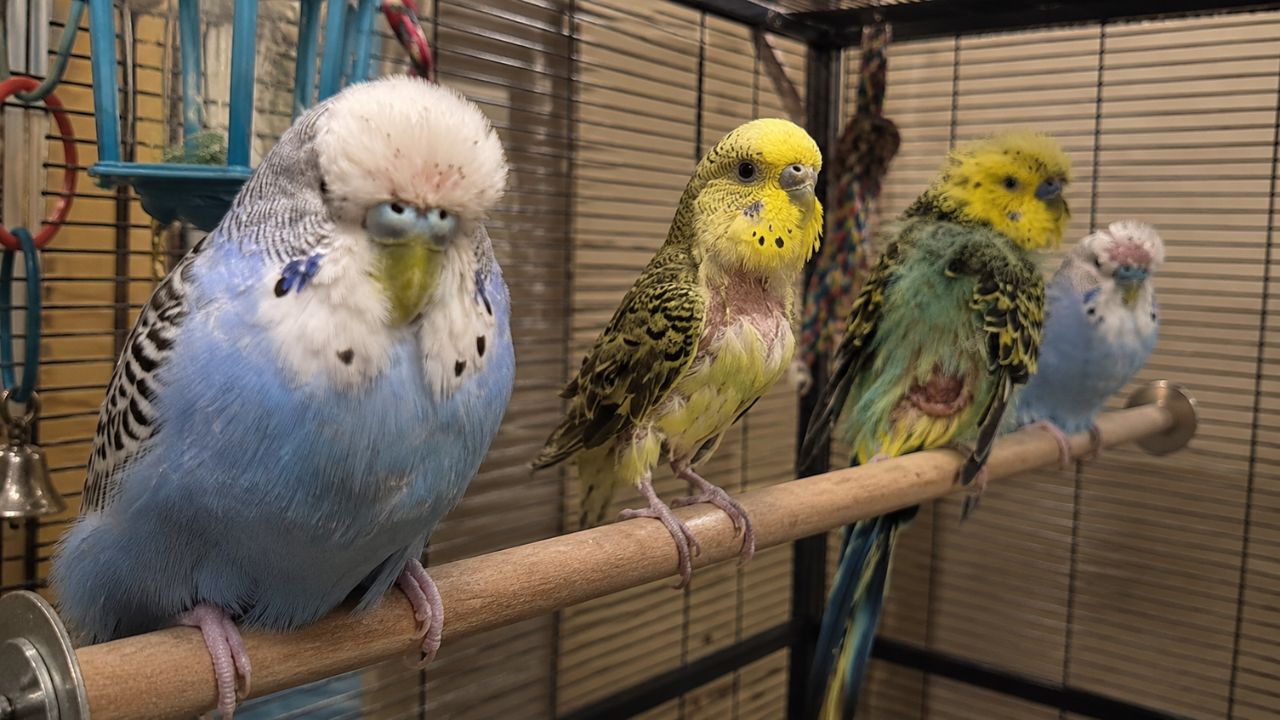

Updated : Replaced unrelated rabbit advice with bird-specific first-moult information and veterinary signposting.
A budgie’s first moult can be unfamiliar to a new owner: loose feathers appear and new feathers begin to grow. Moulting itself is a natural process, but it does not explain every change in appearance or behaviour. This guide explains what to observe and when to contact an avian vet.
Contact an avian vet promptly if your budgie eats less, becomes unusually inactive, develops bald areas or grows abnormal feathers. Breathing difficulty, collapse or active bleeding needs urgent veterinary help. Do not wait for a supposed moulting timetable to finish.
What happens during a moult?
Old feathers are replaced with new ones. A normal moult progresses gradually and should not leave a bird bald or unable to fly. The timing and pattern can vary, especially for birds living indoors; a fixed week-by-week calendar cannot tell you whether an individual bird is healthy. See VCA’s veterinary explanation of moulting.
Make a note of when you first notice changes. Photographs taken without restraining or disturbing your bird can help you show a vet how the plumage has changed. Observe appetite, activity and droppings alongside the feathers, rather than using appearance alone.
Pin feathers: new growth that needs gentle care
Growing feathers start inside a protective sheath and can look like small quills. Developing feathers have a blood supply and may be sensitive. As they mature, the bird preens away the sheath. Do not force handling, brush tender new feathers or pull them out.
A damaged growing feather can bleed. If this happens, contact an avian vet for immediate advice rather than trying to remove the feather yourself. VCA’s blood-feather guidance explains why home removal can make bleeding worse.
Food and everyday care
Feather growth depends on suitable nutrition and health. Keep familiar food and fresh water accessible. Ask an avian vet to assess the whole diet if you are unsure it is suitable; adding a supplement is not a substitute for investigating poor feather growth or reduced appetite.
The RSPCA’s bird-feeding guidance recommends a varied, appropriate diet for small parrots, including pellets, vegetables, fruit and some seed. Change an established diet gradually with professional advice. Do not remove a bird’s accepted food to force a sudden change.
There is no need to add a daily brushing routine to remove swallowed feathers. Allow normal preening and avoid unnecessary handling of sensitive feathers. If your bird seems uncomfortable or you are unsure how to help, ask your avian vet.
Feather loss that needs investigation
Bare areas, damaged skin, unusual feather growth or a prolonged change in plumage deserve veterinary assessment. Feather loss has several possible causes, and a photograph or home checklist cannot diagnose them. Do not wait two weeks for a bald patch to fill in before seeking advice.
A change in eating, breathing, activity or droppings also matters during a moult. VCA’s signs of illness in pet birds explains why prompt attention is important. Record what you have noticed and tell the vet when it started.
Questions owners often ask
Does every first moult last the same number of weeks?
No. Individual birds and their environments differ. Seek advice about unusual or prolonged feather changes rather than judging your bird against a rigid calendar.
Can quieter behaviour be dismissed as moulting?
No. Watch for a change from your bird’s usual behaviour and contact a vet if you are concerned, especially if appetite or activity has also changed.
Can the shop diagnose feather loss?
Diagnosis and treatment belong with an avian vet. For general enquiries about cage and aviary birds or supplies, contact Paradise Pets on 01793 512400. If your bird is unwell, call the vet first.
