


Neil has kept, bred, and sold guinea pigs at Paradise Pets Swindon since 1988 — over 35 years of first-hand experience with these animals. The question of how long guinea pigs live is one he answers almost every day. His answer is always longer than people expect — and it comes with things most sellers never bother to tell new owners. This article is the version he gives when he has time to say it properly.
It usually comes from a parent. They are standing at the counter, the children are pressing their faces against the glass at the guinea pigs, and the parent leans in quietly and asks: “How long do they actually live? I want to know what we’re committing to.”
It is one of the best questions anyone can ask before buying a small animal. And the answer surprises almost everyone.
Guinea pigs live longer than most people think. Longer, in many cases, than the children who are choosing them will expect. And understanding what that means — honestly, before the purchase — changes how the whole experience goes.
Here is what I actually tell people when they ask me.
The Honest Answer — How Long Guinea Pigs Actually Live
A healthy guinea pig, kept well, typically lives between five and seven years. The official range quoted in most veterinary literature is four to eight years. Both of those figures are accurate — the variation within that range depends on genetics, diet, housing, companionship, and how quickly health problems are caught and treated.
In my experience across thirty-five years of keeping and selling these animals, the majority of well-kept guinea pigs in good UK homes live to between five and six years. Animals at the longer end of the range — seven or eight years — are not unusual, but they tend to be the ones where the owner has got almost everything right: diet, space, companionship, and prompt attention to any health issues.
Animals at the shorter end — four years or less — are almost always the ones where something was consistently wrong. Usually the diet. Sometimes the housing. Occasionally an undetected illness that progressed too far before anyone noticed.
The number itself — five to seven years — is what I emphasise with new buyers. Not because it is alarming, but because it needs to land properly. A child who is seven when the family gets guinea pigs may be twelve or thirteen before those guinea pigs die. That is a meaningful stretch of childhood. The commitment is real, and it deserves to be treated as such before the purchase, not discovered gradually over the years that follow.

Why Lifespan Varies So Much Between Individual Guinea Pigs
The four-to-eight-year range is wide, and the reason it is wide is that guinea pig lifespan is genuinely sensitive to the quality of their care. More so than many other small animals. A hamster’s lifespan of two to three years does not vary dramatically with care quality — a hamster in a poor setup and a hamster in a good one will often live similar lengths of time. Guinea pigs are different. The gap between a poorly kept guinea pig and a well-kept one, in terms of years lived, is real and measurable.
Genetics plays a role. Some breeding lines are hardier than others. A guinea pig from a responsible UK breeder — one who has selected for health and vigour over generations — starts life with better odds than one from an unknown import background. This is one of the reasons we source only from UK breeders at Paradise Pets and have done so for decades.
But genetics sets the ceiling. Care determines how close to that ceiling the animal actually gets.
The factors that matter most are diet, companionship, housing, and how quickly illness is identified and treated. Get those four things right, and a guinea pig will consistently reach the upper end of its natural lifespan. Get them wrong — in particular, get the diet wrong — and the animal will not.
The Things That Consistently Shorten a Guinea Pig’s Life
I have watched this play out more times than I would like over thirty-five years. These are the specific things I see most often in guinea pigs that die before their time.
A diet without adequate vitamin C. This is the most important one. Guinea pigs are one of the few mammals that cannot produce their own vitamin C — they need a daily supply from their food. A diet based entirely on dried pellets and hay, without fresh vegetables, will lead to vitamin C deficiency over time. The effects are gradual and often not obvious until the animal is already in significant decline — rough coat, weight loss, swollen joints, lethargy. By the time these signs appear, deficiency has usually been developing for months. Fresh leafy greens and red bell pepper every day. Not occasionally. Every day.
Being kept alone. A lone guinea pig is a stressed guinea pig. Chronic low-level stress suppresses the immune system, makes the animal more vulnerable to illness, and reduces the quality — and length — of its life. This is not a small effect. I have seen it consistently for decades. Two guinea pigs kept in identical conditions, except that one has a companion and one does not, will not age at the same rate. The one with a companion will almost always do better and live longer. The single-guinea-pig mistake is the one I see most often and feel most strongly about.
Too little space and too little exercise. Guinea pigs that spend their lives in undersized hutches — which, unfortunately, describes a significant proportion of pet guinea pigs in the UK — develop muscle wastage, obesity, and associated health problems at an accelerated rate. A guinea pig needs space to run, to explore, to graze. A daily run in a garden enclosure, even in the UK climate, makes a measurable difference to how these animals age.
Illness that goes undetected too long. Guinea pigs are prey animals. They mask illness until they cannot. By the time a guinea pig is visibly unwell, the condition has often been progressing for weeks. An owner who checks their guinea pigs daily — who knows what normal looks like and notices when something changes — will catch problems earlier than one who checks less frequently. Earlier is almost always better with these animals.
The Things That Consistently Extend It
The flipside of the above. These are the things I see in the guinea pigs that reach seven or eight years in genuinely good condition.
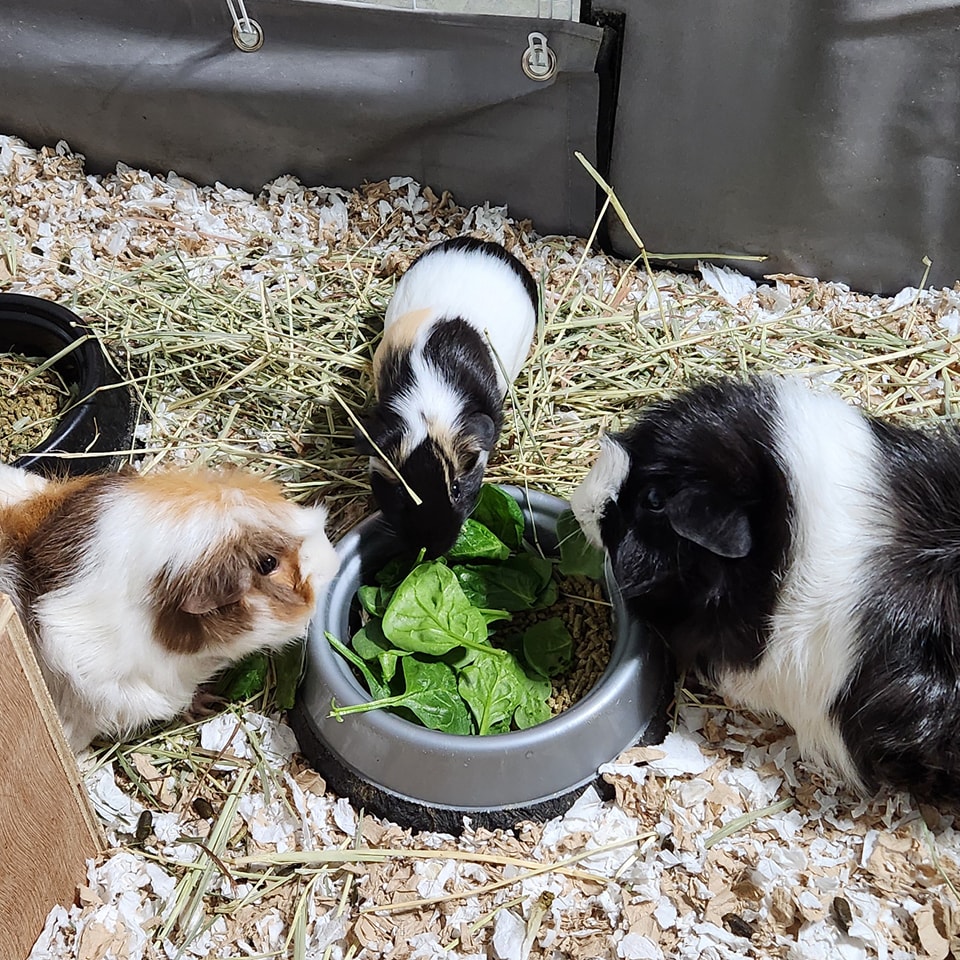
Daily vitamin C from fresh food. I have already said this and I am saying it again because it matters that much. A small piece of red bell pepper, a handful of leafy greens — kale, romaine, spinach in moderate amounts — every single day. Not vitamin drops in the water, which degrade within hours and cannot be dosed reliably. Fresh food. It is cheap, it is simple, and the difference it makes to coat condition, energy levels, and long-term health is visible.
A companion for life. Two guinea pigs, same sex, kept together from the start or introduced correctly, will groom each other, sleep together, communicate, and provide the constant low-level social stimulation that a guinea pig’s nervous system is built to expect. The animal that has this is calmer, less stressed, and healthier across its whole life. If you already have a lone guinea pig, read our guide on what guinea pigs actually need — and consider introducing a companion.
Adequate space and daily exercise. A minimum of 120 by 60 centimetres of hutch floor space for a pair, with daily access to a run or enclosed garden area. This is the baseline. More is always better. Guinea pigs that move and forage and explore maintain healthier muscle condition, healthier gut function, and healthier weight into old age.
Regular health checks by the owner. Not annual vet visits — those matter too, particularly after age three — but daily observation by someone who knows the animal. Weight checked weekly on kitchen scales. Teeth checked regularly. Coat condition monitored. Any change in droppings, appetite, or behaviour noted and acted on. A guinea pig whose owner knows it well enough to notice small changes will get help earlier, and earlier is almost always the difference between a manageable problem and an unmanageable one.

What Ageing Looks Like in a Guinea Pig
Knowing what old age looks like in a guinea pig matters for two reasons. First, because some signs of ageing are normal and do not need a vet — and identifying them correctly means you are not panicking unnecessarily. Second, because some signs that look like ageing are actually illness — and not catching those early is a significant risk.
Normal ageing in a guinea pig typically becomes visible from around three to four years old. The coat may become slightly coarser or thinner in places. Movement slows — an older guinea pig does not dash across its run the way a young one does. It sleeps more. It may become less interested in new things and more set in its daily routine.
None of these things on their own are causes for concern. They are what getting old looks like in a guinea pig.
What is not normal ageing: significant weight loss, a guinea pig that has stopped eating or drinking, one that sits hunched in a corner and does not respond normally to its surroundings, obvious pain or discomfort when touched, laboured breathing, or sudden changes in behaviour. These are signs of illness. In an older guinea pig, they move faster and need to be seen by a vet faster.
If your guinea pig is over three and seems to be slowing down, I would recommend a vet check even in the absence of obvious symptoms. Regular checks from this age mean that conditions like dental problems — very common in older guinea pigs — are caught before they become the reason the animal stops eating.

The Later Years — What Good Care Looks Like for an Older Guinea Pig
An older guinea pig needs the same things it always needed, just with a little more attention and sometimes a few adjustments.
Diet does not change substantially, but palatability matters more. An older guinea pig with early dental wear may find tougher vegetables harder to eat. Softer leaves, finely grated vegetables, and readily available hay that does not require much effort to chew will keep an older animal eating well. Weight monitoring becomes more important — weigh weekly and take note of trends. A gradual, slow weight loss over months is worth discussing with a vet.
Warmth matters more as guinea pigs age. An older animal is less able to regulate its own temperature. If the hutch is outside and the UK winter has arrived, make sure there is adequate insulation and that the animal is not getting cold overnight.
Mobility changes too. Ramps and hides with high lips that require jumping are appropriate for young guinea pigs. As they age, lower access points and flatter bedding areas make life easier. Watch for any reluctance to move around the enclosure — it can be an early sign of joint stiffness or pain.
Vet visits should increase in frequency from three years old onwards. Twice-yearly checks are not excessive for a guinea pig in its middle or later years. The conditions that affect older guinea pigs — dental disease, ovarian cysts in females, kidney issues, tumours — are all significantly more manageable when caught early.
- “Guinea pigs only live about two years — they are short-lived pets” — This is one of the most persistent and damaging misconceptions I encounter. It is wrong. Guinea pigs typically live five to seven years. The confusion may come from mixing them up with hamsters, or from people whose guinea pigs died young — often because of preventable care problems. A healthy guinea pig in a well-run household will be with you for years.
- “She’s three — she’s already quite old for a guinea pig” — Three is middle-aged, not old. A well-kept guinea pig at three still has years of healthy life ahead of it. Managing expectations in the wrong direction leads to owners under-investing in care for an animal they assume is nearly at the end — which becomes a self-fulfilling situation.
- “Vitamin drops in the water are fine instead of fresh vegetables” — They are not fine. Vitamin C degrades rapidly in water, particularly in sunlight, and the dose a guinea pig receives from vitamin-supplemented water is inconsistent and often inadequate. Fresh vegetables are not an optional extra. They are the diet.
- “One guinea pig lives longer because it isn’t competing for food” — The opposite is true. Lone guinea pigs consistently live shorter lives than paired ones. The social stress of isolation is a real, measurable health impact. Companionship extends life. It does not shorten it.
- “It’s just old age — there’s nothing to do” — Old age is not a diagnosis. When an older guinea pig declines, there is usually a specific reason — dental disease, a tumour, kidney issues, pain from arthritis. These may not always be curable, but they can almost always be made more comfortable. An older animal in decline deserves a vet assessment, not an assumption.
- “We’ll get another one when this one dies — it won’t be long now” — Said about a four-year-old guinea pig I saw recently. That animal, if kept well, may have had three or four years left. Assumptions about imminent death lead to neglect in the last years of an animal’s life. Every year of a guinea pig’s life deserves the same standard of care as the first.
The Conversation Most People Are Not Ready For
I want to say something here that does not appear in most guinea pig care guides, because I think it matters and because thirty-five years of selling these animals has taught me it is worth saying.
Guinea pigs are often bought for children. They are presented as a first pet — something manageable, something the child can learn responsibility with. And in many ways they are a good choice. They are gentle, vocal, responsive, and genuinely rewarding to keep well.
But they live for five to seven years. And a child of six or seven who chooses a guinea pig will be eleven or twelve when that animal dies. Some children cope with that well. Some do not, and the loss is significant for them in ways the parent did not anticipate.
I am not saying do not buy a guinea pig. I am saying have the conversation before you do. Not about death specifically — but about commitment, about what it means to care for an animal for years, about what happens as they age and slow down. Children who have been part of the caring process throughout — who have helped with feeding and cleaning and noticing — tend to find the later stages of a guinea pig’s life easier than those who have only enjoyed the early, active years.
The best outcomes I have seen, across hundreds of families over thirty-five years, are the ones where the whole family understood from the start what they were taking on. The purchase was made thoughtfully. The care was consistent. And when the animal eventually died, it was mourned properly — because it had been properly loved.
That starts with asking the right question before you buy. The fact that you are reading this suggests you already have.
What I Tell Every New Guinea Pig Owner at the Counter
Before anyone leaves with a guinea pig from Paradise Pets, I make sure of a few things.
- They are buying at least two.
I will not sell a single guinea pig to someone who does not already have a companion for it at home. This is not a policy I apply grudgingly — it is one I believe in completely. A lone guinea pig is not appropriate, and the wellbeing cost is real. If someone comes in wanting one, I explain why, and in most cases they leave with two. - They know about vitamin C.
Fresh vegetables every day — particularly red bell pepper and leafy greens. Not just pellets. Not vitamin drops in water. Actual fresh food, every day. I say this clearly and I make sure they understand why. The diet is the single biggest factor in how long a guinea pig lives. - The housing is adequate.
Minimum 120 by 60 centimetres for a pair, plus daily access to a run. If someone describes something smaller, I talk through why that matters and what their options are. I would rather have this conversation now than hear about it when the animals are not thriving. - They understand the commitment length.
Five to seven years. Not two. Not three. Five to seven. If that changes the conversation, I would rather it change it now than three years in when the novelty has worn off and the animal still has four years of life ahead of it. - They know what to watch for.
Weight changes, changes in droppings, any drop in appetite, a guinea pig that is quieter than usual. I point them toward our guides on warning signs in guinea pigs before they leave, and encourage them to come back and ask if something seems off. We would rather answer a question now than lose an animal later to something that could have been caught early.
If you are reading this because you are thinking about getting guinea pigs, come in and see us. We are at Manor Garden Centre, Cheney Manor Industrial Estate, Swindon, SN2 2QJ — open every day. Or call us on 01793 512400. We will always make time to answer questions properly before you buy.

Visit Us at Paradise Pets Swindon
We stock guinea pigs year-round — all sourced from UK breeders, all checked carefully before going to a new home. We sell in pairs, we advise on diet and housing before every purchase, and we are always available for questions after. Come in, or call ahead if you want to check what we have in stock.
We also stock a full range of gerbils and hamsters, rabbits, and an extensive selection of cage and aviary birds.