
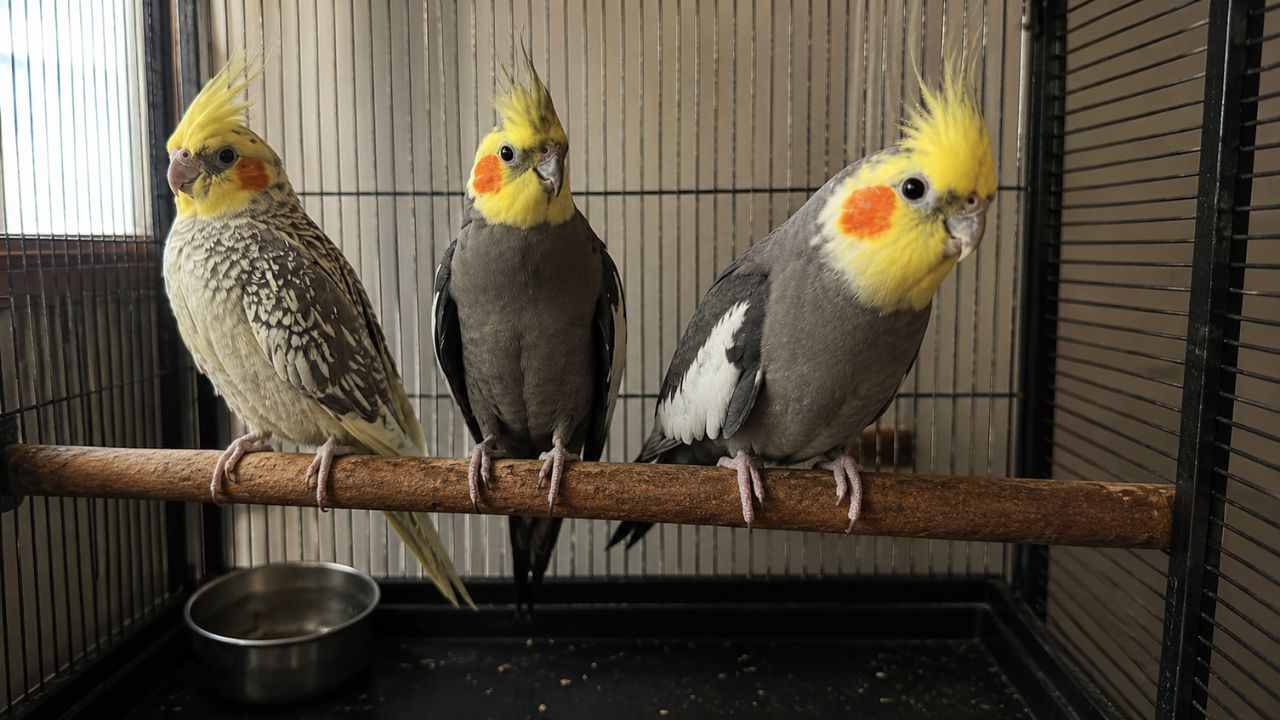

Neil has kept, bred, and sold cockatiels at Paradise Pets Swindon since 1988 — over 35 years of first-hand experience with these birds. In that time, he has spoken to hundreds of worried UK owners whose cockatiels have suddenly started screaming. This article is his honest guide to what is actually going on — and what to do about it.
A gentleman came into the shop on a Tuesday morning looking like he had not slept properly in a week. He had not. His cockatiel had been screaming — not calling, not chirping, screaming — every morning from about half past five, and it had been going on for three weeks.
“I’ve tried everything,” he said. “Covering the cage. Moving it. Ignoring it. Nothing works. My neighbour has started knocking on the wall.”
I hear some version of this story every few months. A cockatiel that screams. An owner at their wit’s end. And nearly always, when I ask a few questions, the answer turns out to be something specific and fixable — not a personality flaw, not a broken bird, not bad luck. Just a need that is not being met, or a trigger that nobody has thought to look for yet.
Cockatiels are one of the most vocal birds we stock here at Paradise Pets. They are flock animals, they are intelligent, they are emotionally sensitive, and they communicate loudly when something is not right. After 35 years of working with them, I can usually tell within five minutes of talking to an owner what the most likely cause is.
This is my honest guide to why your cockatiel is screaming — and what actually works.
First Things First — Is It Actually Screaming, Or Just Being A Cockatiel?
Before we go any further, I want to make sure we are talking about the same thing. Because I have had owners come in convinced their bird has a serious problem, and what they actually have is a perfectly normal cockatiel doing what cockatiels do.
Cockatiels are not quiet birds. They call out at dawn. They call when they want attention. They call when they hear a noise from another room. They call when they are happy, when they are bored, and when they feel like it. Some of that is simply the deal you made when you chose a cockatiel over, say, a goldfish.
What we are talking about in this article is different. It is screaming that is:
- Louder and more persistent than usual — not a few calls, but sustained noise lasting minutes at a time
- New behaviour — a bird that was previously quiet or manageable has changed
- Repetitive and frantic — often with a quality of desperation to it
- Not responding to the things that usually settle the bird
- Happening at specific times — always at dawn, always when you leave the room, always when a certain thing happens
- Combined with other changes — reduced eating, over-preening, unusual posture
If your cockatiel has always been vocal and nothing has changed, that is probably just your bird’s personality. If something has shifted — if it has become noticeably louder, more distressed-sounding, or more persistent — keep reading.
The 7 Real Reasons Cockatiels Scream — And What To Do About Each One
Reason 1: Loneliness And Separation Anxiety — The Most Common Cause By Far
If I had to guess the cause before asking a single question, loneliness would be my first answer. It is the single most common reason I see in the shop, and it is the one most owners dismiss first because it feels too simple.
Cockatiels are flock birds. In the wild, they live in large groups, they fly together, they roost together, and they almost never spend time in isolation. A single cockatiel in a cage, left alone for hours while its owner goes to work, is an animal experiencing something genuinely distressing — not boredom in the way we might feel bored on a slow afternoon, but a deep, instinctive alarm response. Flock animals are not built to be alone. Aloneness, in the wild, means something has gone very wrong.
The screaming is the bird calling for its flock. It is not misbehaving. It is doing exactly what every instinct it has is telling it to do.
- Screaming starts the moment you leave the room — not just when you leave the house
- Bird calms down immediately when you return or when it can see you
- Worst in the mornings after you have been away overnight
- Bird is kept singly with no companion
- Long periods alone during the day while owner is at work
- Cage is in a room where the bird cannot see or hear household activity
What to do
The most effective long-term solution for a lonely cockatiel is a companion. I know that sounds like a big step — and it does need to be done properly, because introducing two cockatiels requires care and patience. But for a bird that is screaming from loneliness, it is transformative. Come and talk to us about it before you do anything — we can walk you through the introduction process so it goes smoothly.
In the short term: move the cage to where the household activity is. The kitchen or living room, somewhere the bird can see people coming and going, hear voices, feel part of what is happening. A cockatiel that can see its people is a calmer cockatiel. Turn a radio or television on when you go out — the human voices provide some comfort. And when you do come home, go to the bird first before doing anything else. Even five minutes of direct attention at that moment makes a significant difference.
Reason 2: Contact Calling — A Normal Behaviour That Can Become A Problem
This one is important to understand because a lot of owners accidentally make it worse.
Contact calling is a natural cockatiel behaviour. When a bird cannot see its flock — or its person, which amounts to the same thing in a pet bird’s mind — it calls out. This is not distress, exactly. It is checking in. “Where are you? Are you still there? Everything okay?” The expectation is that the flock calls back, confirming all is well, and the bird settles.
The problem comes when the owner responds to every contact call by going straight to the bird, or by calling back loudly and repeatedly. The bird learns very quickly that screaming brings results. So it screams more, louder, and longer — because that is the behaviour that has been rewarded.
- Do you go to the bird every time it calls? If yes, you have taught it that screaming summons you.
- Do you shout back or make loud responses? To the bird, this sounds like the flock calling back — it encourages more calling.
- Has the screaming gradually escalated over weeks or months? Gradual escalation almost always points to an inadvertently reinforced behaviour.
- Does the bird go quiet the moment you appear? Classic contact-call pattern — the behaviour is working exactly as the bird intended.
What to do
The fix for contact calling is a specific technique that takes consistency and a few weeks of patience. When you leave the room, call back to the bird calmly — once. A short, calm whistle or a simple word. This mimics the flock response and tells the bird you are there. When you return to the room, wait for a moment of quiet before you go to the bird — even if it is only a second or two of quiet. You are teaching the bird that quiet gets the reward, not screaming.
Do not respond to escalating screams. Do not shout. Do not go to the bird mid-scream. This is hard to stick to, especially with a bird that is genuinely loud, but inconsistency makes it worse. If every fifth scream gets a response, the bird just screams more, trying to hit that fifth one.
Reason 3: Dawn Screaming — Completely Normal, But Manageable
I want to specifically address dawn screaming because it is one of the most common complaints I hear, and it has a slightly different explanation to the rest.
In the wild, cockatiels are loudest at dawn and dusk. Dawn calling is flock behaviour — birds waking up, confirming everyone is present, beginning the day’s communication. Your pet cockatiel has not lost this instinct just because it lives in a flat in Swindon. When the light starts coming through in the morning, the bird wakes up and does what cockatiels have always done at dawn. It announces itself.
This is not a problem to fix. It is a characteristic of the species. If this genuinely does not suit your life or your living situation, I would say honestly — and I do say this to people in the shop — a cockatiel may not be the right bird for you.
That said, there are things that make it worse and things that make it better.
- Thin cage covers let light in too early. A proper blackout cover, or moving the cage away from east-facing windows, can delay the onset of dawn calling by an hour or more in UK summers.
- Going straight to the bird first thing reinforces it. The bird learns that dawn screaming brings you. Go and do something else first — make a cup of tea, get dressed — then go to the bird once it has had a quiet moment.
- Covering the cage later the night before can help. Cockatiels generally sleep until around 10 to 12 hours after cover-down. Cover later, they sleep later.
- A companion often reduces the intensity. When the bird has another cockatiel to call with, the pair fulfil the contact-call need between themselves. The screaming does not disappear but the urgency of it often reduces significantly.
Reason 4: Fear Or A Perceived Threat — Often The Cause Nobody Has Checked
This is the one that surprises owners most. A cockatiel that is frightened — either by something obvious or something the owner has not even noticed — will scream.
Cockatiels are prey animals. Their threat detection is very good, and they react strongly to things that feel dangerous to them. The problem is that “dangerous” to a cockatiel can mean things that seem completely harmless to us.
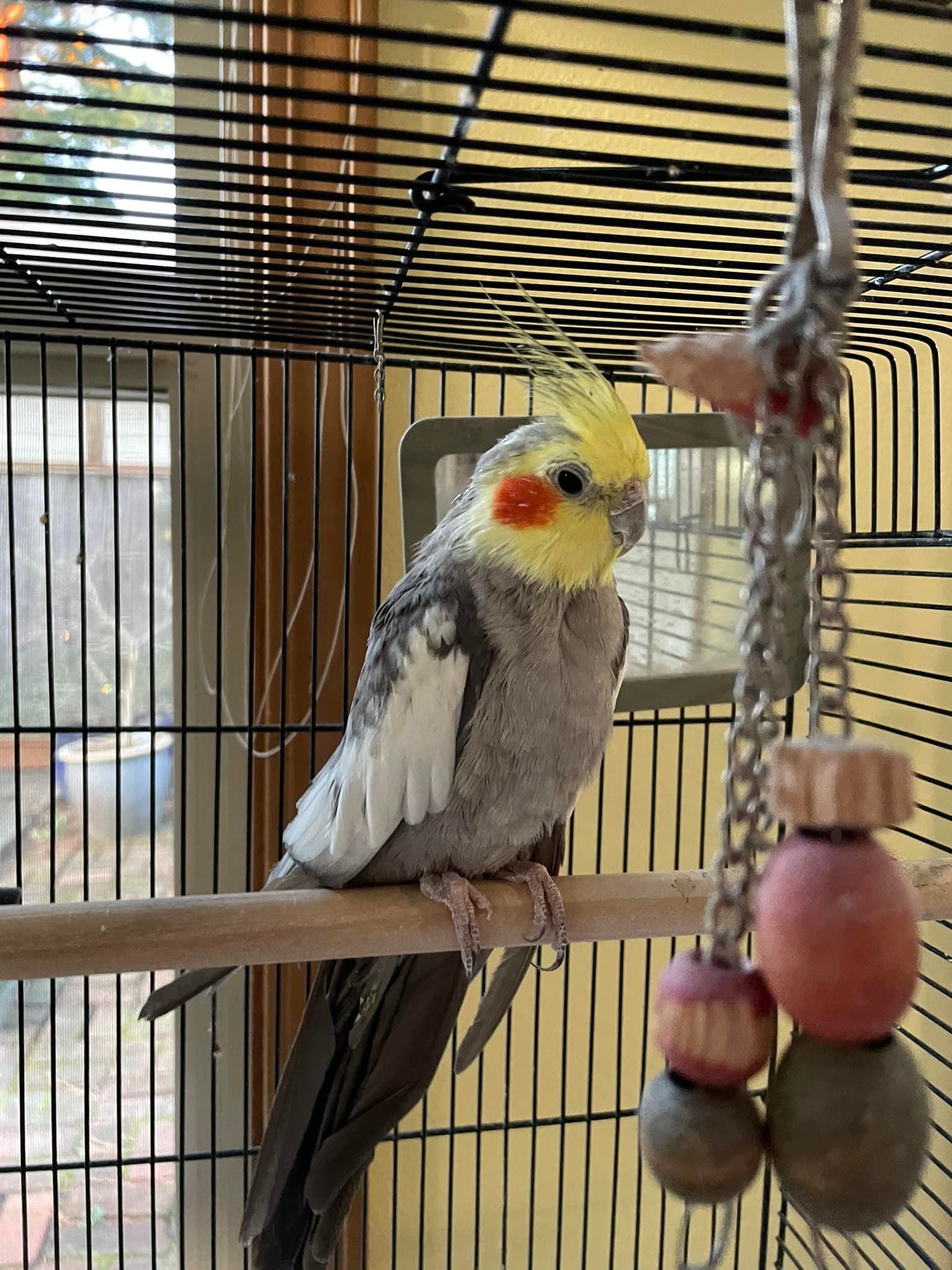
- A new pet in the home — especially cats, dogs, or ferrets that the bird can see or smell
- A new person visiting regularly — unfamiliar people can unsettle cockatiels for weeks
- Wild birds visible through a window — particularly birds of prey, even on a neighbour’s fence
- Reflections — a mirror near the cage, or reflections in windows at night, can appear threatening
- Loud appliances — hoovers, hairdryers, power tools used near the cage
- Cage moved to a new location — even a different corner of the same room
- Something new near the cage — a new piece of furniture, a coat hung nearby, an unfamiliar object
What to do
Think carefully about what changed around the time the screaming started. Not just the obvious things — the subtle ones too. Has anything new appeared near the cage? Has a different animal started coming into the room? Is there a reflection the bird can see at certain times of day?
If you can identify the trigger, remove it or move the cage away from it. Cockatiels that are fear-screaming usually settle within a few days once the trigger is gone — sometimes within hours. If you cannot identify anything obvious, come in and tell me what the setup looks like. Sometimes a fresh pair of eyes spots it immediately.
Reason 5: Boredom And Under-Stimulation — The Cage That Has Nothing In It
A cockatiel is not a decorative object. It is an intelligent, active bird that in the wild would spend its day flying, foraging, socialising, and problem-solving. A bird kept in a small cage with one perch and a seed pot, with nothing to investigate and nothing to do, will find ways to fill the time. Often that way is screaming.
This is particularly common in birds that spend long hours alone and have no enrichment to keep them occupied. The screaming is not distress exactly — it is frustration. An active mind with nothing to do.
- Cage has fewer than four or five different toys or enrichment items
- Toys are never rotated or changed — the bird has lost interest in all of them
- No foraging opportunities — food is just sitting in a pot, no effort required
- Bird spends most of its day in the cage with no out-of-cage time
- Screaming is worst in the afternoon, when boredom typically peaks
What to do
Enrich the cage properly. Cockatiels need things to shred, things to forage in, things to climb, and things that change regularly. Rotate toys weekly — something the bird has not seen for three weeks is interesting again. Introduce foraging: hide millet in shredded paper, attach food to different parts of the cage so the bird has to work for it.
Out-of-cage time matters enormously. Even thirty minutes a day of supervised time outside the cage, with things to explore and a person nearby, can dramatically reduce screaming driven by frustration and under-stimulation.
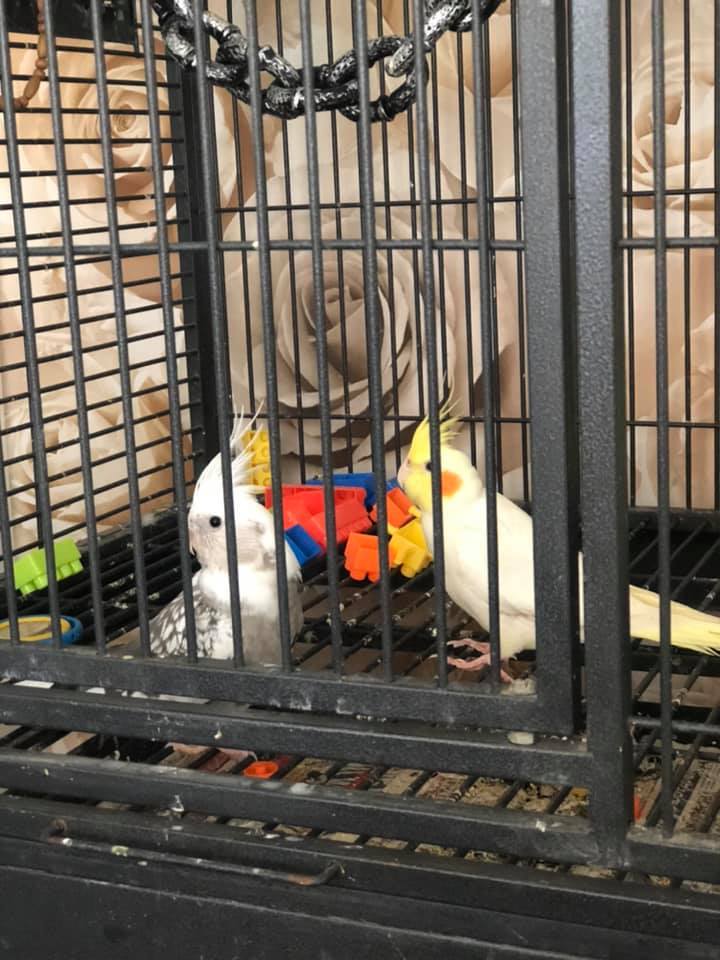
Reason 6: Hormonal Screaming — Especially In Spring And Autumn
This one catches owners off guard every year, usually around March and April, and again in September and October. Cockatiels go through hormonal cycles, triggered by changes in daylight hours, temperature, and what the bird perceives as breeding conditions. During these periods, both males and females can become significantly more vocal — louder, more persistent, and harder to settle.
Males in particular can become quite relentless during breeding season. They call constantly, display on their perches, and are generally more wound up than usual. It is not a problem in itself — it is a natural cycle — but it can last for several weeks and it can be wearing.
- What time of year is it? Spring and autumn are peak hormonal periods for cockatiels in UK conditions.
- Has the bird’s behaviour changed in other ways? Increased display behaviour, regurgitating food, sitting in corners, being more defensive about the cage — all signs of hormonal activity.
- How many hours of light is the bird getting? More than 12 hours of light per day can trigger and sustain hormonal behaviour.
- Is the bird being stroked on the back or under the wings? This stimulates mating behaviour and extends the hormonal period.
What to do
Reduce light hours to 10 to 12 per day using a proper cover. Remove any nesting-like spaces — dark corners, boxes, low shelves the bird is trying to sit in. Avoid stroking the back or under the wings — keep handling to the head and neck. In most cases, the hormonal period passes within a few weeks once the triggers are reduced. If the behaviour is extreme or is lasting months, that is a conversation for an avian vet.
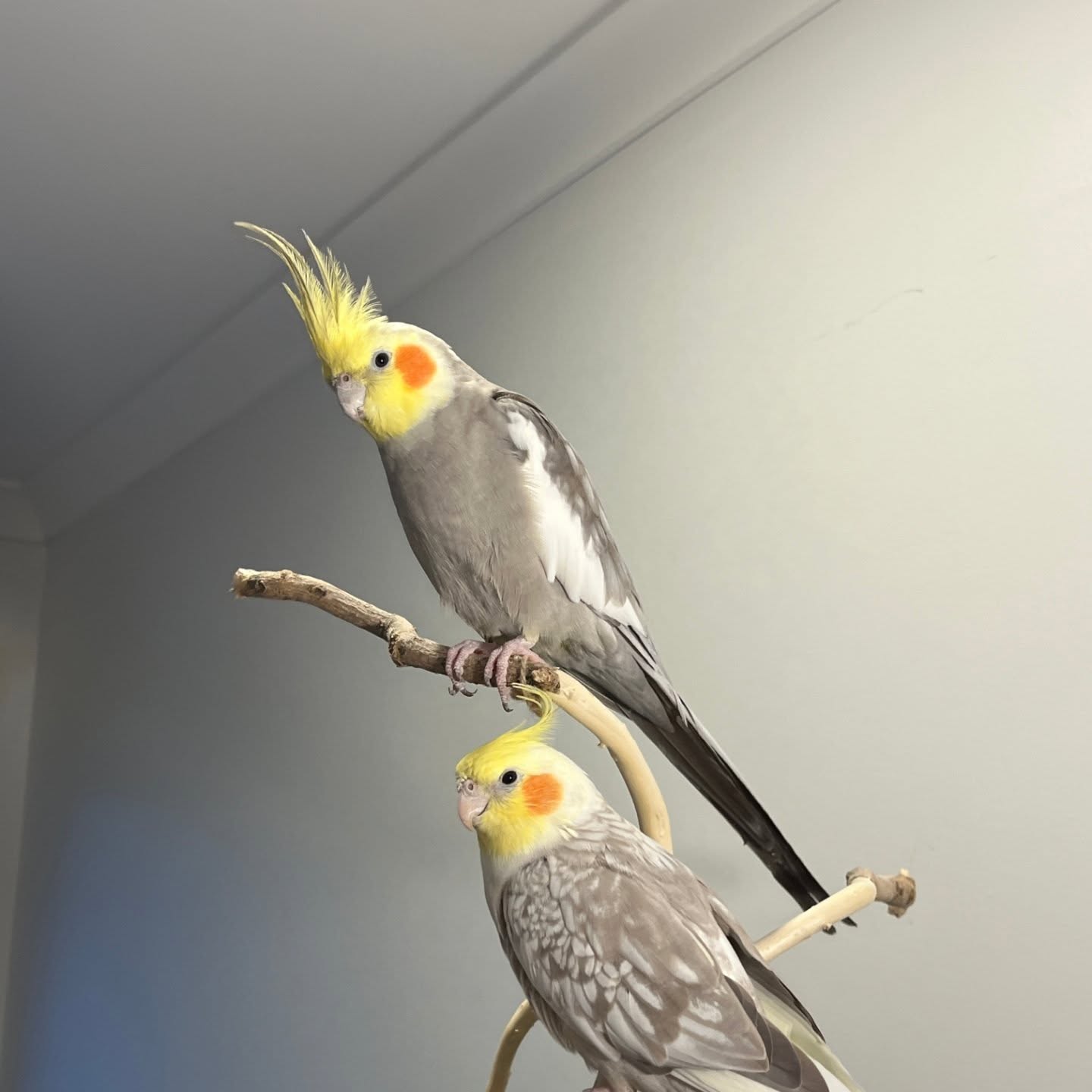
Reason 7: Pain Or Illness — The One You Cannot Afford To Miss
I have put this one last because it is the least common — but it is the one I am most insistent owners do not overlook. A cockatiel that is in pain or feeling unwell will sometimes scream. Not always. Cockatiels, like most birds, are good at hiding illness — they are prey animals and showing weakness is dangerous. But some birds do vocalise when something is physically wrong, particularly if the pain is acute.
- Screaming came on suddenly with no obvious environmental trigger
- Bird is also showing other signs of illness — fluffed up, eyes half-closed, reduced eating or drinking
- Droppings have changed — colour, consistency, or frequency
- Bird is losing weight — ribs or keel bone becoming prominent
- Tail bobbing with each breath — a sign of respiratory effort
- Any discharge from nostrils or eyes
- Bird is on the floor of the cage rather than on a perch
If any of these are present alongside the screaming, do not wait. Get to an avian vet the same day. Cockatiels are small animals and they deteriorate quickly when unwell. The birds I have seen recover from illness are almost always the ones whose owners acted fast.
For a fuller picture of what illness looks like in cockatiels, our article on why your cockatiel is not eating covers the health warning signs in detail.
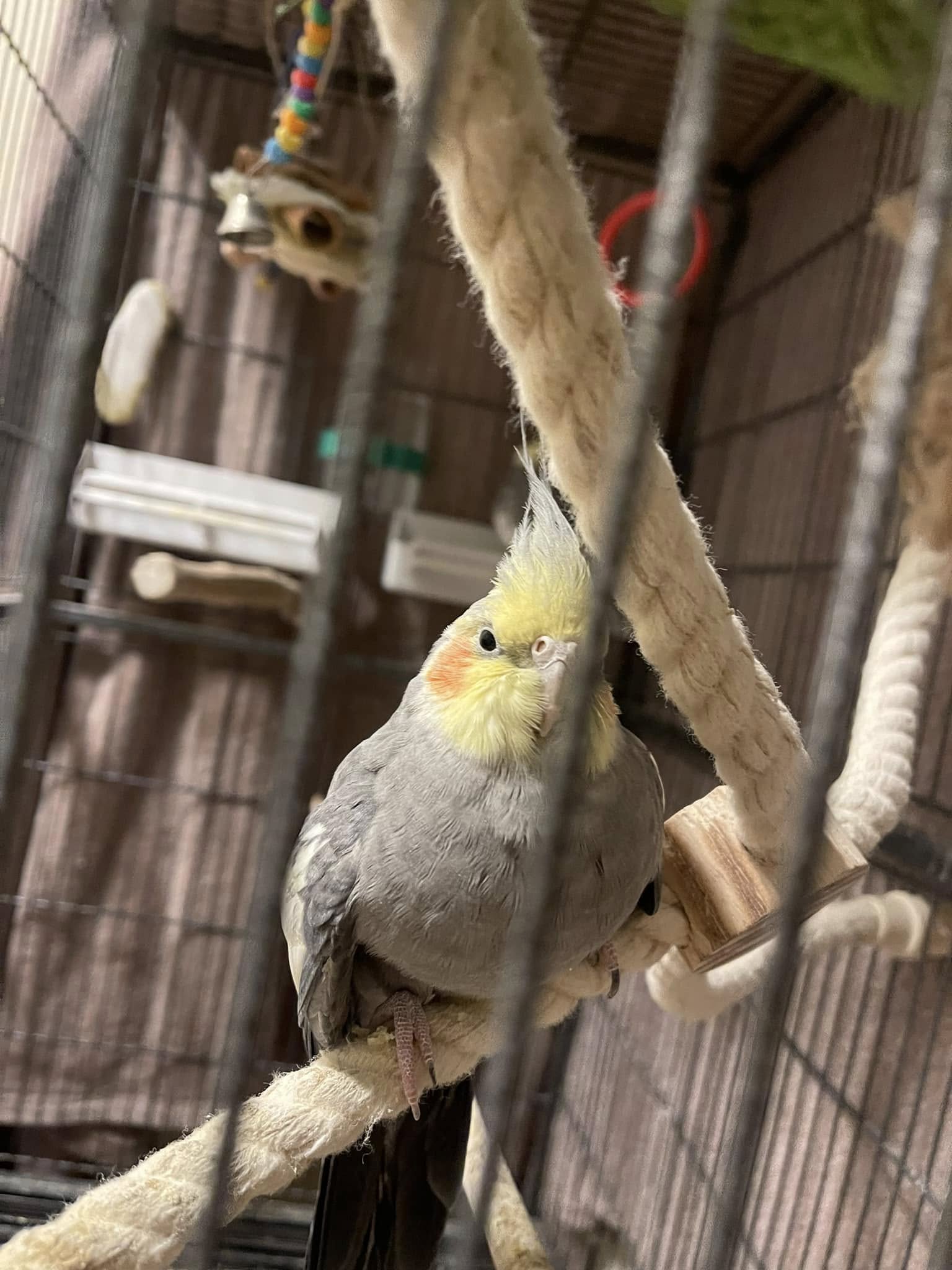
What I Check When An Owner Comes In With A Screaming Cockatiel
When someone walks into the shop and tells me their cockatiel is screaming, I do not guess. There is a process I go through that narrows it down pretty quickly. Here is what it looks like.
- When does the screaming happen?
Always at dawn — likely normal dawn calling. When you leave the room — contact calling or loneliness. Randomly throughout the day — boredom or fear trigger. At a specific time or in response to something specific — identify and remove the trigger. - How long has it been going on?
A few days after a change in environment — almost certainly a stress or fear response. Gradually getting worse over weeks — probably contact calling that has been accidentally reinforced. Suddenly and severely — check for illness or pain first. - Is the bird kept singly or with a companion?
Single birds are far more prone to loneliness screaming and contact calling. This is usually the first thing I ask. - What changed around the time it started?
New pet. Moved house or moved the cage. Change in the owner’s routine. New person or visitor. A new object near the cage. This question solves more cases than any other. - Is the bird otherwise well?
Eating normally, droppings normal, alert and active? Probably behavioural. Any physical changes at all? Rule out illness first. - How much stimulation does the bird get?
Toys, out-of-cage time, foraging, interaction. A bird that is bored and under-stimulated has the time and the motivation to scream.
Five minutes of these questions usually tells me which category we are dealing with — and most of the time, there is a clear and actionable answer.
What Not To Do With A Screaming Cockatiel
Over 35 years, I have seen plenty of well-meaning owners make things significantly worse. Save yourself the trouble.
| What people do | Why it is wrong | What to do instead |
|---|---|---|
| Shout at the bird to be quiet | The bird hears a loud noise and thinks the flock is calling back — it encourages more screaming | Stay calm, do not respond to screaming, reward quiet |
| Cover the cage every time it screams | The bird associates screaming with going to sleep — confusing and stressful | Only cover at bedtime, on a consistent schedule |
| Go to the bird every time it calls | Teaches the bird that screaming brings results — the behaviour escalates | Return to the bird only during quiet moments |
| Move the cage to an isolated room | Isolation makes loneliness screaming dramatically worse | Keep the cage where household activity happens |
| Spray the bird with water | Creates fear and distrust — damages your relationship with the bird | Never use negative reinforcement — it does not work long-term |
| Ignore possible illness signs | Birds deteriorate fast — waiting costs time you may not have | If there are any physical symptoms, see an avian vet same day |
How To Prevent Screaming Problems From The Start
Most of the cases I see could have been avoided with the right setup from day one. Here is what I tell every new cockatiel owner.
- Consider getting two cockatiels — not one. A companion reduces loneliness screaming dramatically and gives the bird what it actually needs.
- Place the cage in a sociable room — kitchen or living room, where the bird is part of household life, not isolated in a spare bedroom.
- Establish a consistent routine — same cover time, same uncover time, same feeding time. Cockatiels thrive on predictability.
- Provide proper enrichment — at least five or six varied toys, rotated weekly, with foraging opportunities built in.
- Give daily out-of-cage time — even thirty minutes of supervised time outside the cage every day makes a significant difference.
- Learn the contact call response — one calm call back when you leave the room. Do not ignore; do not overreact.
- Control light hours — 10 to 12 hours per day, with a proper blackout cover. This helps enormously with both dawn screaming and hormonal behaviour.
Frequently Asked Questions
Why does my cockatiel scream when I leave the room?
This is contact calling — a natural flock behaviour. Your cockatiel sees you as its flock and calls out to check where you are when it cannot see you. The key is to call back calmly once when you leave, so the bird knows you are still there, and to avoid going back to the bird every time it calls — that teaches the screaming to escalate.
Why does my cockatiel scream every morning?
Dawn screaming is normal cockatiel behaviour — in the wild, all cockatiels call at dawn to confirm the flock is together and begin the day. The best ways to manage it are a proper blackout cover to delay the onset, avoiding going straight to the bird when it calls, and keeping a consistent cover schedule so the bird knows when morning starts.
My cockatiel screams when it sees me but stops when I come over — why?
This is classic contact calling that has been reinforced. The bird has learned that screaming brings you to it. The fix is to wait for a moment of quiet before approaching the cage, even if that quiet is only a few seconds. Over time the bird learns that quiet is the behaviour that gets results, not screaming.
Can cockatiels be trained not to scream?
You cannot train a cockatiel to be silent — it is a naturally vocal bird and that is part of what it is. What you can do is address the underlying cause, establish a contact call routine, and ensure all the bird’s needs are met so it has no reason to scream from loneliness, boredom, or stress. Most screaming problems are very manageable with the right approach and a bit of patience.
Is it cruel to keep a cockatiel alone?
I would say honestly — yes, in most cases. Cockatiels are flock animals. A single cockatiel that is left alone for long periods every day is experiencing genuine distress. The screaming you hear is often that distress. If your lifestyle involves long periods away from home, a companion bird is not just nice to have — it is something the animal genuinely needs.
My cockatiel has suddenly started screaming after years of being quiet. Should I be worried?
Sudden changes in behaviour always deserve attention. Ask yourself what changed in the environment around the same time — a new pet, a moved cage, a new person, a different routine. If the answer is nothing, and particularly if there are any other physical signs of illness, get to an avian vet. A sudden change in vocalisation can be an early sign that something is physically wrong.
Where can I get honest cockatiel advice in Swindon?
Come and see us at Paradise Pets, Manor Garden Centre, Cheney Manor, Swindon SN2 2QJ. Or ring us on 01793 512400. We have kept and sold cockatiels for over 35 years. For genuine health concerns, go straight to an avian vet — we will help you decide which it is.
One Last Thing From Me
The gentleman I mentioned at the start of this article — the one who had not slept in a week? His cockatiel was screaming every morning because it was in a spare bedroom, covered until eight, and spending most of its day alone while he was at work. The bird was lonely. It had nothing to do and no one to call to. So it called to him.
We moved the cage to the kitchen that week. We added enrichment. He started leaving a radio on when he went out. And he bought a second cockatiel three weeks later, which we introduced properly. Within a month, the five-thirty screaming had stopped entirely.
That is almost always how these stories end when the owner is willing to look honestly at what the bird actually needs. Not a magic fix. Not a trick or a technique. Just meeting the animal’s actual requirements — company, stimulation, a predictable routine, and the knowledge that its flock is nearby.
If you are at the end of your tether with a screaming cockatiel, come in. Bring the bird if you can, or bring a video of the behaviour. We will work out what it is telling you.
Cockatiel Screaming? Come And See Us — Or Give Us A Ring
For genuine health emergencies, go straight to an avian vet. For everything else — screaming, behavioural changes, questions about setup or diet — come in or phone us. We will take a proper look and tell you honestly what we think. Free advice, no obligation. Over 35 years of hands-on cockatiel experience.