


Neil has kept, bred, and sold hamsters at Paradise Pets Swindon since 1988 — over 35 years of first-hand experience with every type of hamster commonly kept in UK homes. “Which hamster should I get?” is a question he answers most weeks, and the honest answer depends on more than most people realise. This is his complete, honest guide to choosing the right hamster for your situation.
The mistake I see most often with hamsters is not poor intentions. It is a mismatch between the hamster someone picks and the household they are bringing it into.
A family that buys two Syrian hamsters because they assume hamsters, like guinea pigs, do better in pairs — not realising Syrians must be kept entirely alone. A parent who buys a tiny dwarf hamster for a young child because it looks more manageable, when dwarf hamsters are often faster, more nervous, and harder for small hands to handle than the larger Syrian. An owner who buys based purely on colour or cuteness without considering temperament, activity pattern, or the size of enclosure that species actually needs.
None of these are bad owners. They are owners who were never given the full picture before they chose. After 35 years of selling hamsters in Swindon, I have a clear sense of which type suits which situation — and getting that match right from the start makes the difference between a genuinely good experience and a difficult one, for both the owner and the animal.
Before The List — The Questions I Actually Ask
Before going through each type, here are the questions I ask every family or individual who comes in asking about hamsters. The answers shape everything else.
- Who is the hamster actually for, and how old are they?
A hamster bought “for the kids” but cared for by an adult is a different proposition from one a ten-year-old will genuinely handle daily. - Do you want a hamster you can hold and tame, or one you mostly observe?
Some hamster types settle into confident handling more readily than others, and this varies by species as much as by individual. - How much space can you genuinely dedicate to housing?
Every hamster on this list needs more space than the small starter cages typically sold alongside them. Some need considerably more than others. - Are you comfortable with a fast-moving, harder-to-catch animal, or do you want something calmer and slower?
This varies significantly between the types covered below, and it is one of the most consistent sources of mismatch I see. - Is this hamster going in a household with other hamsters, or alone?
This single question changes the entire answer, because some species must live alone and others do best in same-sex groups. - What time of day do you want to interact with your hamster?
All hamsters are nocturnal to some degree, but the practical evening window varies, and matters more for some households than others.
1. The Syrian Hamster — The Best Choice For Most First-Time Owners
If someone walks in with no prior hamster experience and asks me what to get, my answer is almost always the Syrian. It is the largest commonly kept hamster, the easiest to handle confidently once tame, and the one most forgiving of the handling mistakes a first-time owner inevitably makes.
Syrians are solitary by nature and must always be kept alone — this is not optional, and two Syrians housed together will fight, sometimes fatally. But within that single-housing requirement, they make excellent pets. Their larger size means a gentle, well-socialised Syrian is genuinely easier for a child or nervous adult to hold securely than a smaller, faster-moving dwarf species. They tend to settle into a predictable routine and, once tame, are confident, food-motivated, and relatively easy to read.
- Best for: first-time owners, families with children aged ten and above, anyone wanting a hamster they can confidently handle
- Must be kept entirely alone — never with another hamster of any species
- Largest commonly kept hamster — typically 13 to 18cm, making handling easier for most people
- Minimum enclosure 100cm x 50cm — the small “starter” cages widely sold are not adequate
- Generally the calmest temperament of the commonly available types, though individual personality varies
- Lifespan two to three years
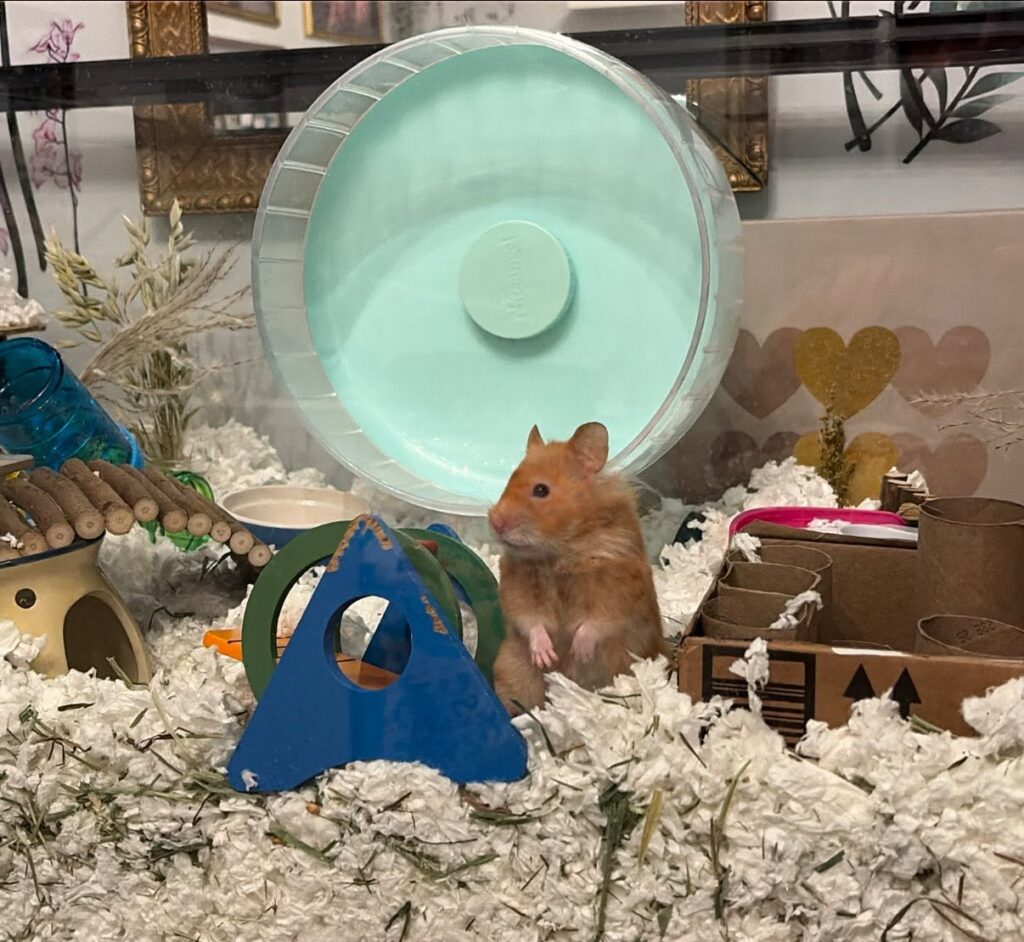
Who Syrian hamsters suit: first-time owners of any age; families with children old enough to handle a hamster correctly and consistently; anyone who wants the most straightforward, forgiving introduction to hamster keeping.
Who they do not suit: anyone hoping to keep two hamsters together for company; households wanting the smallest possible footprint, since Syrians need a genuinely large enclosure.
2. The Syrian Long-Haired (Teddy Bear) Hamster — The Best For A Specific Look And Feel
This is technically a variety of Syrian hamster rather than a separate species, but it deserves its own mention because the practical differences in care are real enough to matter, and because it is one of the most requested types at this counter specifically because of its appearance.
Long-haired Syrians have the same temperament and handling characteristics as standard Syrians, but the long coat requires more attention. Bedding can become tangled in the fur, and in males particularly, the coat can grow long enough to need occasional gentle trimming around the rear to prevent soiling and matting. This is a small but real extra task that owners considering this type should know about before falling for the look alone.
- Best for: owners who specifically want the longer-coated appearance and are prepared for slightly more grooming attention
- Same housing and solitary requirements as standard Syrians
- Coat needs occasional checking — particularly in males, for matting or soiling around the rear
- Same gentle, handleable temperament as standard Syrians in most individuals
- Lifespan two to three years
Who they suit: owners drawn specifically to the appearance, who are happy to check the coat regularly as part of routine care.
Who they do not suit: anyone choosing purely on looks without accounting for the slightly higher coat-maintenance commitment.
3. The Syrian Hamster (Standard Short-Haired) — Worth Separating From The “Teddy Bear” Above For One Reason
I want to flag the standard short-haired Syrian as a distinct practical choice from its long-haired cousin specifically because of the maintenance difference, even though the underlying species and temperament are identical.
For most households, particularly those without much time for the occasional grooming attention the long-haired variety needs, the standard short-haired Syrian offers everything the breed is known for — size, handleability, calm temperament — with no additional coat care required at all. This is, in practice, the version I recommend most often when someone has no strong preference about appearance and simply wants the easiest possible Syrian to care for.
- Best for: owners who want everything good about Syrians with zero additional grooming requirement
- Identical housing, solitary, and handling considerations to other Syrians
- No coat maintenance required beyond normal cage hygiene
- Lifespan two to three years
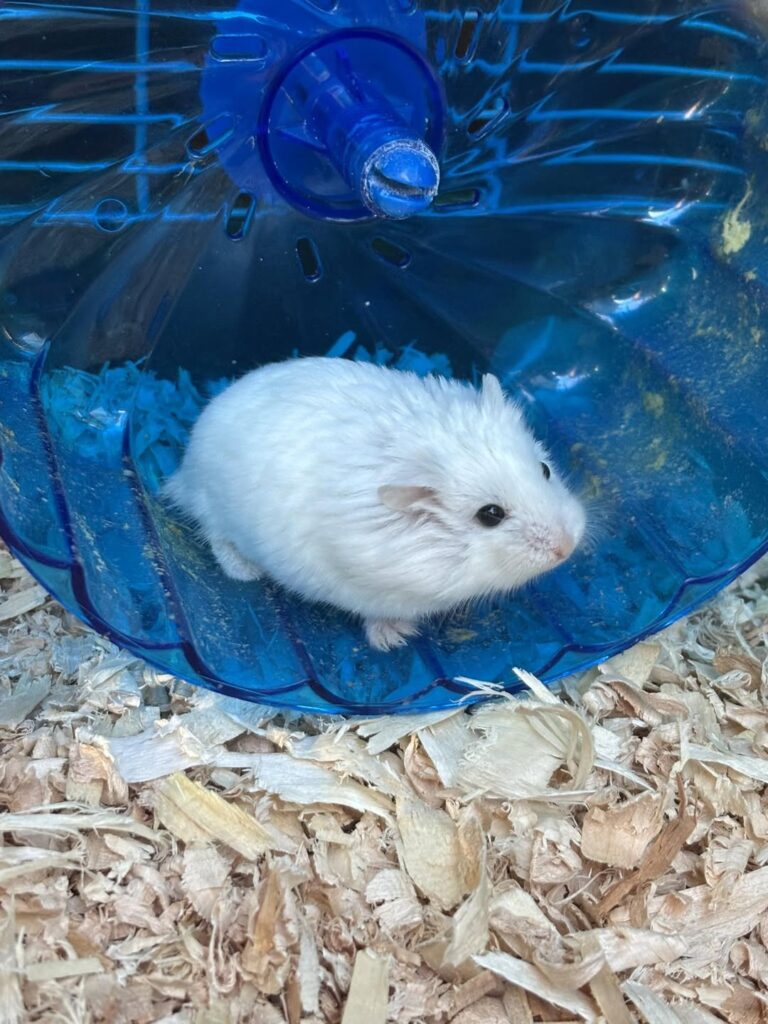
Who they suit: almost anyone suited to a Syrian generally, particularly those who want the lowest-maintenance version of that experience.
Who they do not suit: nobody specifically — this is simply the baseline Syrian experience without the additional coat consideration.
4. The Roborovski Hamster — The Best For Watching Rather Than Handling
Roborovskis are the smallest commonly kept hamster, and they occupy a genuinely different niche from everything above. If you want a hamster primarily to observe — fast, constantly active, entertaining to watch in a well-set-up tank — rather than to handle regularly, Robos are excellent.
What they are not is an easy hamster to tame for confident handling, and this is the single most important thing for a prospective owner to understand before choosing one. Robos are extremely fast, quite nervous by nature, and even with patient, consistent socialisation, many never become entirely comfortable with extensive handling the way a well-socialised Syrian typically does. They are also notoriously difficult to catch if they escape a hand or an open cage, owing to their speed and small size.
- Best for: owners who want to watch rather than handle; those who find rapid, busy activity entertaining rather than frustrating
- Can be kept in same-sex pairs or small groups from a young age, unlike Syrians, though introductions of unfamiliar adults are difficult and often unsuccessful
- Smallest commonly kept hamster — typically 4 to 5cm, genuinely tiny and very fast
- Minimum enclosure similar footprint to a Syrian despite the small body size — they are highly active and need significant floor space
- Generally the least suited to regular handling of the commonly available types
- Lifespan up to three years, sometimes longer — among the longer-lived hamster types
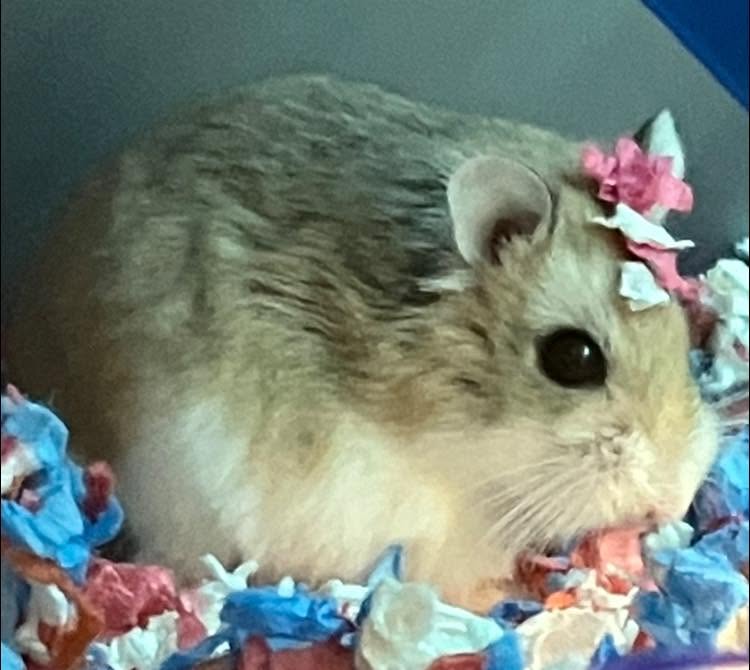
Who Roborovskis suit: owners who enjoy observing natural, busy behaviour and are not seeking a primarily handleable pet; experienced keepers comfortable with a more nervous, fast-moving animal.
Who they do not suit: young children expecting to hold their hamster regularly; first-time owners hoping for an easily tamed pet; anyone who would find a hamster that is difficult to catch stressful rather than interesting.
5. The Chinese Hamster — The Best For An Unusual, Characterful Choice
Chinese hamsters are less commonly kept than Syrians or the dwarf species, and they occupy an interesting middle ground worth knowing about if you want something a little different.
Physically, they are slender with a longer tail than other hamster types — long enough that they are sometimes mistaken for a small mouse by people unfamiliar with the breed. Temperamentally, a well-socialised Chinese hamster can become reasonably tame and handleable, generally falling between the easy confidence of a Syrian and the nervous speed of a Robo. They are technically solitary, similar to Syrians, and should not be housed with other hamsters as adults.
- Best for: owners who want something a little less common, with moderate handleability and an unusual, slender appearance
- Must generally be kept alone as adults — like Syrians, though young littermates sometimes tolerate each other briefly before needing separation
- Smaller and more slender than Syrians, with a notably longer tail than other hamster types
- Moderate handleability — more nervous than Syrians, generally calmer than Robos
- Less widely available than the other types on this list — worth checking ahead with a specialist source
- Lifespan two to three years
Who Chinese hamsters suit: owners who want a less commonly kept species with a distinctive appearance and are comfortable with a moderately, rather than easily, handleable pet.
Who they do not suit: owners hoping to keep two together long-term; anyone wanting the most widely available and easiest-to-source option.
The Honest Comparison Table
| Hamster Type | Handleability | Size | Housing | Lifespan | Beginner? |
|---|---|---|---|---|---|
| Syrian (Short-Haired) | High — most forgiving to handle | Largest, 13-18cm | Always alone | 2-3 yrs | ✅ Yes |
| Syrian (Long-Haired) | High — same as standard, plus coat care | Largest, 13-18cm | Always alone | 2-3 yrs | ✅ Yes |
| Roborovski | Low — fast, nervous, watch rather than handle | Smallest, 4-5cm | Same-sex pairs/groups (young intros) | Up to 3+ yrs | ⚠️ Experienced keepers |
| Chinese | Moderate — between Syrian and Robo | Small, slender, long tail | Generally alone as adults | 2-3 yrs | ⚠️ Some experience helpful |
What About Other Dwarf Hamsters — Campbell’s And Winter White?
You may see Campbell’s dwarf and Winter White (Russian) dwarf hamsters mentioned elsewhere, and I want to address them honestly rather than ignore them.
These species can, in some individual cases and with very careful early-life introductions, tolerate same-sex company — but in my experience and that of most experienced keepers, this is considerably less reliable than people are often led to believe, and a significant proportion of pairings eventually break down into fighting, sometimes seriously. I am cautious about recommending these species be kept in pairs as a default expectation, and I would rather an owner go in prepared to separate animals if needed than be caught out assuming permanent harmony.
Beyond the pairing question, their general care — handleability somewhere between Robos and Syrians, similar space needs, similar lifespan — follows a broadly similar pattern to the other dwarf species above. If you are specifically interested in these types, have a proper conversation with us about the realistic expectations around housing before committing to a pair.

The One Mistake That Causes The Most Problems — Regardless Of Type
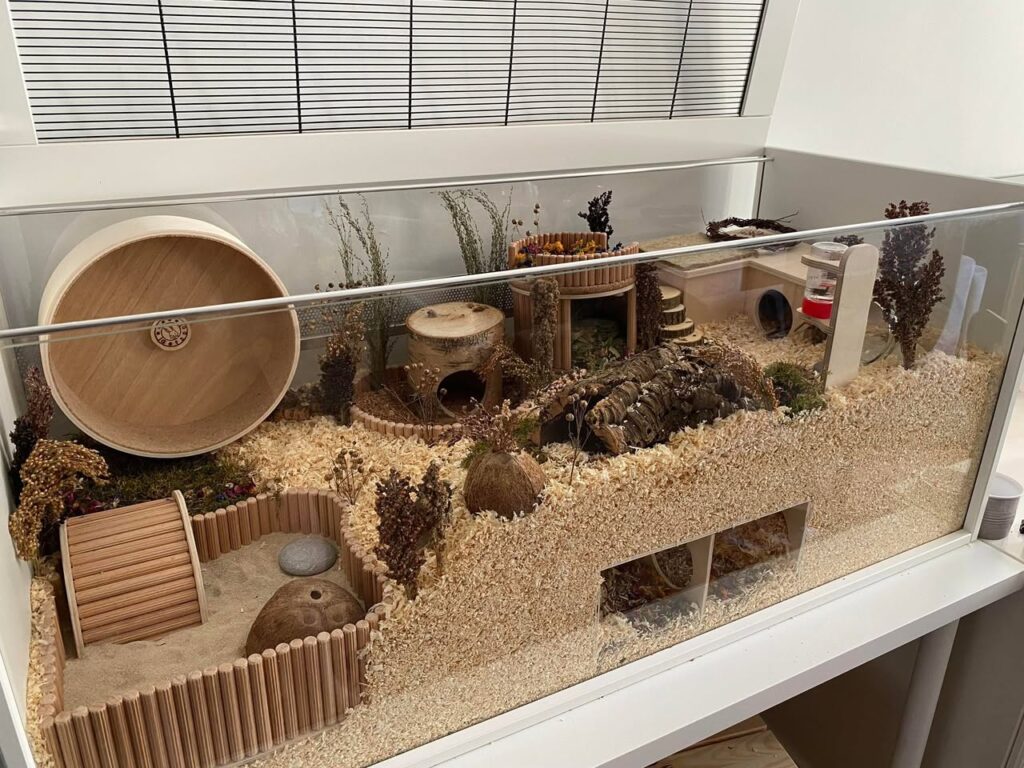
Across every type covered in this article, the single most consistent mistake I see is undersized housing. The cages marketed and sold as “hamster starter kits” in many UK shops are, in my honest opinion, too small for any of the species above, including the dwarf types that people assume need less space because of their smaller body size.
A larger enclosure with appropriate depth of substrate for digging, a properly sized solid wheel, and enough floor space for natural movement makes a genuinely significant difference to welfare and behaviour, regardless of which hamster type you choose. If I had one piece of advice that applied equally across this entire article, it would be this: buy the largest appropriate enclosure your space and budget allow, rather than the smallest one that technically fits the species.
Frequently Asked Questions
What is the best hamster for a child?
For most families, the Syrian hamster is the best starting point for a child old enough — generally ten and above — to handle a hamster correctly and consistently. Its larger size and generally calmer temperament make it easier for a child to hold securely and read accurately compared to the smaller, faster dwarf species.
Can I keep two hamsters together for company?
It depends entirely on species. Syrian and Chinese hamsters must be kept alone as adults. Roborovskis can sometimes be kept in same-sex pairs or small groups if introduced young, though this requires care. Campbell’s and Winter White dwarfs are sometimes kept in pairs but this is considerably less reliable than commonly assumed, and pairings can break down into fighting.
Which hamster is easiest to tame?
Syrian hamsters are generally the easiest to tame for confident handling, owing to their larger size and typically calmer temperament. Roborovskis are the most difficult, given their speed and naturally more nervous disposition, even with patient, consistent handling.
Which hamster lives the longest?
Roborovskis often have a slight edge in typical lifespan, sometimes reaching beyond three years with good care, compared to the two-to-three-year range typical of Syrian and Chinese hamsters.
Do all hamsters need the same size cage?
Broadly, yes — even the smaller dwarf species are highly active and benefit from a similarly generous footprint to a Syrian, despite their smaller body size. The common assumption that a smaller hamster needs a smaller cage is one of the most consistent and unhelpful misconceptions in hamster keeping.
Where can I get honest advice on choosing a hamster in Swindon?
Come and see us at Paradise Pets, Manor Garden Centre, Cheney Manor Industrial Estate, Swindon SN2 2QJ. Or ring us on 01793 512400. We stock the species in this article and will help you find the genuine right match for your situation, not just sell you whatever happens to be available.
One Last Thing From Me
The families I remember best from 35 years at this counter are not necessarily the ones who picked the hamster everyone else picks. They are the ones who answered the questions honestly — about their experience, their children’s ages, how much handling they actually wanted, how much space they genuinely had — and ended up with a hamster that genuinely suited their household.
A Syrian hamster confidently held by a delighted child. A Roborovski colony watched with fascination through the glass of a well-set-up tank, never handled, never expected to be. A Chinese hamster that became a quiet, slightly unusual favourite in a household that wanted something a little different from everyone else’s pet.
None of those outcomes happened by accident. They happened because the right questions were asked before the purchase, not after.
If you are trying to decide which hamster is right for you, come and see us. We will work through your situation honestly and help you find the one that actually fits — not just the one that looks appealing in the cage.
Not Sure Which Hamster Is Right For You? Come And Let’s Work It Out
We stock Syrian, Roborovski, and Chinese hamsters, all from sources we know personally. Come in with your questions and your honest situation. We will give you a straight answer about what fits and what does not. Free advice, no obligation. That is how we have always done things.