
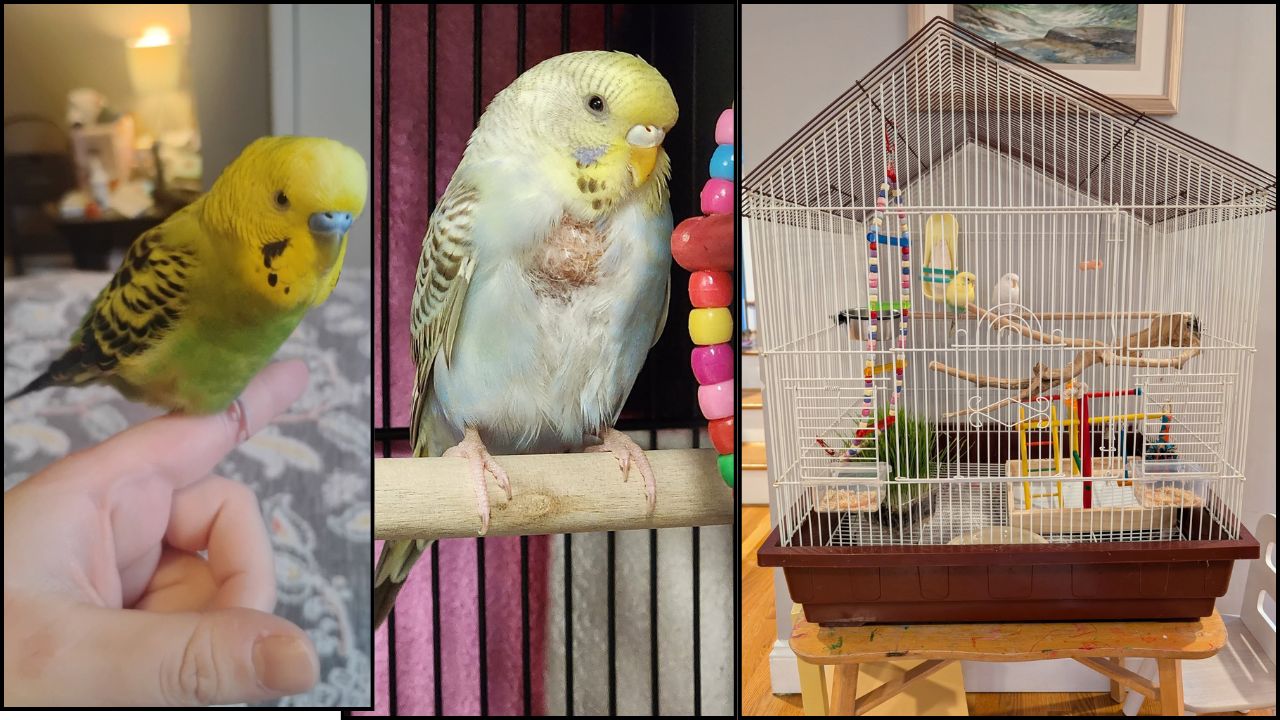

Neil has run Paradise Pets Swindon since 1988 — over 35 years of selling budgerigars and taking the calls that come in during heatwaves from owners who do not realise what is happening until it is already serious. Amber heat alerts are active across all regions of England as of this morning, updated by the UK Health Security Agency at 11am today and running through to Sunday 28 June. This article is being published today, on purpose, because the information in it is needed today — not tomorrow, not after the weekend, now.
I am going to keep this short. Not because the subject does not deserve a longer treatment — I have written that elsewhere and you can find it on this site — but because the situation this weekend does not require a long read. It requires a single action, taken now, that takes thirty seconds.
Look at where your budgerigar’s cage is.
That is it. That is the starting point. Everything else in this article follows from that one thing, and if you do it before you read the rest, you are already ahead of the owners who will ring me on Sunday afternoon.
Amber heat health alerts are active across all regions of England as of this morning — updated by the UK Health Security Agency at eleven o’clock today, 27 June 2026, and running through to nine in the morning on Sunday 28 June. Temperatures in eastern and south-eastern England are still reaching the low to mid-thirties Celsius. In urban areas, overnight temperatures have not been dropping below twenty degrees this week — what the Met Office has been calling tropical nights — which means the retained heat going into this weekend is coming on top of a building thermal load that has been accumulating since Monday. The heatwave that produced a Red extreme heat warning on Wednesday and Thursday, with temperatures approaching thirty-nine degrees in some areas, has eased only partially. The amber warning that remains today is not a footnote to the week just passed. It is a live alert for conditions that can kill a small bird in a cage in the wrong position within a matter of hours.
The Positions That Are Dangerous Right Now — Listed Plainly
I am going to list these without qualification, because this is not a weekend for nuance. These are the positions a budgerigar’s cage should not be in today. If yours is in any of them, move it before you finish reading this article.
Any south or west-facing windowsill, or within direct sunlight range of a south or west-facing window. Glass intensifies solar heat. The temperature at cage level in a south-facing window on a day with temperatures in the low thirties outside is not the ambient room temperature — it is considerably higher, potentially by ten to fifteen degrees or more in direct sun. A budgerigar cannot move away from it. A budgerigar cannot sweat. A budgerigar’s only cooling mechanism is panting, and once panting is overwhelmed, body temperature rises rapidly.
A conservatory. I have said this before and I will keep saying it: a conservatory on a day like today is not a pleasant warm room. It is an oven. The glass roof and walls that make a conservatory appealing in spring create a heat trap in direct summer sun that routinely exceeds the outdoor temperature by a significant margin. If your budgie’s cage normally lives in your conservatory, it should not be there today. Move it to the coolest room in your house — typically a north-facing room on an upper or lower floor, away from any exterior wall that has been in sun for several hours.
A car. If you are taking your bird anywhere this weekend — to a bird show, to a vet, to a friend’s house — and you leave the bird in the car for any period while you do something else, you are placing it in one of the most acutely dangerous environments available on a hot day. A car interior in direct sun at these temperatures reaches fifty degrees or more within minutes. Birds have died in cars on days significantly cooler than today. Do not do it, not even briefly, not even with a window cracked, not even in the shade. If you must travel with a bird today, the bird stays in an air-conditioned car with you present, or it does not travel.
A kitchen, particularly one in active use. Kitchens that already run warm from cooking are compounded by ambient heat today. Additionally, if you are cooking with non-stick cookware in an already-hot kitchen with windows open to try to cool the room down, you are creating a specific additional risk around PTFE fumes that I have written about at length elsewhere on this site. On a hot day, kitchen ventilation moves more air through the house — which means fumes from overheated non-stick surfaces travel further faster. If your budgie is anywhere near a kitchen today, move it now, regardless of the temperature question, and regardless of how many times that pan has been used safely before.
Any room where the temperature has been above twenty-six degrees for more than an hour. This is not about direct sunlight or windows specifically — it is about retained heat. A room that has been warm all week, in a house that has not been able to cool overnight because ambient temperatures have not dropped below twenty degrees, may already be at a temperature that places ongoing thermal stress on a small bird. Feel the air in the room your bird is in. If it feels warm to you, it is warmer still for the bird. The coolest room in your house is where the cage should be right now.
Where The Cage Should Be Right Now
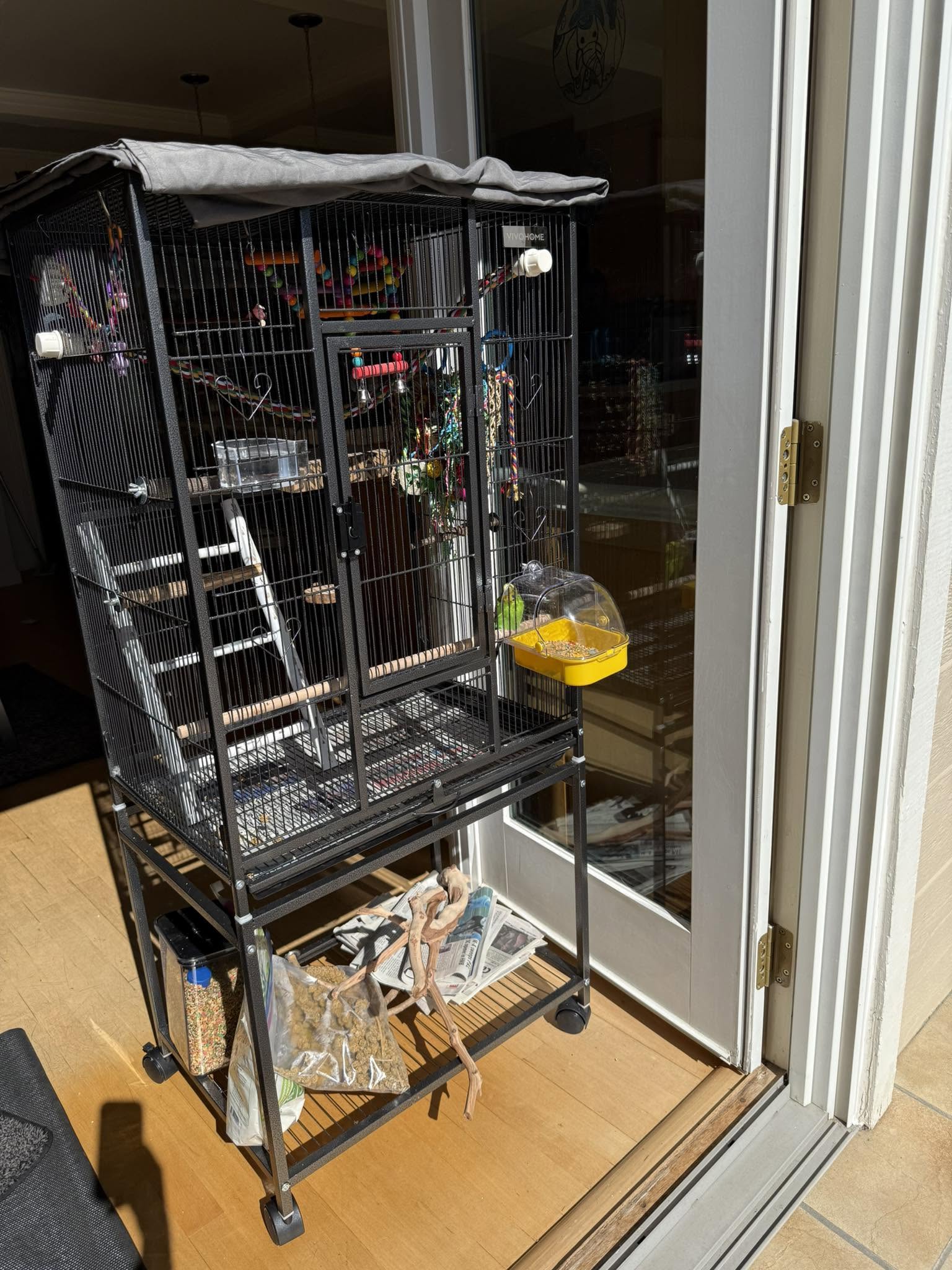
The coolest room in your house that is not a kitchen and is not subject to direct sunlight at any point during the day.
In most UK homes, that is a north-facing room — a north-facing living room, a hallway, an interior room that does not have large windows facing south or west. In a flat without a north-facing room, it is the room that has had its curtains or blinds closed all day to block solar gain, combined with the best air circulation you can manage without creating a direct draught on the cage.
The cage should be positioned away from the floor if the floor is stone or tile and retaining cold — birds can be chilled by a very cold surface even in a heatwave, though this is a lesser risk than heat — and away from the ceiling if the room is warm, because heat rises and the top of the room is consistently the hottest part. A mid-height position in the coolest available spot is where you are aiming.
Fresh water. This is not negotiable today and it is not sufficient to check it once. Check it every two hours. Change it every two hours if needed. The water in a small bird’s bowl at ambient temperature in a warm room becomes warm very quickly, and a bird that is already heat-stressed needs genuinely cool water, not water that has been sitting in a warm room since this morning. A single ice cube placed in the water bowl will keep it cooler for longer without shocking the bird when it drinks.
Gentle air circulation. A fan in the room — not pointed directly at the cage, because a direct draught is a respiratory risk in its own right — but positioned to move air around the room and around the cage. Indirect airflow reduces the thermal load on the bird without the specific risks of a draught. If the room has a door to a cooler space — a corridor, a north-facing room — leaving it open creates cross-circulation that is better than still air.
And this: your presence. Not hovering anxiously, because a stressed owner stresses the bird. But close enough that you will notice if something changes. Today is not the day to leave the house for three hours without checking on the bird first and leaving someone else with instructions to check on it in your absence.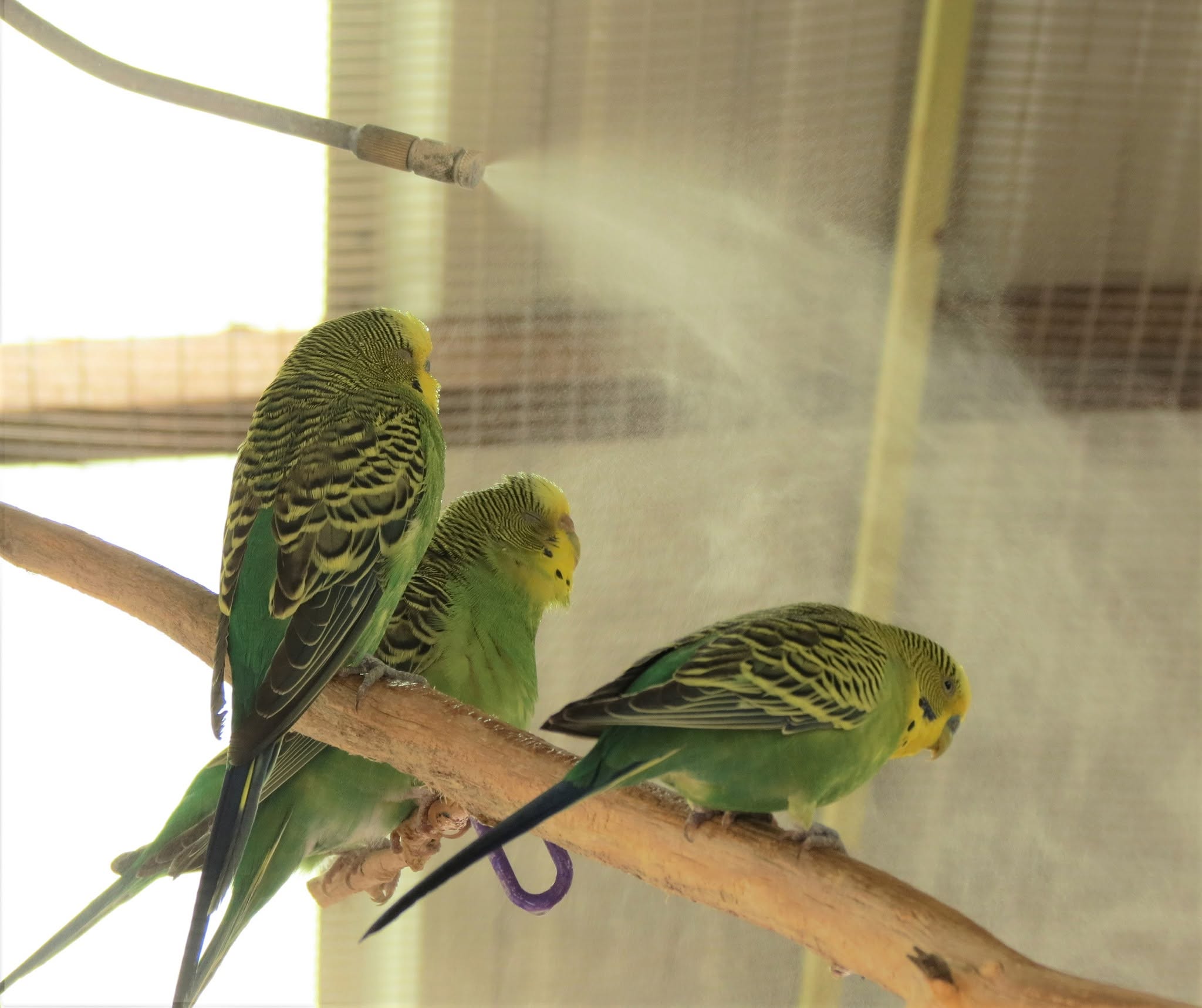
What To Watch For — The Signs That Mean Act Now
I want to repeat the signs of heat stress clearly and briefly, because this is the list you need to have in your head today rather than having to find it when you need it.
Open-beak panting when the bird is at rest. Not when it has been active or has just flown — at rest, with its beak open, breathing visibly. This is the primary cooling mechanism working at maximum capacity. It means the bird is already struggling. This is the sign that triggers moving the cage, misting the bird, and contacting an avian vet if it does not resolve quickly after the move to a cooler environment.
Wings held loosely away from the body. Not in a threat display, not after exercise — loosely spread at rest, creating surface area, because the bird’s body is trying to lose heat. This sign alongside any reduction in normal activity is a clear indicator of thermal stress.
Reduced vocalisation in a bird that is normally chatty. Silence from a budgerigar that usually talks and chirps is not always a heat stress sign on its own, but combined with the above, it completes a picture you should take seriously.
Moving to the lowest perch or the cage floor. A budgerigar that is not ill in any other way but has moved to the cage floor or the lowest available perch is seeking the coolest point in its environment. This is an instinctive response to heat, and it is a sign that the environment is already too warm for the bird’s comfort.
If you see open-beak panting: move the cage to the coolest room immediately, mist the bird lightly with cool tap water — around the head, feet, and under the wings, gently, not drenching — offer cool water at cage-floor level, and ring an avian vet. If the bird is on the floor and barely responsive, you are already past the point where home management is sufficient. That is a same-hour veterinary situation, today, Saturday, whatever time it is when you read this.
Why This Weekend Specifically Is Still A Risk
I want to explain this because the coverage of the heatwave this week has been extensive, and by Saturday the headline temperature figures have dropped from the peak of Wednesday and Thursday. Some owners will read that and conclude the danger has passed. It has not, fully, and I want to say clearly why.
Amber heat warnings remain in place for parts of eastern England due to the cumulative effects of the prolonged hot spell and retained heat in urban areas. That word “cumulative” is the important one. A week of temperatures at or above thirty degrees, with overnight temperatures that have not dropped below twenty, means that the fabric of buildings across England — the walls, floors, and ceilings — has absorbed an enormous amount of heat. That stored heat does not dissipate instantly when the outside temperature drops a few degrees on Saturday. It continues to radiate into the interior of houses through the weekend, meaning indoor temperatures can remain higher than the outdoor reading suggests.
A room that has been baking in direct sun all week, in a house that has not been able to cool down overnight because ambient temperatures never fell low enough, is not a comfortable room today even if the outdoor temperature is only twenty-eight degrees. The retained heat in the structure means the interior temperature can still be several degrees higher than the outside reading. And a budgerigar in a cage in that room is experiencing that interior temperature, not the headline figure on the weather app.
The amber warning across all regions, updated this morning and running through Sunday, reflects exactly this picture. The worst of the peak temperatures has passed. The risk to small birds in poorly positioned cages has not.
The Rooms To Check And The Rooms To Use — A Quick Reference
I want to make this as practically immediate as possible, because the action required today is a physical one — walking around your home and making a decision about where the cage is and where it should be — and I want to give you the framework to do that quickly.
The rooms to avoid or move the cage away from today: any room with a south-facing window that has been in direct sun since mid-morning; any room with a west-facing window that will be in direct sun from early afternoon onwards; the conservatory under any circumstances while outdoor temperatures remain above twenty-five degrees; the kitchen; any room above a south or west-facing exterior wall that has absorbed heat through the day; any room with a glass roof or large glazed area.
The rooms to use: north-facing rooms that have had blinds or curtains closed all day; hallways and corridors that do not have large windows and are shielded from direct sun by the house structure; ground floor rooms in houses with south-facing gardens, where the ground floor is insulated from the worst of the solar gain by the floor above; rooms with thick stone or brick walls that have been kept closed and cool during the day.
The test: stand in the room for sixty seconds. If you feel warm after sixty seconds, the room is too warm for the cage today. If you feel comfortable or cooler than the rest of the house, that is your room. The bird’s thermal tolerance is lower than yours. A room that feels warm to you is already above the threshold at which a budgerigar begins to experience heat stress.
Do this now. Not at the end of the article. The room check takes ninety seconds and it is the most important thing this article asks you to do.
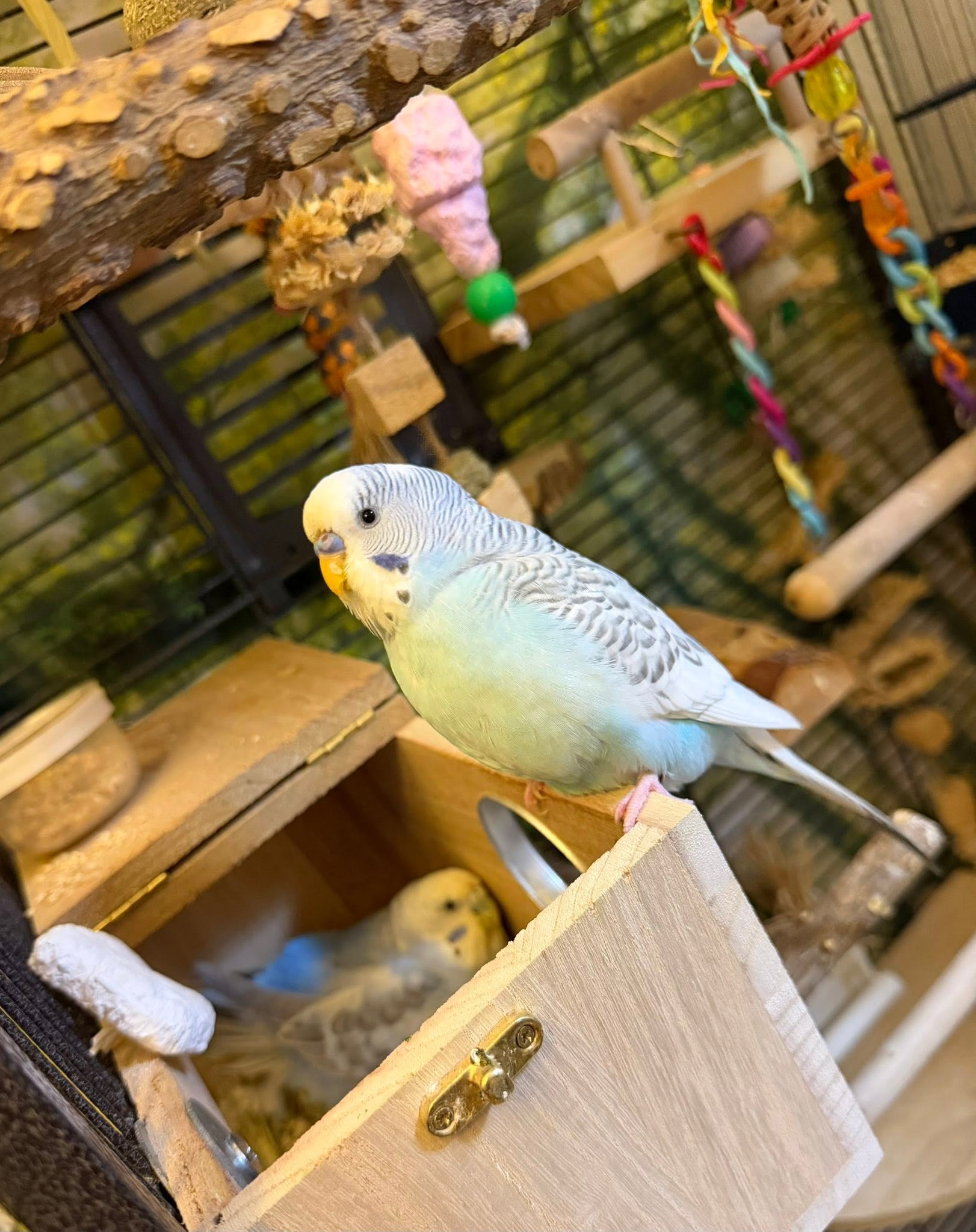
If You Are Reading This And Your Bird Is Already Showing Signs
Stop reading and act. In order:
Move the cage to the coolest room available. Do this first, before anything else, while you are still reading this sentence.
Mist the bird lightly with cool tap water. Not cold. Not iced. Cool tap water, applied gently with a spray bottle or wet fingers around the head, feet, and under the wings. Do not drench. Do not immerse. Gentle, repeated misting to assist evaporative cooling.
Put fresh cool water at cage-floor level so the bird does not need to climb to reach it. One ice cube in the water bowl.
Position a fan to circulate air in the room without pointing it directly at the cage.
Ring an avian vet now if the bird is on the cage floor, barely responsive, or if open-beak panting does not reduce within fifteen minutes of the move to a cooler room. In the Swindon area, ring us first on 01793 512400 and we will point you to the right contact for urgent avian care today. Do not wait for the bird to look better before ringing. Ring while you are managing the bird, not after.
If the bird recovers and appears well after the move, do not move the cage back. Leave it in the cool room for the rest of the weekend. Find a vet on Monday for a check — heat stress that appeared to resolve can have effects on organ function that are not visible in behaviour immediately afterwards.
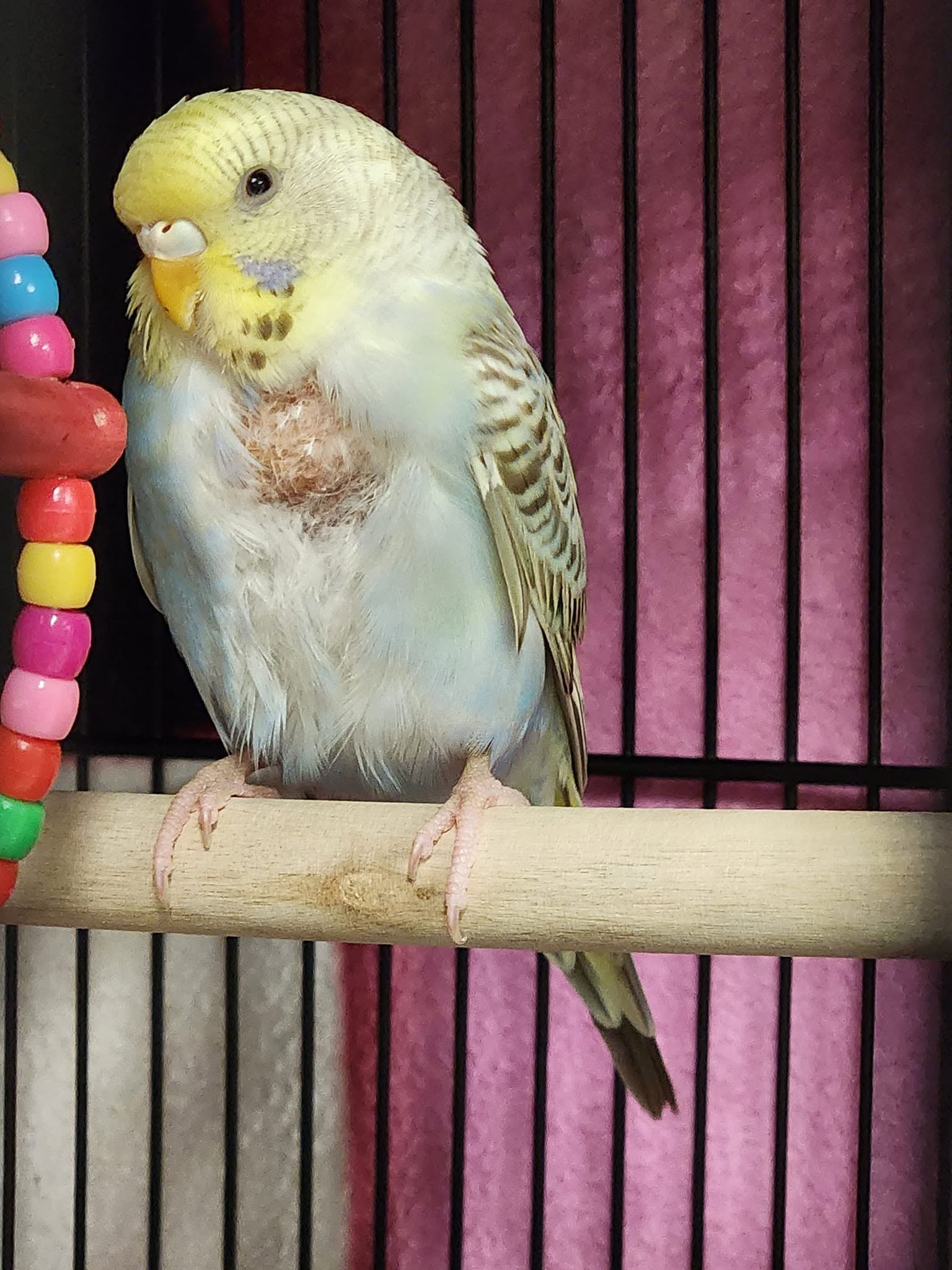
One More Thing Before You Close This Page
Tell someone else. Not in an abstract way — tell whoever else is in your house today, or whoever you know who keeps birds, that the amber warning is still active, that retained heat in buildings remains a risk even as the outdoor temperature eases, and that the cage position check takes ninety seconds and could make the difference between a bird that makes it through the weekend and one that does not.
I have been running this shop for 35 years. The calls that stay with me are not the ones where I could not help — they are the ones where I could have helped if I had been rung an hour earlier. This article is me ringing you an hour earlier. Do the room check. Move the cage if needed. Change the water. Keep watching.
If you are unsure about anything — if your bird’s behaviour has changed and you do not know whether to be worried — ring us. That is what the number below is for, and it applies today as much as on any other day we are open.
Worried About Your Budgie In This Heat? Ring Us Now.
We are open today. If your bird is showing any signs of heat stress, or if you are not sure whether where your cage is positioned is safe, ring us before you wait to see. A short call now is worth considerably more than a longer one later.