

Neil has kept, bred, and sold cage birds at Paradise Pets Swindon since 1988 — over 35 years of first-hand experience with budgies, cockatiels, canaries, and aviary birds. This week is Invasive Species Week 2026 — 22 to 28 June — and the invasive species that most concerns him in the context of pet birds is not on any government watchlist. It is already here, already inside thousands of UK bird homes, and most owners have no idea it is there.
Invasive Species Week runs from 22 to 28 June this year, led by the GB Non-native Species Secretariat. The focus, rightly, is on invasive plants and animals that threaten native ecosystems — the Asian hornet, grey squirrels, Japanese knotweed, signal crayfish. These are real problems and the awareness work matters.
But the invasive species I think about most in the context of the people who walk through this door — the people who keep cage birds in homes across Swindon and the surrounding area — is one you will not find on the government watchlist. It was not introduced recently. It does not threaten native woodland or river systems. It does not make the news.
It is the red mite. Dermanyssus gallinae. And it is already present in a significant proportion of pet bird homes in this country, quietly feeding on birds at night while owners sleep, often undetected for months or years, doing damage that accumulates slowly and becomes serious before most owners have any idea what is happening.
Invasive Species Week seems like the right moment to talk about it.
What the Red Mite Is — And Why It Belongs in Any Honest Invasive Species Conversation
Dermanyssus gallinae is a blood-feeding ectoparasite — an external parasite that feeds on the blood of its host. It infests a wide range of birds worldwide: poultry, pigeons, canaries, finches, budgerigars, cockatiels, parrots, and wild birds that nest near buildings. It is genuinely global in distribution, a consequence of the international trade in poultry and pet birds over centuries, and it has established itself throughout the UK as a persistent and widespread problem in any environment where birds are kept.
What makes it particularly difficult to manage is its biology. The red mite does not live on the bird. During the day it hides in the cracks, crevices, and joints of the cage, the perches, the nest boxes, and the surrounding furniture. It is tiny — less than a millimetre — and when not recently fed it is pale grey or white, nearly invisible against wood and plastic surfaces. It comes out at night, feeds on the sleeping bird, and retreats before morning.
An owner who checks their bird during the day and looks in the cage will often find nothing. The bird may look normal. The mites are hidden. The infestation can be entirely invisible to a casual daily inspection, which is exactly why it so often goes undetected for so long.
Why This Week, Right Now, Is the Moment to Check
Red mite infestations are seasonal in their severity. The mite is present year-round in established infestations, but its life cycle — from egg to reproductive adult — accelerates dramatically with temperature. In cool conditions the cycle takes several weeks. In warm summer conditions it can complete in as little as seven days.
That acceleration means that an infestation that was modest in April becomes significant by June and can reach serious levels by late July and August. The warmer the summer, the faster and more severe the build-up. The record temperatures being recorded across England this June — the warmest May on record, amber heat warnings active as I write this — are exactly the conditions in which red mite populations surge.
Invasive Species Week 2026 falls at precisely the point in the year when UK pet bird owners are most at risk from this parasite, whether they know it or not. Checking now, before the infestation reaches a level where the bird’s health is significantly affected, is the most effective intervention available to any owner.
How Red Mite Gets Into Pet Bird Homes
This is the question I am asked most often when I raise red mite with customers, and the answer is more varied than most people expect.
The most common route is a new bird. A bird purchased from a source — whether a pet shop, a breeder, or a second-hand sale — that already has red mite present in its environment will carry the mites into the new home on its feathers or in the material used to transport it. This is one of the many reasons sourcing from reputable, transparent sellers matters. At Paradise Pets we maintain rigorous hygiene standards and do not import birds — our sourcing is entirely from UK breeders we know personally. But not every seller operates to the same standards, and a bird from an unknown source is a higher risk.
The second common route is wild birds. Nesting wild birds in or near a building — under roof tiles, in wall cavities, in garden nest boxes near an open window — can introduce red mite into the indoor environment. Swallows and house martins nesting near windows are a particular route. When the nest is abandoned in autumn, the mites seek a new host and can find their way indoors.
Second-hand cages and equipment are a significant and consistently underestimated route. Red mite can survive without a host for several months. A cage that looks clean and has been stored for a period may still contain viable mite eggs in its joints and crevices. Any second-hand cage should be thoroughly treated before any bird is introduced to it.
Occasionally, mites can be transferred on clothing or hands after contact with infested birds elsewhere — at a bird show, at another keeper’s home. This is a less common route than the others, but it is not negligible.
What Red Mite Does to a Bird — Why Early Detection Matters
The red mite feeds on blood. In a light infestation, the individual impact per night is small and the bird may show no obvious signs — slightly reduced condition over time, feathers not quite as pristine as they were, a slight restlessness at night. Easy to miss, easy to attribute to other causes.
As the infestation grows, the cumulative blood loss becomes significant. A bird in a heavily infested cage is losing meaningful amounts of blood every night. The signs that develop include persistent scratching and preening, particularly at night and in the early morning. Restlessness or agitation during the night that owners notice as unusual sounds from the cage. Visible anaemia — pale or whitish appearance to the areas of skin visible around the face and cere. Weight loss. A gradual decline in condition that does not resolve with dietary improvement alone.
In severe cases in smaller birds — particularly canaries, finches, and young budgies — the blood loss can be sufficient to cause serious anaemia, immune suppression, and in extreme infestations, death. The bird does not die from a single dramatic event. It is ground down over weeks by nightly blood loss in quantities that are individually small but collectively substantial.
The connection between the mites and the symptoms is often missed because the mites are not visible during the day when the owner is observing the bird. The bird looks normal, or nearly normal, during daylight hours. The cause of the declining condition is active only at night.
How to Check Your Cage — The Detection Method That Works
Daytime inspection of the bird is not sufficient to detect red mite. The inspection that works is of the cage itself, at the right time, using the right approach.
The most reliable detection method is a piece of white paper or a white cloth placed under the cage cover or inside the cage overnight. In the morning, check it carefully in good light. Red mite that have recently fed will appear as tiny dark red or rust-coloured specks — barely visible, but visible. Unfed mites are pale and harder to see but can be detected on white against the right light.
An alternative approach is to check the cage after dark with a torch, looking carefully at the joins between perches and cage bars, the corners where the tray meets the side, any wooden components, and particularly the nest box if one is present. Mites will be visible — tiny moving dots — against a light surface when conditions are right.
The third method is to hold a pale-coloured cloth against the perch and the cage bars in the early morning before the lights come on. Mites returning to hiding can be caught on the fabric.
Any of these methods, used once a week during the peak summer season, will detect an infestation before it reaches levels where the bird’s health is significantly affected. That is the window that matters — catching it early, when treatment is straightforward and the bird has not been significantly compromised.
What to Do If You Find Red Mite
I want to be practical here rather than vague, because “treat the cage” is not useful without specifics.
The bird needs to come out of the cage before treatment. The cage — including all perches, toys, and accessories — needs to be cleaned thoroughly first with hot water, then treated with a product specifically formulated for red mite in bird cages. There are several available including pyrethrin-based sprays and diatomaceous earth products. The product needs to reach the crevices and joins where the mites hide — surface cleaning alone is not sufficient.
Any wooden perches with significant crevices should be discarded and replaced. Mites can survive inside wood grain that cannot be effectively treated, and attempting to treat heavily infested wooden perches is usually less reliable than replacing them.
The cage should be allowed to dry completely before the bird is returned to it. A single treatment is rarely sufficient — the treatment kills active mites but may not eliminate all eggs. A repeat treatment one week later addresses the generation that was in egg form at the time of the first treatment.
The bird itself should be examined by an avian vet if the infestation has been present for any significant period, if the bird is showing any signs of anaemia or weight loss, or if there are any skin lesions from scratching. The vet can confirm the extent of any health impact and advise on whether any supportive treatment — for anaemia, for example — is indicated.
Prevention — What Changes the Risk Picture
Prevention is not complicated but it requires some consistent habits that most owners have not formed because nobody has explained why they matter.
Any second-hand cage or equipment coming into the home should be treated for red mite before a bird is introduced to it. Not just cleaned — treated, with a product designed for the purpose, with attention to all the crevices where mites hide.
Any new bird arriving from an unfamiliar source should be quarantined in a separate cage, away from existing birds, for a minimum of two to four weeks. During this period the cage it occupies should be checked weekly for mite signs using the white paper method. If the bird is clean after two to four weeks, the risk of introducing mites from that bird is significantly reduced.
Wild bird access to areas near the cage should be managed during nesting season, particularly if the cage is near windows where birds might nest. Closing windows near nesting sites in late spring and early summer reduces the route by which mites from nest-abandonment travel indoors.
Wooden nest boxes and perches present a higher mite-harboring risk than metal or plastic components. This does not mean they should not be used — there are good reasons for natural materials in a cage — but it means they warrant more frequent inspection and more thorough treatment if mites are found.
The Human Connection — Worth Being Aware Of
I mention this not to alarm anyone but because it is relevant and I think owners should know about it.
Red mite will feed on humans if it comes into contact with skin and the preferred avian host is not immediately available. It cannot establish itself on humans — it cannot complete its life cycle on human skin and it does not persist as an infestation in the way it does on birds. But contact with a heavily infested cage can result in temporary biting on human skin, producing a rash or itching that can persist for a day or two.
This is not dangerous in the vast majority of cases. It is, however, a useful signal. If you or anyone in the household is experiencing unexplained skin irritation — small red bites, itching with no obvious cause — and you keep cage birds, red mite infestation in the cage is worth investigating as a possible cause. The connection between the two is not always made.
Frequently Asked Questions
My bird seems fine during the day — could it still have red mite?
Yes. This is the core difficulty with red mite detection. The mite hides during the day and feeds at night. A bird that appears completely normal during daytime observation may be being fed on every night. The detection method to use is the cage inspection — white paper overnight, torch inspection after dark — not observation of the bird during the day.
How quickly can a red mite infestation become serious?
In warm summer conditions, the mite completes its life cycle in as little as seven days. A small founding population can become a significant infestation within a few weeks during June, July, and August. This is why the weekly cage check during peak season matters — catching it early, when the population is small, means treatment is straightforward. Catching it late, when the population is large and the bird is already showing health effects, is a more serious management challenge.
Can red mite survive in a cage if the bird is removed?
Yes — for several months under some conditions. This is why a second-hand cage from any source should be treated before use, and why removing the bird temporarily without treating the cage does not resolve an infestation. The mites will persist in the cage and reinfest the bird when it is returned.
Is red mite the same as scaly face mite in budgies?
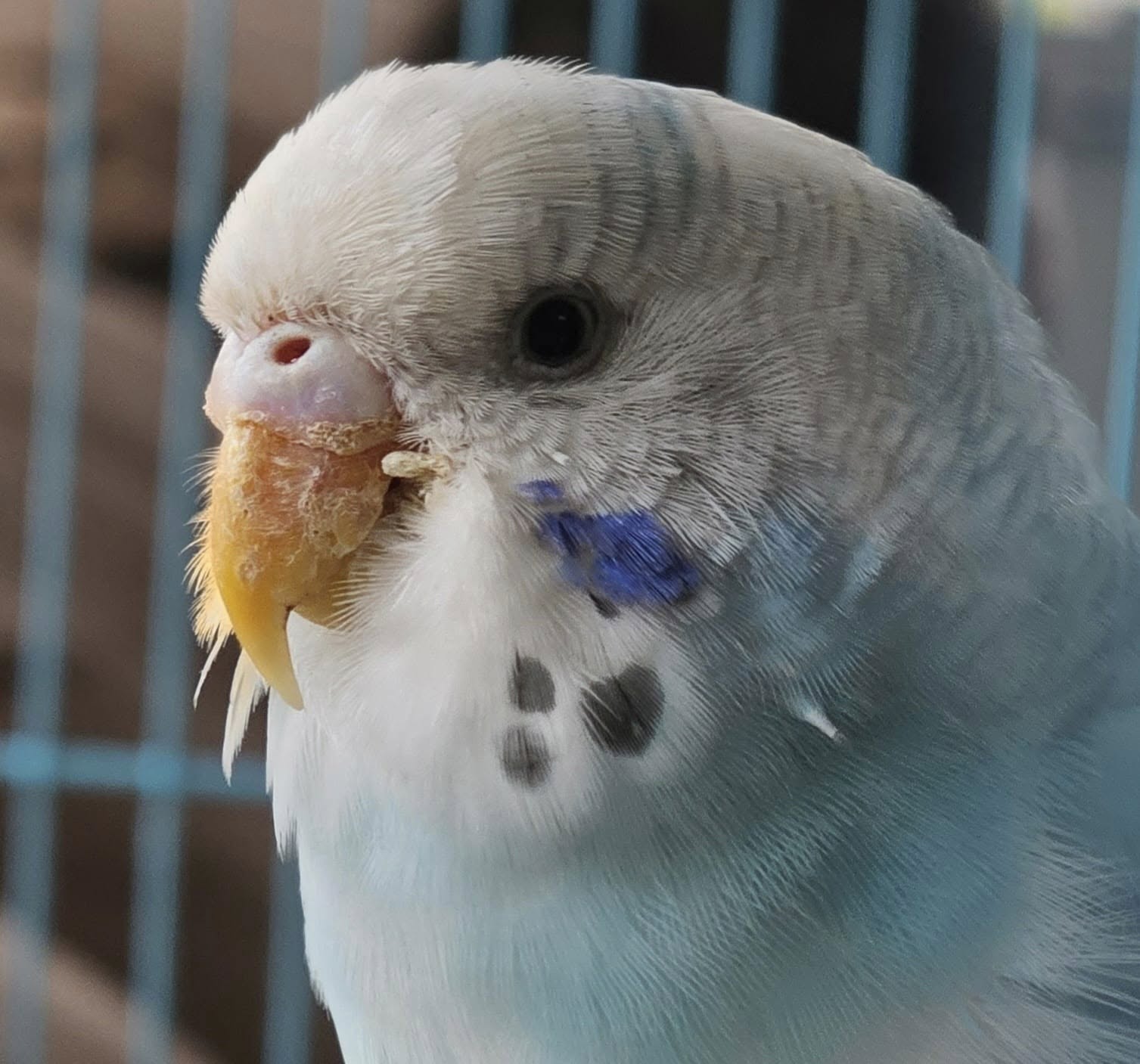
No. Scaly face mite in budgies is caused by Knemidocoptes pilae, a burrowing mite that causes the characteristic crusty, honeycombed appearance around the beak, cere, and sometimes the legs. It is a different species with a different biology, spread by direct contact rather than environmental persistence, and treated differently. Red mite is Dermanyssus gallinae, blood-feeding, nocturnal, living in the cage environment rather than on the bird. Both are significant parasite problems. Neither is the same as the other.
My bird has been scratching more than usual — could this be red mite?
It could be one of several things, red mite among them. Increased scratching and preening, particularly at night or in the early morning, is one of the behavioural signs consistent with red mite irritation. It is also consistent with other parasite problems, dry skin, dietary issues, and other causes. The cage inspection methods described above are the most direct way to investigate whether red mite is the cause. If the cage inspection is negative and the scratching continues, an avian vet visit is the right next step.
One Last Thing
Invasive Species Week is an important annual conversation about species that should not be here and the damage they cause. The species on the government watchlist — the Asian hornets, the invasive plants, the predators of native wildlife — deserve the attention they receive.
The red mite does not make that list. It has been here too long, is too widely established, and causes its damage in too quiet and domestic a context to feature in the conservation conversation.
But in the thirty-five years I have been selling birds and talking to the people who keep them, red mite is the parasite that has caused the most silent, preventable suffering in the most bird homes. Not because it is impossible to manage. Because most owners do not know it is there.
This week, check the cage. One night, one piece of white paper, five minutes in the morning. If you find nothing, you have confirmed that your bird is safe. If you find something, you have caught it early enough to fix it simply.
Come and see us if you want help working out what you are looking at or what to do next. We are at Manor Garden Centre, Cheney Manor, Swindon SN2 2QJ, every day. Get in touch here or call 01793 512400.
Visit Us at Paradise Pets Swindon
We stock cage bird care products including mite treatments, replacement perches, and everything you need to manage a red mite infestation properly. If you are not sure what you are dealing with, come in and describe it — we will help you identify it and sort it.