


Neil has been keeping, breeding, and selling budgies at Paradise Pets Swindon since 1988 — over 35 years of daily first-hand experience with these birds and the people who keep them. A black beak is one of those symptoms that sends owners to the search bar in a panic and sends them to the counter shortly afterwards, still uncertain. The answers online are contradictory, the possible causes range from completely harmless to genuinely serious, and most owners cannot tell which they are looking at. This is his honest guide to every reason a budgie’s beak turns black, what each one looks like, and what to do about each.
A young woman came into the shop holding her phone with a photo on the screen. Her budgie — a young bird, she thought around three months old — had developed dark patches on its beak over the past week or so. She had looked it up online and found articles suggesting everything from normal development to fungal infection to liver disease. She could not work out which she was dealing with and she had come in, she said, because she needed someone to look at the photo and tell her honestly what they saw.
I looked at the photo.
The dark patches were on the upper beak, irregular in shape, distributed in the pattern I have seen hundreds of times in young budgies going through their first moult. The beak itself looked structurally normal — no crumbling, no unusual texture, no asymmetry. The bird in the photo was alert, normally postured, and appeared well.
I told her what she was looking at. New feathers growing through around the cere area were casting shadows on the beak, combined with the normal darkening that occurs in some young budgies as their beak pigmentation develops in the first few months. Nothing wrong. Nothing to treat. Watch it over the next few weeks and it will resolve as the bird matures.
She looked considerably relieved.
Then I told her the other causes — the ones that do require attention — because she deserved to know the difference and because not every dark beak is as innocent as the one in her photo.
What a Healthy Budgie Beak Actually Looks Like
Before going through the causes of black beaks, I want to establish what normal looks like — because without a baseline, the variations that matter are impossible to distinguish from the ones that do not.
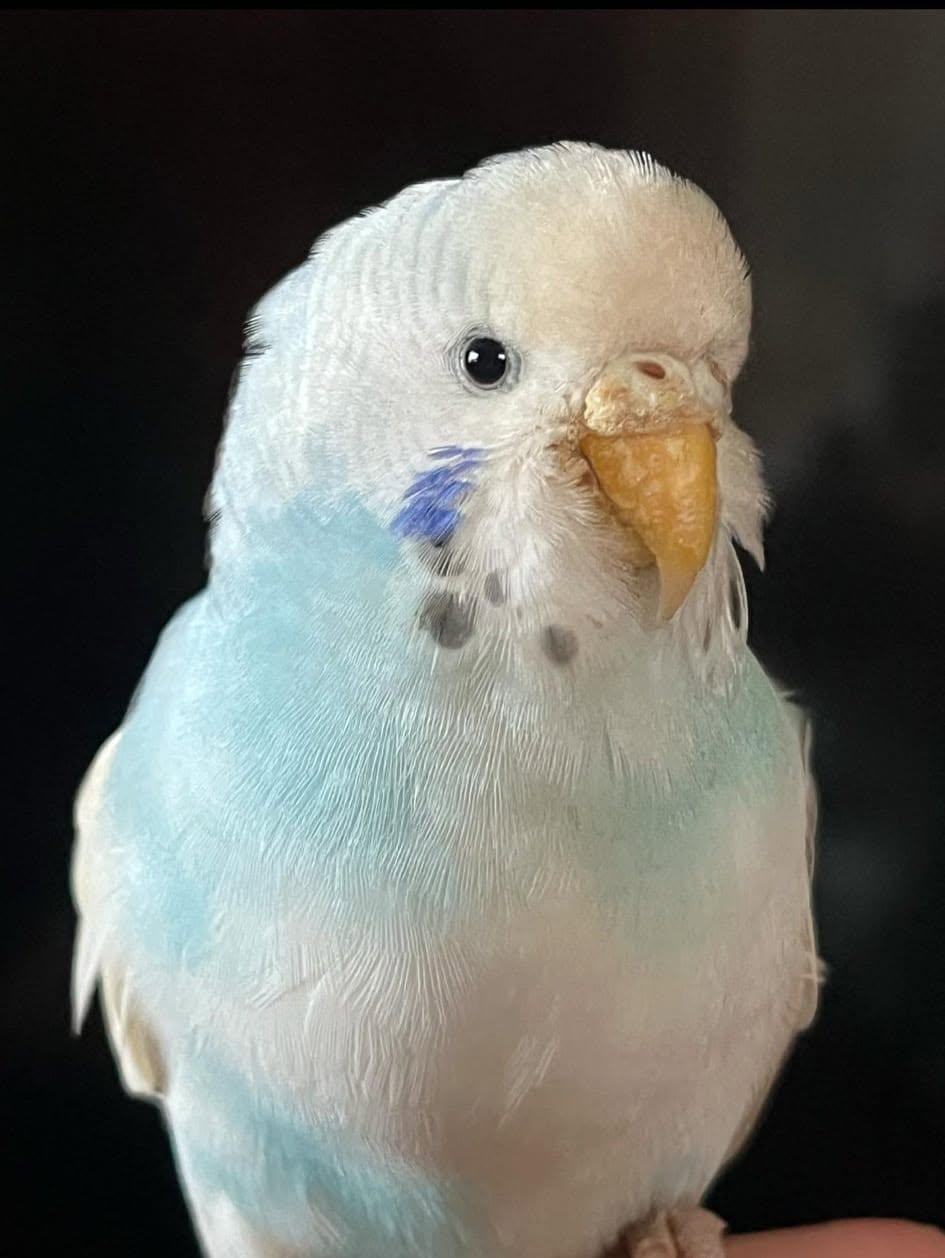
A healthy budgie beak is smooth and symmetrical. In most colour varieties it is a pale horn colour — yellowish, cream, or pale grey — with a consistent surface texture that is neither too hard and dry nor soft and crumbly. The beak curves continuously and evenly from the cere to the tip. The two halves — the upper mandible and the lower mandible — align correctly when the beak is closed. There should be no cracks, no flaking, no areas of unusual texture, and no significant colour variation beyond whatever is normal for the individual bird’s colour variety.
The cere — the fleshy area above the upper beak — is a separate structure and its colour changes with age and hormonal state. It is not part of the beak, but its proximity means cere changes are sometimes mistaken for beak changes and vice versa.
- Smooth, continuous surface with no flaking or crumbling — the hallmark of a healthy beak regardless of colour
- Symmetrical shape — both sides of the upper mandible should be equal; the tip should be centred; overgrowth, deviation, or asymmetry are all worth investigating
- Correct alignment — the lower mandible fits inside the upper when the beak is closed; malocclusion is a problem that needs veterinary attention
- Colour is variable by variety — lutino budgies have pale pink beaks; some colour mutations have naturally darker beaks than others; knowing what is normal for your specific bird is part of knowing when something has changed
The Causes — Every Reason a Budgie’s Beak Turns Black
Normal Development in Young Birds — The Most Common Cause
This is the cause I encounter most often when owners come in with a photo of a dark-beaked young budgie. In birds under six months old, beak darkening — patches of dark pigmentation, an overall darker tone, or irregular dark streaking — is frequently a normal part of development.
Young budgies undergo significant physical changes in their first few months. The first moult, which begins at around eight to twelve weeks, sees the juvenile barring on the forehead replaced by adult plumage, the iris develops its adult ring, and beak pigmentation can change as the keratin matures. In some individual birds this produces temporary darkening that resolves within weeks.
- The darkening appears in patches or streaks rather than as a single solid area — this irregular distribution is characteristic of developmental pigmentation change; it does not have the concentrated, localised appearance of a bruise or a fungal lesion
- The beak surface remains smooth and structurally normal — there is no flaking, no crumbling, no soft areas, and no change in texture; the beak feels and looks normal in every way except the colour
- The bird is otherwise completely well — alert, eating normally, normally postured, active; no other signs of illness
- The darkening fades over weeks as the bird matures — if you are watching it and it is visibly improving over four to six weeks, this was developmental; if it is worsening or not changing, reconsider
- What to do — observe; no intervention needed; if the beak remains dark or worsens beyond eight weeks, have it assessed by an avian vet
Bruising or Trauma
A budgie that has flown into a window, a wall, or a hard object — or has been caught in something — can bruise the beak. Beak bruising appears as a dark discolouration, usually more concentrated and localised than developmental darkening, and often appears suddenly rather than gradually.
- The darkening appeared suddenly following a known or suspected impact — if the bird flew into something yesterday and the beak is dark today, this is the cause
- The discolouration is concentrated in one area — usually the tip or a specific section of the beak rather than distributed across the whole beak
- Minor bruising resolves on its own — the discolouration fades over days to weeks as the damaged tissue heals; no intervention is needed for a minor bruise in a bird that is eating and behaving normally
- Watch for eating difficulties — a bird that has hit something hard enough to bruise the beak may have also injured the surrounding structures; if the bird is struggling to eat, favouring one side, or the beak appears misaligned after an impact, an avian vet visit is appropriate
- Repeated impacts are worth addressing — a bird that regularly flies into windows may benefit from window film or rearrangement of the cage and free-flight space to reduce collision risk
Scaly Face Mite — Knemidocoptes Pilae
This is the cause I want owners to be able to identify clearly — because scaly face mite is common in UK pet budgies, it looks distinctive, it is very treatable when caught early, and it causes permanent damage if left untreated.
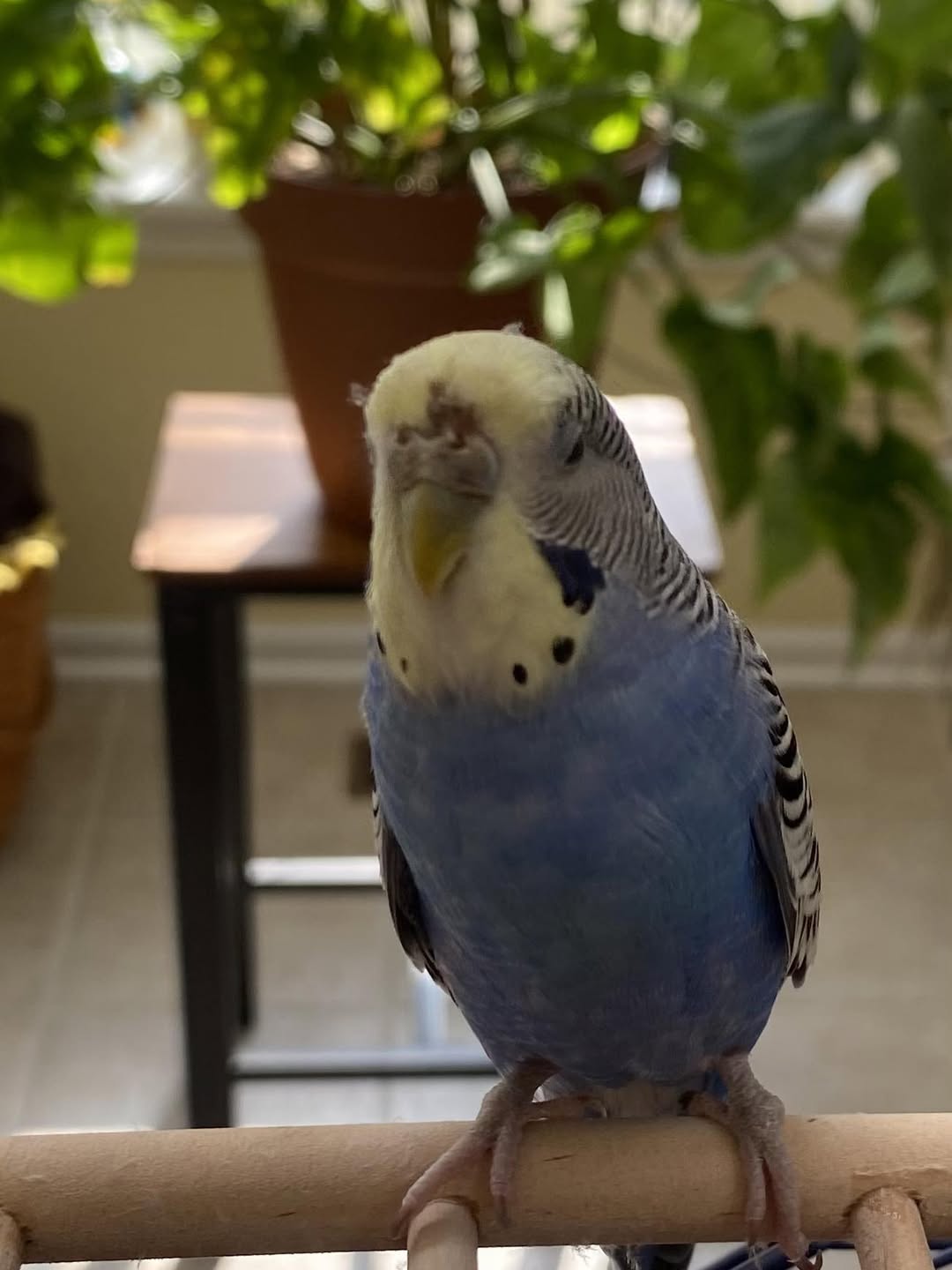
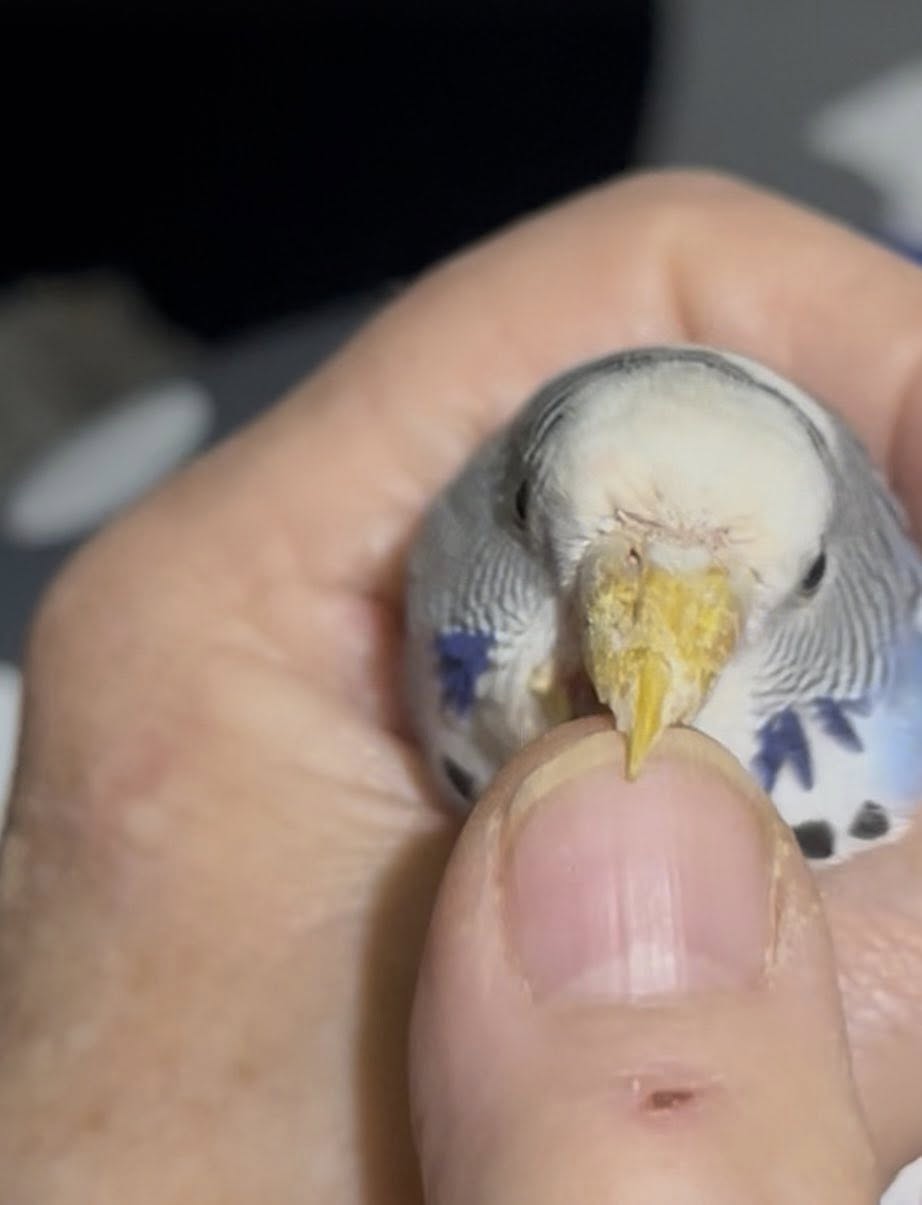 Knemidocoptes pilae is a microscopic mite that burrows under the skin of the cere, beak, and legs. As it tunnels, it produces a characteristic crusty, honeycomb-textured deposit on the surfaces it affects. On the beak, this appears as pale grey to white crusty material at the edges of the beak and at the corners of the mouth — and as the condition progresses, the beak can develop dark areas where the mite damage has affected the keratin underneath.
- The characteristic sign is crusty, honeycomb-textured deposits — not flat darkening but raised, textured material that looks like a miniature coral structure; this is the mite’s tunnelling made visible
- It typically starts at the cere and beak junction — and extends upward over the cere and onto the beak edges; check the corners of the mouth and the area immediately around the cere
- The legs are often affected at the same time — look for similar crusty deposits on the feet and legs; scaly leg mite is the same species affecting a different location
- The beak can become permanently deformed if untreated — the mite causes tissue damage that distorts the beak’s growth pattern; birds with advanced, untreated scaly face have overgrown, misshapen beaks that require ongoing veterinary management
- Treatment is straightforward and effective — an avian vet will prescribe an ivermectin-based treatment, usually applied topically; it works reliably on early-stage infections; do not attempt to remove the crusty material manually — this causes bleeding and pain; treat the cause, not the symptom
- It is contagious between birds — if you have multiple budgies and one has scaly face, all should be assessed; the mite passes between birds in close contact
- The texture is the tell — scaly face mite produces raised, crusty, honeycomb-textured material; developmental darkening and bruising produce flat colour changes with normal beak texture
- Scaly face typically affects the cere first and extends to the beak — it does not appear suddenly on a previously clean beak without affecting the surrounding area
- If you can see anything that looks raised, crusted, or textured around the beak, cere, or corners of the mouth — go to an avian vet; this needs treatment, not observation
- Early treatment produces complete resolution; late treatment resolves the active infection but cannot reverse beak deformation that has already occurred
Liver Disease
This is the cause I tell owners about last in terms of frequency but first in terms of severity — because liver disease producing beak colour changes indicates a bird that is genuinely unwell and needs veterinary attention.
The liver is involved in the metabolism of the pigments that give the beak its colour. When liver function is significantly compromised, these pigments are not processed normally and can accumulate in tissues including the beak, producing darkening. This darkening tends to be more diffuse — affecting the whole beak rather than a specific area — and is almost always accompanied by other signs of illness.
- Liver-related beak darkening is rarely an isolated symptom — it occurs alongside other signs: fluffed feathers during active hours, weight loss, yellowish or green urates in the droppings, reduced appetite, lethargy; a beak that has darkened in an otherwise completely well bird is unlikely to be liver disease
- The darkening tends to affect the whole beak rather than producing patches — an overall darker tone rather than localised dark areas
- The most common dietary cause is a seed-only diet over a prolonged period — high-fat seed diets cause progressive liver damage over months to years; by the time beak changes appear, significant damage has already occurred
- If you see beak darkening alongside any of the other signs listed above — this is a same-day avian vet visit; do not treat this as a wait-and-see situation
Fungal Infection
Fungal infections can affect the beak surface and produce darkening or discolouration. This is less common than the other causes above but worth knowing about — particularly in birds that are immunocompromised from other illness or poor diet.
- Fungal beak lesions often have a slightly soft, powdery, or chalky texture — different from the hard, smooth surface of a healthy beak and different from the honeycomb texture of scaly face mite
- The darkening may be patchy and asymmetrical — not following any predictable pattern
- It occurs most commonly in birds with underlying health problems — a healthy bird with a good immune system is unlikely to develop a primary fungal beak infection; if this is the diagnosis, investigating the underlying cause of immune compromise is part of the treatment
- Requires veterinary diagnosis and antifungal treatment — do not attempt home treatment; antifungal agents suitable for birds require veterinary prescription and the correct product for the specific organism
Dark Food Staining
This one is simple and easily ruled out — but I include it because I have seen owners come in concerned about a dark beak that turned out to be blackcurrant, beetroot, or dark berry staining from a food they had recently offered.
- Check what the bird has eaten in the last 24 hours — dark berries, beetroot, and some leafy greens can temporarily stain the beak; this washes off with normal preening within a day or two
- The staining is usually on the tip and edges of the beak — where food contact is highest; it does not penetrate the beak surface and does not affect texture
- If the dark colour is still present after two days of normal feeding without the staining food — it is not food staining; consider the other causes
Reading What You Are Seeing — A Practical Reference
| What the Beak Looks Like | Most Likely Cause | What To Do |
|---|---|---|
| Patchy dark areas, smooth texture, young bird, otherwise well | Normal developmental pigmentation | Observe; no treatment; reassess if not improving in 6–8 weeks |
| Concentrated dark area, appeared suddenly, history of impact | Bruising from trauma | Monitor; vet if eating is affected or beak appears misaligned |
| Raised, crusty, honeycomb-textured deposits at beak edges and cere | Scaly face mite | Avian vet promptly — needs ivermectin treatment; do not delay |
| Overall darker tone, bird also fluffed, weight loss, abnormal droppings | Liver disease | Avian vet today — do not wait; other symptoms indicate serious illness |
| Patchy, soft or powdery texture, immunocompromised bird | Fungal infection | Avian vet — needs diagnosis and prescription antifungal treatment |
| Dark tip and edges only, appeared after dark food, resolving | Food staining | No action; resolves within 1–2 days with normal preening |
What To Check Before Calling the Vet
- How old is the bird? — under six months, developmental darkening is likely; over two years with sudden onset, investigate more carefully
- What does the beak surface feel and look like? — smooth and normal versus raised, crusty, soft, or chalky; texture is the most important single indicator
- Is the darkening localised or general? — a specific area versus the whole beak; localised suggests bruising or mite; general suggests systemic cause
- What else is going on with the bird? — a beak change in an otherwise completely well bird is almost always developmental, dietary staining, minor bruising, or early mite; a beak change alongside other illness signs changes the picture significantly
- Has the bird eaten anything dark recently? — rule this out first; it takes thirty seconds and eliminates one cause entirely
- Is there anything raised or textured around the cere or beak edges? — if yes, this is not developmental or bruising; go to an avian vet
Frequently Asked Questions
My young budgie has dark patches on its beak. Is this normal?
In a bird under six months old, very often yes. Young budgies undergo significant developmental changes in their first few months including beak pigmentation changes. The key indicators that this is developmental rather than pathological are: the beak surface is smooth with normal texture; the darkening is patchy rather than affecting the whole beak; and the bird is otherwise completely well. If all three of those are true, watch it over six to eight weeks. If the beak is clearing, it was developmental. If the darkening is persisting or worsening after two months, have it assessed.
Could the black beak be scaly face mite?
Look for raised, textured, honeycomb-patterned deposits at the beak edges and around the cere — particularly at the corners of the mouth and where the beak meets the cere. This is the characteristic appearance of scaly face mite. Flat colour change with normal smooth beak texture is not scaly face mite. If there is any raised or crusty material, go to an avian vet — this needs treatment and the sooner it is treated the better the outcome for the beak’s long-term shape.
My budgie’s beak has gone black and it seems unwell. What should I do?
Go to an avian vet today. A beak colour change in a bird that is also showing other signs of illness — fluffing, reduced appetite, weight loss, changes in droppings — is not a developmental or cosmetic issue. These signs together suggest a systemic cause that needs diagnosis and treatment. Do not wait to see if it improves.
Can a black beak be caused by what the bird eats?
Temporarily, yes. Dark berries, beetroot, and some other foods can stain the beak tip and edges. This fades within one to two days with normal preening and eating. If the dark colour is still present after two days without the staining food, it is not food staining. Do not use this as an explanation for persistent beak darkening.
My budgie’s beak went black after flying into the window. Should I be worried?
A small localised dark area following a known impact is almost certainly bruising. In a bird that is eating normally, behaving normally, and does not appear to have any misalignment of the beak, minor bruising resolves on its own over days to weeks. Watch for any difficulty eating or changes in how the beak closes. If eating is affected or the beak looks misaligned, have it checked.
Can I treat a black beak at home?
Developmental darkening and minor bruising need no treatment at all. Food staining resolves on its own. For anything else — scaly face mite, fungal infection, liver disease — home treatment is not appropriate and in some cases (attempting to remove scaly face deposits) actively harmful. If the cause is anything other than the three harmless ones above, it needs a vet visit and prescription treatment.
Where can I get help with my budgie’s beak in Swindon?
Come in to Paradise Pets at Manor Garden Centre, Cheney Manor Industrial Estate, Swindon SN2 2QJ — or call us on 01793 512400. Bring the bird or bring a good photo — ideally both. I will tell you honestly what I think you are looking at and whether it needs a vet visit or whether observation is the right call. Free advice, no obligation. That is how we have done things here for 35 years.
One Last Thing From Me
The young woman who came in with the photo — the one with the young bird and the developmental beak darkening — came back about six weeks later. The beak had cleared completely. The bird had gone through its first moult in the intervening weeks and emerged with adult plumage and a beak that was back to its normal colour and texture.
She said she had been watching it carefully every day, as I had suggested.
“I almost went to the vet three times,” she said. “But it just kept getting better.”
That is the honest truth about most dark beak presentations in young birds. Time and observation tell you more than an anxious search session, and knowing what to watch for means you catch the change that would actually need attention rather than treating normal development as a crisis.
The beak is one of the best health indicators on a budgie. Learn to read it — the texture, the colour, the symmetry, the alignment — and you have a reliable daily health check built into every interaction you have with the bird. Notice when something changes. Know which changes mean watch and which mean act. That knowledge is what makes the difference.
Not Sure What You Are Looking At With Your Budgie’s Beak? Come In.
Bring the bird or bring a photo. I will tell you honestly what I think it is and what, if anything, needs to happen next. Free advice, no obligation. That is how we have done things here for 35 years.