

Neil has kept, bred, and sold budgies at Paradise Pets Swindon since 1988 — over 35 years of first-hand experience with these birds. Feather loss is one of the most common concerns owners bring to the counter. The causes range from entirely normal to genuinely serious — and the first job is always to work out which one you are looking at. This guide covers all of them.
Someone comes in holding their budgie — sometimes in a travel cage, sometimes just cupped in their hands — and says: “Its feathers are coming out. I don’t know if it’s normal or if something’s wrong.”
Most of the time, it is normal. A budgie going through its annual moult will look rough for a few weeks — sparse in places, pin feathers coming through, a slightly tatty appearance that bears almost no resemblance to the sleek bird it was a month ago. It is startling if you have not seen it before. It is entirely expected once you have.
But feather loss is not always a moult. And the causes that are not a moult range from fixable-at-home to needs-a-vet-this-week, with a few that need a vet today.
Knowing which category you are in is what this guide is for.
The First Question — Is This a Moult or Something Else?
Before anything else, I look at how the feather loss is distributed and what the rest of the bird looks like.
A moult is symmetrical and gradual. Feathers thin out evenly across the body. New pin feathers — the small, sheath-covered feather shafts that will become the next set of feathers — are visible coming through the skin. The bird looks a bit rough around the edges but is otherwise alert, eating normally, and behaving as it always does.
Feather loss from other causes looks different. It tends to be localised — specific patches, often in areas the bird can reach with its beak. Or it affects particular feather types — the flight feathers or tail feathers specifically, rather than the body feathers. The bird may look unwell alongside the feather loss, or may be visibly pulling at its own feathers. The skin beneath the bare patches may look red, irritated, or abnormal.
If the feather loss is gradual, evenly distributed, the bird is well in every other respect, and new feathers appear to be growing through — this is almost certainly a moult. Read the moult section below and then watch the bird for the next three to four weeks. It will come through the other side looking better than before.
If the feather loss is patchy, concentrated in specific areas, or accompanied by any change in the bird’s health or behaviour — read the rest of this guide carefully and act accordingly.
Normal Moulting — What It Looks Like and When to Expect It
Every budgie moults. It is as unavoidable as it is alarming to owners who have not seen it before.
Moulting happens one to two times a year, typically triggered by changes in light levels — often in spring and autumn, though the timing varies by individual bird and household light conditions. The old feathers loosen and fall out over several weeks, replaced by new ones growing through. The whole process, from the first loose feather to a full new coat, takes roughly four to eight weeks.
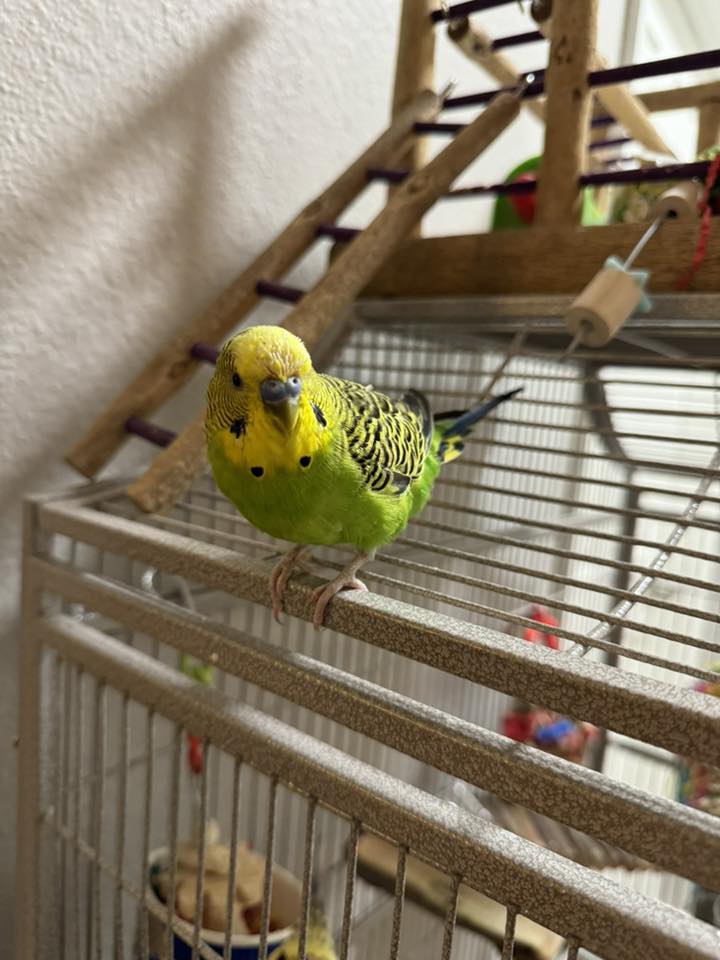
During the moult, the bird will look noticeably different from its usual self. Feathers will be sparse in certain areas. Pin feathers — the new shafts encased in a waxy sheath — will be visible on the head particularly, where the bird cannot preen them open itself. A bird mid-moult can look quite scruffy and significantly less polished than its normal presentation.
What the bird should not look like during a normal moult: unwell. Appetite stays normal. Behaviour stays normal. The bird is still alert, still vocal, still moving around the cage. It is just going through a cosmetic process that looks worse than it is.
One practical note: a bird in full moult may be slightly more sensitive than usual. The growing pin feathers on the head are tender. If your budgie is normally happy to have its head scratched and suddenly objects during the moult, this is why. Be gentle around the head during this period and let the bird guide how much contact it wants.
No treatment is needed for a normal moult. Continue the regular diet — ensuring good nutritional variety will support feather regrowth quality. Ensure the bird is warm enough and not in draughts, which can be uncomfortable during moult. And wait. The bird will look better in a few weeks.
Feather Plucking — When the Bird Is Doing It to Itself
This is the cause I see most often after normal moulting, and it is the one that most concerns me when it comes in because it tells me something is significantly wrong in the bird’s environment or psychological state.
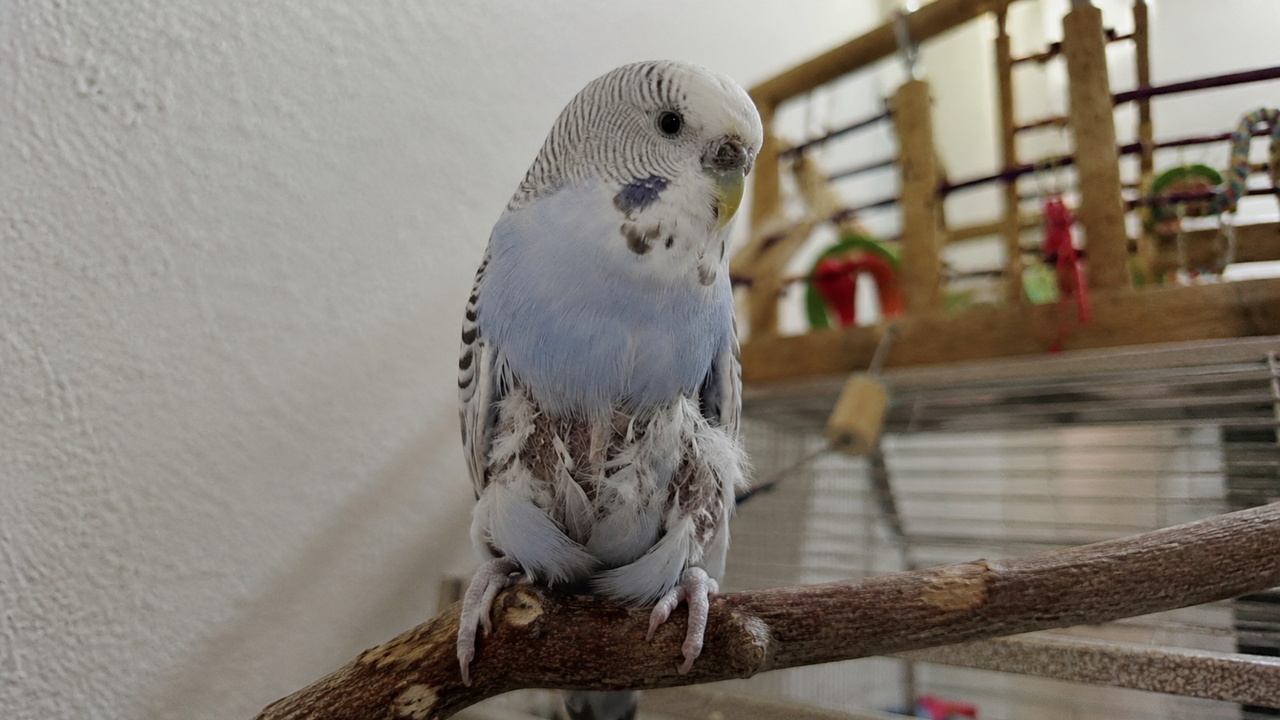
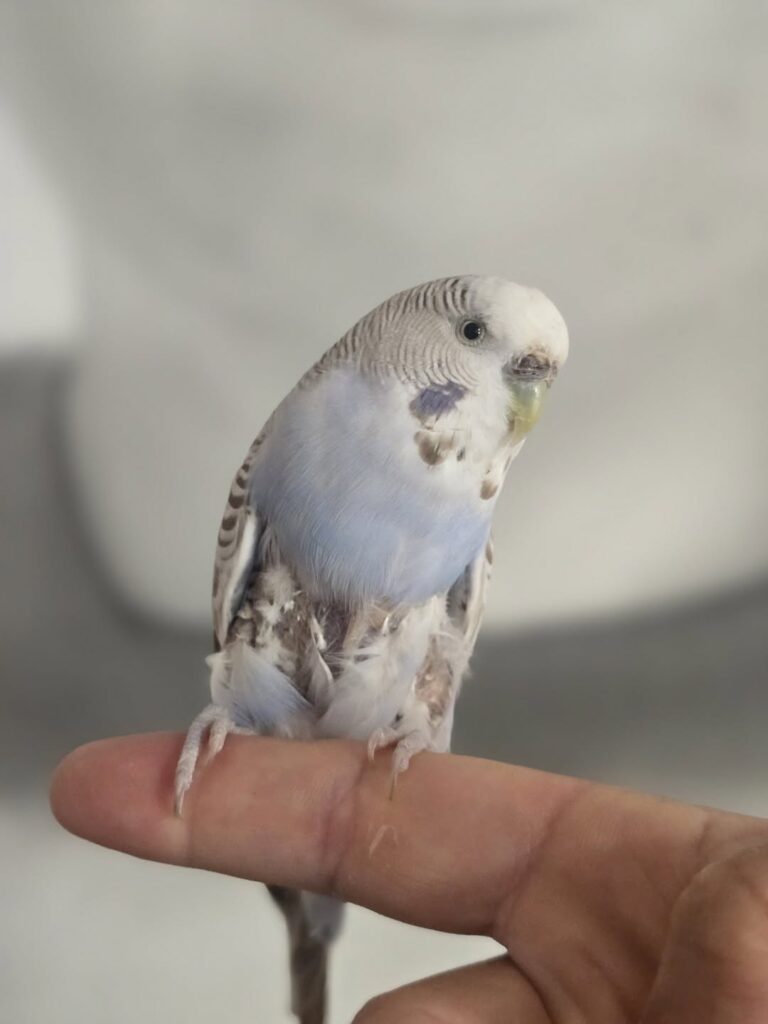
Feather plucking — the bird pulling out or chewing its own feathers — produces a very specific pattern of feather loss. It is localised to areas the bird’s beak can reach: the chest, the flanks, the abdomen, the tops of the wings. The head is almost never affected, because a bird cannot pluck its own head. If you see feather loss on the body but a fully feathered head — plucking is the likely cause.
The feathers that remain in plucked areas are often damaged at the tips, frayed, or chewed rather than cleanly lost. The skin beneath may look slightly red or irritated in advanced cases.
Why do budgies pluck? Almost always, the answer is the environment — not the bird. The specific causes I see most consistently:
Isolation and loneliness. A single budgie with insufficient human interaction, or one that has lost its companion, will sometimes develop feather-destructive behaviour as a response to the psychological stress of isolation. A flock animal living alone, without adequate stimulation, redirects its distress inward. The solution is companionship — a second bird, or significantly more daily human interaction and out-of-cage time.
Boredom and under-stimulation. A budgie in a small cage with nothing to do will pluck. Enrichment — foraging toys, rotating objects, things to chew and investigate — is not optional decoration. It is the behavioural equivalent of the variety a bird would find in a natural environment. A cage that is boring produces a bird that finds ways to occupy itself, and feather plucking is one of them.
Chronic stress. A cage in the wrong position — near a predator, in a high-traffic area with no quiet retreat, near construction noise, in a space where the bird is constantly startled — can produce chronic low-level stress that manifests as plucking. Reviewing and improving the cage environment often reduces or resolves the behaviour.
Skin irritation. Sometimes feather damage begins because the skin is irritated — by mites, by dry air, by an allergic response to something in the environment — and the bird’s scratching and preening in response crosses into self-damage. If the plucking seems to be concentrated around areas of visible skin irritation, a vet check to rule out a parasitic or allergic cause is appropriate.
I have written in detail about the full range of causes and treatments in our guide on budgie feather plucking. If you suspect this is what you are dealing with, read that guide alongside this one.
Over-Preening by a Cage Mate — When the Other Bird Is the Problem
This is the budgie equivalent of barbering in gerbils — one bird in a pair or group chewing or over-preening the feathers of another. It is a dominance behaviour rather than aggression, and it can be easy to miss because it often happens when owners are not watching.
The pattern of feather loss is similar to self-plucking — body feathers, not flight or tail feathers — but the affected bird’s head may also be involved, because the cage mate can reach it. If both birds otherwise seem fine but one is consistently looking worse for wear and you have noticed the other bird doing a lot of preening in the other’s direction, over-preening is worth considering.
Mild over-preening between bonded birds is normal and not a concern. Persistent, heavy over-preening that is leaving one bird noticeably bare needs to be addressed. The practical approach: more space, more enrichment, more hiding places and perches that allow the subordinate bird to move away from the dominant one. If the behaviour is severe and not improving, the pair may not be compatible and separating them — introducing each to a more suitable companion — may ultimately be necessary.
Come and talk to us if you think this is what you are seeing. We can advise on the right approach based on the specific situation.
Mites — The Cause That Hides in Plain Sight
There are two types of mites that commonly affect UK pet budgies, and they cause different patterns of feather and skin damage.
Scaly face mite — Cnemidocoptes pilae. This mite burrows into the skin around the cere, beak, eye rings, and sometimes the legs, producing a distinctive honeycomb or scaly, crusty appearance in those areas. Feather loss directly from scaly face mite is less pronounced than the skin changes, but the crusting around the cere can interfere with feather follicles in that region and cause localised damage. It is very easily treated with ivermectin prescribed by a vet — treatment needs to happen because scaly face mite does not resolve on its own and progresses to beak deformity if left.
Feather mites. These mites live in the feather structure itself and cause feather damage — fraying, breakage, and thinning — without the obvious skin changes that scaly face mite produces. A bird with feather mites will often scratch more than usual, particularly at night when mites are more active. The feathers look damaged and dull rather than cleanly lost. Again, a vet can confirm through examination and prescribe appropriate treatment.
If the feather loss is accompanied by visible skin changes around the cere or legs — crusty, layered, abnormal — go to a vet and mention scaly face mite specifically. It is immediately recognisable to a vet who sees birds regularly, and treatment is straightforward.
PBFD — The Serious One Every Owner Should Know About
Psittacine Beak and Feather Disease — PBFD — is a viral disease that I want to cover clearly because it is serious, progressive, and has no cure. It is not common in UK pet budgies, but it occurs, and knowing what it looks like means it gets identified rather than mistaken for something else.
PBFD affects the feathers and the beak. In budgies, the feather changes appear first — typically in the flight feathers and tail feathers, which become abnormal: misshapen, shortened, retained in their sheaths, or shed and not replaced. The pattern progresses inward over time, eventually affecting the body feathers too. New feathers that grow in are abnormal. The beak may eventually become overgrown or deformed.
The affected bird often seems otherwise well in the early stages — eating, moving around, not visibly distressed. The feather changes are the giveaway.
PBFD is caused by a circovirus. It is diagnosed through a specific blood test or feather test. There is no treatment. Management focuses on supporting the bird’s quality of life and preventing spread to other birds.
If your budgie’s flight and tail feathers are abnormal — misshapen, retained in sheaths, not regrowing after the moult — particularly in a young bird, see a vet with avian experience and mention PBFD specifically. Early identification matters for managing any other birds that may have been in contact.
Nutritional Deficiency and Environmental Causes
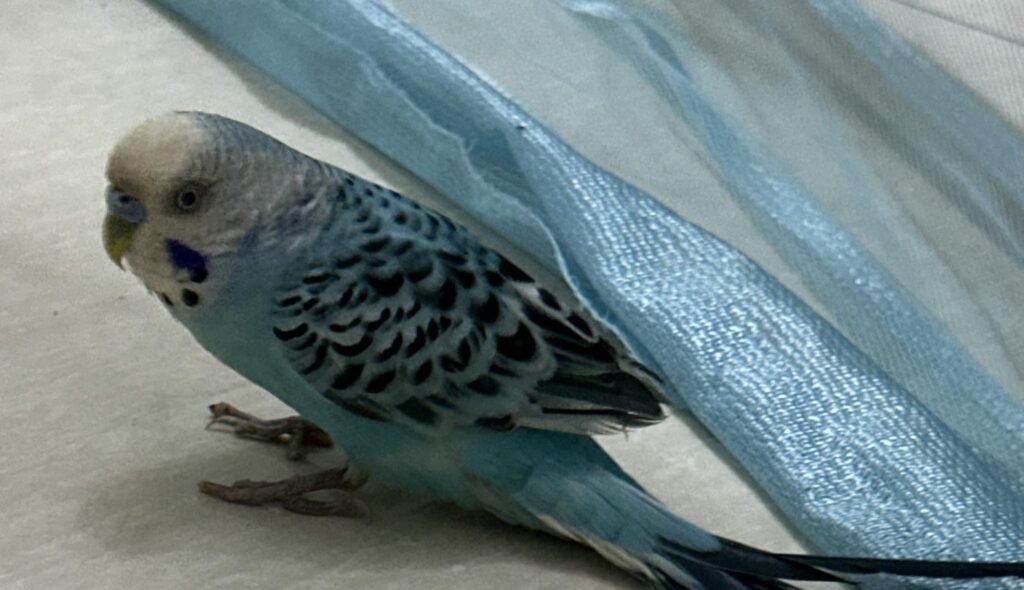
A budgie on a poor diet will have poor feather quality long before it has obvious health problems. A seed-only diet — which is how the majority of UK pet budgies are fed — lacks the protein, vitamins, and minerals needed to grow and maintain healthy feathers. The result, over time, is feathers that are dull, brittle, and shed more easily than they should.
This is a gradual problem rather than an acute one. The feathers do not fall out in patches. They simply look worse over time — less glossy, less cleanly formed, with more breakage and fraying.
The fix is improving the diet. Quality pellets, fresh leafy greens and vegetables daily, and a seed mix as a base rather than the whole diet. Our complete guide on what budgies should eat covers the full picture. Feather quality improves with diet but takes time — give it the full moult cycle to see the real difference.
Environmental irritants also affect feather condition. Cigarette smoke, aerosol sprays, scented candles, and cooking fumes cause chronic respiratory and skin irritation that manifests in part through feather quality. A bird living in an environment with regular chemical exposure will have poorer coat condition than one in clean air. I cover the full range of airborne dangers in our guide on why budgies sneeze.
- “It must be moulting — it always moults this time of year” — Moulting does tend to follow a seasonal pattern, but that does not mean every feather loss episode in autumn is a moult. If the feather loss is patchy rather than gradual, if it is concentrated in specific areas, or if the bird seems unwell alongside the feather loss — those details matter regardless of the time of year.
- “It’s pulling its feathers because it hates me” — Feather plucking is almost never about the owner personally. It is about the bird’s environment — insufficient stimulation, isolation, stress, or a skin irritation driving the behaviour. The bird is not expressing anger. It is expressing a need that is not being met.
- “They both have feather loss so it must be something in the environment” — If both birds in a pair have feather loss in the same areas, environmental cause is possible — but so is one bird plucking the other, or PBFD which spreads between birds. Both birds should be examined rather than assuming one explanation covers both.
- “Pin feathers mean the bird is stressed” — Pin feathers are growing feathers. Seeing them means the bird is moulting — which is normal. A bird mid-moult will have pin feathers on the head particularly. They are a sign of healthy feather replacement, not stress.
- “I’ll wait and see if the feathers grow back on their own” — For normal moulting, watching and waiting is entirely appropriate. For plucking, mites, or PBFD — waiting allows the condition to progress. Identify the cause first, then decide whether watchful waiting makes sense. For anything involving skin changes or abnormal feather regrowth, do not wait more than a week before seeking advice.
When to See a Vet — The Honest Summary
- Gradual, even feather loss across the body, pin feathers growing through, bird is eating and behaving normally.
This is a moult. No vet needed. Keep the bird warm, maintain a good diet, and give it four to eight weeks. It will come through the other side with a full new coat. - Patchy feather loss on chest, flanks, and abdomen — head is fully feathered — bird may be seen preening excessively.
This is likely feather plucking. Address the environment first — enrichment, companionship, cage position, stimulation. If the behaviour continues despite environmental improvement, a vet check to rule out a skin or parasitic cause is appropriate. - Feather loss on one bird alongside another bird doing a lot of preening in its direction.
Possible over-preening by a cage mate. More space, more enrichment, more break-of-sight perching options. Separate if severe and not improving. Come and talk to us before making changes to the pairing. - Crusty, layered, or scaly deposits around the cere, beak, eye rings, or legs alongside feather changes.
Scaly face mite. Vet this week — it is easily treated but does not resolve without treatment and progresses to beak deformity if left. - Abnormal flight or tail feathers — misshapen, retained in sheath, or not regrowing after moult — particularly in a young bird.
Possible PBFD. Vet soon, with avian experience. Ask about PBFD testing. If confirmed, other birds that have been in contact need to be assessed. - Any feather loss alongside weight loss, lethargy, change in droppings, or any other sign the bird is unwell.
Vet today. Multiple signs together mean the situation has progressed. Do not wait for a convenient appointment.
What I Tell Budgie Owners at the Counter
When someone brings in a feather-losing budgie, or describes the situation to me, the questions I ask are always the same. Where is the feather loss? Is the head affected? What does the skin look like underneath? Is the bird eating normally? Are there any other birds in the cage?
Those five questions get me most of the way to an answer in most cases. The location and pattern of feather loss is the most informative single piece of information — it often tells me immediately whether I am looking at a moult, a plucking situation, a mite issue, or something that needs diagnostics.
The message I always leave people with: know what your bird looks like normally. A budgie owner who observes their bird closely enough to know what a fully feathered coat looks like for their specific animal will notice the earliest changes. Earliest is always better — easier to address, more options, better outcomes.
If you are not sure what you are looking at with your budgie, come in. Bring the bird if you can, or a clear photograph if not. We are at Manor Garden Centre, Cheney Manor Industrial Estate, Swindon, SN2 2QJ — open every day. Or call us on 01793 512400.
Visit Us at Paradise Pets Swindon
We stock budgies year-round — all UK-bred, all handled from a young age. If you have a concern about your budgie’s feathers or any other aspect of its health, come in and talk to us. Bring the bird or a photo. Free advice, no obligation — thirty-five years of experience with these birds means we have seen almost every variation of every problem.
We also stock cockatiels, canaries, and finches, alongside a full range of guinea pigs, rabbits, and gerbils and hamsters.