
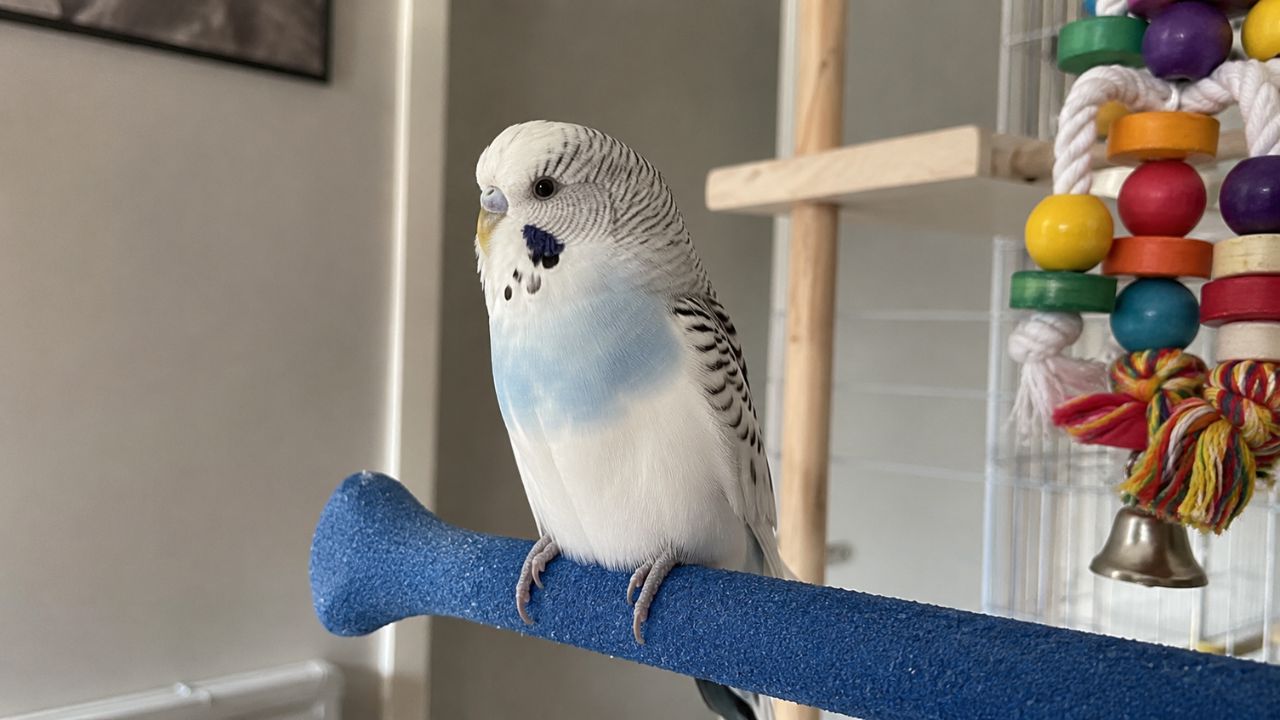

Neil has kept, bred, and sold budgies at Paradise Pets Swindon since 1988 — over 35 years of first-hand experience with these birds. In that time, the question of budgie noise has been one of the most consistent concerns he hears at the counter. This article is his honest guide to what actually determines how loud a budgie is — and how to manage it in a quiet home.
An elderly couple came into the shop about eighteen months ago. They had kept budgies years ago — in their forties, when their children were still at home and the house was full of noise anyway. Now they were in their seventies, living in a quiet house, and wondering whether a budgie would work for them again.
The husband was slightly hard of hearing. The wife was not. She was, she told me with great precision, quite particular about noise.
I told her what I am going to tell you in this article. Budgies are not silent pets. They never will be. But within the range of what a budgie does, there is significant variation — and understanding what drives that variation gives you real tools for managing it.
We spent about fifteen minutes going through it. They bought one female budgie — a quiet, gentle bird I had in the shop at the time — and they set her up in the living room with the specific management approach I recommended. The wife rang me about two months later. She said the bird was perfect. Quiet enough that she barely noticed her during the day, but present enough to feel like company.
That conversation is what this article is about.
The Honest Truth About Budgie Noise
Before I go any further, I want to be completely clear about something — because I think owners deserve honesty rather than reassurance that turns out to be wrong.
A budgie will make noise. That is part of what a budgie is. A bird that makes no noise is an unwell bird, and I would not wish that on anyone. The question is not “can I have a silent budgie” — you cannot — but “can I manage budgie noise in a way that works for a quieter household.” The answer to that is yes, if you approach it correctly.
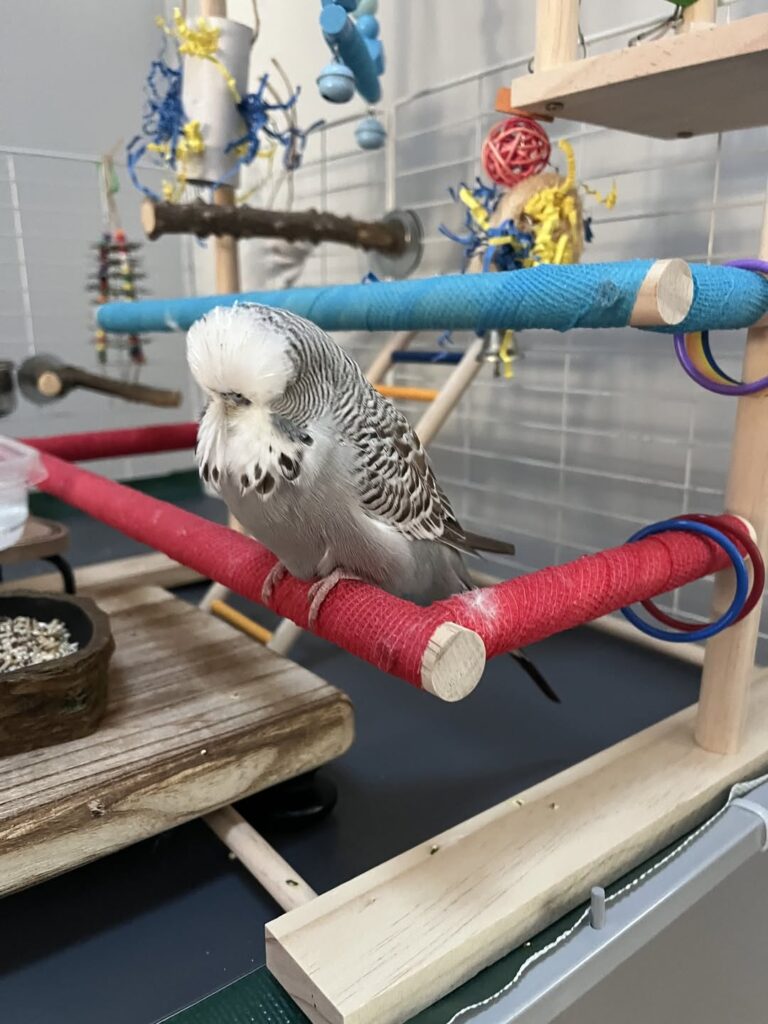
What budgies do not do — and this is important for context — is the sustained, penetrating, wall-carrying calls that cockatiels produce. A cockatiel’s morning call is a genuinely different category of noise to budgie chatter. If you have been researching birds for a quiet home and you have come across cockatiels, please read our article on why cockatiels are not suitable for quieter homes before making any decisions.
Budgies, by comparison, produce a chattering, whistling sound that is relatively contained. It carries within a room but rarely through walls in the way that larger parrots do. For most quiet homes — including those with noise-sensitive occupants, elderly residents, or thin walls between neighbours — budgies are genuinely manageable with the right approach.
What Actually Determines How Loud a Budgie Is
This is the section that most articles skip — and it is the most useful part of this guide. Because budgie noise is not fixed. It varies significantly based on several factors that are within your control.
1. Male vs Female — The Biggest Factor
If you are keeping budgies in a quiet home, the sex of the bird is the single most impactful variable. Male budgies are substantially more vocal than females. Males chatter throughout the day, develop songs and whistles, call back when you speak to them, and are generally the louder sex.

Female budgies are quieter. They vocalise less frequently, do not develop the elaborate songs that males produce, and tend to be more contained in their noise output. For a quiet home, a female is the more appropriate choice.
I want to be honest about the trade-off, though — because there is one. The vocalisation of a male budgie is also what makes a budgie feel like a genuine presence in the room. A quiet female is pleasant company, but she will not fill the house with the cheerful chatter that many people imagine when they think of a budgie. If you want that experience, a quiet home may require some adjustment on both sides.
2. Single Bird vs a Pair
This is where the advice for a quiet home differs from the advice I give most other owners — and I want to explain why.
In most circumstances, I recommend two budgies rather than one. Flock animals need company, and two birds together are generally healthier and happier than one alone. But two birds are also louder than one — because birds that have each other call to each other, respond to each other, and create a back-and-forth that amplifies the overall noise level.
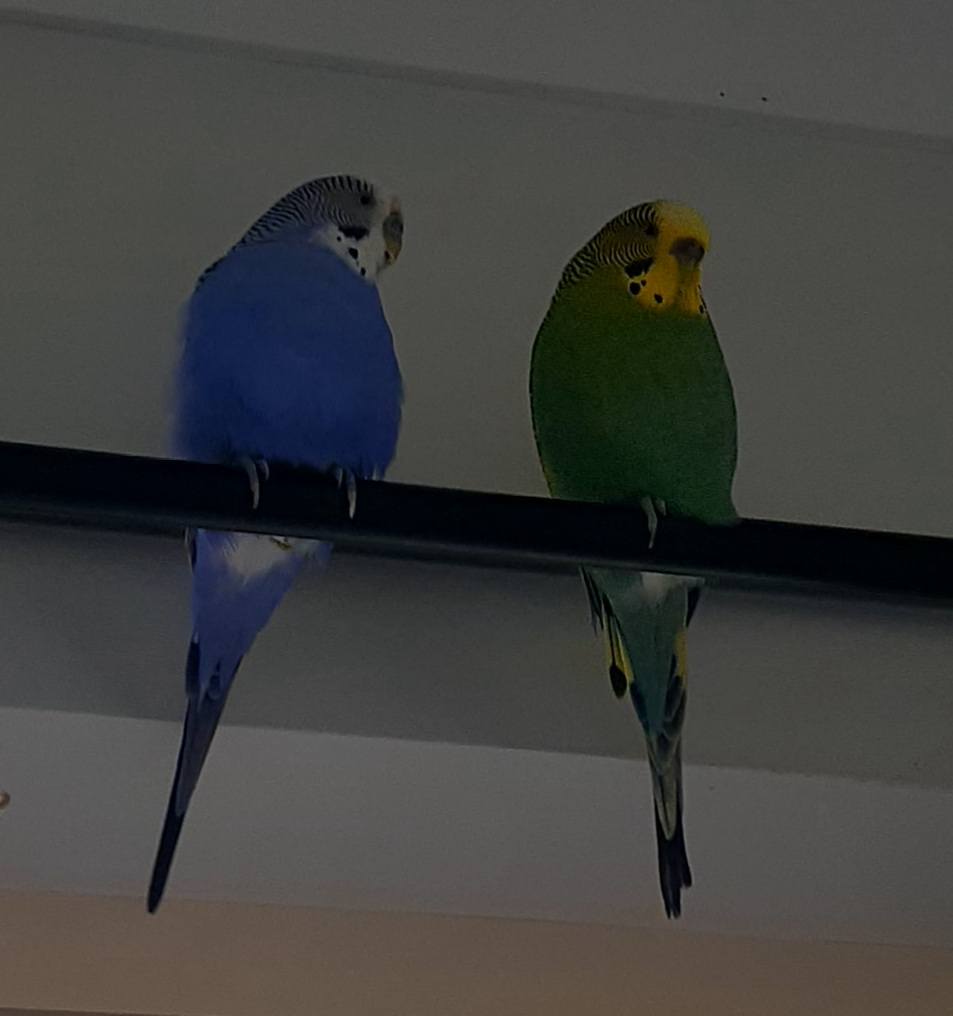
For a genuinely quiet home — where noise sensitivity is a real concern — a single female budgie is a reasonable choice. The noise level is significantly lower than a pair, and the welfare concern of keeping a single bird can be partially addressed with enrichment, daily interaction, and careful attention to the bird’s needs.
I say “partially addressed” deliberately — a single bird is still a single bird, and there is no perfect substitute for avian companionship. But for owners who genuinely cannot manage the noise of two birds, one well-kept female is preferable to two birds in an environment that is poorly suited to their noise.
3. Light Hours and Routine
This is the management tool that makes the biggest practical difference for quiet homes, and it is the one I spend the most time explaining at the counter.
Budgies are most vocal at two specific times — in the morning when the lights come on, and in the early evening as they prepare to settle. These are the periods of highest noise output, and they are directly linked to light.
- Keep the cage covered until a reasonable hour — a budgie in a dark cage is a quiet budgie. If you cover the cage until eight or nine in the morning, you eliminate the early morning vocalisation entirely. The bird simply does not know it is morning yet.
- Limit total light hours to ten to twelve per day — this keeps hormonal behaviour in check, which directly reduces vocalisation. A bird experiencing hormonal peaks is a louder bird.
- Cover the cage at the same time every evening — consistency is key. A bird on a predictable schedule settles more quickly and calls less at settling time than one whose routine is inconsistent.
- Avoid stimulating the bird at quiet times — sudden sounds, people moving quickly near the cage, and unpredictable activity near the cage all trigger vocalisation. In a quiet home, the environment around the cage should be calm and consistent.
4. Cage Position
Where you put the cage affects how much noise you actually hear — not because it changes the bird’s volume, but because it changes how the sound travels through your home.
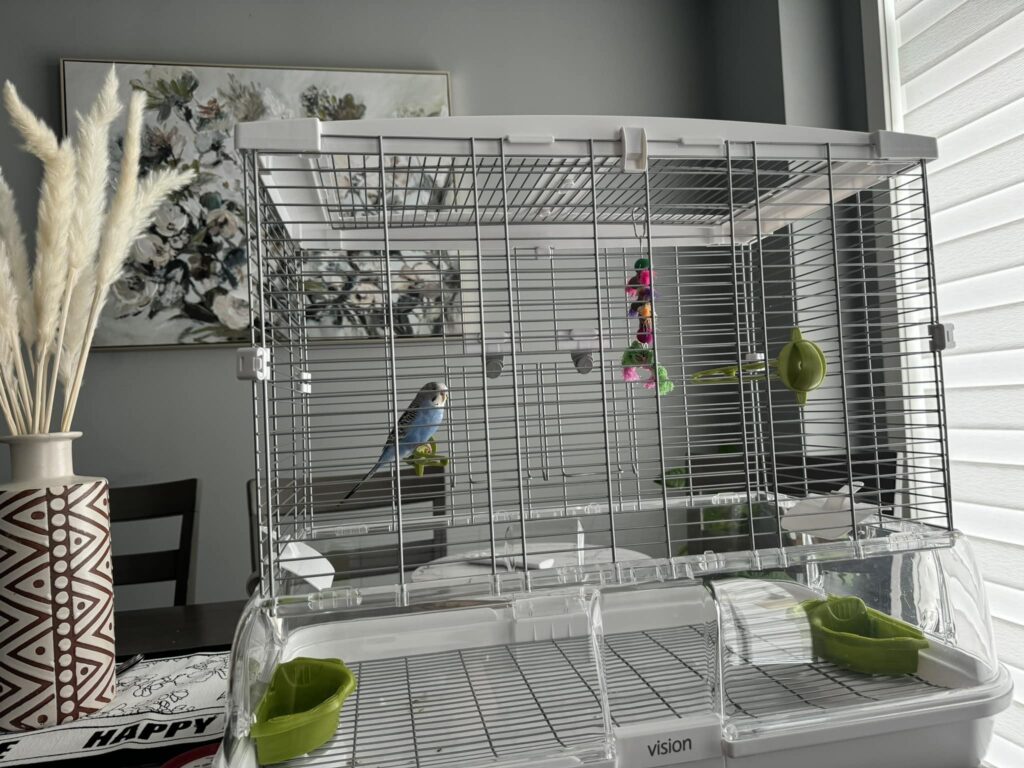
A cage positioned against an external wall rather than a shared internal wall contains the sound within your own home rather than transmitting it to neighbours. A cage in a room with soft furnishings — sofas, carpets, curtains — will sound quieter than the same cage in a bare, hard-surfaced room, because soft furnishings absorb sound rather than reflecting it.
Positioning the cage in a room that has a door you can close is useful — if you need a period of quiet for a call or a rest, closing the door between you and the cage reduces the audible noise significantly without distressing the bird.
5. Enrichment and Stimulation
A bored budgie is a louder budgie. A bird with nothing to do vocalises more — partly as a stress response, partly as a bid for attention. A well-enriched bird, with things to investigate, shred, and explore, is generally calmer and quieter than one sitting in a sparse cage with two toys.
Foraging toys, shreddable materials, swings, and ladders all give a bird something to do that is not vocalising. Rotating toys weekly keeps the enrichment fresh. This is good practice for any budgie owner, but for a quiet home it has a specific practical benefit.
Which Budgies Are the Quietest — By Type
Owners sometimes ask whether certain colour varieties or breeds of budgie are quieter than others. Let me give you the honest answer.
There is no consistent, reliable evidence that specific colour mutations produce quieter birds. The colour mutations in budgies — the blues, yellows, whites, and pied varieties — are the result of selective breeding for appearance, not temperament or noise level.
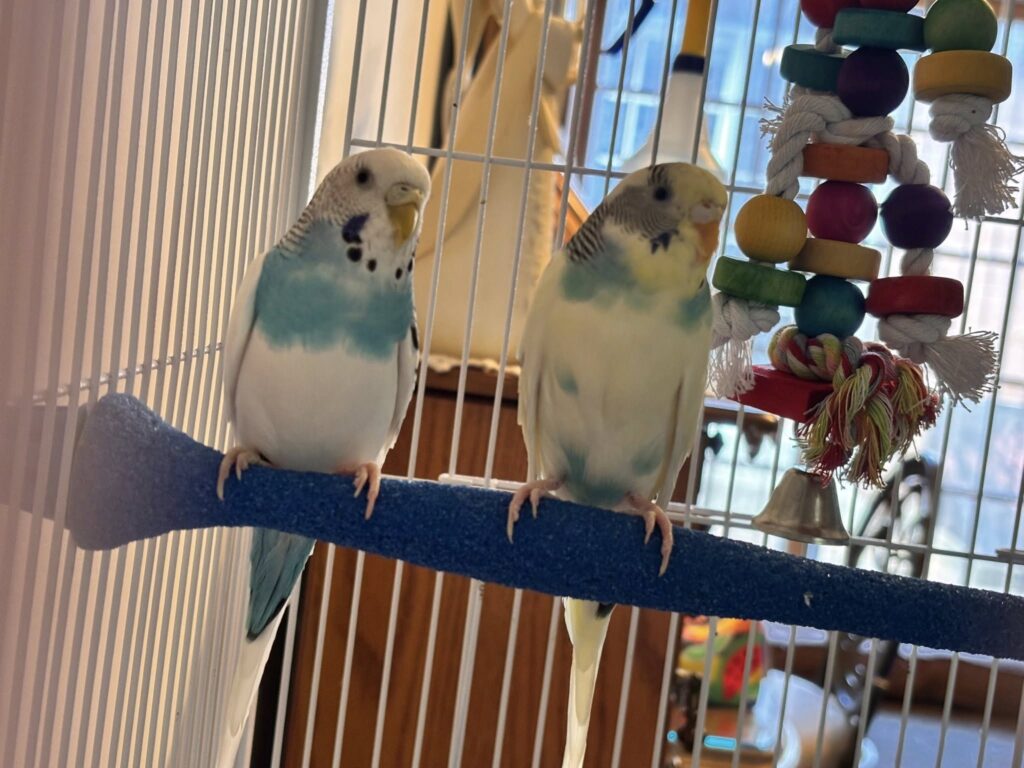
What does vary — and this is the honest answer — is individual temperament. Some individual birds are naturally quieter and more contained than others, regardless of colour or sex. An experienced seller can often identify these birds — the ones that are calm and relaxed rather than excitable and reactive — and steer you toward them.
When you come into the shop, I always suggest spending a few minutes watching the birds before choosing. The bird that is sitting calmly, preening, and not reacting dramatically to every sound in the room is a different temperamental type to the one that is constantly calling, climbing the bars, and reacting to everything. For a quiet home, the calmer individual bird is the better choice regardless of colour.
A Practical Quiet-Home Setup Guide
Right. Here is the practical summary — exactly what I would recommend to someone setting up a budgie for a quiet household.
| Decision | Recommendation for a Quiet Home | Why |
|---|---|---|
| Sex | Female | Significantly less vocal than males |
| Number of birds | One, with excellent enrichment | Two birds amplify noise; single female is most manageable |
| Light hours | Ten to twelve maximum, covered until 8–9am | Controls the loudest periods of vocalisation |
| Cage position | Against external wall, soft-furnished room, closeable door | Absorbs and contains sound within the room |
| Enrichment | High — foraging toys, rotated weekly | A stimulated bird is a calmer, quieter bird |
| Routine | Very consistent — same times every day | Predictable routine reduces anxiety-based vocalisation |
| Individual bird selection | Choose the calmest individual — watch before choosing | Temperament varies between individuals regardless of sex |
What I Tell Owners Who Are Worried About Noise
When someone comes in specifically concerned about noise, I always ask them to describe their quiet home to me — because “quiet home” covers a very wide range.
A retired person living alone who values peace and quiet during the day is very different to a couple who both work and want a calm evening environment. A person with noise-sensitive neighbours is different to someone in a detached house. A household with someone who sleeps during the day — a night shift worker, someone with a health condition — is different again.
The setup I have described in this article — single female, covered mornings, consistent routine, good enrichment, cage in a soft-furnished room — works for most quiet home situations. But if your specific situation is unusual, come in and talk it through. I would rather spend fifteen minutes getting it right than have you come back in three months with a bird that is not working in your home.
The Birds That Are Not Suitable for Quiet Homes
I want to end with this, because I think it is as important as everything I have already said.
If you are researching birds for a quiet home, please do not buy a cockatiel. I have written about this at length, but the short version is that cockatiels have morning and evening calls that carry through walls in a way that budgies simply do not. They are wonderful birds — but not for quiet homes, not for flats with shared walls, and not for noise-sensitive households.
Sun conures, ringnecks, and most larger parrots are equally inappropriate for the same reasons, only more so.
A budgie, managed correctly, is the most quiet-home-compatible pet bird available in the UK. That is not damning it with faint praise — it is the honest answer, and it is the reason I have been recommending budgies to noise-sensitive owners for 35 years.
Frequently Asked Questions
Are budgies suitable for a quiet home?
Yes — with the right setup. A single female budgie, covered until a reasonable hour each morning, in a soft-furnished room with consistent routine and good enrichment, is manageable in most quiet homes. Budgies produce chattering and whistling sounds that are contained within a room rather than carrying through walls. They are not silent, but they are genuinely different in noise character from cockatiels and larger parrots.
What is the quietest type of budgie?
Female budgies are significantly quieter than males. Beyond sex, individual temperament varies — some birds are naturally calmer and less reactive than others regardless of colour or variety. When choosing a bird for a quiet home, spend time watching the available birds and choose the one that appears most calm and contained rather than reactive and excitable.
Will my budgie wake me up early in the morning?
Only if the cage is uncovered at dawn. Budgies respond to light — a covered cage is a quiet cage. Keep the cage covered until a time that suits your household, whether that is seven, eight, or nine in the morning. The bird will stay quiet until the cover is removed. This is one of the most effective and simplest noise management tools available.
Can I keep a budgie if I have a noise-sensitive neighbour?
In most cases, yes. Budgie noise very rarely carries through walls in the way that cockatiel or parrot noise does. Using a covered cage during early morning and evening settling, and positioning the cage against an external rather than a shared wall, further reduces any risk of noise reaching neighbours. I have never had a customer report a neighbour complaint specifically about budgie noise in 35 years.
Is one budgie quieter than two?
Yes — one bird is quieter than two. Two budgies call to each other and create a back-and-forth that amplifies the overall noise level. For the quietest possible setup, one female budgie with excellent enrichment and consistent routine is the right choice. The welfare trade-off of keeping a single bird needs to be managed through enrichment and daily interaction.
Where can I get honest budgie advice in Swindon?
Come and see us at Paradise Pets, Manor Garden Centre, Cheney Manor, Swindon SN2 2QJ. Or give us a ring on 01793 512400. The advice is free and I have been doing this for over 35 years.
Want a Budgie That Suits a Quiet Home? Come And See Me
Bring your questions and your honest situation. I will help you find the right bird and the right setup for your household. Free advice, no pressure, no obligation. That is how we have done things for over 35 years.