


Neil has been keeping, breeding, and selling budgies at Paradise Pets Swindon since 1988 — over 35 years of daily first-hand experience with these birds and the owners who keep them. A budgie drinking noticeably less water than usual is a sign that most owners either miss entirely or misinterpret when they do notice it. This article is his honest guide to every reason it happens — the benign ones and the serious ones — what distinguishes them from each other, and exactly when the situation needs a vet today rather than a watching brief.
A retired teacher came into the shop one Friday afternoon. She had owned budgies for most of her adult life — not a new owner, not someone prone to unnecessary worry. She had noticed over the past four or five days that her bird was using the water dispenser noticeably less than usual. She had changed the water in case it was the taste. She had moved the dispenser in case the bird had taken a dislike to the position. Neither made a difference.
The bird was still eating — or seemed to be. Still moving around the cage. But something felt different. She could not entirely articulate what. The water was the one concrete thing she could point to.
I asked her a few questions. Had she introduced any fresh food recently — something with high water content? No, the diet was the same as always. Was the room cooler than usual? No. Had she changed anything about the cage setup? No.
Was the bird as vocal as normal? She paused. Actually, now that I mentioned it, it had been quieter the past few days. She had attributed it to mood.
I told her to take the bird to an avian vet that afternoon.
She rang the next morning. The vet had found a bacterial infection in the early stages — almost certainly why the bird was quieter and why it had been drinking less. Caught at that point, it was entirely treatable. The bird recovered fully.
“I nearly didn’t come in,” she said. “I nearly just kept watching and waiting.”
First — What Is Normal Water Intake For A Budgie?
Before you can assess whether your bird is drinking less than usual, you need a baseline — both for the species and for your specific bird.
A healthy budgie typically drinks between 5 and 10ml of water per day. This is a modest amount — a budgie is a small bird from an arid environment, and its kidneys are efficient at conserving water. Unlike mammals, budgies obtain a meaningful proportion of their daily fluid from the food they eat, particularly if fresh vegetables or fruit are part of the diet.
Because the daily volume is small to begin with, changes are proportionally significant. A budgie that was taking small sips throughout the day and is now not visibly drinking at all has made a change that represents a much larger proportional shift than the same behaviour would in a larger animal.

The other important thing to understand is the relationship between diet and water intake. A budgie on a varied diet — receiving fresh greens, cucumber, or fruit regularly — will drink less from its water dispenser than one on a dry seed-only diet, because it is obtaining fluid from food. If you have recently introduced more fresh food and the bird seems to be drinking less from the bottle, this is very likely the explanation. If the diet has not changed and the drinking has reduced, something else is happening.
The Benign Reasons — Check These First
Not every reduction in water intake is medically significant. There are several entirely normal explanations, and checking them takes only a few minutes. Rule these out before moving on to the medical causes.

Benign Reason 1 — More Fresh Food In The Diet
This is the most common benign explanation and the first one I ask about when an owner reports reduced drinking.
Fresh vegetables and fruit contain significant amounts of water — cucumber is over 95 percent water by weight, and leafy greens like spinach and kale are similar. A budgie receiving a meaningful quantity of fresh food daily is obtaining a substantial proportion of its fluid requirement from that food, and will naturally drink less from its water dispenser. This is healthy, normal physiology — not a reason for concern.
- Has fresh food been recently introduced or increased? — even a small daily piece of cucumber or a few leaves of spinach can visibly reduce dispenser use
- Is the bird otherwise completely normal? — same activity level, same vocalisation, same posture, eating well, droppings normal
- What to do — nothing; this is the expected result of a varied diet; ensure fresh water is always available regardless of how much the bird drinks from it
- When to move on to other explanations — if diet has not changed and the reduction in drinking is still present, fresh food is not the answer
Benign Reason 2 — Cooler Weather Or Lower Room Temperature
Budgies drink less in cooler conditions because their metabolic rate slows slightly and their water requirements reduce accordingly. A seasonal reduction in drinking that coincides with cooler weather — autumn and winter particularly — and that is not accompanied by any other changes in the bird’s behaviour or appearance is likely to be temperature-related and benign.
- Has the room temperature dropped recently? — central heating going off, colder nights, a draught from a window left open
- Is the reduction modest and gradual? — a slow seasonal change is less concerning than a sudden drop
- Is everything else normal? — if the bird is behaving, sounding, and appearing exactly as usual and the only change is slightly reduced drinking with cooler temperatures, monitor closely but do not panic
- What to do — ensure the cage is not in a cold draught; maintain a stable room temperature between 18 and 24°C; monitor that the drinking does not reduce further

Benign Reason 3 — Water Dispenser Problem
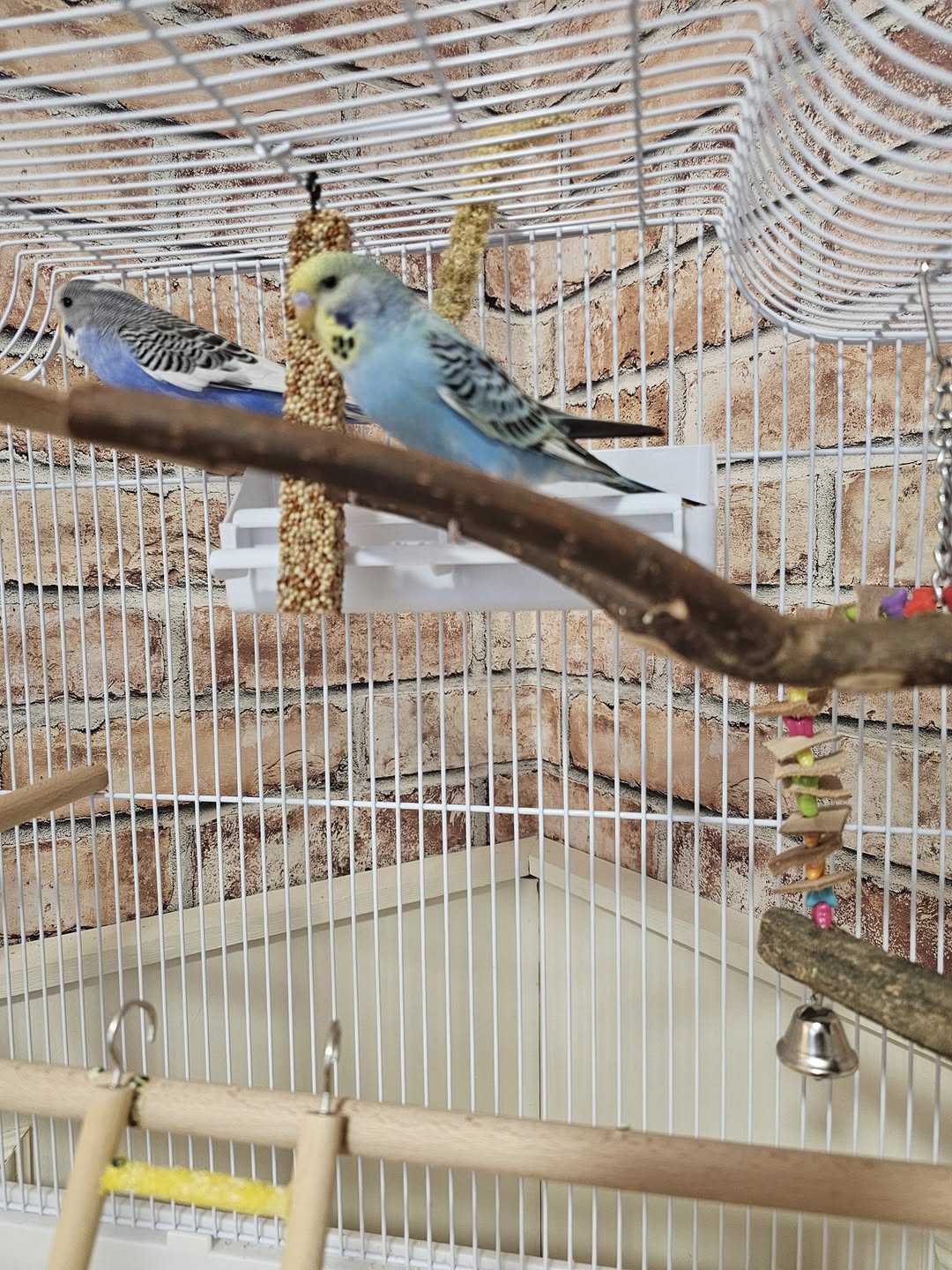
Before attributing reduced drinking to the bird, check the dispenser itself. A water dispenser with a blocked ball-bearing in the spout will not release water when the bird touches it — the bird tries, gets nothing, and stops trying. From the outside, it appears that the bird is not drinking. The bird is actually being prevented from drinking, which is a different and more urgent problem than not wanting to drink.
- Test the dispenser spout manually — press the ball-bearing with a clean finger; water should flow immediately and freely; if it does not, the ball is stuck
- Check the water level — has it actually dropped since you last checked, or has it remained the same? A stable water level in a dispenser that is working correctly means the bird is not accessing it
- Replace or unblock the dispenser immediately if blocked — a bird that cannot access water is becoming dehydrated even as it appears to be “not drinking”
- Consider using an open dish for water temporarily — some birds find dispensers difficult; an open shallow dish of fresh water placed where the bird can reach it easily will tell you quickly whether the dispenser was the problem
A blocked dispenser is not a benign finding if it has been blocked for more than a few hours. A budgie that has been without accessible water for a day or more needs close monitoring and may need veterinary attention if it shows any signs of dehydration — sunken eyes, lethargy, very dry droppings.
Benign Reason 4 — Recent Disruption Or Stress
A budgie that has recently been through a stressful experience — a move, a change in the cage setup, a new animal in the household, an unusual noise event, a period of being handled more than usual — may eat and drink less in the short period immediately following. This is a stress response, not an illness, and it typically resolves within a day or two as the bird settles.
- Has anything changed in the environment recently? — new pet, moved cage, visitor in the house, unusual disturbance
- Is the reduction very recent — one to two days? — a very short-term change following a specific disturbance is more likely to be stress than illness
- Is the bird showing any other signs beyond the reduced drinking? — a stressed bird may be slightly quieter but should not be puffed, lethargic, or sitting on the cage floor
- What to do — reduce stressors in the environment; ensure the cage is calm and positioned away from disturbance; monitor closely; if not returning to normal within 48 hours, move to the medical section below
The Medical Reasons — When To Take Action
If you have worked through the benign reasons and none of them applies, or if the reduced drinking is accompanied by any other changes in the bird’s behaviour or appearance, these medical causes need to be considered. I am going to go through them in order of how commonly I see them, and with the specific accompanying signs that help distinguish each one.
Medical Reason 1 — Illness Reducing The Drive To Drink
This is the cause the retired teacher’s bird had, and it is the most common medical explanation I see for reduced water intake in budgies that are not otherwise displaying dramatic symptoms.
A bird that is becoming ill — whether from bacterial infection, a viral process, or any number of internal conditions — often reduces its eating and drinking before it shows the more obvious outward signs of illness. The reduction in appetite and thirst is part of the body’s response to infection, and it happens before the bird starts to look visibly unwell. This is one of the reasons that a change in drinking pattern, noticed early, can give you a head start on a health problem that would otherwise only become visible days later.
- The bird seems slightly different — this is often the hardest thing to articulate but the most important to trust; the bird that the owner describes as “not quite itself” but cannot specify why is often a bird in the very early stages of something
- Slightly less vocal than usual — reduced vocalisation alongside reduced drinking is one of the more consistent early illness pairings I see; neither sign alone is necessarily alarming, but together they carry more weight
- Slightly less active — spending more time on one perch, moving around the cage less, less interested in toys or in you when you approach
- Posture beginning to shift — not dramatically puffed, not on the cage floor, but perhaps sitting slightly more rounded than usual, feathers perhaps a fraction fuller
- What to do — do not wait; a bird showing this combination of subtle signs needs to be seen by an avian-experienced vet within 24 hours; what looks mild now can deteriorate significantly within a day in a small bird

The reason acting early matters so much here is the same reason I give throughout every health article I write about budgies. These birds hide illness as a survival instinct. By the time the signs become dramatic — puffed feathers, cage floor, laboured breathing — the condition has progressed significantly. The early signs, including reduced drinking, are the window you have to act within. Use it.
Medical Reason 2 — Painful Beak, Mouth, Or Throat
A budgie with discomfort in the beak, mouth, or throat may reduce drinking because drinking is painful. This is a cause that owners almost never think of and vets find regularly when they examine the bird.
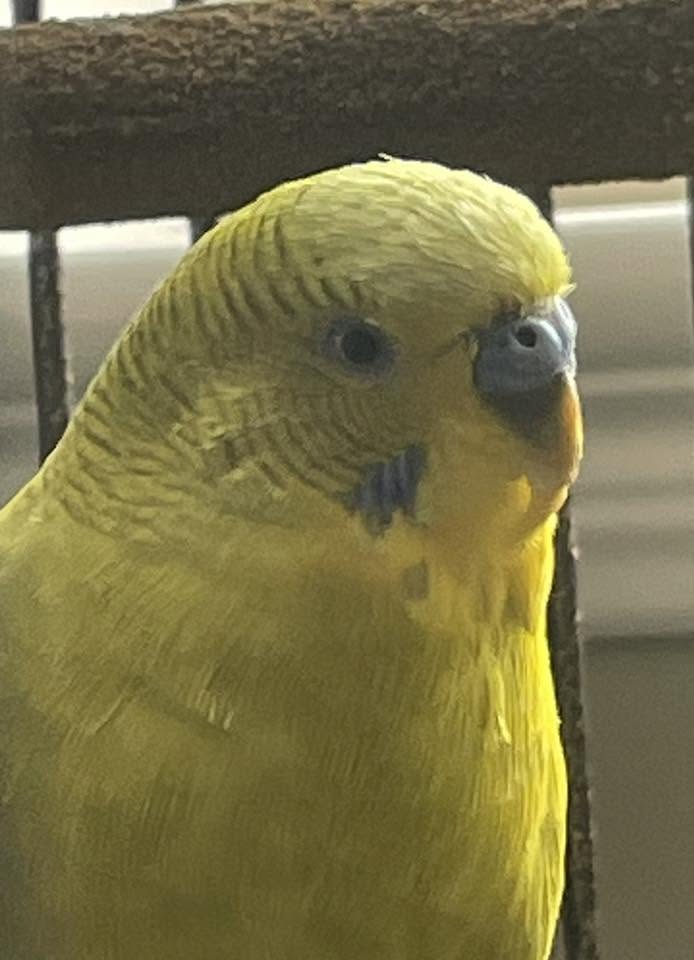
- Overgrown or misaligned beak — a beak that has grown irregularly may make contact with the water dispenser uncomfortable or mechanically difficult; examine the beak from the front and side for obvious overgrowth or misalignment; any deviation from the normal scissor-alignment of upper and lower beak is worth a vet check
- Canker (trichomoniasis) — a parasitic infection that produces lesions in the mouth and throat; a bird with canker may eat and drink less because swallowing is uncomfortable; look for any unusual material around the beak, inside the mouth, or any change in the texture of the area around the cere; this requires veterinary treatment
- Internal mouth lesions — less visible but possible; a bird that flinches away from the dispenser or repeatedly attempts to drink and then stops may have a discomfort in the mouth that prevents comfortable drinking
- What to do — vet check; beak trimming by an experienced avian vet or handler if overgrowth is obvious; canker treatment requires specific medication available only through a vet
Medical Reason 3 — Kidney Or Renal Problem
In older budgies — those over four or five years — kidney function can decline, and this sometimes presents as reduced thirst rather than increased thirst. This is counterintuitive, but it reflects the complex relationship between kidney function and thirst regulation. A bird with compromised renal function may not process thirst signals normally, leading to reduced drinking at the same time as the kidneys are less able to concentrate urine effectively.
- Older bird — over 4 years — kidney issues become more common as budgies age; an older bird with reduced drinking is worth a vet check more promptly than a young bird showing the same sign
- Accompanying signs — weight loss, reduced activity, change in droppings; the combination of reduced drinking and any of these in an older bird is a meaningful clinical picture
- What to do — vet within 24 hours; the vet can assess kidney function and advise on management; early supportive care makes a real difference to quality and length of remaining life
Medical Reason 4 — Reproductive Conditions In Females
Unspayed female budgies are at risk of reproductive health problems — egg binding, chronic egg laying, and ovarian cysts among them. These conditions place significant internal demands on the body and can affect appetite and thirst. A female budgie that is drinking less, particularly if she also seems heavier than usual, has a distended lower abdomen, or is spending more time on the cage floor, needs veterinary attention urgently.
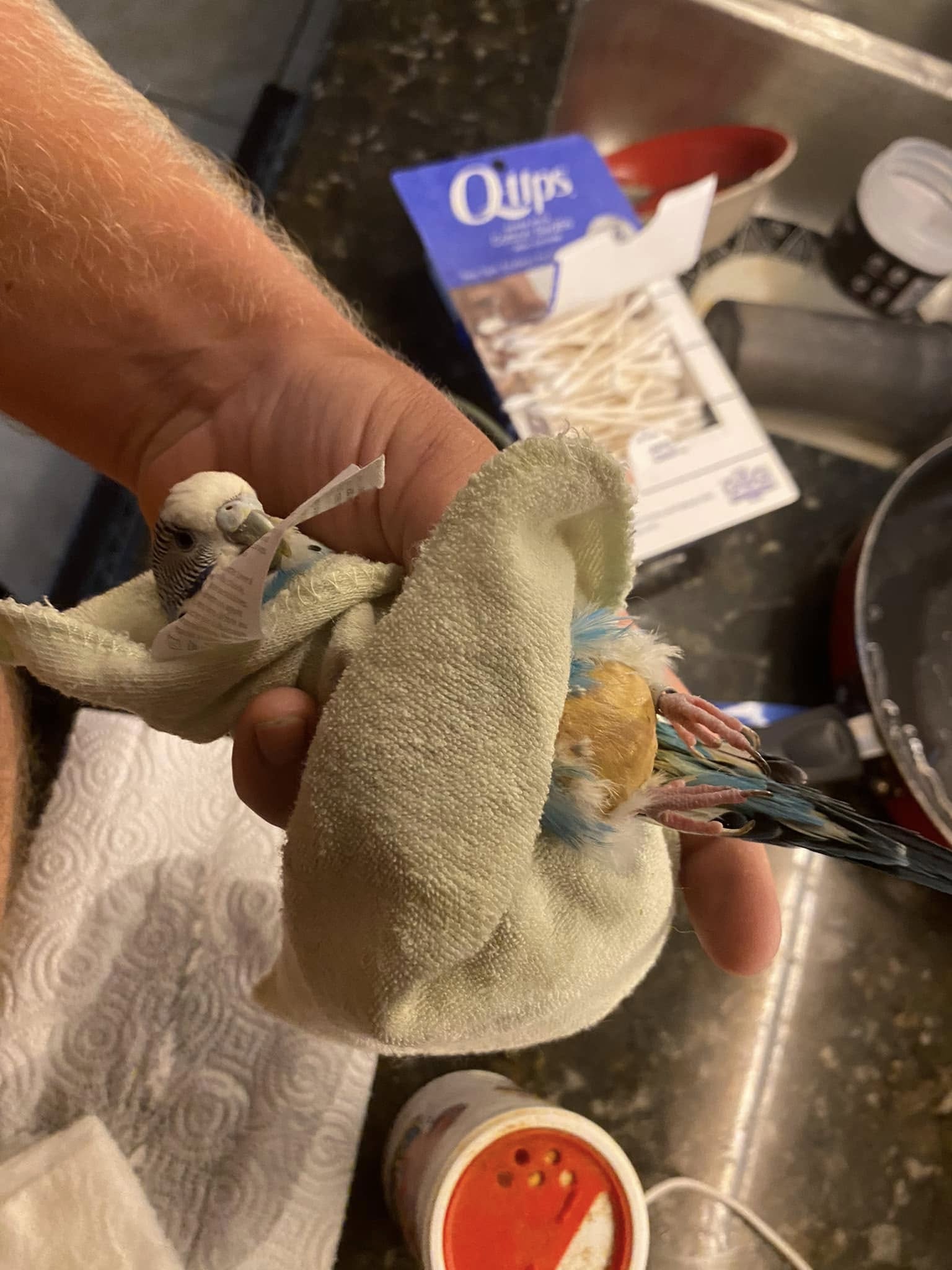
- A female budgie that is straining on the cage floor, appears weak or unsteady, and has reduced or absent eating and drinking may be egg-bound
- Egg binding — a retained egg that the bird cannot pass — is life-threatening and can kill within hours without intervention
- Do not wait to see if it resolves; this is a same-day veterinary emergency
- Keep the bird warm — around 30°C — while arranging emergency transport; warmth can sometimes help the muscles relax enough to pass the egg, but veterinary involvement is essential
- Any female budgie with reduced drinking alongside straining, weakness, or an obviously swollen abdomen needs emergency care immediately
Medical Reason 5 — Dehydration Already Established
This is the situation that most owners fear when they notice reduced drinking — the bird is not drinking because it is already dehydrated and the feedback systems that drive thirst are compromised. It is less common as a primary presentation than the causes above, but it can develop quickly in a bird that has had a blocked dispenser, has been in a hot environment without adequate water access, or has been ill for several days without the owner recognising the signs.

Signs of dehydration in a budgie:
- Sunken or dull eyes — a hydrated bird has bright, full eyes; dehydration causes the eyes to appear sunken or less prominent
- Skin tenting — if you gently pinch the skin at the back of the neck (do this only if you can do so without causing distress), healthy skin returns to position immediately; dehydrated skin returns slowly; this test requires a calm, handleable bird and gentle technique
- Very dry, dark, or scant droppings — reduced fluid in the body produces darker, drier, less voluminous droppings than normal
- Lethargy and weakness — a dehydrated bird is increasingly lethargic; this is a late sign and means the situation has been developing for some time
- What to do — vet same day; a bird showing signs of established dehydration needs fluid support that cannot be provided at home; do not attempt to force water into the bird’s beak
How To Read The Full Picture — Not Just The Drinking
I want to give you the same framework I use at the counter when an owner describes this symptom, because the drinking change alone is rarely enough to tell you which category you are in. It is the combination of signs that makes the distinction.
| Reduced Drinking Plus… | Most Likely Explanation | What To Do |
|---|---|---|
| Recent diet change to include more fresh food. Bird completely normal otherwise. | Dietary — benign | Nothing. This is expected and healthy. |
| Cooler weather, slight seasonal change. Bird completely normal otherwise. | Temperature-related — benign | Monitor. Ensure no draught. No action if otherwise normal. |
| Dispenser not releasing water when tested. Water level unchanged. | Blocked dispenser | Replace or fix dispenser immediately. Monitor for dehydration signs. |
| Recent stressful event — move, new pet, disturbance. Duration 1–2 days. | Stress response — benign short-term | Reduce stressors. Monitor. Vet if not resolved within 48 hours. |
| Slightly quieter than usual. Slightly less active. Feels “not quite itself.” | Early illness — act now | Vet within 24 hours. Do not wait for more obvious signs. |
| Overgrown or misaligned beak. Attempts to drink then stops. | Beak or mouth discomfort | Vet check. Beak trimming may be needed. Check for canker. |
| Older bird (4+ years). Weight loss. Change in droppings. | Possible kidney or systemic issue | Vet within 24 hours. |
| Female bird. Straining. Swollen abdomen. Weakness. On cage floor. | Possible egg binding — emergency | Vet same day, immediately. Keep bird warm during transport. |
| Sunken eyes. Very dry droppings. Lethargic. Not responding normally. | Established dehydration | Vet same day. Do not force water. Keep bird warm. |
What To Do While You Wait For The Vet
If your bird needs a vet and you are waiting to get there, these steps help maintain its condition in the interim.
- Ensure water is accessible — if there is any possibility the dispenser has been blocked or difficult to access, offer an open shallow dish of fresh water at a level the bird can reach easily; do not force the bird to drink
- Keep the bird warm — a sick bird loses body heat quickly; place the cage near a gentle heat source; around 30°C near the bird is the target; do not overheat
- Reduce environmental stress — cover three sides of the cage with a light cloth; keep the room quiet; minimise disturbance; a stressed sick bird uses energy it cannot spare
- Move food to an accessible position — if the bird is weak or spending time lower in the cage, place a small amount of seed near where it is sitting so it does not have to travel to eat
- Do not attempt to force water or food — this adds stress and can cause aspiration; your role while waiting is to maintain warmth and minimise stress, not to intervene medically
- Note everything you have observed — when the reduced drinking started, what the droppings look like, whether the bird has been eating, any other behaviour changes, any recent environmental changes; this information helps the vet considerably
Why The Early Signs Matter More Than The Obvious Ones
I want to say something about this directly, because it is the lesson that the retired teacher’s story illustrates perfectly and that I want every budgie owner to take from this article.
By the time a budgie looks visibly, dramatically unwell — puffed feathers, cage floor, laboured breathing, completely unresponsive — the illness has usually been developing for days. The bird has been hiding it, as prey animals do, until the point where it can no longer compensate. At that stage, the options available to a vet are narrower than they would have been a day or two earlier.
Reduced water intake — noticed by an attentive owner who knew what their bird’s normal looked like — is an early sign. Not a dramatic one. Not an obvious emergency. But a meaningful signal that something has shifted, appearing before the dramatic signs, in the window where intervention makes the most difference.
The retired teacher almost did not come in. She had talked herself out of it twice. What brought her in was a combination of the concrete observation — the water level — and the vaguer feeling that something was not quite right. Both were correct. Both mattered.
Frequently Asked Questions
How much should a budgie drink each day?
A healthy adult budgie typically drinks between 5 and 10ml of water per day from its dispenser. However, this varies meaningfully with diet — a bird receiving fresh vegetables or fruit daily will drink considerably less from the bottle, as it obtains significant fluid from food. The more useful measure than an absolute daily amount is whether the bird’s drinking has changed noticeably from its own established pattern.
My budgie has stopped drinking completely. How urgent is this?
Very urgent. A budgie that is not drinking at all — not just reduced, but completely absent — needs veterinary attention today. First check that the water dispenser is working and accessible. If it is, and the bird is genuinely not drinking, this is a medical emergency. A small bird can become critically dehydrated within 24 to 48 hours without water intake. Do not wait to see if it improves.
Could my budgie be getting enough water from fresh food?
Yes, if fresh food with high water content has recently been introduced or increased. Cucumber, spinach, lettuce, and similar vegetables are largely water and contribute meaningfully to daily fluid intake. If this is the explanation, the bird should be completely normal in every other respect — same vocalisation, same activity, same posture, normal droppings. If anything else seems different alongside the reduced bottle use, do not assume fresh food is the full explanation.
My budgie drank normally yesterday and is not drinking today. Should I worry?
One day of reduced drinking in a bird that is otherwise completely normal is worth watching closely but is not necessarily cause for immediate alarm. Check the dispenser is working. Check whether anything stressful happened yesterday. Monitor closely over the next 24 hours. If the bird is showing any other signs alongside the reduced drinking — quieter, less active, posture changes — do not wait: contact a vet. If everything else is genuinely normal and the drinking returns to normal within 24 to 48 hours, the cause was likely temporary.
How do I know if my budgie is dehydrated?
Early dehydration in a budgie can be difficult to assess without training. Signs to look for include eyes that appear duller or more sunken than usual, droppings that are darker and drier than normal, and increasing lethargy. A commonly cited test — gently pinching the skin on the back of the neck — requires careful technique and a calm bird to be meaningful. If you suspect dehydration, the right course of action is a vet visit, not home assessment. A dehydrated bird needs fluid support that cannot be provided at home.
My budgie’s water dispenser seems fine but it still isn’t drinking. What else could it be?
Once a working dispenser is confirmed, the next things to consider are: diet change that accounts for reduced dispenser use; recent stress or environmental change; beak or mouth discomfort making drinking painful; or early illness suppressing the drive to eat and drink. The distinction between these is made by looking at everything else alongside the reduced drinking — vocalisation level, activity, posture, appetite, droppings. If anything beyond the reduced drinking seems different, contact a vet.
Is it true that budgies from arid environments naturally drink less?
Yes, to a degree. Budgerigars originate from the arid interior of Australia and their kidneys are adapted to conserve water efficiently — which is why their baseline water intake is modest compared to similarly-sized non-arid species. This means a healthy budgie will naturally drink less than some owners expect. It does not mean that a reduction from the bird’s own established normal is not significant. The species’ general efficiency with water does not change the meaning of a change in your specific bird’s pattern.
Where can I get urgent advice about my budgie not drinking in Swindon?
Ring us on 01793 512400 and describe what you are seeing. We will help you assess whether the situation needs a vet today or whether a benign explanation is more likely. If we think it needs urgent veterinary attention, we will say so directly and point you toward avian-experienced practices in the area. Paradise Pets is at Manor Garden Centre, Cheney Manor Industrial Estate, Swindon SN2 2QJ. For anything that sounds urgent — ring the vet first, then ring us.
One Last Thing From Me
The retired teacher rang back on the Saturday morning to tell me the bird had recovered. She had caught a bacterial infection early enough that treatment was straightforward and the bird was, within a week, entirely back to itself. She was relieved, and she was thoughtful about the whole thing in the way that experienced owners sometimes are — turning it over, working out what she had learned.
“I almost dismissed it,” she said. “I had about three explanations ready for why it was probably nothing. And then I thought — I’ve had birds for thirty years and I’ve never come into this shop with a worry that turned out to be nothing. So I came in.”
She is right that it has never been nothing. Not once in thirty years. Not because every reduced-drinking budgie has a serious illness — many of them have a blocked dispenser, or have just started receiving cucumber. But because an experienced owner who has noticed something and followed the thread to the point of coming in or ringing — that owner is almost always correct that something has changed. The question is what.
That is what this article is for. Not to produce panic at every deviation from normal. But to give you the knowledge to follow the thread correctly — to know which explanations to rule out first, what to look for alongside the reduced drinking, and when the situation moves from monitoring to acting.
If your budgie is drinking less than usual and you are not sure which category you are in — ring us on 01793 512400. Describe the full picture. We will tell you honestly what we think. That call is free, it has been free for 35 years, and it is a better use of five minutes than three days of watching and hoping.
Not Sure If Your Budgie’s Reduced Drinking Is Serious? Ring Us
Describe what you are seeing — the drinking, anything else that seems different, how long it has been going on. We will tell you honestly whether we think it needs a vet today or whether a benign cause is more likely. Free advice, no obligation. That is how we have done things here for 35 years.