
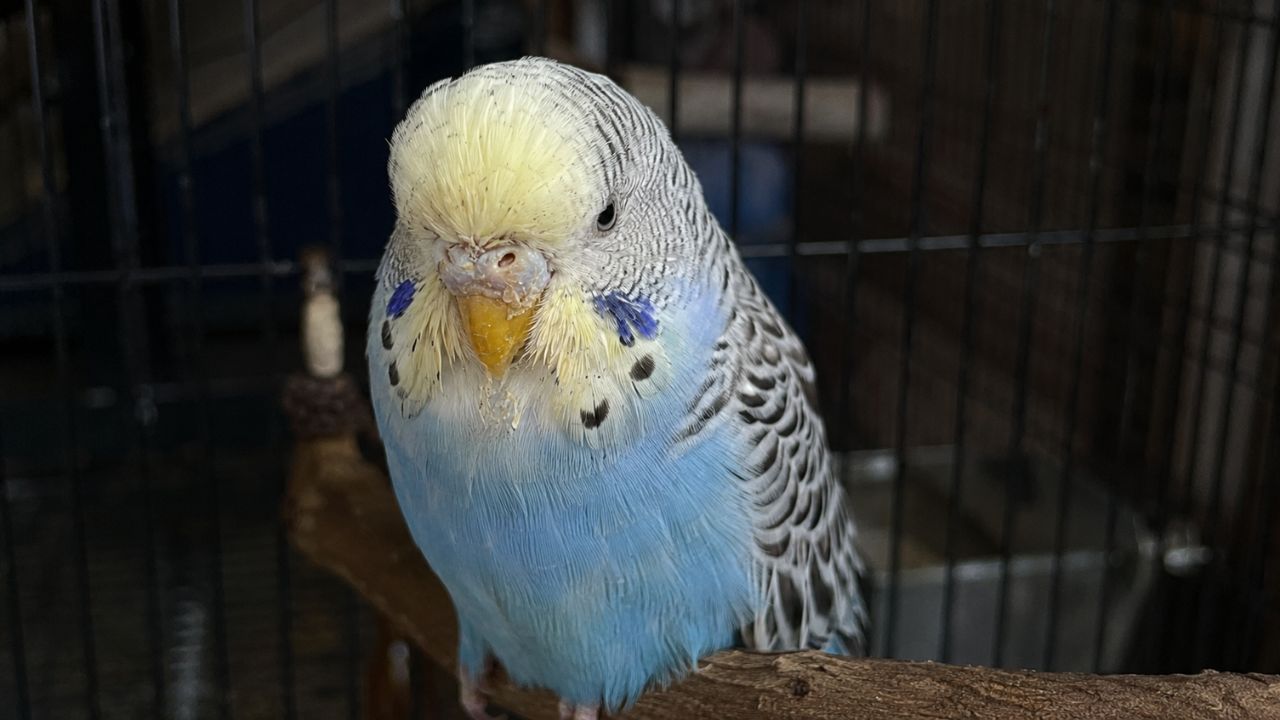

Safety correction, 24 September 2026: Veterinary guidance on recognising illness in birds supports prompt professional contact for reduced appetite or illness signs. Do not use a time threshold or an apparently alert posture to decide that it is safe to delay care.
Neil has kept, bred, and sold budgerigars at Paradise Pets Swindon since 1988 — over 35 years of first-hand experience with these birds. Sneezing with discharge is one of the signs that owners sometimes try to explain away — a bit of dust, the weather changing, the heating coming on. In some cases they are right to be relaxed about it. In most cases with discharge present, they are not. This guide explains the difference clearly, and what to do depending on what you are seeing.
Someone comes in and mentions the sneezing almost as an aside — the way people mention things they have already half-decided are probably nothing. Their budgie has been sneezing a bit. And there is some — they pause — some stuff coming from the nose. Not a lot. But something.
I always stop them at that point.
A sneeze on its own is not usually a concern. Budgies sneeze to clear the nares — the nostrils — of dust, seed husks, loose feather particles, and other debris that accumulates in a cage environment. A budgie that sneezes once or twice across the day, with nothing coming from the nares afterward, is doing something normal.
The moment discharge enters the picture, the conversation changes. Discharge from the nares of a budgie — watery, mucoid, coloured, or crusted — is not normal. It is always a sign that something is happening in the upper respiratory tract or beyond it. And because budgies are small animals with fast metabolisms and limited physiological reserves, respiratory conditions that are minor in their early stages can progress quickly if they are not addressed.
I have been watching for these signs for thirty-five years. Here is what discharge from the nares means — and what to do about it.
The Difference Between Normal Sneezing and Sneezing With Discharge
This distinction is the foundation of everything else in this guide, and it is worth being precise about it.
Normal sneezing in a budgie is brief, occasional, and dry. The sneeze clears whatever particulate has entered the nare, and the nares look clean and open afterward — no residue, no moisture, no staining on the feathers around the nostrils. The bird sneezes and then carries on as normal. It does not sneeze repeatedly in quick succession. It does not appear to be working to clear something that will not clear.
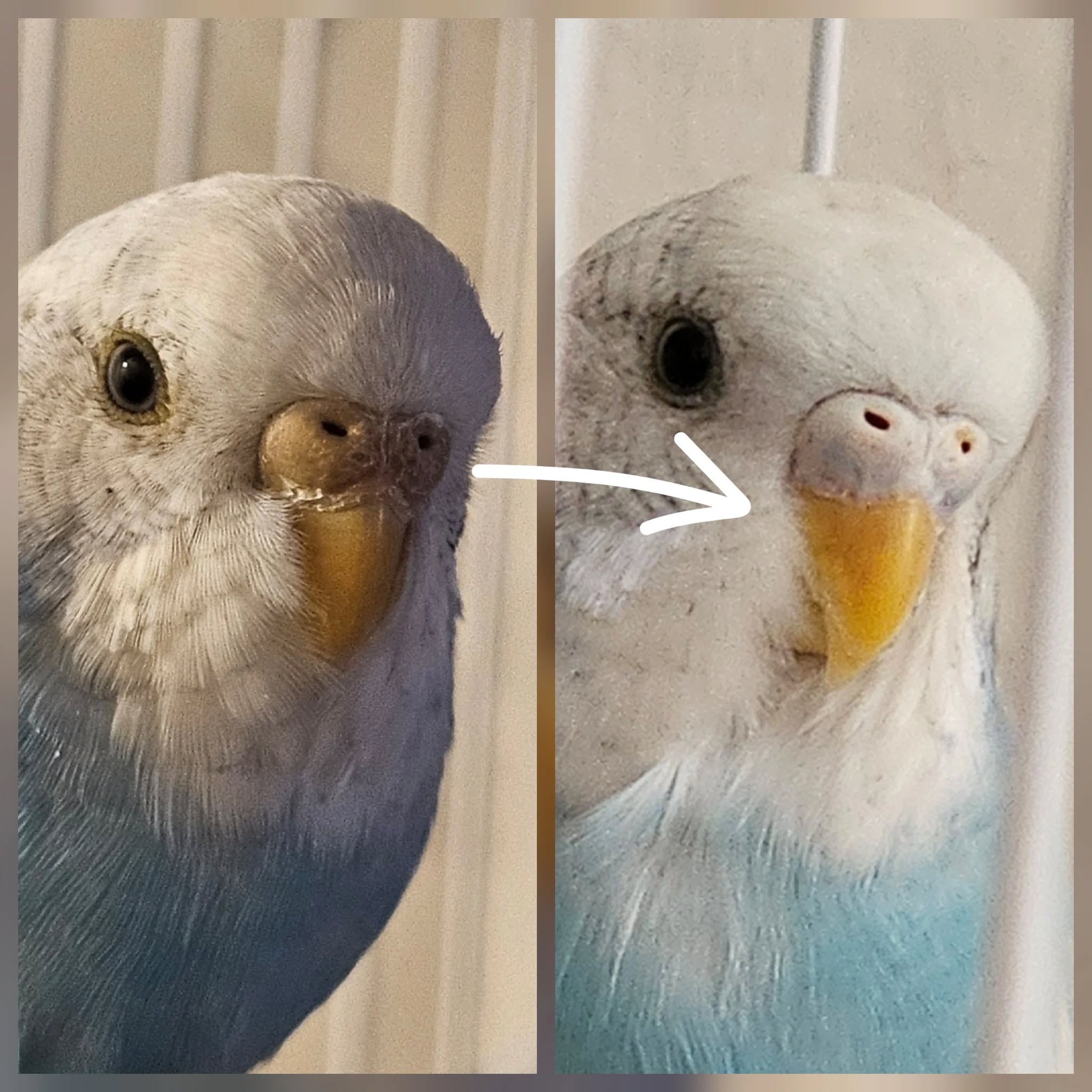
Abnormal sneezing involves discharge. That discharge can look different depending on the cause. It may be watery — a clear, thin fluid that appears at the nare opening during or after a sneeze and may wet the feathers above the beak. It may be mucoid — thicker, slightly opaque, sticky. It may be coloured — yellow, green, or brown — which indicates infection. It may have dried to a crust around the nares, narrowing the opening or sealing one side partially.
Any of these presentations is significant. Clear watery discharge is the least alarming — but it is still not normal, and it can be the early stage of something that will become more serious without treatment. Coloured or purulent discharge means active infection is already established.
The nares themselves should also be checked. In a healthy budgie they are clean, symmetrical, open, and the same size on both sides. A nare that is partially blocked, swollen at the rim, or surrounded by stained or crusty feathers is a nare that has been dealing with discharge for some time.
The Most Common Cause — Bacterial Respiratory Infection
Bacterial infection of the upper respiratory tract is the cause I see most often behind nasal discharge in budgies, and it is the cause that most clearly requires veterinary treatment rather than a wait-and-see approach.
Budgies are susceptible to a range of bacterial pathogens that affect the respiratory tract — Pasteurella, Klebsiella, Pseudomonas, and others. These bacteria can enter through the environment, through contact with other birds, through contaminated food or water, or through the stress-related suppression of immune function that occurs when a bird is housed in poor conditions, fed inadequately, or subjected to chronic disturbance.
The presentation typically begins with increased sneezing — more frequent than normal, sometimes in short bursts. Discharge appears at the nares, initially clear then progressing to mucoid or coloured as the infection establishes. The feathers above the beak may become wet or stained. The bird may wipe its face against the perch or the cage bars in an attempt to clear the discharge. In more advanced cases the nares begin to appear swollen or the discharge thickens to the point of partial blockage.
At this stage, the infection has progressed beyond what the bird’s immune system will clear on its own. Antibiotics are needed — the specific type depending on the pathogen, which a vet can identify through a swab and culture if the case warrants it. Starting antibiotic treatment promptly, before the infection deepens into the lower respiratory tract or spreads to the air sacs, is the difference between a straightforward recovery and a significantly more complicated one.
Do not attempt to treat bacterial respiratory infection at home. There is no safe or reliable over-the-counter antibiotic for birds in the UK. A bird that is given human antibiotics, pet shop treatments marketed for birds, or nothing at all while a bacterial infection progresses is a bird whose situation is getting harder to treat with every passing day.
Chlamydiosis — Psittacosis — The One That Owners Must Know About
This section is important enough that I want to address it specifically and directly, because psittacosis — the infection caused by Chlamydia psittaci — is one of those conditions that is easy to underestimate and that has implications beyond the bird itself.
Psittacosis is a bacterial infection that affects birds across many species — budgies among them. In birds, it produces a range of signs that can include nasal discharge and sneezing, but also eye discharge, lethargy, weight loss, and changes in droppings. It can present mildly or severely. It can be carried by birds that appear completely well.
The reason I am mentioning it specifically is this: psittacosis is a zoonotic disease. It can be transmitted from birds to humans. In people, it produces a flu-like illness — fever, headache, muscle pain, respiratory symptoms — that can progress to pneumonia if untreated. It is not common in humans, but it is not negligible, and in immunocompromised individuals or the elderly it can be serious.
A budgie with respiratory signs including nasal discharge that is not resolving, that came from an unknown source or has been in contact with other birds of unknown health status, or that has had any contact with recently imported birds — is a bird that should be assessed for psittacosis alongside other respiratory causes.
Tell your vet if there are vulnerable people in the household. This is not a reason to panic. It is a reason to make sure the diagnosis is complete.
Fungal Infection — Aspergillosis
Aspergillus fumigatus is a fungal pathogen that primarily affects the lower respiratory tract and air sacs in birds — but upper respiratory signs including nasal discharge can occur, particularly in early or mild cases where the infection is centred in the nasal passages or sinuses rather than the air sacs.
Aspergillosis tends to affect birds that are immunocompromised — those on poor diets, those kept in damp or poorly ventilated environments, those under chronic stress, or those that have been on prolonged antibiotic treatment which has disrupted their normal microbial balance.
It is harder to diagnose than bacterial infection and in many cases requires advanced testing — imaging, endoscopy, or fungal culture — to confirm. It is also harder to treat and requires prolonged antifungal therapy.
The reason I mention it here is that a bird with ongoing nasal discharge that does not respond to appropriate antibiotic treatment should be reassessed for fungal involvement. Aspergillosis is not the first assumption — bacterial infection is far more common — but a bird that is not improving as expected is a bird whose diagnosis needs revisiting.
Environmental Irritants — When the Problem Is in the Room
Not every case of sneezing with discharge traces back to infection. In some cases the cause is in the environment — something in the air that is irritating the nasal passages and producing an inflammatory response that mimics the early signs of infection.
The list of airborne irritants that affect budgies is longer than most owners realise. Non-stick cookware heated to high temperatures releases polytetrafluoroethylene fumes that are acutely toxic to birds and can kill within minutes — but at lower concentrations, repeated exposure can cause chronic respiratory irritation. Scented candles, air fresheners, and plug-in fragrance products contain volatile compounds that irritate the respiratory tract of birds with far less tolerance for airborne chemicals than mammals. Cigarette and vaping smoke. Aerosol sprays of any kind used near the cage — cleaning products, hairspray, deodorant, paint. Dusty seed that has been stored poorly. New carpet, new furniture, or fresh paint off-gassing in the room.
The pattern that points toward an environmental cause rather than infection: sneezing that started or worsened after a change in the room or household, discharge that is consistently clear rather than progressing to coloured, a bird that is otherwise well and active, and no improvement following the typical trajectory of a developing infection.
The approach: systematically remove potential irritants from the bird’s environment, improve ventilation in the room, and see whether the sneezing and discharge reduce over several days. If they do not, or if the bird’s condition changes in any other way, proceed to the vet.
A bird that has been exposed to non-stick fume toxicity — PTFE poisoning — is a veterinary emergency regardless of how the bird appears at the moment. Fume toxicity in birds can produce a delayed deterioration that appears suddenly and progresses to death within hours. If non-stick pans were overheated in the kitchen while the bird was in or near that area of the house, treat it as an emergency.
Foreign Body in the Nare — The Cause That Is Easy to Miss
Budgies are curious, active birds that spend a significant proportion of their time investigating their environment with their beaks. Small pieces of material — a seed husk, a fragment of a toy, a piece of nesting material, a tiny fibre from a rope perch — can occasionally enter a nare and lodge there.
A foreign body in one nare produces a very specific pattern: sneezing that is frequent and often in bursts, as the bird attempts repeatedly to clear the obstruction. The discharge, if present, is typically from one side only. The affected nare may appear slightly enlarged or the opening may look partially obscured. The bird may rub or scratch at that side of the face more than the other.
This is one situation where attempting gentle examination at home is reasonable — holding the bird carefully in good light and looking at both nares to see whether there is a visible obstruction in one. Do not attempt to probe or remove anything you can see unless it is clearly loose and reachable. A nare is a small and delicate structure and damage to it causes its own complications.
If the sneezing is clearly one-sided, the nare looks different from its pair, and you can or cannot see a foreign body — see a vet. A foreign body that has been in a nare for more than a day or two has almost certainly provoked secondary inflammation and possibly secondary infection, and removal under proper conditions with appropriate aftercare is the right approach.
Vitamin A Deficiency — The Nutritional Root
A budgie on a seed-only diet with no fresh food, no supplementation, and no access to natural light is nutritionally deficient in multiple ways. Vitamin A is one of the most significant.
Vitamin A is essential for the integrity of the mucous membranes that line the respiratory tract. Without adequate vitamin A, these membranes become thinner, less resilient, and less able to perform their barrier function — making the respiratory tract more permeable to pathogens and less able to manage minor irritants. A bird that is chronically vitamin A deficient is a bird that gets respiratory infections more easily, more severely, and more repeatedly than a bird with adequate nutrition.
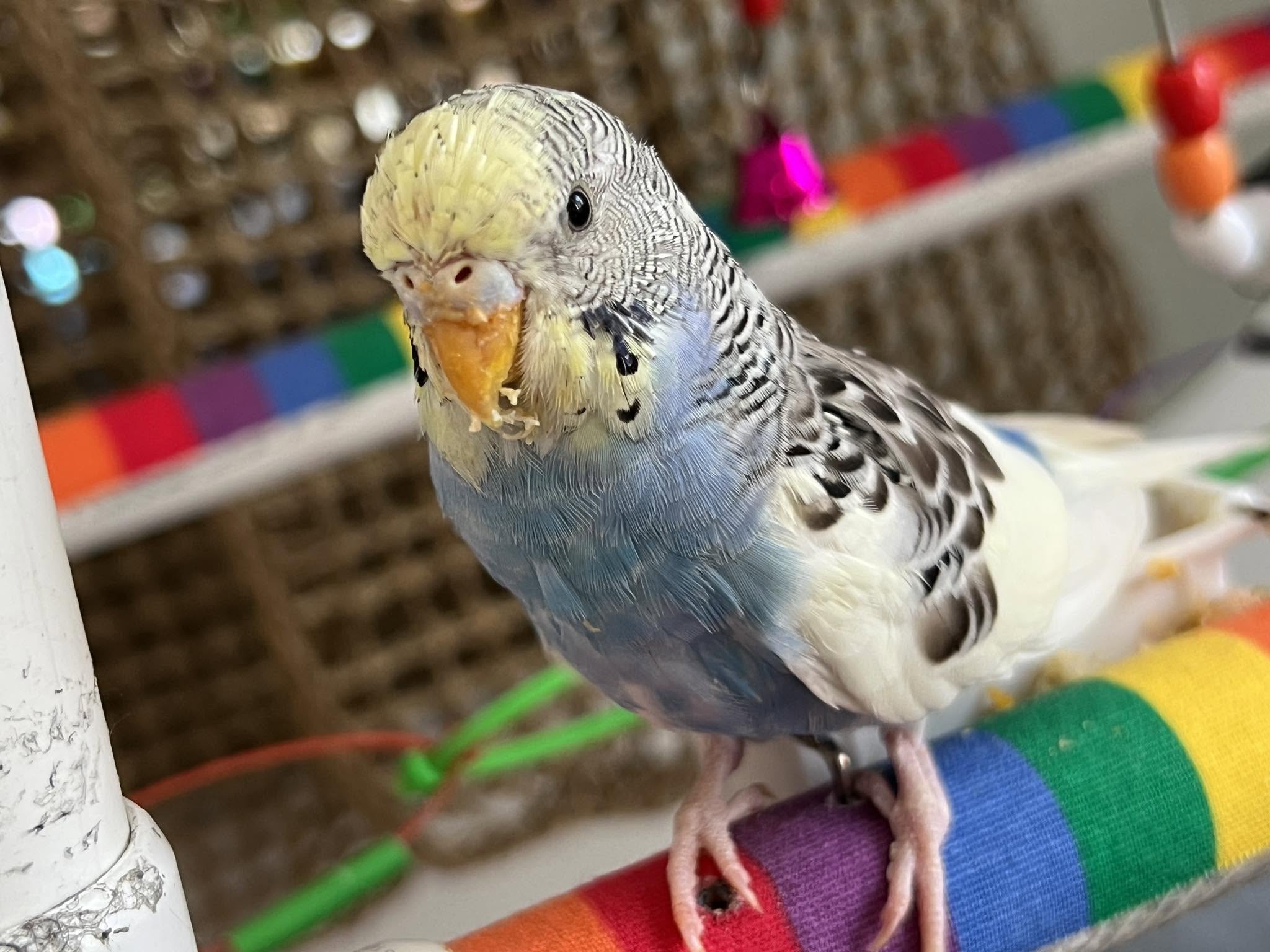
The presentation of vitamin A deficiency alongside respiratory signs: sneezing and nasal discharge that recurs despite treatment, a bird that clears up with antibiotics but relapses several weeks later, and often other signs of nutritional depletion alongside — poor feather condition, a dull cere, weight loss, changes in the condition of the beak.
Ask an avian vet to assess the diet and any possible deficiency before adding supplements. Diet changes or cuttlebone should not be used as treatment for nasal discharge or allowed to delay assessment.
Nutrition is not a substitute for treating an active infection. A bird with discharge needs the infection treated first, and the diet corrected alongside and after treatment to reduce the likelihood of recurrence.
What Else to Look at When the Nares Are Discharging
When I see or hear about a budgie with nasal discharge, I look at more than just the nose. The nose is the presenting sign. What is happening around it often tells you as much or more about the severity and nature of the problem.
Check the eyes. Eye discharge alongside nasal discharge is a common pattern in several respiratory infections including psittacosis and mycoplasmosis. Wet, sticky, or crusted eyes in a bird that is also sneezing with discharge doubles the urgency of a vet visit.
Check the breathing. Is the tail bobbing when the bird is at rest? Is the breathing audible — any clicking, wheezing, or rattling sound? Is the bird opening its beak to breathe rather than breathing normally through the nose? Any of these alongside nasal discharge means the infection or irritation has spread beyond the upper respiratory tract and into the lower airways or air sacs. That is a more serious situation requiring prompt assessment.
Check the cere. In a bird with upper respiratory infection, the cere — the fleshy area above the beak that surrounds the nares — may become swollen, discoloured, or have a different texture than normal. A cere that looks different from usual alongside discharge from the nares is a cere that is showing the inflammation of what is happening immediately beneath it.
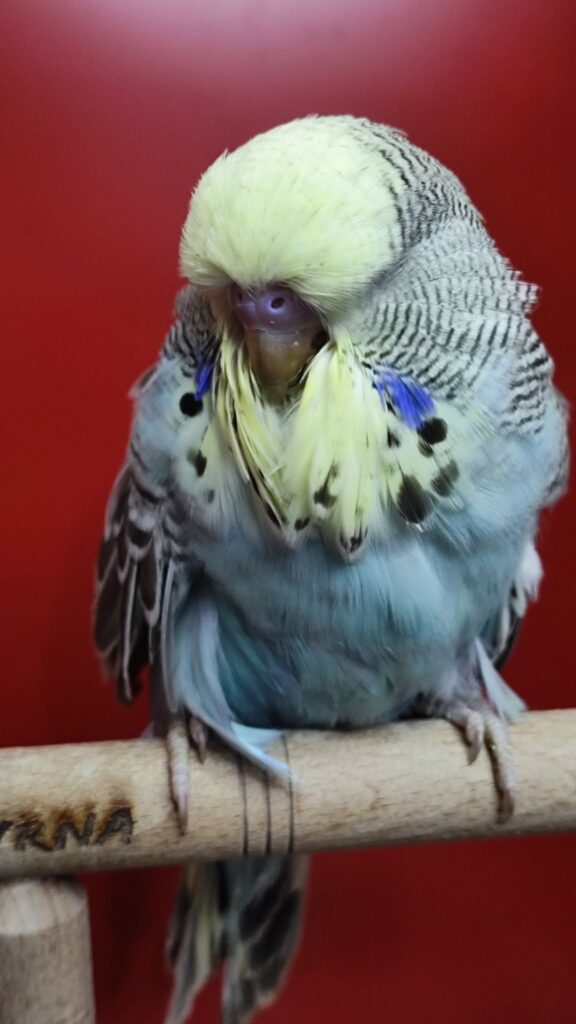
Check the activity level and appetite. A bird that is sneezing with discharge but otherwise bright, active, and eating normally is in a better position than one that is also fluffed, quiet, and off its food. But even a bird that seems otherwise well with nasal discharge needs a vet visit — respiratory infections in budgies can progress faster than the bird’s behaviour initially suggests.
What I Tell Budgie Owners at the Counter
Colour, consistency, timing and whether one or both nostrils are affected are useful details for a vet. They cannot establish the diagnosis or a safe waiting period in the shop.
Contact an avian vet promptly about clear nasal discharge, even if the bird is still active. Do not wait forty-eight hours to see whether it develops further.
Contact an avian vet promptly about coloured discharge. Colour alone cannot show which treatment is needed, and you should not wait until tomorrow simply because the bird still appears alert.
Discharge with breathing difficulty needs emergency veterinary help immediately. Other changes, including appetite loss, eye signs or persistent fluffing, should be described promptly to the practice.
The message I want every owner to leave with is this: nasal discharge in a budgie is never the bird having a bad day. It is always a sign of something that is happening in the respiratory system, and respiratory systems in small birds do not have the margin that larger animals have. The window between early signs and serious deterioration is short. Acting within that window is almost always the difference between a straightforward recovery and something much harder.
For nasal discharge, call an avian vet directly. Paradise Pets can help with general husbandry questions at Manor Garden Centre, Cheney Manor Industrial Estate, Swindon, SN2 2QJ, or on 01793 512400, but shop advice cannot diagnose the cause or replace veterinary triage.
- “It’s probably just the central heating drying the air out” — Dry air can increase normal sneezing frequency slightly. It does not cause discharge. A budgie sneezing with any visible moisture or residue at the nares is not reacting to dry air. Dry air is often used to explain away early respiratory signs that need proper attention.
- “I’ll get something from the pet shop to put in the water” — Water-soluble bird treatments available in pet shops in the UK are not antibiotics and are not effective against bacterial, fungal, or chlamydial respiratory infections. They may reduce the owner’s anxiety about doing something. They do not treat the bird. Time spent on ineffective home treatment is time the infection has to progress.
- “It only sneezes in the morning so it’s probably just from sleeping” — Some budgies do sneeze more in the morning as they move from rest to activity and begin clearing accumulated overnight debris. If this is dry sneezing without any discharge it may be benign. Morning sneezing with any discharge present is not explained away by sleep. It is the same sign at a different time of day.
- “It’s been sneezing for a few weeks but it seems fine otherwise” — Duration without apparent deterioration is not reassurance. It means the bird has been managing a respiratory problem for weeks without it becoming acute — but it has not resolved. A bird that has been sneezing with discharge for weeks has been living with a chronic respiratory issue that needs identifying and treating. Weeks of apparent stability do not mean the situation is stable indefinitely.
- “My other budgie is fine so it can’t be contagious” — Some respiratory pathogens affect individual birds differently depending on immune status, nutritional state, and individual susceptibility. A bird in the same cage that appears healthy may be incubating the same infection, carrying it asymptomatically, or may genuinely be more resistant. Apparent health in a cage companion is not evidence that the sick bird does not have a transmissible condition.
- Occasional sneezing, no discharge, bird otherwise well and active.
Normal clearing behaviour — no action needed. Monitor. If sneezing frequency increases or any discharge appears, reassess. - Sneezing with clear watery discharge, bird otherwise bright and eating normally.
Contact an avian vet promptly. Remove avoidable irritants safely, but do not use that change as a reason to delay assessment. - Sneezing with yellow, green, or brown discharge from one or both nares.
Contact an avian vet promptly. Colour does not determine the cause or whether an antibiotic or antifungal is appropriate. - Discharge with crusting around the nares, stained feathers above the beak.
Contact an avian vet promptly. Crusting is useful to describe, but does not establish how long the problem has been present. - Sneezing with discharge from one nare only, bird rubbing that side of the face frequently.
Contact an avian vet promptly; a foreign body is one possibility. Do not probe the nostril or attempt removal yourself. - Nasal discharge alongside eye discharge, audible breathing, tail bobbing, or open-mouth breathing.
Contact an avian vet immediately. Breathing difficulty is an emergency; this combination does not establish which part of the respiratory system is affected. - Bird kept near non-stick pans that were recently overheated, now sneezing with discharge.
Possible PTFE toxicity — veterinary emergency regardless of current appearance. Fume toxicity in birds can produce sudden fatal deterioration after an initial period of apparent normality.
Visit Us at Paradise Pets Swindon
We stock budgerigars alongside other cage and aviary birds and can discuss general environment, diet and equipment questions. For sneezing with discharge or other illness signs, contact an avian vet directly before arranging a shop visit.
We also stock gerbils and hamsters, guinea pigs, and rabbits.