


Neil has kept, bred, and sold cockatiels at Paradise Pets Swindon since 1988 — over 35 years of first-hand experience with these birds. In that time, he has reassured countless worried owners whose normally sweet cockatiel suddenly started hissing at them. This is his honest, practical guide on what cockatiel hissing really means — and exactly what to do about it.
A young couple came into the shop one Saturday morning looking properly upset. “Neil,” the woman said, “we have had Bella for six months. She was lovely — friendly, sweet, sat on our shoulders. About two weeks ago she started hissing at us every time we go near the cage. She lunges at our hands. She is making this awful snake-like noise. We do not know what we have done wrong.”
Cockatiels are emotionally complex birds. They are far more vocal and expressive than budgies, and their hissing is one of the clearest ways they communicate strong feelings — usually fear, hormones, territorial defence, or discomfort. After 35 years of watching cockatiels, I have learned that the same handful of causes explain almost every case I see, and most of them are completely fixable.
This article is the conversation I have with worried cockatiel owners at the counter, written down. It will walk you through why cockatiels hiss, the specific causes you need to identify, how to read the broader context, and exactly what to do to get your sweet bird back. Because in almost every case, you can.
First — What Cockatiel Hissing Actually Sounds Like
Before we go into the causes, let me describe what hissing actually is in a cockatiel, because some owners come in describing other sounds as “hissing” when they are something else entirely.
A genuine cockatiel hiss is a distinctive low, drawn-out, snake-like sound made by exhaling forcefully through a partly-open beak. It often comes with characteristic body language — the bird crouching low or lunging forward, beak slightly open, eyes locked on the perceived threat, sometimes with the wings held slightly away from the body. Some hissing cockatiels also rock their bodies back and forth.
This is different from:
- Wheezing or breathing sounds — quieter, more continuous, indicates respiratory problems
- Hissing at toys or mirrors — often hormonal display rather than aggression
- Soft grumbling — usually contentment, not threat
- Loud screaming — completely different behaviour with different causes
- Crest flat, sleek body with hissing — usually fear, not aggression

The classic “hiss” is unmistakable once you know it. It is a deliberate warning signal — the bird saying “stay back, I am not happy.”
The 6 Main Causes Of Cockatiel Hissing
After 35 years of selling cockatiels, I can usually identify the cause of hissing within a few minutes of talking to the owner. Here are the six main causes I see, in roughly the order I encounter them at the counter.
Cause 1: Fear And Stress — The Most Common Cause By Far
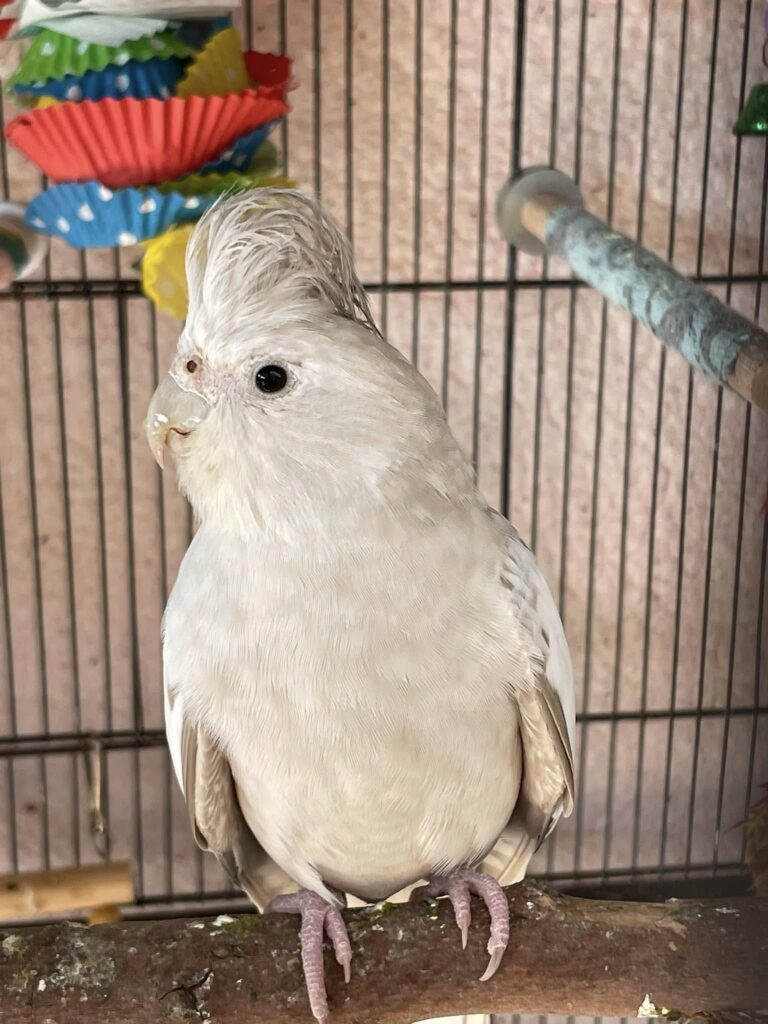
This is the cause behind most cockatiel hissing I see, and it is the most reassuring to identify. The bird is frightened. Something in its environment, its routine, or its experience has triggered a fear response, and hissing is the bird’s way of warning the threat away.
Cockatiels are prey animals at heart. Despite all their tameness and bonding, they remain hard-wired to react to perceived threats with defensive behaviour. Hissing is the first line of defence — a warning before they would actually bite or attempt to escape.
- Sudden change in behaviour from previously friendly bird
- Hissing accompanied by crouching, leaning away, or trying to flee
- Crest flattened against the head (rather than raised in aggression)
- Bird shows the behaviour to specific people or objects, not all
- Behaviour started after a frightening experience (cat encounter, rough handling, loud noise)
- Bird shows other fear signs — rapid breathing, wide eyes, freezing
- Calms when the perceived threat backs away
What to do
Identify and address the source of the fear. If a specific person triggers the hissing, that person needs to approach more slowly and gently. If a new pet (cat, dog) is in the home, manage their presence carefully. If a recent change has destabilised the bird, restore calm and consistency. Rebuild trust patiently — sit near the cage doing nothing, talk gently, offer treats by hand through the bars. Do not force interaction. Trust takes weeks to rebuild but it does come back.
Cause 2: Hormones And Breeding Season
This is the cause that catches many owners out, because the change can be dramatic and seem to come from nowhere. Cockatiels go through significant hormonal phases — particularly during UK spring and summer — and a normally gentle bird can become territorial, defensive, and prone to hissing during these times.
Hormonal hissing is most common in:
- Cockatiels reaching sexual maturity (6-12 months old)
- Adult birds during spring and summer breeding season
- Female cockatiels approaching egg-laying or with eggs
- Male cockatiels in active breeding condition
- Birds with mirrors or perceived “mates” in the cage
- Birds finding dark, enclosed spaces (perceived nesting sites)

The hissing in this case is the bird defending its territory and potential nesting site. Female cockatiels in particular can become extraordinarily protective once they have started laying or are even thinking about it.
What to do
Reduce the triggers that activate hormones. Longer dark periods at night (12+ hours of darkness) reduce hormonal stimulation. Remove anything that might encourage nesting — paper piles in corners, dark hidden spaces, food bowls deep enough to crouch into, mirrors. Avoid stroking the bird down the back, which mimics mating behaviour. Maintain a calm, stable environment. Hormonal phases pass after a few weeks to a couple of months. If the behaviour is severe or persistent across multiple seasons, a rabbit and bird-savvy vet can advise on further options.
Cause 3: Territoriality And Cage Defence
This is closely related to hormones but worth covering separately. Some cockatiels become extremely protective of their cage and surrounding area — treating it as their territory and warning anything that enters that space.
This kind of hissing is often worst around the cage door, food bowls, and favourite perches. The cockatiel may hiss at hands reaching in for cleaning or feeding, even when it is otherwise calm and friendly outside the cage. The same bird that hisses when you reach into the cage may happily perch on your finger across the room.

What to do
Respect the bird’s territory while gradually reducing defensiveness. Approach the cage calmly and predictably — never suddenly. Use a perch or stick rather than your hand to invite the bird out, then handle it away from the cage. Clean the cage when the bird is out of it. Over time, gentle consistent positive handling outside the cage builds trust that the cage door is not a threat. Hands should be associated with positive things only — never with stress.
Cause 4: Pain Or Illness
This is the cause that worries me most when an owner describes hissing, because it requires veterinary attention. A cockatiel that suddenly starts hissing, particularly if it was friendly before, may genuinely be in pain or unwell. Birds hide illness very effectively, and aggressive hissing is sometimes the only outward sign of an underlying problem.
This is more likely if the hissing is sudden, the bird seems less active overall, it is eating less or drinking differently, the feathers are not quite right, or it hisses particularly when touched in a specific area. Hidden conditions like respiratory infection, internal pain, joint problems, or hormone imbalances can all cause behavioural changes including hissing.
- Sudden onset of hissing with no obvious trigger
- Reduced activity or energy overall
- Changes in eating, drinking, or droppings
- Fluffed feathers, dull eyes, or visible signs of illness
- Bird flinches when touched in a particular area
- Weight loss or poor body condition
- Tail bobbing with each breath
- Any nasal discharge or wheezing alongside hissing
What to do
See an avian vet promptly. A sudden change in temperament in a previously friendly bird is always worth a vet check, particularly if combined with any other signs. The hissing may simply be the most visible sign of an underlying problem that needs treatment.
Cause 5: Lack Of Trust Or Poor Socialisation
Some cockatiels are habitual hissers because they were never properly socialised. A bird that was not hand-reared, was poorly handled by previous owners, or has been left alone for long periods in a cage without interaction will often default to defensive hissing when approached.
This is particularly common with cockatiels bought from poor sources, with adult birds rehomed from neglect situations, or with birds left without daily interaction for years. They are not “bad” birds — they have just never learned that humans are safe.
What to do
Treat the bird as if you are taming it from scratch. Patience is essential — this can take weeks or months, sometimes longer. Spend time near the cage doing nothing. Talk softly. Offer treats through the bars. Build up gradually to gentle interaction. Some long-untamed cockatiels never become fully hand-tame, but most can be brought to a state of calm acceptance with consistent positive interaction over time.
Cause 6: A Specific Trigger Or Negative Association
This is the cause that owners often miss because it depends on the bird’s individual history. A cockatiel may hiss specifically at certain triggers — a particular person, an item of clothing, a specific colour, a specific time of day — because of a past negative experience.
I have seen cockatiels that hiss at men but not women (or vice versa), at people wearing hats, at brightly coloured items, at the vacuum cleaner, at children’s voices. Whatever the original trigger, the bird has formed a negative association and hisses defensively whenever it appears.
What to do
Identify the specific trigger and either remove it or build positive associations gradually. If the bird hisses at a specific person, that person should approach calmly, talk gently, offer treats, and not push for interaction. Over time, the bird’s association with that trigger changes from negative to neutral or positive. This takes patience but it does work.
How To Tell The Causes Apart
This is the practical skill that makes everything else work. Different causes of cockatiel hissing have different patterns, and reading those patterns helps you identify what is actually going on. Here is a quick comparison.
| Cause | Key Signs | Timing |
|---|---|---|
| Fear | Crest flattened, crouching, fleeing posture | Specific triggers, after frightening event |
| Hormonal | Crest raised, territorial display, nest-seeking | Spring/summer or sexual maturity age |
| Territorial | Cage-focused, fine away from cage | Often persistent year-round |
| Pain/Illness | Sudden, with other illness signs | Sudden onset, no behavioural reason |
| Poor socialisation | Generally defensive, never been friendly | From the start of ownership |
| Specific trigger | Hisses only at particular things/people | Consistent with specific stimulus |
Most cases I see at the counter are clearly one or two of these once we work through the signs and timing. Once you know the cause, the solution becomes obvious.
Understanding Cockatiel Crest Position — The Hidden Clue
This is one of the most useful skills any UK cockatiel owner can learn, and it changes how you read your bird completely. The position of a cockatiel’s crest tells you exactly what mood the bird is in.
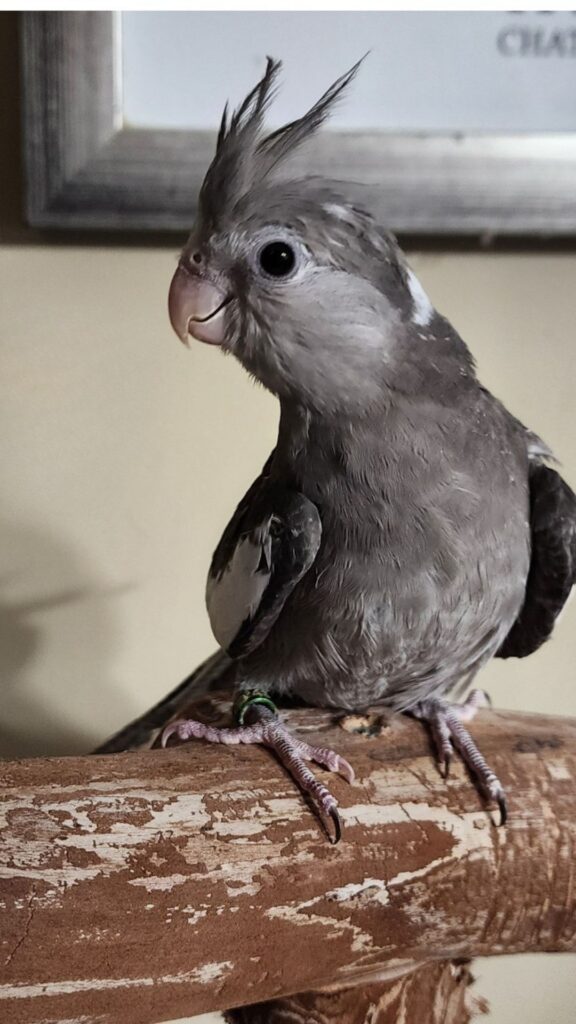
- Crest fully raised, straight up
Alert, excited, curious, sometimes startled. The bird is interested in something. - Crest raised but slightly back
Relaxed but attentive — normal everyday mood for a content bird. - Crest flat against the head
Fear, anxiety, threat response. The bird is genuinely worried. - Crest raised forward (toward forehead)
Aggressive, territorial, hormonal display. The bird is making a threat. - Crest gently angled back
Calm, settled, possibly sleepy.
A hissing cockatiel with crest flat against the head is afraid — back off and reassure. A hissing cockatiel with crest raised forward is being aggressive or hormonal — respect the warning and approach differently. The same hissing sound can mean very different things depending on the crest. Learning to read this transforms how you understand your bird.
What I Ask Owners At The Counter About Hissing Cockatiels
When an owner brings in or rings about a hissing cockatiel, I work through a sequence of questions to quickly identify the cause. Here is what I ask, and what the answers tell me.

- How old is the bird, and how long have you had it?
Young birds entering maturity often go through hissing phases. - Was it friendly before, and when did the change happen?
Sudden change in a friendly bird is often hormonal, fear-based, or health-related. - What time of year did this start?
Spring/summer onset suggests hormones. - Is the bird’s crest flat or raised when hissing?
Flat = fear. Raised forward = hormonal/aggressive. - Is the hissing everywhere or only around the cage?
Cage-focused = territorial. Everywhere = different cause. - Did anything change in the home recently?
New pet, new baby, moved cage, building work, new person? - Is the bird otherwise healthy and active?
Any other signs of illness alongside the hissing? - Are there specific people, items, or times it hisses at?
Pattern often reveals the trigger.
Five minutes of these questions usually identifies the cause clearly, and the solution follows from there.
What NOT To Do With A Hissing Cockatiel
This section matters as much as the previous ones, because some common reactions to hissing actually make it worse. Here is what to avoid.
- Do not punish the bird — they do not understand punishment and it damages trust further
- Do not shout or react dramatically to hissing — your reaction can become reinforcement
- Do not force interaction — pushing past hissing triggers bites and breaks trust
- Do not grab the bird — destroys trust and creates fear-based escalation
- Do not avoid the bird completely — this often makes it worse over time
- Do not assume the bird “hates” you — birds do not work that way; they are communicating something specific
- Do not give up — most cases of cockatiel hissing resolve with the right approach
- Do not ignore other signs of illness — see a vet if hissing comes with other symptoms
How To Rebuild Trust With A Hissing Cockatiel
For most causes — particularly fear, poor socialisation, and post-stressor hissing — the path forward is rebuilding trust patiently. Here is the approach that works.
- Slow down completely — let the bird set the pace. No demands, no forced interaction.
- Spend time near the cage doing nothing — just being present, talking softly, perhaps reading aloud
- Offer treats through the bars by hand — millet spray is excellent for this. The bird learns hands bring good things.
- Use a perch or stick at first for handling — not your hand. Reduces association of hands with stress.
- Reward calm behaviour with positive attention — gentle talking, treats, anything positive
- Build up gradually — finger near the bars, then offered as a perch, over days or weeks
- Stop and back off at the first sign of stress — pushing through creates regression
- Be patient — weeks to months, not days — trust takes time to rebuild
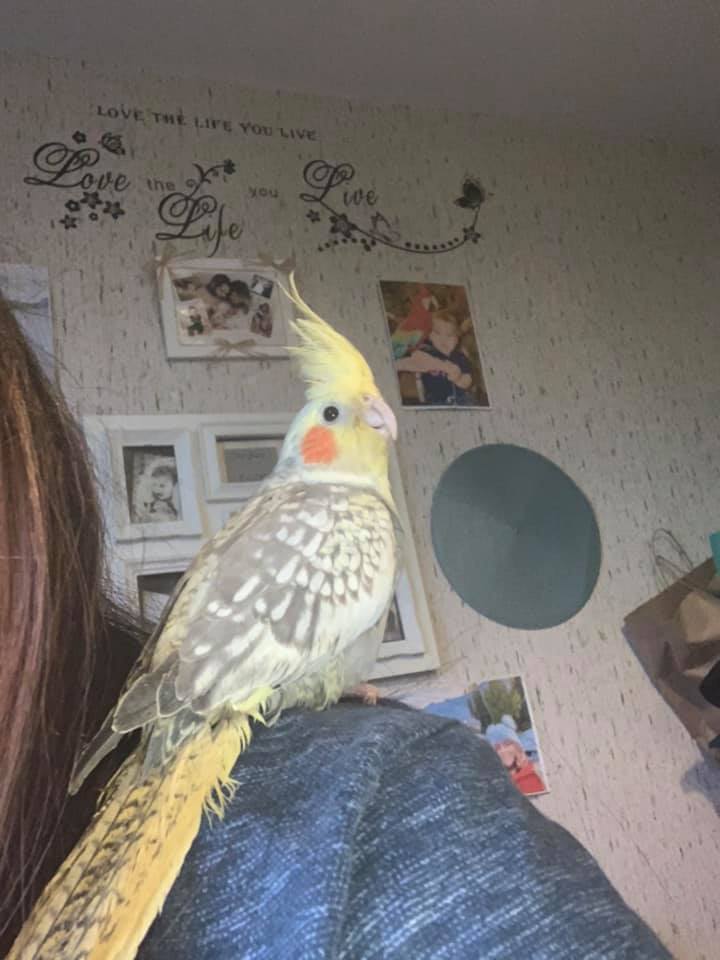
The key insight is that hissing is communication. When you change what you are communicating — moving from threat to safety, from demand to invitation, from imposed contact to chosen contact — the bird’s behaviour changes in response.
Cockatiels are more emotionally complex and more vocal than budgies. They are larger, smarter, more sensitive birds. They form deeper bonds, react more strongly to changes, and communicate more elaborately. The hissing you see in cockatiels is part of a rich communication repertoire that includes whistling, talking, contact calls, and various body postures.
This is not a flaw — it is part of what makes cockatiels rewarding pets. Once you learn to read their communication, the relationship becomes far deeper than with a less expressive species. The hissing is simply part of that communication.
Frequently Asked Questions
Why has my cockatiel suddenly started hissing at me?
The most common causes of sudden hissing are hormones (particularly in spring/summer or in young birds reaching maturity), a frightening experience that has damaged trust, territorial defence of the cage, a new stressor in the environment, or underlying pain or illness. Work through what has changed recently and consider the bird’s age and time of year — these usually point to the cause.
Will my hissing cockatiel ever be friendly again?
In almost every case, yes. Hissing in cockatiels is almost always a response to something specific — fear, hormones, stress, illness, or environmental change — rather than a permanent personality change. Once you identify and address the cause, most birds return to their previous friendly behaviour over weeks. Patience and the right approach are essential.
Why does my cockatiel hiss when I open the cage?
This is usually territorial defence. The cockatiel is protecting its space. Try approaching the cage calmly and predictably, use a perch or stick rather than your hand for stressful tasks, and clean the cage when the bird is out of it if possible. Over time, gentle consistent handling outside the cage helps reduce defensiveness.
Why does my cockatiel hiss with its crest down?
A flat crest with hissing usually means fear. The bird is afraid of something and giving you a warning. Identify what is frightening it — a specific person, an object, a sound — and either remove the trigger or help the bird gradually accept it through patient positive interaction.
Why does my female cockatiel hiss more than my male?
Female cockatiels, particularly those approaching laying or already laying eggs, can be extremely territorial and defensive. This is biologically driven — they are protecting their nest. Reducing nesting triggers (paper piles, dark corners, mirrors, food bowls deep enough to nest in), maintaining a calm environment, and ensuring the female has plenty of space usually helps significantly.
Is hormonal hissing in cockatiels permanent?
No, hormonal hissing is seasonal and usually passes within a few weeks to a couple of months. Reducing triggers — longer dark periods at night, removing nesting opportunities, maintaining a calm environment — helps significantly. If it persists strongly across multiple seasons, an avian vet can advise on further options including possible hormone management.
Should I be worried if my cockatiel hisses at me?
Worried in the sense that it tells you something is wrong, but not in the sense that the situation is hopeless. Hissing is communication, and once you identify what your bird is communicating, you can almost always resolve the behaviour. The exception is when hissing comes with other signs of illness — then see a vet promptly.
Where can I get honest cockatiel advice in Swindon?
Come and see us at Paradise Pets, Manor Garden Centre, Cheney Manor, Swindon SN2 2QJ. Or give us a ring on 01793 512400. The advice is free and we have been doing this for 35 years.
One Last Thing From Me
“Why is my cockatiel hissing at me?” is the question. The honest answer, after 35 years of selling these birds, is — your cockatiel is communicating something specific, and once you work out what, the hissing almost always resolves.
The young couple I mentioned at the start of this article? When we worked through the questions, the cause became clear quickly. Bella was about eight months old, the time of year was late spring, and the hissing had started in the past two weeks. Her crest was raised forward (not flat) when she hissed. She had also recently been allowed to investigate a dark cupboard in the room. It was hormones, almost certainly — with the dark cupboard triggering nesting instincts.
We talked through reducing triggers — closing off the cupboard, longer dark hours at night to reduce hormonal stimulation, avoiding stroking down her back, removing a small mirror she had been displaying at. The couple came back about six weeks later, beaming. Bella was back to her sweet self. She was sitting on shoulders again, taking treats from hands, no more hissing. The hormonal phase had passed, and once it had, the gentle bird they knew was still there.
That is the outcome you want. A bird that goes through a difficult phase and comes out of it as itself again. Or in the case of fear-based or socialisation-based hissing, a bird that learns over weeks and months that you are safe — and gradually rebuilds the trust that makes the relationship possible.
If you are reading this with a hissing cockatiel at home, please do not give up on the bird. Work through the causes in this article, identify what is most likely happening, and address it. Most cases resolve with the right approach. And if you are local and unsure, come and see us. We will work through your specific situation, and help you find the path back to the sweet little bird you used to know. That is genuinely one of the most rewarding parts of the job.
Worried About Your Hissing Cockatiel? Come And See Me
Bring your questions about what is happening and when it started. I will help you work out the cause and the best approach. Free advice, no obligation. That is how we have done things for 35 years.