
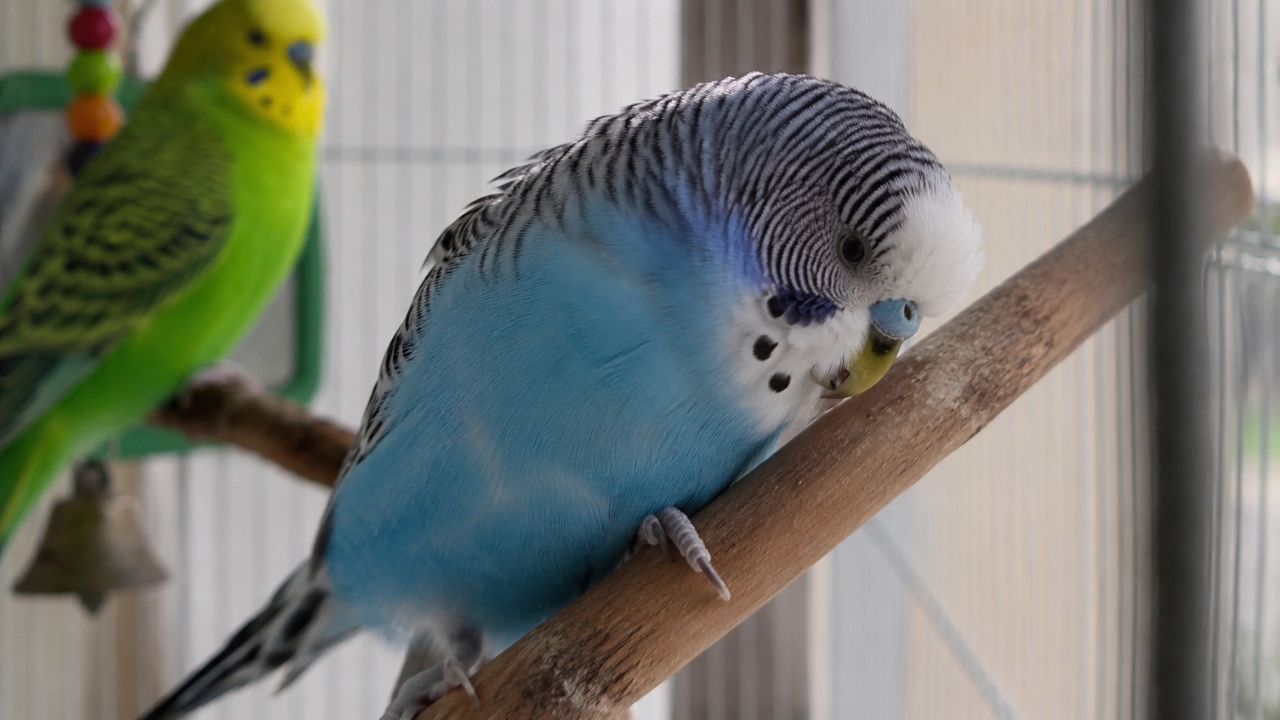

Neil has kept, bred, and sold budgies at Paradise Pets Swindon since 1988 — over 35 years of first-hand experience with these birds. Beak grinding is one of the questions he is asked about regularly, most often by new owners who have heard the sound for the first time and are not sure whether to be concerned. This is his honest guide to what it means.
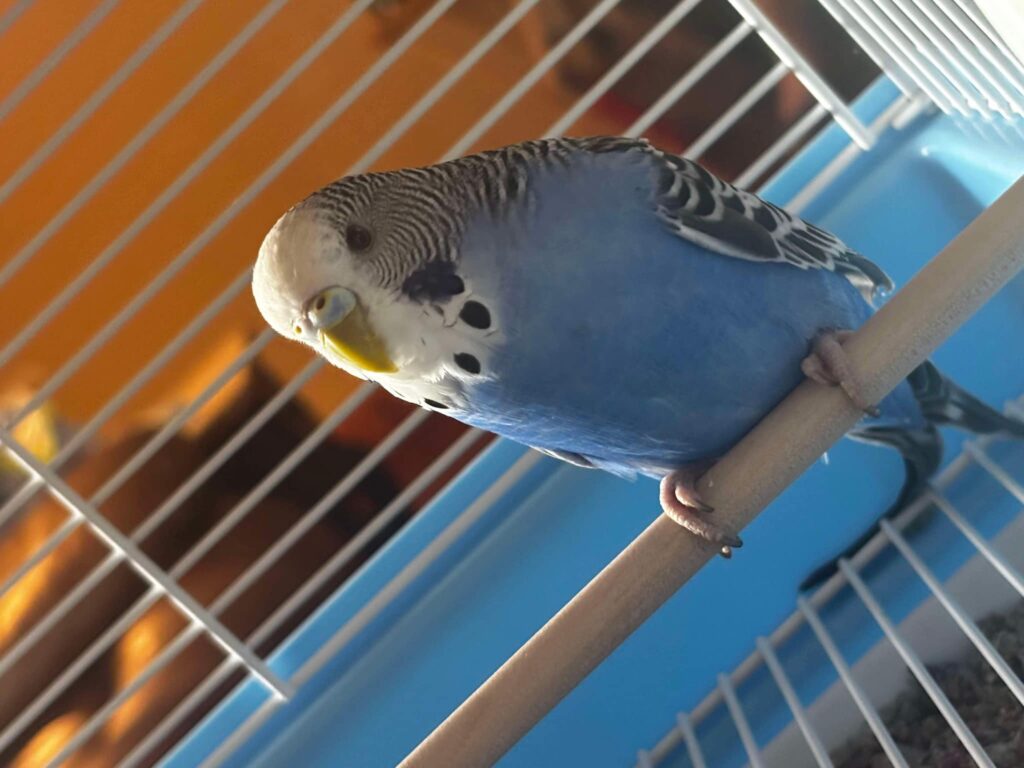
A young man came in a few months ago, clearly a little worried. He had bought his first budgie about three weeks earlier — a young male, pale blue, from us — and had been getting on well with the settling-in process. Then, one evening, he had heard a strange sound coming from the cage. A soft, rhythmic scraping or grinding from the direction of the bird’s beak. It happened for a few minutes and then stopped. He had not heard it before and could not find a clear answer online.
I asked him when it had happened. He said late in the evening, just before the cage light went off for the night. I asked whether the budgie had been sitting on a perch, feathers slightly fluffed, eyes beginning to close.
He said yes, exactly that.
I told him what he had heard was almost certainly beak grinding — one of the most reliably positive sounds a budgie makes. He had a contented, settled bird getting ready for sleep. He went home considerably more relaxed than he had arrived.
That is the most common version of this conversation. But beak grinding is not always that simple, and it is worth understanding the full picture — because there are circumstances where the same basic sound means something quite different.
What Beak Grinding Actually Is
Beak grinding is exactly what it sounds like — the bird moving the upper and lower mandibles against each other in a repetitive, rhythmic way that produces a soft scraping or clicking sound. It is distinct from beak clicking, which is a sharper single sound, and from beak wiping, which is the bird rubbing its beak against a perch to clean it.
The sound can be surprisingly audible for an animal as small as a budgie. First-time owners often describe it as sounding like something is stuck in the beak, or like the bird is chewing on something it should not be. In almost every case, neither of those things is true.
The key, as with most budgie behaviour, is context. When is it happening, what is the bird doing at the time, and what else is going on around it. That context is what separates the benign from the concerning.
The Most Common Reason — Contentment at Rest
This is what the vast majority of beak grinding is, and I want to be clear about it before going anywhere else.
A budgie that grinds its beak in the evening — sitting on its favourite perch, feathers slightly puffed for warmth, eyes beginning to close, winding down for sleep — is expressing contentment. It is the avian equivalent of a cat purring or a dog sighing and settling. The bird is relaxed, safe, and comfortable in its environment. It is, in short, doing well.
This bedtime grinding is so consistent and so reliably positive that experienced budgie keepers actively listen for it as a health indicator. A budgie that is grinding before sleep is a budgie that feels secure. A budgie that has stopped doing it after a period of doing it regularly is sometimes a budgie worth paying closer attention to.
New owners almost always hear this sound for the first time and worry. I understand why — it does not sound obviously pleasant, and the internet is not always helpful in providing clear context. But if what you are hearing is happening in the evening, as the bird settles for sleep, and the bird is otherwise behaving normally, this is nothing to be concerned about. It is one of the best sounds your budgie can make.
Other Positive Reasons a Budgie Grinds Its Beak
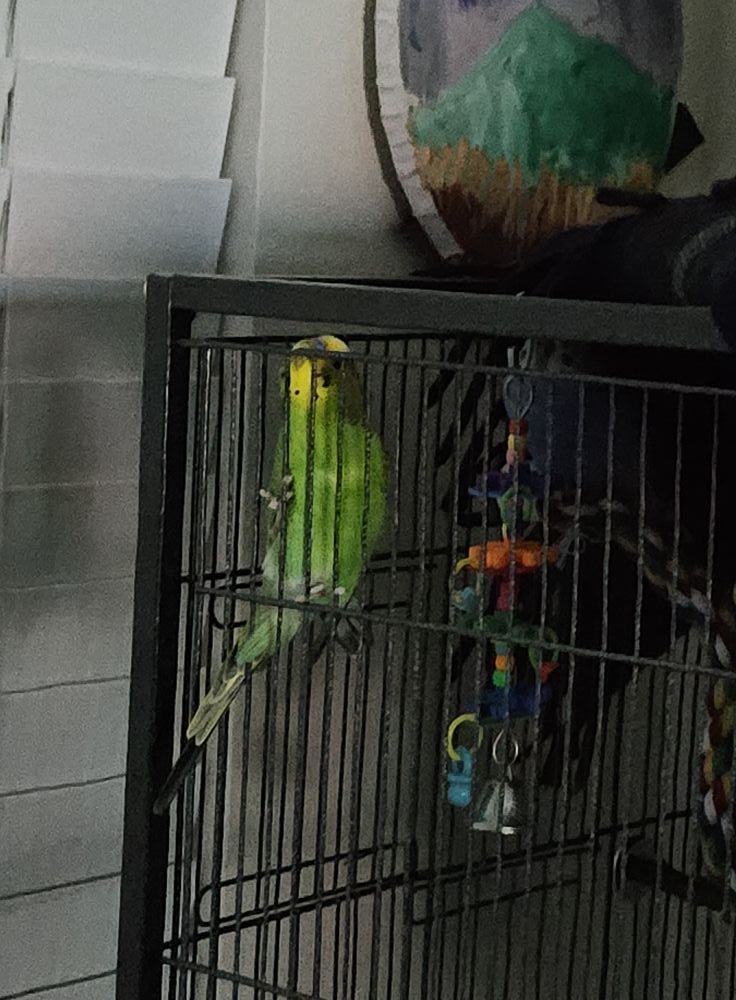
Bedtime contentment is the most common cause, but it is not the only benign one. There are a few other contexts in which beak grinding is entirely normal and healthy.
After Eating
A budgie that grinds its beak briefly after eating is doing something entirely normal — working food remnants off the beak, adjusting the fit of the mandibles, and in some cases simply expressing satisfaction. Post-meal grinding is usually brief and stops within a minute or two. It is not a cause for concern.
During Preening or Relaxation
Some budgies grind their beaks during or after a thorough preening session, particularly once they have finished and are settling back into a rest posture. Again, this is a contentment behaviour and is associated with a bird that feels comfortable and at ease in its environment.
During Bonding or Social Interaction
In pairs or groups, budgies sometimes grind their beaks during or after mutual preening with a cagemate. This is a social bonding behaviour. If both birds are otherwise calm and getting along well, this is entirely positive.
When Beak Grinding Is Worth Paying Attention To
I want to be balanced here, because while most beak grinding is benign, there are circumstances where it warrants closer attention.
Grinding During the Day With No Clear Trigger
Beak grinding that happens throughout the day — not associated with eating, preening, or settling for sleep — is less straightforward. On its own, daytime grinding is not necessarily a problem, but it is worth monitoring alongside other signs. Is the bird eating normally? Is it as active and vocal as usual? Is its weight stable?
A budgie that is grinding more than usual during the day and is also showing any behavioural changes is worth watching carefully.
Grinding Alongside Changes in Eating or Weight
This is the combination that always prompts me to suggest a vet visit. A budgie that is grinding its beak and has also started eating less, dropping food, or losing weight may have a beak or crop issue that needs examination.
Beak problems in budgies — overgrowth, misalignment, or damage — can cause the bird to grind in an attempt to correct something that feels wrong. These are not conditions that resolve on their own, and the earlier they are picked up, the more straightforward the treatment.
Weight loss in budgies is not always obvious to the eye because their feathers mask it. The most reliable way to detect it is to handle the bird and feel the keel bone — the ridge that runs down the centre of the chest. On a healthy budgie this should be slightly padded on both sides. If it feels sharp or prominent, the bird has lost weight and needs a vet.
Grinding With Laboured Breathing or Tail Bobbing
If beak grinding is accompanied by breathing that looks laboured — the tail bobbing rhythmically up and down with each breath, the bird sitting low on the perch, or audible clicking or wheezing alongside the grinding — this needs a vet the same day. These are signs of respiratory distress, and in budgies that can escalate quickly.
Beak Grinding vs Other Beak Sounds — Knowing the Difference
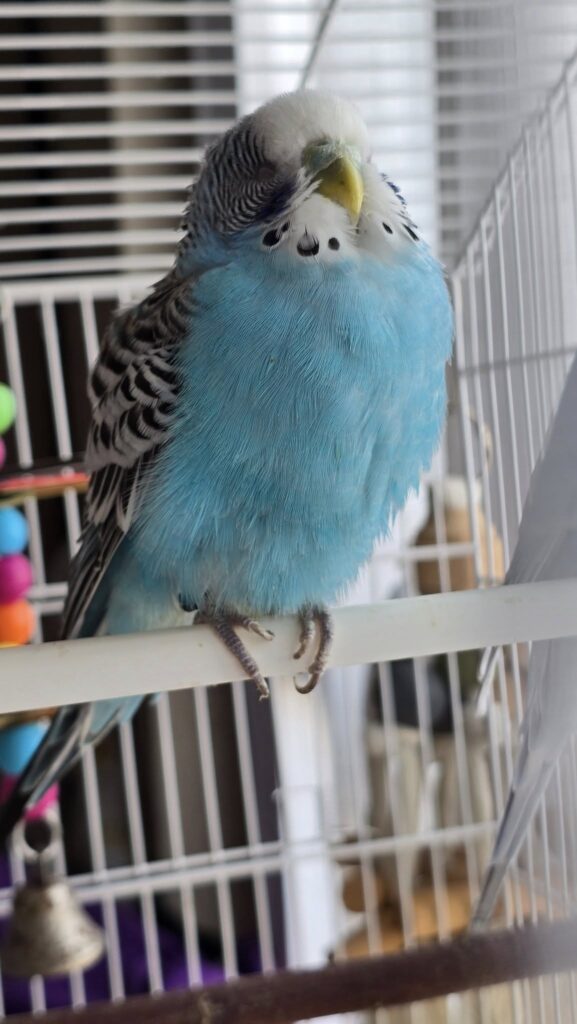
Owners sometimes confuse beak grinding with other sounds, and it is worth being clear about the distinctions because they mean different things.
Beak grinding is soft, rhythmic, and continuous for several seconds or minutes. It has a scraping quality. It is almost always associated with rest or contentment.
Beak clicking is a sharp, single sound — sometimes used in courtship display or as a mild warning. A budgie clicking its beak while bobbing its head at a mirror or at you is usually a social display, not distress.
Beak wiping is the bird rubbing the side of its beak against a perch. This is normal maintenance behaviour — the bird is cleaning food residue off the beak. It sounds like a brief scraping and is over in seconds. Nothing to be concerned about.
Regurgitation sounds are sometimes confused with beak grinding by new owners. A budgie regurgitating food for a bonded partner or a favourite toy will make a bobbing motion with the head and a soft wet sound. This is normal bonding behaviour in a paired bird, not illness — but it does look and sound unusual the first time you see it.
Wheezing or clicking during breathing is distinct from beak grinding and is a medical signal. If the sound appears to come from the throat or chest rather than the beak, and if it coincides with breathing rather than mouth movement, this needs veterinary attention.
Beak Health in General — What to Check
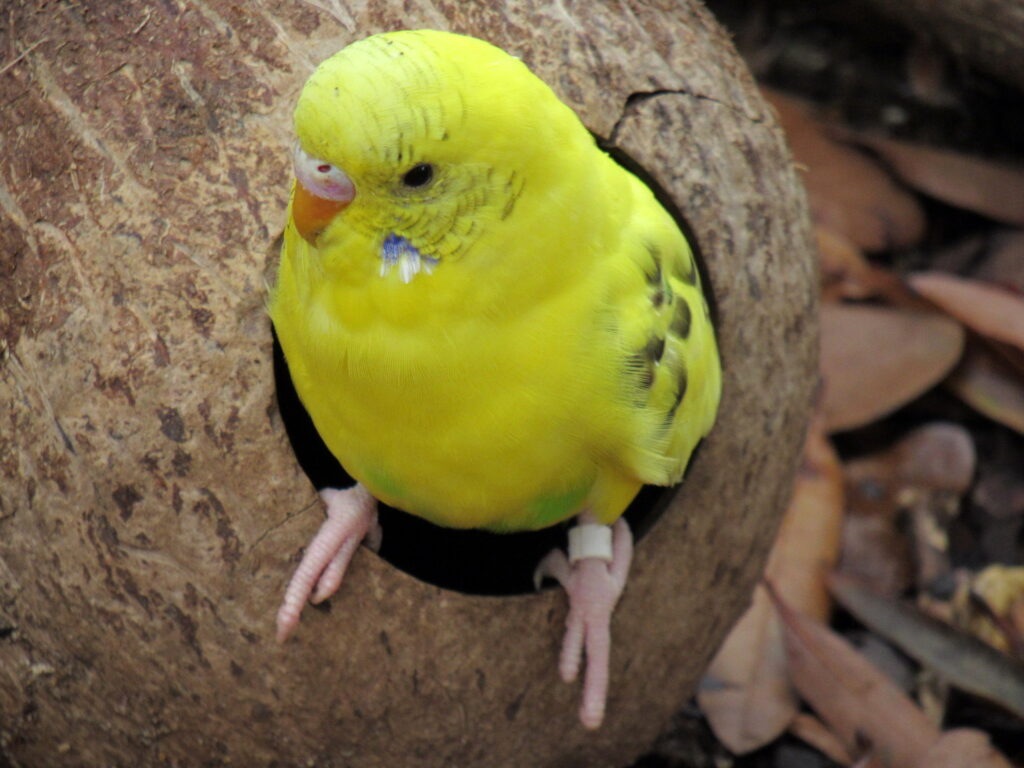
Since we are on the subject of beaks, it is worth covering what a healthy budgie beak looks like — because beak grinding that is accompanied by beak abnormalities is a different situation from grinding with a completely normal beak.
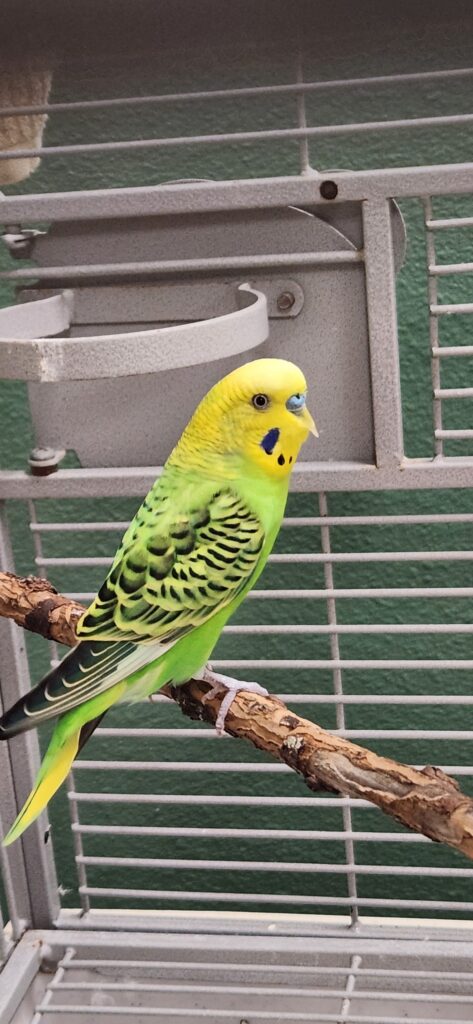
A healthy budgie beak should be smooth, symmetrical, and correctly aligned — the upper mandible should overlap the lower one neatly without being excessively long or curved. The colour should be consistent, typically a pale horn colour in most varieties, without discolouration, flaking, or soft patches.
Signs that the beak needs veterinary attention include: the upper mandible curving downward and overlapping the lower one excessively, the beak crossing to one side rather than meeting symmetrically, soft or crumbly texture rather than hard smooth keratin, or any growth or lesion on the beak surface.
A cuttlefish bone and mineral block provided in the cage help maintain beak condition naturally — the bird uses them to wear the beak down at its own pace. If your budgie is not using these and the beak is growing unusually, that is something to mention to a vet.
When the Grinding Has Recently Started or Changed
A budgie that has always ground its beak in the evenings and continues to do so is almost certainly fine. The situation that warrants more thought is when the grinding is new, has recently increased significantly, or has changed in character.
A new behaviour in an otherwise settled bird is always worth investigating the cause of. Has anything changed in the environment — a new cage, different position in the room, a change in feeding routine, the introduction of another bird, a change in household noise or activity levels? Environmental changes can produce new behaviours that settle once the bird adjusts, but they can also indicate ongoing stress.
If the grinding is genuinely new and you cannot identify an environmental trigger, and if the bird is also showing any other behavioural change, a vet visit is the sensible next step. Not because something is definitely wrong, but because ruling out a physical cause quickly is always better than waiting.
Finding a Vet With Avian Experience
This is something I mention with every bird health topic, and I will say it again here because it matters.
Budgies are classified as exotic pets. Not every vet has meaningful experience with them, and the diagnosis and treatment of bird health issues — including beak and respiratory problems — requires specific knowledge. A vet who sees birds regularly will pick up things that a general practice vet might miss.
When looking for a vet for a budgie with a health concern, search specifically for one who lists avian or exotic pets as an area of practice. The RCVS accreditation search at rcvs.org.uk is a good starting point. In the Swindon area, come and ask us — we are always happy to point people in the right direction.
Have the vet’s number stored before you need it. Finding an avian vet in an emergency is considerably harder than finding one in advance.
Frequently Asked Questions
Is beak grinding normal in budgies?
Yes — in most contexts, very normal. Evening beak grinding as the bird settles for sleep is one of the most reliably positive signs in budgie behaviour. Post-meal grinding is also normal. The context in which it happens tells you far more than the sound alone.
My budgie has just started grinding its beak — should I be worried?
Not necessarily. If the grinding is happening in the evening as the bird settles for sleep, and the bird is eating, drinking, and behaving normally, this is almost certainly contentment. If the grinding is happening throughout the day with no clear trigger, or is accompanied by any other change in behaviour or appearance, it is worth monitoring closely and speaking to a vet if other signs develop.
Does beak grinding mean my budgie is happy?
In the context of bedtime settling, yes — it is one of the clearest contentment signals a budgie produces. Experienced bird keepers often describe it as the equivalent of a cat purring. A budgie that grinds its beak before sleep is a bird that feels safe and comfortable in its environment.
Can beak grinding indicate illness?
On its own, rarely. It becomes a potential illness signal when it is combined with other changes — reduced appetite, weight loss, laboured breathing, changes in droppings, or a change in the beak’s appearance or alignment. Any of those alongside the grinding warrants a vet visit.
My budgie grinds its beak and bobs its head — what does that mean?
Head bobbing alongside beak movement in a paired or bonded bird is most likely regurgitation behaviour — the bird offering food to a partner, a cagemate, or a favoured object. This is normal social bonding behaviour. It is distinct from illness-related regurgitation, which is usually accompanied by other signs of unwellness. If the bird is otherwise bright and behaving normally, this is nothing to be concerned about.
How can I tell if my budgie’s beak is healthy?
A healthy beak is smooth, hard, symmetrical, and correctly aligned — upper mandible sitting neatly over the lower one without excessive length or curvature. Run a finger along it gently. It should feel solid and even. Any softness, flaking, asymmetry, crossing, or excessive length is worth having a vet look at.
One Last Thing
Of all the sounds budgies make, beak grinding is probably the one that generates the most unnecessary worry in new owners. That is understandable — it sounds unusual, it is not immediately obvious what is causing it, and the internet provides conflicting information.
The reality, in the vast majority of cases, is that a budgie grinding its beak is a budgie telling you it is settled and at ease. It is one of the sounds that experienced bird keepers learn to find reassuring rather than alarming. Once you have heard it a few times in the context of a healthy, contented bird, you will feel the same way.
If you are not sure what you are hearing, or if the grinding is accompanied by anything else that has changed, come and talk to us. We are at Manor Garden Centre, Cheney Manor, Swindon SN2 2QJ, every day. Get in touch here or call 01793 512400.
Visit Us at Paradise Pets Swindon
We stock budgies year-round alongside all the food, housing, and enrichment they need. If you have a question about your budgie’s behaviour or health, come in and talk to us — we are always happy to help.