
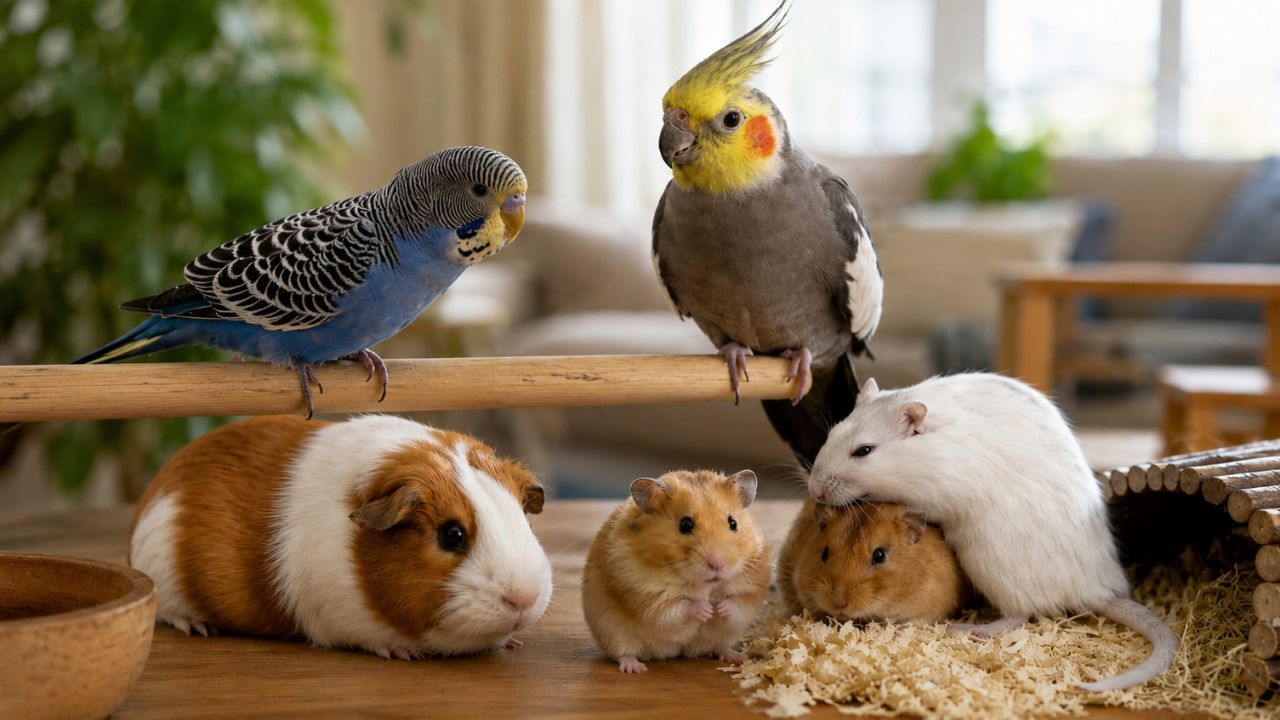

Neil has kept, bred, and sold small animals and birds at Paradise Pets Swindon since 1988 — over 35 years of helping families choose the right pet for their children. He has seen what works and what does not, across thousands of households and every species he stocks. This guide is his honest summary of what he actually knows.
It is one of the most common conversations I have, and one of the most important ones to get right.
A family comes in — usually on a Saturday, usually with children from about five to thirteen years old, usually with the children having already decided they want something — and they ask me: what is the best pet for kids?
I never answer that question directly. Not because I am being evasive, but because the question itself is too broad to answer usefully. The best pet for a five-year-old in a flat with one parent is not the best pet for a ten-year-old in a house with a garden and two available parents. The best pet for a family that will genuinely engage with it daily is not the best pet for a family where the novelty will wear off in three months and the parents will be doing everything.
The question I actually answer is: given this specific family, this specific household, and these specific children — which pet is most likely to go well?
That conversation takes longer. It results in better decisions. And it is the conversation I am trying to have with you now, in writing, before you walk through the door.
The Questions That Actually Determine the Answer
Before I name a single species, I ask about the household. The answers to these questions matter more than any generalisation about which animal is “best for kids.”
How old are the children? This is the most important factor. Handling ability, impulse control, the capacity to understand an animal’s needs — all of these are age-dependent in ways that directly affect which pets are appropriate and safe.
How much time does the household genuinely have? Not idealised time — realistic time. Is a parent home during the day? Is everyone out from eight until six on weekdays? Who will do the daily care on a Tuesday in January, nine months after the purchase, when the novelty has completely worn off?
Where will the pet live? An outdoor hutch in a UK winter is not appropriate for guinea pigs without very specific management. A bird cage in a kitchen is dangerous. Space matters, position matters, and the specifics of the home matter.
What happened with previous pets? A household that has successfully kept a pet through its natural lifespan has demonstrated something important about their capacity for sustained commitment. A household with a trail of animals that were enthusiastically bought and eventually neglected tells a different story.
What does the child actually want from a pet? Some children want something to handle and interact with. Some want something to watch. Some want something that responds to them vocally. The answer shapes the species recommendation significantly.
Under Five — The Honest Assessment
I will say this gently but clearly: very young children are not ready to be primarily responsible for any animal. They can benefit enormously from being around animals — from observing, from being involved in care with close adult supervision, from learning that other creatures have needs. But the primary carer of any pet in a household with children under five is always going to be an adult.
That does not mean a family with a four-year-old should not have a pet. It means they should choose with the adult’s lifestyle in mind as much as the child’s enthusiasm.
For very young children, fish are the most honest recommendation for independent family observation — visually engaging, genuinely interesting, and entirely adult-managed. A well-set-up tropical fish tank or cold water setup is something a three-year-old can watch with real delight, and a parent can maintain without the daily handling complexity that small mammals and birds require.
If the family wants something more tangible — something the child can eventually interact with — guinea pigs are the best starting point among mammals. They are large enough to be handled without the fragility risk of smaller animals, they vocalise in ways young children find delightful, and they are generally more tolerant of imperfect handling than gerbils or hamsters. The handling should still be supervised and on the floor or sofa, but the margin for error is wider.
What I would not recommend for children under five: hamsters (nocturnal, fast, bite when startled), gerbils (fast, tail danger, fragile handling requirements), or birds (require patience and quiet approach that young children struggle with consistently).
Ages Five to Seven — What Actually Works
This is the range where the guinea pig is my consistent recommendation, for reasons I have observed across hundreds of family purchases over thirty-five years.
Guinea pigs are robust enough to survive the imperfections of young children’s handling — they are significantly harder to hurt accidentally than smaller animals. They vocalise frequently and expressively — wheeking, purring, rumbling — which young children find enormously engaging. They are active during the day. They respond visibly to the people who care for them. And they are large enough that a child can actually hold and interact with them without the high-speed handling challenge that gerbils or hamsters present.
The conditions still apply. Guinea pigs must be kept in same-sex pairs or groups — a lone guinea pig is not appropriate regardless of the child’s age. They need space. They need daily fresh vegetables, particularly vitamin C sources, because they cannot produce it themselves. They live five to seven years. A parent is still the backstop for all of this.
But if a family with a six-year-old asks me what small animal will give them the best experience — guinea pigs are almost always my answer. They are genuinely suited to this age group in ways that most other small animals are not.
Hamsters at this age: possible, with important caveats. Hamsters are nocturnal — they will be asleep when the child comes home from school and wants to interact. They are significantly more fragile than guinea pigs. And they bite when startled, which a young child’s unpredictable approach makes a genuine risk. If the family understands all of this and still wants a hamster — a Syrian hamster, well-handled before purchase, is the better choice over dwarf varieties, which are faster and less tolerant of handling.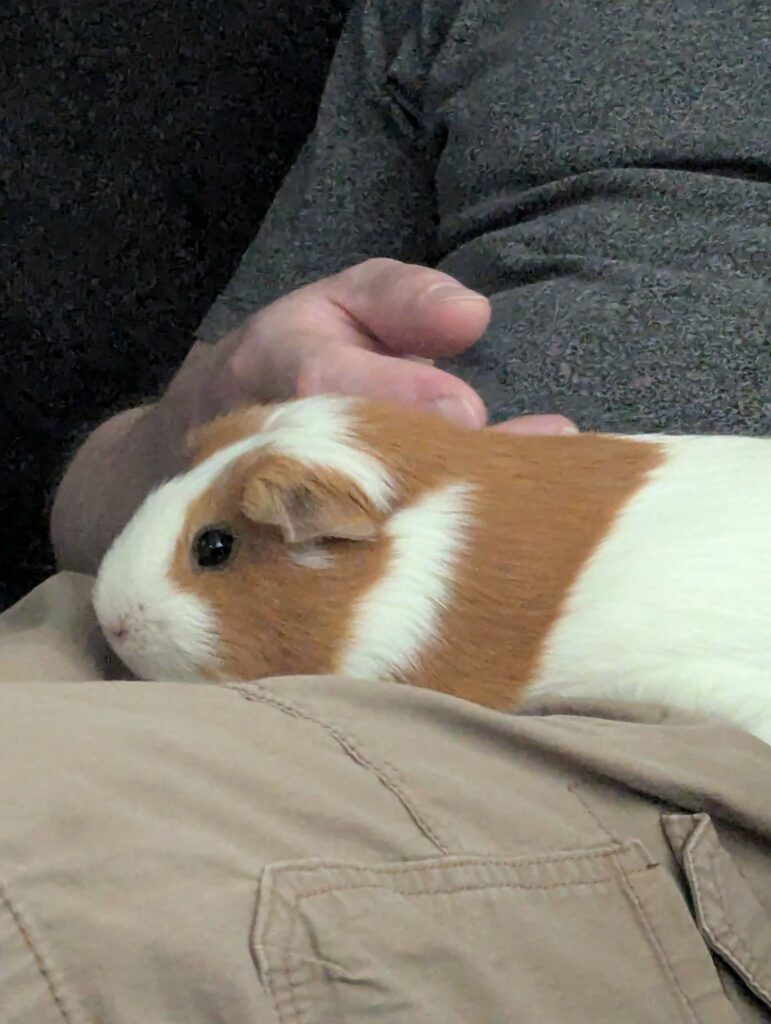
Ages Eight to Eleven — When More Options Open Up
From around eight years old, the range of appropriate pets expands meaningfully. Children in this age group have the motor skills and impulse control to handle smaller, faster animals safely — with guidance and practice. They can take on more genuine responsibility for daily care. And they can engage with the more complex needs of animals like budgies in ways that younger children cannot consistently manage.
Gerbils become a genuinely excellent choice from around eight onwards. They are active during the day, endlessly entertaining to observe in a well-set-up tank, and form real bonds with children who handle them regularly from a young age. The tail rule must be understood and applied — never pick up a gerbil by its tail, always cupped hands, never grab from above. With correct technique established, gerbils in this age group are one of the most rewarding small animal choices available. They must be kept in same-sex pairs. Our guide on whether gerbils are good pets for kids covers this in full.
Hamsters work better from eight onwards than they do with younger children — the handling is more reliable, the nocturnal schedule is better understood. A well-handled Syrian hamster bought young and handled consistently can become a genuinely engaging pet for a child in this age group. The adult is still the primary carer, but the child can participate meaningfully.
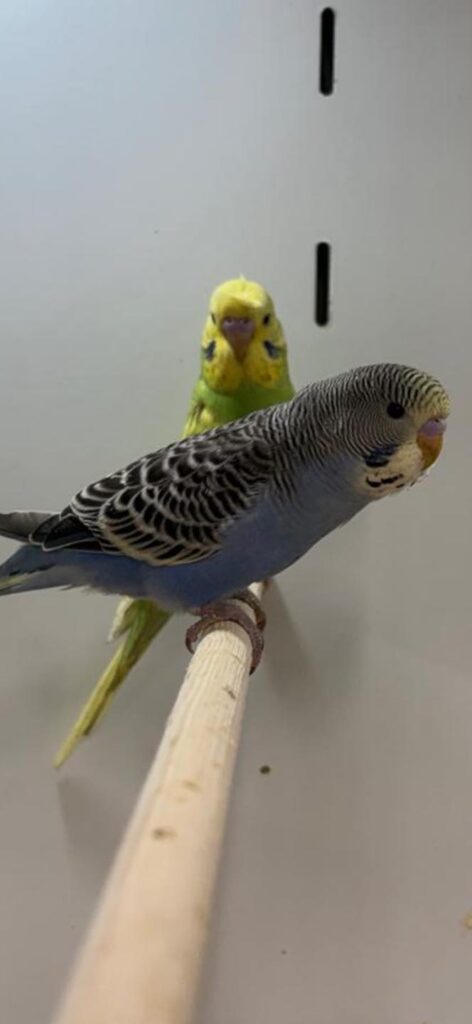
Budgies become an option from around eight or nine for children who are specifically interested in birds. A single well-tamed budgie with genuine daily human interaction can form a real bond with a child in this age group — talking, stepping up, learning its owner’s voice. The time commitment for a single budgie is significant — hours of daily interaction — which makes this more appropriate for households where someone is reliably home. A pair of budgies requires less human interaction time but bonds more with each other than with the owner. Our guide on whether budgies can live alone covers the decision in detail.
Ages Twelve and Above — When Real Choice Is Possible
From twelve onwards, a child who has been raised around animals and understands their needs can genuinely participate as a primary carer — with adult oversight that is supervisory rather than operational. At this age, more demanding and more rewarding species become appropriate.
Rats are, in my honest opinion, one of the most underrated pets for this age group. Intelligent, highly social, genuinely interactive in ways that smaller animals are not — a well-kept pair of rats will learn their owner’s voice, come to the cage door when called, play, and form bonds that are genuinely impressive. They are not glamorous, and the association with wild rats means many families overlook them. The families that do not are often the most satisfied small animal owners I see. Rats live two to three years, which is shorter than gerbils or guinea pigs, and that lifespan is worth being honest about. But the quality of the relationship within those years is often exceptional.
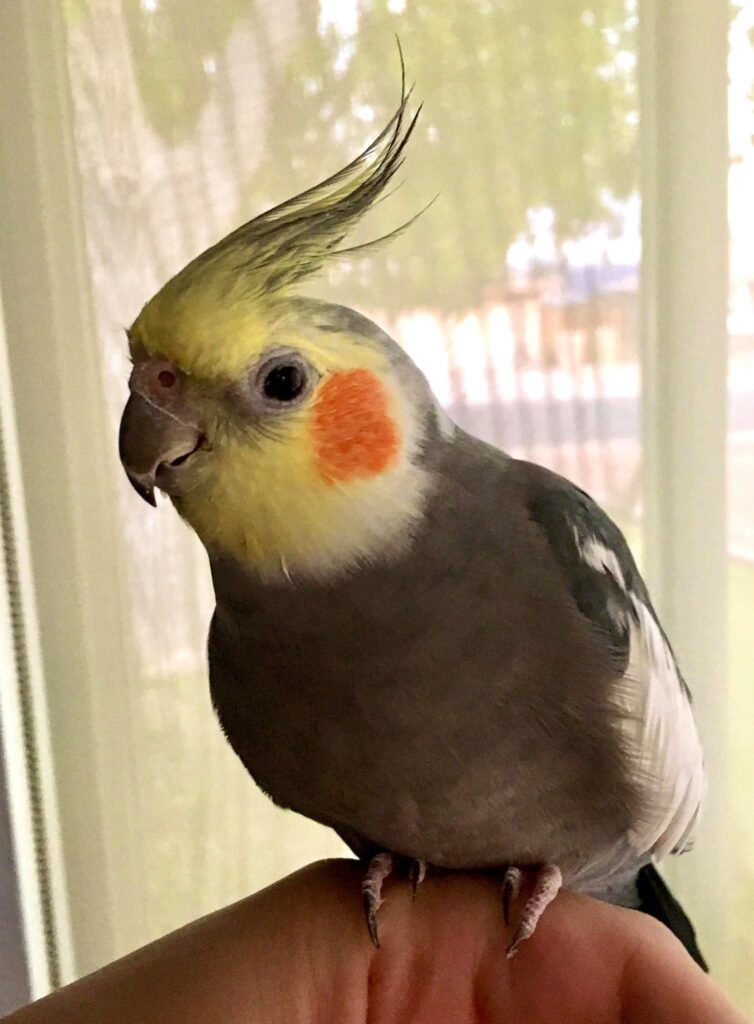
Cockatiels are a real option from twelve onwards for a child who is specifically interested in birds and whose household can meet the significant time and environmental requirements. A cockatiel lives fifteen to twenty-five years — this is a commitment that will follow the child into adulthood. The noise, the social needs, the PTFE and airborne fume dangers, the diet requirements — all of this is manageable for a sufficiently engaged household. But cockatiels are not starter pets, and I say this clearly to every family that asks. Our guide on why cockatiels are not beginner birds is required reading before any cockatiel purchase.
Rabbits are bought for children more often than any other animal except perhaps guinea pigs, and they are also more frequently rehomed than almost any other animal. The reason is simple: rabbits are not the cuddly, passive animals that their appearance suggests. They are territorial, they bite and scratch when handled incorrectly, they need substantial space, and most of them do not enjoy being picked up regardless of how much the child who wanted them does. From twelve onwards, a child who genuinely understands and accepts what a rabbit actually is — rather than what it is assumed to be — can have a rewarding relationship with one. Our guide on rabbits not being low-maintenance pets is essential reading for any family considering one.
A Species-by-Species Honest Summary
| Animal | Best Age | Key Strengths for Kids | Honest Caveats |
|---|---|---|---|
| Guinea Pigs | 5 and above | Robust, vocal, daytime active, tolerant of handling, deeply rewarding | Must be kept in pairs, need space and daily fresh veg, live 5–7 years |
| Gerbils | 8 and above | Daytime active, fascinating to watch, form real bonds, low odour | Must be in pairs, tail rule critical, fast and hard to catch for young children |
| Syrian Hamster | 8 and above | Solo animal, manageable setup, can bond deeply with one owner | Nocturnal — asleep when children want to interact, bites when startled |
| Budgies | 8–9 and above | Can talk and bond closely, entertaining, daytime active | Single bird needs significant daily human time, PTFE fume danger in kitchen |
| Rats | 10 and above | Highly intelligent, interactive, form genuine bonds, underrated | Short lifespan (2–3 years), must be in pairs, some families resistant to the idea |
| Cockatiels | 12 and above | Long-lived companion, can talk and interact, deeply rewarding | 15–25 year commitment, PTFE lethal, noise, significant daily care needs |
| Rabbits | 12 and above | Can bond deeply with correct handling, interesting and active | Most dislike being picked up, territorial, frequently rehomed when reality sets in |

The Responsibility Myth — Said Once, Clearly
Every week, a parent tells me they want to get their child a pet to teach them responsibility.
I understand the instinct. I do not argue with it. But I want to say something honest about how it actually works, because thirty-five years of watching this play out has given me a clear view.
Pets do not teach children responsibility. Adults teach children responsibility, using the pet as the context.
The difference matters practically. A child left to independently manage a pet’s care will, in most cases, do it well for a few weeks and then inconsistently thereafter — because sustained daily responsibility for another living thing is a skill that develops over years, not weeks. The animal’s needs do not pause while the child develops that skill. The adult fills the gap.
This is not a failure. It is parenting. It is what good parents do — they maintain the standard while the child is learning to meet it. The child learns, gradually and imperfectly, what consistent care looks like. The animal gets the care it needs throughout.
What pets genuinely teach children — when the adults stay engaged and model good care throughout — is empathy. The understanding that other creatures have needs, that those needs do not pause because it is inconvenient, and that being responsible for another living thing is a real thing with real consequences. That is a lesson worth teaching. It requires the parent to stay involved, consistently, for the full lifespan of the animal. Not to do everything — but to ensure everything gets done.
- “She’s been asking for months so we know she’ll look after it” — The intensity of wanting a pet before it arrives tells you very little about the sustained daily effort that will be applied nine months later. Children who beg for pets are children who want the idea of a pet. The reality of daily care is a separate question entirely.
- “Something small and easy — we don’t want anything complicated” — Small does not mean easy. A guinea pig’s daily fresh vegetable requirement, a gerbil’s need for a companion and deep substrate, a hamster’s nocturnal schedule — none of these are complicated, but none of them disappear because the animal is small. Every living animal has non-negotiable daily needs.
- “We’ll start with one and see how we get on before getting a second” — For species that must be kept in pairs — guinea pigs, gerbils, budgies — this approach is not appropriate. A lone animal is not a trial period. It is an animal with an unmet social need. If the family is not ready for two, they are not ready for a species that requires two.
- “Rabbits are perfect — they’re gentle and children love them” — Rabbits are often gentle in the right circumstances. They are also territorial, capable of biting and scratching when held against their will, and profoundly unsuited to being treated as cuddly toys. The gap between the rabbit that exists in people’s imaginations and the rabbit that exists in reality is wide enough to account for a very large proportion of small animal rehomings in the UK every year.
- “It’s only a hamster — it doesn’t really matter if it doesn’t live that long” — It matters to the child who is attached to it, and it matters to the hamster. The “only” framing normalises a casualness about animal welfare that I do not think serves children well. Every animal deserves appropriate care for the full duration of its life, regardless of how long that is.
What I Tell Families at the Counter
- How old are the children, and what is the youngest child who will handle the animal?
The youngest handler sets the upper limit on what is safe. A household with a ten-year-old and a four-year-old should choose as if the primary handler is four — because the four-year-old will handle the animal whether or not that was the plan. Age-appropriateness for the youngest, always. - What does a typical weekday look like in your household?
Everyone out from eight to six? Someone home all day? Children home at three-thirty wanting to interact? The answer determines whether a nocturnal animal is a practical choice, whether a budgie gets the daily interaction it needs, and who is realistically going to manage the daily care routine. - What happened with the last pet you had?
If the family has previously kept an animal through its natural lifespan, with consistent care throughout, that tells me they can do it. If there have been animals that were eventually neglected or rehomed, I ask about that honestly. Not to judge — to understand what support the family might need to avoid the same outcome. - Are you prepared for pairs?
Guinea pigs, gerbils, budgies — social species that should not be kept alone. I confirm this clearly before any recommendation. A family that only wants one animal needs to choose a species where one is appropriate — a Syrian hamster, for example, or a single cockatiel with significant human interaction time. - What is the longest lifespan you are genuinely comfortable committing to?
A guinea pig is five to seven years. A gerbil is three to five. A hamster is two to three. A budgie is seven to ten. A cockatiel is fifteen to twenty-five. A rabbit is eight to twelve. I say these numbers clearly. I want the family to connect the animal they are about to choose with the full duration of the commitment they are making. That conversation changes things — sometimes the species, sometimes just the expectations.
Come and see us at Manor Garden Centre, Cheney Manor Industrial Estate, Swindon, SN2 2QJ — open every day. Or call us on 01793 512400. Bring the family. Spend some time with the animals. Ask us the questions you are not sure about. We have been doing this for thirty-five years and we genuinely want the purchase to go well — for the family and for the animal.
Visit Us at Paradise Pets Swindon
We stock guinea pigs, gerbils, hamsters, rabbits, budgies, cockatiels, canaries, finches, and more — all year round, all from UK breeders, all checked and handled before they go to a new home. Whatever age your children are and whatever your household looks like, come in and talk to us. We will help you find the right match.