


Neil has sold and kept budgerigars at Paradise Pets Swindon since 1988 — over 35 years of first-hand experience with one of the UK’s most popular pet birds. In that time, he has been asked about budgie head bobbing more times than he can count — by new owners who are worried, by experienced owners who are puzzled, and by everyone in between. This article is his honest, complete guide on what head bobbing in budgies actually means, when it is completely normal, and when it is a sign that something needs attention.
A young woman came in one afternoon with her phone out, showing me a video she had taken of her budgie. The bird — a young green male, maybe four months old — was bobbing his head rhythmically, up and down, quite vigorously, toward a small mirror clipped to the side of his cage.
“Is he ill?” she asked. “I looked it up and some websites say it is normal and some say it is a problem. I don’t know what to believe.”
I watched the video for about ten seconds and I knew exactly what I was looking at.
“He’s not ill,” I said. “He’s showing off. He’s courting the mirror.”
She looked relieved. Then slightly amused. Then — as I explained a bit more — genuinely fascinated.
That conversation captures the head bobbing question almost perfectly. Because head bobbing in budgies is one of those behaviours that looks alarming to new owners, is completely normal in most contexts, but can occasionally — in specific circumstances — be a sign of something that needs attention. The difference is not always obvious if you do not know what you are looking at.
After 35 years, here is what I know.
The Short Answer — And Why It Is Not Quite Enough
The short answer to why budgies bob their heads is this: it is usually completely normal behaviour, and in most cases it means the bird is happy, engaged, and doing something purposeful — feeding, courting, communicating, or playing.
But the short answer is not quite enough on its own, because head bobbing is not one behaviour. It is several distinct behaviours that happen to look similar to the human eye. They have different causes, different contexts, and different implications. A young male bobbing vigorously at a mirror is doing something entirely different from a hen regurgitating food for her mate, or a young bird begging to be fed, or a bird with a crop problem moving its head in an attempt to clear discomfort.
Understanding which type you are seeing is the whole point of this article.
Type 1: Courtship and Excitement — The Most Common Type
This is what the young woman’s budgie was doing, and it is by far the most common type of head bobbing I see owners ask about.
Male budgies bob their heads as a courtship display. It is directed, deliberate, and rhythmic — usually aimed at another bird, a mirror, a favourite toy, or occasionally a person the bird has bonded with strongly. The bird bobs up and down repeatedly, often while making contact calls or singing. The body is usually upright and alert. The tail may fan slightly. The whole posture says, in budgie terms, pay attention to me.
This behaviour is most pronounced in young males who are coming into sexual maturity — typically from around three or four months of age. It can look quite vigorous and persistent, which is why owners sometimes mistake it for something medical.
- Directed at a specific target — another bird, a mirror, a person, or a favourite toy
- Rhythmic and deliberate — regular up and down motion
- The bird looks alert, upright, and engaged — not unwell
- Often accompanied by vocalisation — contact calls, singing, chattering
- Most pronounced in young males but females can display similarly
- Increases in spring and summer when day length stimulates breeding hormones
- Stops when the bird’s attention moves elsewhere — it is purposeful, not compulsive

What to do
Nothing. This is a healthy bird behaving naturally. Enjoy it — a budgie in full courtship display is one of the more entertaining things these birds do.
One note on mirrors: a bird that spends most of its day bobbing at a mirror is a bird that is treating the reflection as its primary social companion. This is not harmful in the short term, but it is a sign that the bird may benefit from a real companion. A mirror cannot reciprocate, cannot preen back, cannot provide the genuine social interaction a budgie needs. If your bird is mirror-obsessed, it may be worth considering a second bird.
Type 2: Regurgitation — Feeding a Partner or a Person
This type surprises owners when they first encounter it, because it looks odd and slightly alarming until you understand what is happening.
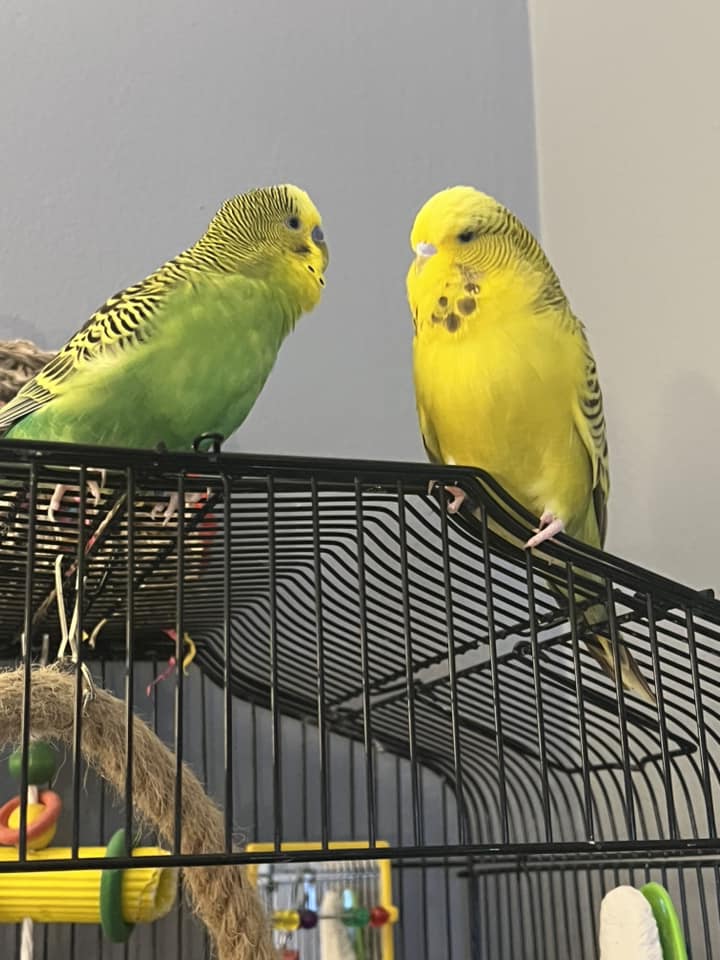
Budgies regurgitate food as a bonding behaviour. In the wild, a male will feed a female by regurgitating partially digested food directly into her beak — it is a sign of pair bonding and is a precursor to breeding. In captivity, a budgie may direct this behaviour toward its companion bird, toward a mirror, toward a favourite toy, or — particularly in birds that have strongly bonded with their owner — toward a person’s finger, hand, or face.
The head bobbing associated with regurgitation is distinctive once you know what to look for. The bird bobs its head in a pumping motion, stretches its neck slightly, and eventually produces a small amount of regurgitated food. It may do this repeatedly. The action is deliberate and the bird looks focused rather than distressed.
- Pumping, rhythmic head motion — slightly different from the upright courtship bob; there is more neck extension
- The bird is clearly focused on a target — another bird, a toy, a person’s hand
- Small amounts of regurgitated food visible at the beak or deposited on the target
- The bird looks calm and purposeful throughout — this is intentional behaviour
- Common in bonded pairs and in birds that have strongly bonded with their owner
- More common in males but females can do it too
What to do
Nothing, if this is occasional and the bird is otherwise well. Regurgitation as a bonding behaviour is completely normal. If a bird regurgitates onto your hand regularly, it is expressing a very strong bond — it considers you a mate or close flock companion.
The important distinction is between this intentional, calm regurgitation and vomiting — which involves a sick bird shaking its head, flicking food around, appearing distressed, and producing food that smells sour or unpleasant. Intentional regurgitation is neat, directed, and calm. Vomiting is messy, undirected, and accompanied by signs of illness. The difference is usually clear once you know to look for it.
- Normal regurgitation: deliberate, directed at a target, calm bird, small neat amount of food, bird continues normally afterward
- Vomiting: undirected, food flung around the cage or shaken off the beak, wet or crusty feathers on the forehead from repeated vomiting, sour smell, distressed or unwell-looking bird
- Vomiting in a budgie is a symptom of illness — it needs a vet visit the same day
- Wet, matted feathers on the top of the head between the eyes are a classic sign of chronic vomiting and always need investigation
Type 3: Begging — Young Birds Asking to Be Fed
If you have a young budgie — particularly one that is recently weaned or still in the process of weaning — you may see head bobbing that is neither courtship nor regurgitation. It is the young bird begging to be fed.
Fledgling and recently weaned budgies bob their heads toward adult birds — or toward their owner if they are hand-reared — as a signal that they want food. It is the avian equivalent of a chick opening its beak and calling to be fed. The bobbing is accompanied by a particular begging call — a persistent, slightly plaintive cheeping that is different from normal contact calls.
This behaviour naturally diminishes as the bird becomes fully independent and confident in feeding itself. Most budgies are fully weaned and self-feeding by around six to eight weeks of age, and begging behaviour should reduce significantly after that point.
- The bird is young — recently weaned or still in the weaning process
- Bobbing directed toward an adult bird or toward the owner
- Accompanied by a persistent begging call — different from normal vocalisation
- Bird may crouch slightly and flutter wings alongside the head bobbing
- Should reduce naturally as the bird matures and gains feeding confidence
- A young bird still begging persistently at eight weeks or beyond may not be fully weaned — check with the vet or breeder

What to do
In most cases, nothing — this is normal developmental behaviour that resolves as the bird matures. Ensure the young bird has easy, consistent access to food at all times during this period, and that a more dominant bird is not preventing it from reaching the food bowl. If a bird past eight weeks is still begging persistently and seems unable to feed independently, a vet check is worthwhile to rule out any developmental issue.
Type 4: Play and Exploration — Curious, Active Bobbing
Not all head bobbing in budgies is social or nutritional. Some of it is simply what an engaged, curious bird does when it is exploring its environment, investigating something new, or playing.
A budgie that encounters a new toy, a shiny surface, an interesting texture, or something it has not seen before may bob its head as it assesses the object — moving its head up and down to get different angles of view, using its monocular vision to examine something from different perspectives. This is intelligent, exploratory behaviour and it looks slightly different from courtship bobbing — it is less rhythmic, more variable, and the bird looks curious and investigative rather than purposeful and directed.
You may also see this when you introduce something new near the cage — a new object in the room, a new person, an unfamiliar animal. The bird is assessing, not distressed.
- Directed at a new or unfamiliar object rather than a social target
- Less rhythmic than courtship bobbing — variable speed and angle
- The bird looks alert and curious rather than excited or distressed
- Typically brief — the bird investigates, loses interest, and moves on
- Common in young birds especially, which are naturally more exploratory

What to do
Nothing. This is a mentally engaged bird interacting with its environment. It is a good sign.
When Head Bobbing Is a Warning Sign
Now for the part that matters most to worried owners — the situations where head bobbing is not normal behaviour but a sign that something is medically wrong.
These situations are less common than the normal types above, but they are real and they matter. Here is what to watch for.
Crop Problems and Sour Crop
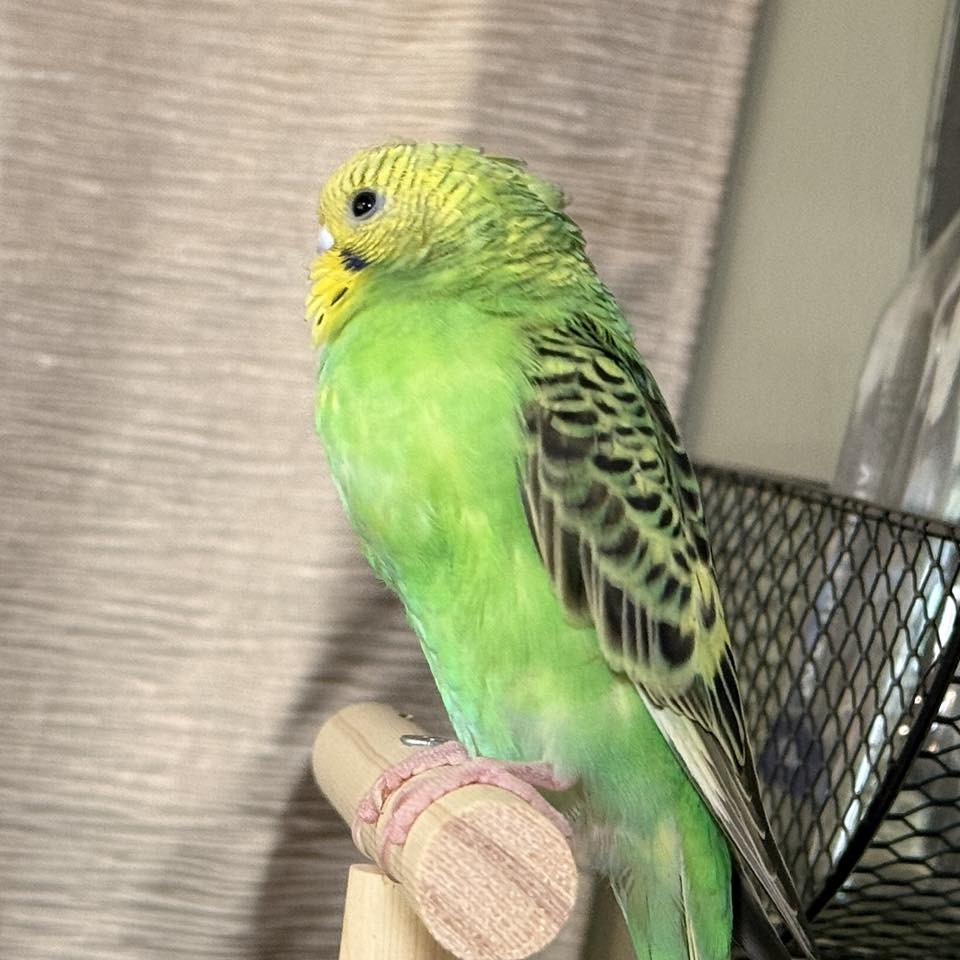
The crop is a pouch in the budgie’s throat where food is stored before passing to the stomach. Crop problems — infection, slow emptying, impaction — can cause a bird to bob or pump its head in an attempt to move food that is causing discomfort. This looks superficially similar to regurgitation bobbing but the context is different and the bird usually looks uncomfortable rather than purposeful.
- Head bobbing or pumping that seems distressed rather than deliberate and calm
- Visible swelling on one side of the chest — an enlarged or visibly full crop
- Sour or unpleasant smell from the beak
- The crop does not empty normally overnight — in a healthy budgie the crop should be visibly reduced or empty by morning
- The bird looks unwell — fluffed feathers, reduced activity, sitting lower on the perch
- Regurgitated material that smells sour or looks abnormal
What to do
A vet visit today. Crop problems in budgies need professional diagnosis — the vet can feel the crop, assess whether it is emptying properly, and identify infection or impaction. Do not try to empty the crop manually at home. Crop infections in particular can deteriorate quickly in a small bird.
Respiratory Problems
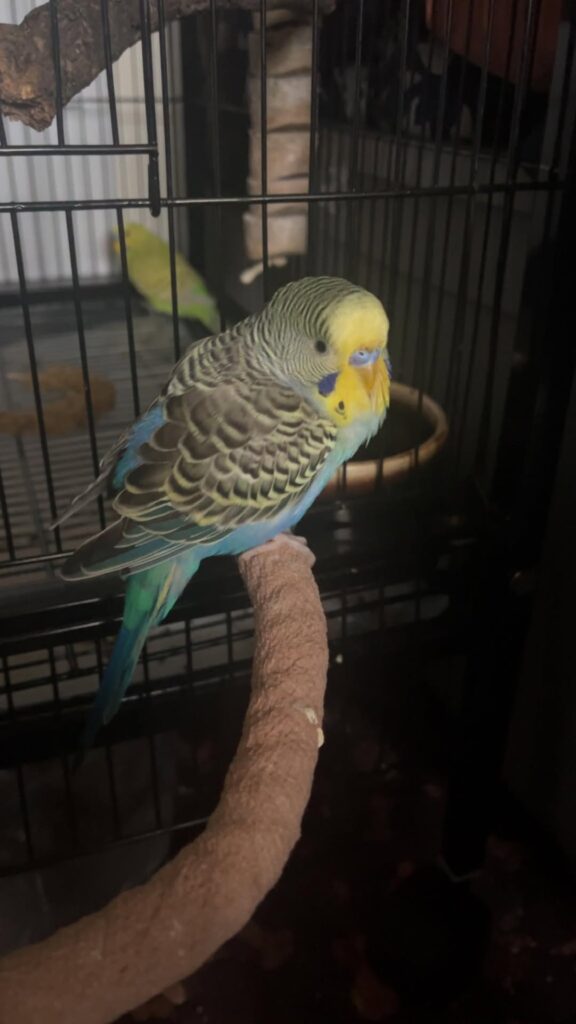
A budgie with a respiratory infection or airway problem may produce head and neck movements that can be mistaken for bobbing — particularly rhythmic tail bobbing or a pumping motion as the bird works to breathe. This is distinct from normal head bobbing but owners can confuse the two, particularly from a distance.
- The movement is in the tail as much as the head — the whole body moves with each breath
- The bird looks laboured — breathing is clearly an effort
- Clicking or wheezing sounds accompanying the movement
- Open beak breathing — a budgie breathing through its open beak is a respiratory emergency
- The bird is sitting low on the perch or on the cage floor
- Discharge from the nostrils or around the beak
What to do
This is urgent. A budgie showing signs of respiratory distress needs a vet today — not tomorrow. Respiratory infections in small birds progress quickly and the window for effective treatment is short. Open-beak breathing in a budgie is an emergency call.
Neurological Issues
In rare cases, repetitive head movements in a budgie can indicate a neurological problem — a tremor, a lesion affecting motor control, or the effects of a toxin. Neurological head movements are usually distinguishable from normal bobbing because they are involuntary — the bird is not directing the movement at anything, it is not contextually appropriate, and the bird looks bewildered or distressed rather than engaged.
- Head movement that does not stop and is not directed at anything
- The bird looks confused or distressed rather than purposeful
- Other neurological signs alongside the head movement — loss of balance, falling off perches, seizures
- Sudden onset with no obvious trigger
- Possible recent exposure to a toxin — cooking fumes, scented candles, cleaning products near the cage
What to do
A vet visit urgently. If there is any possibility of toxin exposure — move the bird immediately to clean air and phone the vet on the way. Budgies have extremely sensitive respiratory and nervous systems and certain common household substances — non-stick cookware fumes, scented candles, certain cleaning sprays — are genuinely dangerous to them.
- Head or neck pumping with signs of discomfort and a distended or sour-smelling crop
- Rhythmic body movement that seems to be from laboured breathing rather than behaviour
- Open-beak breathing at any point — this is an emergency
- Head movement that is involuntary, continuous, and not directed at anything
- Any head movement combined with: fluffed feathers, sitting on the cage floor, not eating, loss of balance
- Wet, crusty feathers on the top of the head — chronic vomiting
What I Check When an Owner Describes Head Bobbing
When someone describes their budgie bobbing its head, I work through the same set of questions every time. They narrow things down quickly.
- What is the bird doing when it bobs?
Bobbing at a mirror or another bird — almost certainly courtship. Bobbing while stretching its neck toward a target — likely regurgitation. Bobbing with no target, or combined with other symptoms — investigate further. - How old is the bird?
A very young bird begging is normal. A young male coming into maturity courting is normal. An older bird that has developed new head movements needs more scrutiny. - Is the bird otherwise well?
Eating normally, alert, active, good droppings? A bird that is bobbing but well in every other respect is almost always behaving normally. A bird that is bobbing and also unwell is a different picture entirely. - What does the crop look like?
Visible, distended, not emptying overnight — raise the possibility of a crop problem. Normal — reassuring. - Are there any sounds associated with the movement?
Clicking, wheezing, or laboured breathing sounds alongside head movement mean respiratory involvement — see a vet today. - Is the movement directed or undirected?
Directed at something, starts and stops with context — behaviour. Continuous, not directed at anything, looks involuntary — possible neurological issue. - Has anything changed in the environment recently?
New cleaning products, cooking nearby, scented candles, new items near the cage — possible toxin exposure if the onset was sudden.
Head Bobbing and Hormones — The Seasonal Pattern
One thing I always mention to owners who notice head bobbing increasing at certain times of year — this is often hormonal and it follows a predictable seasonal pattern.
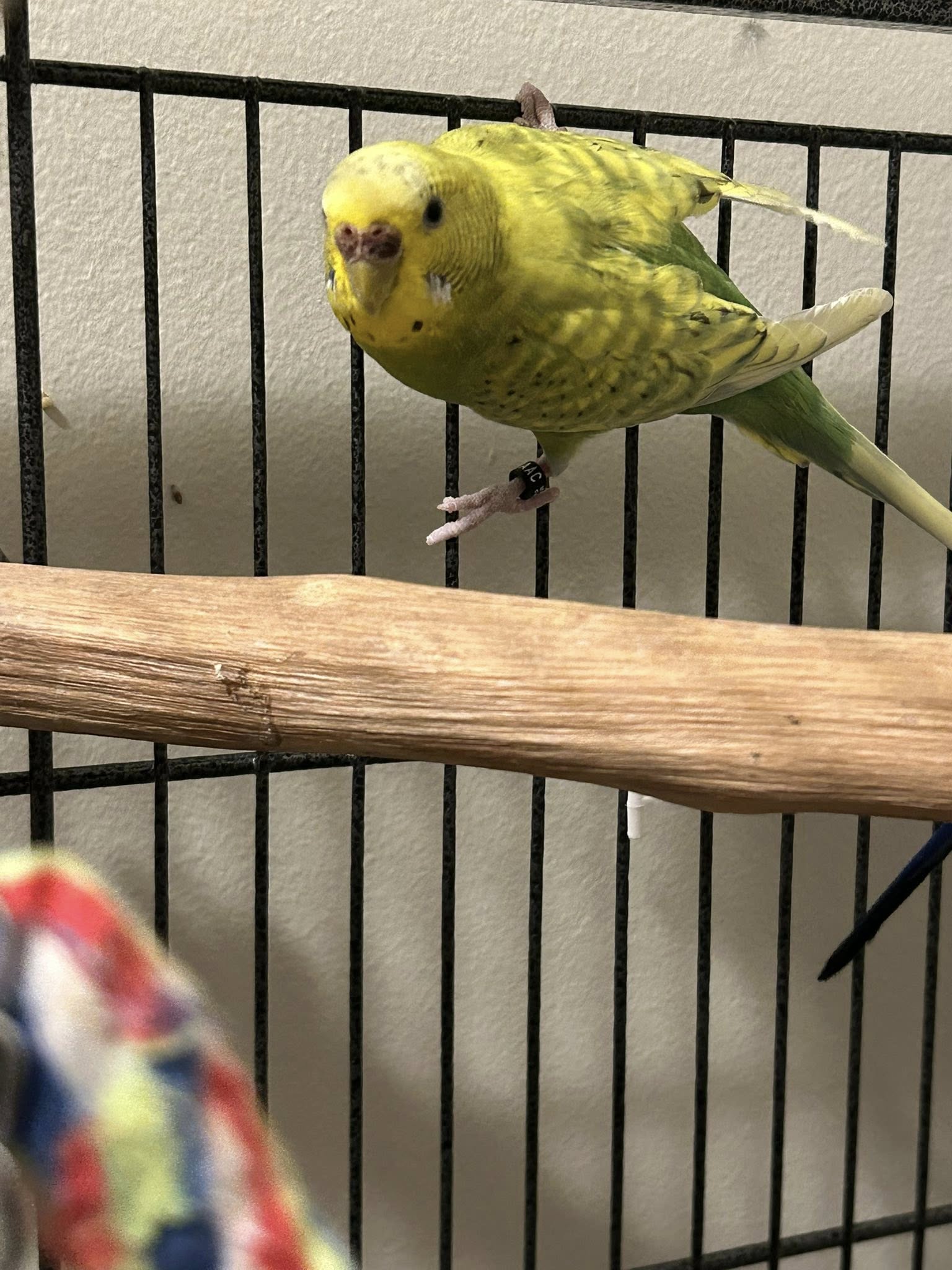
Budgies are stimulated to breed by increasing day length. As the days get longer from late winter through spring and into summer, rising light levels trigger hormonal changes in both males and females. Courtship behaviour — including vigorous head bobbing, singing, regurgitation, and general excitability — increases significantly in most budgies during this period.
This is completely normal. It is the bird responding to the same environmental cues its wild counterparts respond to in Australia. A budgie that barely bobbed all winter and is suddenly performing energetically in March is not developing a problem — it is responding to the season.
- Head bobbing that increases noticeably from late winter into spring — very likely hormonal and seasonal
- Accompanied by increased singing, vocalisation, and general activity — confirms hormonal cause
- Both males and females can show increased courtship behaviour seasonally
- Females may also show nesting behaviour alongside — investigating corners, chewing cage furnishings, sitting low in the cage
- Reduces naturally as the season progresses and day length stabilises
If seasonal hormonal behaviour is very intense and causing the bird stress — or causing problems like persistent egg laying in females — it is worth a conversation with an avian vet about environmental management. But in most cases, seasonal head bobbing is something to observe with interest rather than concern.
Frequently Asked Questions
Is head bobbing always normal in budgies?
In most cases yes — budgies bob their heads for completely normal reasons including courtship, bonding, feeding young, play, and exploration. But head bobbing combined with other symptoms — looking unwell, not eating, laboured breathing, wet feathers on the head, crop problems — is a sign to see a vet. Context is everything.
Why does my budgie bob its head at me?
Almost certainly because it has bonded with you and is treating you as a flock companion. Head bobbing directed at a person usually means courtship or regurgitation behaviour — the bird considers you a mate or close companion. It is a compliment, in budgie terms. Enjoy it.
Why does my male budgie bob his head so much more than my female?
Males are generally more vigorous and persistent in courtship display than females. Head bobbing as a courtship behaviour is predominantly a male display — it is directed at a potential mate to demonstrate fitness and interest. Females do bob their heads but typically less dramatically. This difference in intensity between the sexes is completely normal.
My budgie bobs its head after eating — is that normal?
Often yes — gentle head movements after eating can be part of crop movement as food passes from the crop to the stomach. If the movements are subtle and the bird is otherwise well, this is usually nothing to worry about. If the movements are vigorous, the bird looks distressed, or food is being brought back up repeatedly, that is different — see a vet.
Should I stop my budgie bobbing at its mirror?
Not necessarily stop, but consider whether the mirror is the bird’s only social companion. A bird that spends most of its day interacting with a reflection rather than a real bird is a bird whose social needs are not fully being met. Mirrors have their place, but they are no substitute for a real companion. If your budgie is very mirror-fixated, it is worth thinking about whether a second bird would be a better solution long term.
Where can I get budgie behaviour advice in Swindon?
Come and see us at Paradise Pets, Manor Garden Centre, Cheney Manor Industrial Estate, Swindon SN2 2QJ. Or ring us on 01793 512400. We have been keeping and selling budgies for over 35 years and we will give you a straightforward answer based on experience — not guesswork.
One Last Thing From Me
The young woman with the video of her budgie courting the mirror — she went away reassured. But she also went away thinking about the mirror question. She came back two weeks later and bought a second budgie. A young female, well matched in age and temperament.
The male stopped spending his days in front of the mirror within a week. He had something better to bob at.
That is the thing about budgie behaviour. Most of it makes complete sense once you understand what the bird is doing and why. A head-bobbing budgie is almost always a budgie that is alive to its world, communicating, bonding, being what budgies are.
The cases that need attention are real — crop problems, respiratory issues, neurological signs — but they are a small minority of what gets described to me. Most of the time, the bird bobbing its head in your living room is a healthy bird doing healthy bird things.
Now you know the difference. And if you ever are not sure, you know where to find us.
Questions About Your Budgie’s Behaviour? Come In and Talk to Us
We have been keeping, selling, and advising on budgies for over 35 years. If something your bird is doing is puzzling or worrying you, come in and describe it — or show us a video on your phone. We will give you an honest answer. Free advice, no obligation. That is how we have always done things.