
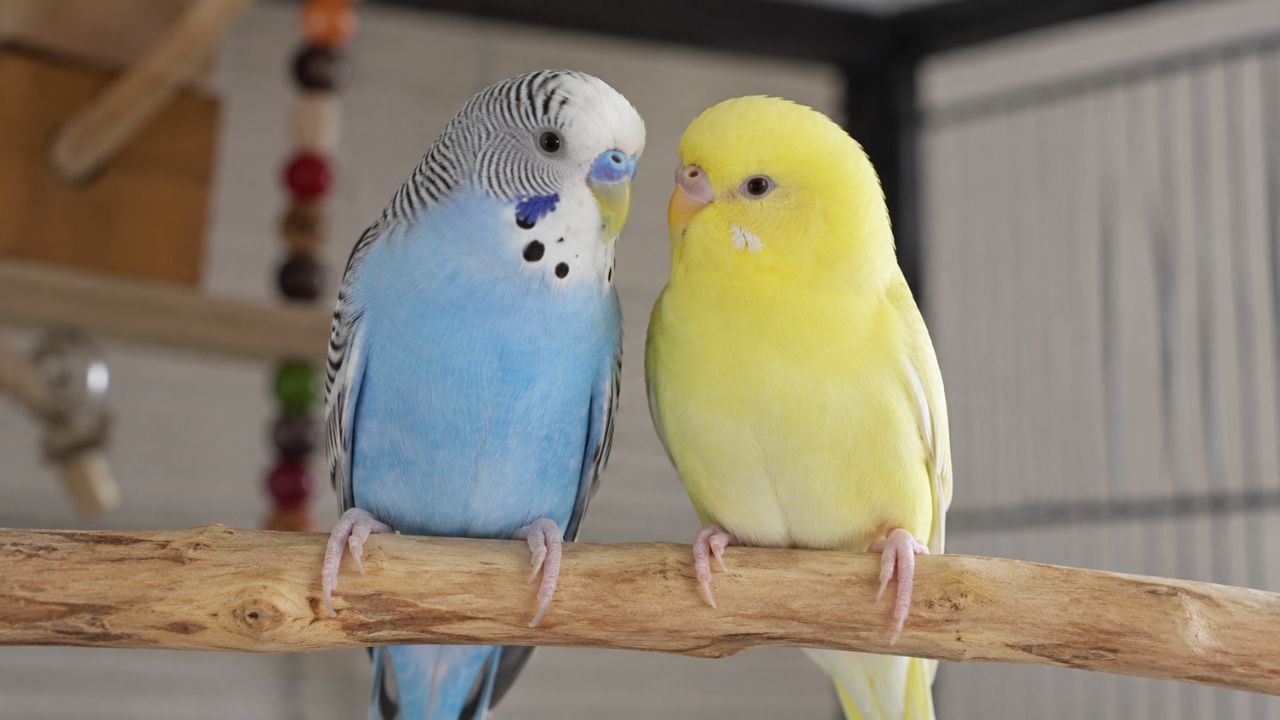

Neil has sold and kept budgerigars at Paradise Pets Swindon since 1988 — over 35 years of first-hand experience with one of the UK’s most popular pet birds. In that time, he has been asked the same question thousands of times: does my budgie need a friend? This article is his honest, complete answer — including the cases where a second bird is not the right choice, and what to do if you already have a single budgie at home.
It is one of the most common questions I get asked at the counter. Someone has had a budgie for six months, or a year, or three years. The bird is well looked after. It has a good cage, decent food, plenty of attention. But something is not quite right. The bird is quiet. It sits in the same spot. It has stopped being as active as it was. And the owner wants to know — does it need a friend?
My honest answer, in most cases, is yes.
But the honest answer also has caveats. Because getting a second budgie wrong — choosing the wrong bird, introducing them badly, misreading the existing bird’s temperament — can make things worse, not better. And there are situations where a second bird is genuinely not the right solution.
So rather than give a one-line answer, let me give you the full picture. After 35 years, here is what I actually know about budgies and companionship.
What Budgies Actually Are — And Why It Matters
To understand why this question matters, you need to understand what a budgerigar actually is in the wild.
Budgerigars are Australian grassland birds. In the wild they live in flocks — sometimes enormous flocks of thousands of birds. They fly together, forage together, roost together, and preen each other. The flock is not just company. It is safety, warmth, stimulation, and the entire social world of the bird.
A budgie that has been bred in captivity and raised in a pet shop has not lost those instincts. The need for social contact, for mutual preening, for the sounds and presence of other birds — it is still there. Completely intact. The bird in your living room is, underneath everything, a flock animal.
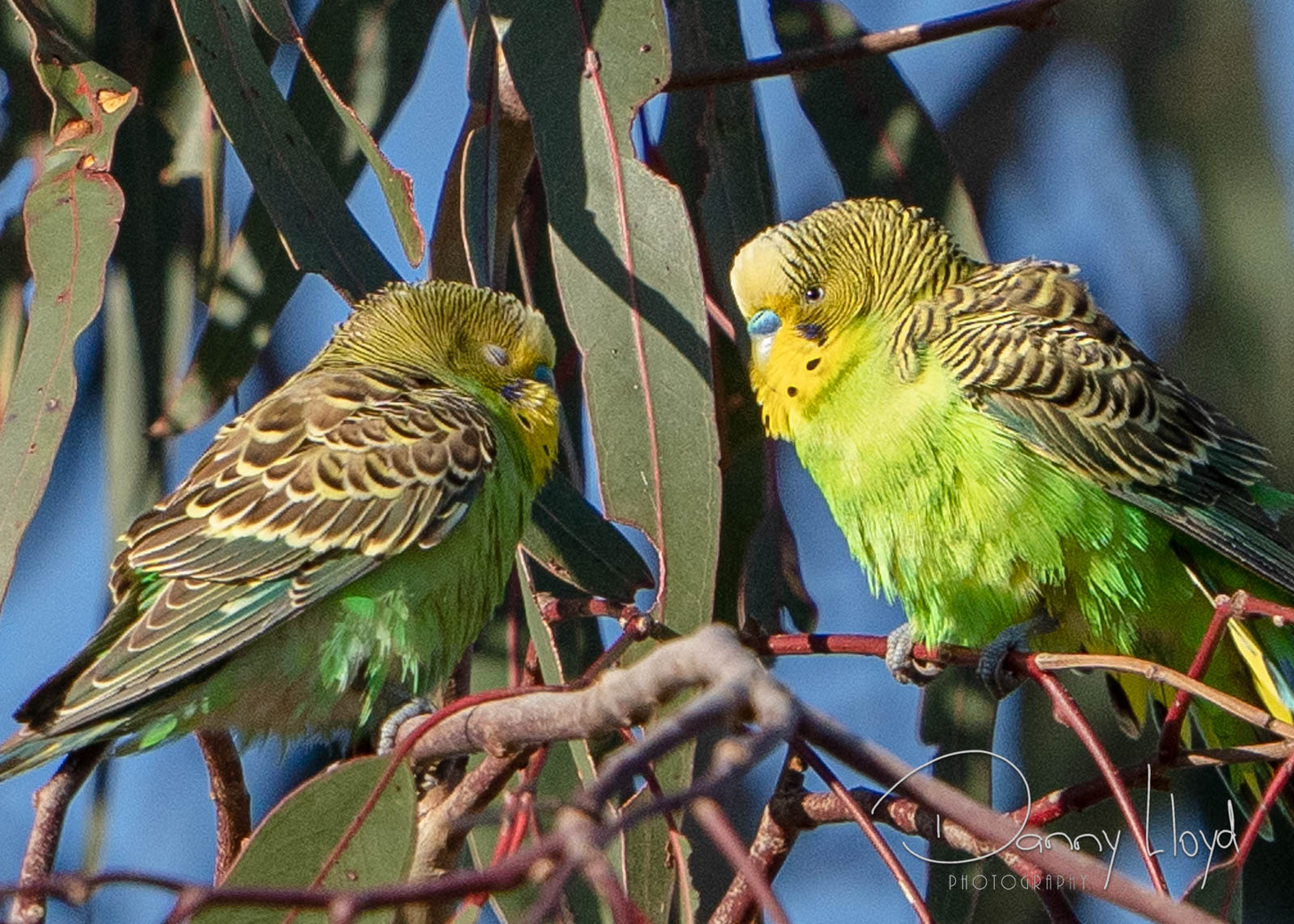
What this means in practice is that a single budgie in a cage is being asked to live in a way that is fundamentally at odds with its nature. Not because the owner is doing anything wrong — but because one bird in one cage is simply not what that bird evolved for.
Most single budgies adapt. They are resilient. They bond with their owners, they respond to voices, they find things to do. But adaptation is not the same as thriving. And in many cases, the quiet, inactive, slightly dull budgie that an owner describes to me is not an old bird or an unwell bird — it is a lonely one.
The Signs Your Budgie May Be Lonely
Loneliness in budgies does not look the same as loneliness in humans. Budgies do not mope obviously. They do not look sad in a way that is immediately recognisable. What they do is gradually become less of themselves.
- Less vocalisation — the bird has become quieter over time, calls out less, is less chatty than it used to be
- Less movement — spending long periods sitting on the same perch rather than flying, climbing, or exploring the cage
- Excessive mirror fixation — staring at its own reflection for hours, treating the mirror as a companion because there is nothing else
- Over-preening or feather plucking — displacement behaviour when the need for social contact is unmet
- Calling persistently when the owner leaves the room — the bird is trying to maintain contact with the only flock member it has
- Loss of interest in toys and enrichment that it previously engaged with
- General reduction in activity and alertness compared to how the bird was six or twelve months ago
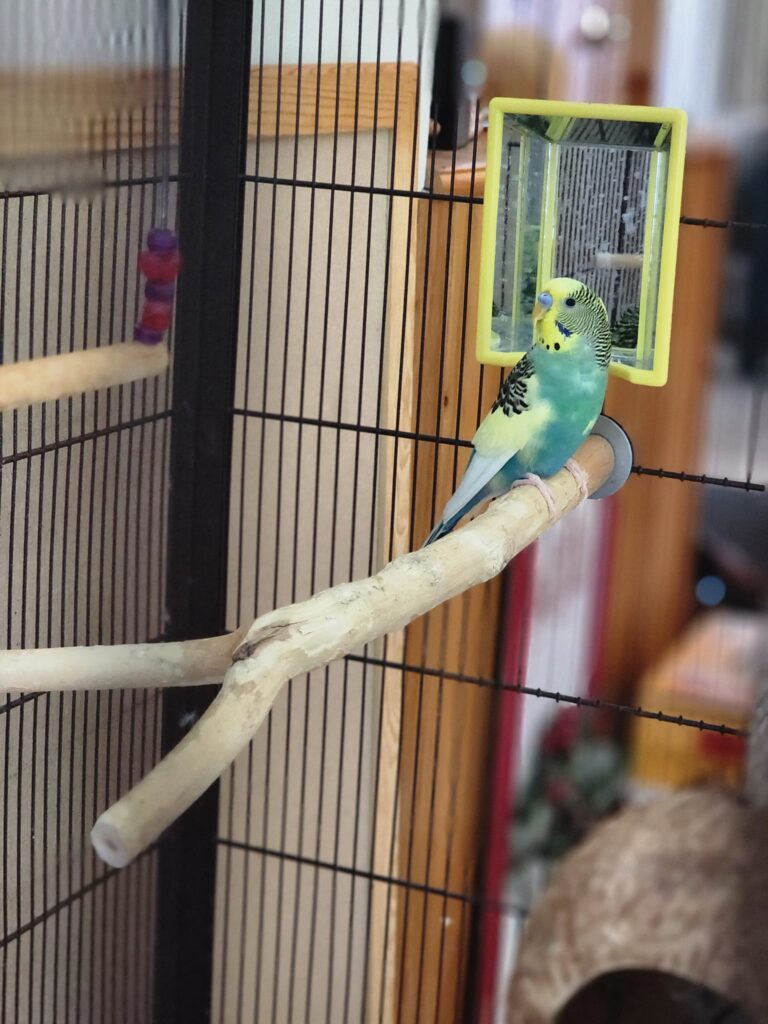
None of these signs alone proves loneliness — some of them overlap with health issues and should be checked by a vet first. But the pattern of a bird that has gradually become quieter, stiller, and less engaged over months is one I see regularly, and in most cases companionship is a significant part of the answer.
- A quiet, inactive budgie may be unwell rather than lonely — and those need different responses
- Book a vet visit to rule out illness, nutritional deficiency, or other health issues before adding a second bird
- Adding a new bird to a cage with a sick bird can spread illness to the new bird and delay treatment for the existing one
- If the vet confirms the bird is healthy — then companionship becomes the next question to address
The Case For Getting a Second Budgie
Let me make the positive case clearly, because it is a strong one.
Two budgies that are well matched and properly introduced are, in my experience, significantly healthier and happier than either would be alone. I have seen this hundreds of times over 35 years and it is consistent enough that I now recommend pairs to almost every new budgie owner from the start.
Here is what changes when you add a companion bird:
Natural behaviour returns. Mutual preening — allopreening — is one of the most important social behaviours budgies have. It serves a practical purpose, reaching areas the bird cannot groom itself, but it is also a bonding behaviour. Two budgies that preen each other are expressing trust and attachment. Single birds cannot do this. When a companion arrives, this behaviour often begins within days.
Vocalisation increases. Budgies communicate constantly. They call to flock members, they respond to calls, they chatter and chirp throughout the day. A single bird in a quiet house has nobody to communicate with. Two birds communicate with each other constantly — and the difference in how alive the cage sounds is remarkable.
Activity levels rise. Two birds chase each other, investigate things together, compete gently for perches, and generally create movement and interest in the cage throughout the day. The inactive, still bird I described earlier is almost always transformed within weeks of getting a companion.
Emotional resilience improves. A bird with a companion is less dependent on the owner’s schedule. When the owner is at work for eight hours, the single bird waits. The pair has each other. The stress of separation is substantially reduced.
Lifespan improves. This is harder to prove definitively, but the pattern I observe over decades is consistent — well-kept pairs tend to live longer than well-kept singles, all else being equal. Less chronic stress, more natural behaviour, better mental stimulation. It adds up.
Will a Second Budgie Make My Bird Less Tame?
This is the question that stops most owners from getting a companion bird, and I want to address it directly and honestly.
Yes — it is possible that a second budgie will reduce how tame and hand-friendly your existing bird is. I am not going to pretend otherwise, because it does happen.
Here is the full picture though.
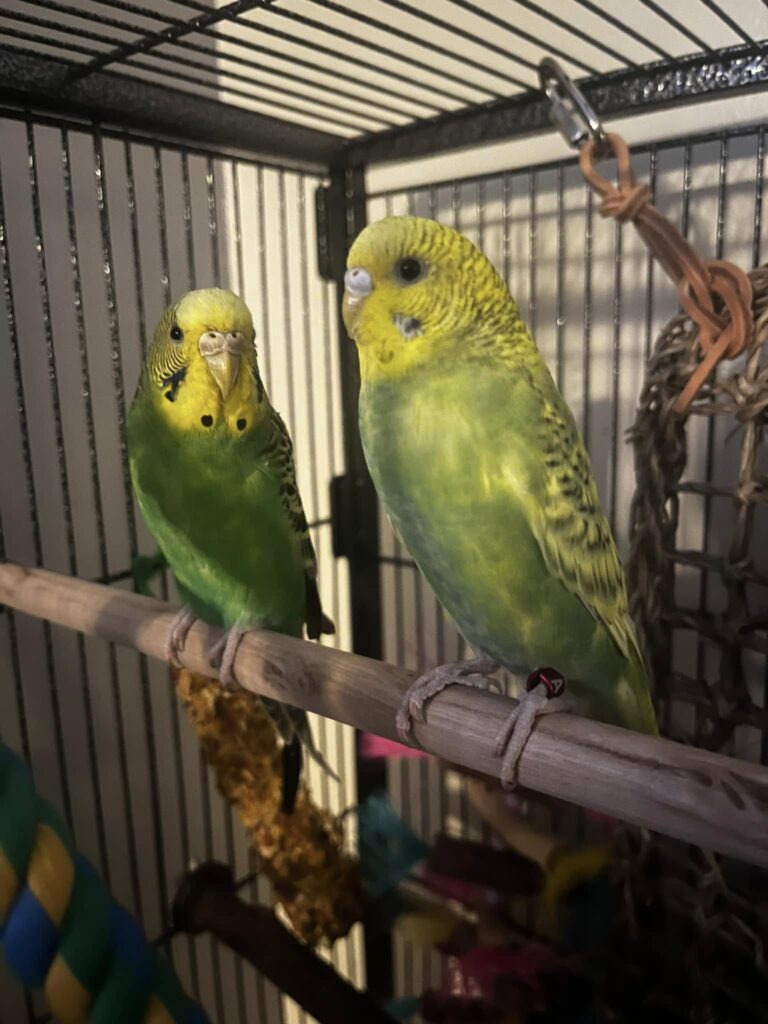
A budgie that bonds strongly with a companion bird may become less reliant on its owner for social contact. It has what it needs from its own species. Some birds that were previously very hand-tame become less interested in stepping up or sitting on shoulders once they have a bonded companion.
But — and this is important — this is not universal. Plenty of bonded pairs remain tame with their owners. Budgies are perfectly capable of maintaining relationships with both their avian companion and their human family. The key factors are how young the birds are when introduced, how much daily handling continues after the introduction, and the individual temperaments of both birds.
What I tell owners is this: if your entire relationship with your budgie depends on it having no other social outlet, you are asking the bird to be something it is not, in order to serve your needs rather than its own. That is worth thinking about honestly.
If you want a very tame, handleable budgie and the bird’s companionship needs are genuinely being met by significant daily interaction with you — then a single bird may be appropriate for your situation. But you need to be honest about whether that interaction is really happening consistently, day after day, including the days when you are busy or tired or away.

When a Single Budgie Can Be Appropriate
I want to be balanced here, because I do not think the answer is always and automatically “get a second bird.” There are situations where a single budgie is genuinely appropriate.
- You are home most of the day and interact with the bird consistently for several hours daily — not just being in the same room, but actually talking to, handling, and engaging with the bird. If you genuinely provide this level of interaction reliably, a single bird can do well
- The bird is elderly and has been single its entire life — introducing a companion to a very old bird that has never had one can cause more stress than benefit, particularly if the new bird is young and energetic. The disruption may not be worth it
- The bird has a known history of aggression toward other budgies — some individuals genuinely do not tolerate companions. This is the exception rather than the rule, but it exists
- You are actively taming a young bird and want to build a close human bond first — there is a reasonable case for waiting until a young bird is settled and comfortable with handling before adding a companion, though I would not wait longer than six months
What is not an appropriate reason to keep a budgie alone is convenience, cost, or the assumption that the bird is fine because it is not obviously distressed. Fine and thriving are different things.
How to Choose the Right Companion Bird
Assuming you have decided to get a second budgie, choosing the right bird matters. A poor match can create stress rather than resolve it.
- Get a bird of similar age if possible — a young, energetic bird introduced to a much older, settled bird can be overwhelming. Similar ages mean similar energy levels and social needs
- Same-sex pairs work well — two hens or two cocks can coexist happily. Two hens can sometimes be territorial with each other; two cocks are usually fine. A male-female pair will bond strongly but may breed — be prepared for that if you choose a mixed pair
- Get the new bird from a reputable source — not from a pet shop that imports birds or cannot tell you where they came from. Ask about the bird’s history. We only sell birds from UK breeders we know personally — that matters for health and temperament
- Choose a bird that is alert and active — bright eyes, smooth feathers, moving around the cage, interested in its surroundings. Avoid any bird that looks fluffed, inactive, or unwell
- Do not get a bird from the same environment as a sick bird — if there are unwell birds in the same shop or breeder’s collection, walk away
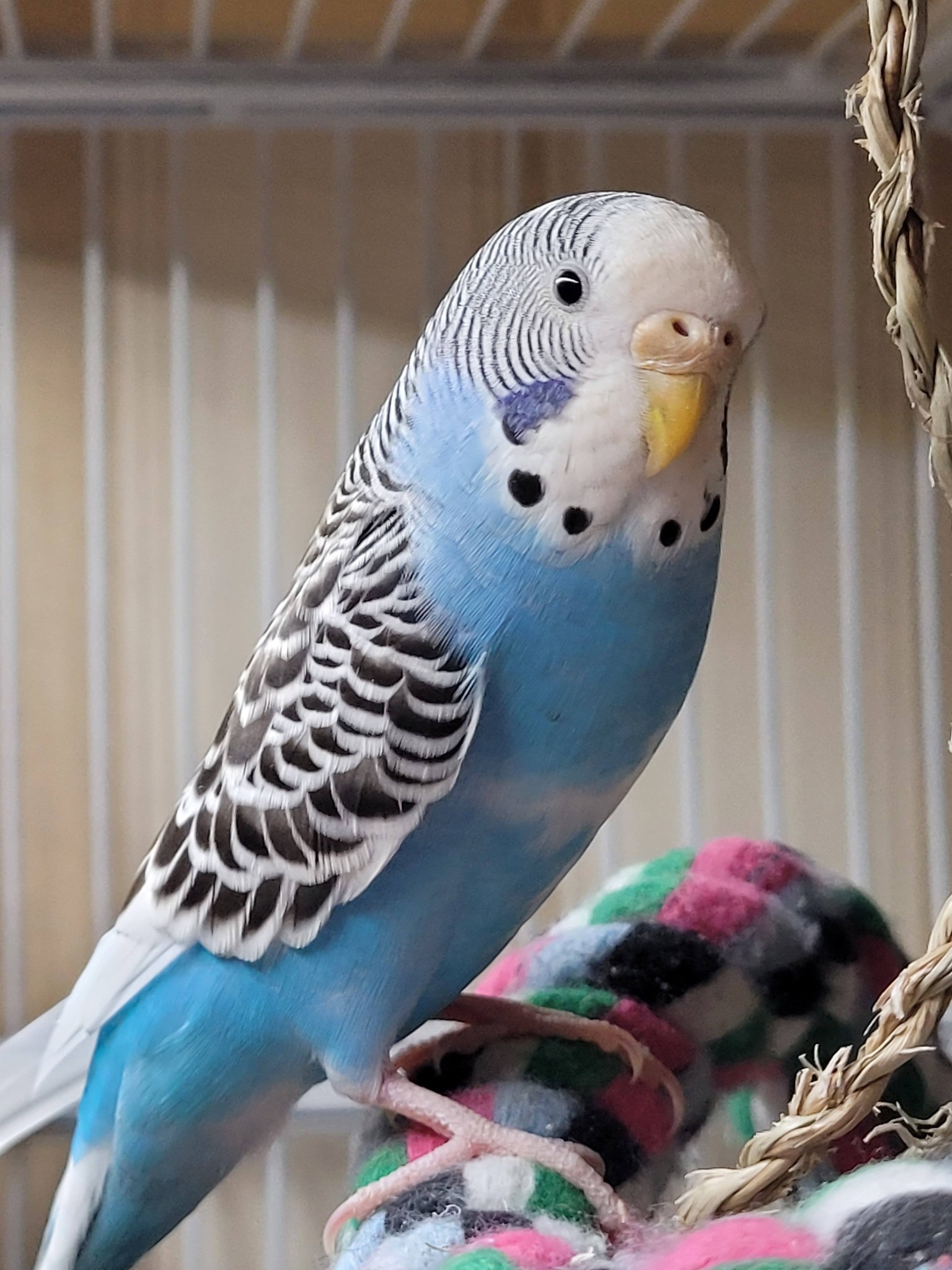
How to Introduce a New Budgie — The Right Way
This is where many owners go wrong, and it is where a successful pairing can turn into a failed one. Introduction matters enormously. Do not rush it.
- Quarantine the new bird for two to four weeks.
Keep the new bird in a separate cage, in a separate room if possible. This protects your existing bird from any illness the new bird may be carrying — even birds that look healthy can carry infections. Two to four weeks is the minimum quarantine period. Do not skip this step. - Place the cages side by side after quarantine.
Once the quarantine period is complete and the new bird is confirmed healthy, move the two cages close to each other — within sight and sound but not touching. Let the birds get used to each other’s presence, calls, and behaviour over one to two weeks. Watch for how they respond. Interest and curiosity are good signs. Persistent alarm calls or aggressive posturing at the cage bars are worth noting. - Allow supervised out-of-cage time together.
Before combining into one cage, allow both birds out in the same room together with supervision. Watch how they interact. Are they interested in each other? Do they move toward each other or away? Mutual preening attempts at this stage are an excellent sign. - Combine into a single cage — ideally a neutral one.
When combining, the ideal is a cage that neither bird has established as its territory. If that is not practical, rearrange the existing cage thoroughly before introducing the new bird — different perch positions, different toy placement, cleaned thoroughly. This reduces territorial behaviour from the existing bird. - Monitor closely for the first week.
Watch feeding. Are both birds getting access to food and water? Watch for bullying — one bird preventing the other from eating or drinking. Watch for genuine aggression — biting that draws blood, not just beak sparring. Some squabbling during the settling-in period is normal. Sustained bullying is not and may mean the pairing is not working. - Have a plan if it does not work.
Not every pairing succeeds. Some birds do not get on. If after a genuine attempt — several weeks of proper introduction — the birds are causing each other significant stress, keeping them in separate but adjacent cages may be the best outcome.
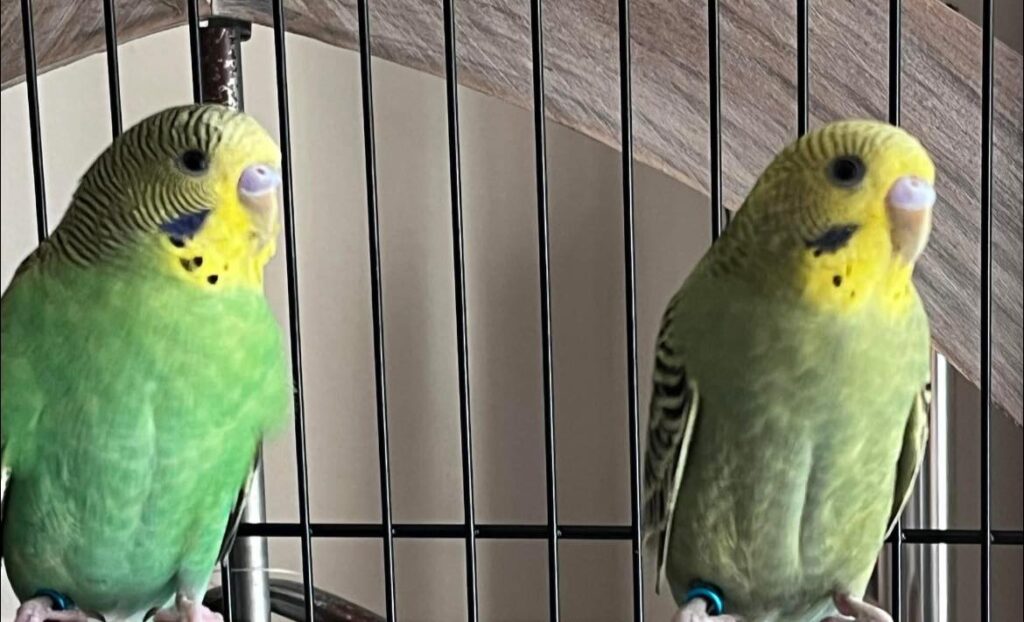
What About Getting Two Budgies From the Start?
If you are reading this before you have bought your first budgie — this is the section for you.
My consistent recommendation to new budgie owners is to get two birds from the beginning. Not one and then another later. Two, together, from day one.
Here is why. Two birds raised together from the start bond naturally and completely. There is no introduction process, no quarantine, no territorial adjustment. They simply grow up together. The result is almost always a pair of healthy, active, well-adjusted birds that enrich each other’s lives continuously.
The counterargument people give is usually about tameness — “won’t they just bond with each other and ignore me?” In my experience, budgies raised together from young are often just as handleable as single birds, particularly if handling starts early and is done consistently and gently. The birds can bond with both each other and with you. It is not one or the other.
Starting with two birds is, in almost every case, the right foundation for keeping budgies well.
Frequently Asked Questions
Can a budgie be happy alone?
Some can, if the owner provides substantial, genuine daily interaction and the bird has a good temperament for solitary keeping. But in my honest experience of 35 years, most single budgies that appear content are simply adapted to their situation rather than genuinely thriving. The change you see when a well-matched companion is introduced is almost always significant. Happy alone and as happy as it could be are different things.
Will two budgies bond with each other and stop being friendly with me?
Possibly, partially — but not inevitably. Two budgies can absolutely maintain a warm relationship with their owner alongside their bond with each other. The key is continuing to handle and interact with both birds daily, from when they are young. Birds that are handled consistently remain handleable. Birds that are left to bond with each other exclusively and rarely handled will naturally become less tame over time.
Can I keep a budgie with a different species of bird?
I generally advise against it unless you have significant experience with mixed-species keeping. Different species have different social structures, communication styles, and physical capabilities. A budgie housed with a larger parrot species is at risk from even accidental injury. Housing with other small finches or canaries is sometimes done but requires careful monitoring. The simplest and safest companion for a budgie is another budgie.
Do budgies grieve when a companion dies?
In my experience, yes — genuinely. A budgie that loses a long-term companion often shows real signs of distress. Quietness, reduced appetite, spending time near where the companion used to perch. This is not anthropomorphism — it is a real behavioural response to the loss of a bonded companion. In these cases, getting a new companion relatively promptly is usually kinder than leaving the surviving bird alone.
How long does it take for two budgies to bond?
It varies enormously. Some birds are clearly interested in each other within days and are preening each other within a week. Others take months to fully settle together. The average, in my experience, is somewhere between two and six weeks for the initial acceptance, and another few months for a fully settled, genuinely bonded pair. Patience during the early weeks is essential.
Where can I get a companion budgie in Swindon?
Come and see us at Paradise Pets, Manor Garden Centre, Cheney Manor Industrial Estate, Swindon SN2 2QJ. Or ring us on 01793 512400. We stock budgies from UK breeders we know personally and we will help you choose a bird that is the right match for your existing one.
One Last Thing From Me
I have had this conversation — does my budgie need a friend — more times than I could possibly count. And my answer has been consistent for 35 years, because the evidence in front of me has been consistent for 35 years.
Budgies are flock animals. They need company. Not because owners are failing them, and not because they are demanding pets — but because that is simply what they are. A bird that has a well-matched companion, properly introduced, in a good cage with a proper diet, is living the life it is built for. Everything else is compromise.
If you have a single budgie and you are wondering whether it needs a friend — the answer is almost certainly yes. Come in and talk to us. We will help you choose the right bird, explain the introduction process properly, and make sure the whole thing goes smoothly.
That is what we have been doing here for 35 years.
Thinking About a Second Budgie? Come In and We’ll Help You Get It Right
We stock budgies from trusted UK breeders and we will help you choose a bird that suits your existing one. We will also walk you through the introduction process so you give the pairing the best possible start. Free advice, no obligation — that is how we have always done things.
⭐ Customer Reviews
Amazing Bird Selection
Had a lovley visit today,staff were very friendly and very helpful,such a great petshop,their selection of birds is incredible,really impressed,thank so much to the staff at Paradise Pets

Friendly Helpful Staff
I have been coming to this place for years and they have a great stock of food for all types of pets. Have a great selection of small mammals and a lot of birds. Staff are friendly and helpful.

Great Quality Hutch
Bought a guinea pigs hutch and run combo, very happy with the service, the hutch was put in my car for me without even asking for help. The wood quality is very good, the instructions easy to follow and we are extremely happy with the fully built hutch. A good size for 2 guinea pigs

Response from Paradise Pets | Wiltshire
Thank you Melanie Latus Nice to provide services to you.
Best Bird Shop Around
It’s the best pet shop in and around Swindon. They always have an amazing selection of birds and all you need to keep them happy. I keep birds myself and the guys there are happy to answer questions and really know their stuff. I have seen budgies etc. in chain pet shops in the area looking really unhealthy and ill – I wouldn’t go anywhere else than Paradise Pets for animals.

Highly Recommended Bird Shop
I could not praise this shop enough. Really helped my Grandson buy his first bird and he’s loving it. Travelled from Somerset and was welcomed with open arms.

Great Shop with Competitive Prices
Great shop with amazing selection for small animals, hamsters, mice ect, highly recommend!
Also has a great selection for dogs & cats too & very competitive prices! 💖

