
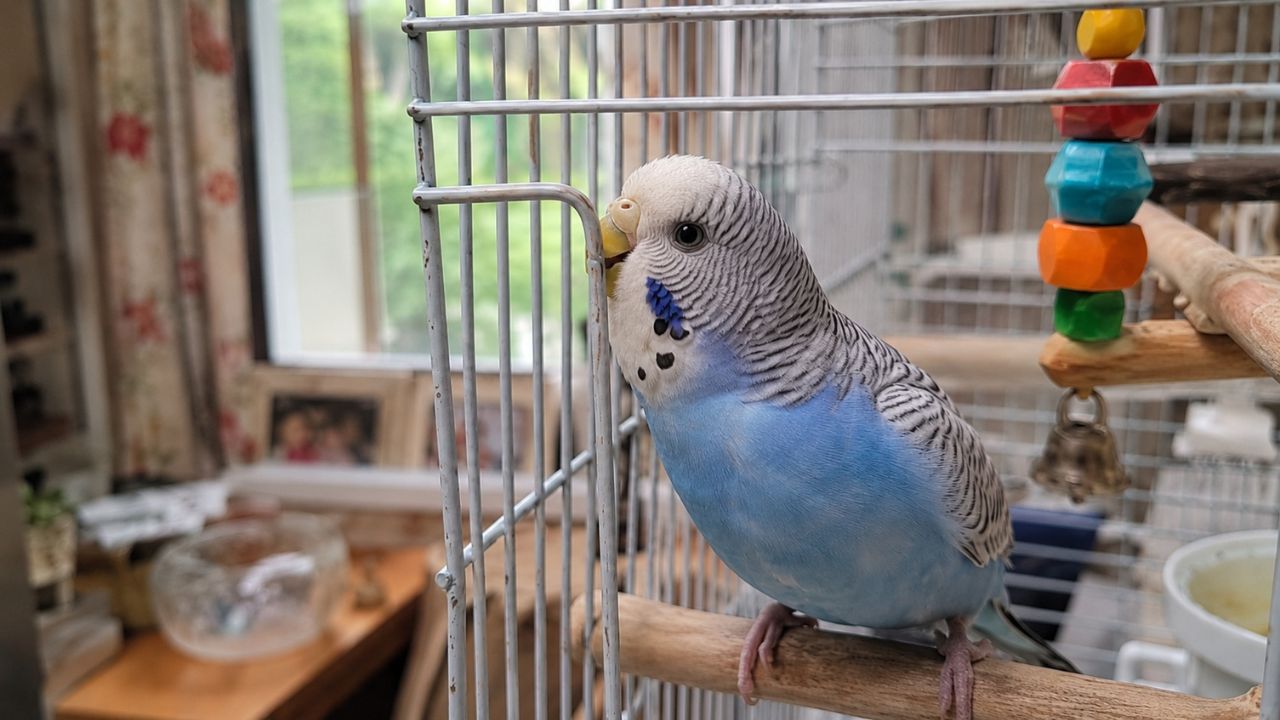

Neil has sold and kept budgerigars at Paradise Pets Swindon since 1988 — over 35 years of first-hand experience with one of the UK’s most popular pet birds. In that time, he has been asked about budgies biting cage bars more times than most owners would expect. It is one of those behaviours that looks alarming, gets misinterpreted regularly, and in most cases points directly to something specific that the owner can actually change. This article is his honest, complete guide on why budgies bite cage bars and what to do about it.
A man came in a couple of years ago, genuinely frustrated. He had a single budgie — a blue male, about eighteen months old, his first bird. He had bought the cage online, followed the setup advice that came with it, and been reasonably pleased with how things had gone. But for the past few months the bird had developed a habit he could not shift. Every morning, at the same time, the budgie would work his way along the bars of the cage, gripping and pulling at each one methodically. Up and down the same section of bars, over and over.
“Is he trying to escape?” the man asked. “Is he unhappy? I can’t work out if I’ve done something wrong.”
The honest answer was: a bit of both, and yes, there were things he could change. But not because he had done anything obviously wrong — because he had not been given the full picture when he bought the bird, and the cage he had bought was part of the problem.
That conversation, or one very close to it, is one I have regularly. And the reason it comes up so often is that cage bar biting in budgies is one of the most consistent and readable signals these birds give. Once you understand what drives it, the behaviour stops being mysterious and starts being useful information.
First — Is Any Bar Biting Normal?
Before we go into the causes, it is worth being clear about what is and is not normal, because not every instance of a budgie touching the bars of its cage is a problem.
Budgies naturally climb. They use their beaks as a third limb — gripping, pulling, testing surfaces — and they will interact with the bars of a cage as part of normal exploration and movement. A budgie that occasionally mouths or lightly grips a bar while climbing is doing something completely normal. This is not what I mean when I talk about cage bar biting as a behaviour worth investigating.
The bar biting that matters is persistent, repetitive, and targeted. It is the bird that returns to the same section of bars repeatedly. The bird that bites and pulls at bars for extended periods. The bird that does it at the same time every day, or in response to specific triggers. That kind of behaviour is not exploration. It is communication.
- Occasional biting of bars while climbing — normal exploration, nothing to investigate
- Persistent, repetitive biting of the same section of bars — a behaviour pattern worth understanding
- Biting bars at a specific time of day — usually triggered by something predictable
- Biting bars when the owner appears or leaves the room — attention-seeking or separation anxiety
- Biting bars combined with other signs of agitation — pacing, screaming, feather ruffling
- A bird that has developed this habit over weeks or months rather than always doing it
Reason 1: The Cage Is Too Small
This is the cause I see behind cage bar biting more than any other, and it is the one I always investigate first. If a budgie is persistently biting the bars of its cage, the first question I ask is: how big is the cage?
A budgie in a cage that is too small for it to move properly is a budgie in a state of chronic physical frustration. It cannot fly. It cannot explore. It cannot behave as its body is built to behave. The biting of bars is partly an outlet for that pent-up energy and partly a direct response to the physical constraint of the bars themselves — the bird is trying to get through them because it cannot get around them.
This is one of the most uncomfortable truths in budgie keeping, because the majority of cages sold in UK pet shops as “budgie cages” are, in my honest opinion, too small. They are sized for a market that expects small cages to cost small money. They are not sized for the welfare of the bird inside.
A budgie needs to be able to fly short distances within its cage — not just hop from perch to perch, but actually travel with wingbeats. That requires a cage that is wide enough to accommodate that movement. Anything under 60cm wide for a single bird, or under 90cm wide for a pair, is inadequate.
- The cage is less than 60cm wide for a single bird — this is the most common problem I see
- The bird cannot extend both wings fully without touching the bars or another surface
- The perches are so close together that the bird can reach between them in one step
- There is no meaningful flying distance available — the bird hops, it does not fly
- Biting tends to be on the long sides of the cage — the direction the bird most wants to move
- The behaviour is worst when the bird has been confined for several hours without out-of-cage time
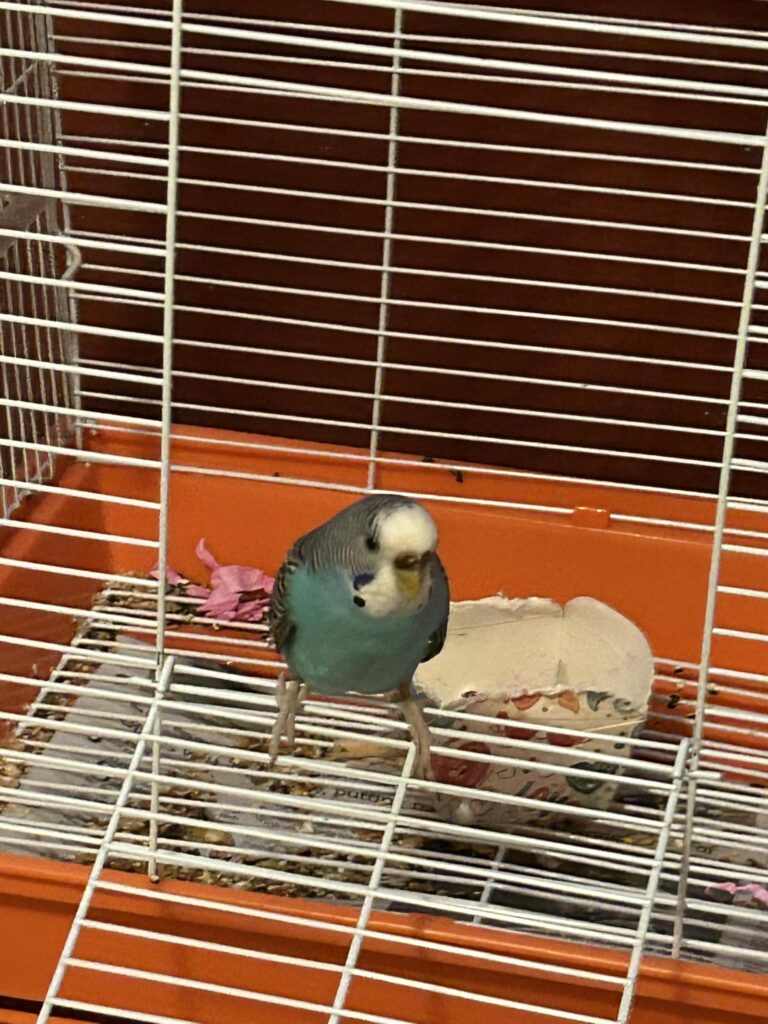
What to do
Upgrade the cage. I know that is not the most convenient answer, but it is the honest one. A cage that is too small for a budgie is causing that bird ongoing stress, and bar biting is one of the least severe symptoms of that stress. Wider is always the priority — aim for 90cm or more for a single bird if you can manage it. Think of the width first, then height.
While you are sorting the cage, increase out-of-cage time. A budgie that gets meaningful daily flight time in a bird-proofed room is less desperate about the space inside the cage. It is not a permanent solution to an inadequate cage, but it makes a real difference in the short term.
Reason 2: Boredom and Insufficient Stimulation
Budgies are intelligent birds. That word — intelligent — gets used about a lot of animals without much thought, but in budgies it is genuinely meaningful. They learn. They problem-solve. They remember. They need mental engagement throughout the day, and when they do not get it, they find their own ways to fill the time.
Bar biting is one of those ways. It is a displacement behaviour — the bird has energy and a need for stimulation that is not being met, and it redirects that onto the most consistently available surface in its environment: the bars.
A cage with three smooth plastic perches, a mirror, and a standard seed bowl is not a stimulating environment. It is the budgie equivalent of an empty room with nowhere to sit except a few chairs. Most budgies in that environment will, over time, develop some form of displacement behaviour — bar biting, over-preening, excessive calling. Bar biting is simply the most visible one.
- The cage has limited enrichment — few toys, no foraging opportunity, no variety
- The same toys have been in the same positions for weeks or months
- The bird bites bars most during the long hours when the owner is absent
- The bird is immediately more settled when the owner is present and engaging with it
- The behaviour started or worsened when something that previously occupied the bird was removed — a companion, a toy, a routine activity
What to do
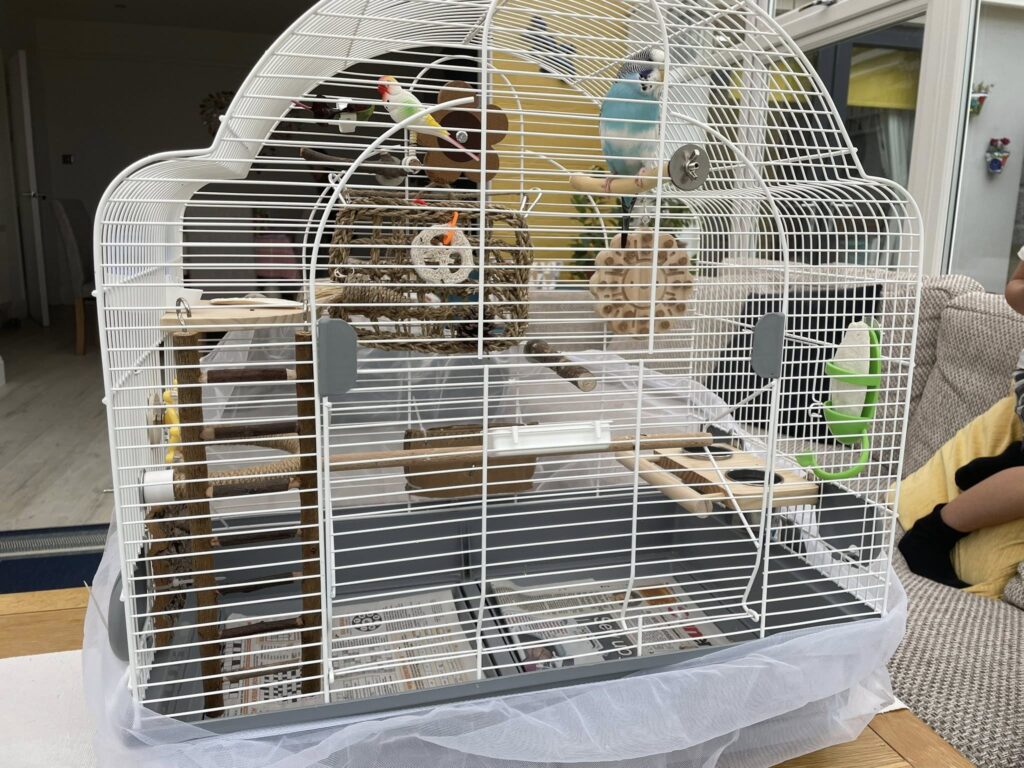
Enrich the cage meaningfully. This does not require spending a lot of money — it requires variety and rotation. Foraging toys that the bird has to work to access food from are the single most effective enrichment tool I know. Chew toys that give the beak something purposeful to do. Different textures — rope, wood, plastic, woven materials — that encourage different types of interaction. A ladder, a swing, a bell.
The key is rotation. A new toy is interesting. The same toy for six months is furniture. Rotate what is in the cage every week or two, bringing back “old” toys after an absence. To the bird, a toy it has not seen for three weeks is almost as interesting as a new one.
Foraging in particular addresses bar biting effectively because it gives the beak a legitimate, rewarding job. Hide a small amount of millet in a foraging toy. Weave pieces of leafy green through the bars on the inside of the cage so the bird has to work to reach them. Make the food require effort rather than just sitting in a bowl. A bird whose day involves meaningful foraging activity is a less frustrated bird.
Reason 3: Loneliness and Lack of Social Contact
I have said this in several articles now and I will keep saying it because it keeps being true: budgies are flock animals. A single budgie with limited human interaction is a lonely bird. And lonely birds develop problem behaviours.
Bar biting in lone birds often has a specific pattern that distinguishes it from cage-size frustration or boredom. It tends to happen when the owner is visible but not paying attention — the bird can see you, it wants your attention, and it has learned that making noise or being physically active near the bars gets a response. Even a negative response — being told to stop, being looked at — is still attention, and attention is what the bird wants.
This is not manipulation in any calculating sense. It is simple learned association. The bird bites the bars, the owner reacts, the bird gets interaction. Over time the behaviour becomes associated with getting what it needs.
- Bar biting that happens specifically when the owner is in the room but not interacting with the bird
- The bird stops when given direct attention and starts again when attention is withdrawn
- The bird is kept alone with limited daily human interaction
- Bar biting is loudest and most persistent when the owner is about to leave or has just returned
- The behaviour is less pronounced when the bird is tired, at night, or early in the morning before the household is active
What to do
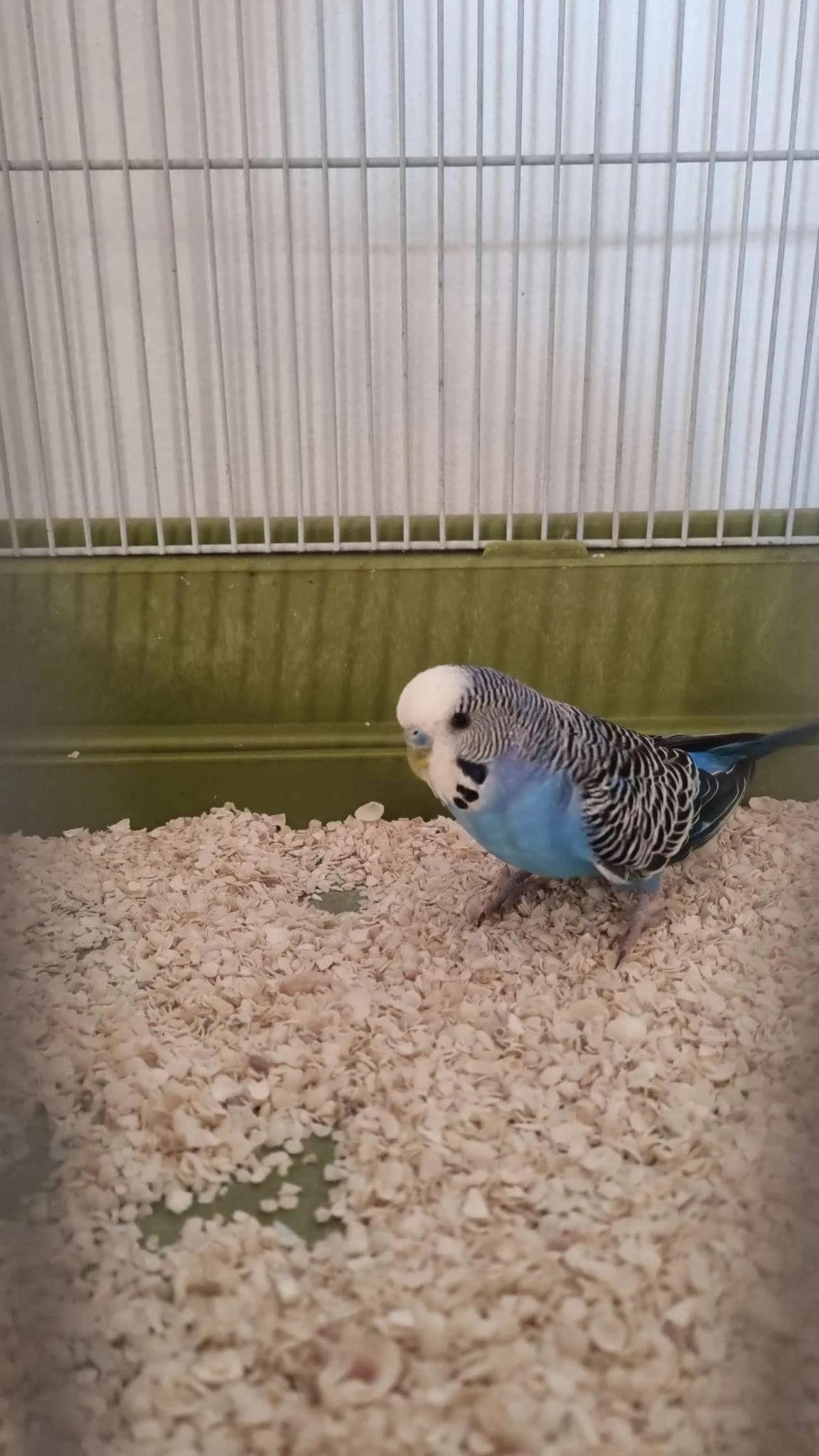
Two things, both of which matter. First — do not reward the bar biting with attention. When the bird bites bars, avoid reacting directly to it. Instead, when the bird is quiet and calm, give it attention and interaction. You are teaching the bird that quiet behaviour earns engagement, not bar biting. This takes consistency and it takes time.
Second — address the underlying social need. More genuine daily interaction: talking to the bird, letting it out, handling it, involving it in your routine. And if your life genuinely does not allow for that level of consistent engagement, consider a second bird. A companion almost always reduces this specific type of bar biting significantly, because the underlying need — social contact — is being met.
Reason 4: Attention Seeking — And Why Reacting Makes It Worse
This builds directly on the loneliness cause but deserves its own section because it is one of the most common mistakes I see owners make, and it actively worsens the behaviour rather than improving it.
Once a budgie has learned that biting cage bars produces a response from its owner — even a negative one — the behaviour becomes self-reinforcing. Every time the owner says “stop that,” or moves toward the cage, or even just looks at the bird, they have confirmed that biting bars works. The bird files that away and does it again.
I see this pattern particularly in birds that have been alone for a long time, or in birds whose owners have very busy schedules and give sporadic rather than consistent attention. The bird has no reliable way to initiate interaction, so it has developed one.
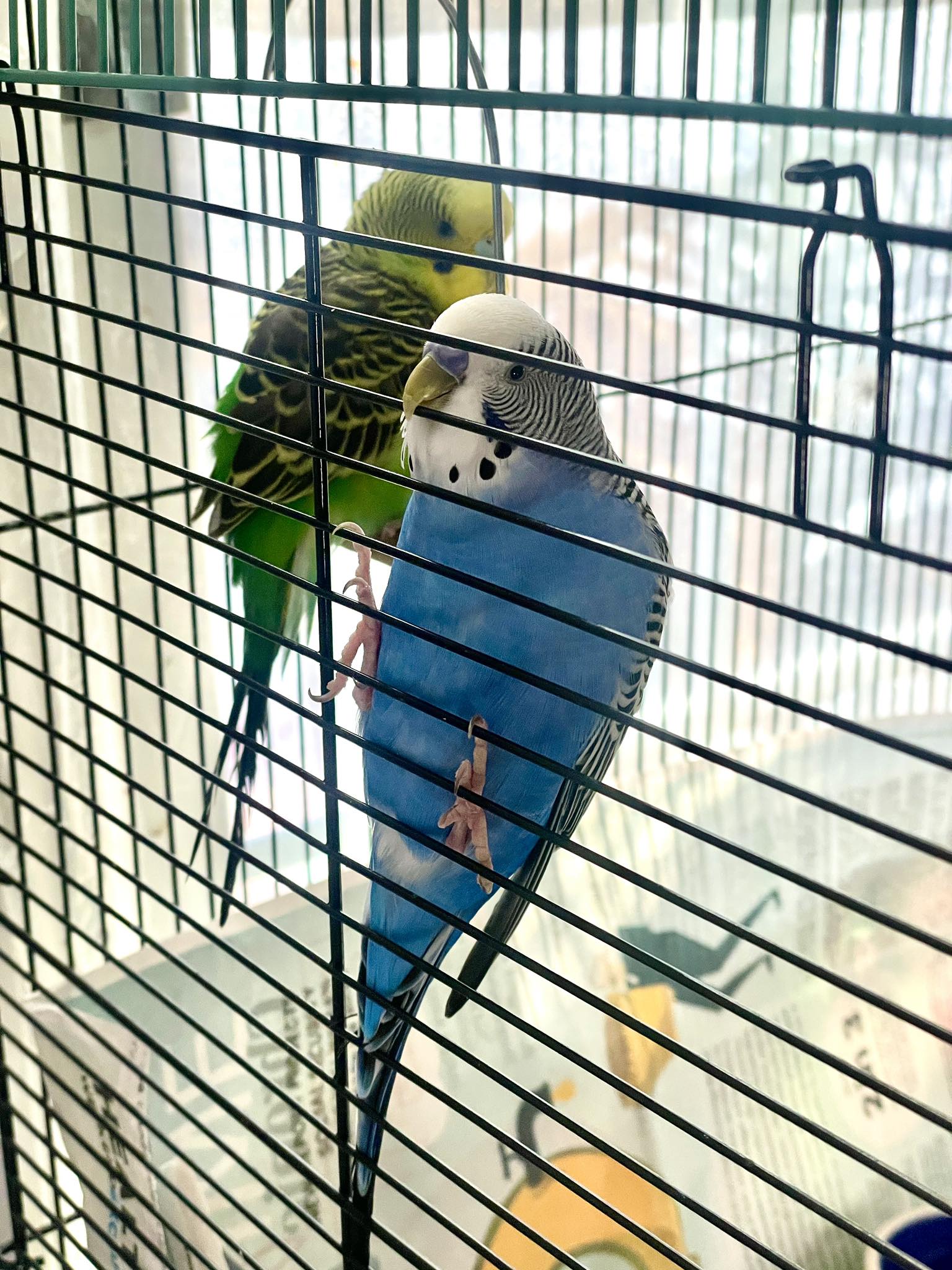
- The biting is clearly directed at getting the owner’s attention rather than at any physical frustration
- It stops immediately when the owner engages with the bird
- It escalates in frequency if the owner consistently responds — the bird learns it works
- The owner reports that telling the bird off makes it bite more, not less
- The bird looks directly at the owner when biting — it is communicating, not randomly frustrated
What to do
The counter-intuitive answer is the right one: stop reacting to the bar biting. Not harshly — simply withdraw attention when it happens. Turn away, leave the room briefly, do not look at the bird. Return and give attention when the bird has been quiet for even a few seconds. Build from there.
At the same time, build predictable interaction into the daily routine — feeding time, a regular out-of-cage period, a consistent window when the bird knows engagement is coming. Predictability reduces the anxiety that drives attention-seeking bar biting.
This approach requires patience. The behaviour will often get worse before it gets better — what behaviourists call an extinction burst, where the bird tries harder because the old strategy is no longer working. Stick with it. Most birds shift within two to four weeks of consistent management.
Reason 5: Wanting to Come Out of the Cage
This one is straightforward and I mention it separately because it is so specific and so common.
A budgie that has learned the pleasure of being out of the cage — flying freely, exploring, interacting with its owner outside the confined space — will ask to come out. And one of the ways it asks is by biting the door bars or the bars nearest the door.
This is particularly common in birds that used to get regular out-of-cage time and have had that reduced — perhaps because of a change in the owner’s routine, a new addition to the household, or a life event that has simply made the daily free-flight session less regular.
- Biting concentrated near the cage door rather than distributed across the bars
- The behaviour is most intense at the time of day when out-of-cage sessions used to happen
- The bird is immediately calm once the cage door is opened
- The behaviour started or worsened when out-of-cage time was reduced
What to do
Restore the out-of-cage sessions. A budgie needs daily flight time in a safe space — this is not optional for a bird’s physical and psychological health. An hour of daily free flight in a bird-proofed room makes a significant difference to how a bird relates to its cage. It becomes a safe base to return to rather than a confinement to escape from.
Reason 6: Beak Conditioning and Natural Chewing Instinct
Not every bar biting is about frustration, boredom, or social need. Some of it is simply a bird doing what birds do — using its beak.
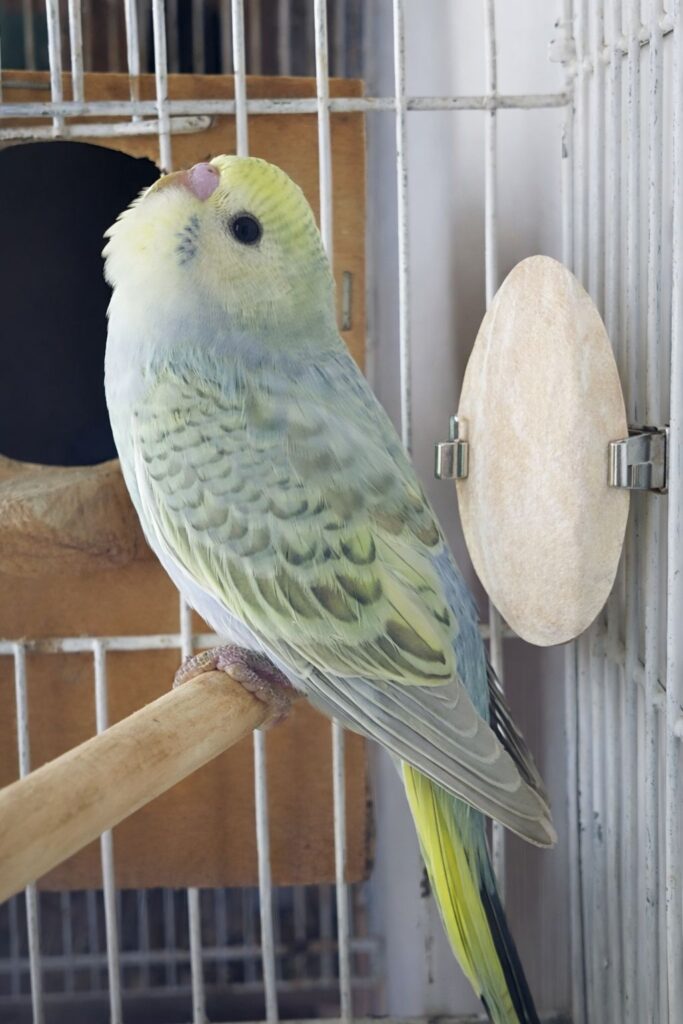
Budgies’ beaks grow continuously throughout their lives. In the wild, constant foraging, climbing, stripping bark, and manipulating objects keeps the beak naturally worn and shaped. In captivity, with a limited set of surfaces and foods available, the beak can grow slightly faster than the available materials wear it down.
A budgie that bites cage bars may partly be doing so because the bars provide a hard surface that satisfies the instinct to use the beak and provides some conditioning for it. It is not the ideal surface for this — bars are not particularly good for beak maintenance and the habit can become compulsive — but the underlying instinct is legitimate.
- The biting appears exploratory and investigative rather than frustrated or attention-seeking
- The bird bites various surfaces in the cage, not just bars — perches, toys, food dishes
- The cage lacks proper chew materials — cuttlebone, mineral block, safe wooden toys
- The beak looks slightly overgrown or uneven — worth a vet check if so
What to do
Provide better materials for the beak to work on. Cuttlebone should always be in the cage — it is an excellent beak conditioning surface as well as a calcium source. A mineral block provides a different texture. Safe wooden toys — untreated softwoods, willow, apple wood — give the bird something genuinely satisfying to chew and strip. A bird with good chewing materials available will naturally redirect the biting instinct away from the bars.
Reason 7: Something Outside the Cage — Territory or Threat
This cause is less common but specific enough that it is worth knowing about. Some budgies bite the bars of their cage in response to something they perceive outside the cage — another pet, an unfamiliar person, a bird they can see through a window.
This is territorial behaviour or a fear response. The bars become the boundary the bird is defending or trying to get through. The biting is directed at the outside of the cage rather than from a movement pattern along the bars.
- Biting is directed outward — the bird is focused on something external
- The behaviour happens specifically when a particular trigger is present — the cat walking past, a person the bird does not know, a wild bird at the window
- The bird looks tense and alert rather than bored or frustrated
- The behaviour stops when the trigger is removed
What to do
Identify the trigger and, where possible, remove or reduce it. Move the cage away from the window where wild birds congregate. Ensure cats and dogs cannot approach the cage directly. If a particular person consistently triggers the response, allow the bird to observe that person from a safe distance over time until it becomes comfortable.
- The beak looks overgrown, misaligned, or unusually shaped — a vet should check beak health
- The bird is also losing weight, not eating properly, or the bar biting seems linked to difficulty with food
- The behaviour is compulsive and the bird cannot be distracted from it even briefly — this level of intensity may indicate chronic stress that needs professional assessment
- The bars show signs of damage and the bird’s beak is cracked or chipped from the force of biting
- Bar biting is combined with feather plucking or self-harm — combined displacement behaviours suggest significant welfare concern
What I Check When an Owner Describes Bar Biting
When someone describes their budgie biting cage bars, this is the process I work through.
- How big is the cage — specifically the width?
This is always my first question. A cage under 60cm wide for a single bird is the most common cause and the most common fix. If the cage is too small, everything else is secondary. - Is the bird kept alone?
A single bird biting bars is more likely to be driven by social frustration or attention-seeking. A bird with a companion that is still biting bars points more toward cage size or enrichment. - When does it happen — is there a pattern?
Same time every day, or when the owner appears or leaves — attention-seeking or routine-based frustration. Random throughout the day — more likely boredom or cage size. Triggered by specific external events — territorial or fear response. - What enrichment is in the cage?
A bare cage with minimal toys is almost always part of the problem. What materials does the bird have to chew, forage through, investigate? - How much out-of-cage time does the bird get?
Daily free flight in a safe room is not a bonus — it is part of what a budgie needs. A bird that never comes out is a more frustrated bird than one that does. - What does the beak look like?
Overgrown, uneven, or cracked beak alongside bar biting — the biting may be partly beak-related and a vet check is worthwhile. - Has anything changed recently?
New pet, changed routine, reduced out-of-cage time, lost a companion — context changes almost always reveal the cause.
What Not To Do
Over 35 years I have heard the same unhelpful responses to bar biting described to me by owners. Here is what to avoid.
| What people do | Why it is wrong | What to do instead |
|---|---|---|
| Shout at or tap the cage to stop it | Any reaction reinforces attention-seeking bar biting and adds stress to other types | Withdraw attention calmly; reward quiet behaviour instead |
| Spray the bird with water | Creates fear and distrust without addressing the cause; makes the bird associate the owner with unpleasant experience | Address the underlying reason — enrichment, cage size, social contact |
| Cover the cage as punishment | Covering the cage is for sleep — using it as punishment confuses the bird about what the cover means and adds stress | Reserve the cover for the natural end of the day, as part of a consistent sleep routine |
| Buy more toys and fill the cage | Overcrowding the cage with toys reduces the usable space further and can increase frustration | Add a few well-chosen toys strategically; rotate them regularly |
| Move the cage to a quieter room to reduce stimulation | Reduces social contact and interaction, which is often the root cause | Keep the cage where the family spends time; address the stimulation through enrichment, not isolation |
| Assume the bird will grow out of it | Established displacement behaviours do not resolve on their own — they become more ingrained over time | Address the cause now; the sooner you act, the easier the habit is to change |
Frequently Asked Questions
Is cage bar biting ever completely harmless?
Occasional biting during normal climbing and exploration is harmless — it is just a budgie using its beak as it moves around. Persistent, repetitive bar biting always has a cause, and that cause is usually something the owner can address. It is not dangerous in the short term but it is a signal worth taking seriously.
Will getting a second budgie stop the bar biting?
In many cases, yes — particularly when the bar biting is driven by loneliness or attention-seeking. A second bird provides the constant social contact that resolves the underlying need. But if the cage is too small and that is the primary driver, a second bird in a small cage will make the situation worse. Fix the cage first, then consider a companion.
My budgie only bites the bars in the morning — why?
Morning bar biting almost always relates to routine. The bird has been asleep all night, has energy to burn, and is ready for interaction and activity. If mornings are when the owner is busiest and least available, the bird expresses its frustration at the bars. Establishing a brief consistent morning interaction — a few minutes of talking, the cage cover coming off at the same time each day, a foraging activity to start the day — usually reduces this significantly.
Can cage bar biting damage my budgie’s beak?
In most cases no — the beak is robust enough to handle occasional bar biting without damage. However, very vigorous and persistent bar biting over a long period can cause the beak to chip or develop uneven wear. If the beak looks abnormal, a vet check is worthwhile. This is another reason to address the behaviour at its cause rather than allow it to continue indefinitely.
My budgie bites bars and then looks at me — is it trying to tell me something?
Yes, almost certainly. A bird that bites bars and then looks directly at its owner is classically attention-seeking. It has learned that this behaviour gets a response. The most effective counter is to withdraw attention when it happens and provide interaction when the bird is calm and quiet. Consistency over two to four weeks usually produces a noticeable shift.
Where can I get budgie behaviour advice in Swindon?
Come and see us at Paradise Pets, Manor Garden Centre, Cheney Manor Industrial Estate, Swindon SN2 2QJ. Or ring us on 01793 512400. We have been advising on budgie behaviour for over 35 years and we will give you a straight, honest answer based on what we have actually observed — not what sounds reassuring.
One Last Thing From Me
The man with the bar-biting blue budgie — he came back about six weeks after our conversation. He had upgraded the cage to a proper flight cage, 90cm wide. He had replaced the three plastic perches with a variety of natural wood branches. He had set up a simple foraging arrangement — a small tube stuffed with millet that the bird had to work to access. And he had started letting the bird out for an hour each evening.
The bar biting had stopped within two weeks of the cage upgrade. Almost completely.
He said he felt slightly guilty that it had taken him a year and a half to sort it. I told him what I tell most owners in that position — you can only act on what you know, and now you know.
Bar biting is one of the more useful things a budgie can do, once you understand it. It is the bird’s clearest, most persistent way of telling you that something about its situation is not right. Find what that thing is, change it, and the behaviour changes with it.
That is the pattern I have seen consistently for 35 years. It holds.
If you are trying to work out what your bird is telling you and you are not sure where to start, come and find us.
Budgie Biting the Bars? Come In and Let’s Work Out Why
We have been advising on budgie behaviour, cage setup, and enrichment for over 35 years. Come in and describe what you are seeing — or show us a video on your phone. We will give you a straight answer and point you in the right direction. Free advice, no obligation. That is how we have always done things.