
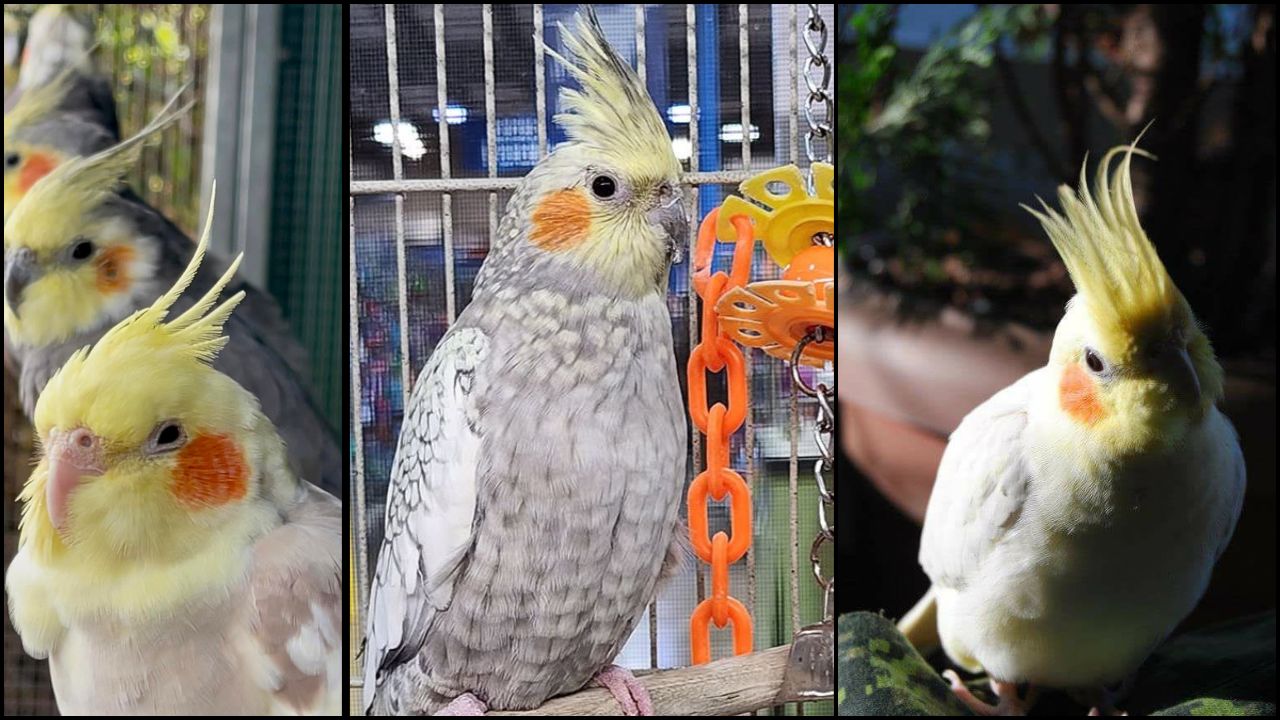

Neil has kept, bred, and sold cockatiels and cage birds at Paradise Pets Swindon since 1988 — over 35 years of first-hand experience with cockatiels of every temperament and background. “What does it mean when my cockatiel puts its crest up or down?” is one of the questions he enjoys most at the counter. This is his honest guide to what cockatiel crest positions actually tell you — and why learning to read them changes everything about keeping these birds.
A man came in about three weeks ago with a question written on his face before he had even opened his mouth. “Neil,” he said, “my cockatiel has this crest on its head and it goes up and down all day. Sometimes it’s completely flat, sometimes it’s straight up, sometimes it’s at an angle — and I have absolutely no idea what any of it means. Is it trying to tell me something?”
I told him yes. It is trying to tell him something every single time the crest moves. And once he learns to read it, he will find that his cockatiel is one of the most communicative birds he has ever encountered — not despite its crest, but largely because of it.
That conversation happens at this counter more than people might expect. Cockatiel owners — particularly new ones — know that the crest is there, they notice that it moves, but they have no framework for understanding what the movement means. Which is a shame, because the cockatiel crest is one of the most expressive and readable structures in the bird world. A cockatiel with a crest is wearing its emotional state on its head, quite literally, and an owner who can read it has an enormous advantage in understanding and relating to their bird.
In 35 years of keeping and selling cockatiels, I have spent a great deal of time watching crests. I have watched them in frightened birds and curious ones, in content birds and aggressive ones, in birds that were courting and birds that were sleeping and birds that were reacting to something alarming just outside the window. And over time I have come to regard the crest as one of the most reliable communication tools in bird keeping — more honest and more immediate than almost anything else a cockatiel does.
This is my honest guide to what each crest position actually means, how to read it in context, and what to do with the information once you have it.
First — Understanding Why Cockatiels Have Crests At All
Before we go through the positions, it is worth understanding why the crest exists and what it evolved to do — because that context makes the communication much easier to understand.
Cockatiels are flock birds from the arid interior of Australia. In the wild, they live in groups, and group cohesion depends on rapid, clear communication between individuals — about threats, about food, about social dynamics within the flock. Vocalisation is part of that communication, but sound travels without direction and can alert predators as well as flock members. Visual signals, by contrast, can be directed and read at a glance by another bird nearby.
The crest is a visual signal. It evolved as a rapid, highly readable broadcast of the individual bird’s emotional state — something that another cockatiel can read instantly from across the flock without any sound being made. It is, in the language of animal behaviour, an honest signal — meaning it is difficult to fake and therefore genuinely informative to anyone watching.
Your cockatiel is still using it exactly as nature intended. The only thing that has changed is the audience.
The Crest Positions — What Each One Actually Means
1. Crest Flat Against The Head — Fear Or Extreme Aggression
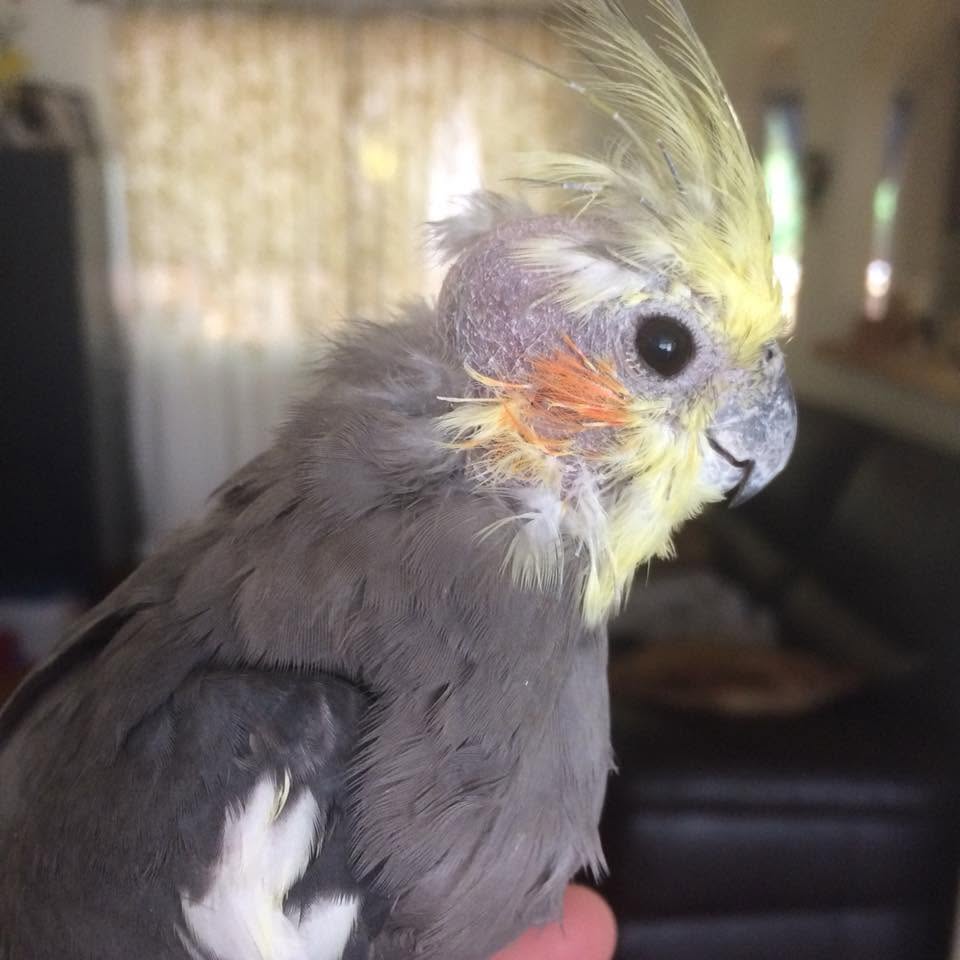
A crest pressed firmly flat against the skull — feathers slicked down, no lift at all — is the most unambiguous signal a cockatiel gives, and it is important to get this one right because it is the one most often misread.
A completely flat crest means one of two things, and context tells you which. In a frightened bird, the flat crest accompanies a tense, compact body posture — the bird is making itself as small as possible, is likely pressed against the back of the cage or as far from the perceived threat as it can get, and may have wide eyes and a slightly open beak. This is a bird that is genuinely afraid and needs the source of its fear identified and removed.
In an aggressive bird, the flat crest looks superficially similar but the rest of the body is very different — forward-leaning, wings possibly slightly spread, beak open or snapping, eyes pinning if the bird is also vocalising. This is a bird on the offensive, not in retreat.
The distinction matters because the appropriate response is entirely different. A frightened bird needs calm, space, and the removal of whatever is scaring it. An aggressive bird needs you to respect its signals and not push the interaction.
What both share is intensity — a completely flat crest is a cockatiel at an emotional extreme, and it deserves your full attention.
2. Crest Fully Raised And Vertical — Alert, Excited, Or Curious
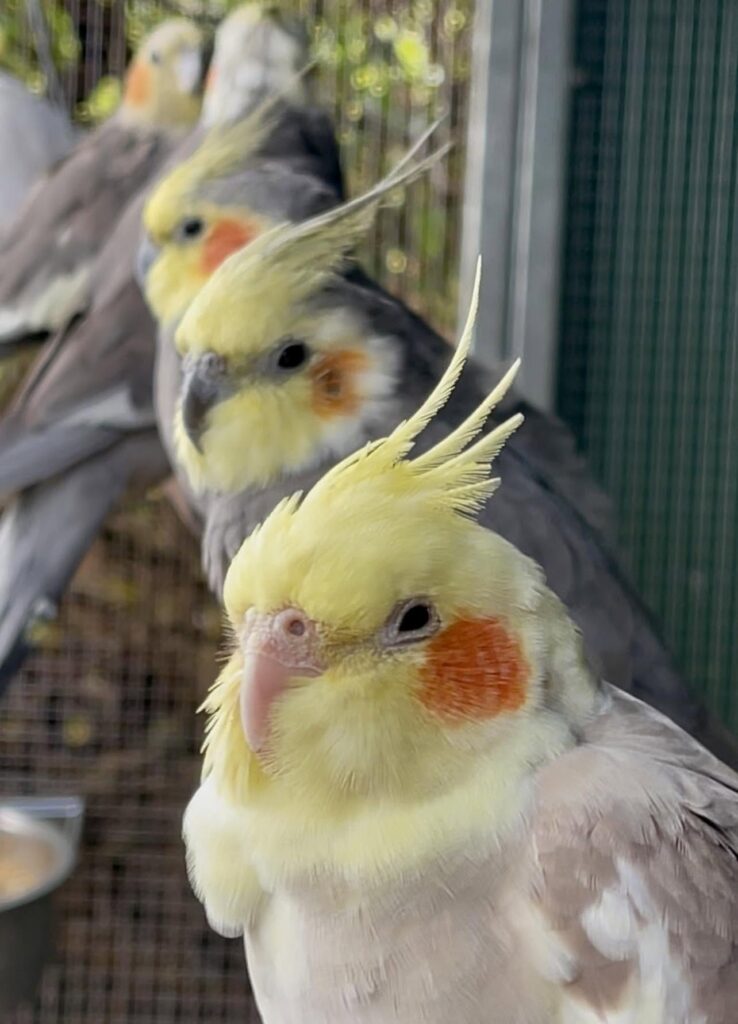
A crest standing straight up at full height is the signal most new owners notice first and usually misinterpret. It looks dramatic. It looks alarming. New owners often think it means the bird is angry or about to attack.
In the vast majority of cases, it means nothing of the sort. A fully vertical crest is the signal of a bird that is highly alert — something has caught its attention and it is processing it. This might be a sound from outside, another bird, something moving on the television, you walking into the room, a new toy placed in the cage. The crest goes up because the bird is engaged and interested.
This position also appears during excitement — a bird anticipating something it enjoys, a bird that has heard its favourite person’s voice, a bird that is worked up about something in a positive way. Young cockatiels often hold their crests at full height for extended periods simply because everything is interesting and they are processing the world with full attention.
The key distinction between this and the aggression version is the overall body language. An alert, curious, interested bird holds itself upright but relaxed, moves normally, and may vocalise in a normal way. An aggressive bird adds the flattening of body posture, the forward lean, the wing positioning. Learn to read the body alongside the crest and you will rarely confuse the two.
3. Crest At A Relaxed Angle — Forty-Five Degrees Or Thereabouts — Contentment
This is the crest position I want every owner to be able to recognise, because it is the one that tells you everything is well with your bird.
A crest held at a natural, relaxed angle — not pressed flat, not raised to full height, but somewhere in between, often described as around forty-five degrees — is the crest of a content, settled bird. This is what your cockatiel’s crest looks like when it is simply going about its day without stress, without alarm, without particular excitement. It is the resting state of a well-adjusted bird in an environment it feels safe in.
Many owners who are new to cockatiels do not notice this position specifically, because it lacks the drama of the fully raised or fully flattened crest. But it is the most common position in a healthy, happy bird, and learning to recognise it as the baseline you are aiming for is one of the most useful things you can do. If your bird is in this position more often than not, your bird is content more often than not.
4. Crest Raised With Feathers Slightly Fanned Out At The Tip — Excitement And Display
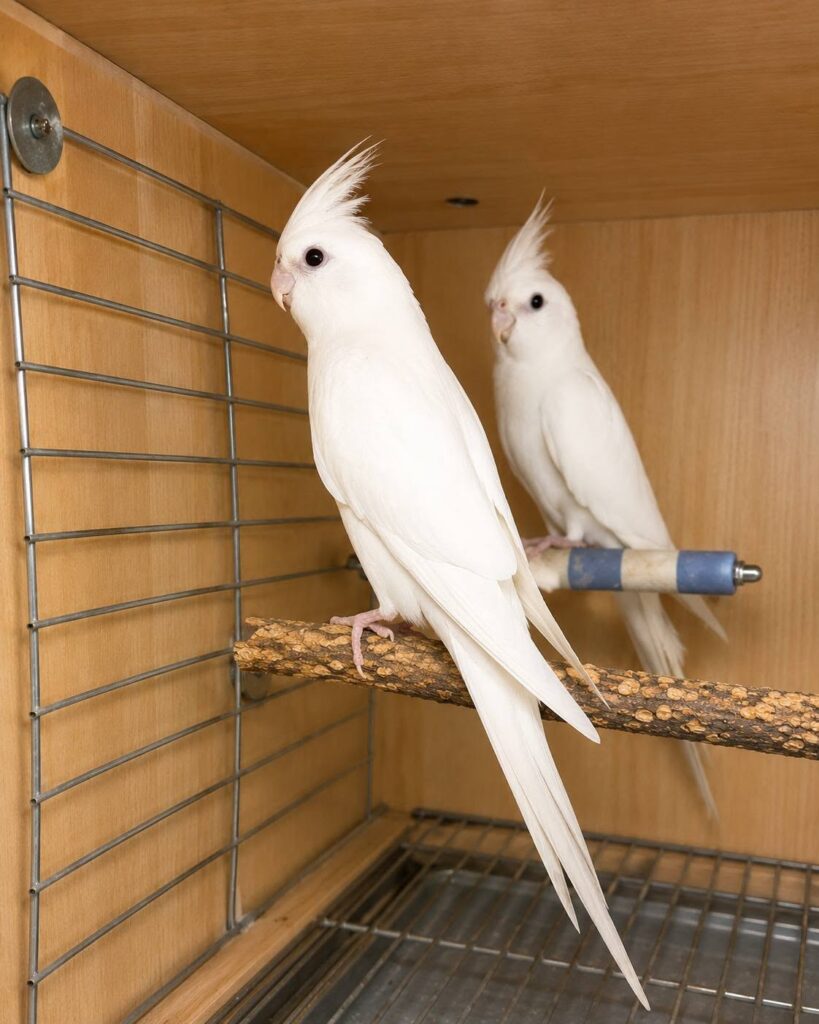
This is a variation of the raised crest that has its own distinct meaning. When the crest is up but the individual feathers at the tip are also slightly spread or fanned rather than held in a tight point, this is display behaviour — the bird is showing off, performing for an audience, often a potential mate or a person the bird is particularly attached to.
Male cockatiels display frequently and elaborately. The fanned tip crest is often accompanied by tail fanning, wing positioning, singing, and strutting. If your cockatiel does this at you, it regards you as a social partner of significance. This is not always comfortable to be on the receiving end of — a cockatiel in full display mode can be relentlessly persistent — but it is a clear sign of a bird that is engaged, confident, and socially active.
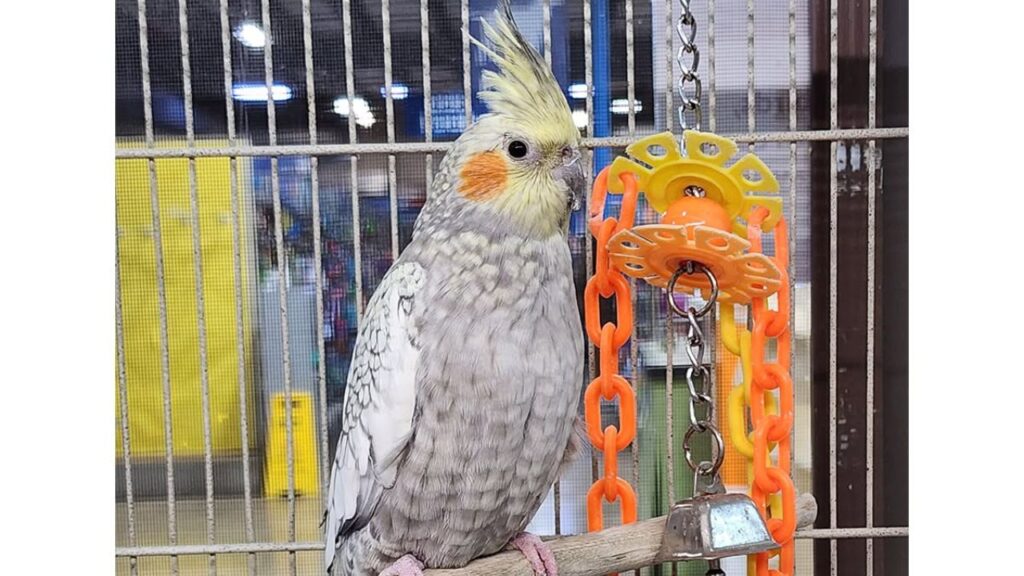
5. Crest Slightly Raised And Held Still — Listening And Processing
A subtle position that many owners never consciously notice — the crest held slightly above resting position but below full alert height, with the bird itself still and attentive, often with its head tilted slightly to one side. This is a bird that is listening carefully. It has heard or noticed something and is processing it, not yet decided whether it is significant.
You will see this most clearly when there is a new sound — a sound from outside, something happening in another room, a word or phrase the bird has learned to recognise. The crest lifts partway and holds. The bird waits. Then either the crest comes back down as the sound is assessed as nothing to worry about, or it goes to full alert height as the bird decides this requires more attention.
This position is a window into the bird’s processing — you are watching it think, in real time. It is one of the things I find most fascinating about cockatiels after 35 years.
6. Crest Lowered And Body Fluffed — Unwell Or Cold
This one is important to know for welfare reasons. A crest that is not fully flat but is held low — combined with a body that is fluffed up, feathers slightly puffed out, the bird sitting still rather than active — is not a communication signal. It is a symptom.
A fluffed, low-crested cockatiel that is sitting quietly and not engaging normally with its environment may be cold, may be unwell, or may be in the early stages of an illness. Cockatiels, like all birds, hide illness well — this is the instinctive concealment of a prey animal that does not want to appear vulnerable. By the time a cockatiel is visibly fluffed and subdued, it has often been struggling for some time.
This position on its own does not send you straight to a vet — a bird that has just woken from a nap may be briefly fluffed and slow. But a bird that is consistently in this state, particularly if combined with reduced appetite, ruffled feathers throughout the day, or any change in droppings, needs veterinary attention. Do not leave this one and hope it resolves.
Reading The Crest In Context — The Most Important Skill
I want to spend a moment on something that matters more than memorising the positions themselves — the importance of reading the crest in context, alongside the rest of the bird’s body language.
The crest does not communicate in isolation. It communicates as part of a whole-body signal, and the same crest position can mean different things depending on what the rest of the bird is doing. A fully raised crest on a bird that is singing and strutting means something completely different from a fully raised crest on a bird that is pressed against the cage bars with its feathers slicked tight. Both have crests up. One is happy. One is terrified.
The things to read alongside the crest are the body posture — upright and relaxed versus tight and compressed; the eye — normal and blinking naturally versus wide and fixed or pinning; the beak — closed and relaxed versus open or clicking; the wings — held normally versus spread or drooping; and the overall activity level — moving around normally versus frozen or hunched.
With practice, you will not need to go through this checklist consciously. You will simply read the whole bird at once, and the crest will form part of a picture that your eye takes in together. That is what 35 years looks like — but it starts with paying deliberate attention to all of these elements individually, and it comes faster than most people expect.
How The Crest Changes During A Single Interaction
One of the most revealing things to watch, particularly with a bird you are building a relationship with, is how the crest changes during the course of a single handling session or interaction. The movement tells you a story in real time.
A typical interaction with a well-bonded cockatiel might go something like this. You approach the cage and the crest goes to full alert — the bird has noticed you and is assessing. You speak to the bird and the crest begins to lower toward the relaxed position — it has recognised you and the initial alertness is settling. You open the cage and offer your hand and the crest may flicker upward slightly — a moment of uncertainty. The bird steps onto your hand and, as it settles, the crest drops to relaxed position. During petting or a scratch behind the ears, the crest may lower even further — approaching flat, but in the content rather than the fearful sense, the bird’s version of closing its eyes in pleasure.
That sequence of crest movements is the bird telling you exactly what it is feeling at each moment of the interaction. An owner who can read that sequence is an owner who can respond to their bird in real time — pausing when the crest signals uncertainty, proceeding when it signals comfort, backing off when it signals stress.
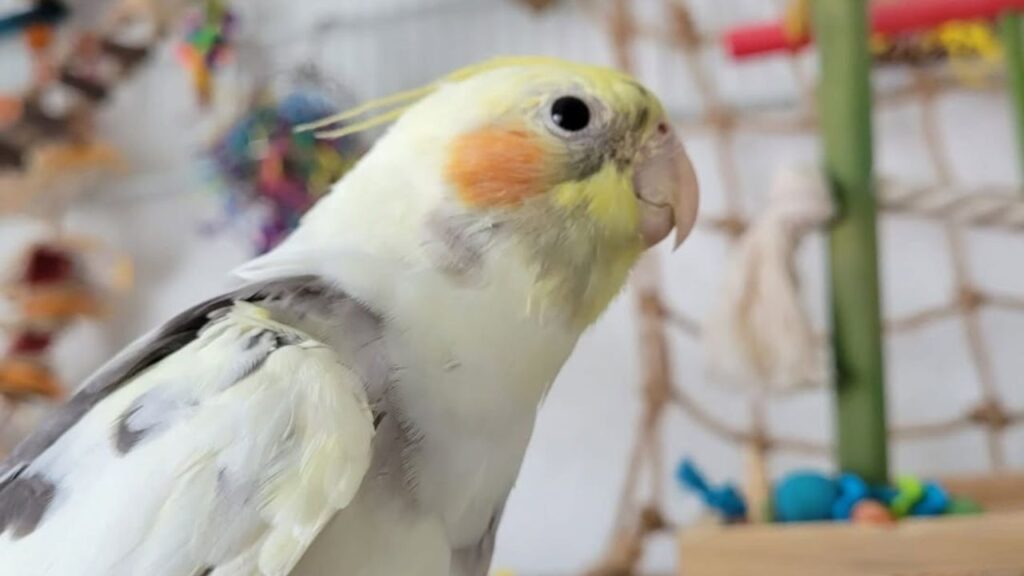
Crest Positions And What They Mean Toward You Specifically
A question I am often asked is whether the crest means different things depending on who or what the bird is directing its attention toward. The answer is yes — and understanding this adds another layer to reading your bird.
When the crest goes up in response to you specifically — when you walk in, when you speak, when you offer your hand — that is the bird calibrating its response to you. A bird that consistently raises its crest to the alert position when you approach, then slowly brings it back to relaxed as you interact, is a bird that is still in the process of building trust. The alert crest is not a bad sign — it is the bird paying attention. The question is whether the crest eventually relaxes, which indicates the bird is comfortable with you, or stays raised and tense throughout the interaction, which indicates anxiety.
A bird that already trusts you well may not fully alert at your arrival — the crest may simply lift partway from resting as a greeting acknowledgement, rather than going to full height. That partial lift in an otherwise relaxed bird is recognition and mild positive excitement. It is a good sign in a bonded bird.
Quick Reference — Cockatiel Crest Positions At A Glance
| Crest Position | What It Usually Means | What To Do |
|---|---|---|
| Fully flat, slicked tight | Fear (body compressed) or aggression (body forward) | 🔴 Identify and remove the cause — do not push interaction |
| Fully vertical, tight point | High alert — curious, excited, or startled | ⚠️ Read body language — usually fine, may need reassurance |
| Relaxed, natural angle ~45° | Content and settled — the good baseline | ✅ Your bird is comfortable — carry on |
| Raised with fanned tip | Display and showing off — often directed at you or another bird | ✅ Normal — particularly in males; may be persistent |
| Slightly raised and held still | Listening and processing — assessing a sound or change | ✅ Normal — wait and see what the crest does next |
| Low with body fluffed | Unwell or cold — not a communication signal | 🔴 Monitor carefully — vet if persists or combines with other symptoms |
| Moving frequently and rapidly | Highly stimulated environment — lots to process | ⚠️ Normal if bird is otherwise relaxed — check for overstimulation |
What The Crest Tells You About Your Relationship With Your Cockatiel
I want to end the main body of this guide with something that goes beyond simple identification of positions — because the crest is not just useful for reading individual moments, it is useful for reading the overall state of the relationship between you and your bird.
A bird whose crest is consistently in the relaxed, natural position during interactions with you — that barely flickers to alert when you approach, that drops toward relaxed comfort during handling — is a bird that is fundamentally at ease with you. That ease has been earned. It is the product of consistent, respectful, patient interaction over time. The crest is telling you that the relationship is in a good place.
A bird whose crest is consistently raised to full alert during your interactions, or that stays tense and uncertain whenever you are near — that crest is telling you that work remains to be done. Not that the bird dislikes you, not that the relationship is wrong, but that trust is still in progress. That is useful information because it tells you where to focus your energy.
In 35 years I have watched the crest change as relationships develop. A bird that arrived in a home with a consistently alarmed, high crest in any interaction slowly shifting over weeks and months to a relaxed, natural angle in its owner’s presence — that shift is the whole story of a relationship developing, told entirely through a few feathers on the top of a bird’s head.
Frequently Asked Questions
Why does my cockatiel’s crest go up when I walk into the room?
This is an alert response — the bird has noticed you and is assessing. Whether it is a positive or neutral response depends on what the crest does next. If it slowly comes back to a relaxed position as you talk to the bird and approach normally, the bird recognised you and settled. If it stays raised and tense throughout, the bird is not yet fully comfortable with your approach. In a well-bonded bird, you may see only a brief partial raise as a greeting acknowledgement rather than a full alert, which is the sign of a bird that trusts you reliably.
My cockatiel’s crest is flat all the time — is something wrong?
A consistently flat crest is worth paying attention to. If the bird is otherwise active, eating well, and behaving normally, a naturally lower crest position may simply be this particular bird’s resting baseline — some birds carry their crests slightly lower than others. But if the flat crest is combined with a fluffed body, reduced activity, or any other changes, that picture looks more like illness or chronic stress, and the environment and the bird’s health both deserve a closer look.
Can I tell if my cockatiel likes me from the crest?
Yes, meaningfully so. A bird that raises its crest in positive excitement when it sees you, that settles to a relaxed crest during interaction with you, that drops toward the comfortable low-flat position during a head scratch from you — that bird likes you. The crest during and after interaction is one of the most reliable indicators of the state of the relationship. A bird whose crest stays high and tense whenever you are near has not yet reached comfortable trust with you.
My cockatiel raises its crest at my other birds — what does that mean?
Context again is everything here. A raised crest between birds during normal flock interaction — moving around, vocalising, eating together — is general social alertness and engagement, which is normal and healthy. A raised crest combined with flattening as two birds get closer to each other may be the beginning of a territorial challenge. Watch what follows — if the birds settle without incident, the crest lowering, this is normal flock navigation. If the crest goes from raised to flat and the bird moves aggressively, you have a conflict developing that needs monitoring.
What does it mean when the crest goes flat during a head scratch?
This is one of my favourite things in cockatiel keeping to explain, because owners are often slightly alarmed by it. When a cockatiel is being scratched behind the ears or on the head, and the crest drops almost to flat while the bird closes its eyes and leans into the scratch — that flat crest is not fear. It is the deepest available expression of physical contentment. The bird is in such a state of bliss that the crest can go no further. If the flat crest during a head scratch worries you, look at everything else — eyes closed, leaning in, relaxed body. That is a happy bird.
Where can I get honest cockatiel advice in Swindon?
Come and see us at Paradise Pets, Manor Garden Centre, Cheney Manor, Swindon SN2 2QJ. Or give us a ring on 01793 512400. The advice is free and we have been doing this for 35 years.
One Last Thing From Me
The man who came in not knowing what his cockatiel’s crest meant went home with a very different understanding of his bird. He came back about a fortnight later — not because anything was wrong, but because he wanted to tell me that he had spent the intervening days watching the crest and connecting it to what was happening around the bird, exactly as I had suggested. “It’s like subtitles,” he said. “I can see what it’s thinking now.”
That is exactly right. The crest is subtitles for a bird that communicates in a language most owners have never been taught. Once you have the key, you cannot unknow it — and every interaction with the bird becomes richer for it.
A cockatiel that is understood is a cockatiel that can be responded to properly — its fears addressed, its contentment recognised and valued, its stress spotted before it becomes a problem. That is better bird keeping, built on something as simple as learning to read a few feathers on the top of a bird’s head.
Come and see us if you want to talk through your cockatiel’s behaviour or what you are seeing. We have been helping owners understand their birds for 35 years, and it is genuinely one of the parts of the job I enjoy most.
Not Sure What Your Cockatiel Is Telling You? Come And Ask Me
Bring your observations, your questions, and if you have one, a video of the behaviour you are seeing. I have been reading cockatiel body language for 35 years and I will give you a straight answer. Free advice, no obligation. That is how we have done things since 1988.