


Neil has run Paradise Pets Swindon since 1988 and has stocked wild bird food and feeders for almost as long. The increasing frequency and severity of UK winter storms in recent years has had a visible effect on garden bird populations — something he has watched develop firsthand through what customers describe and what he sees in his own garden. This guide covers what is actually happening and what genuinely helps.
Customers have been telling me something for a few years now, and it lines up with what I am seeing in my own garden. Fewer birds. Quieter mornings. Feeders that used to empty in a day now lasting two or three. People who have fed garden birds for decades are noticing a real decline, and more of them are asking what they can do about it.
Part of the answer is straightforward: UK storms, in recent winters, have been more frequent, more severe, and arriving in patterns that are harder for garden birds to weather than the storms of twenty or thirty years ago. The combination of high winds, sustained heavy rain, and rapid temperature swings creates conditions that are genuinely difficult for small birds to survive — and the effect on populations is visible if you know what you are looking at.
The good news is that there is a great deal an ordinary household with a garden can do. Not dramatic intervention — straightforward, consistent provision of the things birds most need when storms make finding them naturally much harder. This guide covers what is actually happening to garden birds in UK storms, and what genuinely helps, based on what I have learned from thirty-five years of stocking and discussing wild bird care.
Why Storms Are Genuinely More Dangerous to Garden Birds Now
UK storms have changed in character over the past decade in ways that matter specifically for small bird survival.
Named storms — the Met Office storm naming system, introduced in 2015, now identifies a season of storms each winter rather than occasional unnamed severe weather events — have become more frequent and, in many cases, more intense. Sustained high winds combined with heavy rainfall over extended periods create a double burden for small birds: the physical difficulty of maintaining body temperature in wind and wet, combined with the practical impossibility of finding food during the storm itself.
Small garden birds — blue tits, great tits, robins, wrens, goldfinches, and similar species — have an extremely high metabolic rate relative to their size, similar in principle to the metabolic demands of small pet birds like budgies. They need to eat frequently to maintain their body temperature, particularly in cold weather. A wren, one of the UK’s smallest garden birds, can lose a significant proportion of its body weight overnight in cold conditions and needs to replace that energy the following day simply to survive.
When a storm prevents foraging for an extended period — heavy sustained rain that soaks plumage and reduces insulation, wind strong enough to make flight to food sources dangerous or impossible, or simply weather severe enough that insects and seeds are unavailable or inaccessible — birds burn through their energy reserves with no way to replace them. A storm lasting two or three days, which is now common in UK winters, can be the difference between survival and death for birds that were already managing on thin margins.
The birds most affected are the smallest species — wrens, goldcrests, long-tailed tits — which have the least fat reserve relative to their metabolic demand. Population surveys in recent years have shown measurable declines in several of these species following particularly severe storm seasons, and the pattern correlates closely with storm frequency and severity.
What Happens to a Garden Bird During a Severe Storm
Understanding the actual sequence of events helps explain why specific interventions matter.
As a storm approaches, birds typically increase their feeding activity if they have any warning — sensing the change in air pressure and weather pattern that precedes severe conditions. This is why feeders are often unusually busy in the hours before a storm hits. Birds are stocking up, in effect, ahead of conditions that will make foraging difficult or impossible.
During the storm itself, foraging becomes extremely difficult. Heavy rain reduces visibility and soaks plumage, which compromises the insulating properties of feathers and increases the energy cost of maintaining body temperature. High winds make flight dangerous and exhausting, and ground-feeding species struggle to find food in waterlogged or wind-scoured ground. Birds typically shelter as much as possible — in hedges, dense shrubs, tree cavities, or any available cover — and reduce activity to conserve energy.
The critical period is often not the storm itself but the immediate aftermath. A bird that has sheltered through a two-day storm, burning energy reserves to maintain body heat with minimal food intake, emerges into the calm after the storm in a depleted state. If food is not readily and easily available at this point — if it takes significant additional energy expenditure to find it — the bird may not have sufficient reserves to recover.
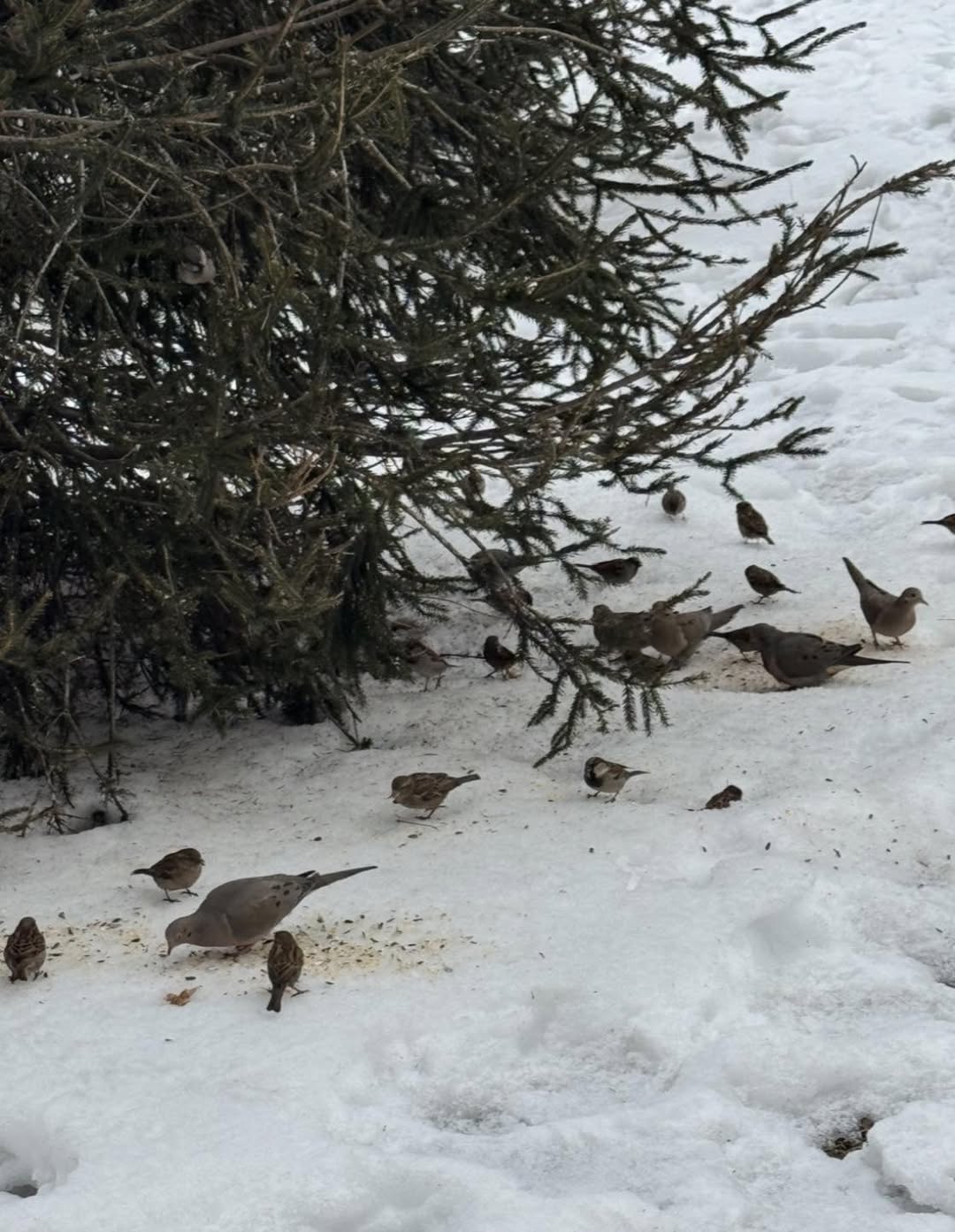
This is precisely where garden feeding stations have the most significant impact. A well-stocked, easily accessible feeder in a sheltered part of the garden, available the moment conditions allow birds to move safely, can be the difference between a bird recovering from a storm and one that does not.
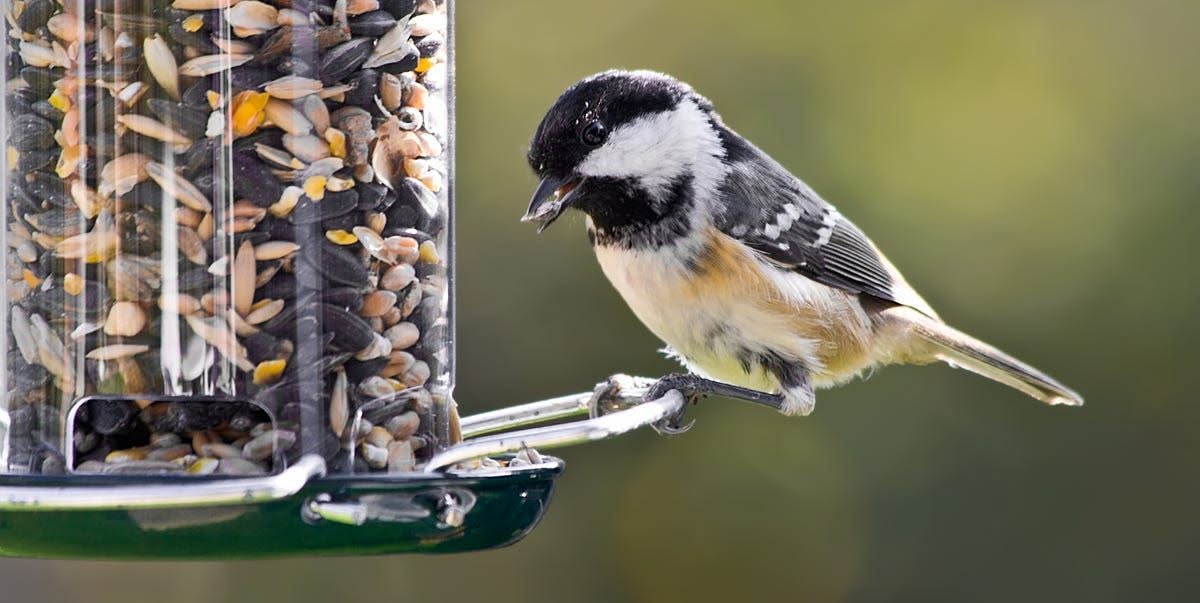
What to Feed — High-Energy Foods That Matter Most in Storm Conditions
Not all bird food provides the same value during severe weather. Some foods are significantly more important than others when birds need maximum calories with minimum effort to obtain them.
Suet-based foods — fat balls, suet blocks, suet pellets. These are the single most valuable food source during cold, wet, and stormy conditions. Fat provides more than double the energy per gram compared to carbohydrate-based foods, and birds instinctively prioritise high-fat foods in cold weather because the energy return justifies the foraging effort. Suet blocks and fat balls left in feeders provide a dense, readily available calorie source that requires minimal energy expenditure to access.
A note on quality: cheap fat balls sold in some UK supermarkets are sometimes packaged in plastic netting, which can trap and injure birds’ feet and beaks. Use feeders specifically designed to hold fat balls or suet blocks without exposed netting, or unwrap netted products before placing them in an appropriate feeder.
Black sunflower seeds. Higher in oil content than the striped variety, and consequently higher in energy value. Black sunflower seeds are accessible to a wide range of garden species and provide good calorie density. This is the staple seed I recommend stocking through the winter months specifically because of its energy value.
Mealworms — live or dried. An excellent high-protein, high-fat food, particularly valuable for insect-eating species like robins and wrens that struggle to find their normal food sources during storms when insects are not active or accessible. Dried mealworms can be soaked briefly in water before offering, which makes them easier for birds to eat and slightly more similar to their natural live food.
Peanuts — in appropriate feeders. High in fat and popular with a wide range of species. Always offer in a wire mesh feeder designed for whole peanuts, never loose on the ground, as whole peanuts can be a choking hazard, particularly to young birds.
Niger seed. Particularly valuable for finches, including goldfinches and siskins, which have specific dietary preferences that niger seed satisfies. A specialist feeder with small ports is needed, as the seed is very fine.
What to avoid: bread, which has minimal nutritional value and can cause digestive issues if it becomes the primary food source; salted or roasted nuts intended for human consumption, which are inappropriate for birds; and milk, which birds cannot digest properly.
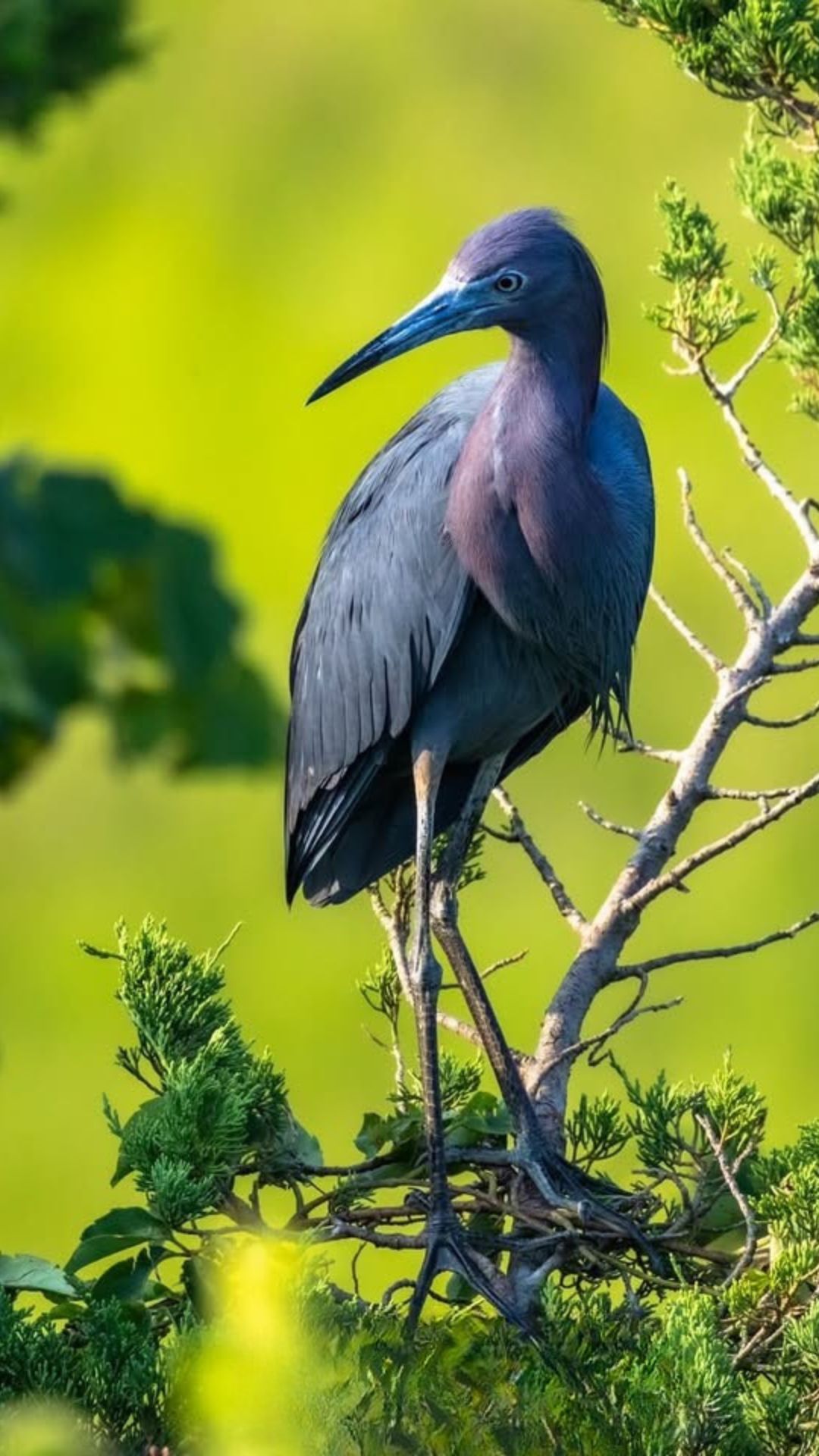
Feeder Placement and Storm Protection
Where feeders are positioned matters significantly during storm conditions, in ways that may not be obvious from how they are positioned in calmer weather.
A feeder that works well in mild weather — hanging from a tree branch in an open part of the garden, for instance — may become inaccessible or actively dangerous during high winds. Swinging feeders in strong wind can injure birds attempting to land, and exposed positions make feeding genuinely hazardous in storm-force conditions.
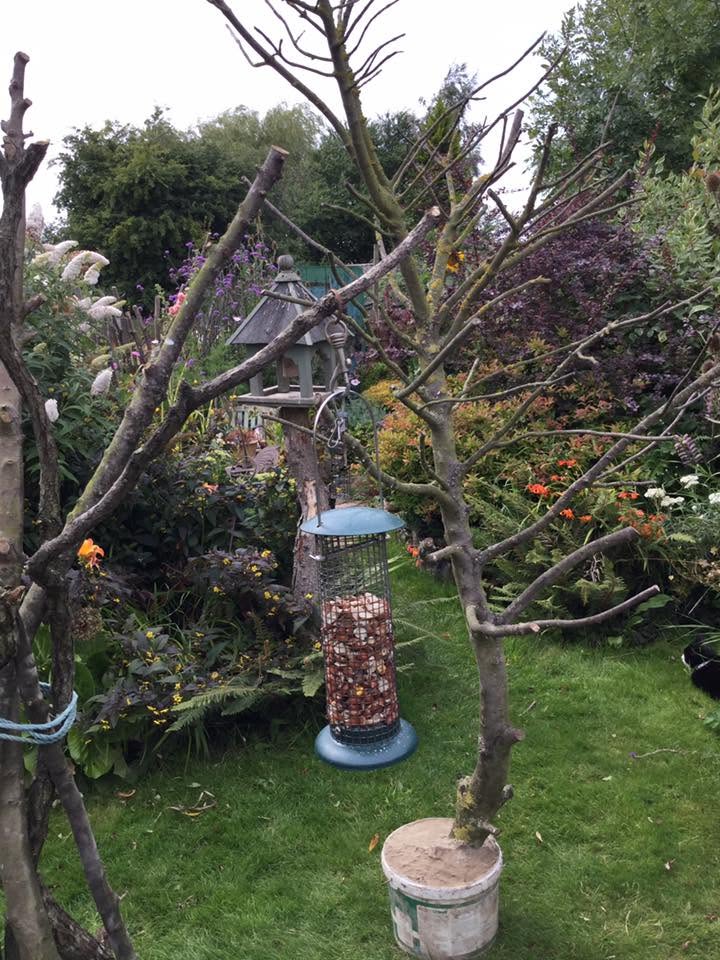
The ideal storm-resilient feeder setup includes a sheltered position — close to a wall, fence, or dense hedge that provides a wind break, rather than fully exposed in open garden space. A stable mounting — a pole-mounted feeder or one secured to a fixed structure is more stable in wind than one hanging loosely from a branch, which will swing and become difficult for birds to use safely.
Ground-feeding areas need particular attention during and after storms. Heavy rain can create standing water or waterlogged conditions that make ground-scattered food inaccessible or spoiled. A raised, covered ground feeding tray — or simply scattering food on a paved or raised area that drains rather than directly on saturated lawn — keeps food usable through wet conditions.
After a storm has passed, check feeders promptly. Wind damage, displaced feeders, or feeders that have run empty during the storm period need immediate attention — this is precisely the window when birds most need food to be readily available, and a feeder that is empty or damaged at this critical moment undermines the entire purpose of providing it.
Water — The Often-Overlooked Storm Casualty
It seems counterintuitive that water access would be a problem during storms with heavy rainfall, but it genuinely is.
During freezing conditions that sometimes follow or accompany winter storms, standing water sources freeze over, and birds that rely on garden bird baths or ponds for drinking and bathing lose access at exactly the time they most need it — bathing helps maintain feather condition and insulating properties, which is critical for surviving cold conditions.
During the storm itself, water that is technically present — in puddles, in waterlogged ground — is often contaminated with debris, mud, or runoff in ways that make it unsuitable. A clean, accessible water source remains valuable even during heavy rain.
Check bird baths and water sources for ice during cold spells, and break or remove ice promptly. A shallow, regularly refreshed water source — checked daily during severe winter weather — supports birds’ ability to drink and maintain feather condition through difficult periods.
Shelter — Why Food Alone Does Not Solve the Problem
A garden that provides excellent food but no shelter is a garden that only partially helps birds through storm conditions. Birds need somewhere to escape wind and rain between feeding visits, and gardens that have been tidied of natural shelter — dense shrubs removed, ivy cleared, hedges cut back hard — remove exactly the resources birds rely on most during severe weather.
Dense evergreen shrubs and hedging provide year-round shelter that deciduous planting cannot match in winter. If your garden has the space, leaving at least some dense, low shelter — rather than clearing everything for tidiness — gives birds somewhere to retreat between feeding visits.
Roosting boxes — different from nest boxes, though some nest boxes double as roosting sites in winter — provide additional sheltered space, particularly valuable in gardens with limited natural cover. Several small birds will sometimes roost together in a single box during cold weather, sharing body heat.
Leaving some areas of the garden slightly less tidy through winter — leaf litter, log piles, areas of longer grass — supports the insect life that some garden birds depend on even in winter, maintaining a degree of natural food availability alongside the supplementary feeding.
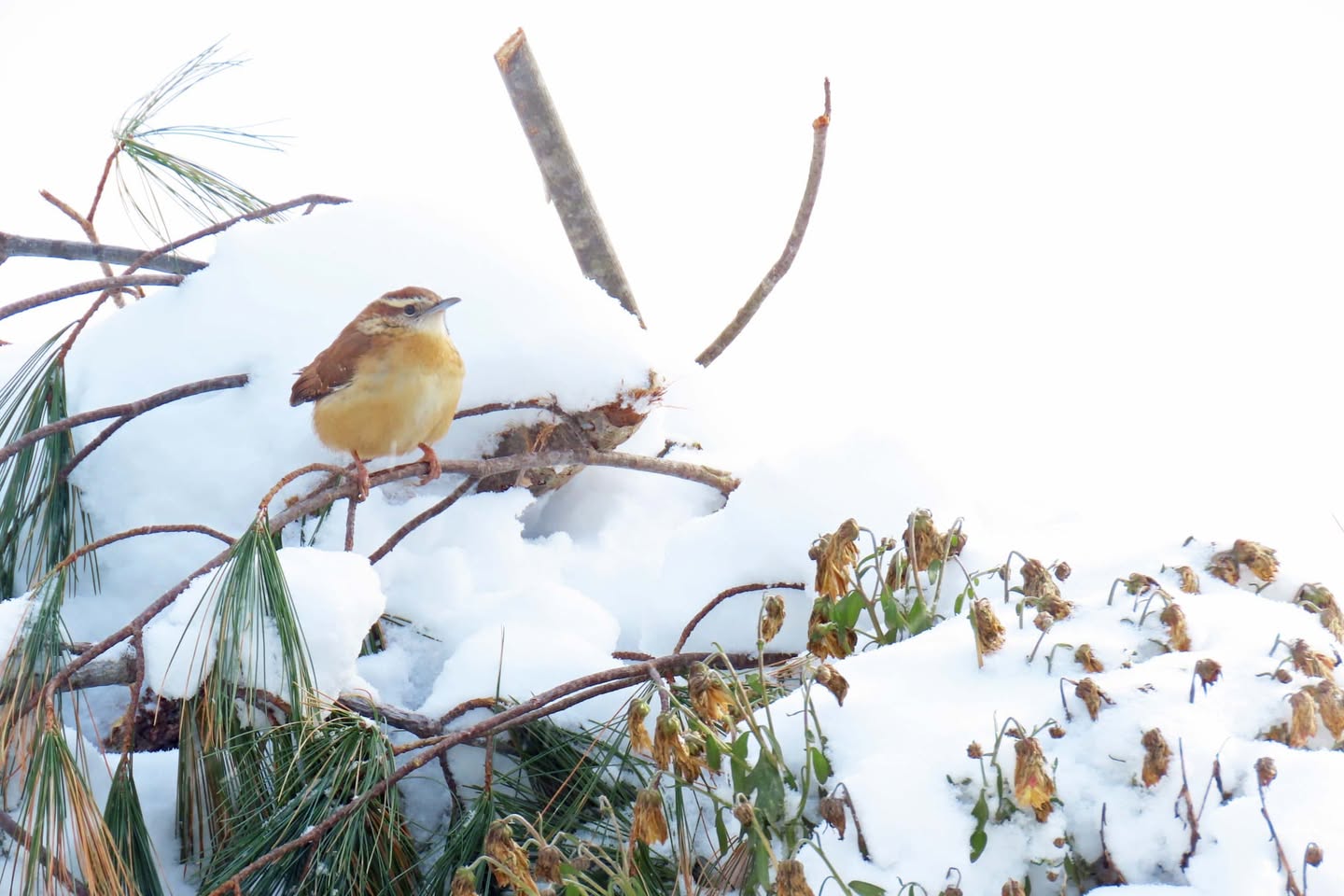
Consistency Matters More Than Quantity
One of the most important things to understand about winter bird feeding, and storm-period feeding specifically, is that birds come to rely on feeding stations as a predictable food source. A feeder that is well-stocked for two weeks and then empty for a week creates a worse outcome than consistent moderate provision throughout — because birds have adjusted their foraging behaviour to rely on the feeder, and its sudden absence during a critical period removes a resource they were depending on.
This matters particularly during storm seasons. If you start feeding garden birds through autumn and into winter, continue consistently through the storm season rather than feeding intermittently. Birds that have learned to rely on a feeding station will visit it as a priority when conditions allow, and an empty feeder at that moment is a missed opportunity at exactly the time it matters most.
If you are going away during winter — and many UK storms arrive with enough warning that travel plans are sometimes already in place — arrange for someone to check and top up feeders in your absence, particularly through a storm period. A week of empty feeders during severe weather can mean local birds that have come to rely on that food source go without at a critical time.
- “Birds will just find food elsewhere if my feeder runs out” — During severe storm conditions, natural food sources are significantly reduced across the whole area, not just in one garden. A bird that has come to rely on a particular feeding station, and finds it empty during a storm, may not have the energy reserve to search extensively elsewhere. Consistency matters precisely because alternatives are scarcer during the conditions that make feeding most critical.
- “Feeding birds in winter makes them dependent and stops them foraging naturally” — This is a persistent myth not supported by the evidence. Garden birds use feeders as a supplement to natural foraging, not a replacement for it, and continue to forage naturally alongside using feeders. The energy demands of UK winters, intensified by storm conditions, mean supplementary feeding provides genuine survival benefit rather than creating unhealthy dependency.
- “Bread is fine for garden birds — people have fed it for generations” — Bread provides minimal nutritional value relative to the volume consumed and can fill birds up without meeting their actual energy needs, particularly problematic during periods when calorie-dense food matters most. It is not toxic in small amounts, but it should not be a primary food source, and high-fat alternatives like suet provide vastly more genuine benefit.
- “My garden is too small to make a difference” — Garden size is largely irrelevant to the value of a feeding station. A single well-positioned feeder with suet and black sunflower seeds in even a small garden provides genuine support to local birds. Population-level benefit comes from many individual gardens each providing what they can, not from any single large provision.
- “I’ll start feeding when the weather actually gets bad” — Starting supplementary feeding only once severe weather has already arrived means birds have not had the opportunity to learn that your garden is a reliable food source before they most need it. Consistent feeding from autumn onwards establishes the feeding station as part of local birds’ regular foraging pattern, so it is already integrated into their survival strategy by the time storms arrive.
What I Tell Customers Setting Up Winter Feeding for the First Time
- Start now, not when the first storm arrives.
Establish feeding stations through autumn so birds have already incorporated your garden into their regular foraging pattern before severe weather hits. A feeding station birds already know and trust is far more valuable during a storm than one introduced after the fact. - Prioritise high-energy food — suet, black sunflower seeds, mealworms.
These provide the calorie density that matters most when birds need maximum energy return for minimum foraging effort. Build your winter feeding around these rather than lower-value alternatives. - Position feeders for storm resilience, not just convenience.
Sheltered locations near walls, fences, or dense hedging. Stable mounting rather than loose hanging. Consider how the feeder will perform in high wind, not just how it looks in calm weather. - Check water sources regularly through cold and stormy periods.
Ice needs breaking or removing promptly. A clean, accessible water source supports both drinking and the feather maintenance that helps birds stay insulated. - Maintain consistency through the whole storm season, not intermittently.
A feeding station that is reliably stocked throughout winter provides far more genuine benefit than one that is generously filled some weeks and empty others. Plan for coverage during any periods you might be away.
If you want advice on setting up a winter feeding station, what food and feeders would work best for your specific garden, or anything else about supporting garden birds through this winter’s storms — come in and talk to us. We are at Manor Garden Centre, Cheney Manor Industrial Estate, Swindon, SN2 2QJ — open every day. Or call us on 01793 512400.
Visit Us at Paradise Pets Swindon
We stock a full range of wild bird food, feeders, and accessories — suet blocks, black sunflower seed, mealworms, niger seed, and the storm-resilient feeders that hold up through a UK winter. Come in and talk to us about the right setup for your garden.
We also stock cage and aviary birds, guinea pigs, rabbits, and a full range of gerbils and hamsters.