
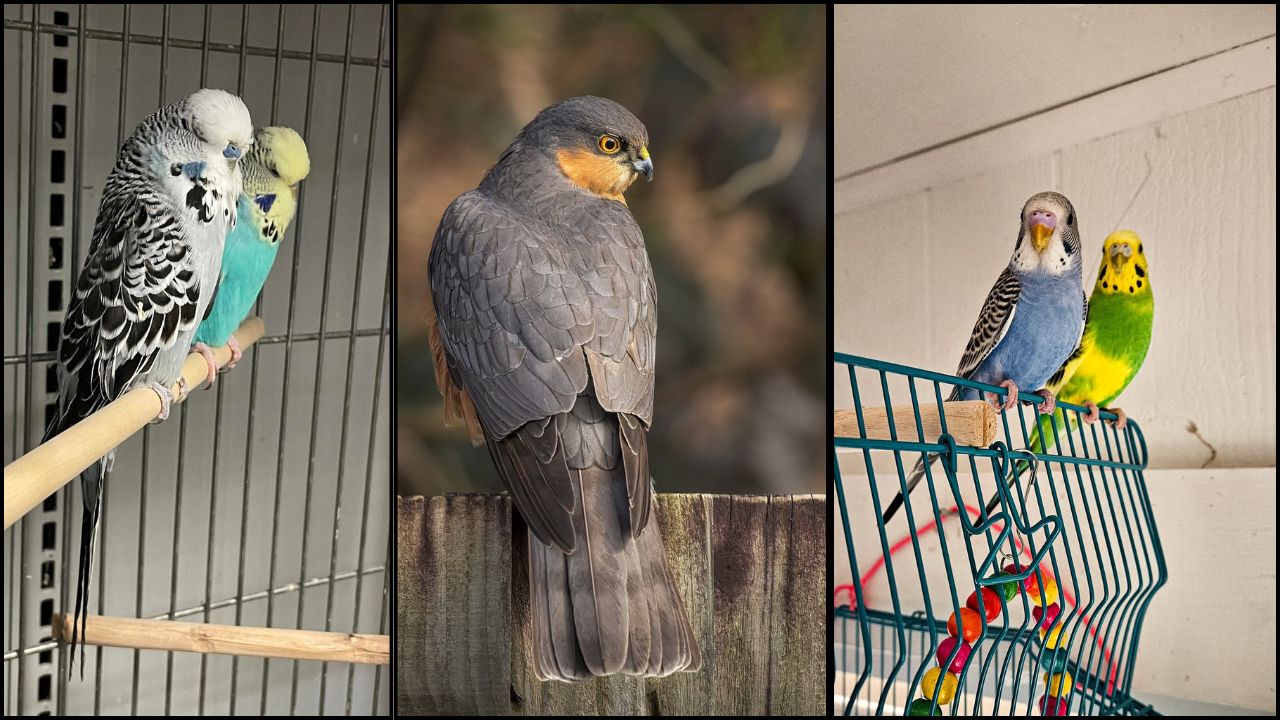

Neil has owned and run Paradise Pets Swindon since 1988. In more than 35 years of helping bird owners, he has seen many budgies, cockatiels, canaries and finches become nervous because of simple household setup mistakes. Sparrowhawks hunting garden birds are a reminder that many small birds are naturally alert to danger. Pet birds are safe indoors, but sudden movement, overhead shadows, cats, dogs, loud noises and poor cage position can still make them feel exposed.
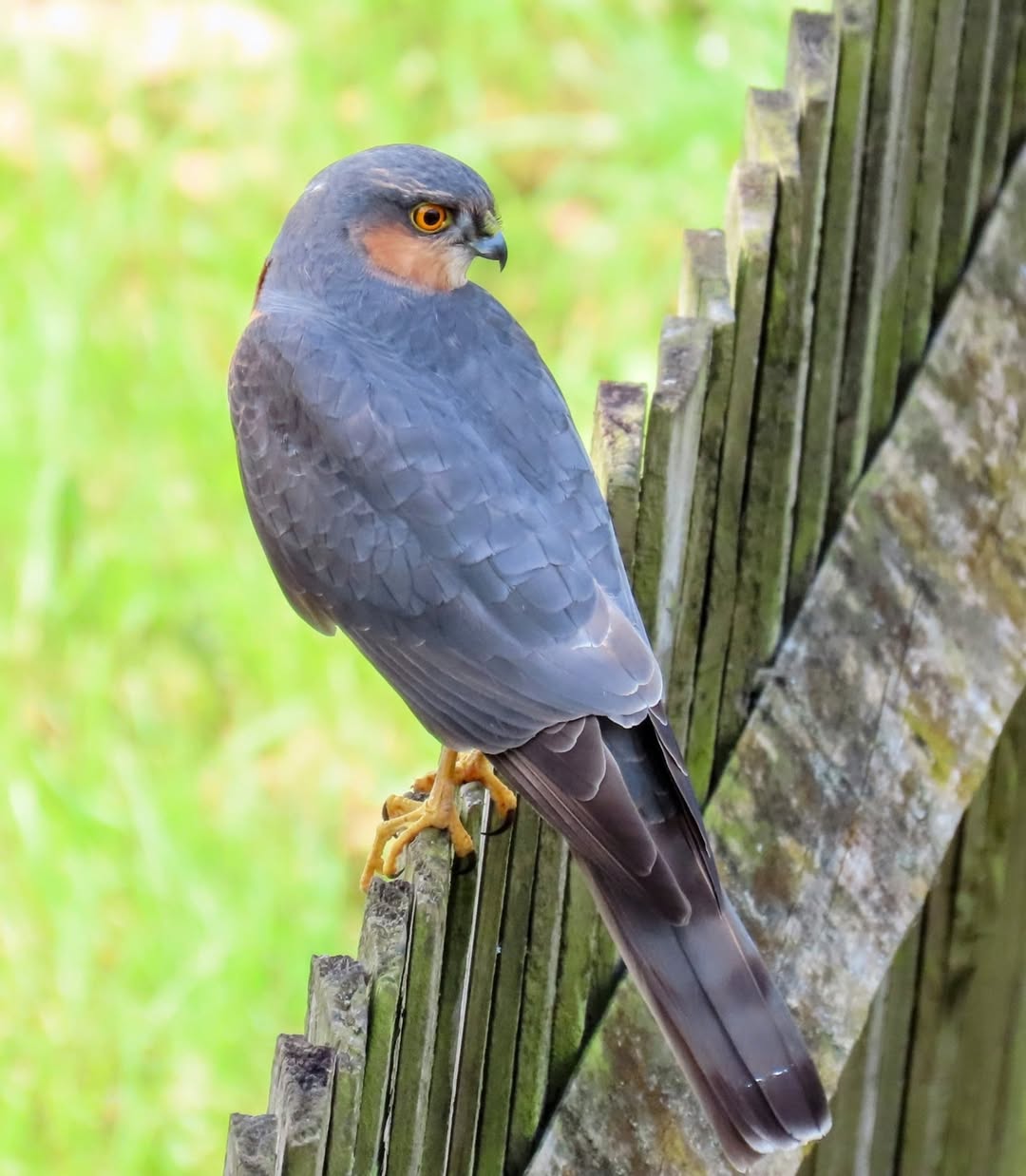
Sparrowhawks are part of normal UK wildlife. The RSPB describes them as small birds of prey that hunt birds in places such as woodland, urban green spaces and gardens. The Wildlife Trusts also notes that they catch small birds such as finches, tits and sparrows.
Your pet budgie or cockatiel is not living in the wild. It is not being hunted by a sparrowhawk inside your living room. But many pet birds still have strong startle responses. They may react to fast movement, shadows, overhead objects, other pets or sudden noise because those things feel threatening to them.
This article is not about making owners worried. It is about making the cage area feel safer, calmer and more predictable for the bird.
Why Sparrowhawks Are A Useful Reminder
Sparrowhawks are fast, agile hunters. The RSPB lists the sparrowhawk as an Amber-status species in the UK and says they have adapted to urban green spaces, using surprise attacks to catch small birds.
That does not mean pet birds are thinking about sparrowhawks all day. But it does remind us of something important: many small birds survive by noticing movement, shadows and possible danger quickly.
Inside a home, the same kind of alertness can be triggered by harmless things, including a person walking past quickly, a ceiling fan, a cat staring at the cage, a dog jumping up, a door slamming, or a reflection in a window.
Common Household Triggers For Nervous Pet Birds
In the shop, Neil often sees bird anxiety linked to the room setup rather than the bird being naturally difficult. These are the most common triggers to check.
- A low cage position: birds may feel more exposed when people, pets and movement tower over them.
- A cage in the middle of the room: the bird has to watch movement from every direction.
- No solid wall behind the cage: the bird may feel less secure if there is activity behind it.
- No covered top area: overhead movement and shadows can make some birds nervous.
- Ceiling fans: the RSPCA warns that birds may be frightened by ceiling fans when flying free.
- Cats and dogs near the cage: even a calm pet can feel threatening to a bird if it stares, jumps or sits close.
- Sudden household movement: children running, doors opening quickly or people leaning over the cage can startle birds.
- Window reflections: moving reflections, passing birds and outdoor activity can keep some birds alert.
- Loud appliances: vacuum cleaners, blenders, drills and sudden bangs can cause fear responses.
- Kitchen location: kitchens can add heat, steam, fumes and sudden movement, so they are not ideal cage areas.
Signs Your Bird May Feel Unsafe
One startled moment does not mean there is a serious problem. But repeated signs over days or weeks are worth taking seriously.
- Flinching or panicking when someone walks past
- Constantly watching the room instead of relaxing
- Staying in one corner or high perch all the time
- Reduced singing, calling, playing or exploring
- Hesitating before eating or drinking
- Freezing when a cat, dog or child enters the room
- Restless sleep or difficulty settling at night
- Over-preening or feather damage
- Becoming defensive when hands approach the cage
- Sudden behaviour changes that do not improve
Some of these signs can also be linked to illness, pain, poor diet, moulting, hormones or other welfare issues. If your bird is fluffed up, not eating, breathing heavily, sitting on the cage floor, bleeding, weak or acting suddenly different, contact a qualified vet urgently.
How To Make Your Bird Feel Safer
The good news is that most improvements are simple. You do not need to rebuild the room. Start with cage position and daily routine.
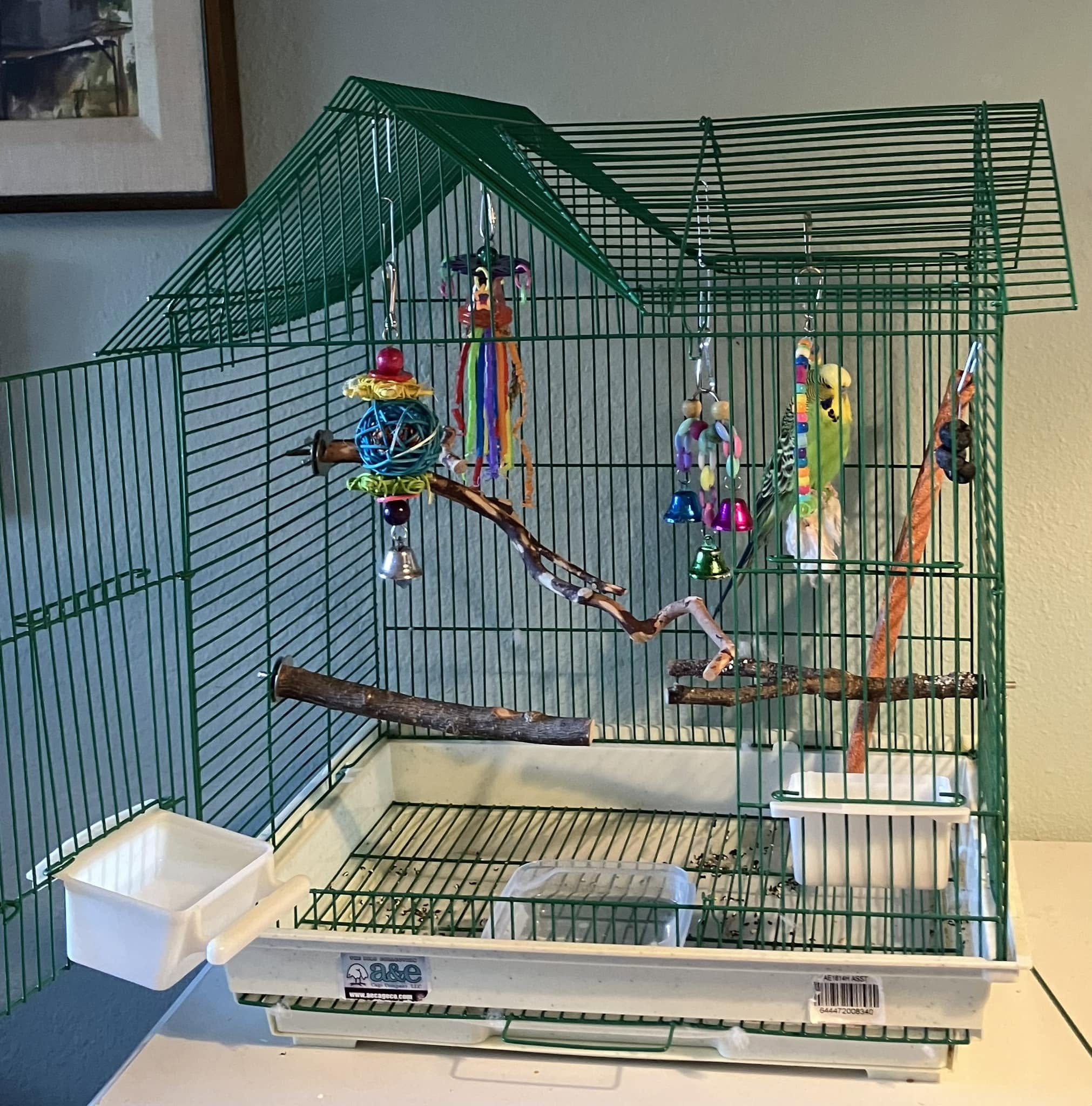
- Put the cage against a solid wall: the RSPCA recommends a solid wall behind the cage to help birds feel safe from threats behind them.
- Cover part of the cage top: a partial top cover can give overhead security while still allowing light and visibility.
- Raise the cage if it is too low: eye level or slightly higher often feels safer than floor level.
- Move the cage away from ceiling fans: avoid placing birds directly under overhead moving objects.
- Keep cats and dogs away from the cage: give the bird predator-free time and space every day.
- Approach slowly: speak before putting hands near the cage and avoid sudden leaning over the bird.
- Reduce window stress: use a safer position, partial cover or screen if outside movement keeps the bird alert.
- Avoid kitchens: keep birds away from cooking fumes, steam, smoke, hot pans and sudden kitchen activity.
- Keep a predictable routine: regular feeding, cleaning and sleep times help nervous birds settle.
- Give safe enrichment: perches, foraging toys and uncluttered movement space help birds behave more naturally.
What To Do If You Have Cats Or Dogs
Many homes have birds alongside cats or dogs. That can work, but it needs management. A bird should not have to spend all day with a cat staring at the cage or a dog jumping up at it.
- Keep the cage in a room where the bird can have calm time without other pets.
- Do not let cats sit on or beside the cage.
- Do not allow dogs to jump, bark or paw at the cage.
- Never rely on “they are friendly” as the safety plan.
- Use doors, distance and supervision to protect the bird.
- Make sure the bird has a secure place to rest and sleep.
The aim is not to blame the cat or dog. The aim is to stop the bird living beside something it may experience as a threat.
When A Nervous Bird Needs More Than A Cage Change
Sometimes changing the cage position helps quickly. Sometimes the problem is bigger. If anxiety continues, look at the whole care picture.
- Is the cage large enough for proper movement?
- Is the bird getting enough sleep?
- Is the diet balanced for the species?
- Is the bird lonely or under-stimulated?
- Is the bird moulting, hormonal or unwell?
- Is there a loud or unpredictable household routine?
- Has the bird ever been checked by an avian-experienced vet?
A calm cage setup is one part of welfare. It does not replace diet, company, space, enrichment or veterinary care.
Frequently Asked Questions
Is my budgie really scared of predators indoors?
Your budgie is not thinking like a person, and it may not be thinking specifically about predators. But budgies and many other pet birds can react strongly to sudden movement, overhead shadows, other animals and loud sounds. The care point is to reduce repeated fear triggers.
Should I cover my bird’s cage?
A full cover can help some birds sleep at night. A partial top cover during the day can also help some birds feel safer. Do not make the cage dark all day, and make sure there is good airflow.
Is a ceiling fan dangerous?
A moving ceiling fan is dangerous when a bird is flying free, and it can also frighten some birds. Keep fans off during free-flight time and avoid placing the cage directly underneath one.
Can my bird live in the same house as a cat?
Yes, but only with careful separation and supervision. The bird should not have constant visual contact with a cat sitting near the cage, and the cat should never have direct access to the bird.
What if my bird has always been nervous?
Long-term nervous birds can still improve when the environment becomes calmer and more predictable. Start with cage position, wall backing, partial top cover, fewer sudden movements and better daily routine. If the behaviour is severe or sudden, speak to a vet.
A Final Thought From Neil
When a bird is nervous, owners often think, “That’s just its personality.” Sometimes that is partly true. But very often, the bird is reacting to a setup that makes it feel exposed.
Move the cage against a wall. Raise it off the floor. Keep cats and dogs away from the cage. Stop sudden overhead movement. Give the bird a predictable routine. These are small changes, but for a nervous bird they can make daily life feel much safer.
Need Help With A Nervous Bird?
Bring a photo of your cage, room position and daily setup into Paradise Pets Swindon. Neil can help you spot the simple changes most likely to calm your bird.
Sources Checked For This Article
Last checked: 16 July 2026