
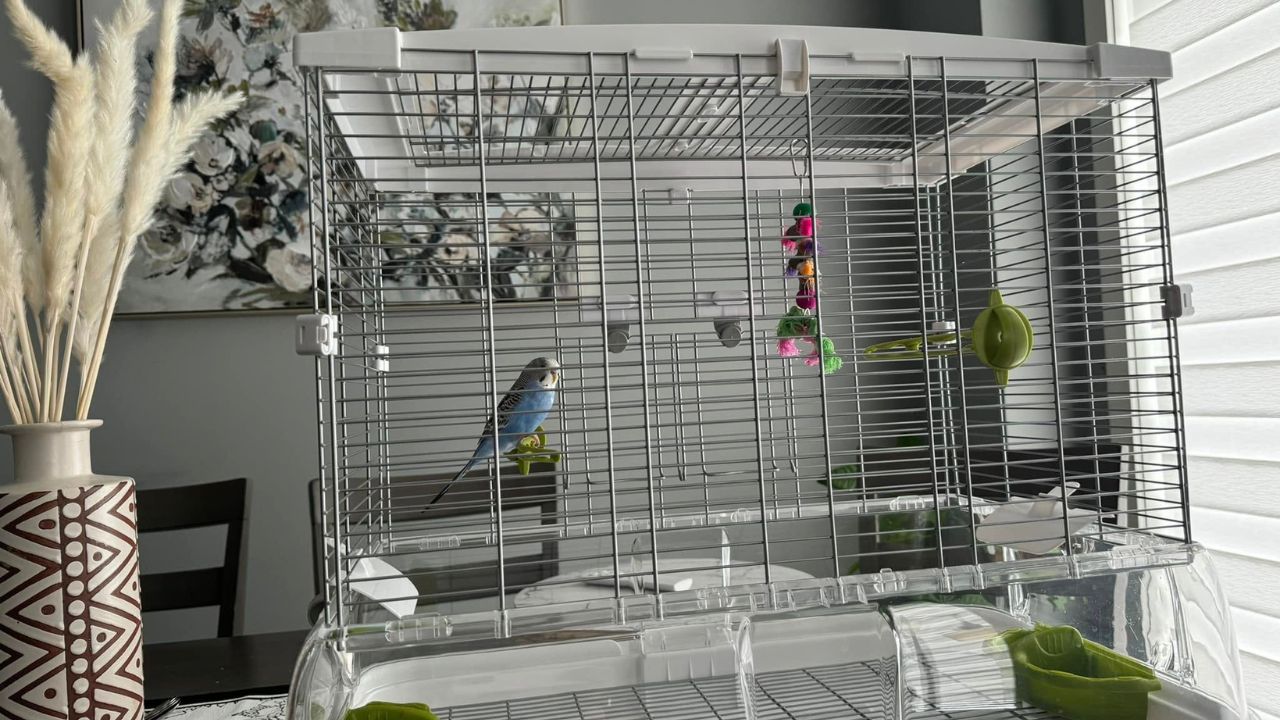

Neil has been keeping, breeding, and selling budgies at Paradise Pets Swindon since 1988 — over 35 years of visiting customers’ homes during follow-up conversations, having birds brought in for advice, and hearing descriptions of cage setups that produce a consistent and specific concern. Cage position is one of the most consequential welfare decisions a budgie owner makes, and one of the least discussed at point of sale. It is also one of the easiest to get wrong without ever realising it — and one of the easiest to fix once you know what to check. This article is the 30-second check, explained properly.
A man brought his budgie in last spring, worried because the bird had been unwell on and off for several months — recurring respiratory symptoms, a slightly fluffed posture that came and went, and what he described as a general quietness that had developed gradually and that he had been attributing to the bird getting older.
I asked him where in the house the cage was positioned.
Kitchen, he said. On the counter, near the window, because the bird seemed to enjoy watching what was going on and the family spent a lot of time there.
I asked whether he cooked with non-stick pans. He did. I asked whether the kitchen window was often open or whether there was any noticeable draught around the counter area. There was — the window let in a cold cross-draught when it was open, which it often was for ventilation.
The bird was living in a room with two of the most well-documented environmental hazards for cage birds — non-stick cookware fumes and chronic cold draught exposure — and nobody had ever told him that the kitchen was the one room in any UK home where a budgie’s cage should never go.
The 30-Second Check — Five Questions, Asked Now
Stand next to your budgie’s cage in its current position. Ask these questions in order. They take about 30 seconds to work through and cover the five most consequential positioning issues in UK cage bird keeping.
Question 1 — Is This Room A Kitchen?
If the answer is yes, the cage needs to move. This is the one answer that requires no further assessment — the kitchen is the room where a budgie’s cage should never be positioned, regardless of how convenient or pleasant the location seems.
- Non-stick cookware is the primary concern — polytetrafluoroethylene (PTFE), the coating used in non-stick pans, releases toxic fumes when overheated; birds have extremely sensitive respiratory systems and are acutely vulnerable to these fumes at concentrations that produce no detectable effect in humans; what a human would experience as a slightly smoky pan is sufficient to kill a budgie in the same room, sometimes within minutes
- This is not theoretical risk — PTFE toxicity in birds is a documented, frequently reported cause of sudden death in cage birds; it is called “Teflon toxicosis” in veterinary literature and it has a rapid onset and high mortality rate in small birds; the risk is not from the pan being in the same house, it is from the bird being in the same room when the pan is heated
- Other kitchen hazards compound the problem — cooking fumes generally, steam, variable temperature swings between cooking and non-cooking periods, cleaning product vapours, and open windows creating draughts all add to the kitchen’s unsuitability as a bird’s permanent environment
- What to do — move the cage to a different room today; if the family genuinely wants the bird near household activity, the living room provides this without the non-stick cookware risk; never return the cage to the kitchen even temporarily while cooking is happening
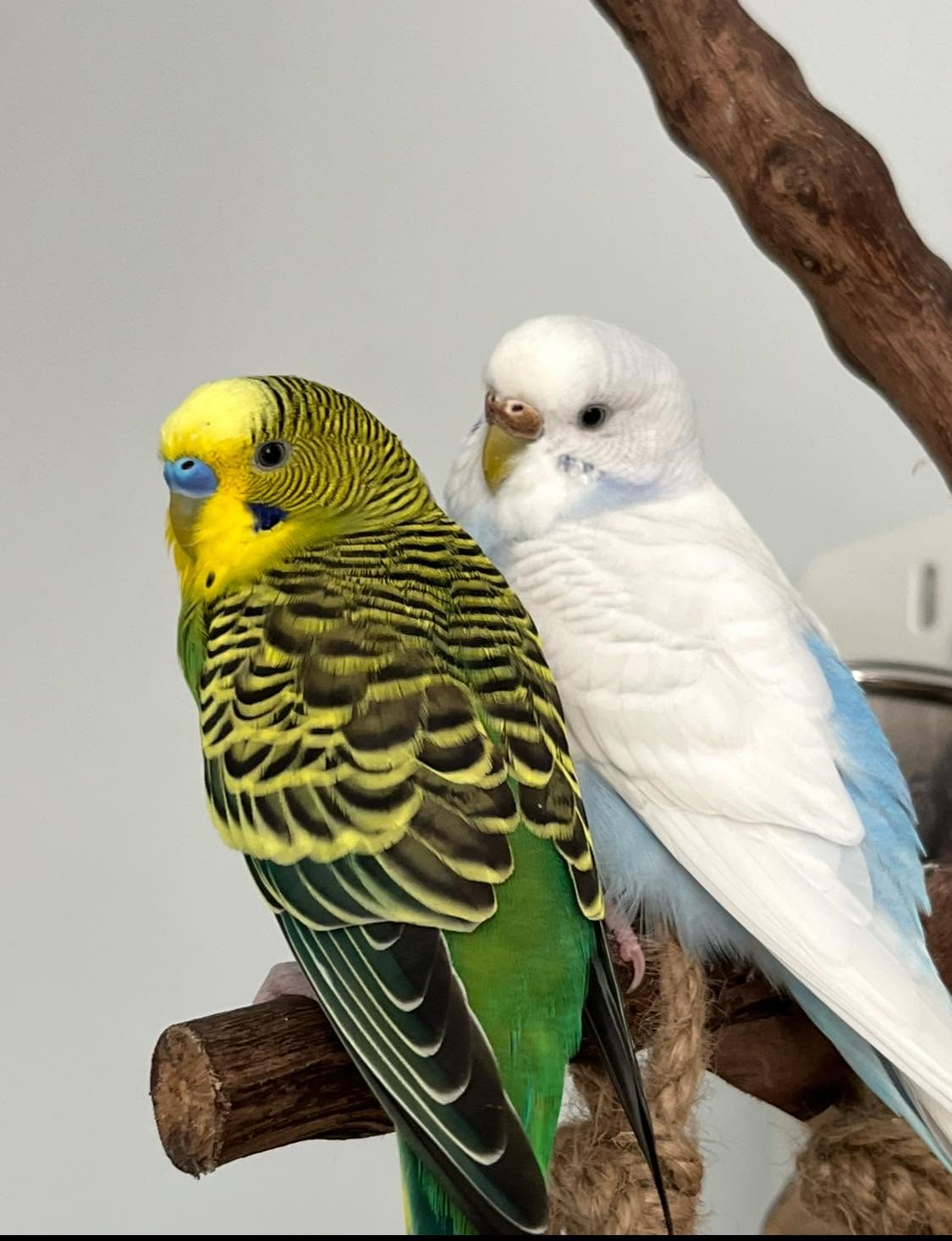
Question 2 — Can I Feel Any Air Movement When I Stand Here?
Place your hand near the cage — behind it, beside it, and between it and any nearby window or external door. Is there detectable air movement?
- Draughts are one of the most consistent chronic welfare problems in UK cage bird keeping — a budgie exposed to regular cold air movement, even mild and intermittent draughts, is a bird whose thermoregulatory system is under sustained low-level stress; over weeks and months this contributes to respiratory vulnerability, reduced immune competence, and the kind of gradual, hard-to-attribute decline that the man in my opening story was experiencing
- The draught problem is frequently invisible to the owner — a draught that a human does not notice because of body size and clothing insulation is fully experienced by a 35-gram bird sitting still on a perch; the threshold at which air movement becomes a welfare concern for a small bird is considerably lower than the threshold at which a human would consciously notice it
- Windows are the most common draught source — a cage positioned near a window that is sometimes open, even partially, is a cage regularly exposed to cold air movement that the owner may not register as significant; UK summer window ventilation is particularly deceptive — a window open for cooling during warm weather creates a draught that can chill a bird even in July
- External walls are the second most common draught source — particularly in older UK properties; a cage against an external wall may be experiencing cold from the wall surface itself as well as any infiltration draughts through window frames or gaps
- What to do — reposition the cage away from any window that is regularly opened; ensure there is at least one metre of clearance from any external wall; if the room itself is draughty, consider which walls are internal and ensure the cage is against one of those; check again after repositioning by holding your hand near the cage with windows in their normal positions
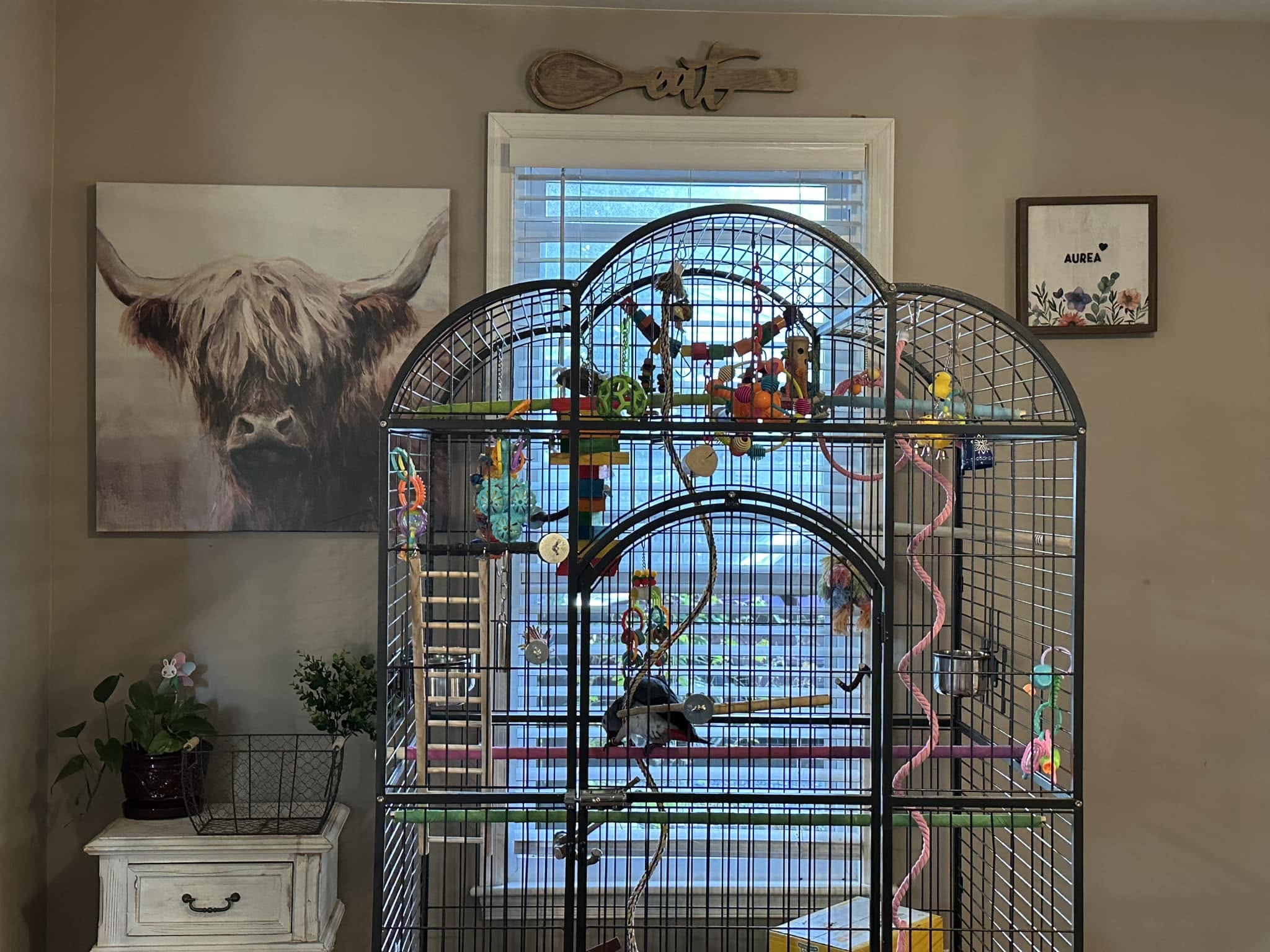
Question 3 — Does Direct Sunlight Reach This Cage During The Day?
Think through the sun’s movement across the room throughout the day. Does sunlight — not ambient daylight, but direct sun — fall on the cage or pass through the glass onto it at any point?
- Direct sunlight through glass heats a cage extremely rapidly — glass amplifies heat in a way that open outdoor sunlight does not, and a cage in direct sun through a window can reach dangerously high temperatures within thirty minutes even in UK summer conditions; a bird cannot leave a cage, which means it cannot escape an overheating environment the way a free animal would
- This is a specific July and August welfare concern right now — the combination of warmer UK summers and direct sun through south or west-facing windows creates temperature conditions in cage environments that simply did not occur with the same frequency in previous decades; a cage position that was adequate in a cooler climate may not be adequate in a July 2026 UK summer
- Partial sun is not the same as no sun — a cage that receives direct sun for two hours in the afternoon is a cage at risk during those two hours regardless of how comfortable the temperature is during the rest of the day; the question is whether the sun reaches the cage at any point, not whether the room is generally comfortable
- What to do — if direct sun reaches the cage at any point in the day, either reposition the cage or ensure there is a fixed shade barrier — a blind, a curtain, or furniture — that prevents direct sun reaching the cage without removing ambient daylight; the bird benefits from daylight but must be able to move out of direct sun
- The partial shade solution — a cage positioned so that part of it is in shadow even when the room receives direct sun gives the bird the option to move into shade; covering one side and the top of the cage with a lightweight cloth during the sunniest hours is an acceptable temporary measure if repositioning is not immediately possible
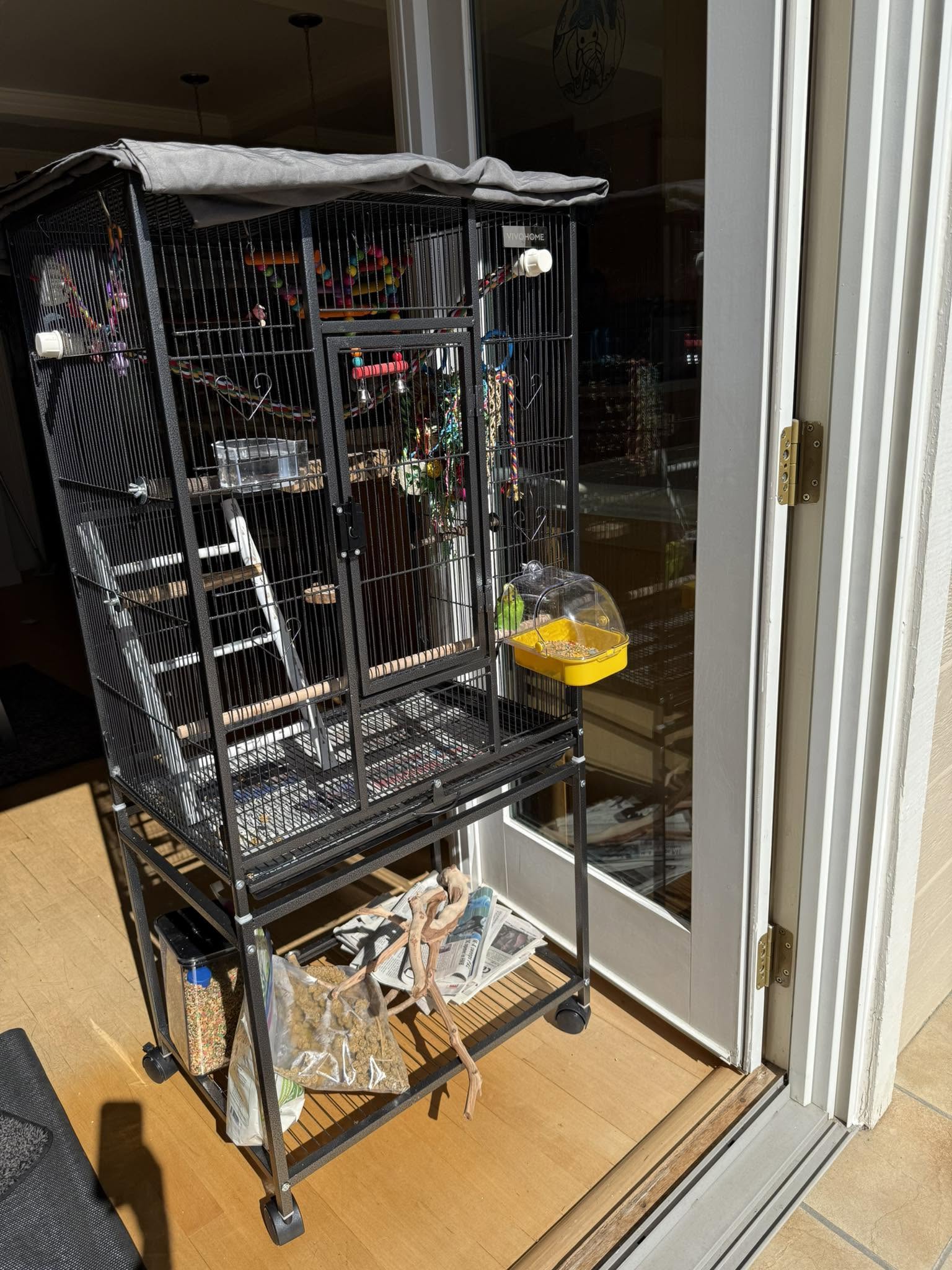
Question 4 — What Is Directly Adjacent To This Cage On Each Side?
Look at what is immediately beside, behind, and above the cage — not at the room generally, but at the specific items within a metre of the cage on each side.
- Television sets or speakers beside the cage — a television at normal viewing volume beside a cage is a sustained, unpredictable noise source that prevents the bird from habituating to a stable baseline sound environment; the occasional sudden volume change, the unpredictable nature of television audio, and the sustained exposure all contribute to chronic low-level stress; the bird may appear to tolerate it, but tolerance is not comfort
- Radiators or heat sources below or beside the cage — a cage positioned directly above a radiator is a cage subject to rising dry heat during heating periods that can produce dehydration and thermal stress; the temperature directly above a radiator is consistently higher than the ambient room temperature and changes significantly when the heating turns on and off
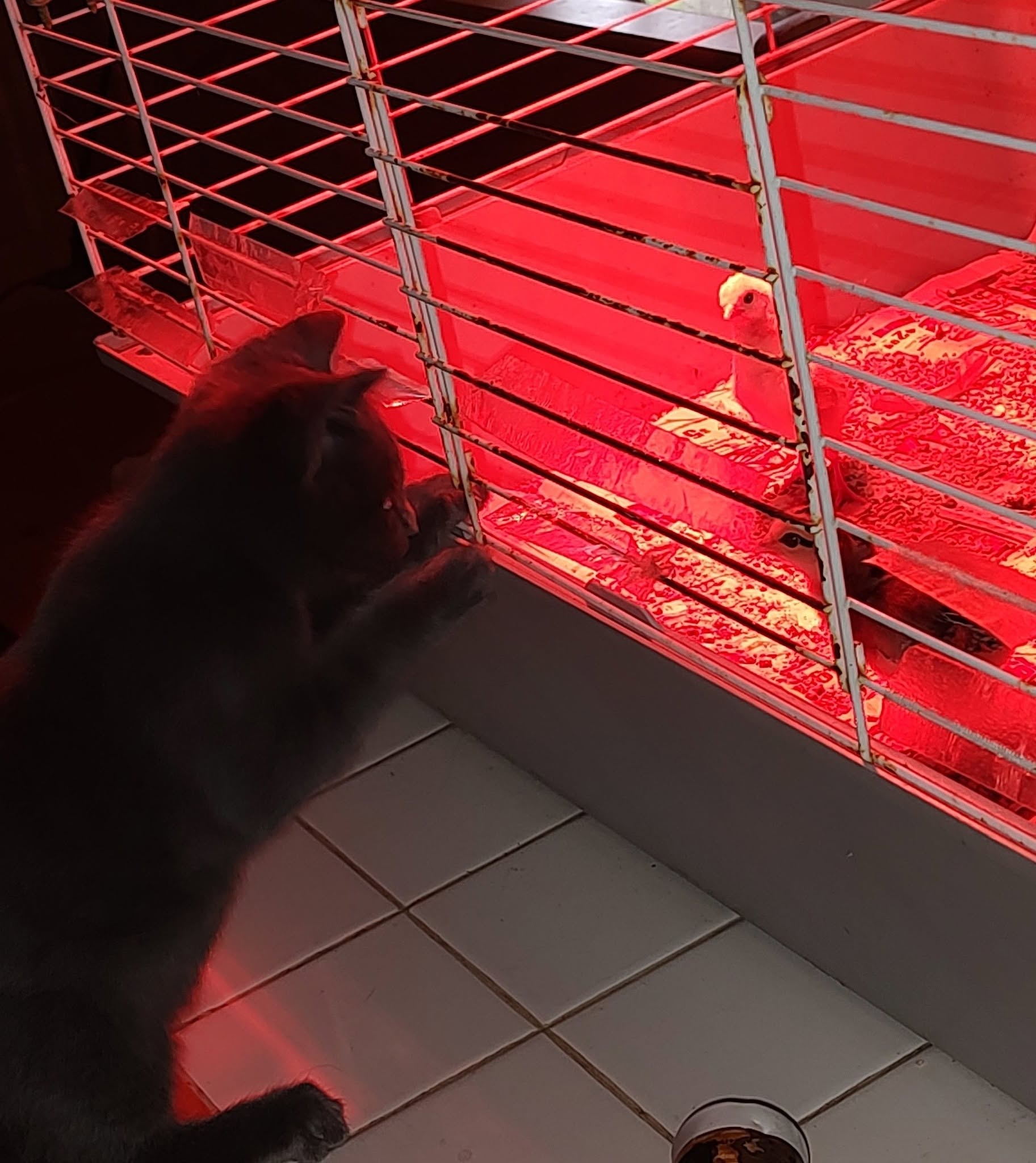
- Other pets with line-of-sight to the cage — a cat or dog with a consistent visual on the cage is a predator stimulus that keeps a prey animal in a state of sustained alert; a bird that can see a cat watching it from across the room is not at rest during those periods regardless of whether any actual contact is possible; position the cage so that cats and dogs cannot maintain a fixed visual on it
- Toxic plants within the cage’s environment or nearby — addressed in detail in our article on toxic houseplants; position the cage away from any plant that is on the toxic list, not simply outside the cage but out of the room
- What to do — establish at least a metre of clearance from any television or audio equipment; ensure no heat source is directly below or beside the cage; position the cage so that other household pets cannot see into it from their usual resting positions
Question 5 — What Height Is The Cage At, And Does The Bird Have A Clear View Of The Room?
Look at where the cage sits relative to the human eye level of the people who spend most time in the room.
- Cage height matters for the bird’s sense of security — in the wild, height provides safety; a bird positioned at floor level or significantly below human eye level is a bird positioned as if it were at ground level in its natural environment, which is where predators operate; this is not a trivial consideration for an animal whose entire evolutionary history has been shaped by predator avoidance
- Eye level or above is the appropriate height range — a cage positioned at or above the eye level of the people using the room regularly allows the bird to observe the environment from a position of relative safety; the bird that can see the room without being towered over by the humans in it is a more settled bird than one whose primary experience of humans is of large shapes looming above it
- Too high has its own problem — a cage positioned at the very top of a tall piece of furniture or on a very high shelf may be physically out of the normal interaction range, reducing the daily contact that taming and bonding require; the target is eye level or modestly above, not so high as to make normal interaction difficult
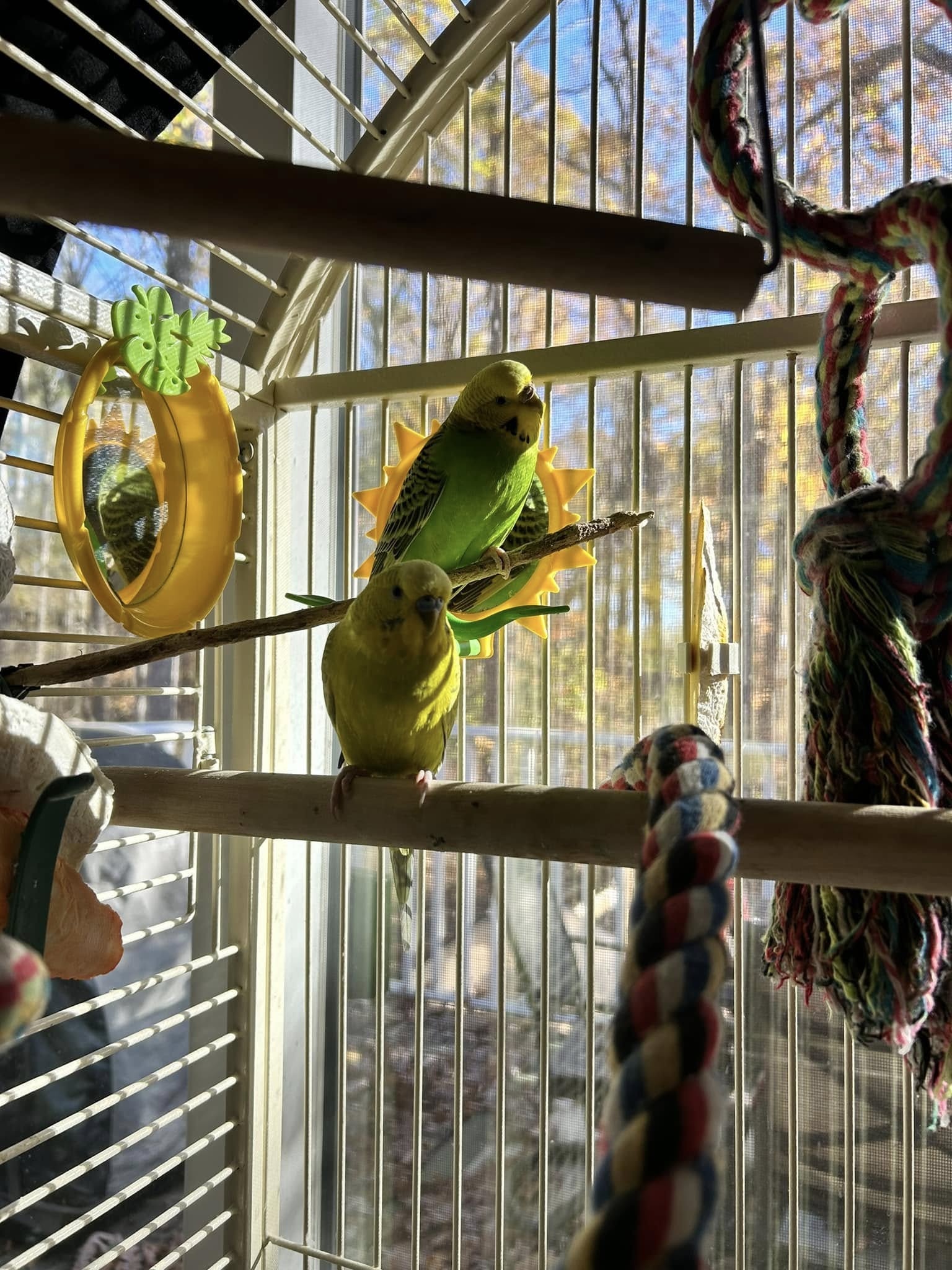
- A solid wall behind the cage on at least one side — a budgie that has a solid wall behind it has one side from which nothing can approach; this provides a sense of security that a cage positioned in open space in the centre of a room, visible from all sides, does not; against a wall with a clear view of the room from the front is the most settled configuration for most individual birds
The Common Wrong Positions — And Why They Are Wrong
| Position | Why It Is Wrong | What To Do |
|---|---|---|
| Kitchen counter or worktop | Non-stick cookware fumes; cooking vapours; temperature swings; cleaning product exposure | Move immediately to a different room — permanently |
| Beside or below an opening window | Regular cold draught exposure; temperature fluctuation; potential outdoor noise stress | Move at least a metre from any window that opens regularly |
| In direct afternoon sunlight through glass | Cage temperature rises rapidly; bird cannot escape; heat stress is dangerous particularly in summer | Reposition or create fixed shade barrier; partial shade allows bird to choose |
| Beside the television at normal viewing distance | Sustained unpredictable noise; volume changes; chronic low-level stress | Minimum one metre from television or audio equipment |
| At floor level or below waist height | Unnatural position from security perspective; humans tower over the bird; predator-position perception | Raise to eye level or modestly above on stable surface or dedicated stand |
| Where a cat or dog has sustained visual access | Predator stimulus maintains chronic alert state; bird does not fully rest; sustained stress | Reposition so other pets cannot maintain a fixed visual on the cage |
| Directly above a radiator | Rising dry heat during heating periods; temperature fluctuation when heating cycles; dehydration risk | Ensure cage is not directly above any heat source |
| In an isolated room with no household activity | Social species require ambient human presence; isolation in a quiet room is its own welfare problem | Position where normal household activity is audible and visible without being overwhelming |
The Right Position — What It Actually Looks Like
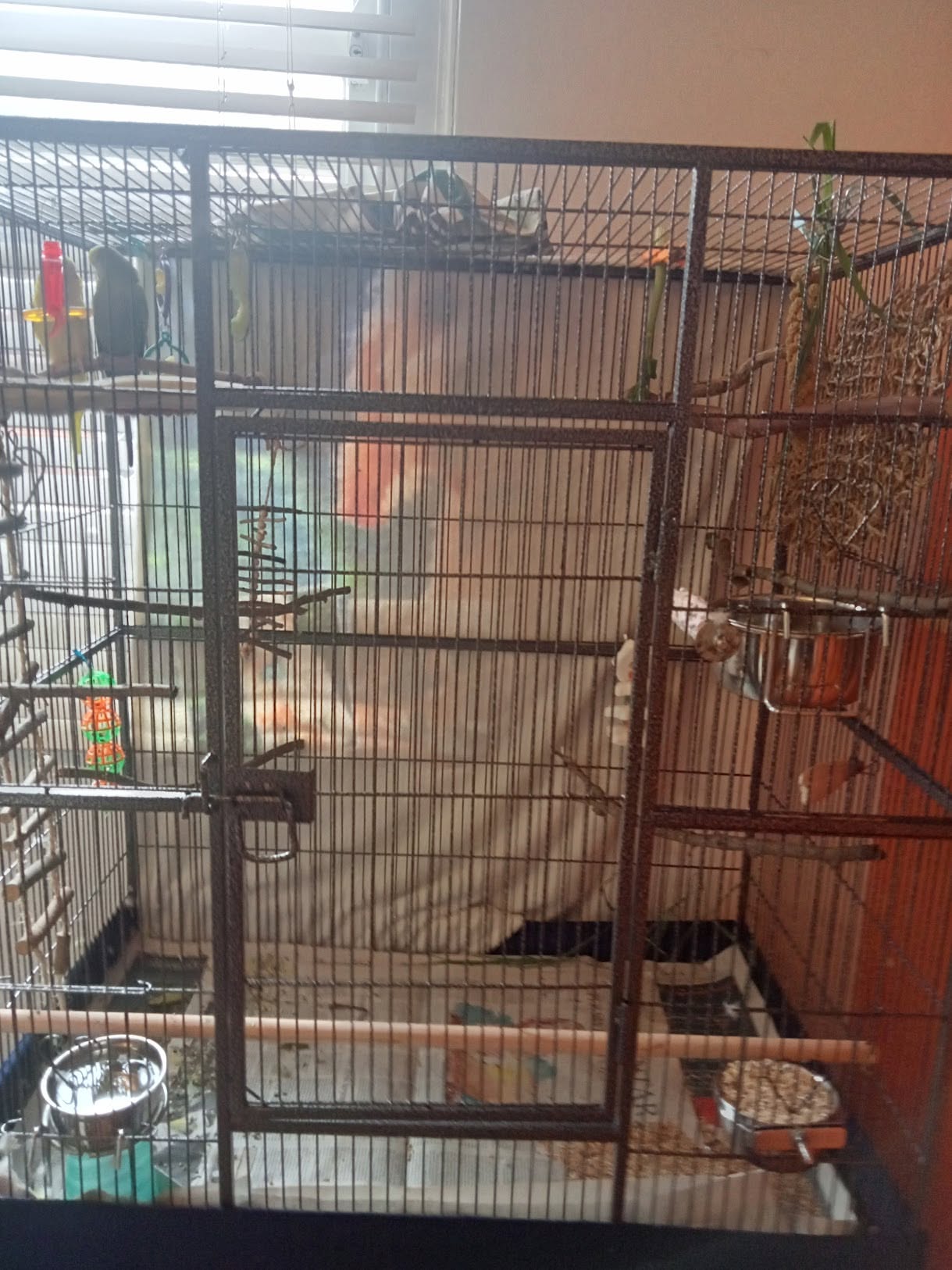
- A living area where the family spends regular time — the bird should be near normal household activity, able to observe and vocalise in response to the people it lives with, without being in the noisiest or most disrupted part of the home
- Against an internal wall, away from external walls and windows that open — internal walls are the most draught-free and temperature-stable surface in any UK home
- At or slightly above the eye level of the people most often in the room — stable, at the right height, with the back against a wall
- Away from direct sunlight with ambient daylight available — not in a dark corner, but not in the sun’s path through the window
- At least a metre from any television, speaker, or audio equipment
- Not directly above any heat source — radiator, floor heating, or similar
- In a position where cats and dogs cannot maintain a fixed visual on the cage from their usual resting spots
Frequently Asked Questions
Can I keep my budgie in the kitchen if I don’t use non-stick pans?
The non-stick cookware concern is the primary reason for the kitchen rule, and removing non-stick pans eliminates that specific risk. However, cooking fumes generally, steam, variable temperature swings, cleaning product vapours, and the draught typically associated with a kitchen window that is often open for ventilation all remain concerns. The kitchen is the most variable and potentially most hazardous environment in most UK homes for a cage bird, and other rooms provide a more stable, lower-risk environment. Removing non-stick pans reduces the acute risk but does not eliminate the structural unsuitability of the kitchen as a permanent cage environment.
My budgie seems happy in the kitchen and comes to the front of the cage when we cook. Does that mean it is fine?
A bird coming to the front of its cage when people are nearby is showing interest in activity, not confirming that the environment is appropriate. Birds cannot assess the air quality in their environment or identify a chronic low-level stressor as the cause of gradually declining health. The fact that a bird appears engaged and interested in its kitchen environment does not confirm that the kitchen is safe — it confirms that the bird is social and responsive to the presence of people it knows, which would be true in any location.
How far from a window does a cage need to be?
At least a metre from any window that is regularly opened, and positioned so that direct sunlight cannot fall on the cage during any part of the day. A cage near a window that is always closed and that does not receive direct sunlight is in a different situation from a cage beside an often-opened window in the sun’s path. Assess the specific window rather than applying a fixed rule to all windows; the relevant factors are whether it opens, whether it creates a draught when open, and whether direct sun reaches the cage through it.
My cage is on the floor because I have no furniture to put it on. Is this a problem?
Yes, and it is worth finding a solution. A cage at floor level positions the bird where it is approached from above by every person, cat, and dog in the household, which is the predator-approach direction for a prey species. A dedicated cage stand — which can be purchased inexpensively — raises the cage to an appropriate height without requiring furniture. This is not an aesthetic consideration, it is a genuine welfare one.
I live in a small flat with one main room. Is there any acceptable position for the cage?
Yes. In a single-room environment, the most important considerations are avoiding direct sun exposure, staying away from the cooking area and any non-stick cookware use, keeping a metre of clearance from any frequently opened window, and not positioning the cage directly adjacent to audio equipment. A position against an internal wall at eye level, away from the kitchen area and any windows you regularly open, with shade available during sunny periods, is achievable in most single-room homes. Come in or ring us and describe your specific layout — we can usually work out a workable solution.
How do I know if my budgie’s current cage position is affecting its health?
The signs of chronic environmental stress in a budgie are often gradual and easy to attribute to other causes — a slight increase in fluffed posture, intermittent quietness, occasional respiratory sounds, reduced vocalisation compared to the bird’s previous baseline. The problem is that these signs accumulate slowly enough that they are not alarming on any single day, and most owners attribute them to the bird getting older rather than to an environmental condition that has been building for months. If your bird has been showing any of these signs and you have not previously assessed the cage position against the questions in this article, doing the 30-second check is the most logical immediate next step.
Where can I get advice about my budgie’s cage position in Swindon?
Come in to Paradise Pets at Manor Garden Centre, Cheney Manor Industrial Estate, Swindon SN2 2QJ — or call us on 01793 512400. Describe your home layout, where the cage currently is, and what the adjacent rooms and surfaces are. We can work through the positioning questions with you and identify any changes worth making. The advice is always free.
One Last Thing From Me
The man with the budgie in the kitchen did two things after our conversation. He moved the cage to the living room, against an internal wall, away from the window and at eye level. And he replaced every non-stick pan in the kitchen with stainless steel — not because I told him to, but because he had understood clearly enough what the risk was that he did not want it in the house at all.
He came back about two months later. The recurring respiratory symptoms had resolved. The bird was, by his account, more vocal and more active than it had been in well over a year. The general quietness that he had been attributing to age had lifted.
“I’d had it in the kitchen for over two years,” he said. “I thought it liked being in there because of all the activity. I didn’t know to ask whether the position was right — I just put it where it seemed to work.”
That sentence describes the situation most budgie owners are in regarding cage positioning — not wrong because of carelessness, but wrong because of the absence of information that should have been part of the original conversation at point of purchase. The 30-second check exists to make that information available now, regardless of how long the cage has been where it is.
If you have not done this check, do it today. Stand next to the cage. Ask the five questions. Most of them will produce answers that reassure you the position is fine. Any that do not produce a reassuring answer are worth acting on before they produce consequences that are harder to reverse.
Unsure Whether Your Budgie’s Cage Is In The Right Position? Come And Talk To Us
Describe your layout and we will tell you honestly whether anything needs to change. Free advice, no obligation. That is how we have done things here for 35 years.