
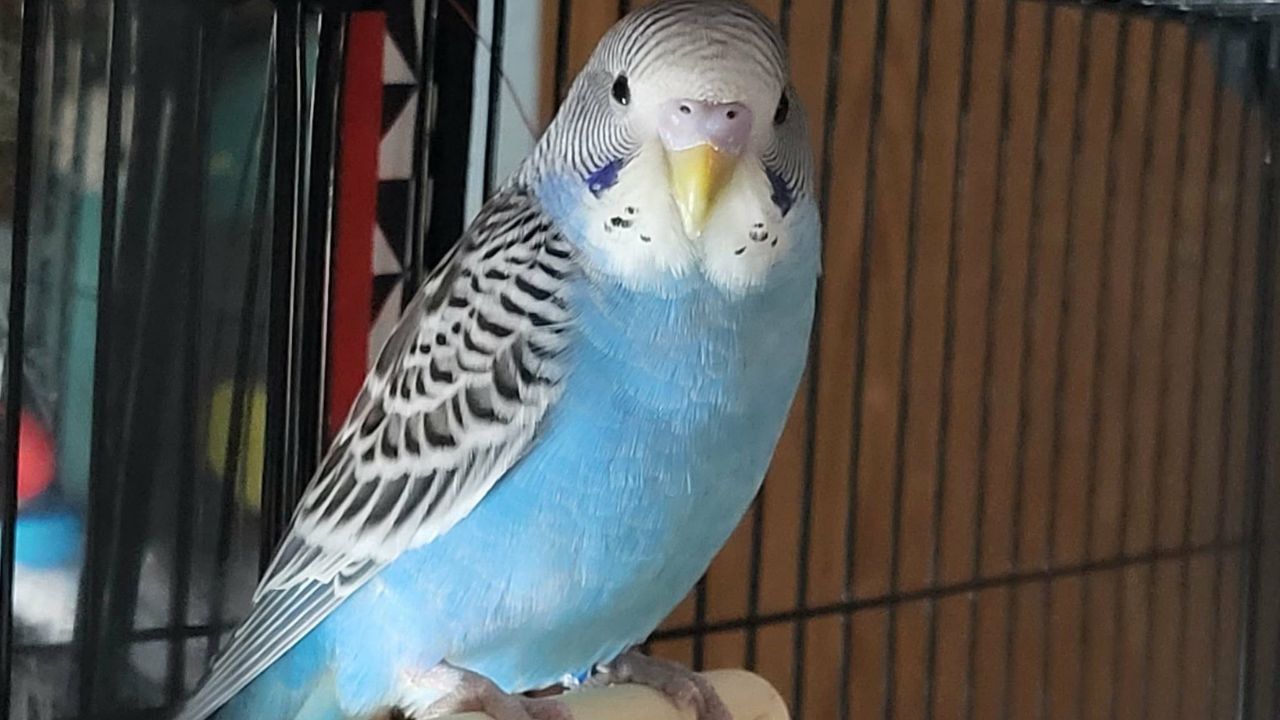

Neil has kept, bred, and sold cage birds at Paradise Pets Swindon since 1988 — over 35 years that have included some significant British summers. The late June 2026 heatwave produced record-breaking temperatures not seen in England since the 1970s, three consecutive Red Warnings for Extreme Heat, and overnight temperatures described by the Met Office as unprecedented. This article is what happened at this counter during and after that event — and what every pet bird owner in the UK should know about heat and birds that nobody is talking about.
The last week of June 2026 was not a normal British hot spell.
Three consecutive Red Warnings for Extreme Heat — the first time that has happened since the Red Warning category was introduced to the UK weather system in 2021. England recorded its warmest June on average since records began in 1884. Overnight temperatures that the Met Office described as unprecedented: 23.5 degrees at Cardiff Bute Park on the 25th, breaking the previous record for overnight June warmth by three and a half degrees. Not a normal British hot spell.
I have been working summers in Swindon since 1988. I know what a hot British week feels like, and what it tends to produce at this counter. The calls from rabbit owners, the questions about frozen water bottles, the customers asking whether their outdoor guinea pigs are all right. These things I expect.
What I also saw during those three days of Red Warning heat — and what I want to talk about plainly in this article — was something that does not tend to make the news coverage that focuses on dogs in cars and children in paddling pools. What happened to the cage birds.
Not dramatically, in most cases. Not in the ways that produce the kind of emergency that sends owners to a vet at speed. Quietly. In the way that cage birds experience heat stress before their owners recognise it — which is the same way cage birds experience most things that are wrong with them. Silently, gradually, and without the obvious distress signals that would prompt intervention if people knew what they were looking at.
What Actually Happened During the Heatwave — What I Saw
Let me be specific, because I think the specificity matters more than generalities.
During the peak heat days — the 24th, 25th and 26th of June, when the Red Warnings were in force and temperatures in parts of England were into the mid-thirties — I received a higher than usual number of calls and visits from owners describing birds that were not quite right. Not dramatically unwell. Quieter than normal. Less active. Not eating with the usual enthusiasm. Sitting in an unusual position. One owner described her cockatiel as looking “flat” — her word — in a way she could not be more specific about.
In almost every case, the first question I asked was the same: how warm was the room where the bird was during the day? The answers were all variations on the same theme. Warm. Very warm. The windows were open. The fan was on. But yes, in the afternoon when the sun was on the side of the house, quite hot.
“Quite hot” in an English house in late June 2026, with a Red Warning for Extreme Heat in force, means ambient temperatures that can reach 32 to 35 degrees or above in a south or west-facing room with good glazing. This is not the temperature of a hutch in direct sun — it is the temperature of a living room or kitchen in a normal British house during an exceptional heat event.
And 35 degrees inside a house is, for a budgerigar or cockatiel, genuinely hot. Not outdoor-hutch-in-direct-sun hot, which is where we most commonly talk about the bird overheating problem. But physiologically challenging in ways that produce the cluster of quiet signs I was hearing about. The reduced activity. The altered vocalisation. The bird sitting differently.
Why Birds Feel Heat Differently From How You Do
I want to explain the physiology here because it is not well understood and it changes how owners interpret what they are seeing during a heatwave.
A bird’s normal body temperature is significantly higher than a human’s. A budgerigar maintains a core body temperature of around 40 to 41 degrees Celsius — substantially above the human 37 degrees. This high baseline means that the range between normal temperature and dangerous temperature is narrower than it is for a mammal. When ambient temperature climbs toward that baseline, the bird’s ability to maintain the differential it needs to function normally is compromised faster than a human would be.
Birds have no sweat glands. They cannot sweat. Their primary mechanism for shedding excess heat is through respiration — breathing faster and in some cases through open-mouth panting to evaporate moisture from the airways. This is effective within a range, but it has limits. In very high ambient temperatures, particularly in humid conditions — and the June 2026 heatwave was notably humid, which is why overnight temperatures remained so high — the efficiency of respiratory cooling drops because the moisture gradient between the bird’s airways and the surrounding air reduces.
The result is a bird whose body is working harder than normal to manage its temperature, whose respiratory system is under strain, and whose energy is being directed away from normal activity and toward thermoregulation. This produces exactly the cluster of quiet signs that owners described to me: quieter, less active, altered posture, reduced interest in food.
The bird has not obviously overheated. It is not panting dramatically or lying on the cage floor. It is managing, at a cost. And that cost is being extracted from its reserves, its immune response, its normal behaviour — silently, without announcing itself to an owner who is sitting in the same warm room and feeling hot themselves but not connecting the bird’s altered state to the temperature.
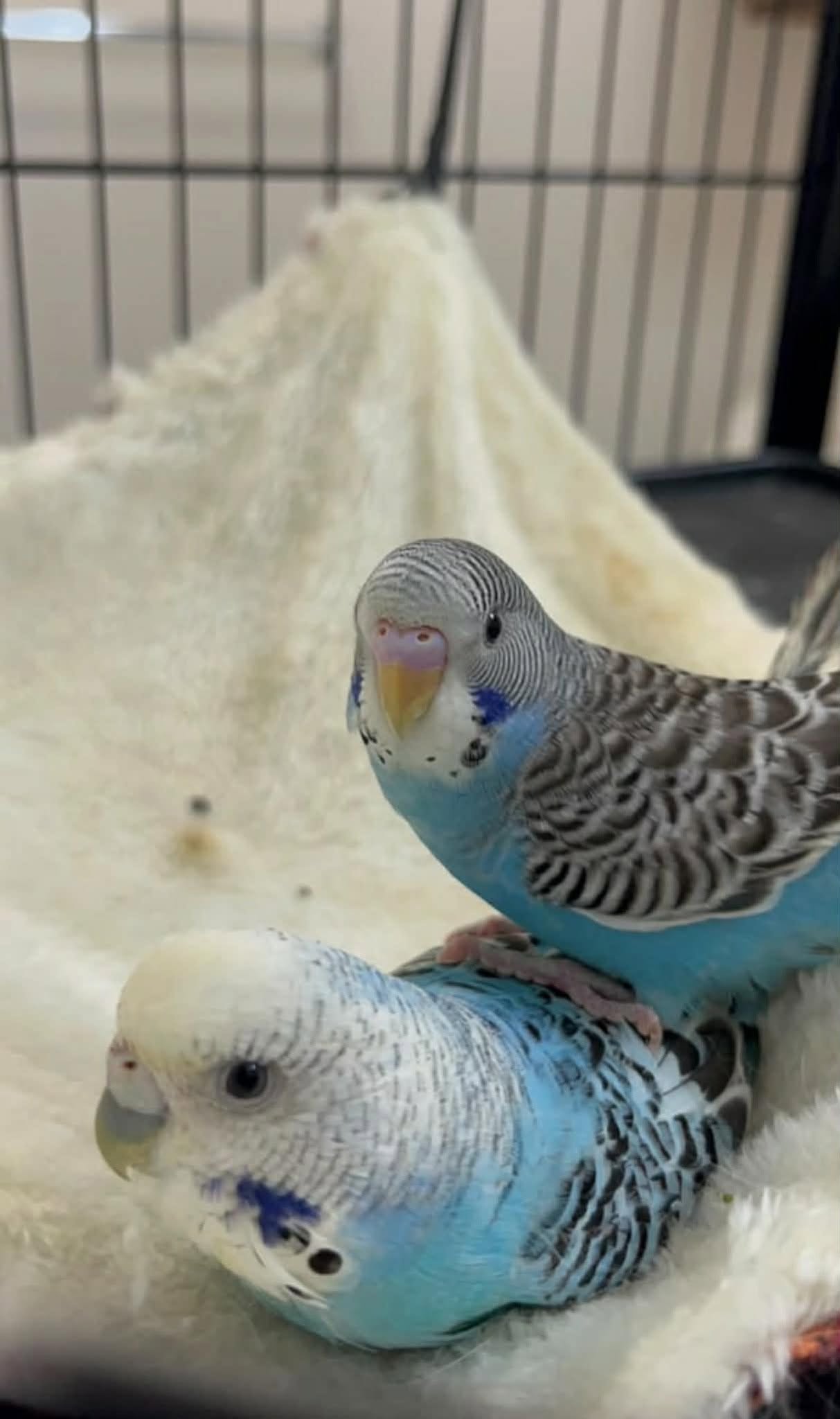
The Indoor Setting Myth — Why “Inside” Is Not Automatically Safe
This is the thing I want to say most clearly, because it is the assumption that prevented most owners from acting during the peak heat days: the belief that a bird inside the house is not affected by extreme outdoor heat in the way that an outdoor animal would be.
This belief is partially true and significantly wrong.
It is true that a bird inside a house during a heatwave is not exposed to direct solar radiation in the way that an outdoor animal is. The worst-case scenarios — a hutch in direct sun, a cage on an outdoor patio — are genuinely more dangerous than an indoor cage.
It is significantly wrong in the sense that the ambient temperature of a UK house during a prolonged extreme heat event is not cool. It is warm. And in rooms with good south or west-facing glazing, it can be hot. The house does not maintain the temperature it held before the heatwave began. It absorbs heat across the days of a sustained event. Overnight temperatures during the June 2026 heatwave — record-breaking, described as tropical nights, with 23.5 degrees recorded overnight in Wales — meant that the house had no opportunity to cool between the days of extreme heat. Each day began warmer than the previous one.
A bird that is in a cage in a room where the ambient temperature is 30 degrees is not in the same situation as a bird in an outdoor enclosure at 38 degrees. But it is not in a safe situation. It is in a situation where thermoregulation is under meaningful strain, where quiet heat stress signs are developing, and where the owner who is unaware of this is not acting to mitigate it.
The Signs Nobody Talked About — What Heat Stress Actually Looks Like in Cage Birds
I want to list these specifically because the heat stress coverage in the media during the June 2026 heatwave was almost entirely focused on dogs, outdoor pets, and vulnerable humans. The cage bird angle was entirely absent.
The early signs of heat stress in cage birds — the ones that appear before the dramatic signs that prompt emergency action — are easy to miss because they are quiet and because they overlap with signs that have other explanations.
Reduced vocalisation or complete quiet during periods when the bird is normally active. A budgie that chats through the morning and is silent during a heat-wave afternoon is not necessarily fine because it is quiet. It may be managing a temperature stress that is suppressing normal behaviour.
Altered posture — wings held slightly away from the body, not tucked. This is the bird’s attempt to increase the surface area available for heat dissipation. Many owners interpret this as the bird being relaxed or lounging. It is more often a thermoregulation posture.
Reduced interest in food. A bird that typically responds immediately to the cage being refreshed with food or treats and does not engage normally during a heat event is exhibiting reduced appetite from physiological stress. This is not the same as not being hungry because it is warm, which is a human response. In a bird, it is a stress signal.
Faster respiratory rate. Not dramatic panting — subtle increase in the rate of breathing that requires watching the bird for a moment to detect. The chest moves more quickly. If you are not looking for it, you will not see it.
The serious signs — open-mouth panting, lying on the cage floor, unresponsiveness, dramatic tail bobbing — are the signs that prompt emergency action. But they are not the beginning of heat stress. They are the stage at which heat stress has become critical and the bird has very little time. The quiet signs above are the earlier stage. They are the window when intervention is possible.
- Early stage — act today: Reduced vocalisation during active period. Wings slightly held away from body. Reduced food interest. Faster respiratory rate detectable on close watching. Altered resting posture.
- Moderate stage — act within hours: Clear wing-holding away from body in an attempt to cool. More obvious quietness. Visible increase in breathing rate without exertion. Fluffed feathers despite warmth (a sign of physiological stress, not cold-seeking).
- Serious stage — veterinary emergency: Open-mouth panting at rest. Bird on or near cage floor. Unresponsive or very slow to respond to normal stimulus. Visible tail bobbing with each breath. Unsteady on perch. Immediate action required.
- What to do at any stage: Move the bird to the coolest available room. Ensure ventilation without direct draughts on the bird. Offer fresh cool water. Do not use cold water, ice, or rapid cooling. Call a vet if the bird is in the moderate or serious stage.
What I Actually Told People During the Heatwave — And What Most Owners Should Have Done
When people called me during the peak heat days with birds that were showing the early signs I described, the advice I gave was consistent.
Move the bird to the coolest room in the house. Not into the garden, not into a car to go somewhere cooler. The coolest room in the house. Typically a north-facing room, a ground-floor room, or a room on the shaded side of the building that had not been in direct sun all day.
In that room, ensure ventilation. A fan positioned to move air through the room without pointing directly at the cage. Open windows on the cooler side of the house. The goal is air movement and avoidance of the still, humid air that accumulated in warmer rooms.
Offer fresh water frequently. Not ice water — cool, fresh tap water, changed more often than normal. A bird that is using respiratory moisture for cooling needs hydration. A warm water source is less effective than cool water but a cold water source can cause its own problems. Cool tap water is the appropriate temperature.
Observe the bird for changes. If the signs move from early to moderate, call a vet. If the bird reaches serious signs — floor, panting, unresponsive — this is a veterinary emergency.
For the birds I heard about during those three days, the outcomes were largely good. The owners caught the early signs, moved the birds, provided ventilation, and the birds recovered without drama. The quiet signs resolved once the conditions improved. This is how it should work — not because the birds were not stressed, but because the owners acted on early signs rather than waiting for the serious stage.
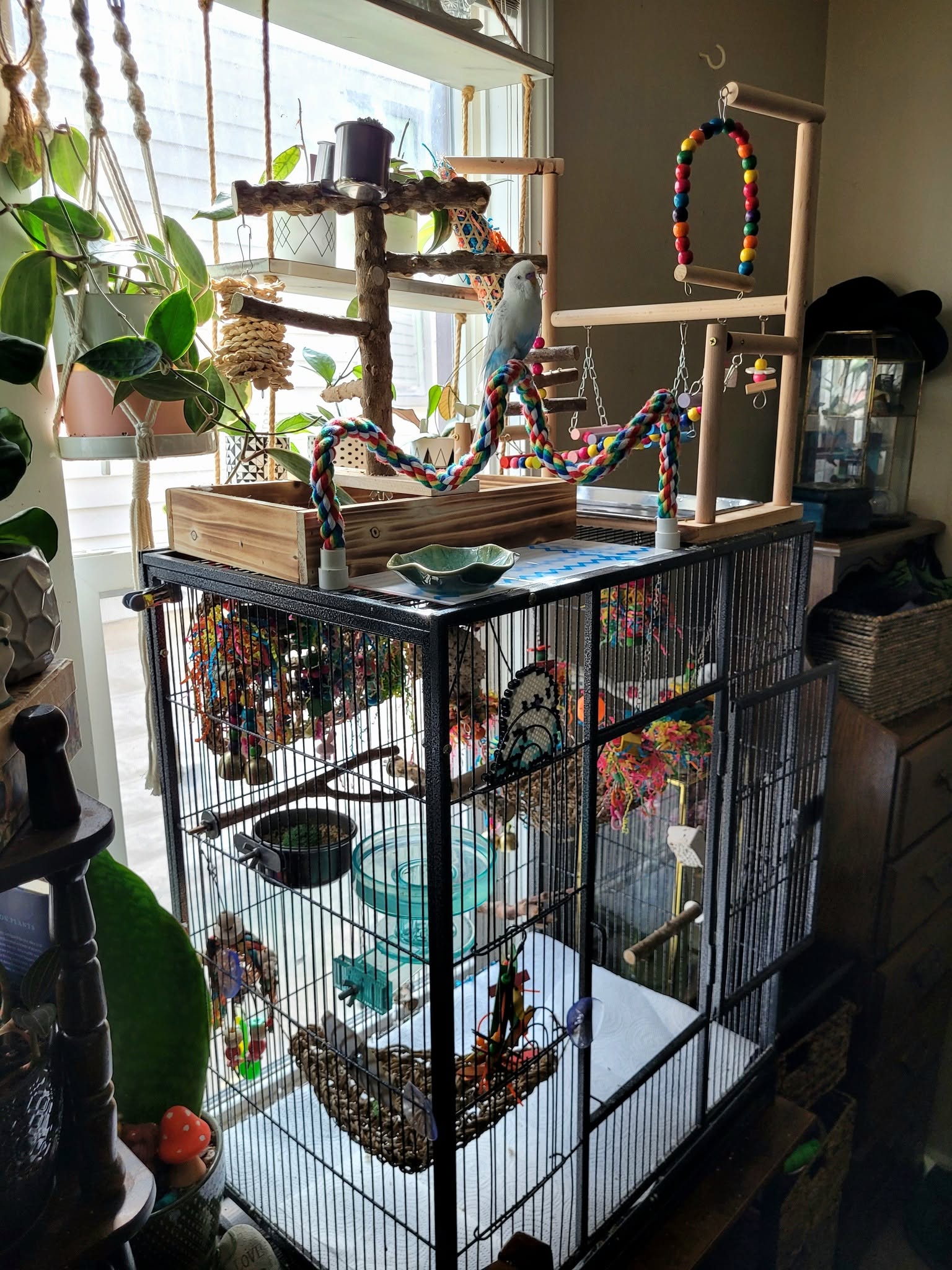
The Overnight Problem — The Part Nobody Expected
The June 2026 heatwave was remarkable not just for daytime temperatures but for overnight temperatures. The Met Office described them as unprecedented. The previous UK record for overnight June warmth was broken by a very significant margin. Welsh stations recorded overnight temperatures above 23 degrees.
This matters for pet birds in a specific and under-discussed way.
Birds — budgies, cockatiels, canaries and other cage birds — are naturally more active around dawn and dusk than during the middle of the day. This is the crepuscular pattern of many species, and in the domestic setting it produces the bird that is typically noisy and active in the morning, quieter during midday, and vocal again in the early evening.
In a heatwave, the evening active period coincides with the maximum accumulated heat in the house. The day’s solar gain has built through the afternoon and the house is at its warmest precisely when the bird would normally be at its most active. In a normal British warm spell, the house begins to cool significantly by evening as outdoor temperatures drop. In the June 2026 heatwave, this did not happen. Tropical nights — temperatures above 20 degrees overnight — meant that the house retained its daytime heat. There was no cooling window.
The bird that experienced 30 degrees or above in its environment for the afternoon and early evening, and then had no overnight temperature relief, began the next day in a house that had barely cooled. Three consecutive days of this produced a cumulative heat load that some birds experienced as sustained mild stress across the full duration of the event.
This is why, by the third day of Red Warnings, I was hearing about birds that had been quietly off for two or three days rather than suddenly affected. The cumulative effect of sustained heat — without the overnight relief that British summers usually provide between hot days — had accumulated.
The Fume Problem That Heat Makes Worse
I want to include this because it is almost never part of the summer bird welfare conversation and it should be.
Heat increases off-gassing from non-stick cookware.
The polytetrafluoroethylene (PTFE) coating on non-stick pans, baking sheets, and other coated cookware releases fumes at high cooking temperatures that are toxic to birds. This is documented, it is serious, and it kills birds every year in UK households where the owner was unaware of it. A single overheated non-stick pan can produce enough fumes to kill a budgie in the same room or a connected room within minutes.
During a heatwave, cooking temperatures needed to produce problematic fume levels are reached more easily — both because ambient kitchen temperatures mean the pan reaches dangerous temperatures faster and because hotter weather often means ventilation is less effective at clearing fumes from the kitchen.
If you have a bird and you use non-stick cookware, the kitchen should be inaccessible to the bird during cooking at all times, with good ventilation. During a heatwave, when people are opening windows and creating different airflow patterns through the house, the risk of fumes reaching adjacent rooms increases. Consider closing the door between the kitchen and the room where the bird is kept during cooking, regardless of how warm that makes the house.
- Non-stick cookware overheating: PTFE coatings on non-stick pans release toxic fumes at high temperatures. A bird in or near a kitchen where a non-stick pan has overheated can die within minutes.
- Why heat increases this risk: Higher ambient temperatures mean pans reach dangerous temperatures faster. Altered ventilation patterns during hot weather can carry fumes further through the house.
- Aerosol products: Air fresheners, cleaning sprays, scented candles, and plug-in diffusers used to make the hot house more comfortable can all produce airborne compounds harmful to birds.
- What to do: Keep birds out of the kitchen during any cooking. Close connecting doors during cooking in summer. Switch to stainless steel or cast iron cookware as a permanent solution. Remove plug-in diffusers and aerosols from rooms the bird accesses.
What the June 2026 Heatwave Should Change — The Specific Actions
Now that the peak heat event has passed, the appropriate response is not to wait for the next one and then react. It is to prepare now, while the recent experience is still fresh and before the summer heat events that are historically more common in July and August arrive.
Know the coolest room in your house and make it accessible for the bird during extreme heat. Not a room that needs to be cleared, not a room where the cage cannot fit. An identified, prepared location that can receive the bird immediately when outdoor temperatures enter the extreme range.
Buy a thermometer for the room where the bird normally lives. Not expensive. Not complicated. A simple room thermometer positioned where you can see it tells you what the bird is experiencing. A room at 29 degrees on a heatwave day is in a different category from a room at 23 degrees. Knowing which you have determines whether you act.
Know what the Met Office heat warning levels mean for birds specifically. A Yellow Warning for heat is a caution — monitor and check the bird more frequently. An Amber Warning is the point at which moving the bird to the coolest room is reasonable planning. A Red Warning for Extreme Heat is the point at which the bird’s environment needs active management and the question of whether it needs to move is answered: yes.
Have cool water available in quantity. Fresh water, changed frequently, is the simplest and most accessible heat mitigation tool available to an indoor bird owner. During extreme heat, change it two to three times a day rather than once.
Know the early signs. The section above describes them. The owner who recognises altered posture and wing-holding in a warm room on day one of a heatwave is the owner who moves the bird before the moderate or serious stage is reached.
The Heatwave Checklist — What to Do Before the Next One
| Action | When | Why It Matters |
|---|---|---|
| Identify the coolest room in the house | Now — before the next heat event | You need an identified destination, not a decision to make when the temperature is already 34 degrees |
| Buy a room thermometer for the bird’s normal location | Now | Knowing what temperature the bird is actually in is the difference between guessing and knowing when to act |
| Prepare a fan that can be positioned to move air without pointing at the cage | Now | Air movement is the primary indoor heat mitigation tool. Direct airflow at a bird is not appropriate — indirect room circulation is. |
| Review non-stick cookware in the house | Now — year-round, not just for heat events | Non-stick fume risk increases with ambient temperature. Consider switching to stainless steel or cast iron. |
| Check Met Office warnings and know what each level means for your bird | Throughout summer | Yellow — monitor more frequently. Amber — prepare to move bird. Red — active management required immediately. |
| Change water more frequently during hot spells | Any day forecast above 28 degrees | A bird using respiratory cooling loses moisture that needs replacing. Warm water is less effective than cool fresh water. |
| Watch for early heat stress signs during hot afternoons | Any day forecast above 28 degrees | Early-stage signs are subtle and reversible. Late-stage signs are an emergency. Catching them early is the entire strategy. |
| Move the bird if the room temperature reaches 30 degrees | During any heat event — this is the action threshold | Birds begin to experience meaningful thermoregulation challenge from around 28–30 degrees ambient. Above 30 in a closed indoor space, active management is appropriate. |
Frequently Asked Questions
How hot is too hot for a budgie or cockatiel indoors?
The exact threshold varies by individual bird, humidity, and the quality of ventilation in the space. As a practical guide: above 28 degrees Celsius in the bird’s environment, monitor closely for early heat stress signs. Above 30 degrees, active intervention is appropriate — move the bird to a cooler room or improve ventilation significantly. Above 35 degrees in a closed indoor space, this is a genuine emergency situation. The June 2026 Red Warning period saw temperatures in south-facing rooms reaching these levels in the afternoon, even in ordinary houses.
Can I put a fan directly on a bird to cool it down?
No. Direct airflow onto a bird can cause respiratory issues and is not appropriate. Position a fan to move air through the room and improve general circulation, without the airstream pointing directly at the cage. The goal is reducing the stagnant, heated ambient air around the cage — not blowing air at the bird directly.
My bird seemed fine during the heatwave — does that mean it wasn’t affected?
Not necessarily. Birds are prey animals that mask physiological stress effectively — a bird can be working harder than normal to manage its temperature without showing obvious distress. The early signs described in this article are subtle enough to miss entirely unless you are specifically looking for them. A bird that appeared fine during the heatwave may have been quietly managing a heat load that showed as slightly reduced activity or quietness rather than obvious distress. This is the more likely scenario than the bird being entirely unaffected.
Is it safe to have a bird in a south-facing room during UK summer?
South-facing rooms in UK houses can reach temperatures during heatwave conditions that are genuinely challenging for cage birds. The June 2026 event made this concrete — houses that were comfortable in normal summer weather accumulated heat over several consecutive days of extreme heat in ways that produced indoor temperatures significantly above what many owners expected. If your bird’s room is south or west-facing, having a plan for moving the bird during extreme heat events is practical preparation rather than excessive caution.
Non-stick cookware — should I be worried about this during summer?
Year-round, any cooking on non-stick cookware in a kitchen near a cage bird carries potential risk if the pan overheats. During summer, when ambient temperatures are higher and airflow patterns through the house are different, the risk of fumes reaching a bird in an adjacent room is somewhat increased. The simplest solution is closing the connecting door between kitchen and bird room during cooking, ensuring good kitchen ventilation, and considering a switch to stainless steel or cast iron cookware as a permanent arrangement.
Where can I get advice about keeping my bird safe in hot weather in Swindon?
Come and see us at Paradise Pets — Manor Garden Centre, Cheney Manor, Swindon SN2 2QJ. I am happy to talk through your specific setup and what the practical preparations are for your particular bird and home arrangement. Call 01793 512400 before visiting.
Summer Heat and Your Bird — Come and Talk Before the Next Red Warning
The June 2026 heatwave showed that extreme heat in UK homes is now a real and recurring risk for indoor cage birds. If you want to know what preparation makes sense for your specific bird and your specific home — come in before the next Red Warning, not during it. I will tell you honestly what the risks are and what the practical mitigations look like.