

Neil has kept, bred, and sold rabbits and guinea pigs at Paradise Pets Swindon since 1988 — over 35 years of watching UK summers become warmer and more unpredictable, and over 35 years of receiving distressed phone calls from owners who did not act early enough when the temperature rose. This checklist is what he tells every rabbit and guinea pig owner before the warm weather arrives.
It was a Tuesday afternoon in July, a few years ago. The temperature in Swindon had been above 30 degrees since midday.
A man came in fast. His two rabbits were outside in their hutch, he said. He had got home from work at half past four and they were both lying flat, not moving, barely responding. He had not thought about them when he left in the morning — the forecast had said warm, not hot, and the hutch was usually in shade by early afternoon.
The shade had arrived too late. The hutch had been in direct sun for most of the day.
I told him exactly what to do, in exactly what order, and I told him to call me when he got home. He called thirty minutes later. One rabbit had recovered. The other was at the emergency vet.
The one at the emergency vet did not make it home.
I tell that story because I tell it every summer to the owners who come in asking how to keep their animals cool, and because the animals that survive UK heatwaves are almost always the ones whose owners prepared before the temperature peaked — not the ones who started thinking about it when the animal was already flat on the hutch floor.
This checklist is what preparation looks like.
Why Rabbits and Guinea Pigs Are More Vulnerable Than Most Owners Realise
Before the checklist itself, understanding why these animals are vulnerable changes how seriously you take the preparation. Many owners compare their rabbit’s heat tolerance to a dog’s, or assume that because the animal lives outdoors it can tolerate outdoor temperatures. Both assumptions are wrong.
Rabbits and guinea pigs cannot sweat. Their primary heat dissipation mechanism is respiration — breathing faster to lose heat through airway moisture — and for rabbits, blood flow through the large vessels in the ears, which act as radiators in moderate heat. These mechanisms have significant limits. Once the ambient temperature exceeds those limits, or once humidity reduces the effectiveness of respiratory cooling, the animal’s core temperature begins to rise rapidly and there is no physiological override.
Dogs, by comparison, have more effective panting. They are also typically larger — a larger body has a better surface area to volume ratio for heat management. And they are different animals, adapted to different conditions.
Rabbits begin to show serious heat stress at ambient temperatures above 26 to 28 degrees Celsius. Guinea pigs — which originate from the cooler, drier mountain regions of South America, not the hot lowlands — are typically vulnerable at temperatures above 24 to 25 degrees Celsius. On a 30-degree UK summer day, a hutch or enclosure in direct sunlight can reach 40 degrees or more within an hour, regardless of what the thermometer reads in the shade.
The other factor that catches owners out is humidity. A humid day at 27 degrees is more dangerous for these animals than a dry day at 29 degrees, because high humidity reduces the effectiveness of respiratory cooling. UK summer weather — warm and humid — is particularly challenging for small mammals in outdoor enclosures.
Emergency Signs — Recognise Heatstroke Before It Becomes Fatal
- Rapid, laboured, or open-mouth breathing: The animal is in respiratory distress trying to cool itself — this is urgent
- Lying flat and unresponsive — unable or unwilling to move: Critical — the animal’s body temperature is already elevated significantly
- Very hot, reddened ears (rabbits): The ear vessels are engorged — the body is attempting maximum heat dissipation through the ears
- Drooling or wet fur around the mouth: Loss of normal motor control — significant heat stress
- Twitching, fitting, or loss of coordination: Neurological involvement — the animal needs emergency veterinary care immediately
- Glassy or unfocused eyes: The animal is not alert in the normal way — heat-related disorientation
- What to do: Move to cool area immediately. Cool gradually — not cold water. See the emergency response section below. Call a vet while you are doing this.
The Checklist — Before the Temperature Peaks
These are the actions to take when a warm spell is forecast, not when the temperature has already peaked. Acting the day before is dramatically more effective than acting in the afternoon of a 30-degree day.
1. Check the Position of Every Outdoor Enclosure
Walk around the garden at midday on a sunny day — not in the morning, and not looking at where the shade will be at four in the afternoon. Where is the sun falling at midday? Where will it fall between noon and two pm? This is the dangerous window, and it is the window that catches owners out most consistently — they put the hutch somewhere that seems shaded in the morning, and they leave for work before the sun has moved to the position that puts the hutch in direct exposure.
If any part of your rabbit or guinea pig’s enclosure is in direct sun between ten in the morning and four in the afternoon on a hot day, it needs to move. If moving it is not possible, covering it with a breathable shade cloth — not a towel, which traps heat — is an interim measure. But moving it is better.
2. Identify an Indoor Option
On days when the temperature is forecast above 26 degrees — or above 24 degrees for guinea pigs — the safest option is to bring the animals inside. Indoors, with windows open and some ventilation, is almost always cooler than an outdoor hutch in summer, and it removes the risk of direct sun exposure entirely.
This does not have to be a permanent arrangement. A large indoor run in a cool room, a utility room, a garage (provided it ventilates well and does not get hot), or a cool ground-floor room will serve as temporary heat refuge. Plan this in advance — have the space ready before the hot day arrives.
3. Water — More of It, Multiple Sources, Changed Frequently
Hydration is the first line of heat defence for any animal, and rabbits and guinea pigs in warm weather need significantly more water than they drink on a cool day. The problem with a single water bottle or bowl in heat is threefold: it warms up quickly in ambient heat; it may run out; and a single source in a shared enclosure can be monopolised by one animal.
In warm weather: provide two water sources minimum. Change the water more frequently — warm water is less palatable and less beneficial than cool water. In extreme heat, adding ice cubes to a water bowl keeps it cool longer. Check water sources at least three times during a hot day.
4. Frozen Bottles and Cooling Surfaces
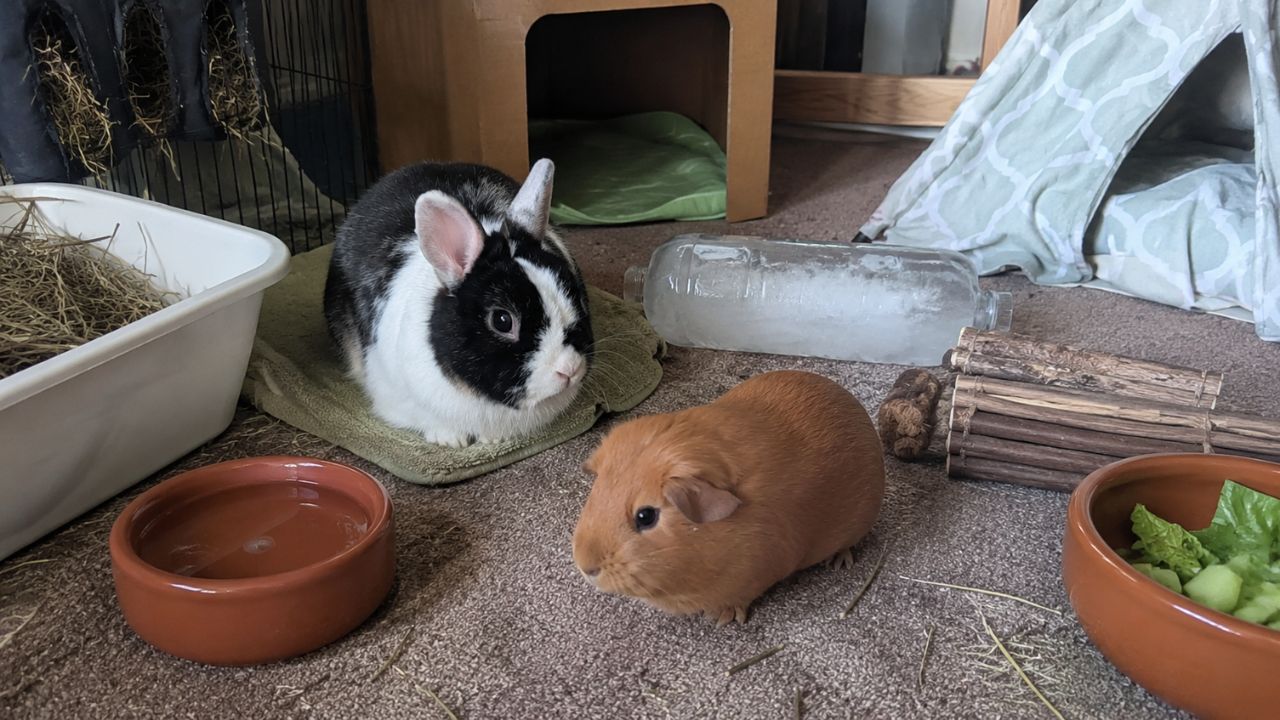
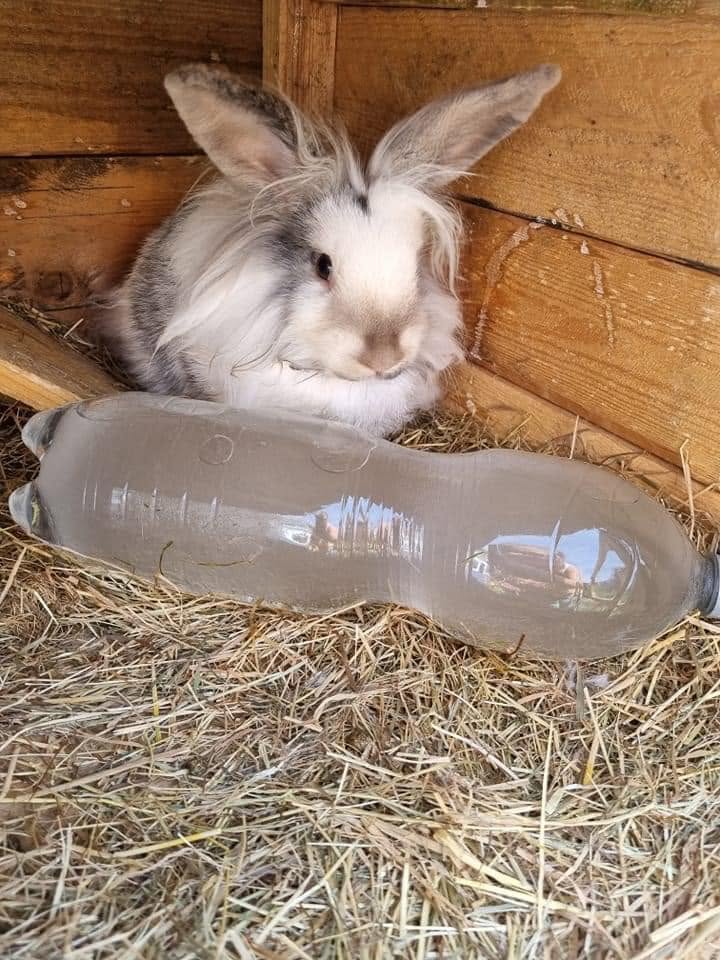
Freeze two-litre plastic bottles of water the night before a forecast hot day. Wrap them in a cloth or towel and place them in the enclosure. Rabbits and guinea pigs will choose to lie against the cool surface to dissipate body heat. This is one of the most effective and simplest cooling aids available, and it costs nothing beyond the freezer space.
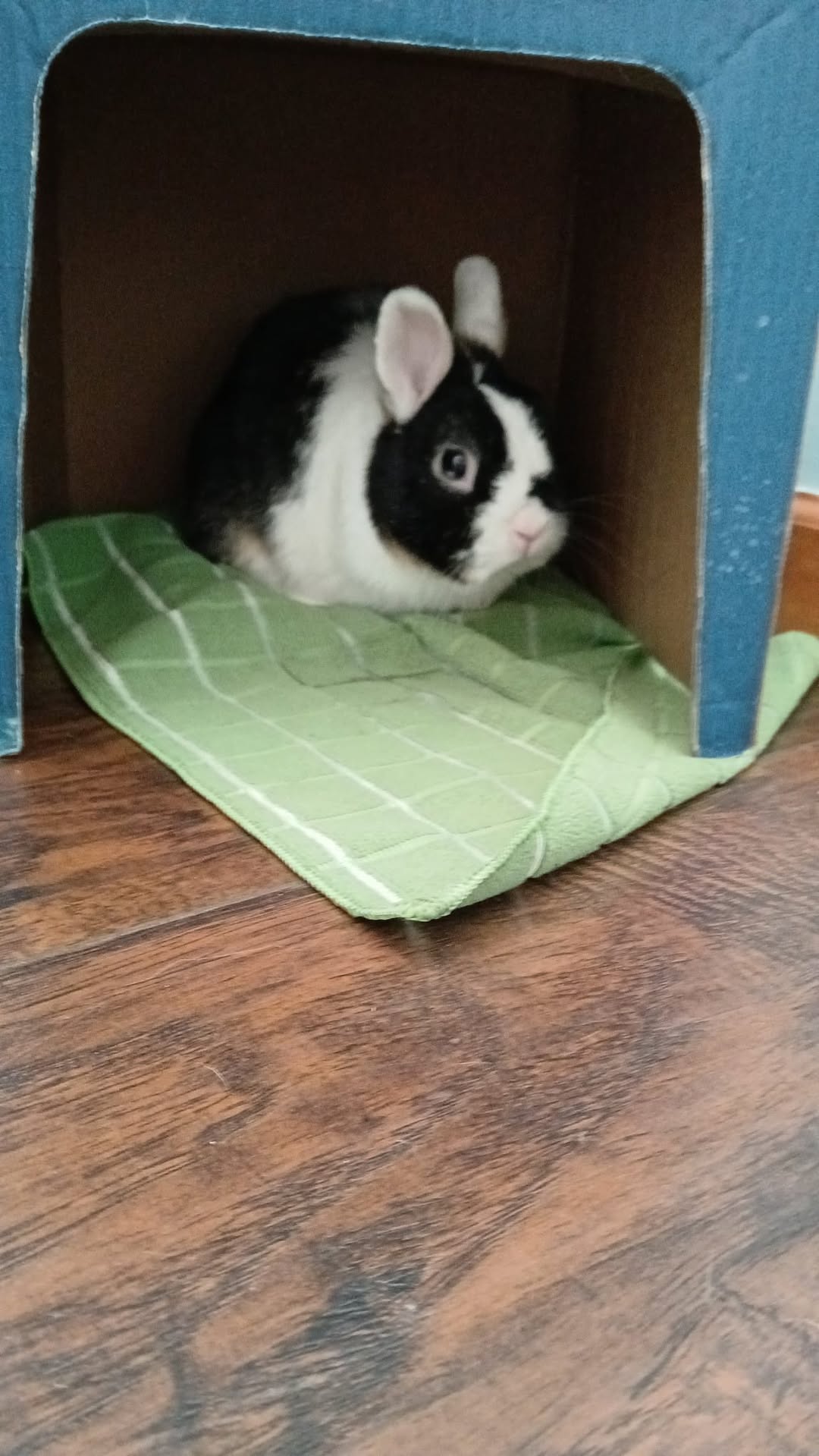
Ceramic floor tiles or marble tiles stored in the fridge overnight serve the same function — a cool flat surface for the animal to rest on. Place one or two in the enclosure before the temperature peaks. The cool surface will warm over the course of the day, so rotating chilled tiles or frozen bottles every few hours maintains the effect.
5. Ventilation — Always
Never close up a hutch or enclosure in an attempt to keep heat out. The belief that a sealed space will stay cooler is the opposite of how heat management works for a living animal. A sealed enclosure traps heat, moisture, and carbon dioxide. It will reach a higher temperature than an equivalent open space and will do so faster.
All ventilation points should be fully open during hot weather. If you are adding shade fabric over a hutch, ensure it is placed above the hutch rather than draping over the sides — you want shade without sealing the airflow.
6. Damp Towels and Gentle Misting — Correctly Used
Placing a damp towel flat on the floor of the enclosure gives the animal a cool, moist surface to rest on. This is useful and effective. Draping a damp towel over the top or sides of the enclosure is not — it traps heat and humidity inside and makes the interior more dangerous, not less.
A light misting of cool water over the enclosure exterior — not directly at the animal — can reduce the temperature of the metal or wood surfaces. Some owners use a misting fan positioned to direct a light breeze near the enclosure without blowing directly at the animal.
For rabbits specifically, dampening the ears gently with cool water helps because the ears are a primary heat exchange surface. Do not wet the body fur extensively — wet fur in a rabbit can trap heat against the skin rather than cooling it.
7. Diet Adjustments in Heat
Fresh leafy vegetables with high water content — cucumber, leafy greens, celery — provide both nutrition and hydration in hot weather. Offer these cool from the fridge, not warmed to room temperature.
Frozen herbs in ice cubes — small ice cubes made with water and a piece of mint or parsley — are both a cooling food and an enrichment item in hot weather.
Reduce or temporarily eliminate starchy or high-sugar foods during heat spells — these require more digestive energy and produce more metabolic heat. Fresh hay remains essential and should always be available.
Remove uneaten fresh food from the enclosure within two to three hours in hot weather — decomposition is faster and the resulting bacterial growth is a health risk at warm temperatures.
What Never to Do — The Mistakes That Cause Harm
- Never drape a wet or dry towel over the hutch: This traps heat and humidity inside the enclosure. The temperature inside will be higher, not lower.
- Never place an animal directly in cold water or an ice bath: Rapid cooling of a heat-stressed animal can cause cardiovascular shock. Cool gradually, not suddenly.
- Never leave animals in a car — not even briefly: A car in summer sun can reach lethal temperatures within minutes. There is no safe duration for an animal in a warm car.
- Never assume morning shade means afternoon shade: The sun moves. Check where direct sun falls at midday and two in the afternoon specifically.
- Never leave without checking the forecast and the hutch position: Forecasts can underestimate temperatures. If there is any possibility the enclosure will be in direct sun during the day, move it before you leave.
- Never wait for visible heatstroke signs before acting: By the time the animal is flat and unresponsive, it is already critically ill. Prevention during forecast heat is the only reliable strategy.
- Never trust a shaded position from a previous year: Trees grow, structures change, seasons affect shadow patterns. Verify the position works before relying on it in a new heat event.
The Outdoor Hutch Problem — Honest Assessment
I want to say something directly about outdoor hutches, because I think honest advice requires it.
The standard wooden hutch sold for rabbits and guinea pigs in UK pet shops — designed in a period when UK summers were reliably cooler — is not well adapted to the temperatures that UK heatwaves now produce. Wood retains heat. An enclosed wooden hutch in direct sun functions more like an oven than a shelter, and the small ventilation points provided by mesh doors are not sufficient to offset the heat gain from solar radiation on the wooden surfaces.
This does not mean outdoor keeping is impossible or wrong. It means outdoor keeping in UK summers requires active management that the basic hutch design does not provide. Permanent shade structures, large outdoor runs that allow genuine ventilation and access to ground-level cool, and the ability to bring animals inside during genuine heatwaves are all part of what responsible outdoor rabbit and guinea pig keeping now requires.
If your outdoor setup cannot be adequately shaded during a heatwave, or if you cannot access the animals during the day to move them, add cooling aids, and check on them — that is a genuine welfare limitation that is worth addressing before the next hot summer arrives, not after.

Emergency Response — If You Suspect Heatstroke
If an animal is showing the signs I described at the beginning of this guide — flat, unresponsive, rapid or laboured breathing, reddened ears, fitting — this is a veterinary emergency. Call the vet while you are doing the following.
Move the animal immediately to the coolest available space indoors. Do not wait to assess the situation. Get it inside.
Cool it gradually. Dampen the ears and feet with cool — not cold — water. Do not submerge the animal. Do not use ice water. Cool, damp cloths on the ear area, feet, and the underside of the body are appropriate. The goal is gradual reduction of body temperature, not shock cooling.
Encourage drinking if the animal is conscious and able to swallow safely. A few drops of cool water from a syringe, touching the lips, can help — do not attempt to make an unresponsive animal drink.
Keep the animal calm and in the cool space while you transport it to the vet. Heatstroke in rabbits and guinea pigs requires veterinary assessment and treatment even if the animal appears to recover — internal organ stress from heat can have consequences that are not immediately visible.
The Complete Heatwave Checklist — Quick Reference
| Action | When to Do It | Priority |
|---|---|---|
| Check enclosure position for midday/afternoon direct sun | Day before forecast heat event | Essential — first action |
| Move enclosure to shade or bring animals indoors | Before temperature peaks, ideally morning of hot day | Essential — above 26°C for rabbits, 24°C for guinea pigs |
| Freeze water bottles for enclosure cooling | Night before — 2-litre bottles, wrapped in cloth | High |
| Chill ceramic tiles for cool resting surfaces | Night before in fridge | High |
| Provide two water sources, refreshed with cool water | Morning of hot day, repeated through the day | Essential |
| Place damp towel flat in enclosure (not over it) | Morning of hot day | Useful |
| Ensure all ventilation points fully open | Ongoing throughout hot weather | Essential — never close up the hutch |
| Offer fresh leafy greens with high water content from fridge | Two or three times through the day | Useful |
| Check the animals physically at midday | Noon on hot days — this is when problems develop | Essential if outdoor |
| Replace frozen bottles/tiles as they warm | Every 3–4 hours on a very hot day | High |
| Know the nearest emergency vet’s number in advance | Before the hot season starts | Preparation essential |
The Rule I Give Every Rabbit and Guinea Pig Owner Before Summer
Do the preparation before the first hot day, not during it.
Check the enclosure position in May. Identify the indoor option. Buy the cooling tiles. Establish the routine of checking the water multiple times on warm days. Know where the nearest emergency vet is and have their number in your phone.
None of this is difficult. None of it is expensive. All of it is dramatically easier to do in April when the temperature is fifteen degrees than in July when it is thirty-two and the animal is already in difficulty.
The animals that survive UK heatwaves are not the lucky ones. They are the ones whose owners planned ahead. Every year I see the evidence of both — the owners who come in in May asking for cooling tips, and the owners who call me in July from the driveway because they cannot move their rabbit.
The difference between those two situations is preparation, and preparation costs nothing except a small amount of attention paid at the right time.
Frequently Asked Questions
At what temperature do rabbits and guinea pigs overheat?
Rabbits begin to show heat stress at ambient temperatures above approximately 26 to 28 degrees Celsius. Guinea pigs are more sensitive and can show signs of heat stress from around 24 to 25 degrees. These thresholds apply to ambient shade temperature — a hutch in direct sun can be ten to fifteen degrees higher than the shade temperature, making a 25-degree day genuinely dangerous for animals in an unshaded outdoor enclosure. These are approximate thresholds; individual animals, particularly young, elderly, or overweight animals, may be affected at lower temperatures.
My rabbit is flat and unresponsive — is this heatstroke?
If it is a warm day and the animal has been in or near direct sun, treat this as heatstroke until proven otherwise. Move the animal to a cool indoor space immediately, dampen the ears and feet with cool (not cold) water, and call a vet while you are doing this. Do not wait to assess whether it might be something else. If it is heatstroke, speed matters critically. If it turns out to be something else, no harm has been done by moving the animal to a cool space.
Can I put my rabbit or guinea pig in cold water to cool them down?
No — and this is one of the most important things to get right in an emergency. Rapid immersion in cold water can cause cardiovascular shock in a heat-stressed animal and can make the situation significantly worse. Cool the animal gradually: cool damp cloths on the ear area and feet, a cool (not cold) damp surface to rest on, a move to an air-conditioned or fan-cooled indoor space. The goal is gradual reduction of body temperature, not sudden shock cooling.
Should I bring my rabbit or guinea pig inside during a heatwave?
Yes — this is the most reliable intervention available. An indoor space, even a warm house, is almost always cooler than an outdoor hutch in direct summer sun, and it removes the risk of solar heat gain entirely. On days forecast above 26 degrees for rabbits or 24 degrees for guinea pigs, bringing animals inside for the hottest part of the day — typically ten am to four pm — is the safest approach. A cool room, a utility room, or a well-ventilated ground-floor space with cooling aids will serve well.
What can I freeze to help keep my rabbit cool?
Two-litre plastic bottles filled with water, frozen overnight and wrapped in a cloth before placing in the enclosure, are the most practical and cost-effective option. Ceramic or marble tiles chilled in the fridge overnight provide a cool resting surface. Small frozen treats — herbs frozen in ice cubes — can be offered in very small amounts. Do not offer large amounts of frozen food — digestive disruption in heat is a secondary risk.
Where can I buy cooling products for rabbits and guinea pigs in Swindon?
Come and see us at Paradise Pets — Manor Garden Centre, Cheney Manor, Swindon SN2 2QJ. We stock a range of products appropriate for hot weather small animal care, and I am happy to talk through your specific enclosure setup and what will work best. Call 01793 512400 before visiting.
Getting Ready for a UK Heatwave? Come and Talk Before It Arrives
If you want to review your rabbit or guinea pig’s setup before the hot weather comes — come in. I will give you an honest assessment of whether your current outdoor arrangement is adequate and what practical changes will make a real difference. This is not a conversation to have when the temperature is already 30 degrees.