
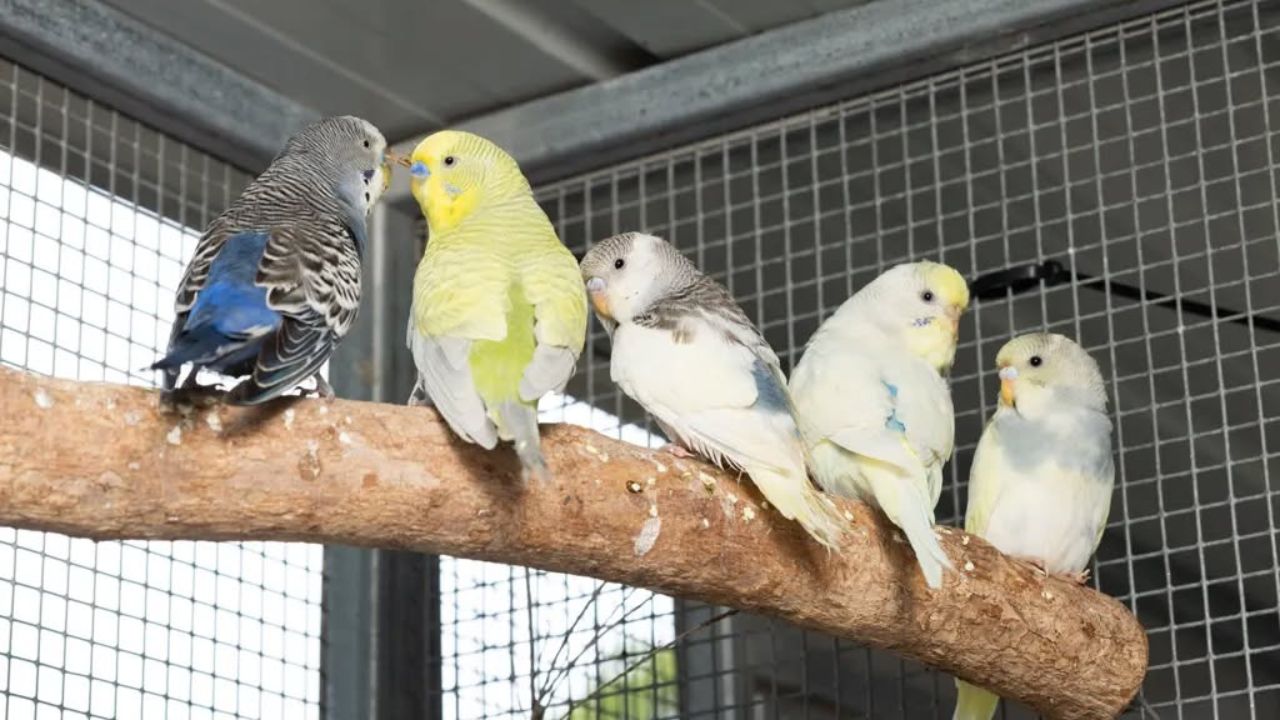

Neil has run Paradise Pets Swindon since 1988 — over 35 years at the intersection of the budgerigar trade and budgerigar welfare. There are approximately one million budgerigars kept in UK homes in 2026. They are the most popular exotic pet in the country. They are also, in his honest assessment based on 35 years of evidence, kept incorrectly in a majority of cases — not because their owners do not care, but because the trade that sold them the bird consistently failed to tell them what keeping it correctly actually means. This is the audit he has been wanting to write for some time.
I want to say something in public that I have been saying privately, at this counter, for most of my career.
The budgerigar is the most popular exotic pet in the United Kingdom. It is also the exotic pet that is most consistently let down by the combination of how it is sold, how it is housed, and how it is fed — not in every case, and not by every seller, but across the trade as a whole, in patterns that are so consistent over so many years that they cannot be explained by individual ignorance or individual carelessness. They are systemic. And they have consequences for approximately one million birds living in UK homes right now.
I run a pet shop. I sell budgerigars. I am part of the trade I am criticising, and I want to be clear about that before I say anything else. What I am describing in this article is a set of failures that the trade — including shops like mine, in the years before I made the decision to do things differently — has participated in. I am not writing from the outside looking in. I am writing from the inside, with 35 years of watching what the systemic failures produce in individual birds, and I think it is time somebody said it plainly.
The Scale Of What We Are Talking About
One million budgerigars in UK homes is a number that deserves to sit still for a moment before we move past it.
A million individual animals. Each one alive, social, intelligent in the way that parrots — which budgerigars are — are intelligent. Each one with a specific lifespan potential of eight to twelve years if kept correctly. Each one in a home where someone decided, at some point, that keeping this animal was something they wanted to do and were prepared to take responsibility for.
The PDSA’s Pet Health Inequality Report, published in April 2026, found that over one in five UK pet owners say pet ownership has been more expensive than they expected. One in ten have cut back on their own food or heating to afford pet care. These are people who take their responsibilities seriously. They are making genuine sacrifices for their animals. The failures I am going to describe in this article are not the failures of people who do not care. They are the failures of a system that sold people a bird without giving them the information they needed to keep it correctly — and then sold them the wrong cage, the wrong food, and a set of assumptions about what budgie care involves that the evidence does not support.
The PDSA PAW Report has been tracking pet welfare in the UK since 2011. Its consistent finding, across more than a decade of nationally representative surveys, is that millions of UK pets are not having their welfare needs appropriately met. Budgerigars are not the primary focus of the PAW Report, which concentrates on dogs, cats, and rabbits. But the welfare gaps it identifies in those species — inadequate housing, poor nutrition, insufficient veterinary care, misunderstanding of basic behavioural needs — map directly onto what I observe in the budgerigars presented at this counter, year after year, by owners who had no idea their bird was not thriving.

Failure One — The Cage
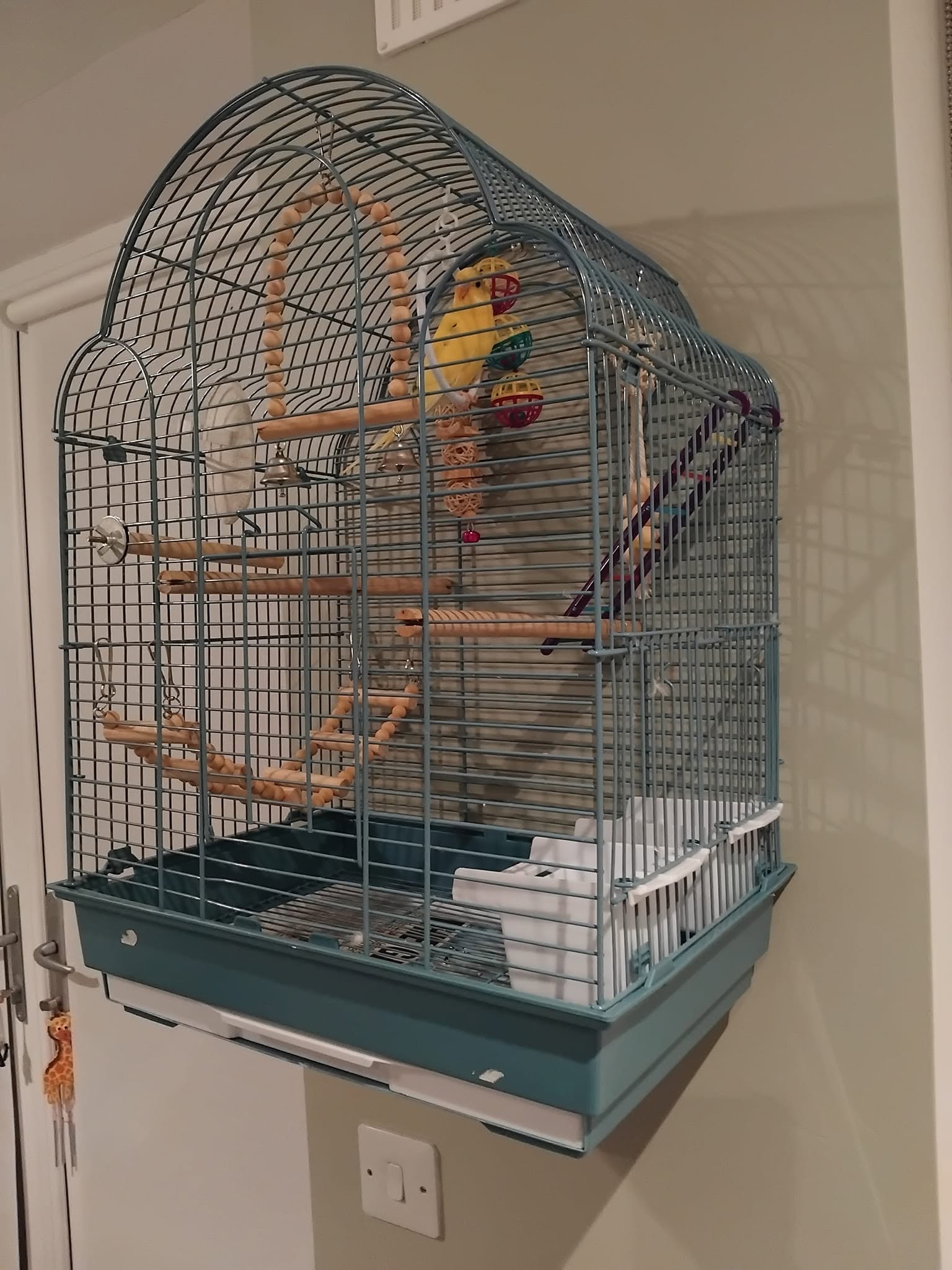
The RSPCA’s housing guidance for budgerigars is specific and publicly available. It states that the height, width, and depth of a cage must be at least twice the bird’s wingspan. For a budgerigar, whose wingspan is typically around 30 centimetres, this means a minimum cage dimension of 60 centimetres in each direction — height, width, and depth. For a pair, the standard increases. For a group, it increases further, with additional space required for each bird above the first.
The cage most commonly sold in the UK pet trade as appropriate for a budgerigar does not meet this standard. I am not describing the cheapest possible cage from the least reputable possible source. I am describing the mainstream product — the cage on the shelf at the high street pet retailer, the cage that comes in the starter kit, the cage that looks, to a new owner who has no prior knowledge of what is required, like a perfectly adequate home for a small bird.
The consequence of an undersized cage is not dramatic or immediate. The bird does not die from the cage. It lives in it — moving between perches that are too close together for the wing stretches that constitute the minimum physical activity a budgerigar requires, unable to engage in the lateral flight that is the species’ natural form of locomotion, in an environment that provides physical constraint without the owner necessarily noticing that anything is wrong.
The research on captive bird welfare is consistent on this point: restricted movement produces increased stress, and chronic low-level stress produces reduced immune function and shortened lifespan. A bird in a cage too small to fly is not in acute distress. It is in chronic, low-level, invisible distress that compounds over months and years into a lifespan that falls well short of the twelve years a well-kept budgerigar can achieve.
The trade’s role in this failure is specific. The cage that does not meet the RSPCA standard is not sold alongside information about the RSPCA standard. The buyer does not know the standard exists. They buy the cage that looks right because nobody has told them what right actually looks like. This is not a failure of individual sellers being dishonest. It is a failure of a trade that has normalised a product that does not meet welfare requirements and has never systematically communicated those requirements to buyers.
Failure Two — The Diet
The diet most commonly fed to UK budgerigars in 2026 is a seed mix. Sometimes a premium seed mix. Sometimes a mix with added vitamins. Almost always, in the homes of owners who have not specifically sought out better information, seed as the primary and often sole source of nutrition.
A seed-only diet is not adequate for a budgerigar. This is not a matter of debate in avian veterinary medicine — it is established fact, documented extensively in peer-reviewed literature and reflected in the dietary guidance of every reputable avian welfare organisation. Seed is high in fat and carbohydrate. It is low in protein, calcium, and a range of vitamins. A budgerigar fed exclusively on seed develops nutritional deficiencies that compromise immune function, feather quality, and organ health over time, and is at significantly elevated risk of fatty liver disease — one of the most common causes of premature death in captive budgerigars in the UK.
The BritExotics veterinary guidance, drawing on RCVS-verified sources and updated in December 2025, recommends a diet of fifty to sixty per cent pellets, thirty per cent vegetables, and ten to twenty per cent seeds as a supplement rather than a staple. That is a diet that looks nothing like what the majority of UK budgerigars receive.
Why does seed-only persist as the norm? Because seed is what is sold. Because the bag of mixed seed is on the shelf next to the cage in the pet shop, and the instruction to buy it is implicit in the positioning. Because the packaging does not say “this is nutritionally incomplete as a sole diet” — it says “budgie food.” Because nobody at the point of sale is routinely explaining that the bag of seed the buyer is adding to their basket is not adequate on its own and needs to be supplemented with fresh vegetables, quality pellets, and cuttlebone at minimum.
I have been explaining this at this counter for 35 years. I explain it every time someone buys a bird from us and every time someone comes in for food. The people who hear it — who change what they feed their bird after having that conversation — have birds that live longer and look better and show fewer of the health problems associated with nutritional deficiency. The people who never have that conversation have birds whose diet has never been questioned because the product they were given told them nothing was wrong.
Failure Three — The Single Bird Default
The budgerigar is a flock animal. In the wild, budgerigars live in flocks that can number in the thousands. Their social structure is one of the most fundamental aspects of their biology — they are not incidentally social, they are constitutively social, meaning that social contact is not a preference but a need that, when unmet, produces measurable physiological and psychological effects.
The default recommendation in much of the UK pet trade, and the default assumption of many first-time budgie buyers, is to start with a single bird. Sometimes this is framed as a welfare suggestion — “one bird will bond better with you.” Sometimes it is simply the lower-cost option that meets less resistance. Sometimes it is simply what the buyer asks for and what the seller provides without questioning.
A single budgerigar in a household where both adults work full time, or where the primary carer is at school during the day, is a bird spending the majority of its waking hours without social contact of any kind. The research on social isolation in flock birds is not ambiguous: chronic social isolation produces stress responses, immune suppression, and behavioural abnormalities including feather plucking, repetitive movements, and what researchers describe as learned helplessness. These effects are not immediate and they are not dramatic. They are gradual, invisible, and cumulative — the kind of harm that does not announce itself until it has been building for months.
The “one bird bonds better with you” rationale contains a partial truth. A single bird, in a household where it receives genuinely extensive and consistent daily human interaction — multiple hours of active engagement, not passive presence in the same room — can develop a relationship with its owner that compensates partially for the absence of avian social contact. The question is whether most UK budgie owners are providing that level of engagement. In my experience, they are not — not because they are neglectful, but because they have jobs and children and lives, and because they were sold a bird on the understanding that it was relatively low-maintenance.
Two birds cost marginally more than one. Two birds in an appropriately sized cage provide each other with the social contact that is a biological need rather than a preference. Two birds together are not lower maintenance — they still require daily care and observation — but they are lower stakes, because the daily departure of the household for work and school does not leave an animal alone that is biologically unable to cope with being alone. This is not a controversial position in avian welfare circles. It is the default recommendation of the RSPCA and every avian welfare organisation I am aware of. It is not, however, the default in the UK pet trade.
Failure Four — The Starter Pet Positioning
The most damaging single thing the pet trade has done to the budgerigar is position it as a starter pet.
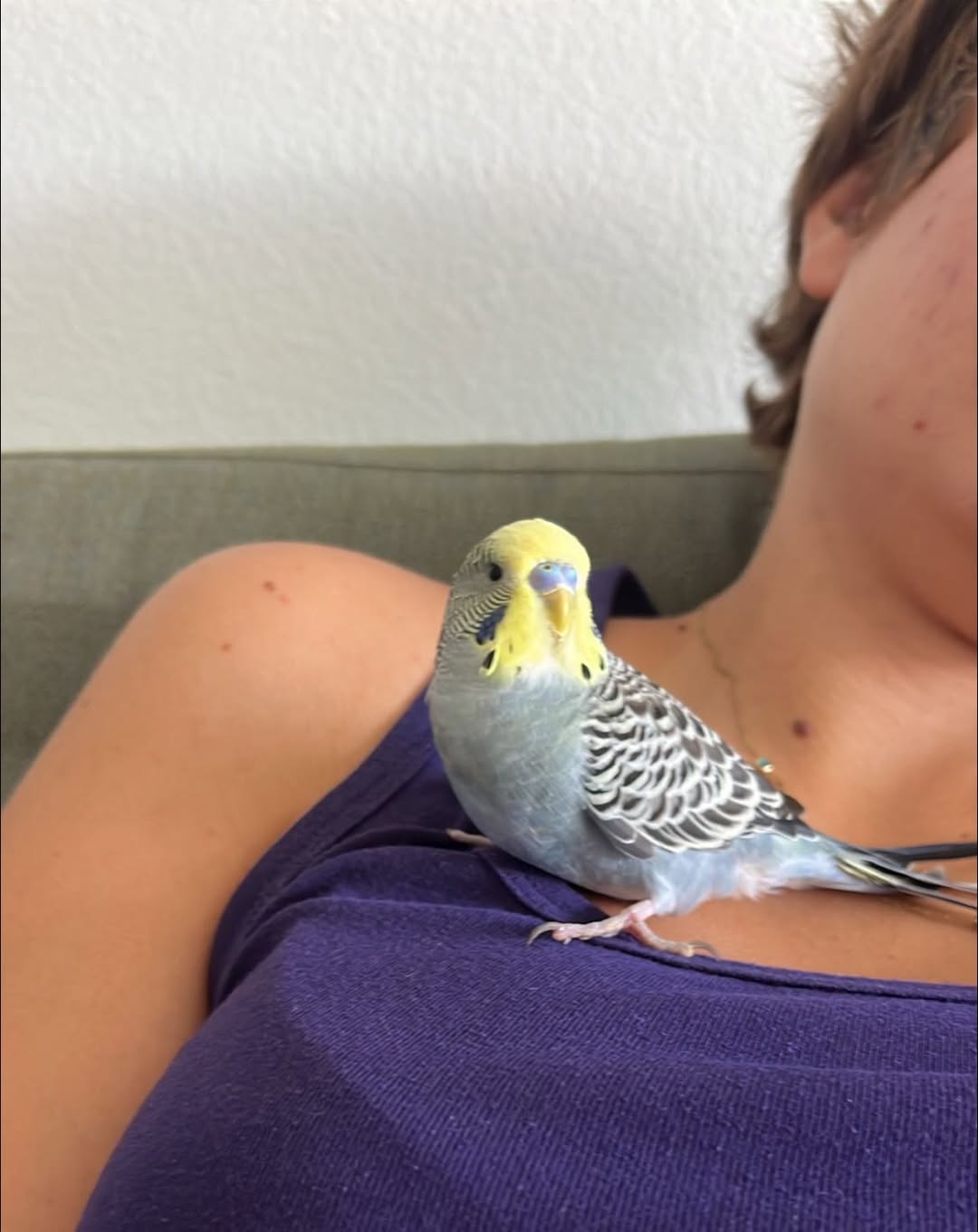
Not as a first bird — that framing is legitimate, because the budgerigar is genuinely well-suited to owners who have not kept birds before, for reasons I have written about extensively elsewhere on this site. As a starter pet in the broader sense — an introductory, low-commitment, low-cost, low-requirement animal that is appropriate for people who are not yet sure whether they are ready for a real pet, or for children as a first responsibility, or as a gentle way into animal ownership before moving on to something more serious.
That framing is wrong in almost every dimension. A budgerigar is not low-commitment — it is a fifteen-year commitment if kept correctly, though most do not reach it. It is not low-requirement — it has specific housing, dietary, social, and veterinary needs that are genuinely demanding relative to the “easy bird” reputation it carries. It is not a practice run for something more serious — it is a serious animal in its own right, with an intelligence and a capacity for relationship that the starter pet positioning actively obscures.
The consequence of the starter pet positioning is that people buy budgerigars with starter-pet expectations. They provide starter-pet levels of care. The cage is whatever comes with the kit. The food is whatever is on the shelf. The vet is whoever sees dogs and cats locally, if the bird sees a vet at all. The animal is not monitored with the kind of daily observation that might catch illness early, because starter pets do not require that level of attention. And the bird lives a shorter, less healthy, less fulfilled life than it would if its owner had been given an accurate picture of what it is and what it needs.
I have said for 35 years that a budgerigar is not a low-maintenance pet. It is a moderate-maintenance pet with specific needs that are achievable for most committed owners. The distinction is not pedantic. The owner who was told it was low-maintenance and finds the actual requirements more demanding than expected is the owner most likely to reduce their engagement over time — not out of cruelty, but out of the mismatch between what they were led to expect and what the animal actually needs.
Failure Five — The Missing Vet Conversation
The Royal Veterinary College recommends annual health checks for budgerigars. The PDSA’s work on pet health inequality documents that veterinary care is one of the first things UK pet owners cut back on when finances tighten. The avian vet shortage I have written about separately on this site means that even owners who want specialist avian care face genuine barriers to accessing it.
But underneath all of those structural factors is a simpler failure: most UK budgerigar owners have never been told that their bird should see an avian vet at all, let alone annually. The bird was bought, a vet was not mentioned, and the assumption — reasonably derived from everything else the owner was told about their easy starter pet — is that a budgerigar is not really a veterinary animal. It is too small, too common, too inexpensive to justify that kind of investment.
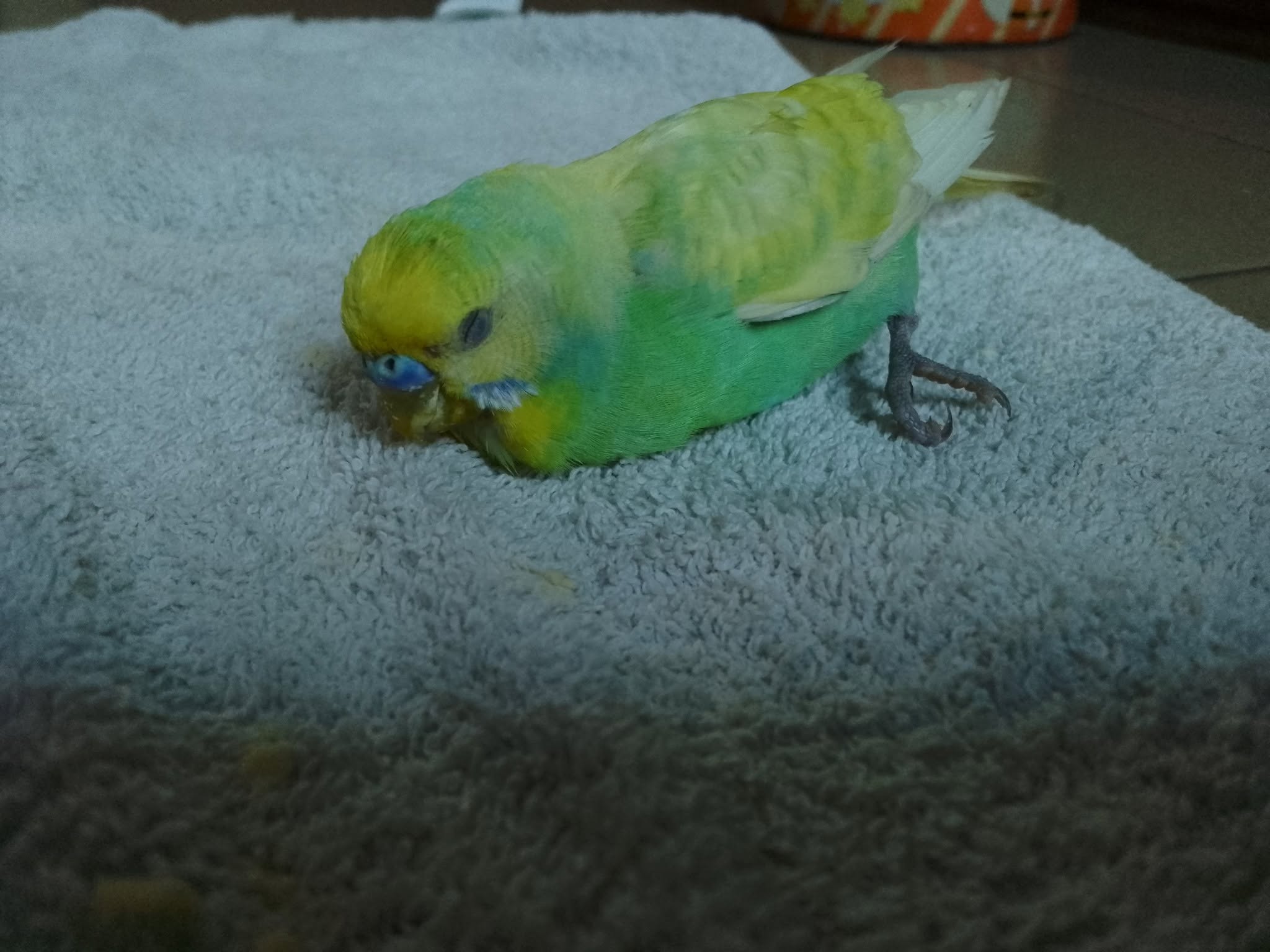
That assumption is wrong and its consequences are significant. A budgerigar that conceals illness — and all budgerigars conceal illness, for the reasons I have described elsewhere — and that never sees a vet until it is visibly unwell, is a bird whose treatable conditions have been allowed to progress to stages where treatment is difficult and outcomes are poor. The annual wellness check that the RVC recommends exists precisely because birds conceal illness so effectively: a vet with avian experience examining a bird that appears healthy can often identify early abnormalities that the owner would not have seen for another six months, when the bird’s ability to conceal them had failed.
The BritExotics veterinary guidance notes that avian specialist consultation costs between £45 and £300 depending on complexity. The cost of an annual wellness check — at the lower end of that range — is less than most UK budgerigar owners spend on cage accessories in a year. It is a cost that most could absorb if they had been told, at the point of purchase, that it was part of what responsible budgerigar ownership looks like. They were not told. They assumed veterinary care was for other kinds of pets. And the birds that did not reach their vet before it was too late are the ones whose stories end at this counter, in a carrier, with an owner who genuinely had no idea.
What Needs To Change — And What You Can Do Today
I am not writing this article as an exercise in blame. The trade has done what trades do — optimised for volume and accessibility, defaulted to what sells rather than what informs, and allowed the gap between the animal’s actual needs and the buyer’s understanding of those needs to persist because closing it requires conversations that slow down a sale and sometimes prevent one.
I am writing it because one million budgerigars is a number large enough to justify saying, in public, that the system that produced those million birds in UK homes has not served them adequately. And because the gap between how most of those birds are being kept and how they could be kept is not a technical problem or a resource problem. It is an information problem. It is people not knowing what they were not told.
If you have a budgerigar, here are the five things I am asking you to check today.
The cage. Measure it. Is the height, width, and depth each at least twice your bird’s wingspan? If the answer is no, the cage needs to change. Not next month. As soon as you can arrange it, because every day in an undersized cage is a day of physical constraint that has cumulative effects.
The diet. Is your bird eating anything other than seed? Fresh leafy greens offered daily. Cuttlebone available at all times. A quality pellet or properly balanced seed mix rather than a cheap mix that your bird selects through, eating only its preferred seeds and leaving the rest. If the answer to “anything other than seed” is no, today is the day that changes.
The social situation. Do you have one bird? If you do, and that bird spends significant daily periods without any social contact — avian or human — the question of a companion bird deserves serious consideration. Not because single birds cannot thrive, but because they can only thrive with a level of daily human engagement that most working households cannot reliably provide.
The observation. Do you know what your bird looks like when it is well? If the honest answer is no — if you have never spent five focused minutes watching your bird and noting what normal looks like — that is the practice to build, starting today. It is the single most important thing you can do for your bird’s welfare, and it costs nothing except five minutes a day.
The vet. When did your bird last see an avian-experienced vet? If the answer is never, or if you cannot name the avian vet you would contact if something changed tomorrow, finding one is the next conversation to have. Come and ask us if you are in the Swindon area — we can point you in the right direction, as we always have.
Frequently Asked Questions
Is the RSPCA cage size guidance legally enforceable?
The Animal Welfare Act 2006 requires owners to meet their animals’ welfare needs, including the need to be able to exhibit normal behaviour patterns and to be housed with, or apart from, other animals in accordance with the animal’s needs. The RSPCA’s guidance on cage size reflects what it considers necessary to meet the behavioural needs of captive birds. While the specific RSPCA measurements are not themselves statutory regulations, keeping an animal in conditions that prevent normal behaviour could constitute a welfare offence under the Act. The practical point is simpler: the guidance exists because anything smaller than the standard it describes does not provide what a budgerigar needs in order to be well.
My budgerigar has been on seed its whole life and seems fine. Why should I change its diet?
The effects of nutritional deficiency in a budgerigar are cumulative and internal before they are visible. A bird on a seed-only diet that “seems fine” at three years old may have developing liver changes that will not become apparent until five or six. The birds that seem fine on seed for years and then decline rapidly are not demonstrating that seed was adequate — they are demonstrating exactly the prey-animal concealment behaviour that makes budgerigar illness so difficult to catch early. Transitioning to a better diet is easier earlier in a bird’s life than later, but it is worth doing at any stage. Come and talk to us about how to transition gradually — a sudden change in diet is not the right approach, but a gradual one, with patience, is achievable for most birds.
I was told one budgie would bond better with me than two. Is that wrong?
It contains a partial truth and a significant omission. A single bird that receives extensive daily human interaction can form a strong bond with its owner — stronger in some observable respects than the human-directed bond of a bird that also has an avian companion. The omission is what “extensive daily human interaction” actually means — multiple hours of active engagement per day — and whether most households can reliably provide that. For most working households, two birds is the more honest recommendation for the bird’s welfare. The bond with you may be expressed differently, but both birds will be healthier and less stressed than a single bird spending its days without social contact of any kind.
If my budgie has never seen a vet, is it too late to start?
It is never too late, and I would encourage anyone whose bird has never been seen by an avian-experienced vet to make that appointment. The wellness check establishes a health baseline, identifies any existing issues that may not be visible to the owner, and introduces you to a vet before you need one urgently. The birds that benefit most from first vet visits are often the ones whose owners had no idea there was anything to find — because the finding, at a stage when something can be done about it, is exactly the purpose of the check.
Is this article saying the pet trade is dishonest?
No. It is saying the pet trade has been systematically inadequate in communicating what budgerigar welfare actually requires — and that the gap between what is sold and what is needed has persisted for long enough that it deserves to be named and addressed rather than politely overlooked. Most sellers do not knowingly sell inadequate cages or inadequate food. They sell what is available, what is normal in the trade, and what the buyer has not been given a framework to question. Changing that requires the information to reach buyers — at the counter, online, in every context where someone is deciding how to keep the bird they have just brought home. This article is an attempt to contribute to that, from a shop that has been trying to have the right conversation with its buyers for 35 years.
A Final Word
One million budgerigars. One million individual animals in one million individual homes, each one kept at a standard that reflects what its owner was told rather than what the bird actually needs.
The good news — and there is good news — is that the information gap is closable. Every owner who reads this article and checks their cage size has closed a gap. Every owner who adds fresh greens to their bird’s bowl today has closed a gap. Every owner who books an avian vet appointment for the first time has closed a gap. The gap is not technical. It is not expensive to close. It is a matter of information reaching the people who need it, in a form they can act on.
That is what this article is for. And if there is anything in it that raises a question about your specific bird, your specific cage, or your specific situation — come and find us. That conversation has always been what this counter is for. It remains so, and it always will.
Want To Know Whether You Are Keeping Your Budgie Correctly? Come And Ask Us.
We will give you an honest assessment of your current setup and tell you specifically what, if anything, needs to change. No pressure, no upselling — just the honest conversation that one million budgies in UK homes deserve to have had before they came home.