
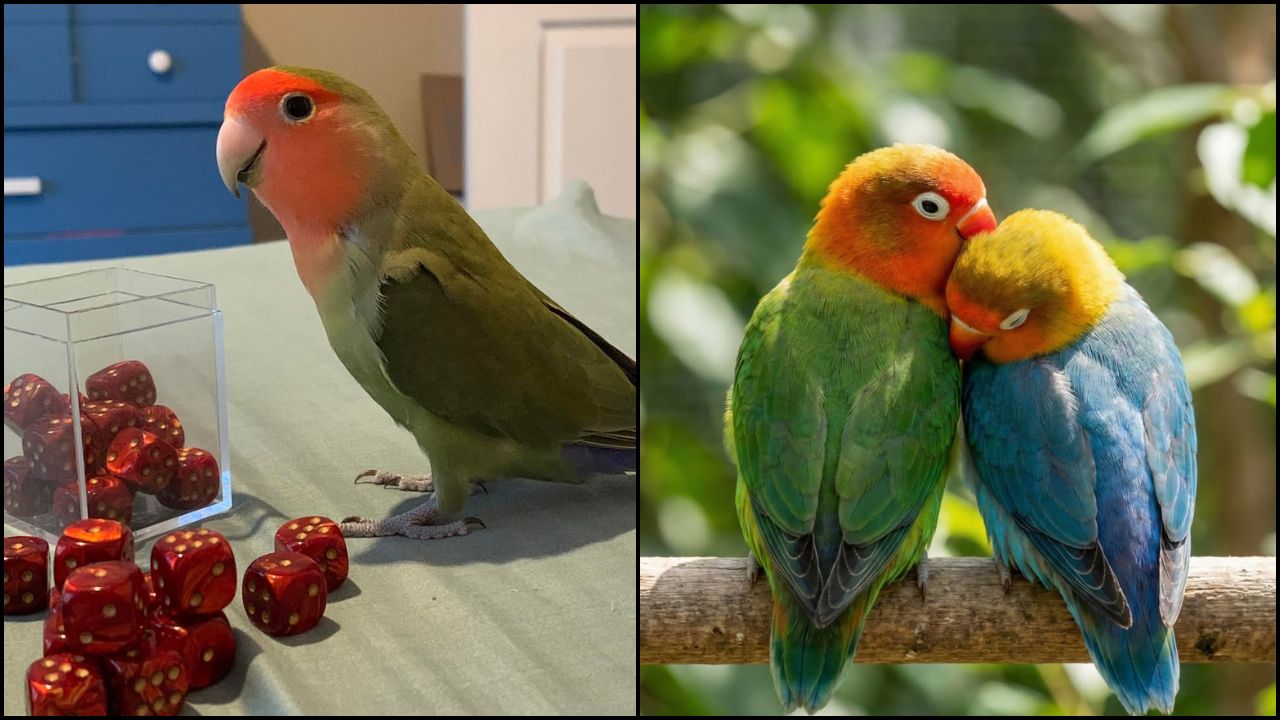

Neil has run Paradise Pets Swindon since 1988 — over 35 years of watching which birds surge in popularity, and watching what happens in the months after that surge. Lovebirds are everywhere this summer — in enquiries, in online listings, in the conversations at this counter. So, if you look carefully at the rehoming platforms, are the lovebird ads that say “due to noise complaints,” “change in circumstances,” and “not enough time.” Neil has watched this particular cycle play out before. This is what he wants every prospective buyer to read before they join it.
I want to show you two things that are happening simultaneously in the UK pet bird market this summer.
The first is the lovebird surge. Enquiries at this counter asking about lovebirds are up considerably compared to two years ago. The online bird listing platforms are full of lovebirds for sale, from breeders who have responded to demand with increased supply. The social media content that has been driving interest in the species — vivid colour mutations, the paired-bird aesthetic, the intense and visually compelling behaviour of two bonded lovebirds — has produced exactly the consumer interest it was designed to produce. Lovebirds are the most talked-about pet bird of the 2026 summer, and the sales figures across the trade reflect that.
The second thing is quieter, and you have to look a little more carefully to see it. On the same platforms that are listing lovebirds for sale in volume, there are lovebird rehoming ads. Not in the same volume as the for-sale listings, but in a proportion that I recognise — because I have been watching this particular ratio for 35 years. “Due to noise complaints from neighbours.” “Not enough time for him now that work has picked up.” “Change in circumstances — must rehome, lovely bird.” “Will not stop screaming, unsuitable for our flat.”
Those ads are not evidence that lovebirds are bad pets. They are evidence that a significant proportion of the people who bought lovebirds during this surge did not have the information they needed to know whether a lovebird was the right choice for them — and they discovered the answer to that question after they had already brought the bird home.
That is the gap I want to close before you make a decision, not after.
Why Lovebirds Are Surging Specifically This Summer
The mechanism behind the lovebird surge in 2026 is not complicated, and understanding it is useful context for assessing whether the trend is one worth following.
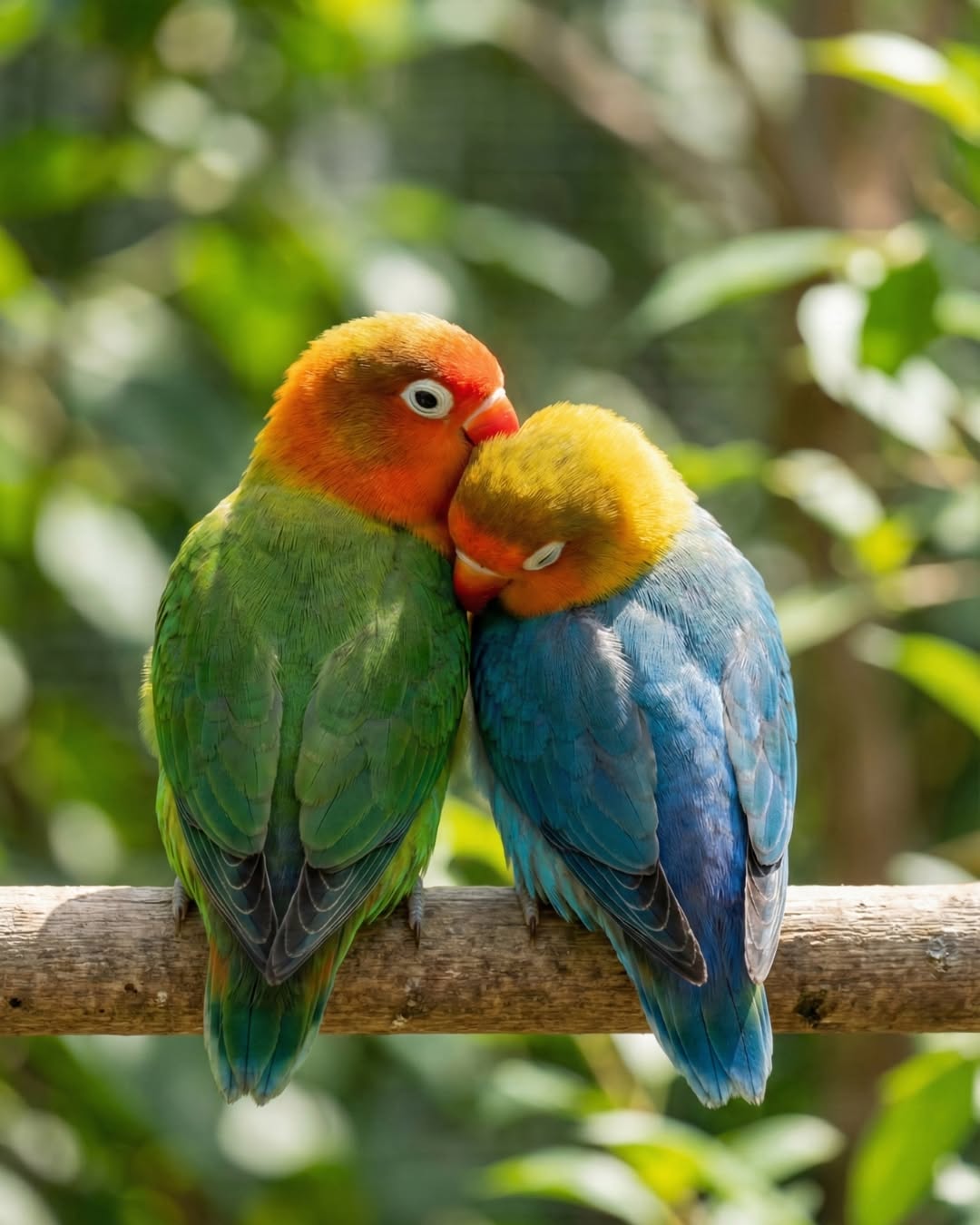
Lovebirds are visually extraordinary. The range of colour mutations available in the peach-faced lovebird in particular — violet, blue, lutino, opaline, and combinations of those — produces birds that photograph in a way that almost no other small pet bird can match. A violet peach-faced lovebird in good feather condition is, objectively, a stunning animal. A pair of them together, exhibiting the close-contact bonding behaviour the species is known for, is the kind of content that social media was designed to amplify.
That amplification has been happening, and the volume of lovebird-related content on the platforms where prospective buyers are spending their time has reached a level that creates what marketers call social proof — the impression that everyone is getting a lovebird, that lovebirds are the thing to have, that choosing a cockatiel or a budgerigar when you could have a lovebird is somehow missing the moment.
The summer timing compounds this. School holidays, families looking for something to engage with, children who have decided this is the summer for a bird, the compressed timeline between deciding and buying that the school holiday period produces — all of these push people toward the decision faster than they might otherwise move, and toward the species that is currently most visible in the content they have been consuming.
None of that is the lovebird’s fault. The bird is what it is, and what it is happens to be genuinely remarkable. The problem is not the species. The problem is the gap between what a buyer who has been consuming social media content about lovebirds believes they are getting and what a lovebird actually involves day to day, month to month, for a fifteen-year commitment.
What The Rehoming Ads Are Actually Telling You
I want to spend a moment on the rehoming ads, because they are the most honest data available about what happens when a lovebird goes home with a buyer who was not adequately prepared.
The most common reason cited in lovebird rehoming ads is noise. “Noise complaints from neighbours.” “Too loud for our flat.” “Will not stop screaming.” This is not a minority experience — it is the single most consistent factor in lovebird rehoming ads across every platform I have looked at, and it has been consistent every summer for as long as I can remember.
The noise of a lovebird in full voice is not adequately conveyed by any written description, and it is almost never conveyed by the social media content that drove the purchase. The videos that show two lovebirds preening each other in a sunlit cage are not made when the birds are screaming. The photographs of a lovebird on someone’s shoulder are not taken during the period of loud, sustained vocalisation that most lovebirds produce daily when they want attention, when something in their environment has changed, when they perceive a threat, or sometimes simply because they feel like it.
A lovebird in a flat with thin walls, in a terrace with shared walls, in any living situation where significant sustained noise is incompatible with the household or its neighbours, is a recipe for exactly the rehoming ad that says “noise complaints.” Not because the bird is unusual. Because it is doing what lovebirds do.
The second most common reason in the rehoming ads is time. “Not enough time for her now.” “Change in circumstances.” “Work has picked up.” These reflect a different gap — between the level of daily interaction a lovebird needs to maintain its tameness and the level of daily interaction the buyer’s life actually allows for. A lovebird that is well-socialised, handled daily, and given consistent attention is a different animal from a lovebird that has spent increasing periods alone as the novelty wore off and the routine demands of work and family reasserted themselves. The bird in the latter situation does not maintain its tameness passively. It reverts. And a lovebird that has reverted from tame to not-tame is not a simple situation to reverse.
The third reason — less frequently stated explicitly but evident in the timing and circumstances of the ads — is that the bird turned out to bite. Not hard enough to be mentioned in every ad. Hard enough to be the unspoken factor in quite a few of them.
Lovebird Versus Cockatiel — The Specific Comparison This Title Implies
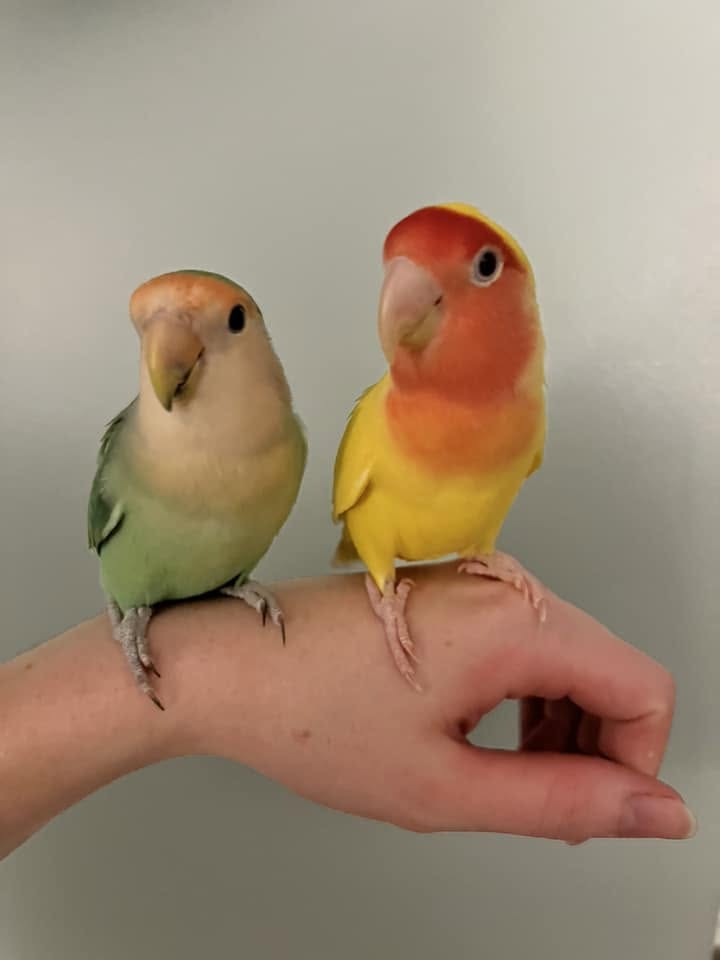
The title of this article puts lovebirds against cockatiels, and I want to honour that comparison specifically rather than speaking generally about lovebirds in isolation — because the two species are frequently compared by buyers who are trying to decide between them, and the comparison is more nuanced than most of the content they will find online suggests.
The cockatiel is, in my view, one of the most consistently well-suited companion birds for UK homes. It is affectionate in a way that is more immediately accessible than the lovebird’s intensity — the cockatiel’s expression of bonding is gentler, more tolerant of interaction with multiple family members, less territorial. Its vocalisation is more musical and more manageable in a domestic setting — the cockatiel’s primary sounds are whistles and contact calls that most households find pleasant rather than intrusive. It is larger than a lovebird, which means it requires more space, but that larger size also means it has more physiological resilience and is, in some respects, easier for a first-time owner to read and respond to.
The cockatiel has been the number two pet bird in the UK behind the budgerigar for many years, and it has held that position not through trend cycles but through consistent performance as a companion animal across a wide range of owners and homes. It did not require a social media moment to sustain its popularity. It required owners who found, after living with one, that the animal delivered on the promise of the relationship in ways they had not fully anticipated.
The lovebird offers something a cockatiel does not — an intensity of one-to-one bond, when it develops, that is among the most remarkable things in small bird keeping. A lovebird that has chosen you is a different kind of relationship from a cockatiel that likes you. The lovebird’s bond is more exclusive, more demanding, and more — in the word that gives the species its name — devoted. For the owner who has the right environment, the right experience, and the right commitment to daily interaction, that bond is extraordinary. It is also, for the wrong owner in the wrong environment, the thing that produces the screaming, the biting, and the rehoming ad.
The Three Questions I Ask Before Anyone Buys A Lovebird From Me
I have a process at this counter that I apply every time someone comes in specifically asking about lovebirds, and I want to share it here because it is the same process a buyer should apply to themselves before they make a decision — whether they come to us or buy from anywhere else.
The first question is about the building. Do you live in a house or a flat? If it is a flat, how are the walls between your flat and the ones adjacent to it — thin partition walls, or something more substantial? Do you have a landlord or a management company with noise policies? Do you know your neighbours, and do you know how they would feel about sustained high-pitched bird calls through a shared wall on a Saturday morning?
This is not a discouraging question. It is an information-gathering question. The answer might be that you live in a house with solid walls and obliging neighbours, in which case the noise question is answered. The answer might be that you are in a Victorian terrace conversion with lath-and-plaster walls shared with a shift worker next door, in which case it is not answered. I need to know which situation I am in before I say anything else about the bird.
The second question is about the daily routine. What does your average working day look like — specifically, how many hours is the bird alone, and what is the window in the evening or morning when it would receive focused, one-to-one handling? A single lovebird that receives less than an hour of genuine daily interaction loses its tameness over a period of months. That is not a judgement about the owner’s commitment. It is a biological reality about what a single lovebird kept as a companion requires. If the answer to the daily routine question is that an hour of focused daily interaction is realistic and the owner is genuinely committed to it, I can proceed. If the honest answer is more like twenty to thirty minutes of passive coexistence, the conversation needs to go in a different direction.
The third question is about experience. Have you kept birds before? If yes, what species, and how did that relationship develop? Someone who has kept budgerigars for five years and wants to move to something more intense and engaging is a different conversation from someone for whom this would be a first bird. Not because first-time bird owners cannot keep lovebirds — they can — but because the margin for navigating the early weeks of establishing a relationship with a lovebird is narrower for someone who has no prior frame of reference for bird behaviour, and the consequences of mishandling that period are more significant with a lovebird than with a more forgiving species.
If the answers to all three questions are in the right territory — house or well-separated flat, genuine daily time available, some bird experience or strong commitment to learning — the lovebird conversation becomes enthusiastic very quickly. Because I genuinely love these birds and I genuinely want to sell them to the right people. The problem is not the bird. It is matching the bird to the buyer correctly rather than letting the trend do the matching.
The Buyer The Lovebird Is Actually Right For
I want to say something positive here, because this article has spent considerable time on the mismatches and the rehoming ads, and I do not want the overall impression to be that lovebirds are birds no one should buy. That is not my position.
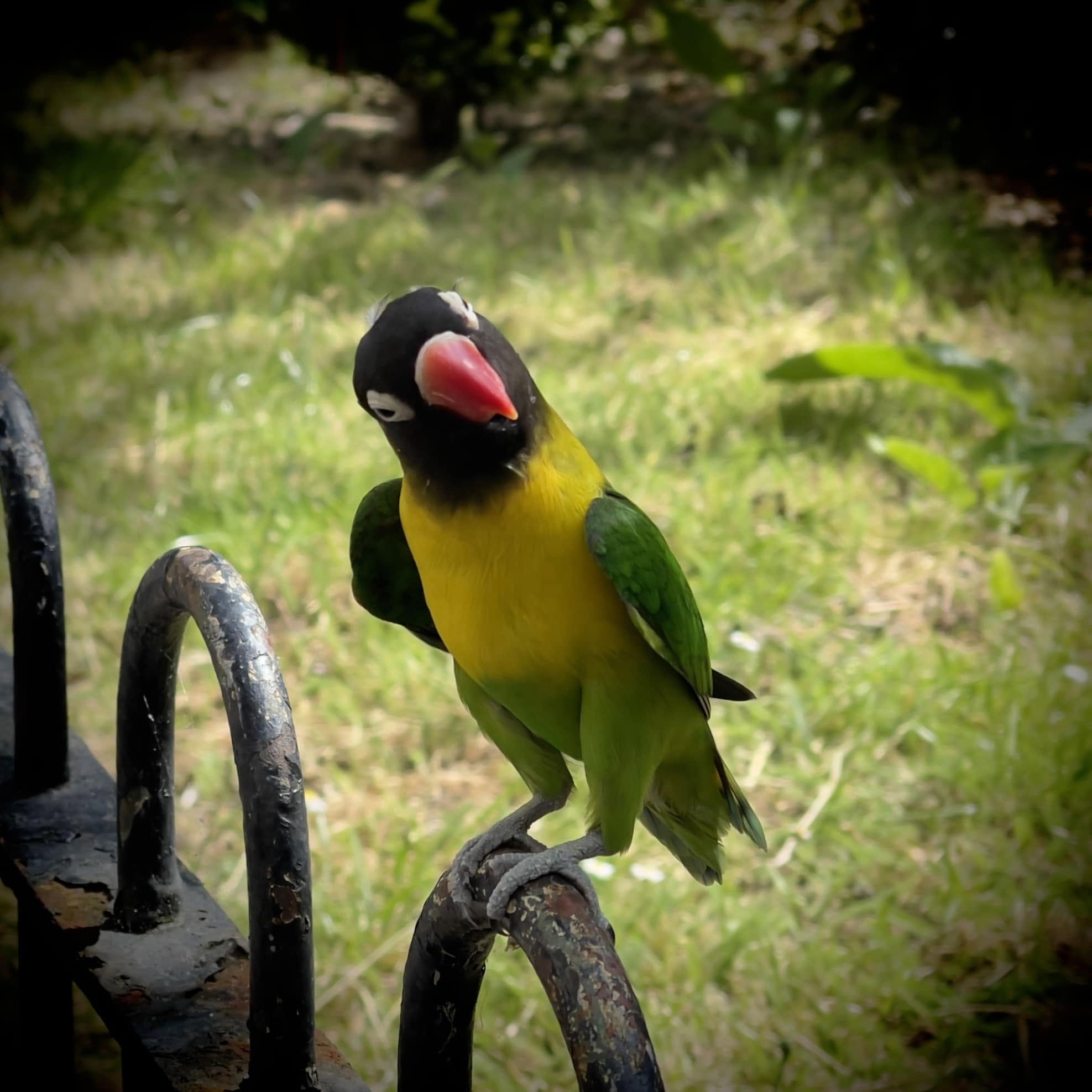
The person the lovebird is genuinely right for is not rare. They exist in significant numbers, and when they find the right bird from the right source and have the right information before they start, the experience they describe is one of the most consistently rewarding in small bird keeping.
They live in a house, or in a flat where the building construction and their relationship with neighbours make the noise question manageable. They work from home, or they have a schedule that includes genuine daily time with the bird — not passive presence but active handling and interaction. They have patience — real patience, not the patience that lasts three weeks before the routine starts to feel like a burden. They are interested in the process of building a relationship with an animal that requires genuine investment before it gives genuine return. And they understand — before they buy, not after — that a lovebird is a fifteen-year commitment that does not adjust its requirements because the owner’s life has changed.
For that person, a single well-socialised lovebird from a reputable source — hand-raised, properly handled from the first weeks of life, given to them with specific guidance on how to continue the socialisation that makes the bond develop — is one of the best small companion birds available. I have sold lovebirds to people like that and watched the relationships develop, and I find them genuinely moving in a way that the budgerigar’s charm, for all that I love the budgerigar, does not always replicate.
The question is whether the person reading this is that person. Not the person they intend to be. The person they actually are, in the life they actually live, in the home they actually have. That question deserves an honest answer, and the time to answer it honestly is before the purchase — not six months into a rehoming situation that a different answer would have prevented.
If The Lovebird Is Not The Right Answer — What Is
I want to be concrete about this, because the person who has read this article and concluded that a lovebird is probably not right for them in their current situation still wants a bird. The question is which bird.
If the noise question was the issue — a flat, shared walls, neighbours whose tolerance is uncertain — the canary is one of the most underrated answers in the pet bird trade. The canary’s song is not noise. It is music, and it is widely considered one of the most pleasant sounds a domestic animal produces. A male canary in good condition sings with a richness and a complexity that people who have not lived with one are consistently unprepared for. It is not a handling bird — canaries are generally observed and listened to rather than directly interacted with — but for a flat dweller who wants beauty and song rather than a one-to-one bond, the canary is an extraordinary animal that deserves far more attention than it receives in the current trend cycle.
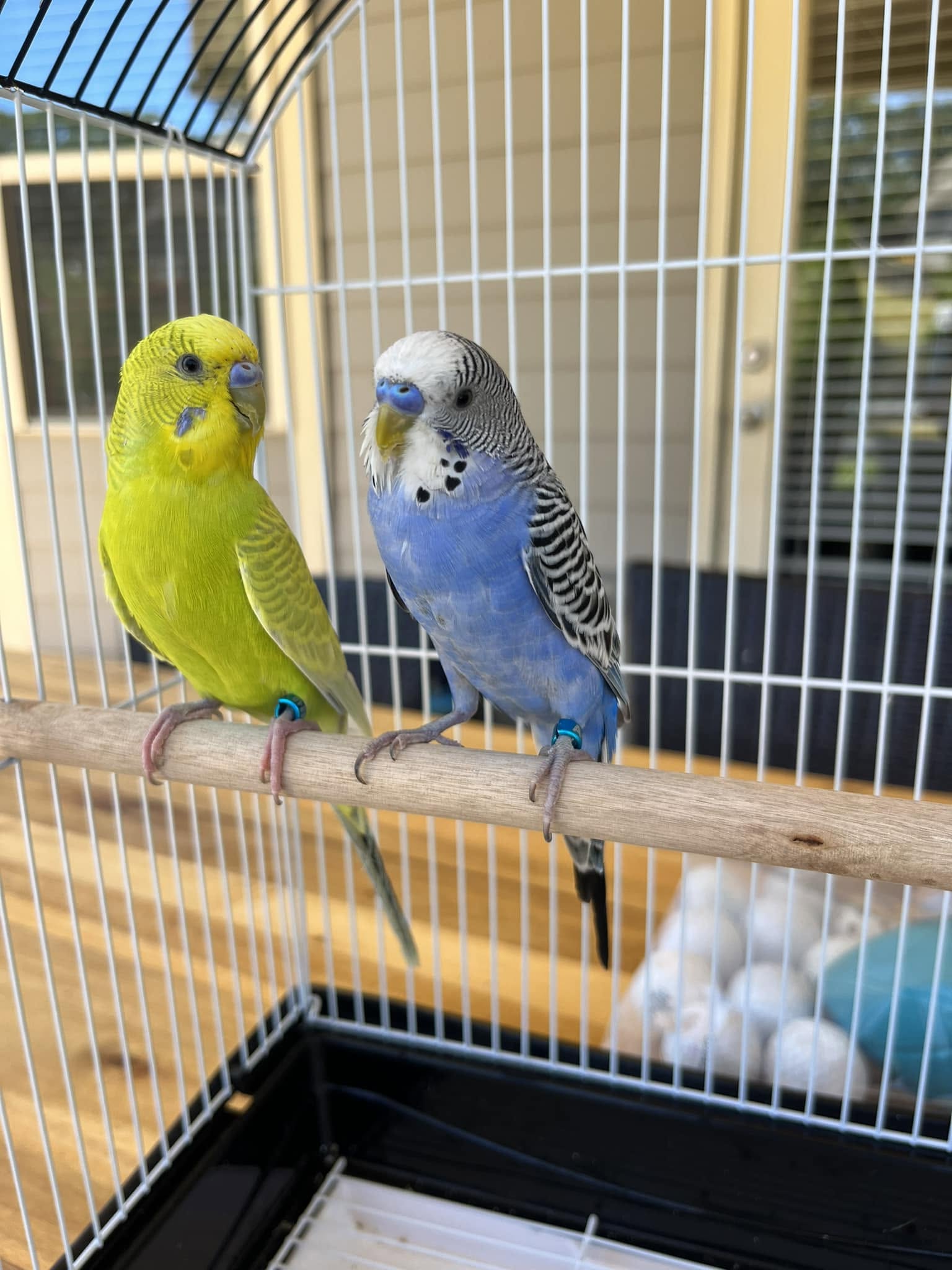
If the time question was the issue — the daily interaction commitment that a single lovebird requires is more than the buyer’s schedule reliably allows — a pair of budgerigars is the right answer for most situations. Two budgerigars together provide each other with the social contact that is a biological need, require consistent care but not the level of individual daily handling that a single lovebird needs to maintain its tameness, and offer genuine entertainment and interaction on the owner’s schedule rather than the bird’s.
If the experience question was the issue — a first-time bird owner who wants something interactive and relationship-building but who has not yet developed the bird-literacy that makes the lovebird’s more demanding dynamics navigable — the cockatiel is, in my view, the correct recommendation in the majority of cases. The cockatiel offers the warmth, the responsiveness, and the genuine companionship that the lovebird is famous for, in a form that is somewhat more forgiving of first-time ownership and somewhat more inclusive of the whole household rather than focused exclusively on one person.
None of those alternatives are consolation prizes. They are genuinely excellent animals. The lovebird is not the default best bird. It is the right bird for the right owner — which is a specific thing, and the most useful thing this article can do is help you determine whether that specific thing describes you.
Frequently Asked Questions
Are lovebirds actually outselling cockatiels this summer?
The data picture is more nuanced than the title’s framing suggests, and I want to be honest about that. BritExotics data from May 2026 places the cockatiel as the UK’s most popular small parrot after the budgerigar, with lovebirds listed alongside conures as smaller-volume species. What has changed is the ratio of interest to supply — the number of people asking about lovebirds, the number of lovebird listings on platforms like Pets4Homes and Freeads, and the volume of lovebird-related enquiries at this counter have all increased significantly in 2026. Whether that translates to lovebirds genuinely outselling cockatiels in terms of actual sales at any given point in the summer, I cannot say with certainty. What I can say is that the surge in interest is real, the increase in availability from breeders responding to that interest is real, and the rehoming pattern that follows those surges is equally real and equally worth understanding before you contribute to the buying side of it.
I live in a flat. Can I genuinely not have a lovebird?
Not “genuinely not” — but the noise question needs a genuinely honest answer before you proceed. There are flats where the building construction, the layout, and the relationship with neighbours make a lovebird manageable. There are flats — particularly conversions in older properties with thin partition walls, or purpose-built blocks where sound travels freely between units — where it is not. Ring your neighbours before you buy the bird, not after. Describe the noise level honestly and ask whether it would be an issue. If the answer is uncertain, that uncertainty is itself information. The rehoming ads that cite noise complaints represent birds whose owners did not have that conversation before the purchase.
My child really wants a lovebird specifically. What should I tell them?
That wanting a specific bird is a legitimate starting point and a conversation worth having in full. A lovebird in a household with children requires careful management — the bird’s territorial behaviour around its primary bond and its bite strength both require consistent adult supervision in interactions with young children. If the adult in the household is genuinely committed to the daily handling routine and the household environment is appropriate for the noise level, a lovebird can work in a family setting. If the appeal is primarily the visual and the name — and for a child who has encountered lovebirds on social media, it often is — the conversation about what living with one actually involves is the conversation to have before any decision is made. Come and have it at this counter. Bring your child. We will answer every question honestly.
Is there a time of year that is better to get a lovebird?
Not in terms of the bird’s welfare — lovebirds can go to new homes throughout the year, provided the source is reputable and the bird is properly weaned. In terms of the buyer’s readiness, however, the school holidays are a mixed picture. The availability of time during the summer to invest in establishing the relationship is genuinely useful. The compressed decision-making timeline that the holidays tend to produce is not. The best time to get a lovebird is when you have done the preparation — answered the three questions I described, identified an avian vet, arranged appropriate equipment — rather than when the moment feels right because the summer is long and the children are excited.
Where should I buy a lovebird if I decide it is right for me?
From a source that can tell you specifically how the bird has been socialised — whether it has been hand-raised, how much human contact it has had from the earliest weeks, and what the seller’s experience is with the species. A well-socialised lovebird from a reputable source that has invested in early handling is a fundamentally different starting point from a bird sold in volume from a breeder who has prioritised colour mutations over tameness. Ask to see the bird interacted with before you commit. Ask what the seller would do if the relationship did not work out. A source that takes those questions seriously is a source worth buying from. Come and talk to us about what is available and from where before you make a decision.
One More Thing Before You Decide
The summer surge in lovebird interest is not a bad thing in itself. These are extraordinary birds and the people who are discovering them are discovering something genuinely worth knowing about. The problem is the gap between discovery and understanding — the point at which enthusiasm becomes a purchase without the information that would allow the buyer to assess whether the enthusiasm is matched by their specific situation.
That gap is what this article is for. Not to discourage the lovebird buyer who is genuinely right for the bird — that buyer should absolutely proceed, and when they do, they will have an experience that justifies everything the social media content suggested. But to give the buyer who is not quite right for the bird — who lives in the wrong building, or has less daily time than the bird needs, or is making the decision on a summer timeline that does not allow for the reflection the commitment deserves — the specific, honest information that the trend cycle does not provide.
If you are not sure which category you fall into, come and have the conversation at this counter. Bring the questions you have not been able to answer. We will tell you honestly what we think, based on 35 years of watching both the buying wave and the wave that follows it.
Thinking About Getting A Lovebird This Summer? Come And Talk To Us First.
We will ask you the questions that matter, listen honestly to your answers, and tell you whether a lovebird is the right choice for your specific situation — and if it is not, we will tell you what is. No pressure, no trend-following, just the honest conversation that should happen before any bird goes home.