
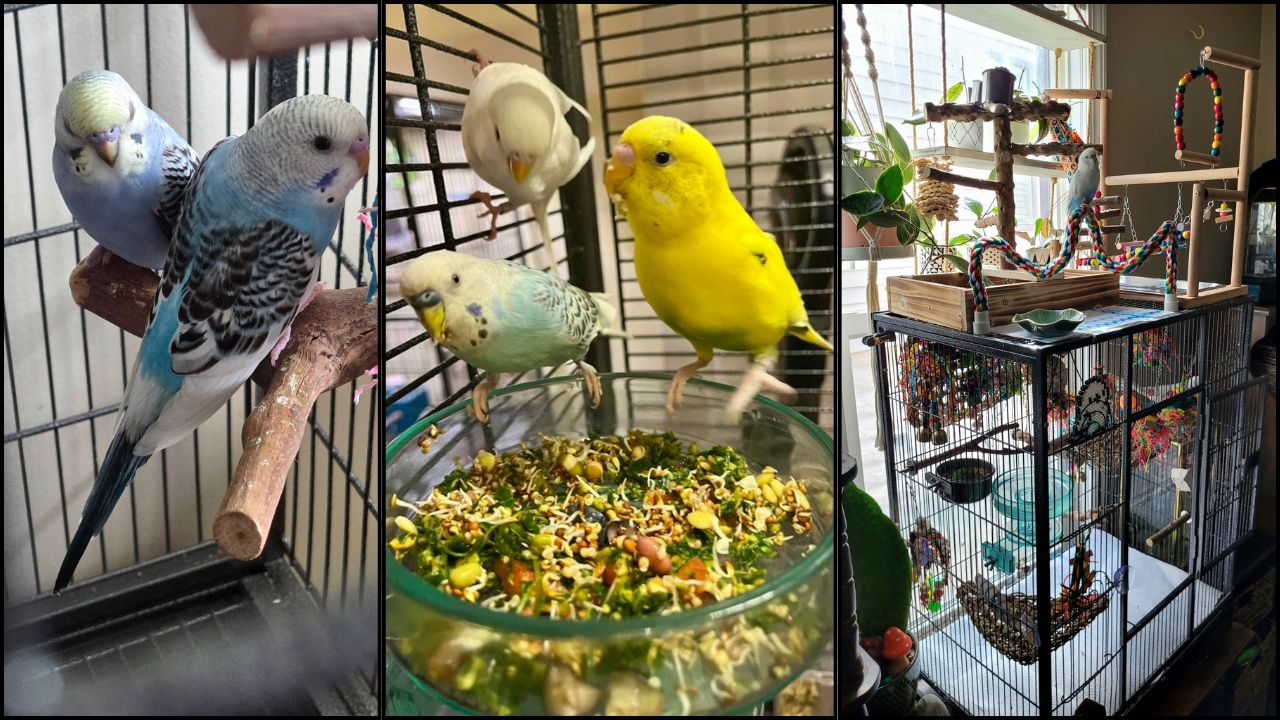

Neil has kept, bred, and sold cage and aviary birds at Paradise Pets Swindon since 1988 — over 35 years of first-hand experience with budgerigars, cockatiels, canaries, finches, and dozens of other species. The RSPB’s new summer feeding rule has dominated the conversation about garden birds this month. But there is a dimension to that guidance that almost nobody is discussing — what it tells you about how you should be feeding the birds inside your home.
The RSPB’s new summer guidance has been in the news all week. Stop filling seed feeders from May to October. Move to mealworms and suet instead. The reasoning is about trichomonosis — the disease that has driven a 67 percent decline in UK greenfinch populations — and the role that high-density seed feeding plays in its spread.
I have written about that guidance already from the garden bird perspective, and I stand by what I said. The hygiene changes — weekly feeder cleaning, removing flat-surface feeders, daily water changes — are right and overdue. The seasonal seed pause is more complicated, but the underlying disease-transmission reasoning is sound.
What I want to do in this article is something different. I want to take the logic behind the RSPB guidance — the specific reasoning about seed, disease, hygiene, and bird health — and apply it directly to the cage bird environment. Because the biology that drove the RSPB to change its guidance applies to the birds inside as much as the birds outside. And almost nobody is making that connection.
Most pet bird owners who have heard about the RSPB guidance are thinking about their garden feeding station. I want them also to think about their bird’s food bowl. Because there are habits in pet bird feeding — common, widespread, unremarked habits — that the RSPB guidance is indirectly pointing straight at.
Why The RSPB Guidance Is Relevant To Cage Birds — The Biology
Let me be specific about the mechanism, because understanding it is what makes the connection to cage bird feeding clear.
The RSPB’s concern about seed feeding in summer is primarily about trichomonosis. Trichomonas gallinae, the parasite responsible for the greenfinch decline, spreads through contaminated food and water — specifically through infected saliva deposited on shared feeding surfaces reaching other birds. Seed that has been fed on by an infected bird carries the parasite. Another bird feeding from the same seed picks it up. The cycle continues.
The conditions that make this cycle most dangerous are well-established. High bird density means more infected-to-healthy bird contact. Flat surfaces where infected material accumulates mean more contamination. Moisture in the seed — from rain, from a bird’s saliva, from humid conditions — keeps the parasite viable for longer than it would survive on dry surfaces. Summer heat accelerates all of this.
Now look at a pet bird’s food bowl.
The bowl is a shared feeding surface. In a multi-bird cage, every bird feeds from the same container. An infected bird deposits saliva into the food. Another bird feeds from the same bowl. The transmission mechanism is identical to the garden feeding station. The only difference is scale.
Even in a single-bird cage, the food bowl accumulates hulls, moist seed residue, feather debris, and droppings if the cage is managed loosely — creating exactly the kind of contaminated surface the RSPB is now telling sixteen million households to clean weekly.
The RSPB guidance changed because decades of widespread, well-intentioned feeding practice had created conditions for disease to spread that nobody had recognised as a problem. The same analysis applies to pet bird feeding practice — and I think, in many homes, the same problem exists.
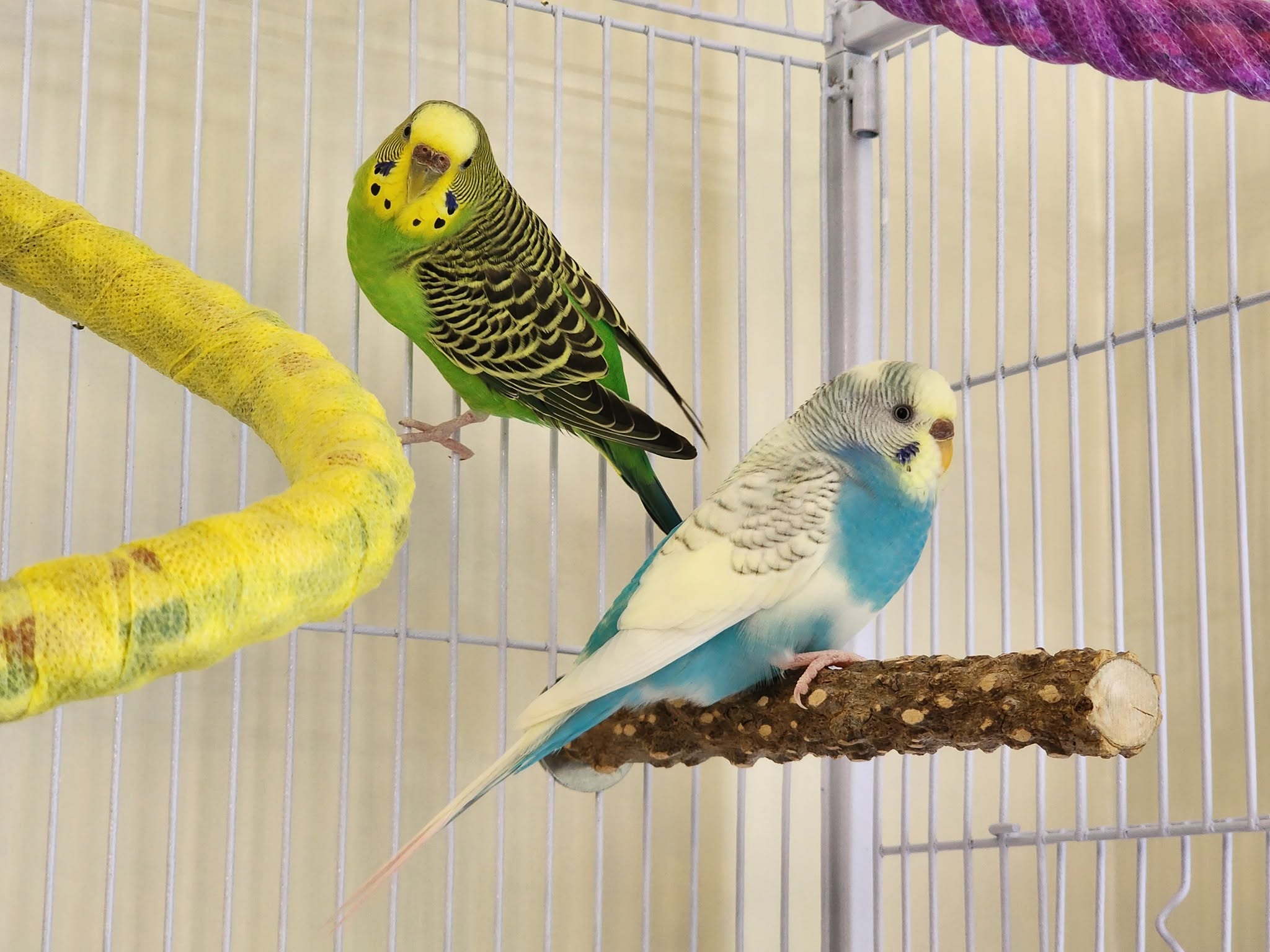
The Specific Pet Bird Feeding Habits The RSPB Logic Points At
1. The Food Bowl That Is Topped Up Rather Than Changed
This is the most common feeding mistake I see in pet bird management, and the RSPB guidance is directly relevant to it.
Most pet bird owners top up the food bowl. They look at it, see it is low, add more seed on top. What they are actually doing is layering fresh seed on top of a substrate of hulled seed casings, moisture, feather debris, dried droppings particles, and the accumulated saliva residue of every feeding interaction since the bowl was last properly cleaned.
In a cage with a climate-controlled environment, this accumulation happens more slowly than in a summer garden. But it happens. And the result — a bowl that looks like it contains food but whose bottom layer is a biological habitat — is a version of the same contamination problem the RSPB is addressing at scale.
The rule I give at the counter, which the RSPB guidance now supports with its full institutional weight, is simple: empty, wash, and refill the food bowl daily. Not top up. Not add to. Empty, wash with water and a proper food-safe cleaning approach, and refill with fresh seed. Every day. In summer, this is not optional.
2. Moist Fresh Food Left In The Cage
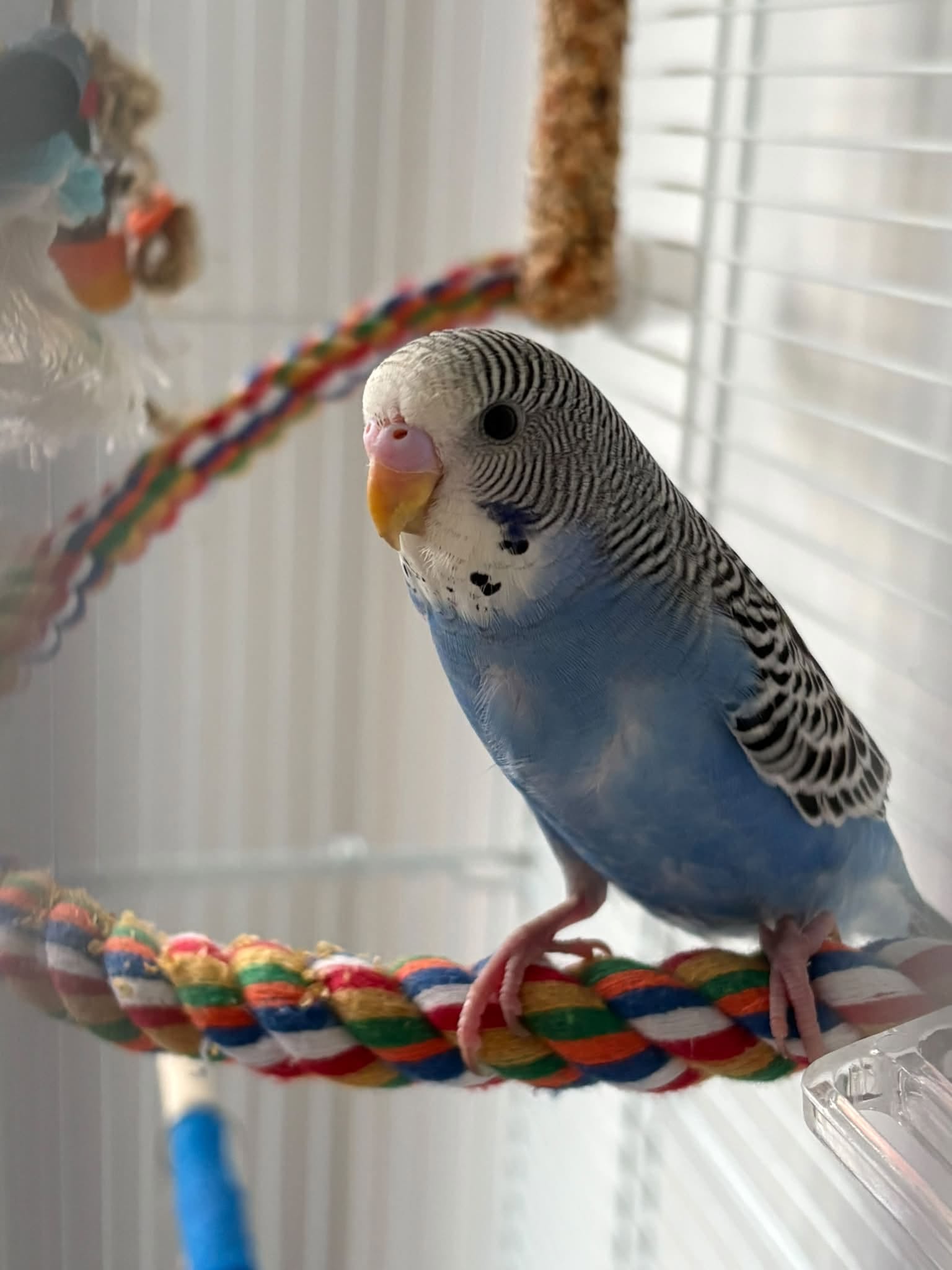
Fresh food — vegetables, fruit, sprouted seeds, egg food — is a meaningful nutritional addition to a pet bird’s diet. The RSPB guidance specifically highlights what happens to moist food in summer conditions: it deteriorates rapidly, and deteriorating moist food is a medium for bacterial and fungal growth.
Fresh food should be given in portions small enough to be consumed within a couple of hours. It should be removed from the cage after that period, even if not fully eaten. The bowl it was served in should be washed before the next use.
I see this go wrong constantly. An owner gives a piece of apple in the morning, leaves for work, comes home to find wilted, part-eaten fruit that has been sitting in a warm cage all day. That fruit is not food anymore. It is a problem. The RSPB guidance — about deteriorating food in warm conditions becoming a disease transmission medium — applies to the cage fruit bowl as directly as it applies to the garden flat feeder.
3. The Water Container That Is Refilled But Not Cleaned
The RSPB’s water guidance is explicit: refill bird baths with fresh tap water daily. Not top up. Refill. Because water that has been sitting with algae, feather particles, and bird saliva is not clean water, regardless of how full it looks.
In a cage, the water bottle or dish is the most important piece of equipment to clean properly, and the least often cleaned properly. The inside of a water bottle that is refilled but not regularly cleaned develops a biofilm — a layer of bacteria, algae, and organic material that is invisible from the outside but coats every surface the water touches before the bird drinks it.
In summer, with higher ambient temperatures, this biofilm develops faster. A water bottle that was acceptable to refill every three days in February needs to be cleaned every day in July. The mechanism the RSPB is addressing at garden feeding stations — contaminated water surfaces harbouring pathogens that spread to feeding birds — operates in the cage water bottle on exactly the same timescale.
Clean the water container. Not rinse it. Wash it — with appropriate cleaning agent, then rinse thoroughly, then refill. Every day in summer.
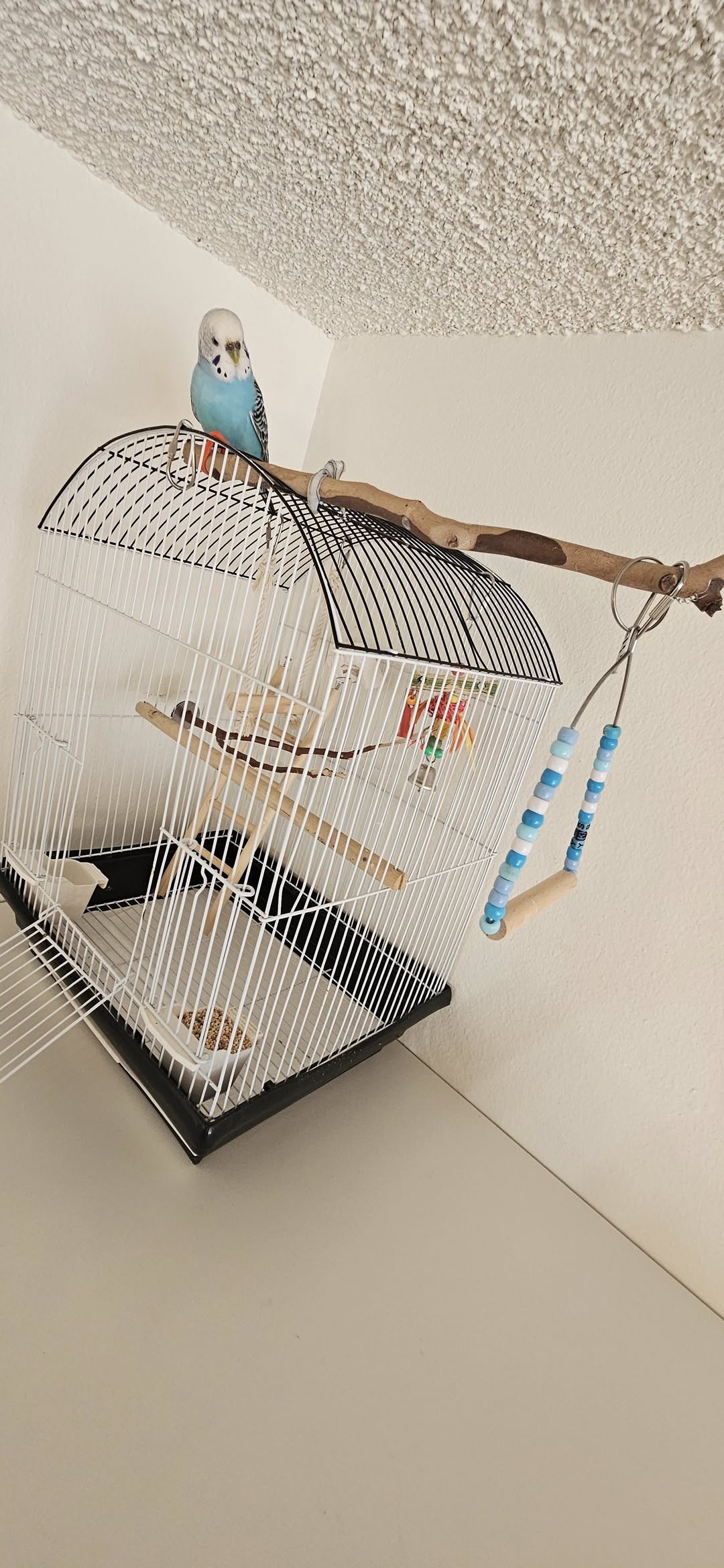
4. The Seed Mix That Is Never Fully Rotated
One of the specific problems the RSPB identifies with garden seed feeders is the accumulation of old seed that birds have not eaten — which becomes damp, clogged, and a medium for mould and bacteria. Their solution includes smaller feeders to force more frequent complete emptying and restocking.
The cage equivalent is the food bowl that never quite gets fully emptied because the bird preferentially selects certain seeds and ignores others, leaving a residue at the bottom that accumulates over days or weeks. That residue — of less-preferred seed, increasingly damp with age, mixed with hulls and debris — is the cage equivalent of the clogged garden feeder.
The solution is the same. Completely empty the bowl before refilling, rather than topping up what is already there. This forces a regular clear-out of the residue and ensures the bird is being offered genuinely fresh food rather than a fresh layer on an ageing substrate.
What The RSPB Guidance Means For Different Types Of Cage Feeding
Let me be specific about each food type, because the translation from garden to cage is not identical for every category.
Dry Seed Mix — The Baseline
Dry seed in a clean, dry bowl in a well-ventilated cage is the lowest-risk feeding situation. The risk rises when: the bowl is topped up rather than emptied and cleaned; the cage is humid or warm; multiple birds share the bowl; or fresh food, water, or droppings contaminate the seed. In summer, all of these risks increase. The solution is the daily emptying and washing routine I have described, combined with good cage hygiene generally.
Quality matters here too. Cheap seed that has been poorly stored — potentially already carrying mould spores — is a different product from quality seed sourced carefully and stored in appropriate conditions. The seed you buy for your bird is worth thinking about in the same way the RSPB is now thinking about what is in garden feeders: the quality of the food itself is part of the safety picture.
Sprouted Seeds — The Highest-Risk Category
Sprouted seeds are nutritionally excellent — they are one of the best foods you can give a budgie or cockatiel, packed with vitamins and enzymes that dry seed does not provide. They are also the highest-risk category of bird food from a contamination perspective, for the simple reason that sprouting requires moisture, and moisture is what pathogens need to proliferate.
Sprouted seeds should be prepared in clean conditions, served in a clean bowl, and removed entirely after a maximum of two hours in summer — one hour if the cage is warm. Any sprouted seed that has been sitting in a warm cage for longer than this should be disposed of rather than left for later. The nutritional benefit of sprouted seeds is genuinely significant. The risk of offering them carelessly in summer is equally significant.
Rinse sprouted seeds thoroughly before serving. Store them in the refrigerator between preparation and serving. Never leave them in the cage for extended periods in warm conditions. These are not burdensome rules — they are the appropriate handling standards for a moist food offered to an animal with a sensitive digestive system.
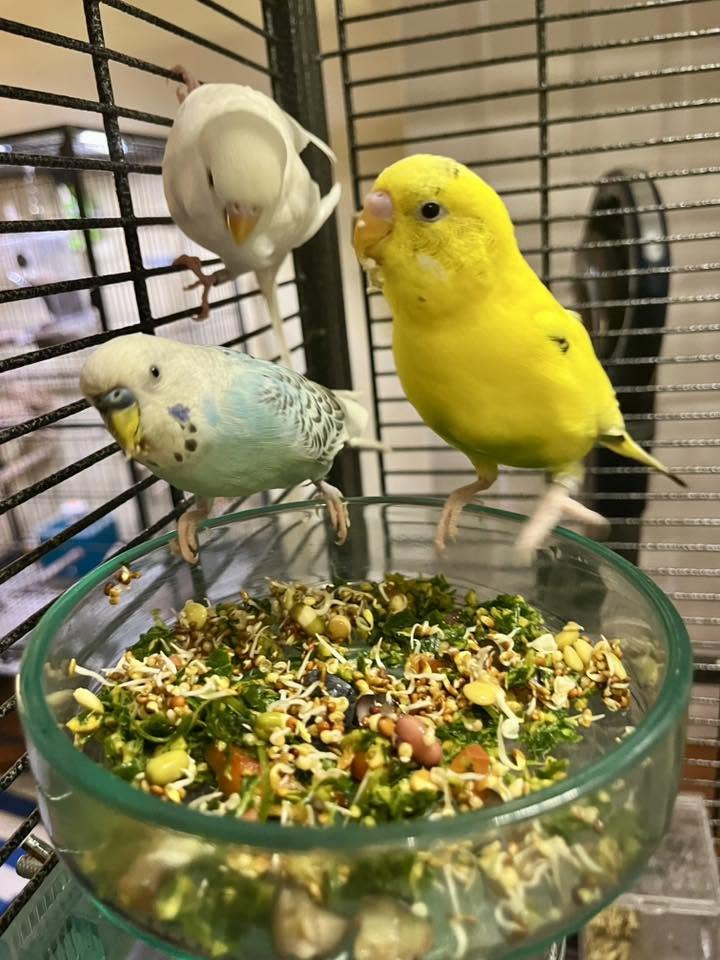
Fresh Vegetables And Fruit — The Two-Hour Rule
The same logic applies. Fresh food offered in summer needs to be removed within two hours. Not because it is necessarily contaminated, but because the conditions in a warm cage — ambient heat, saliva contact from the feeding bird, the general biological activity of a living environment — accelerate the deterioration of fresh food faster than most owners account for.
The practical approach: offer small pieces of fresh food rather than large ones, so the bird is more likely to consume what is offered within the two-hour window. Give fresh food in the morning or evening rather than at midday when the cage is warmest. Remove it when the two hours are up, regardless of whether it has been eaten.
Mealworms And Protein Foods
The RSPB’s summer guidance specifically endorses continuing to offer mealworms — the protein source that garden birds need for their breeding chicks — while pausing seed. For cage birds, protein foods in general deserve the same careful handling as fresh food: small quantities, offered in a clean bowl, removed promptly. Mealworms in particular can deteriorate quickly in warm conditions. Dried mealworms are more stable than live or fresh ones, but still deserve a clean bowl and prompt removal of uneaten portions.
The Parallel Between Garden Feeder Reform And Cage Management Reform
I want to make a broader point here that the RSPB guidance occasion gives me a reason to make.
The RSPB has changed guidance that was in place for decades, based on evidence about what that guidance was producing in practice. The previous guidance — feed generously, keep feeders full, attract as many birds as possible — was well-intentioned. It was also, as the evidence now shows, contributing to the spread of a disease that has driven a 67 percent decline in a once-familiar UK species.
This is a story about good intentions not being sufficient without understanding of the mechanism. The people who kept their feeders full of seed were not doing anything wrong by the lights of the guidance they had. The guidance was wrong.
I wonder how many pet bird feeding practices look similar in retrospect. Not harmful by intent, not careless by any normal standard, but producing outcomes — mild chronic illness, reduced immune resilience, shortened lifespans — that are not immediately connected back to the feeding habits that contributed to them.
The most common example I see is the seed bowl that is topped up rather than cleaned. Nobody does this because they think it is good for the bird. They do it because it looks fine, because the bird appears well, because nobody has ever told them it is a problem. The connection between the accumulated residue in the bottom of the bowl and the bird’s respiratory health, or its susceptibility to the next infection that comes along, is not visible.
The RSPB’s guidance change was driven by population-level data that made a previously invisible connection visible. Pet bird owners rarely have access to population-level data about their birds. What they have is the guidance from people who do know the mechanism — and acting on that guidance before the connection becomes visible in the individual bird in front of them is exactly what good ownership looks like.
The Practical Updated Standard — Summer Feeding For Cage Birds
- Empty, wash, and refill the dry seed bowl every day. Not top up. Empty it completely, wash it with hot soapy water, rinse, dry, and refill with fresh seed. The hulls and residue at the bottom are not neutral — they are the environment in which contamination builds. Remove them daily.
- Clean the water container daily — properly. Empty completely, wash the interior surface with hot water and a small amount of food-safe disinfectant, rinse thoroughly to remove any cleaning agent residue, and refill with fresh water. In summer, this is the minimum. In a multi-bird cage or in very hot conditions, twice daily is better.
- Give fresh food in portions small enough to be consumed within two hours, and remove what is not eaten. Do not leave fresh food in the cage when you leave the house. Give it when you can monitor and remove it. In the morning before work, or in the evening, are both viable. Midday, when the cage is warmest, is not.
- Handle sprouted seeds with particular care. Rinse before serving, refrigerate between preparation and use, serve in a clean bowl, remove within two hours in summer. The nutritional value is worth the extra handling care. The risk of not applying that care is real.
- Use separate bowls for dry seed and fresh food. Never put fresh food into the dry seed bowl. The moisture from the fresh food will accelerate deterioration of the seed it contacts. Keep food types separate and manage each with the appropriate standard for that food type.
- Increase cleaning frequency in summer relative to winter. The standards I have described are summer standards — driven by the same elevated risk that the RSPB’s guidance is responding to in garden feeders. In winter, the timescales are somewhat more forgiving. In July, they are not.
Warning Signs That Cage Feeding Hygiene May Be The Issue
- Recurring soft or loose droppings without other obvious cause — digestive disruption that clears and returns, particularly in summer, can sometimes be traced to contaminated food or water
- Persistent low-level respiratory symptoms — a bird that sneezes occasionally, seems slightly congested, or has subtly changed vocalisation without a clearly identified cause may be in an environment where hygiene is chronically slightly below the needed standard
- Reduced appetite or weight loss across a summer — a bird that is consistently eating less over weeks may be responding to food that is less palatable or less safe than it should be
- A food bowl with visible mould or an off smell — if you can see or smell a problem, it has been developing for long enough that it is genuinely a welfare concern. This is not a borderline case
- A water bottle with visible discolouration inside — the green or brown tinge that develops inside a water bottle that is refilled without being cleaned is biofilm. That is what the bird is drinking from
- Lethargy or reduced activity that appears in summer and is not explained by heat — a bird that is consistently less active without an obvious thermal cause may be dealing with a low-level infection or digestive burden that is hygiene-related
Quick Reference — RSPB Garden Guidance Translated To Cage Standard
| RSPB Garden Guidance | Cage Bird Equivalent | Summer Standard |
|---|---|---|
| Clean feeders weekly with disinfectant | Clean food bowl daily with hot soapy water | ✅ Daily minimum in summer |
| Refill bird baths daily with fresh tap water | Empty, wash, and refill water container daily | ✅ Daily — twice daily in very hot conditions |
| Remove uneaten moist food promptly | Remove fresh food after maximum two hours in summer | ✅ Two-hour rule, non-negotiable in July |
| Avoid flat feeders where material accumulates | Avoid deep bowls with uncleared residue — fully empty before refilling | ✅ Empty fully before each refill |
| Move feeders to prevent ground contamination | Wash cage tray and surrounding area regularly | ✅ Weekly cage floor cleaning minimum |
| Space feeders apart to reduce density | Multiple bowls in multi-bird cages, no crowding at single food source | ✅ Separate food access points for multi-bird setups |
Frequently Asked Questions
Does my indoor cage bird face the same disease risks as garden birds?
Not the same risks from exactly the same sources — a budgie in an indoor cage is not exposed to wild bird contact at a garden feeding station. But the cage bird faces equivalent risks through the same mechanism when food and water hygiene is inadequate. Trichomonosis can reach caged finches and canaries. Bacterial contamination of food and water is a direct welfare concern in any cage. The hygiene standards the RSPB is now advocating for garden feeders are, in their underlying principle, exactly the standards that responsible pet bird management has always required.
Is it really necessary to clean the food bowl every day?
In summer, yes. The accumulation of hull residue, dried saliva contact, and potential moisture in the bottom of a food bowl that is topped up rather than cleaned is the same type of contamination the RSPB guidance is addressing in garden feeders — operating on the same biological principles, just at a smaller scale. Daily cleaning in summer removes that accumulation before it becomes a meaningful health risk. The time required is under two minutes. The protection it provides is real.
Can I give my bird more fresh food in summer since it needs more nutrition in the heat?
Fresh food is always positive in principle, but the handling standard it requires is more demanding in summer because it deteriorates faster. More fresh food with proper handling — small portions, removed within two hours, clean bowls — is fine. More fresh food left in a warm cage without proper management is counterproductive. The nutritional benefit of fresh food does not override the hygiene requirement for offering it safely.
My bird seems fine even though I top up the bowl rather than washing it — is that not evidence it is not a problem?
A bird that appears fine may be managing the chronic, low-level burden of feeding from a bowl that is not as clean as it should be. Birds are resilient and hide health compromise well. The evidence the RSPB is responding to with its guidance change was population-level data, not bird-by-bird observation. Each individual bird at an inadequately maintained garden feeding station also appeared fine — right up until it was not. The standard should not be “the bird looks okay.” It should be “the bird is being fed from a clean, safe surface.”
Where can I get honest bird feeding advice in Swindon?
Come and see us at Paradise Pets, Manor Garden Centre, Cheney Manor, Swindon SN2 2QJ. Or give us a ring on 01793 512400. We will talk through your feeding setup honestly and tell you where we think the standards need updating. Free advice, no obligation — that is how we have done things for 35 years.
One Last Thing From Me
The RSPB guidance changed because an institution with access to population-level data about UK birds recognised that a common, well-intentioned practice was contributing to harm that was not visible at the individual level until you looked at the whole population.
I do not have population-level data about the health outcomes of pet birds in UK homes. But I do have 35 years at a counter where people bring me their birds, describe their management practices, and tell me what has happened. And the patterns I see — the recurring digestive issues in summer, the birds that seem well but not thriving, the cases where something shifted for the better when the owner simply started washing the food bowl properly — are consistent with the mechanism the RSPB is now formally acknowledging in the garden bird world.
The RSPB said stop filling seed feeders from May to October. The part of that guidance that applies most directly to cage bird owners is not the seasonal seed pause. It is the mechanism behind it — the recognition that shared feeding surfaces with inadequate hygiene are a disease transmission route, and that the solution is hygiene standards robust enough to interrupt that route.
Apply that to your cage. Not because the RSPB said so — because the biology is the same, the mechanism is the same, and your bird deserves the same standard of care that the guidance is now asking for the birds in your garden.
Want To Review Your Bird’s Feeding Setup? Come And Talk It Through
Tell me what you are feeding, how often you clean, and what the setup looks like. I will give you an honest assessment of where the hygiene standard is right and where it needs updating. Free advice, no obligation. That is how we have done things for 35 years.