
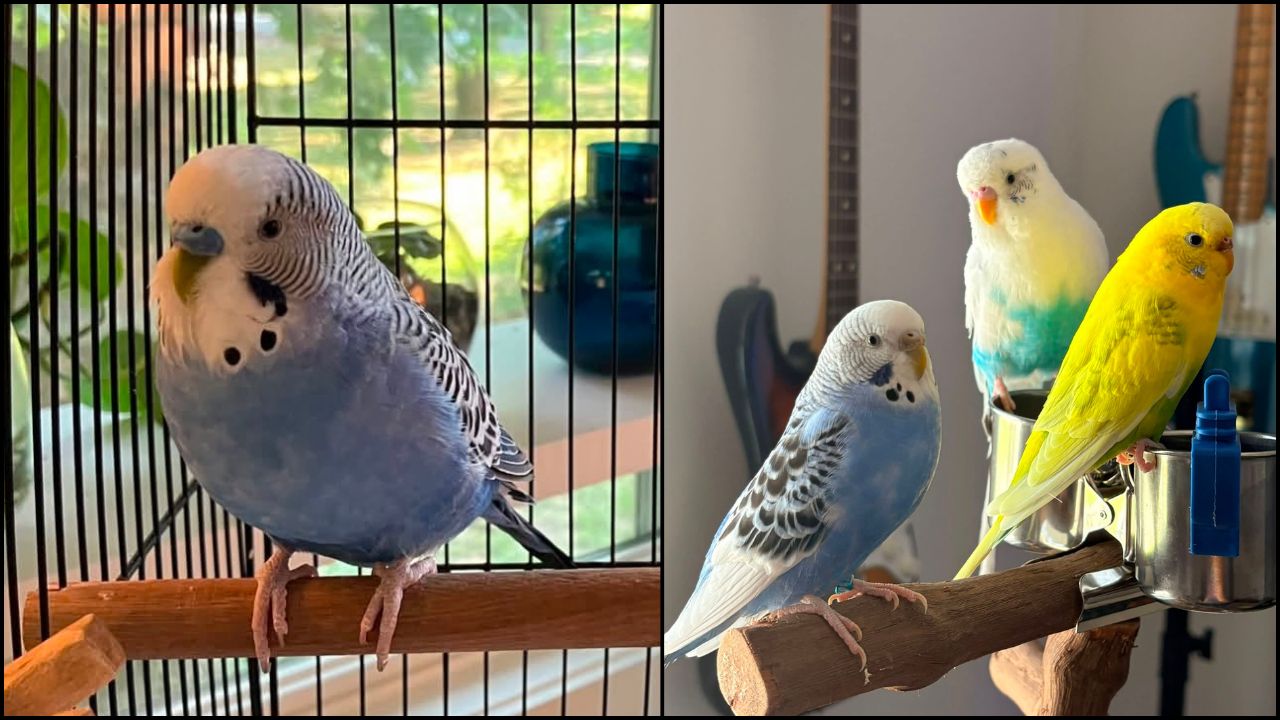

Neil has kept, bred, and sold budgies at Paradise Pets Swindon since 1988 — over 35 years of watching UK households form relationships with the bird species that has remained Britain’s most popular pet bird for decade after decade. According to UK Pet Food (PFMA) data, over one million pet budgies live in UK homes today, making them the UK’s most popular pet bird species by a wide margin. Yet after 35 years at the counter, Neil has come to believe budgies are also the UK’s most systematically misunderstood pet bird — treated as simple, small, decorative pets when the welfare-led reality is that they are highly social, genuinely intelligent, emotionally complex flock birds whose actual needs UK owners are consistently under-informed about at point of purchase. The budgie loneliness crisis is not one problem but many overlapping welfare gaps rooted in the same fundamental misunderstanding — that a small, affordable, common pet bird must be simple to understand and simple to care for. This is Neil’s honest, welfare-led take on why the UK’s most popular pet bird is also its most misunderstood, what the layers of misunderstanding actually look like across British households, why they matter for individual UK budgie welfare, and what UK owners can genuinely do to close the gap.
A young man came into the shop one Thursday afternoon, visibly rethinking something important. He had owned his pet budgie Ollie for six months, had provided what he genuinely thought was excellent care, and had recently read an article about budgie intelligence and social needs that had completely reframed how he thought about his relationship with Ollie. He wanted to talk to someone who genuinely knew budgies about whether he had been fundamentally underestimating what Ollie was — not just Ollie’s needs, but Ollie’s actual cognitive and emotional life. He had come to the counter because he had begun to suspect he had been treating a genuinely intelligent, emotionally complex flock bird as if he were caring for a decorative small pet.
I sat with him for half an hour and explained the honest answer, which is one I have given hundreds of times over 35 years — his suspicion was correct, but he was not alone. In fact, the systematic underestimation of budgies is genuinely the norm across the UK pet budgie community. Most UK households acquire budgies expecting a “starter bird,” a “small pet,” a “cage bird” — categories that carry cultural implications about simplicity, low welfare demands, and limited relationship depth. What UK owners then actually encounter, if they pay close attention over months and years, is a bird species with substantial cognitive capacity, genuine emotional bonding, complex social requirements, sophisticated communication ability, and welfare needs that require considerably more thoughtful provision than the cultural stereotype suggests. The young man left that afternoon planning several welfare-led changes to Ollie’s care based on this reframing. Two months later, when he came back to the shop for supplies, he described the deepening of the relationship as “one of the most surprising and rewarding experiences of my adult life.” Ollie was thriving. He was thriving because his owner had begun to see him as who he actually was rather than as who the cultural stereotype suggested.
I am writing this article because the systematic misunderstanding of UK budgies is not a niche welfare concern affecting a small number of birds. It affects the majority of the one million-plus UK pet budgies currently living in British homes, and it produces cumulative welfare compromises that develop over years across the entire UK budgie community. The misunderstanding is not the fault of individual UK owners — it reflects a broader cultural and retail pattern that has consistently treated budgies as simpler than they actually are. But the welfare consequences are borne by individual UK budgies, and the correction has to happen at the individual owner level.
This article is the conversation I have at the counter with UK budgie owners who have begun to suspect they have been underestimating their birds. By the end of it, you will understand the multiple overlapping layers of budgie misunderstanding common across UK households, why each layer matters for welfare, how these layers combine to produce the loneliness crisis affecting the UK budgie community, and what welfare-led UK owners can genuinely do to close the understanding gap for their specific birds — whether they have owned budgies for six weeks or sixteen years.
The Paradox — Most Popular Yet Most Misunderstood
For UK readers wanting to understand the paradox at the heart of this article, here is the honest picture based on 35 years of watching the UK budgie community.
What the UK budgie paradox actually looks like:
- Over 1 million pet budgies in UK homes according to UK Pet Food (PFMA) data
- UK’s most popular pet bird species by wide margin
- Sold in essentially every UK pet retailer from chain stores to independent shops
- Kept across every UK demographic — families, singles, elderly, urban, rural
- Yet routinely underestimated as intelligent beings
- Systematically kept in undersized cages falling short of RSPCA guidance
- Commonly kept solo despite being flock species
- Provided with limited enrichment below welfare-appropriate standards
- Fed diets that fall short of welfare-led nutrition
- Given inadequate out-of-cage flight time
- Expected to live shorter lives than their welfare-standard potential
- Rarely provided with same-species social contact
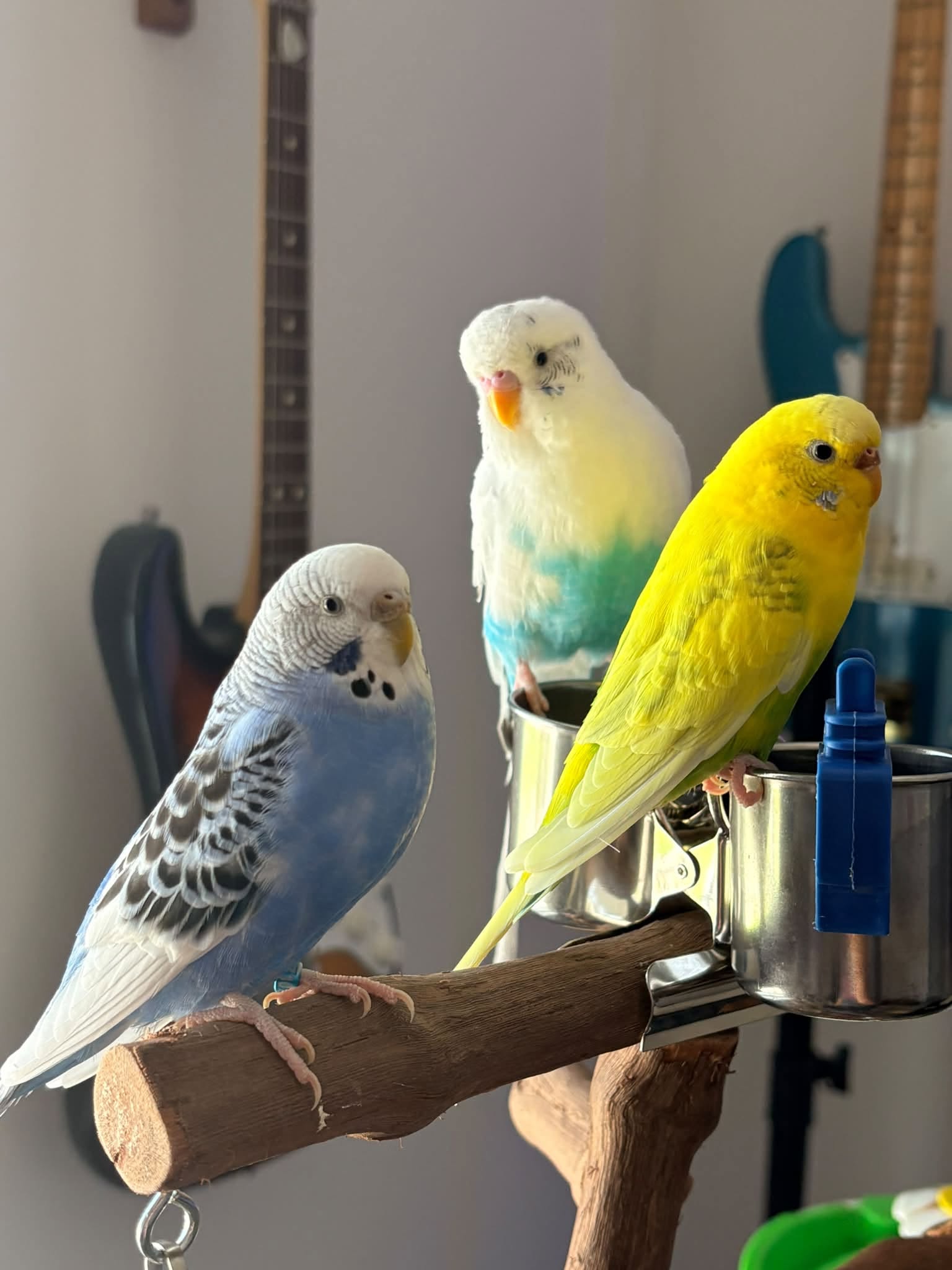
The paradox is that popularity has produced familiarity, and familiarity has produced cultural assumptions of simplicity that are fundamentally inaccurate. Most UK households know what a budgie looks like. Most UK households have opinions about budgies as pets. Most UK households believe they understand what budgies need. And most UK households are wrong about most of the specific welfare-relevant aspects of budgie care because the cultural stereotype has substituted for genuine species knowledge.
This is why “most popular” and “most misunderstood” are not contradictory descriptions of the same UK species — they are causally connected. Popularity produced cultural stereotype. Cultural stereotype produced widespread assumption of simplicity. Assumption of simplicity produced systematic under-provision of welfare-appropriate care. And systematic under-provision has produced the cumulative welfare gap I have watched at the counter for 35 years.
For more on the UK budgie population context, our article on why the UK now has over a million pet budgies covers the community context that makes this understanding gap matter for so many individual UK birds.
Layer 1 — Underestimating UK Budgie Intelligence
For UK budgie owners wanting to understand the first layer of common misunderstanding, here is the honest picture of what UK budgies actually are cognitively.
What UK budgie intelligence actually looks like:
- Genuine problem-solving ability observed in laboratory and welfare research
- Individual object recognition — birds recognise specific toys, people, objects
- Routine learning and prediction — birds learn household patterns and adjust behaviour
- Owner recognition across time — long-term memory for specific individuals
- Language mimicry demonstrating cognitive processing
- Trainability comparable to some small mammals
- Preference learning — birds develop specific food, toy, activity preferences
- Social learning from other budgies — behaviours transmitted within groups
- Adjustment to household changes demonstrating flexible cognition
- Emotional response calibration — different reactions to different situations
- Multiple communication modalities — vocalisations, body language, contact
- Cognitive stimulation requirements — bored budgies show welfare-relevant behaviour changes
Why UK budgie intelligence is systematically underestimated:
- Small size associated with limited cognitive capacity in cultural stereotype
- Common as pet species reduces perceived exoticism and interest
- Historical characterisation as “simple starter bird” in UK pet retail
- Marketing that emphasises “easy care” misinterpreted as “low intelligence”
- Comparison with larger parrots obscures budgie cognitive complexity
- Limited public scientific communication about budgie research findings
- Cage keeping restricts behavioural expression that would reveal intelligence
- Solo keeping reduces observable social intelligence
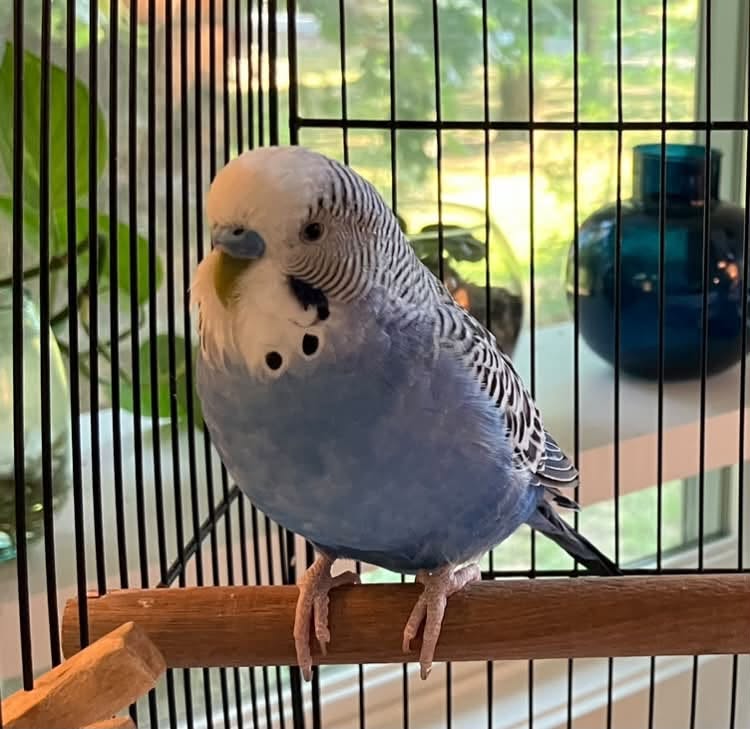
For more on the science of UK pet bird intelligence, our article on why new research reveals pet birds are smarter than we thought covers the emerging scientific understanding of avian cognition that most UK owners have not been told about.
After 35 years of watching UK budgies in the shop and in visiting customers’ homes, I can tell you that budgies are genuinely intelligent beings whose cognitive capacity is systematically underestimated across UK households. This underestimation matters because it shapes every subsequent decision about their care — cage size, enrichment provision, interaction time, social housing, dietary variety. UK owners who reframe their budgies as intelligent beings typically transform their entire approach to welfare-led keeping.
Layer 2 — Underestimating UK Budgie Emotional Depth
For UK budgie owners wanting to understand the second layer of common misunderstanding, here is the honest picture of what UK budgies actually experience emotionally.
What UK budgie emotional life actually looks like:
- Genuine emotional bonding with specific individuals — humans and other birds
- Attachment behaviours observable and measurable
- Distress responses to social loss — mate loss, owner absence, companion removal
- Joy indicators in welfare-appropriate contexts — vocalising, playing, exploring
- Fear responses to genuinely threatening situations
- Boredom and frustration in welfare-inadequate housing
- Curiosity and interest as observable behavioural states
- Individual personality expression — no two UK budgies are emotionally identical
- Preference formation based on positive and negative experiences
- Long-term emotional impact of significant events
- Social emotional contagion — birds respond to each other’s emotional states
- Grief responses to loss of paired companions
Why UK budgie emotional depth is systematically underestimated:
- Small size assumption of limited emotional capacity
- Cultural framing of birds as fundamentally different from mammals emotionally
- Limited overt expression compared to mammalian pets obscures internal states
- Cage keeping restricts emotional expression opportunities
- Historical scientific dismissal of bird emotion now genuinely outdated
- Owner projection of “just a bird” framing prevents emotional recognition
- Solo keeping prevents observation of social emotional behaviour
- Limited welfare-relevant emotional education at point of purchase
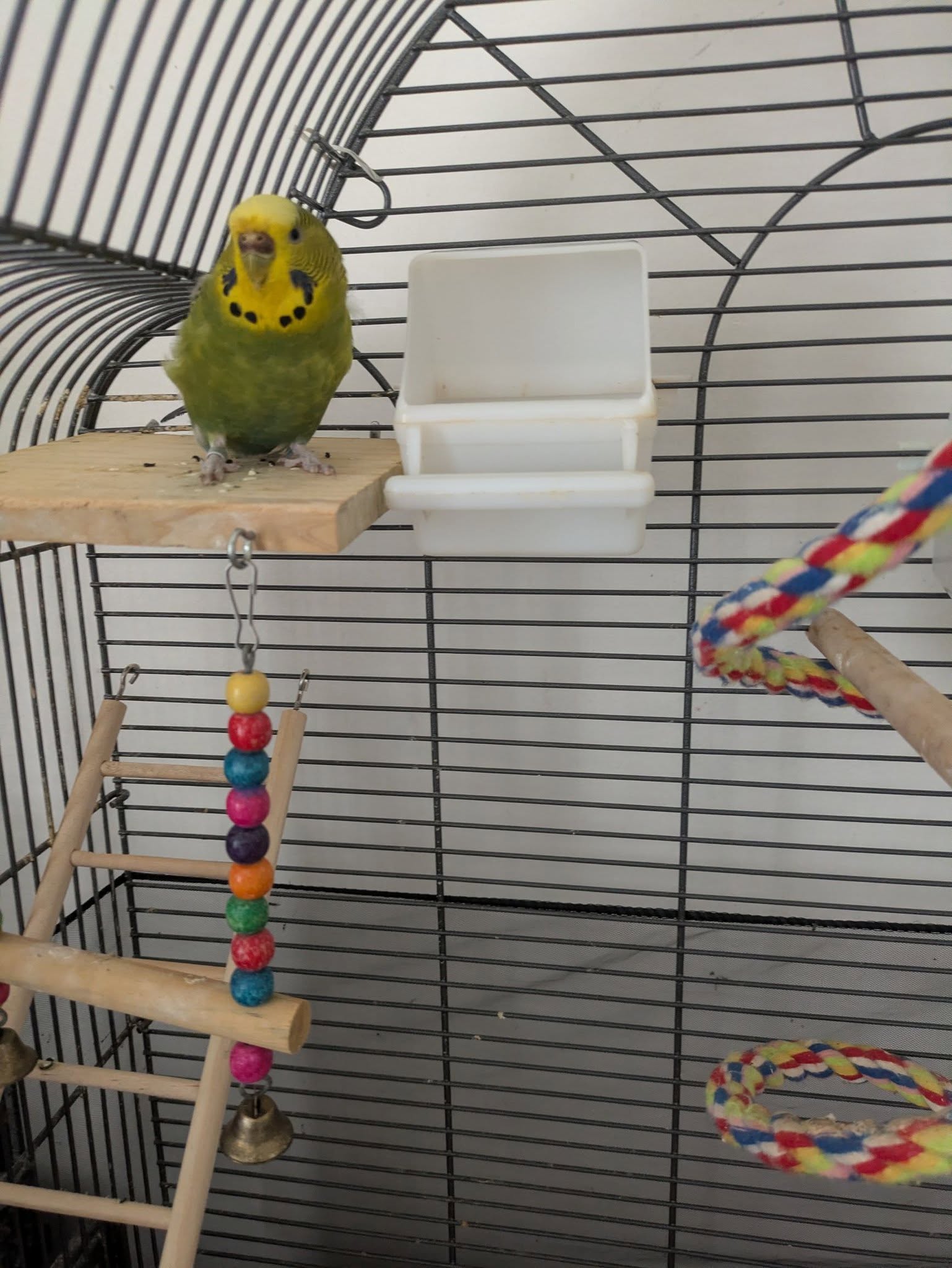
The emotional depth of UK budgies matters for welfare because emotionally complex beings require welfare-appropriate treatment that acknowledges their capacity for suffering and thriving. Owners who reframe their UK budgies as emotionally complex typically make welfare-led decisions they would not make if they continued to view budgies as emotionally simple. This includes decisions about social housing, environmental enrichment, interaction quality, and response to signs of distress.
Layer 3 — Underestimating UK Budgie Social Needs (The Loneliness Core)
For UK budgie owners wanting to understand the third layer and the core of the loneliness crisis, here is the honest picture of what UK budgies actually need socially.
What UK budgie social needs actually require:
- Same-species contact as core welfare requirement — not optional companionship
- Daily interaction with own species preferred throughout waking hours
- Flock-based biology evolved for constant same-species presence
- Wild budgies live in flocks of hundreds to thousands in Australian grasslands
- Same-species communication cannot be replicated by human interaction
- Mutual preening as core welfare behaviour humans cannot provide adequately
- Sleep-time flock security important for psychological wellbeing
- Species-specific play and social interaction require same-species partners
- Solo keeping creates measurable welfare adaptations over months and years
- Pair or group housing produces observable welfare improvements
- Human interaction supplements but cannot replace same-species contact
- Estimated 40-60% of UK budgies kept solo based on 35-year counter observation
Why UK budgie social needs are systematically underestimated:
- Historical UK retail practice of selling single budgies without explaining welfare implications
- Belief that human interaction substitutes for same-species company
- Cost consideration during initial purchase — two seemed twice the investment
- Space concerns in UK homes reducing willingness for pair housing
- Assumption that solo budgies bond better with humans — misapplied welfare thinking
- Cultural framing of budgies as “cage birds” rather than flock beings
- Limited point-of-purchase welfare guidance about social requirements
- Solo welfare gap develops gradually and is often misattributed to other causes
For more on the specific solo-keeping welfare issue, our article on why solo keeping is the most common UK budgie welfare mistake covers this specific dimension of the loneliness crisis in detail, and our article on why UK budgies genuinely need a friend covers the practical companion consideration.
The social layer of the loneliness crisis is genuinely the most impactful welfare gap for individual UK budgies. Hundreds of thousands of UK budgies are currently kept solo, receiving human interaction but denied the same-species contact their welfare needs actually require. Addressing this layer alone would substantially improve welfare across the UK budgie community.
Layer 4 — Underestimating UK Budgie Communication
For UK budgie owners wanting to understand the fourth layer of common misunderstanding, here is the honest picture of what UK budgies actually do communicatively.
What UK budgie communication actually involves:
- Distinct vocalisations for different situations — alarm, contact, contentment, aggression
- Individual vocal signatures — different budgies sound different
- Language mimicry ability — many UK budgies learn words and phrases
- Contextual understanding of learned vocalisations in some birds
- Body language communication — feather positioning, posture, movement
- Eye pinning as communication signal
- Beak contact and mutual preening as social communication
- Vocal exchange between paired birds throughout the day
- Emotional tone conveyed through vocalisation quality
- Recognition of owner voice and specific words
- Complex song patterns in some individuals
- Communication with other bird species in mixed households
Why UK budgie communication is systematically underestimated:
- Dismissal as “just chirping” prevents recognition of variety
- Focus on human speech mimicry obscures broader communication
- Limited owner attention to specific vocalisation patterns
- Solo keeping prevents observation of social communication
- Cage restriction limits communication behavioural expression
- Cultural assumption of simple bird communication
- Comparison with parrots noted for speech reduces perception of budgie ability
- Limited welfare-relevant communication education at point of purchase
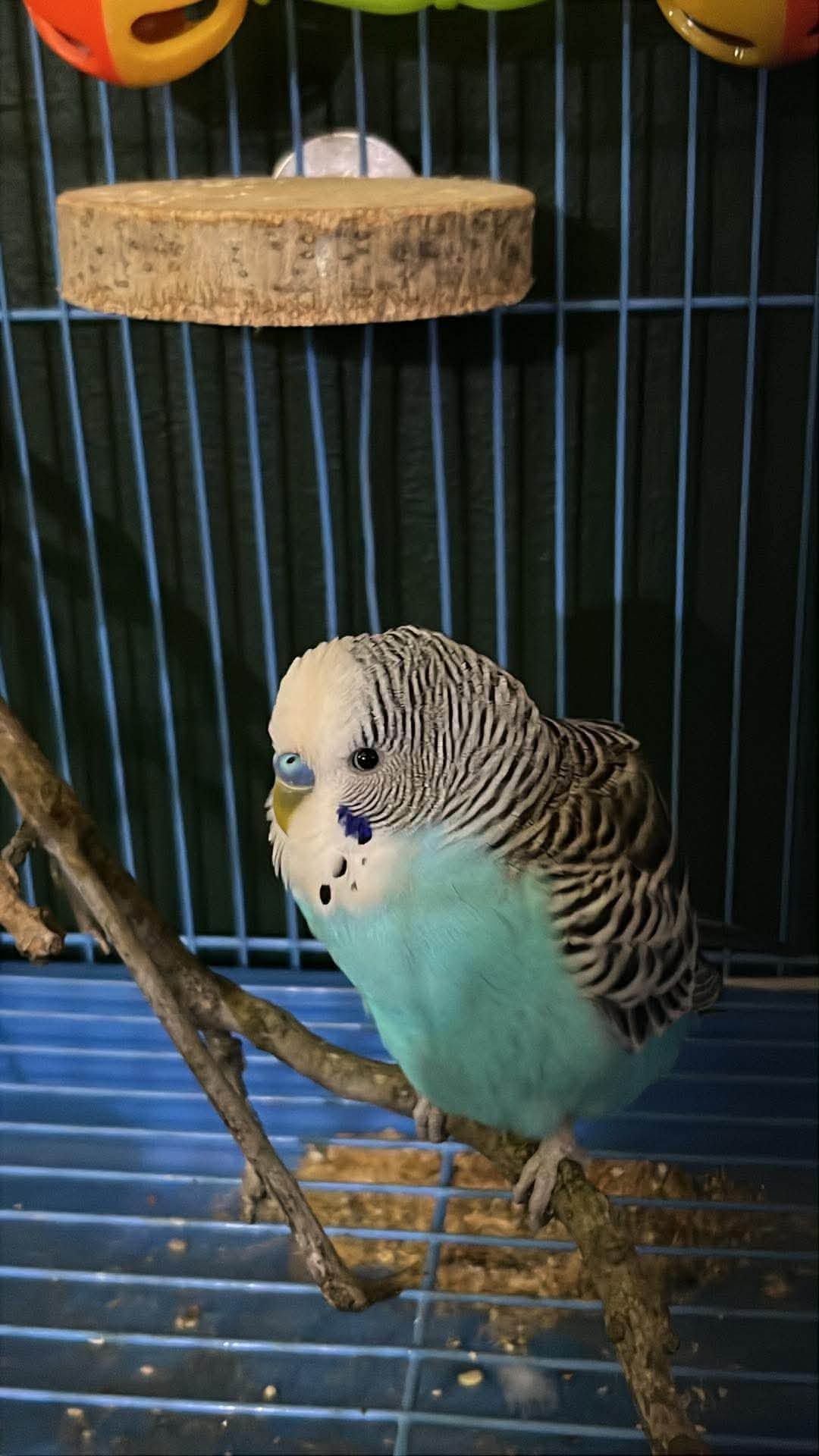
UK budgie communication ability matters for welfare because it reveals the underlying cognitive and emotional complexity that requires welfare-appropriate care. Owners who begin to attend to their budgie’s specific vocalisations, body language, and communication patterns typically develop deeper appreciation of the individual bird’s welfare state and specific needs.
Layer 5 — Underestimating UK Budgie Welfare Needs (Cage, Diet, Enrichment)
For UK budgie owners wanting to understand the fifth layer of common misunderstanding, here is the honest picture of what UK budgies actually need physically.
What UK budgie physical welfare needs actually require:
- Cage width three times combined wingspan for pairs per RSPCA guidance
- Minimum 6 hours daily out-of-cage flight time
- Varied diet beyond seed alone — pellets, vegetables, occasional fruits
- Multiple perches at different heights and materials
- Regular environmental enrichment rotation — foraging, chewing, exploration
- Appropriate temperature range — 18-24°C ideal
- Consistent daily routine for feeding, cleaning, interaction
- Regular UK avian vet care from specialist
- Fresh water changed daily
- Cage cleaning routine appropriate to prevent disease
- Bird-safe indoor flight space preparation
- Protection from household hazards — fumes, non-stick cookware, open windows
Why UK budgie physical welfare needs are systematically underestimated:
- UK pet retail stocks cages that fall short of RSPCA guidance
- Marketing suggests smaller cages are adequate
- Historical UK budgie keeping practice normalised undersized cages
- Diet marketing focuses on seed-based nutrition below welfare-led standard
- Enrichment provision often minimal — few toys, basic setup
- Out-of-cage time frequently well below RSPCA recommendation
- UK avian vet care under-utilised compared to mammalian pets
- Assumption of “easy care” reduces perceived need for research
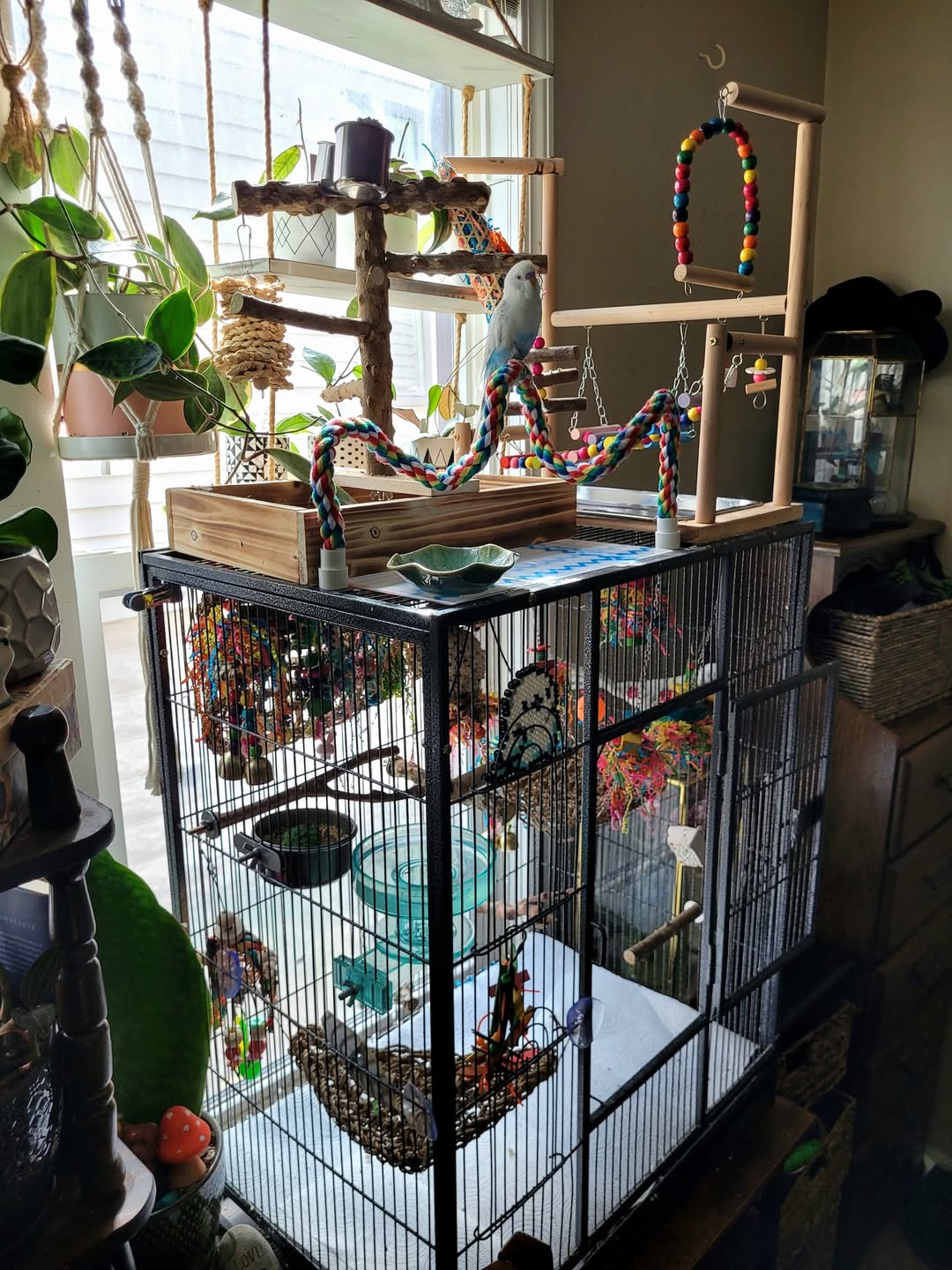
For more on the specific cage size issue, our article on why most UK budgie cages fall short of RSPCA guidance covers the specific welfare gap in physical housing that affects the majority of UK budgies.
Physical welfare needs are perhaps the most measurable dimension of the misunderstanding crisis because they can be assessed against RSPCA guidance objectively. Most UK budgie setups fall short across multiple physical welfare dimensions simultaneously. Addressing physical welfare needs is often the most immediate practical improvement UK owners can make.
Layer 6 — Underestimating UK Budgie Lifespan Potential
For UK budgie owners wanting to understand the sixth layer of common misunderstanding, here is the honest picture of what UK budgies can actually live to become.
What UK budgie lifespan potential actually looks like:
- Welfare-standard UK budgies can live 8-12 years or more
- Some UK budgies have reached 15-20 years with exceptional welfare-led care
- Species biological lifespan potential substantially longer than typical outcomes
- Cultural expectation of 5-7 year lifespan reflects historical welfare-limited keeping
- Welfare-standard care extends effective lifespan significantly
- Diet, housing, social, veterinary care all affect lifespan outcomes
- Solo keeping typically reduces effective lifespan
- Small cage keeping reduces lifespan through cumulative welfare compromise
- Seed-only diet reduces lifespan through nutritional inadequacy
- Lack of veterinary care reduces lifespan through untreated conditions
Why UK budgie lifespan potential is systematically underestimated:
- Cultural expectation shaped by welfare-limited historical keeping outcomes
- Marketing framing of budgies as “starter pets” implies limited lifespan commitment
- Point-of-purchase guidance rarely mentions welfare-standard lifespan
- Assumption that small birds live short lives generalises inaccurately
- Historical UK budgie lifespans reflected under-provision of care
- Owner expectation of shorter lifespan reduces investment in welfare
- Cultural framing of budgies as replaceable rather than long-term companions
- Limited awareness of species biological potential in general UK population
The lifespan underestimation matters because it shapes owner commitment expectations at point of purchase. UK households acquiring budgies expecting 5-7 year commitment are genuinely surprised to learn that welfare-standard budgies can live substantially longer. The reframing from “short-lived starter pet” to “10-15 year committed relationship” transforms welfare-led decision-making at every stage of the bird’s life.
How These Layers Combine — The Cumulative UK Budgie Loneliness Crisis
For UK budgie owners wanting to understand how these overlapping layers produce the cumulative welfare gap, here is the honest picture of the systemic issue.
How the six layers of misunderstanding combine cumulatively:
- Intelligence underestimation reduces enrichment provision
- Emotional depth underestimation reduces welfare-led interaction quality
- Social needs underestimation produces solo keeping practices
- Communication underestimation reduces owner attention to welfare signals
- Physical needs underestimation produces undersized cages and limited flight time
- Lifespan underestimation reduces long-term welfare investment
- Each layer reinforces the others in a compounding pattern
- Individual UK budgies typically experience multiple layers simultaneously
- Cumulative welfare gap develops over years across the affected UK budgies
- The pattern becomes normalised because it is so widespread
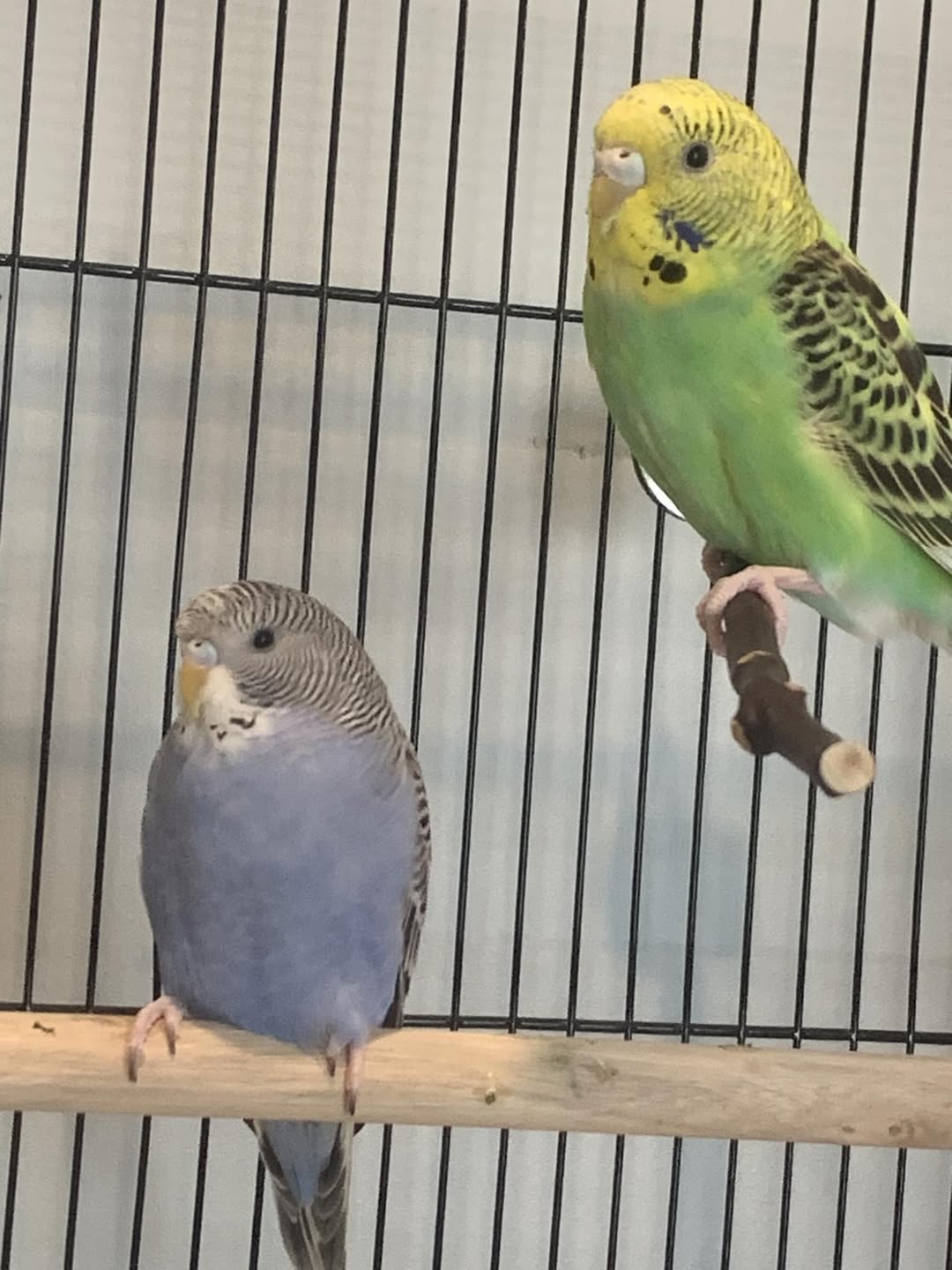
The UK budgie loneliness crisis, understood in this broader sense, is not simply about solo keeping. It is about the cumulative effect of six overlapping layers of species misunderstanding that together produce welfare-limited living for the majority of UK pet budgies. Each layer alone would matter. Combined, they produce the systematic welfare gap that has become normalised across the UK budgie community.
After 35 years at the counter, I have come to believe recognising this cumulative pattern is what enables genuine welfare-led change. UK owners who address one layer often notice their bird’s welfare improving. UK owners who address multiple layers typically report transformative changes in their bird’s visible thriving. The layers are addressable individually, but the greatest impact comes from reframing budgies comprehensively across all six dimensions.
What UK Owners Can Do — Genuine Welfare-Led Reframing
For UK budgie owners wanting to close the understanding gap for their specific birds, here is the honest practical approach based on 35 years of watching what works.
- Reframe budgies as intelligent beings
Attend to your bird’s problem-solving, learning, and preference expression. Provide cognitive enrichment through varied toys and opportunities. - Reframe budgies as emotionally complex
Recognise attachment behaviours, distress signals, joy indicators. Respond to emotional needs as you would for any complex pet. - Reframe budgies as social flock beings
Provide same-species companionship. If solo keeping continues, dramatically increase human interaction quality and enrichment. - Reframe budgies as communicators
Attend to vocalisation patterns, body language, individual expression. Learn to read your specific bird. - Reframe budgies as welfare-need-having pets
Assess cage size against RSPCA guidance. Increase out-of-cage flight time toward 6 hours daily. Vary diet beyond seed. Provide enrichment rotation. - Reframe budgies as long-term commitments
Plan care for 10-15 year timeline. Invest in welfare-standard setup as long-term one-time cost. Build UK avian vet relationship. - Attend to your specific bird’s individual expression
Individual budgies differ. Learn your bird specifically rather than generic species facts. - Prioritise welfare-led over aesthetic decisions
Choose cage, diet, and enrichment based on welfare rather than shelf appearance. - Seek welfare-led UK independent shop guidance
Independent shops with welfare-led focus provide better ongoing guidance than mainstream retail. - Share welfare-led understanding with other UK budgie owners
Community change happens through individual owner conversations.
The reframing does not need to happen all at once. UK owners who make gradual welfare-led changes across the six layers typically transform their bird’s quality of life over months and years. Each welfare-led decision compounds with others to produce cumulative improvement.
Frequently Asked Questions
Why do UK owners systematically underestimate their pet budgies?
The systematic underestimation reflects cultural and retail patterns rather than individual owner failure. UK budgie popularity has produced cultural stereotypes of simplicity, retail marketing has emphasised “easy care” framing, historical UK budgie keeping practices normalised welfare-limited setups, and point-of-purchase guidance has consistently under-explained species complexity. Individual UK owners inherit these patterns and typically apply them without recognising them as underestimation. The correction requires reframing across six overlapping dimensions — intelligence, emotional depth, social needs, communication, physical welfare needs, and lifespan potential.
What is the UK budgie loneliness crisis?
The UK budgie loneliness crisis refers to the cumulative welfare gap affecting the majority of the UK’s over one million pet budgies, produced by six overlapping layers of systematic species misunderstanding. At its core is solo keeping — an estimated 40-60% of UK budgies kept without same-species company. But it extends beyond social isolation to include undersized cages, limited enrichment, seed-heavy diets, insufficient flight time, limited vet care, and reduced lifespan outcomes. The “loneliness” describes both the specific social welfare gap and the broader welfare-limited living the majority of UK budgies experience.
How do I know if I have been underestimating my UK budgie?
Consider whether your setup and interaction assume budgie simplicity or budgie complexity. Do you provide cognitive enrichment appropriate for an intelligent being? Do you respond to your bird’s emotional signals? Do they have same-species companionship? Do you attend to their communication patterns? Does your cage meet RSPCA guidance dimensions? Are you providing 6+ hours daily flight time? Are you planning for 10-15 year care? If several of these prompt “no” or “not really” responses, you have likely been underestimating your budgie in ways that affect their welfare.
What should I do first if I want to close the understanding gap?
The single most impactful first change is providing same-species company if you have been keeping solo, or dramatically increasing out-of-cage flight time toward the RSPCA-recommended 6 hours daily if you have a pair. Both changes address welfare gaps affecting the majority of UK budgies. Beyond these two, the reframing can progress at your pace across the other layers — dietary variety, enrichment rotation, cage upgrade planning, welfare-led interaction quality, veterinary relationship building. Prioritise the changes that address the most significant gaps in your specific setup.
Are welfare-standard UK budgie setups genuinely more work than the cultural stereotype suggests?
Yes — meaningfully more work than the “easy starter pet” cultural framing implies, but not overwhelming for households genuinely committed to welfare-led keeping. Welfare-standard care requires proper cage investment, varied diet provision, daily out-of-cage flight time, enrichment rotation, same-species companionship, welfare-led interaction, and long-term commitment. This is more substantial than the cultural stereotype but comparable to responsible mammalian pet keeping. UK households considering budgies should genuinely understand this before purchase, and UK households already keeping budgies can transition to welfare-led standards gradually.
Where can I get welfare-led UK budgie guidance in Swindon?
Come and see us at Paradise Pets, Manor Garden Centre, Cheney Manor, Swindon SN2 2QJ. We provide welfare-led guidance across all six dimensions of budgie care discussed in this article — cognitive enrichment, emotional recognition, social housing, communication understanding, physical welfare setup, and long-term care planning. Free thoughtful advice based on 35 years of helping UK budgie owners provide welfare-appropriate care that reflects who these birds actually are. Ring us on 01793 512400.
One Last Thing From Me
“Have I been underestimating my UK budgie all this time?” is the question I hear most often from UK owners who begin to recognise the systematic misunderstanding pattern, and one I want to answer with complete honesty. The honest answer, after 35 years of watching UK budgies in the shop and in visiting customers’ homes, is — yes, you almost certainly have, because almost every UK budgie owner underestimates their budgie in at least some of the six ways covered in this article. This is not a personal failing. It is the inherited pattern of UK budgie keeping shaped by cultural stereotypes, retail marketing, historical practice, and limited point-of-purchase welfare education. Your budgie is genuinely more intelligent than the stereotype suggests. Your budgie is genuinely more emotionally complex than the stereotype suggests. Your budgie genuinely needs same-species company more than the stereotype suggests. Your budgie communicates more meaningfully than the stereotype suggests. Your budgie has more substantial physical welfare needs than the stereotype suggests. Your budgie can live longer than the stereotype suggests. The reframing across these six layers is what enables welfare-led keeping for the UK’s most popular pet bird species. The reframing is achievable — thousands of UK budgie owners make this transition each year and describe transformative deepening of the relationship with their birds. The UK budgie loneliness crisis persists because too few UK owners have been given honest welfare-led education about who these birds actually are. This article is my honest 35-year attempt to close that gap for the UK budgie owners who find it before the misunderstanding produces cumulative welfare consequences, and for the UK budgie owners who find it after and can still correct course for their bird’s remaining years.
The young man with Ollie that Thursday afternoon? He implemented reframing across all six layers gradually over the following months. He upgraded to a welfare-standard cage. He introduced a same-species companion after appropriate protocol. He varied Ollie’s diet substantially. He increased daily out-of-cage flight time. He built a relationship with a local UK avian vet. He committed to a 10-15 year care horizon rather than the shorter timeline he had originally assumed. Two years later, when he came back to the shop with both Ollie and Ollie’s companion Pip, he described the difference as “night and day compared to how I was keeping Ollie originally.” Both birds were visibly thriving. His relationship with them had deepened substantially. He had become an informal advocate among his friends for welfare-led budgie keeping. The transformation had been comprehensive and it had begun with the reframing conversation at the counter.
That is what I want for every UK budgie owner reading this article. Not the guilt of realising you have been underestimating your bird. Not the defensiveness of assuming the cultural stereotype was adequate. But the genuine understanding of who UK budgies actually are, honest recognition of which dimensions you may have underestimated in your specific setup, and welfare-led practical response across the layers where change would benefit your individual bird.
The UK budgie loneliness crisis is real. It affects the majority of the one million-plus UK pet budgies currently in British homes. It is rooted in systematic species misunderstanding across six overlapping dimensions. And it is closeable — one UK owner at a time, one UK budgie at a time, through the reframing conversations that happen at welfare-led UK independent shops like this one, in articles like this one, and in the growing UK budgie welfare community that is beginning to recognise these birds for who they actually are.
If you have specific questions about closing the understanding gap for your particular UK budgie, please come in for a chat. After 35 years at the counter, helping UK owners reframe their budgies comprehensively is one of the most genuinely valuable things any independent UK pet shop can do — because reframing is what enables everything else that follows.
Ready To Understand Your UK Budgie Better? Come And See Me
We provide welfare-led guidance across all six dimensions of UK budgie care — cognitive enrichment, emotional recognition, social housing, communication understanding, physical welfare setup, and long-term care planning. Free thoughtful advice based on 35 years of helping UK owners reframe their budgies for welfare-appropriate keeping. That is how we have done things since 1988.