


Neil has been keeping, breeding, and selling budgies at Paradise Pets Swindon since 1988 — over 35 years of daily first-hand experience with these birds and the owners who keep them. In that time, he has sold budgies to hundreds of first-time owners and watched the same avoidable mistakes made again and again — not through carelessness, but through a lack of honest, practical information at the start. This article is the conversation he has at the counter with every new budgie owner before they leave the shop.
I have sold a lot of budgies over 35 years. More than I could count accurately. Young birds, older birds, pairs, singles. To families with children, to retired couples, to people living alone who wanted some company in the house. Budgies suit a wide range of households, and that is part of what has kept them one of the most popular pet birds in the UK for the best part of a century.
But there is a pattern I have watched repeat itself more times than I would like. A new owner leaves the shop excited, follows the standard advice they have been given or found online, and within weeks or months runs into problems — a bird that will not tame, a bird that gets ill earlier than it should, a bird that never quite seems settled. They come back to the counter with questions that could have been answered before they left with the bird.
So about twenty years ago I started doing something simple. Before any new budgie owner left my shop, I had a ten-minute conversation with them. Not a sales pitch. Not a brochure. A genuine, direct conversation about the things that actually matter — the things that determine whether the next year with their bird goes well or goes badly.
Before The Ten Things — The One Mindset That Changes Everything
Before I go through the list, I want to give you the single most important thing I tell new owners — not a practical tip, but a way of thinking about the bird you are bringing home.
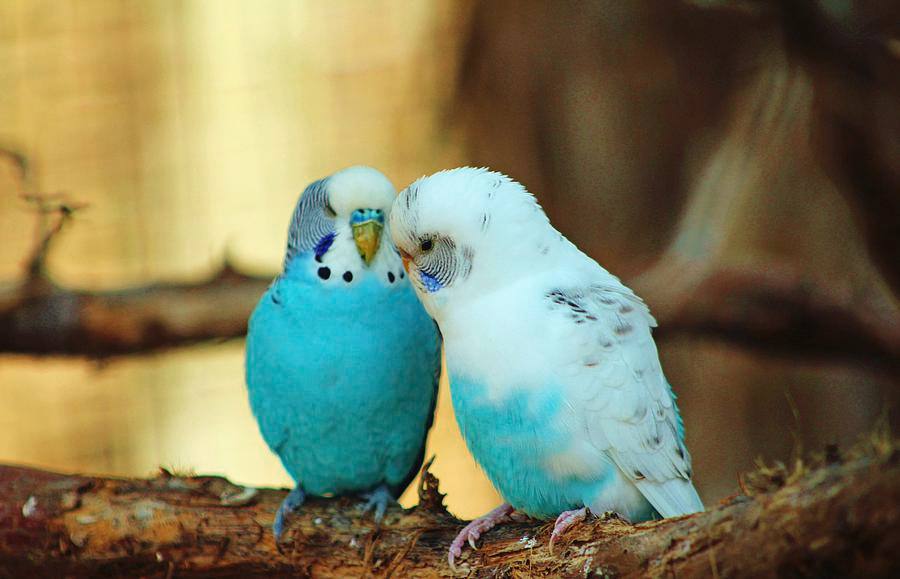
A budgie is a prey animal. Its entire biology, behaviour, and psychology is built around the assumption that something larger than it wants to eat it. Every decision it makes — where to perch, when to eat, how to respond to your hand — runs through that filter. Understanding this one thing changes how you interpret almost everything your budgie does, and it explains why so much standard budgie advice produces the opposite of the intended result.
When your budgie is scared of your hand, it is not being difficult. It is being a prey animal. When it takes weeks to settle into a new environment, it is not unhappy. It is being cautious in the way that has kept its species alive for millions of years. When it responds better to patience than to effort, it is not stubborn. It is a bird.
Hold that in mind as you read everything below. It is the lens that makes the rest of it make sense.
1. The First Two Weeks Are Not For Taming — They Are For Settling
This is the one I put first because it is the one most new owners get most wrong, and because getting it wrong sets back everything that comes after.
When a new budgie arrives in your home, the temptation is to start interacting with it immediately. To put your hand in the cage, to offer treats, to begin the taming process. You have been looking forward to this. You want to get started.
The bird, at this point, has just been taken from every environment it has ever known, transported in a box, and placed in a completely unfamiliar space. It does not know that it is safe. It does not know that you are not a threat. Its stress levels are at their highest point they will ever be in your care — and the last thing that helps a stressed prey animal is a large unfamiliar hand appearing in its only safe space.
What the first two weeks are for:
- Let the bird learn that the cage is safe — food, water, no threats; that is the entire agenda for week one
- Sit near the cage and do nothing demanding — read a book, watch television, have a cup of tea; be present without putting any pressure on the bird at all
- Talk quietly to the bird at a normal distance — not directly into the cage, just near it; your voice becoming familiar is valuable work
- Resist the urge to interact physically — I know this is hard; do it anyway; this foundation is what everything else is built on
- Do not put your hand in the cage at all for the first two weeks — cage cleaning can happen when the bird is briefly out or use long-handled tools; the cage is the bird’s sanctuary and your hand entering it is not neutral
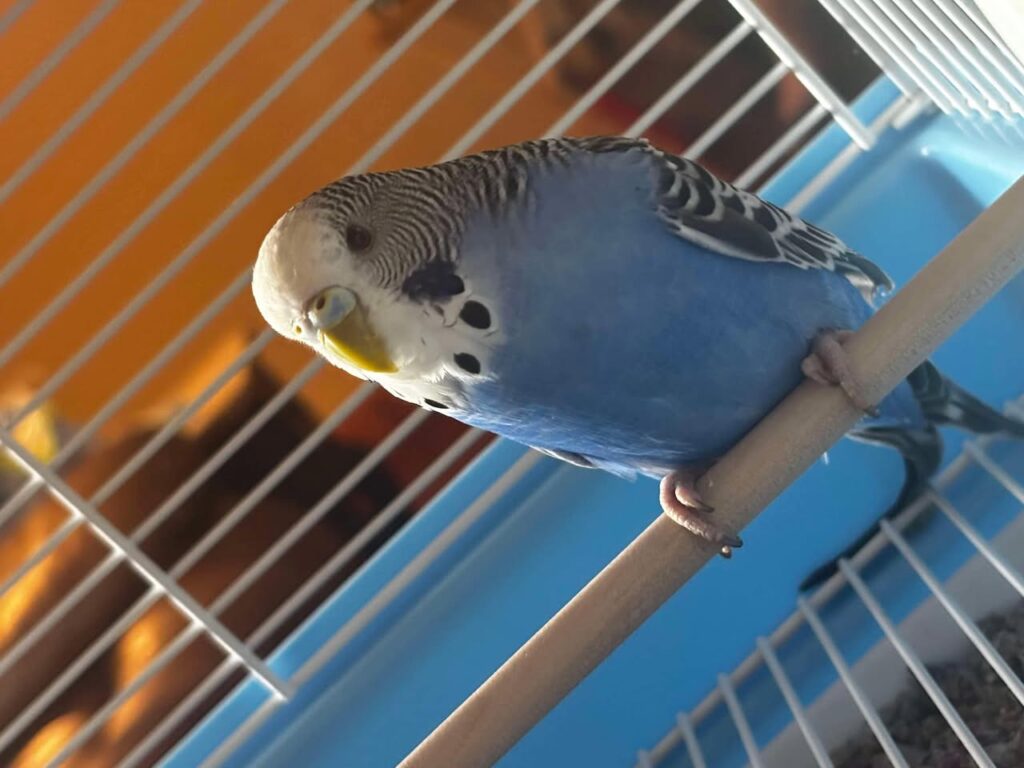
Two weeks of this approach produces a bird that has started to lower its guard. Everything after it works significantly better. Two weeks of pushing for interaction produces a bird that is more frightened of you than the day you brought it home. I have seen both outcomes hundreds of times.
2. Buy Two Birds, Not One — Unless You Plan To Be Their Flock
This is the piece of advice that gets pushback most often. “But I want it to bond to me. Won’t it bond better if it’s alone?”
The honest answer is: sometimes yes, but usually at a cost you have not fully accounted for.
Budgies are flock birds. In the wild, they live in groups of sometimes thousands. The flock is not a preference for them — it is a psychological need. A single budgie in a cage without another bird of its kind is a budgie experiencing something its biology never anticipated. The loneliness is real, and over months and years its effects are real too — in behaviour, in health, and in lifespan.
If you keep a single budgie, you become its flock. That means you need to be present and genuinely interactive for significant portions of the day, every day. No holidays without proper cover. No long work days without someone at home. No weeks where life gets busy and the bird gets an hour less attention than it needs. Single birds kept by owners who cannot provide this level of presence will show it — in excessive screaming, in feather plucking, in declining health.
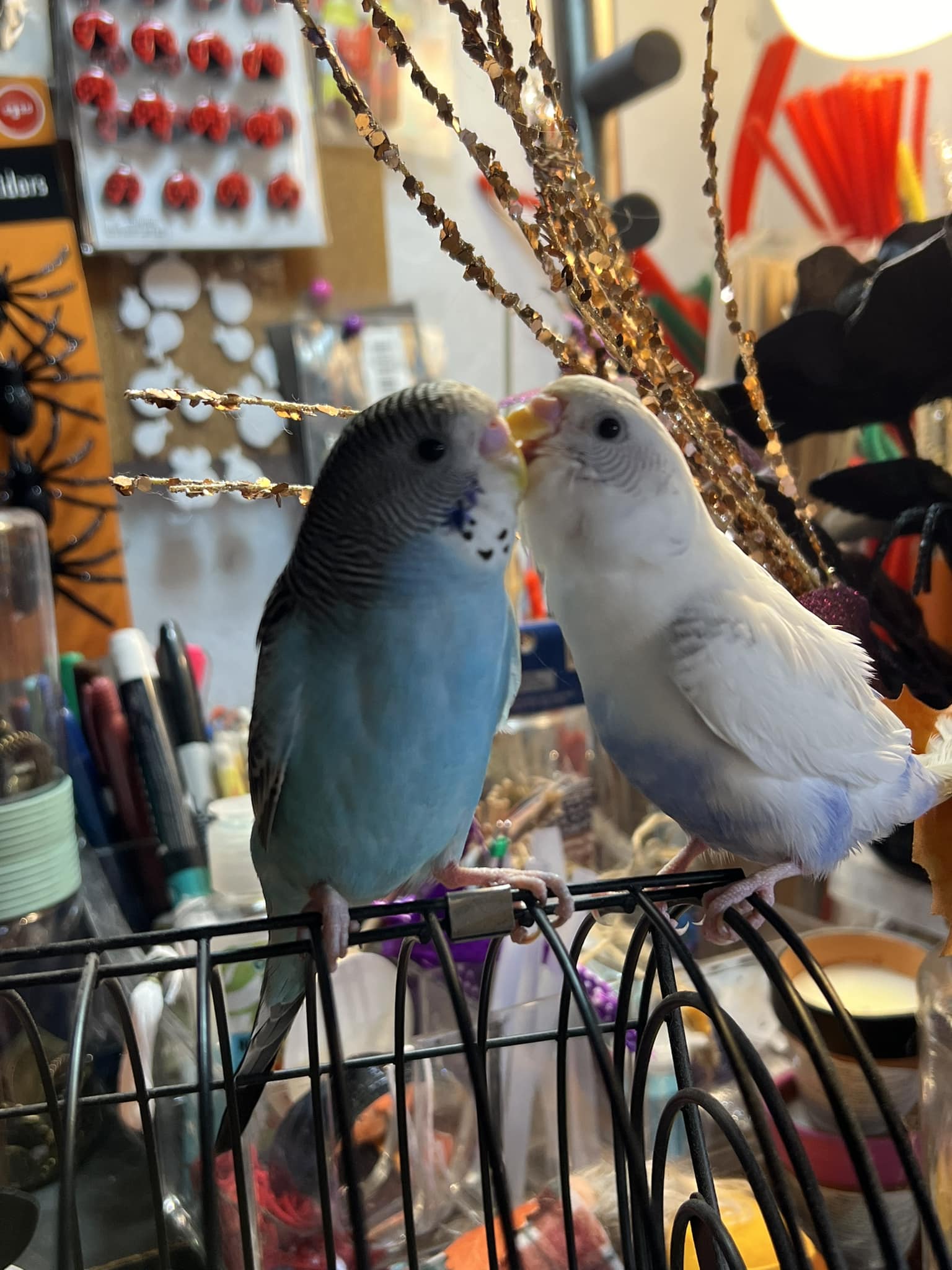
Two birds together are not harder to keep than one — they are easier. They entertain each other, they settle faster, they are less demanding of your presence. They will still bond to you if you spend time with them. They will simply not be devastated on the days you cannot.
The exception is an owner who is genuinely home for most of the day and willing to make the bird a serious daily priority. In that situation, a single bird can thrive. Be honest with yourself about which description fits your life.
3. Seed Alone Will Slowly Kill Your Bird
I say this plainly because it needs to be said plainly, and because the packaging on most seed mixes does not say it at all.
Seed is the standard budgie food. It is what most owners feed. It is what most shops sell as the primary — sometimes the only — food recommendation. And a budgie fed exclusively on seed, even a quality seed mix, is a budgie that is chronically under-nourished in ways that do not show for years but consistently shorten life.
The problem is fat content and nutritional incompleteness. Seeds are energy-dense but nutritionally narrow. A seed-only diet leads, over time, to fatty liver disease — a condition that develops silently, without obvious symptoms, over years of inadequate nutrition, and that dramatically shortens lifespan. By the time it becomes apparent, it has usually been present for a long time.
What a good budgie diet actually looks like:
- Quality seed mix as a base — fine as part of the diet, not the whole of it
- Fresh greens regularly — spinach, kale, broccoli, cucumber; introduce slowly if the bird resists; most will come around within a few weeks of consistent offering
- A small amount of fresh fruit occasionally — apple, pear, a berry or two; not daily, but regularly
- Quality pellets — a good pellet mix provides balanced nutrition that seed cannot; some birds resist the transition initially; there are ways to introduce them gradually
- Fresh water, changed every single day — water containers grow bacteria faster than most owners realise; daily change is not optional
- Cuttlefish bone always available — calcium source and natural beak maintenance in one
- No avocado, no onion, no caffeine, no alcohol — all toxic to budgies
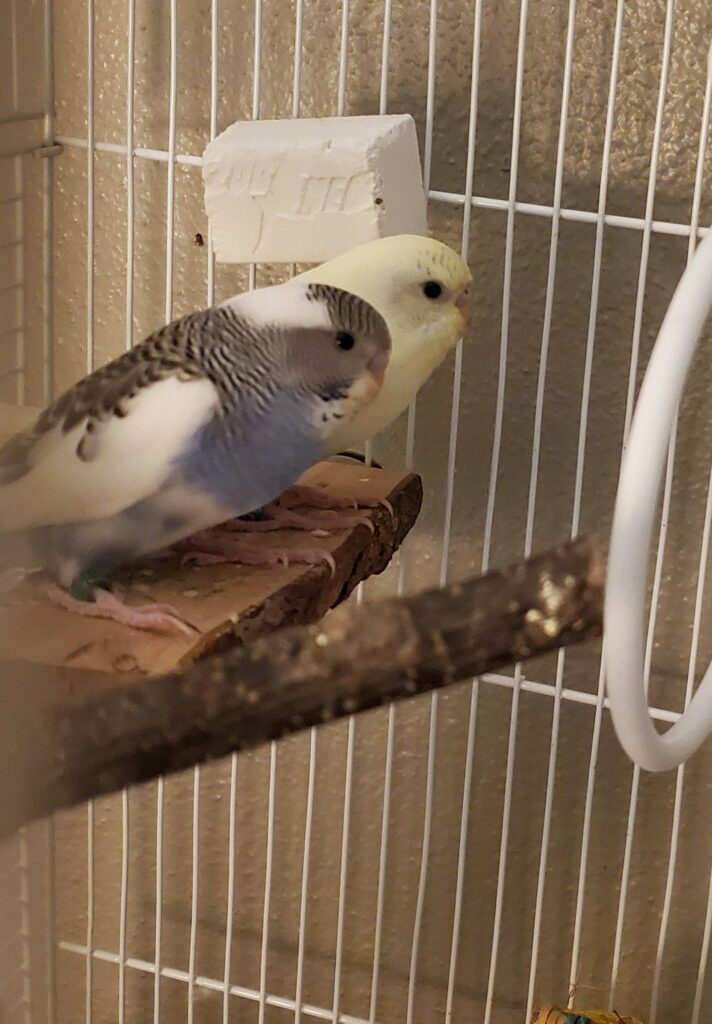
The owners whose budgies reach 12, 13, 14 years are almost universally on varied diets. This single change — moving away from seed-only — has more impact on long-term health than almost anything else a new owner can do.
4. The Cage You Were Sold Is Probably Too Small
This is the one that makes me most frustrated with the pet industry in general, because it is a problem that is entirely created by the retail market and entirely paid for by the bird.
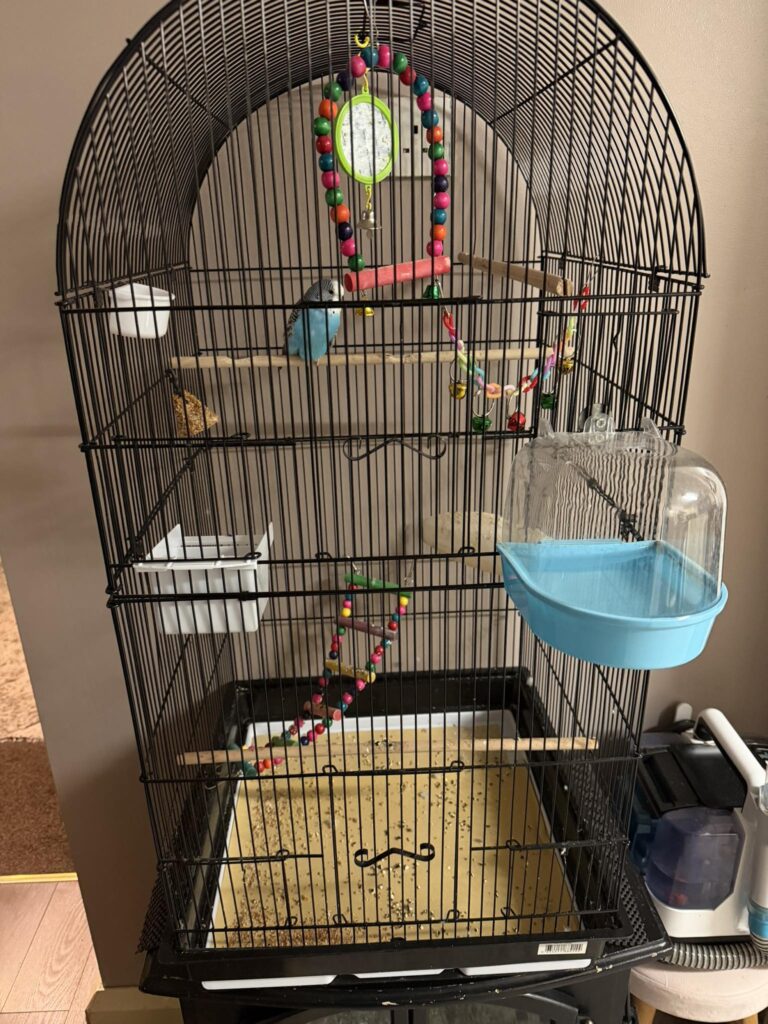
Most cages sold as budgie cages in UK pet shops — including many sold specifically marketed for budgies — are too small. They allow the bird to perch and turn around. They do not allow the bird to fly, which is what a budgie’s body needs to stay physically healthy over a long life.
Budgies fly horizontally, not vertically. A tall narrow cage looks impressive and is almost useless. What matters is length — enough length that the bird can take several wing-beats from one perch to another. The minimum useful length for a single budgie is around 60 to 70cm. For a pair, larger still. Many of the cages on the market fall well below this.
Beyond size:
- Natural wood perches of varying diameter — the smooth uniform dowel rods that come with most cages are hard on feet over time; replace them with natural wood branches of different widths
- Width matters, not height — if you are choosing between a taller cage and a wider one, always choose wider
- Out-of-cage time in a bird-proofed room adds significant benefit — 30 minutes a day of supervised free flight makes a real difference to physical health and to the human-bird relationship
- Position the cage at roughly eye height or above — budgies feel secure at height; a cage on the floor is a source of ongoing low-level stress
- Away from the kitchen — non-stick cookware fumes are acutely toxic to birds; even low-level repeated exposure causes harm
5. Taming Takes Months, Not Days — And Pressure Makes It Worse
Almost every new budgie owner underestimates how long taming takes. Almost every piece of standard taming advice underestimates how much pressure makes it worse.
A budgie does not become tame because you spent time trying to tame it. It becomes tame because it gradually learned, over many interactions, that you are not a threat. Those two things produce entirely different approaches.
The approach that works:
- Presence without pressure — sit near the cage, do nothing demanding, let the bird get used to your existence
- Soft, consistent talking — your voice becoming familiar is doing genuine taming work; it does not feel like it, but it is
- Millet spray through the bars before ever putting your hand inside — the bird learns that hands bring good things before it has to cope with a hand in its space
- Hand inside the cage doing nothing before hand trying to interact — let the bird approach on its own terms
- Step-up taught slowly and voluntarily — a bird that steps up because it wants to is building trust; a bird that steps up because it has been forced to is learning that you make it do uncomfortable things
The approach that makes it worse — and that most sources still recommend:
- Reaching into the cage from day one — to the bird, a hand entering its only safe space is a predator entering its territory; this increases fear, not familiarity
- Wing clipping to prevent escape — clipped birds are more fearful, not less; they know they cannot escape, and that knowledge increases stress; do not do this
- Forcing handling before trust is established — the bird endures it but does not learn from it; trust does not build under duress
- Pushing through visible stress signs — every session you continue past the point where the bird is distressed sets you back; every session you stop at the right moment builds trust
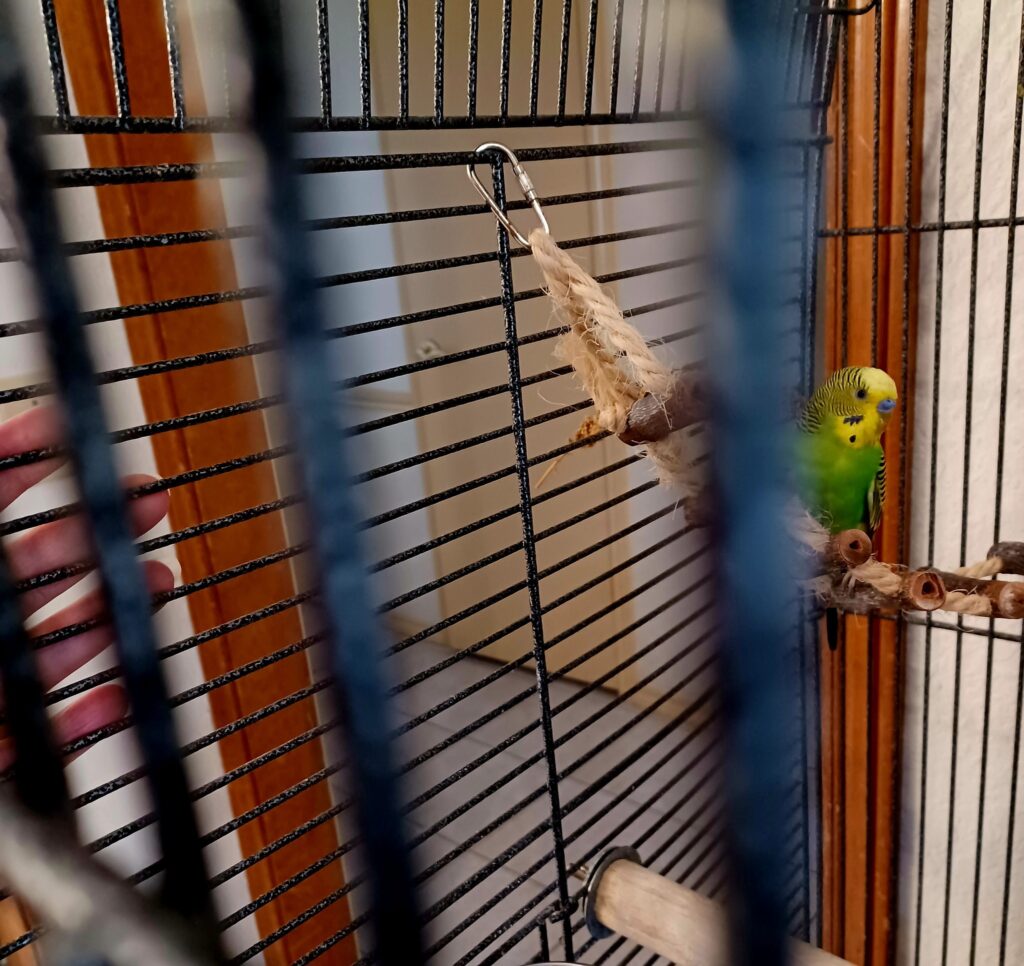
The realistic timeline: basic hand familiarity in 4 to 8 weeks with consistent gentle work. Reliable step-up in 8 to 12 weeks. Genuine out-of-cage tameness in 3 to 6 months. Any source telling you days or weeks is selling you something.
For a full step-by-step taming approach, our complete UK guide to taming a new budgie covers the daily process in detail.
6. Your Budgie Is Hiding How It Feels — Learn The Early Signs
This is the one that saves the most birds, and the one that most owners only learn after losing one too soon.
Budgies are prey animals. In the wild, a visibly sick bird is a targeted bird. So they conceal illness with extraordinary effectiveness — eating when eating is uncomfortable, perching when perching takes effort, staying active until activity is no longer possible. By the time a budgie looks visibly unwell to an untrained eye, it has usually been unwell for longer than you realise, and the window for effective treatment has narrowed significantly.
The early signs to learn:
- A change in the bird’s normal routine — less vocal than usual, less active, spending more time on one perch; you need to know your bird’s normal to recognise when it has changed
- Subtle posture shifts — feathers slightly fuller than normal, a slight hunch in the shoulders, tail held a little lower
- Eyes closing briefly during active hours — not sleeping; struggling to maintain alertness
- Changes in droppings — colour, consistency, or volume changes that persist for more than 24 hours
The serious signs that require a vet today, not tomorrow:
- Sitting on the cage floor — this is never normal in a healthy budgie; it means the bird can no longer maintain its perch
- Tail bobbing with each breath — respiratory distress; the bird’s breathing muscles are working at full capacity
- Dramatically puffed feathers with lethargy — the bird is cold and depleted
- Any neurological sign — loss of balance, head tilt, falling from perch
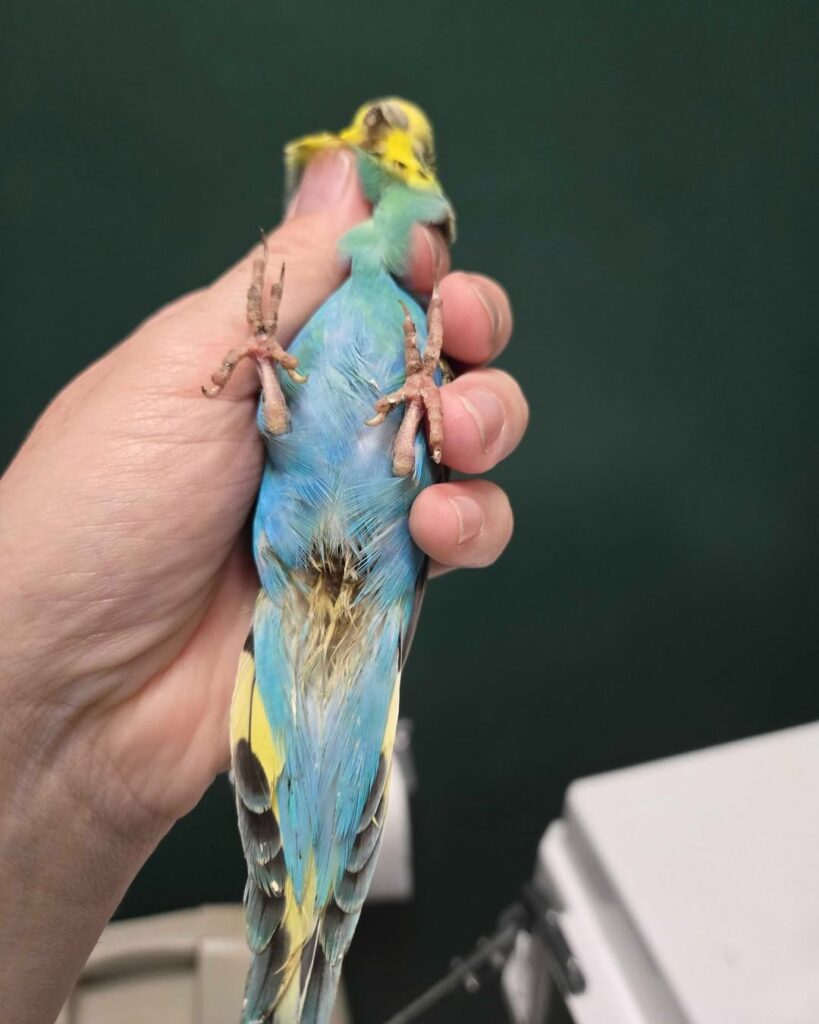
The rule I give every new owner is simple: if your bird’s behaviour changes noticeably and you cannot account for why, do not wait more than 24 hours before speaking to a vet. With birds this size, conditions can escalate quickly. Early action almost always produces better outcomes than waiting.
7. Routine Is Not A Luxury — It Is A Health Requirement
This is the one that surprises people the most, because it sounds like an exaggeration. It is not.
Budgies thrive on predictability. In the wild, their lives are governed by the reliable rhythms of day and night, temperature and light, the movements of the flock. Consistency is the background against which they feel safe enough to function normally — eating properly, sleeping properly, behaving naturally.
A budgie in an unpredictable environment — uncovered at different times each morning, fed at different hours, exposed to loud noise at unpredictable intervals, lights on and off without pattern — is a budgie in a state of low-level chronic stress. That stress does not show dramatically. It shows over months and years in slightly compromised immunity, slightly shorter lifespan, slightly reduced quality of life.
What a good routine looks like:
- Same time to uncover the cage each morning — within half an hour of the same time daily
- Fresh food and water at a consistent time — the bird learns when to expect it and is calmer for the predictability
- Interaction at roughly the same time each day — not rigid to the minute, but consistent enough that the bird can anticipate it
- Same time to cover the cage each evening — 10 to 12 hours of quiet darkness is what a budgie’s sleep cycle needs
- Consistent noise levels — normal household sounds are fine and the bird adjusts to them; sudden loud unpredictable noise is the problem
This is one of the cheapest, easiest things you can do for your bird’s long-term health. It costs nothing. It just requires a small amount of daily consistency that most households can manage without significant effort.
8. Two Budgies Together Will Not Stop Them Bonding To You
This is the other half of point two, and I am separating it out because the fear behind it is so common that it deserves a direct answer.
The concern I hear from new owners who have heard they should get two birds is this: “If they have each other, they won’t be interested in me.”
In my experience, over 35 years of watching pairs of budgies with their owners, this is largely not true. A pair of budgies that is handled consistently from a young age, that has out-of-cage time regularly, and whose owner makes genuine time for interaction will bond to that owner meaningfully — alongside bonding to each other. The bond is not a fixed resource that runs out if it has to be shared. It is something that develops through consistent positive interaction, regardless of whether the bird also has avian company.
What is true is that a pair will be less desperate for your attention than a single bird. They will not become as frantic when you are out of the room. They will not scream for attention from dawn to dusk on the days when you are busy. For most households, this is not a drawback. It is a significant advantage.
If your primary goal is a bird that depends entirely on you — that treats you as its only social world — then one bird kept singly may give you that, at the cost I described in point two. If your goal is a pair of healthy, happy, bonded birds that genuinely enjoy your company without being entirely defined by it, two birds is the better answer in almost every situation.
9. The Signs Of A Happy Budgie — And Why They Matter
I tell new owners to learn what contentment looks like in their bird, because it is the baseline against which everything else is measured. You cannot recognise that something has changed if you do not know what normal looks like.
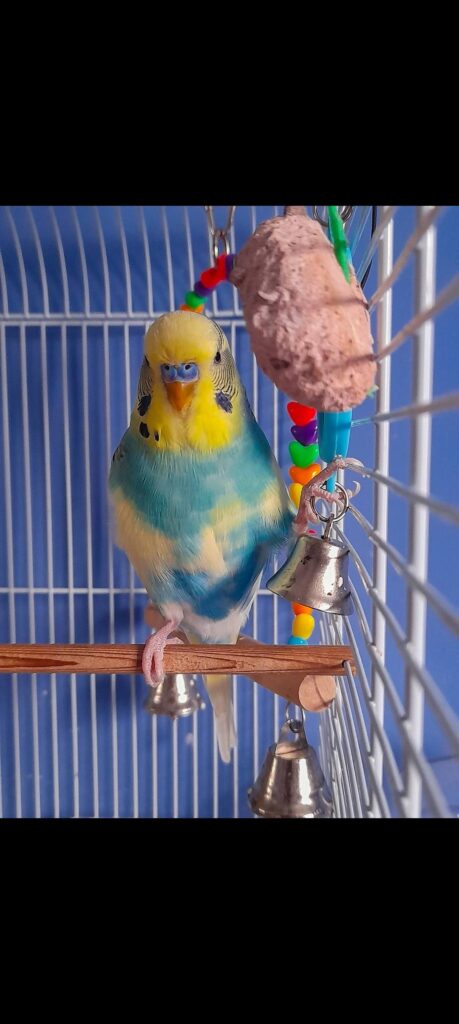
A genuinely happy, settled budgie:
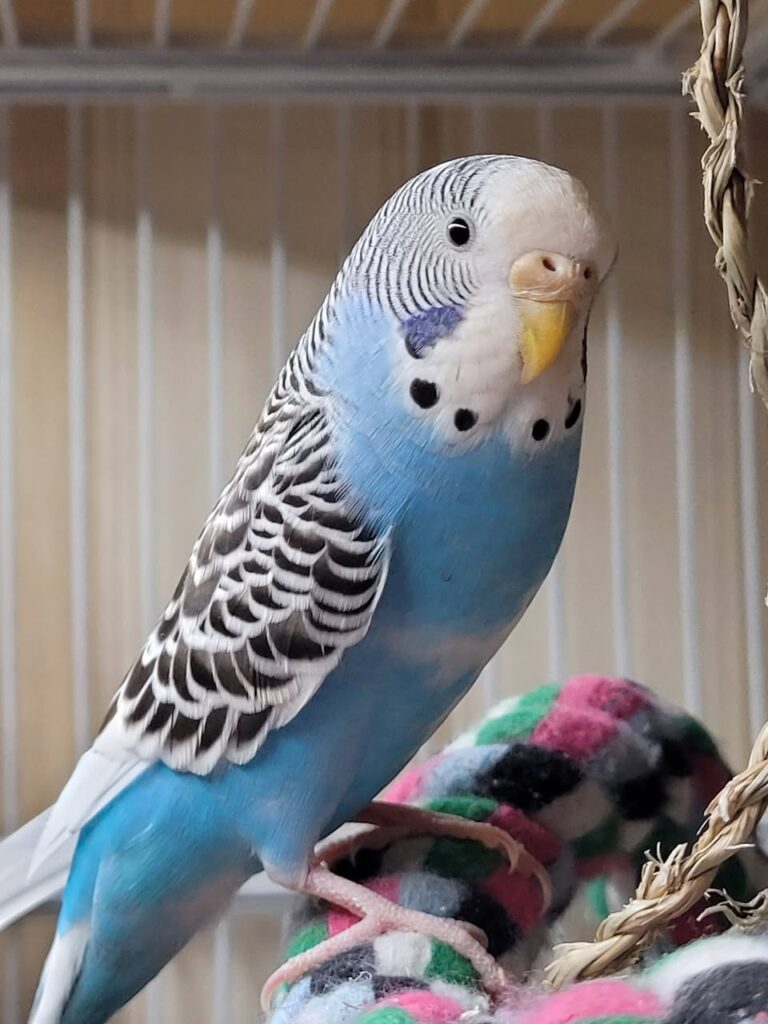
- Chatters, chirps, or warbles regularly during the day — vocalisations are the most reliable indicator of a contented bird; a budgie that has gone quiet is telling you something
- Eats and drinks normally and without anxiety — a settled bird does not rush to eat as if competing; it goes to the food calmly and regularly
- Preens regularly — a bird that feels safe preens; preening requires the bird to let its guard down, and it will only do that when it is genuinely relaxed
- Shows curiosity about its environment — investigating objects, watching movement with interest rather than alarm, exploring the cage
- Grinds its beak gently before sleeping — this is a specific sign of contentment that new owners often do not know about; a budgie grinding its beak quietly as it settles for the night is a budgie that feels safe
- Plays with toys and interacts with its environment — a mentally engaged bird is a healthy bird
- Sleeps on one foot in a relaxed posture — a bird that sleeps standing on both feet with feathers tight is not fully relaxed; one foot tucked up, feathers slightly loose, is genuine rest
These are your benchmarks. Know them. Check against them regularly. When your bird stops doing the things on this list, that is your earliest warning that something has changed.
10. A Budgie Is A Ten-Year Commitment — Treat It Like One From Day One
The last thing I tell every new budgie owner is the most important one to sit with before they even buy the bird — and the one that changes the most about how the next decade goes.
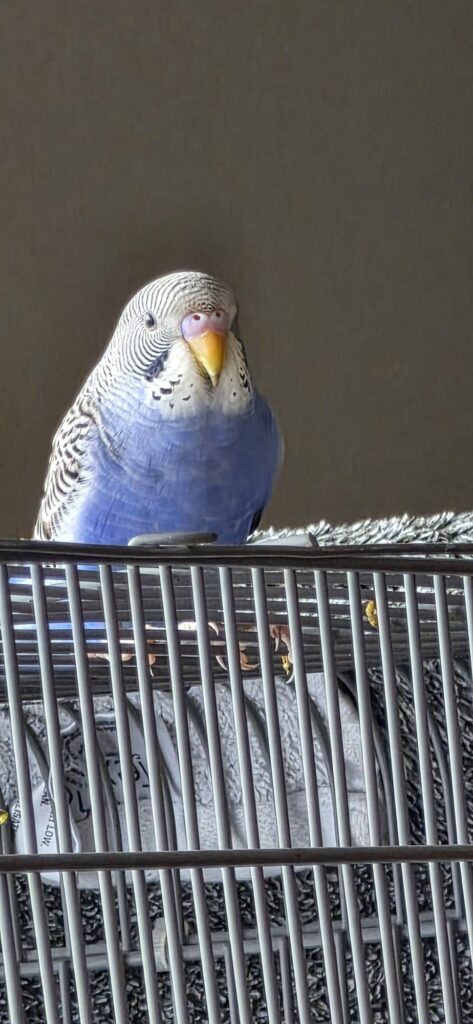
A well-kept budgie can live 10 to 15 years. Most UK budgies live 4 to 7, for the reasons I have described throughout this article. The gap between those numbers is almost entirely explained by whether the owner understood, from the start, that this was a serious and sustained commitment — not a starter pet, not a child’s short-term interest, not something that will manage itself in the corner of the room.
What a ten-year commitment actually means:
- Daily feeding, watering, and cage maintenance — every day, including holidays (which means planning cover), including busy weeks, including days when nobody particularly feels like it
- Regular veterinary care — an annual check with a vet who has genuine avian experience, and prompt attention when something seems wrong
- A diet that evolves with better knowledge — seed only is where many owners start; it should not be where they stay
- An environment that is maintained, not set and forgotten — cage position, cage size, temperature, noise; these matter and they require occasional reassessment
- Attention to the bird across its whole life — including the later years, when older budgies may need adjusted diet, more frequent vet attention, and quieter handling
None of this is extraordinary. It is what responsible ownership of any living animal requires. The reason I make a point of saying it is that the budgie’s size and price create an impression that it asks less than it does. It does not ask as much as a dog. It asks more than people expect.
The owners who come back to tell me their budgie has just turned eleven, twelve, thirteen — those owners made a decision at the start, knowingly or not, to treat this small bird as a genuine long-term responsibility. The result, in almost every case, is a bird they are deeply fond of and genuinely proud to have kept well.
That outcome is available to every new budgie owner who walks out of my shop. It requires the right knowledge from the start, and the willingness to apply it consistently over years.
That is what this article is for.
Frequently Asked Questions
What is the most important thing to do in the first week with a new budgie?
Nothing. Or as close to nothing as you can manage. The most important thing in the first week is to allow the bird to settle — to learn that the cage is safe, that you are not a threat, and that the new environment is predictable and consistent. Sit near the cage, talk quietly, resist the urge to interact physically. The foundation you build in these first days determines how much easier everything that follows becomes.
Should I get one budgie or two?
In most households, two. Budgies are flock birds and their wellbeing is genuinely affected by social isolation. Two birds settle faster, are less demanding of your constant attention, and tend to be healthier over the long term. The concern that two birds will not bond to you is mostly unfounded — a pair that is handled consistently will still develop a genuine relationship with its owner. The exception is an owner who is genuinely home most of the day and willing to make the bird a serious daily priority.
What should I actually feed my budgie?
A varied diet — seed mix as a base, fresh greens regularly, occasional fresh fruit, quality pellets for balanced nutrition, fresh water changed every day, and cuttlefish bone always available. Seed alone is not enough. The single most impactful change most UK budgie owners can make is introducing regular fresh greens and reducing the proportion of the diet that is seed-only.
How long does it take to tame a budgie?
Longer than most sources suggest. Basic hand familiarity takes 4 to 8 weeks of consistent gentle work. Reliable step-up takes 8 to 12 weeks. Genuine out-of-cage tameness takes 3 to 6 months. These timelines assume daily gentle interaction at the bird’s pace, without forcing contact or pushing through stress signals. The owners who try to rush the process almost always end up with less tame birds than those who do not.
How do I know if my budgie is happy?
A happy budgie chatters and vocalises regularly during the day, eats and drinks calmly, preens frequently, shows curiosity about its environment, plays with objects in the cage, and grinds its beak gently before sleep. Learn these as your baseline. When they change without an obvious reason, pay close attention — changes in normal behaviour are often your earliest indication that something is not right.
What size cage does a budgie actually need?
Larger than most retail budgie cages provide. Budgies fly horizontally, so length is the critical dimension — a minimum of around 60 to 70cm for a single bird, more for a pair. The bird needs to be able to take several proper wing-beats between perches, not just hop. If the cage you have does not allow that, it is too small. Out-of-cage time in a bird-proofed room supplements whatever cage space you can provide.
How long do budgies live?
A well-kept budgie can live 12 to 15 years. Most UK budgies live 4 to 7. The gap is almost entirely explained by care — diet, environment, veterinary attention, and the consistency of daily routine. A new owner who gets the basics right from the start gives their bird a genuinely good chance of reaching double figures.
Where can I get honest advice about keeping a budgie in Swindon?
Come in to Paradise Pets at Manor Garden Centre, Cheney Manor Industrial Estate, Swindon SN2 2QJ — or call us on 01793 512400. We stock budgies from UK breeders and we are happy to spend time with any new owner going through exactly this kind of conversation before they leave. That has been how we do things here for 35 years.
One Last Thing From Me
I want to end with the thing that brings most of this together, because it is the thing I most want new owners to take away from this conversation.
The budgies that do best — the ones that live long, tame lives as genuinely valued members of a household — are almost never the result of extraordinary effort or special expertise. They are the result of ordinary, consistent care, applied with the right knowledge from the start.
The owners who do best are not the ones who try hardest in the first week and then settle into inconsistency. They are the ones who understood, from the beginning, what the bird needed — the right diet, the right space, the right approach to taming, the right routine — and just kept doing those things, day after day, for years.
That understanding is what this conversation is for. You now have it. The ten things I have described are not complicated, and they are not expensive. They are just things that most owners are not told clearly enough, early enough, before they walk out of the shop with their bird.
If you are a new budgie owner and something in this article has raised a question I have not answered — about your specific bird, your specific setup, anything at all — come in and talk to us. That conversation is free, it is honest, and it is what we have been offering at this counter for 35 years.
New Budgie Owner? Come In And Let’s Go Through It Properly
Before you run into problems — before the taming stalls, before the bird seems unwell, before the questions pile up — come in and have the conversation. Bring your questions, bring your concerns, bring the bird if you want a second opinion. Free advice, no obligation. That is how we have done things here since 1988.