
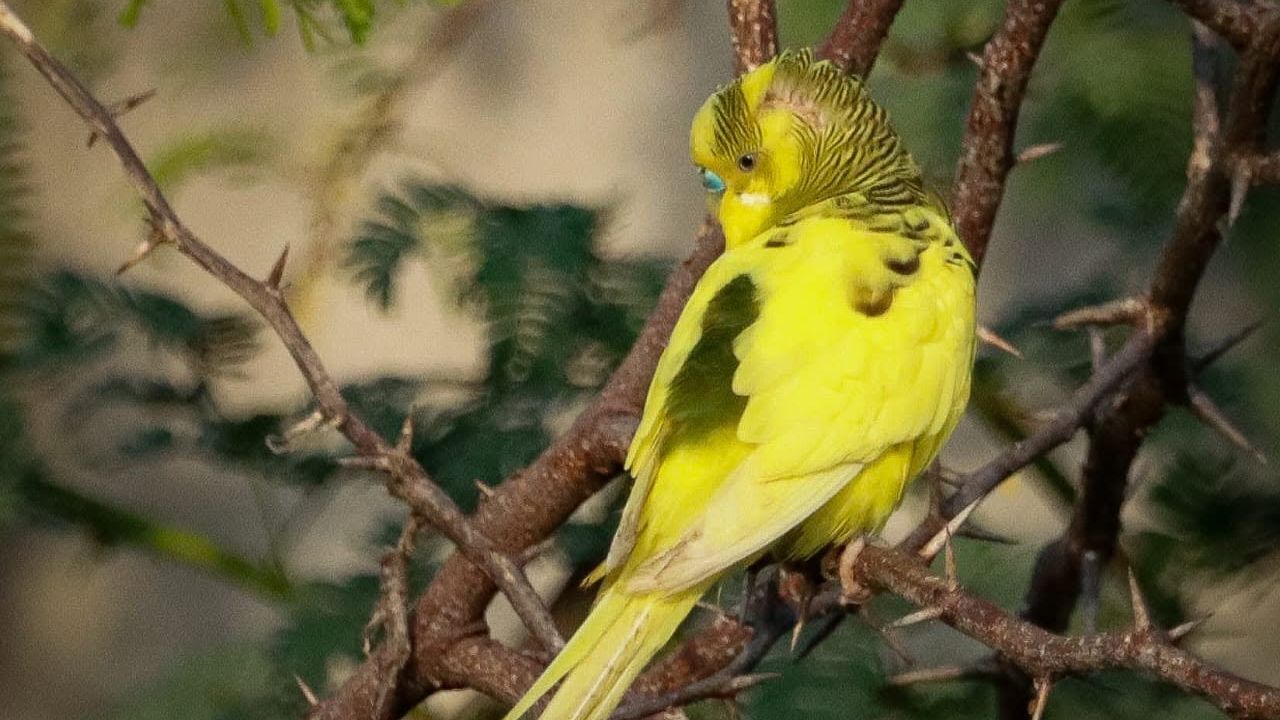

Neil has kept, bred, and sold cage and aviary birds at Paradise Pets Swindon since 1988 — over 35 years of first-hand experience with budgerigars, cockatiels, canaries, finches, and dozens of other species. Scientists have confirmed what ornithologists have long suspected: Australian birds adapt faster to environmental change than almost any other species on earth. Budgerigars are among the most compelling examples of that adaptability. After 35 years, Neil explains what the science actually shows, why budgies are built to survive almost anything — and the one thing they are not built to survive.
A researcher I follow in the ornithological press published findings recently that confirmed what has been building in the scientific literature for a while: Australian bird species, studied across multiple decades of environmental change, show rates of behavioural and physiological adaptation that significantly exceed comparable species elsewhere in the world. The paper drew attention across the birding and conservation communities, and rightly so — it is genuinely important science.
What struck me when I read about it was not the science itself, which I found fascinating, but the way it illuminates something I have been watching from behind this counter for 35 years. Budgerigars are one of the clearest examples of this exceptional Australian adaptability. They are, by almost any measure, one of the most resilient, adaptable, behaviourally flexible small birds on the planet. The things they can survive, tolerate, and adjust to are remarkable.
And yet. There is one thing they cannot adapt their way around. One thing that their extraordinary resilience does not protect them from. One thing that, in my experience over 35 years, accounts for more suffering in pet budgies than any other single factor.
That is what this article is about.
What the Science Actually Shows About Australian Bird Adaptability
The research confirming the exceptional adaptability of Australian bird species is built on decades of longitudinal data — long-term population studies, physiological measurements, and behavioural tracking that allow scientists to observe change across generations rather than in snapshots.
What the data shows is that Australian bird species, particularly those adapted to the variable and extreme conditions of the Australian interior, have developed rates of adaptive change — in breeding timing, in foraging behaviour, in physiological stress responses, in movement patterns — that exceed those seen in equivalent studies of European and North American species.
The explanation is evolutionary. Australia’s interior is one of the most ecologically variable environments on the planet. Rainfall is dramatically unpredictable — the same region can experience years of drought followed by floods of a scale that transforms the landscape within weeks. Temperature ranges are extreme. Resource availability can shift from abundance to near-zero within a season. The species that have survived in this environment have done so by developing an exceptional capacity to track and respond to change rather than relying on stable, predictable conditions.
Budgerigars are among the most striking examples of this. Wild budgerigar populations are nomadic — they do not maintain fixed territories but follow rainfall and food availability across thousands of kilometres. Their breeding is opportunistic rather than seasonal — they breed when conditions are right, not on a fixed calendar. Their flocking behaviour is dynamic, with groups forming, splitting, and recombining in response to resource distribution. They are, in every measurable sense, built for instability and change.
This is the biological heritage that every pet budgie in the UK carries. These are not fragile birds. They are birds built to survive conditions that would destroy less adaptable species.
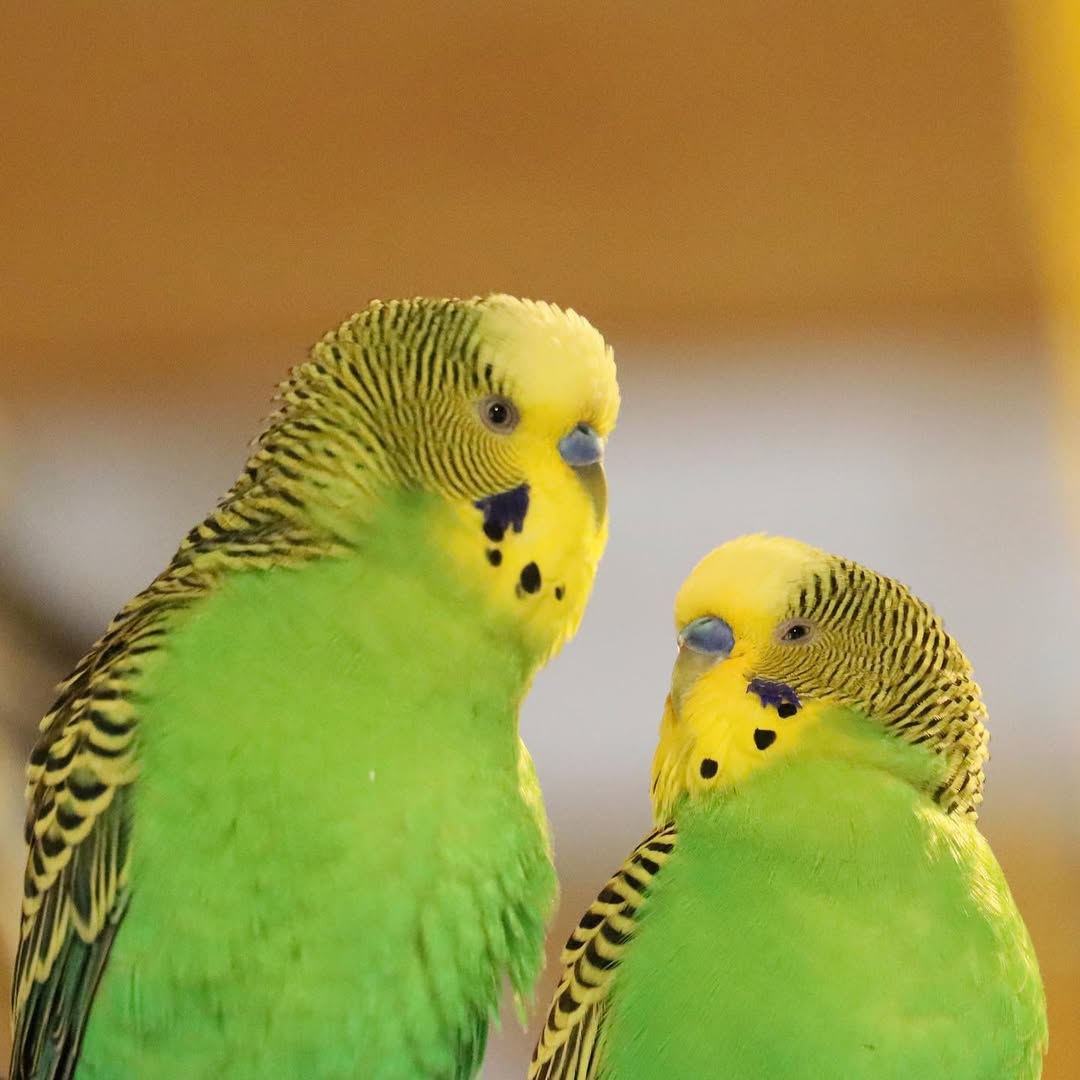
What Budgies Can Survive — The Remarkable Resilience Case
I want to give this the detail it deserves, because understanding what budgies can tolerate helps make the contrast with what they cannot — which I will come to — properly striking.
Dietary Variability
Wild budgerigars eat whatever seeds are available in a given location at a given time. The composition of their diet shifts substantially depending on where they are and what has grown after recent rainfall. Their digestive systems are adapted to process a wide range of grass seeds in varying conditions of freshness and availability. They can manage periods of relative nutritional scarcity and capitalise on abundance when it occurs.
This dietary adaptability means pet budgies are more tolerant of imperfect diets than many other pet bird species — though I want to be clear that tolerating an imperfect diet is not the same as thriving on one, and seed-only diets in captivity still produce the nutritional deficiencies I have written about extensively elsewhere. The resilience is real. The deficiency consequences are also real. Both can be true simultaneously.
Environmental Variability
A species that has evolved to survive the temperature extremes of the Australian interior — from winter nights that drop below freezing to summer days that exceed 45 degrees Celsius — has a physiological range that is genuinely broad. Pet budgies can manage a wider range of household temperatures than is sometimes implied in care guides, provided the changes are not sudden and extreme. They are not fragile in the way that some more specialist species are.
Social Flexibility
Wild budgerigars live in groups of anywhere from a few dozen to tens of thousands. The flock size varies enormously depending on conditions. Individual birds move between groups. The social structure is fluid in a way that very few other highly social species can match. This flexibility means budgies can adapt to different social environments — a single bird with a committed human keeper, a pair, a small group, a larger aviary — in ways that reflect genuine behavioural plasticity.
Cognitive Adaptability
The research on avian cognition has consistently found that budgerigars perform well on problem-solving tasks, have good spatial memory, and show learning and behavioural flexibility that reflects the demands of a nomadic existence in variable environments. A bird that needs to find water in a drought and food after rainfall needs to be cognitively flexible, and budgies are. This translates in captivity to a bird that is genuinely interested in its environment, that engages with novel stimuli, and that can develop a substantial interactive repertoire with patient handling.
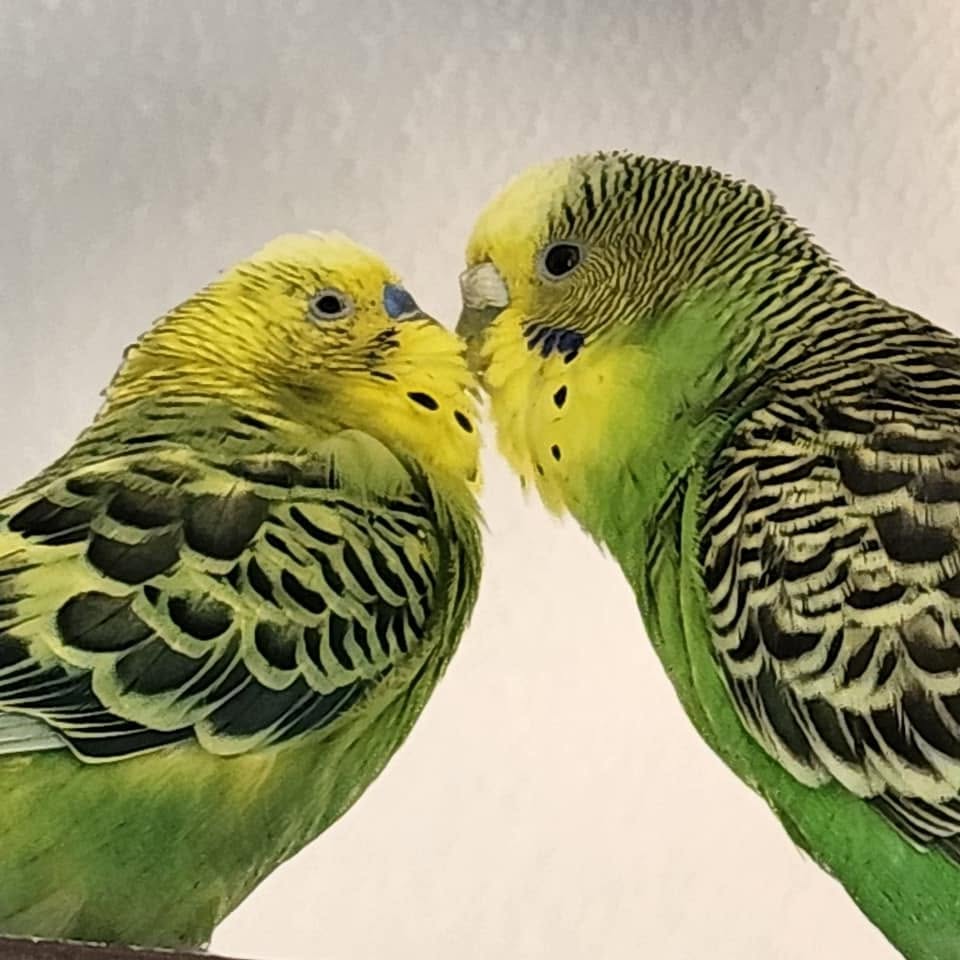
The One Thing They Cannot Adapt Around
Having established how genuinely remarkable budgerigar resilience is, I want to be specific about what it does not cover — because the contrast is important, and the lesson that follows from it is one I think every UK budgie owner needs to hear.
Budgerigars are obligate social animals. Not social by preference in the way that some species have a preference for company but can manage without it. Obligate — meaning that social contact is a biological requirement, as fundamental to their functioning as food and water. This is the product of the same evolutionary history that produced their other adaptations: a nomadic flock animal in a variable environment survives by the flock, not despite it. The flock shares information about food and water. The flock provides collective predator detection. The flock is the unit of survival.
The consequence of this evolutionary history is a nervous system and a stress response architecture that treats social isolation as a threat equivalent in severity to physical danger. A budgie that is chronically isolated — not acutely isolated in the way a temporarily separated flock member might be, but chronically, day after day with no meaningful social contact — is a budgie in a state of ongoing physiological stress. Elevated cortisol. Altered immune function. Behavioural changes that reflect the underlying distress even when the owner interprets them as simply the bird’s personality.
And this is the thing that the budgie’s remarkable adaptability does not help with. You can adapt to variable food. You can adapt to temperature change. You can adapt to a new environment. You cannot adapt your way out of a biological requirement that is hardwired into your nervous system. The social drive does not diminish with exposure to isolation. It persists, producing ongoing stress, for as long as the isolation continues.
What Chronic Social Isolation Actually Looks Like in Pet Budgies
The reason this matters practically is that chronic social isolation in pet budgies is common — far more common than most owners realise — and its signs are frequently misread or missed entirely. I want to be specific about what it looks like, because recognition is the first step to addressing it.
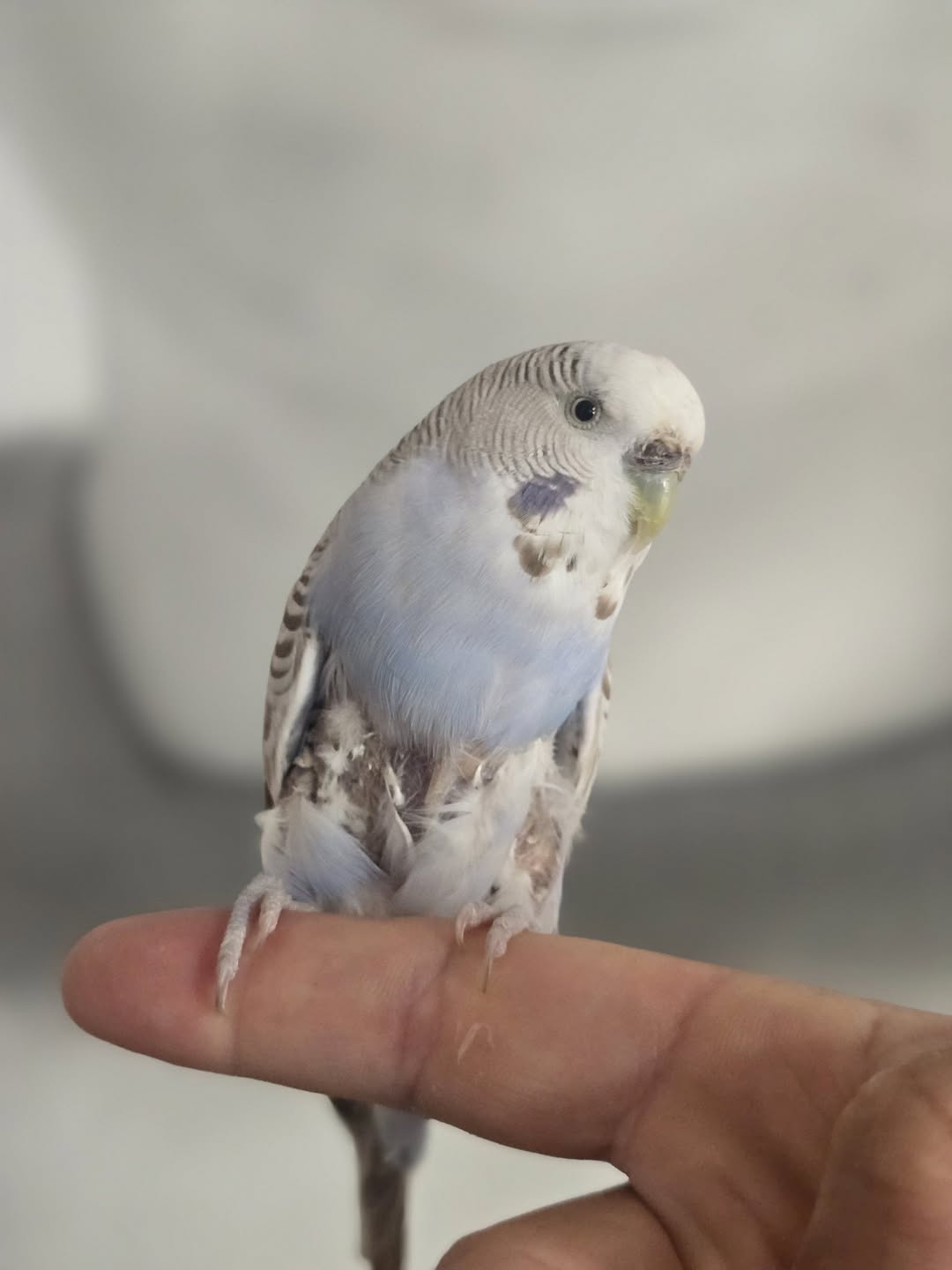
Feather Destructive Behaviour
Feather plucking and over-preening are among the most documented consequences of chronic social deprivation in parrots and parrot-family species. The behaviour reflects a displacement of social grooming — an activity that in flock settings is directed at other birds and in isolation has nowhere to go except the bird’s own feathers. A budgie with feather condition issues that has no identifiable medical cause and minimal social contact is very often a bird whose feather problem is a social problem.
Repetitive Stereotyped Behaviours
A budgie that bobs its head repetitively at a mirror, that paces along a perch in a fixed pattern, that engages in any behaviour that is repetitive and apparently purposeless is showing the signs of a nervous system that has run out of adequate stimulation and social input. These stereotyped behaviours are well-documented in captive animals experiencing environmental inadequacy and they are not self-resolving — they become more entrenched over time without intervention.
Excessive Vocalisation or Unusual Silence
A budgie calling persistently — not the normal chattering of a content bird, but an insistent, repeated contact call that has the quality of searching — is a bird looking for its flock. This is the sound of the social drive finding no response. Conversely, a budgie that has become unusually quiet, that has lost the chattering vocalisation that characterises a content bird, may have moved beyond the active searching phase into a more resigned withdrawal. Both patterns are informative. Neither is simply personality.
Loss of Interest in Enrichment and Environment
A socially deprived budgie often shows reduced engagement with its environment — less interest in toys, less exploratory behaviour, less movement around the cage. This is frequently interpreted by owners as the bird being calm or content. It is more accurately understood as reduced motivation — the same reduction in exploratory and foraging behaviour that is documented in other species experiencing social deprivation and chronic stress.
What the Australian Adaptability Research Tells Us About the Solution
Here is where the science circle closes in a way I find genuinely useful for practical bird keeping.
The same research that documents the exceptional adaptability of Australian bird species also documents the mechanism through which that adaptability operates: social learning. Wild budgerigars are exceptional social learners. They acquire information about new food sources, new routes, new behaviours by observing other members of the flock. The flock is not just company — it is a distributed information system, and social learning is how individual birds keep pace with a rapidly changing environment.
In captivity, this translates into something directly applicable. A budgie that has genuine social contact — with another bird, or with a human owner who engages meaningfully and consistently — is a budgie whose social learning capacity is being exercised. It is a more cognitively active bird, a more behaviourally flexible bird, and a more resilient bird than one whose social system is not engaged. The adaptability that makes budgies remarkable in the wild does not disappear in captivity. It lies dormant when there is nothing for it to engage with, and it becomes active when there is.
The practical implication is that providing social contact is not just meeting a welfare need in a passive sense. It is activating a set of capacities that make the bird genuinely more interesting, more interactive, and more fully itself. The bird that has the flock — in whatever form — is the bird that demonstrates the extraordinary cognitive and behavioural repertoire that makes budgies so consistently rewarding to keep.
What Every UK Budgie Owner Should Actually Do With This
- Assess the actual daily social contact the bird receives. Not theoretically — concretely. On a typical weekday, how many minutes of genuine, active interaction does the bird receive? Talking to it, letting it out, being near and engaged? If the answer is less than thirty minutes of meaningful contact, the social provision needs to be addressed.
- Consider whether a companion bird is the right answer. For owners who are regularly away from home for six or more hours on weekdays, a second budgie is almost always the most effective welfare provision available. The tradeoff — somewhat reduced dependence on the human keeper — is worth understanding, but it is rarely as significant as the welfare benefit of companionship for an otherwise isolated bird.
- Use ambient sound thoughtfully. Radio or television on at a moderate volume during the day — human voices specifically — provides a form of social stimulation that is not equivalent to actual social contact but is meaningfully better than silence. Choose speech-based content over music. The social audio cues in human conversation engage the bird’s auditory social system in ways that music does not.
- Distinguish between the bird being quiet and the bird being content. A quiet budgie is not necessarily a content budgie. Apply the social deprivation signs I have described above and be honest about what you are seeing.
- Make the daily interaction consistent rather than intense. Twenty minutes every day is more valuable than two hours on Saturday and nothing during the week. Consistency is the mechanism through which the social bond develops and through which the bird’s social system remains engaged. Irregular intense contact does not substitute for regular reliable contact.
- Introduce foraging enrichment alongside social provision. The social learning mechanism that makes Australian birds exceptional adapters works through doing things together. Foraging enrichment that involves interaction — you presenting the foraging opportunity, the bird working through it with you present — engages both the social and the cognitive system simultaneously. This is the highest-value form of daily interaction for a budgie.
Frequently Asked Questions
My budgie has always lived alone and seems fine. Is it really suffering?
Coping and suffering are not mutually exclusive. A bird that has adapted to chronic isolation may show few dramatic signs — it has adjusted its behaviour to the conditions it cannot change. But the physiological stress response to social deprivation does not switch off because the bird has stopped showing acute distress. Review the subtle signs I have described — feather condition, stereotyped behaviours, vocalisation patterns, engagement with the environment — and assess honestly. If the bird is receiving substantial daily human social contact, it may genuinely be meeting its needs. If it is not, the absence of drama does not mean the absence of a problem.
Does a mirror count as social contact for a budgie?
No, and this is worth being clear about. A budgie interacting with a mirror is interacting with its own reflection. The social drive is engaged in the sense that the bird responds to what looks like another bird, but the interaction provides no genuine social reciprocity — no information exchange, no actual other bird responding. More significantly, a budgie that has become strongly attached to a mirror sometimes becomes less interested in genuine social interaction as a result, which is the opposite of what we want. Mirrors can be part of a cage environment without dominating it, but they are not a substitute for social contact.
If budgies are so adaptable, why do they sometimes seem difficult to tame?
Adaptability and tameness are not the same thing. A budgie’s adaptability means it can adjust its foraging behaviour, its environmental responses, and its social groupings across a wide range. Tameness — the development of a trusting relationship with a human keeper — requires consistent, patient interaction that builds a specific association between human contact and safety. This process takes weeks, not days, and requires the kind of daily consistency that the bird’s adaptability cannot shortcut. The remarkable thing is not that taming takes patience — it is how thoroughly a budgie, once tamed, can express the full range of its cognitive and social capacity in a relationship with a human.
Where can I get honest advice about my budgie’s social welfare in Swindon?
Come and see us at Paradise Pets, Manor Garden Centre, Cheney Manor, Swindon SN2 2QJ, or call us on 01793 512400. Tell us about your setup, your daily routine, and what behaviour you are seeing, and we will give you an honest assessment of whether the social provision is adequate and what, if anything, would improve it.
One Last Thing
The science confirming that Australian birds adapt faster than almost any other species is a reminder of why budgerigars are the way they are. The nomadic existence, the cognitive flexibility, the extraordinary responsiveness to environmental change — these are not accidents. They are the product of millions of years of surviving in one of the most demanding environments on the planet.
What that history did not produce is a bird that can survive without its flock. The flock is too central to what a budgerigar is — too woven into the evolutionary logic of everything else about it — to be removed without consequence. Adaptability built on social intelligence cannot function without the social component that powers it.
That is what 35 years has taught me, confirmed now by the science. Budgies can survive almost anything. What they cannot survive without cost is being alone.
Give them the flock. Whatever form that takes in your home — it is the most important thing you can do.
Want to Make Sure Your Budgie’s Social Needs Are Genuinely Being Met? Come In and We Will Help
We will look honestly at your setup and tell you whether your bird is getting what it needs — and what to change if it is not. Free advice, no obligation. That is how we have done things since 1988.