
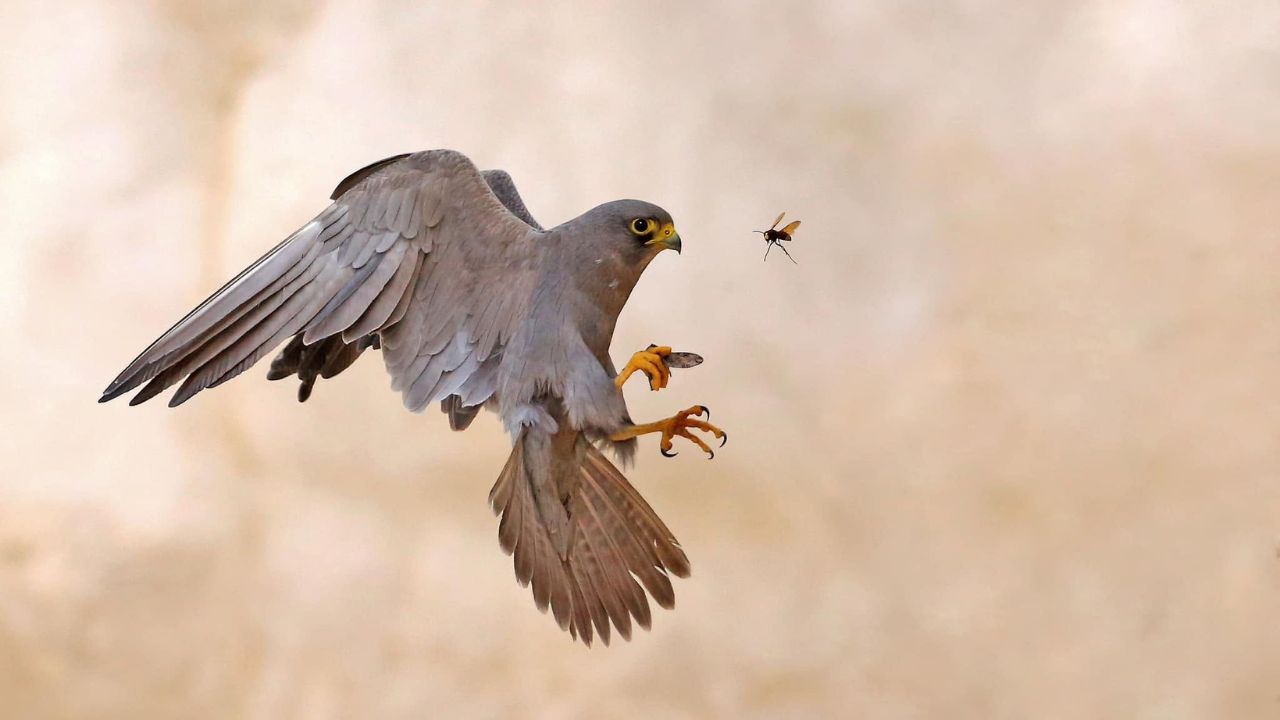

Neil has kept, bred, and sold cage and aviary birds at Paradise Pets Swindon since 1988 — over 35 years of first-hand experience with budgerigars, cockatiels, canaries, finches, and dozens of other species. Ornithologists have just confirmed the first documented inland breeding colonies of Sooty Falcons — a discovery that has changed how scientists understand what this species actually needs to thrive. After 35 years watching birds closely, Neil explains what that discovery reveals about wild bird biology — and the specific lessons it holds for every UK owner of a pet budgie, cockatiel, or canary.
Most bird discoveries make the rounds in the specialist press and go no further. This one caught my attention in a different way.
Sooty Falcons were understood, until very recently, to breed exclusively on coastal and island habitats — specifically the rocky outcrops and cliff faces of the Arabian Peninsula and East African coastline. The coastal association was considered so fundamental to the species that habitat models, conservation plans, and population assessments were all built around it. Then researchers confirmed breeding colonies in inland desert habitats — rocky outcrops and gorge systems far from any coastline — that nobody had documented before and that required a significant revision of what the scientific community thought it knew about this bird.
What the discovery shows is not simply that Sooty Falcons are more widespread than previously thought. It shows that the species has specific requirements — particular rock formations, particular prey availability, particular nesting microclimates — and that where those requirements are met, the species can thrive regardless of whether the habitat matches the assumption that had been made about where it needed to be. The coastal association was not a requirement. It was where the requirements happened to be met historically. Where they are met elsewhere, the birds do equally well.
I want to explain why this matters for the owner of a budgie in Swindon. Because it does, more directly than it might seem.
What the Sooty Falcon Discovery Actually Reveals About Bird Needs
The scientific significance of the inland Sooty Falcon colonies is not primarily about the location. It is about what the discovery forces researchers to do — which is to go back to first principles and ask: what does this species actually need, as opposed to what we assumed it needed because of where we had previously observed it?
When that question was asked properly, the answer became clear. Sooty Falcons need specific nesting structures — rocky formations with particular dimensions and orientations that provide appropriate temperature regulation for eggs and chicks. They need prey availability in the form of migrating passerines at the right density and at the right time. They need a particular combination of exposure and shelter in the nesting microclimate. These requirements are specific and non-negotiable.
What they do not need, it turns out, is the coast. The coast was simply the place where all those requirements happened to coincide in the locations that had been studied. In the newly documented inland sites, the same requirements are met by the geology and ecology of desert gorge systems. The birds could not have told researchers this — they simply went where their requirements were met and thrived there.
This is the lesson I want to apply to domestic bird keeping: the requirements are specific and biological, and they do not change based on what we assume them to be or what is convenient for us to provide. A pet bird does not need what we imagine it needs. It needs what its biology actually requires. Those two things are sometimes the same. Often they are not.
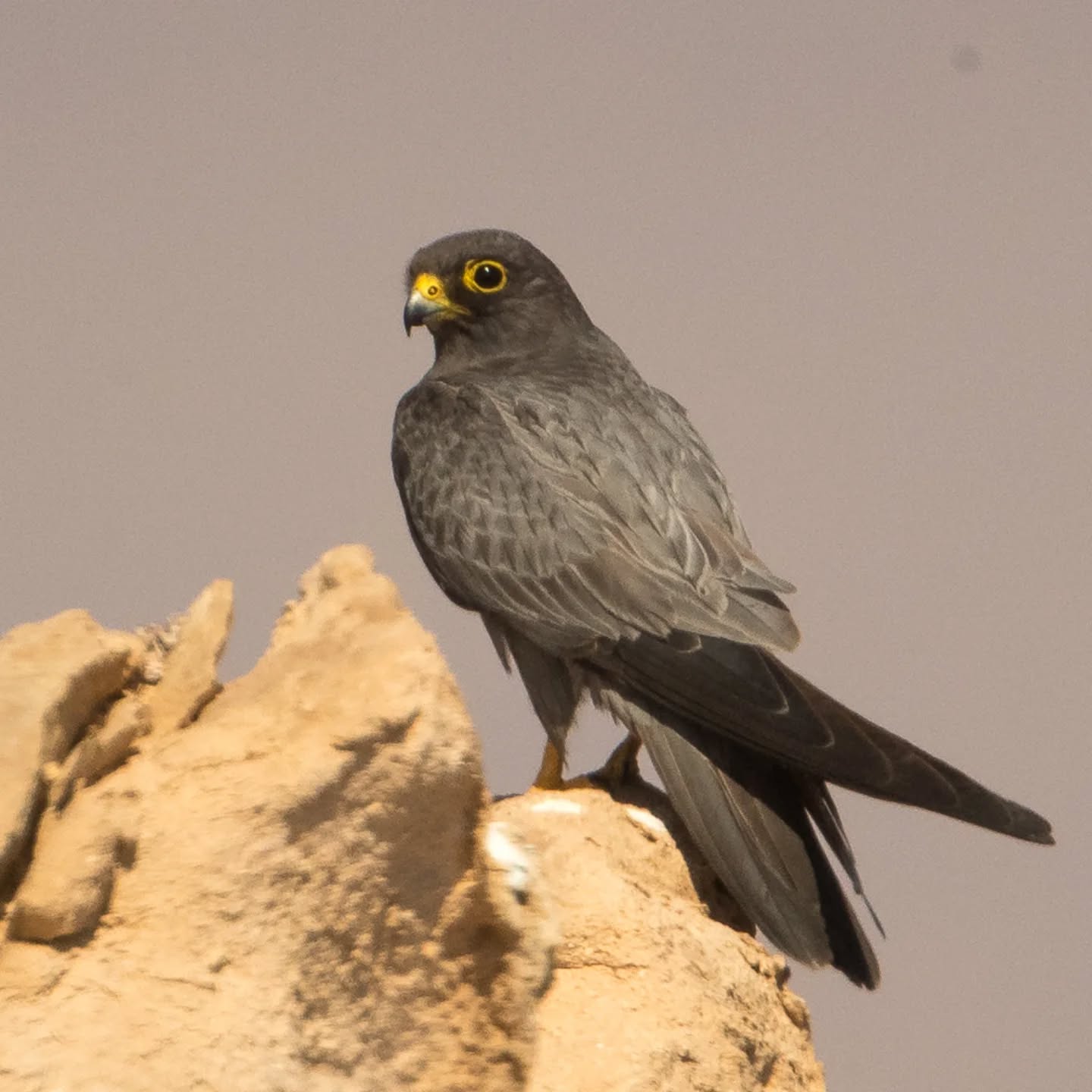
The Three Levels at Which Wild Birds Thrive — And Their Domestic Equivalents
Ornithological research on what wild birds need to thrive consistently identifies three levels of requirement. Understanding them, and their domestic equivalents, is the most practical thing I can take from the Sooty Falcon story and apply to the birds in my customers’ homes.
Level One — Physical Requirements
For Sooty Falcons, physical requirements include the specific nesting structure, a certain temperature range in the nesting microclimate, and prey availability. These are non-negotiable — without them, breeding cannot occur and the birds do not persist in a location regardless of other factors.
For pet budgies and cockatiels, the physical requirements are equally specific and equally non-negotiable, even if they are more familiar. Adequate space for normal movement and wing extension. A temperature range that allows comfortable thermoregulation without stress. Food of sufficient quality and variety to meet nutritional needs — not just enough to prevent starvation, but enough to support immune function, feather quality, and long-term health. Clean water available at all times. A clean environment that does not accumulate the bacterial load that causes respiratory and digestive illness.
These are the basics, and most owners who think carefully about their bird’s care meet them reasonably well. But meeting the basics is not the same as enabling thriving, which is what the Sooty Falcon discovery is ultimately about.
Level Two — Behavioural Requirements
Wild birds do not simply survive in appropriate habitats — they express a full range of species-typical behaviours that are as necessary to genuine thriving as the physical requirements. For Sooty Falcons, this includes specific hunting behaviour, pair-bonding behaviour, nest-site selection and preparation, and the communication behaviours that coordinate colony life.
For pet budgies and cockatiels, the behavioural requirements are equally real and equally important, even though they are more easily overlooked in a cage environment. Foraging behaviour — not just eating from a dish, but actively searching for and processing food — is a core species-typical behaviour that captive birds need to express. Social communication — the constant low-level chattering, contact calling, and mutual interaction that in the wild maintains flock cohesion — is a behavioural need, not a personality quirk. Exploration and investigation of the environment — moving between perches, investigating novel objects, engaging with the cage’s three-dimensional space — is a behavioural requirement, not an optional extra.
A cage that meets the physical requirements but suppresses or prevents the expression of these behaviours is a cage in which a bird is surviving, not thriving. The distinction matters. The Sooty Falcon in its rocky gorge — nesting where its physical requirements are met and able to express its full hunting and social repertoire — is thriving. The pet bird in a physically adequate cage with nothing to forage for, no social interaction, and no variation in its environment is not.
Level Three — Cognitive and Social Requirements
The most sophisticated level of what wild birds need — and the one most commonly overlooked in captive settings — is the cognitive and social environment that allows the full expression of their intelligence and social capacity.
For Sooty Falcons, this includes the coordination and communication that pair breeding requires, the social learning involved in hunting technique, and the environmental complexity of a habitat that presents genuine challenges and novelty. These are not peripheral — they are part of what defines the species and what enables its full capacity to be expressed.
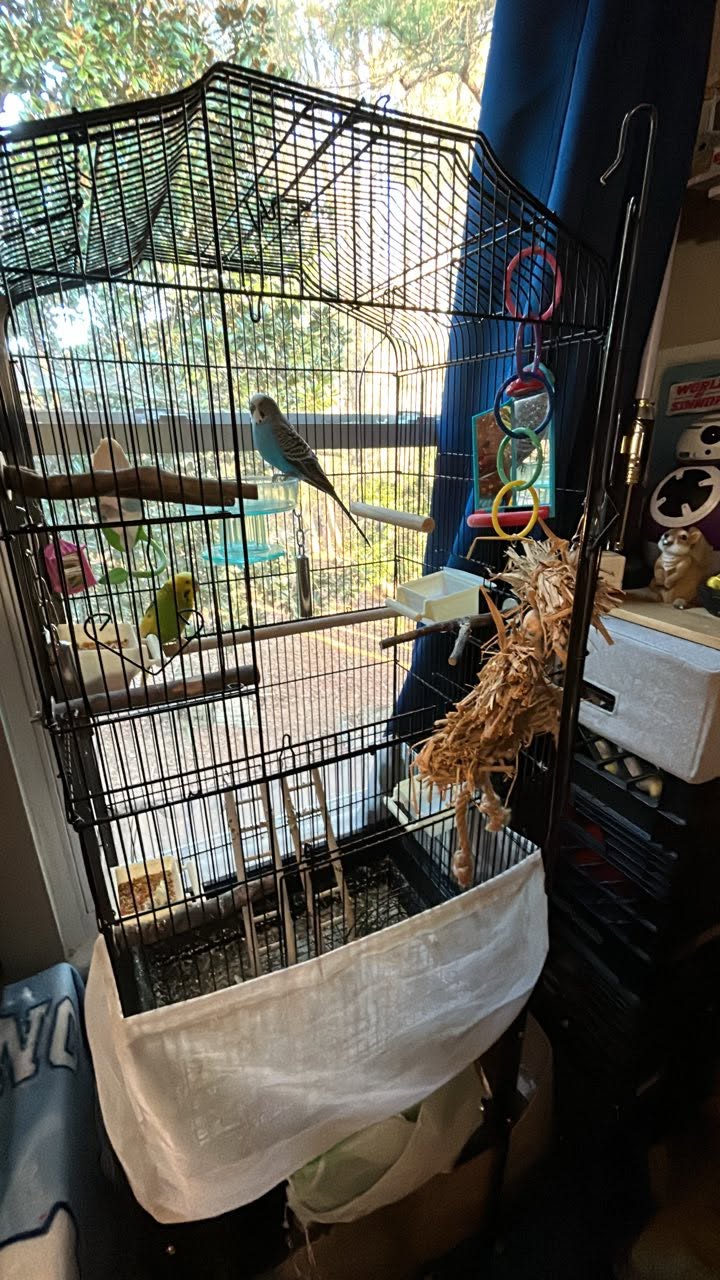
For budgies and cockatiels — both highly intelligent, socially complex species — the equivalent is social interaction that engages their communication and bonding capacities, enrichment that presents genuine cognitive challenges rather than static decoration, and an environment that has enough variation and novelty to engage the exploratory intelligence that their natural history has selected for.
A budgie with a companion bird or a committed human keeper who provides consistent, engaged interaction, with a foraging-rich environment that changes regularly enough to maintain novelty, is a budgie whose cognitive and social requirements are being met. This is the thriving equivalent. It is not rare or difficult to achieve. But it does require understanding that the requirements exist — which is the first thing the Sooty Falcon discovery teaches.
The Assumption Problem — Why We Get Bird Needs Wrong
The Sooty Falcon story is partly a story about assumptions — specifically about how assuming we know what a species needs, based on where we have observed it rather than on what its biology actually requires, leads to an incomplete and sometimes incorrect picture.
The same assumption problem pervades domestic bird keeping in the UK. Here are the most common assumptions I encounter that do not match what the biology actually requires.
The Assumption That a Full Food Dish Means Adequate Nutrition
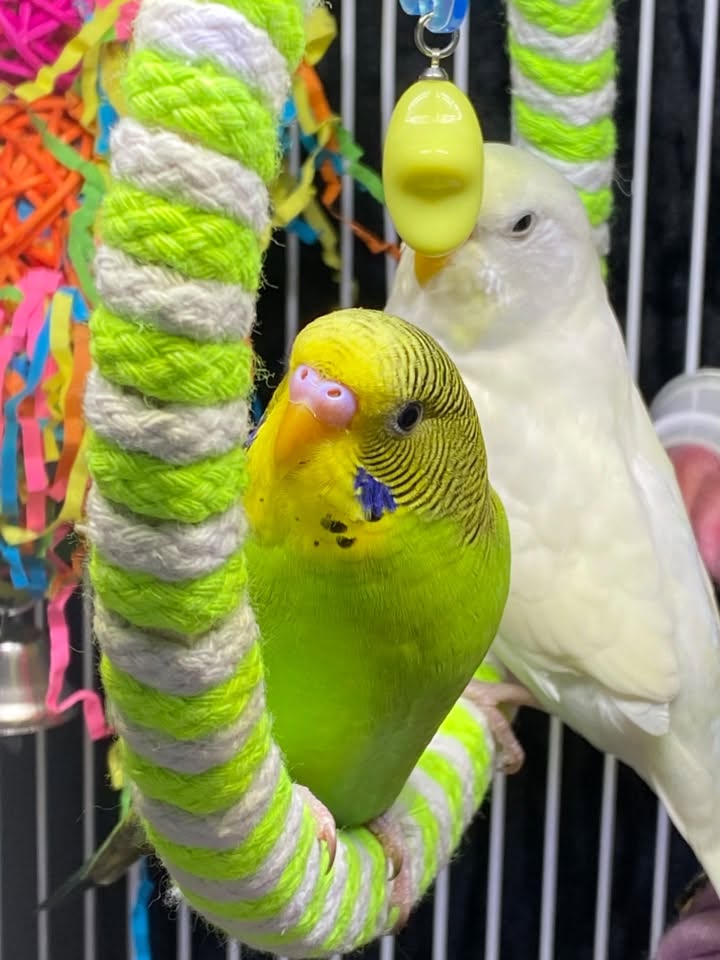
A food dish that is never empty looks like adequate feeding. It is not, if what is in the dish is nutritionally inadequate. A budgie living exclusively on cheap millet mix has a full food dish and Vitamin A deficiency. The observation — full dish, bird eating — matches the assumption about adequate feeding. The biology — deficiency developing over months, immune function declining, lifespan shortening — does not care about the assumption.
The Assumption That a Quiet Bird Is a Content Bird
A bird that does not show obvious distress looks fine. But birds evolved to conceal distress. The quiet bird in the corner is not necessarily a content bird — it may be a bird that has stopped expressing the distress that has gone unanswered. The behavioural observation matches the assumption. The underlying biology — chronic stress, suppressed immune function, reduced lifespan — is not visible in the assumed indicator.
The Assumption That the Same Setup That Worked Last Year Is Still Adequate
Welfare standards change because our understanding improves. The cage that was considered adequate in 2015 may not meet the standard of 2026. The diet that was considered appropriate ten years ago may have been revised in light of better nutritional science. Assuming that nothing needs revisiting because nothing has dramatically gone wrong is the same error the ornithologists made about Sooty Falcons — assuming the current understanding is complete rather than that it might be missing something important.
What Wild Bird Thriving Actually Looks Like — And the Domestic Translation
When ornithologists assess whether a wild bird population is thriving — not just surviving, but genuinely well — they look for specific indicators: breeding success, adult condition, longevity, behavioural repertoire, immune function. A thriving population breeds successfully, maintains good body condition, lives to expected lifespan, expresses the full range of species-typical behaviours, and shows normal immune function without unusual disease burden.
The domestic equivalent of each of these indicators exists and is observable in pet birds:
- Active and vocal during normal active periods. A thriving budgie chatters, investigates, moves around the cage, responds to stimuli. A surviving budgie sits quietly, moves minimally, and shows limited engagement with its environment.
- Good feather condition throughout and between moults. Smooth, intact, appropriately lustrous feathers are a visible record of good nutrition and low stress during the growth period. Dull, damaged, or poorly-structured feathers indicate the opposite.
- Healthy weight with good muscle condition. The keel bone should be detectable but well-padded on both sides. Neither sharp and prominent nor buried in excess fat.
- Engagement with enrichment and novelty. A thriving bird investigates new items, engages with foraging opportunities, and shows curiosity about its environment. A surviving bird ignores novelty or shows minimal response.
- Normal droppings consistently. The balance of solid, urate, and liquid components in droppings is one of the most reliable health indicators available to an observant owner.
- Social engagement — with another bird or with the human keeper. A thriving budgie engages actively with its social companion. It communicates, responds, seeks contact. A surviving bird may be passive or withdrawn in social contexts it previously engaged with.
The Practical Audit — Is Your Bird Surviving or Thriving?
I want to give every UK pet bird owner reading this a concrete way to assess their current situation against the three-level framework the Sooty Falcon discovery points toward. Not a guilt exercise. An honest assessment with a clear direction of travel.
For each of the three levels, here is the question to ask and the honest answer to look for.
For physical requirements: Is the cage the right size? Is the diet genuinely varied, with fresh food alongside quality seed or pellets? Is the water fresh and the environment clean? Is the cage position safe — away from draughts, direct sunlight, kitchen fumes, and scented products? If any of these is not fully met, it is the starting point.
For behavioural requirements: Does the bird have opportunities to forage — to work for food rather than simply eat from a dish? Is there variety and novelty in the cage environment? Does the bird get out-of-cage time for normal flight? Is it able to express its natural communication behaviour — vocalising, responding, interacting? If any of these is absent or minimal, it is the next priority after the physical requirements are met.
For cognitive and social requirements: Does the bird have genuine social contact — a companion bird or a committed human keeper providing daily interaction? Is the enrichment cognitively engaging rather than decorative? Is there enough variation in the bird’s experience — new perches, new foraging items, new interactions — to exercise the intelligence that its natural history has selected for? If any of these is absent, it is the third priority.
Work through the levels in order. The physical foundations have to be right before the behavioural layer can fully function. The behavioural layer has to be present before the cognitive and social layer fully expresses. Each level builds on the one below it, and the Sooty Falcon story is a reminder that all three need to be right — not just the one we have been paying attention to.
Frequently Asked Questions
How do I know if my bird is thriving rather than just surviving?
Apply the six indicators I listed above to your specific bird, in comparison with the bird’s own established normal. The question is not whether the bird meets some abstract standard but whether it is expressing the full range of behaviour and condition that you have seen it capable of when things are going well. A bird that is less active, less vocal, less engaged, or in worse feather condition than its own previous peak is a bird that is doing less well than it was, regardless of whether it meets a minimum threshold.
What is the single most impactful change most UK budgie owners could make?
In my experience, the most impactful change for most UK budgie owners — the one that produces the clearest visible improvement in the bird — is introducing foraging enrichment alongside increasing daily social contact. These two changes together engage both the behavioural and the cognitive-social requirements simultaneously. They are not expensive or time-consuming. They require understanding that the requirements exist and making a consistent daily commitment to meeting them. That is the whole of it.
Is there a way to tell from behaviour alone whether a bird is thriving?
Yes, with the caveat that you need to know your individual bird’s normal to use behaviour as a reliable indicator. A bird that is more active, more vocal, more curious, more engaged with its environment than it was previously is moving toward thriving. A bird that is quieter, less active, less engaged than its own baseline is moving away from it. Behaviour is the most sensitive and most accessible indicator available to an observant owner, which is exactly why knowing your bird’s normal — establishing the baseline — is so important.
Where can I get help assessing whether my bird is thriving in Swindon?
Come and see us at Paradise Pets, Manor Garden Centre, Cheney Manor, Swindon SN2 2QJ, or call us on 01793 512400. Describe what you are seeing — the behaviour, the feather condition, the daily routine — and we will give you an honest view of where things stand and what would make the most difference. Free advice, no obligation. That is how we have done things since 1988.
One Last Thing
The ornithologists who found the Sooty Falcon colonies in the inland desert will spend the next several years updating the models, revising the conservation plans, and incorporating what the discovery teaches about what this species actually needs. The process is essentially one of getting closer to the truth about the bird — replacing the assumption with the evidence, and adjusting the approach accordingly.
That is what I have been trying to do from this counter for 35 years. Not tell people what is convenient to hear about what their bird needs, but tell them what the bird is actually showing us — in its behaviour, its health, its engagement with its environment — and help them respond to that evidence rather than the assumption.
The Sooty Falcon’s inland gorge is not a compromise habitat. It is a habitat where the actual requirements are met. That is what thriving looks like — requirements met, capacity fully expressed, the animal fully itself in an environment that enables it.
That is what we are aiming for in every bird cage in every UK living room. Not survival in assumed-adequate conditions. Thriving in conditions where the actual requirements are genuinely met.
Come and talk to us about whether yours are.
Want to Know If Your Bird Is Genuinely Thriving? Come In and We Will Help You Find Out
We will go through the three levels — physical, behavioural, cognitive and social — and give you an honest picture of where things stand and what would make the most difference. Free advice, no obligation.
⭐ Customer Reviews
Amazing Bird Selection
Had a lovley visit today,staff were very friendly and very helpful,such a great petshop,their selection of birds is incredible,really impressed,thank so much to the staff at Paradise Pets

Friendly Helpful Staff
I have been coming to this place for years and they have a great stock of food for all types of pets. Have a great selection of small mammals and a lot of birds. Staff are friendly and helpful.

Great Quality Hutch
Bought a guinea pigs hutch and run combo, very happy with the service, the hutch was put in my car for me without even asking for help. The wood quality is very good, the instructions easy to follow and we are extremely happy with the fully built hutch. A good size for 2 guinea pigs

Response from Paradise Pets | Wiltshire
Thank you Melanie Latus Nice to provide services to you.
Best Bird Shop Around
It’s the best pet shop in and around Swindon. They always have an amazing selection of birds and all you need to keep them happy. I keep birds myself and the guys there are happy to answer questions and really know their stuff. I have seen budgies etc. in chain pet shops in the area looking really unhealthy and ill – I wouldn’t go anywhere else than Paradise Pets for animals.

Highly Recommended Bird Shop
I could not praise this shop enough. Really helped my Grandson buy his first bird and he’s loving it. Travelled from Somerset and was welcomed with open arms.

Great Shop with Competitive Prices
Great shop with amazing selection for small animals, hamsters, mice ect, highly recommend!
Also has a great selection for dogs & cats too & very competitive prices! 💖

