
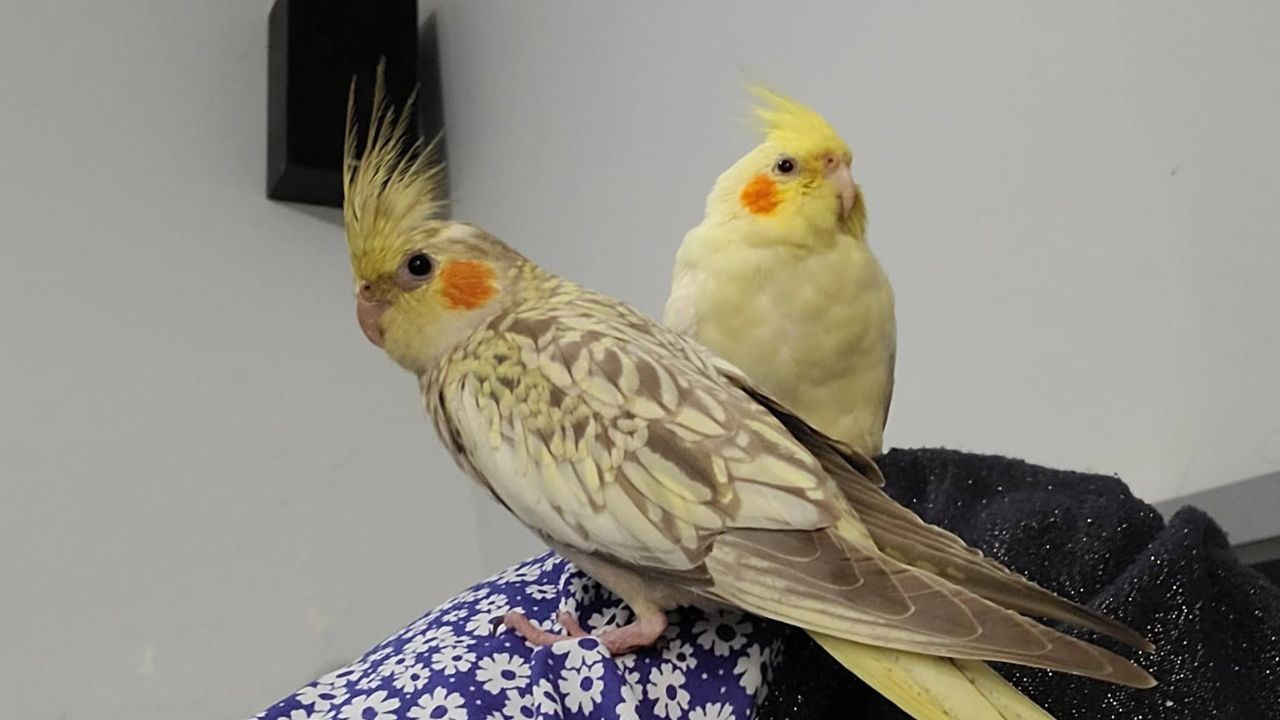

Neil has been keeping, breeding, and selling cockatiels at Paradise Pets Swindon since 1988 — over 35 years of daily first-hand experience with these birds and the people who keep them. Cockatiels are among the most expressive birds kept as pets in Britain, and almost nobody is taught how to read them properly. This is his complete, honest translation guide — every part of the body, what it is telling you, and why learning this language changes the whole relationship.
A woman came into the shop with a cockatiel she had owned for two years. She loved the bird genuinely, but she told me she sometimes felt like she was guessing at what it wanted. Some days it seemed delighted to see her. Other days it hissed when she approached and she had no idea why the change happened or what she had done differently.
I asked her to describe what the bird’s body looked like on the good days compared to the bad days. She described the crest — up on good days, flat and tight on bad ones. She described the wings — relaxed and loose on good days, held tightly against the body on bad ones. She described the eyes — and this was the detail that mattered most — wide and round on bad days, with the pupils visibly changing size in a way she had noticed but never thought to interpret.
I told her she had just described, in complete and accurate detail, the difference between a contented cockatiel and a stressed or alarmed one. She had been reading the signs correctly the whole time. She had simply never been told that what she was seeing had a consistent, learnable meaning.
That conversation happens at this counter more than almost any other. Owners who love their birds and pay close attention to them, without ever having been given the vocabulary to understand what they are looking at. This guide is that vocabulary.
Why Cockatiels Are So Expressive — The Reason Behind the Language
Before going through each signal individually, it is worth understanding why cockatiels communicate this way at all — because the reason shapes how reliably the signals can be read.
Cockatiels are flock animals. In the wild, a flock survives by communicating rapidly and reliably between its members — about danger, about food, about social status, about emotional state. A bird that cannot signal “I am alarmed” quickly to the rest of the flock is a bird whose flock cannot respond collectively to a threat. Evolution has produced, in cockatiels and their relatives, an extremely legible visual and behavioural communication system built for exactly this purpose.
When a cockatiel bonds with a human, it directs this same communication system at that person. The crest, the eyes, the wings, the posture — none of this is decorative. It is the bird’s social communication apparatus, working exactly as it evolved to, applied to the human it lives with. The good news for owners is that this means the signals are genuinely consistent and learnable, not vague or ambiguous. The bad news is that almost nobody teaches new owners what they mean.
- Every signal serves a real communicative function — none of what follows is arbitrary; each behaviour evolved because it reliably conveyed specific information within a flock
- The signals work together, not in isolation — reading the crest alone, or the eyes alone, gives you partial information; reading them together gives you the complete picture
- Context changes meaning — the same physical position can mean different things depending on what else is happening; this guide explains both the individual signals and how context shapes their interpretation
- The signals are consistent across individual birds, even though personality varies — a nervous cockatiel and a bold cockatiel both use the same vocabulary; what differs is how often each signal appears and in response to what
The Crest — The Headline Signal
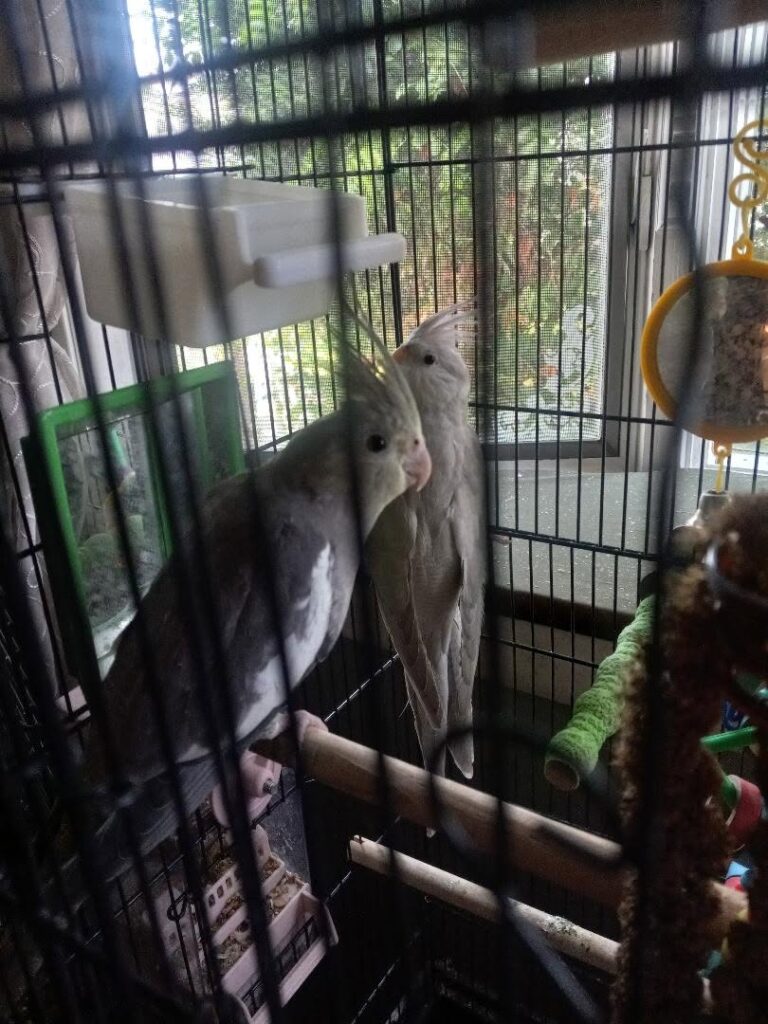
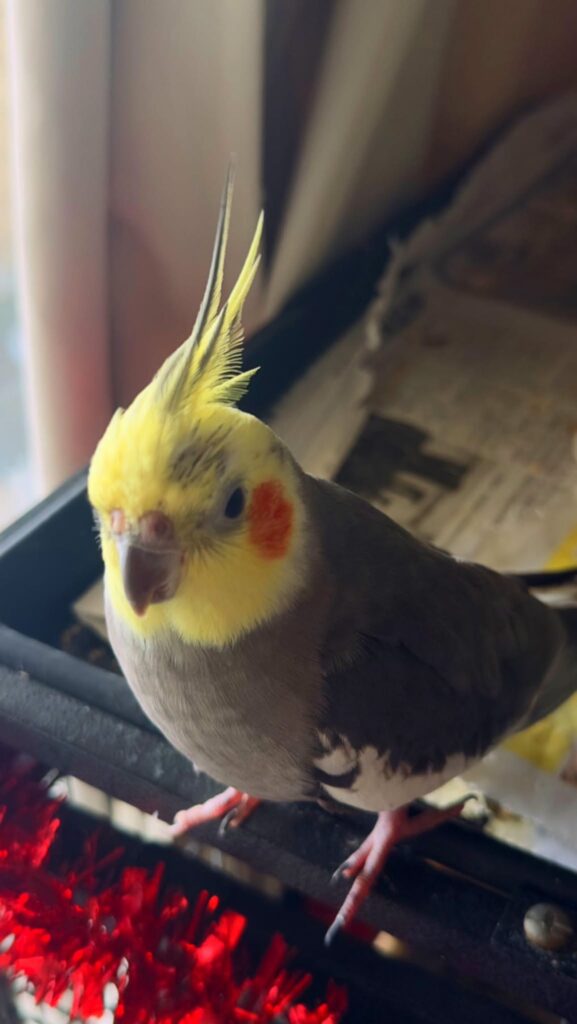
The crest is the most visible and most frequently noticed signal, and for good reason — it is highly mobile, easy to see, and changes rapidly. Full guidance on crest positions deserves its own detailed treatment, but the core vocabulary is essential here as the foundation for everything else.
- Flat and relaxed, soft body posture alongside it — contentment; the resting position of a calm, comfortable bird; most common during quiet periods, while being stroked, or while settling toward sleep
- Flat and tightly slicked against the head, body tense and leaning forward — fear or aggression warning; a very different message despite the similar crest position; the body language alongside it is what distinguishes this from contentment
- Fully raised and upright — high arousal; could be excitement, curiosity, or alarm depending on context; watch the rest of the body to know which
- Held at a moderate angle, neither flat nor fully up — relaxed interest and engagement; the most common position during normal active exploration of the environment
The Eyes — The Signal Most Owners Miss
This is, in my experience, the most underappreciated signal in the entire cockatiel communication system, and it is one of the most reliable. Cockatiels can control the size of their pupils independently of light conditions, and they do so as a deliberate social signal — a behaviour called “pinning” or “flashing.”
- Pupils rapidly contracting and expanding — pinning — this is high arousal, and it can mean several different things depending entirely on the rest of the body’s signals; excitement, intense interest, aggression, or anticipation can all produce pinning; never read pinning alone
- Pinning combined with a relaxed body, soft crest, and approach toward you — excitement and positive anticipation; commonly seen when a favourite person approaches, when a favourite treat appears, or during enthusiastic play
- Pinning combined with a tense body, slicked crest, and a forward lean — this is a warning sign; the bird is highly aroused in a negative or defensive way and a bite may follow; back off and give space
- Wide, fully round eyes with normal pupil size — alertness and attention; the bird is focused on something specific in its environment
- Half-closed or slowly blinking eyes during calm interaction — contentment and trust; similar to the slow blink in cats, this is a relaxed bird that feels safe enough to let its guard down slightly
- Half-closed eyes during the active part of the day, alongside other quiet behaviour — this is different from the contented slow blink above and is a health concern; a bird that should be alert and active showing reduced eye opening during its normal active hours may be unwell; context and timing distinguish this from the positive version
The Wings — Stretching, Display, and Tension
Wing position and movement provide a significant amount of information, ranging from simple physical comfort to complex social display.
- Wings drooping slightly away from the body, loose and relaxed — comfort and relaxation; a bird settling in for a calm period often allows its wings to hang loosely rather than holding them tightly tucked
- Wings held tightly and tensely against the body — stress, fear, or general tension; the opposite of the relaxed droop above; a bird holding its wings unusually tightly is communicating discomfort with its current situation
- A single wing stretched out and held briefly, often alongside a leg stretch on the same side — a normal stretching behaviour after rest; entirely healthy and not a concern
- Both wings raised and flapped while remaining on the perch — exercise behaviour; healthy and an indicator of good energy levels
- Wings spread and held out, body leaning forward, often with hissing — a threat or warning display; the bird is attempting to appear larger and more intimidating; respect this signal and give space rather than pushing through it
- Wings quivering or shaking rapidly during display toward another bird or a mirror — courtship display, most commonly seen in males in breeding condition; normal reproductive behaviour, not a health concern
Body Posture and Feather Position
The overall body posture and how the feathers are held communicate information about comfort, alertness, illness, and social state in ways that complement the more specific signals above.
- Sleek, tight feathers held close to the body — alertness, focus, or in some contexts mild apprehension; this is the “ready” posture, neither relaxed nor distressed but attentive
- Loosely fluffed feathers during calm, settled moments — relaxation and comfort; a contented bird often fluffs slightly during rest periods, particularly while preening or settling to sleep
- Significantly fluffed feathers during the active part of the day — this is different from the relaxed fluffing above and is a health concern; a bird that is fluffed when it should be alert and active is conserving body heat because it is unwell; this is one of the most important health signals a cockatiel gives and should never be dismissed as the bird simply being relaxed
- Standing tall, body elongated, feathers sleek — alarm and assessment; a bird that has detected something unusual will often stretch its body upward to get a better view and assess the situation before deciding how to respond
- Crouched, lowered body posture with wings slightly extended — readiness to flee or, in the right context, an invitation to be picked up; distinguishing these requires reading the rest of the body — a crouched bird with a relaxed crest and soft eyes near a trusted person is often inviting a step-up; the same crouch with a tense crest and pinned eyes is preparing to flee
The Tail — A Quieter But Important Signal
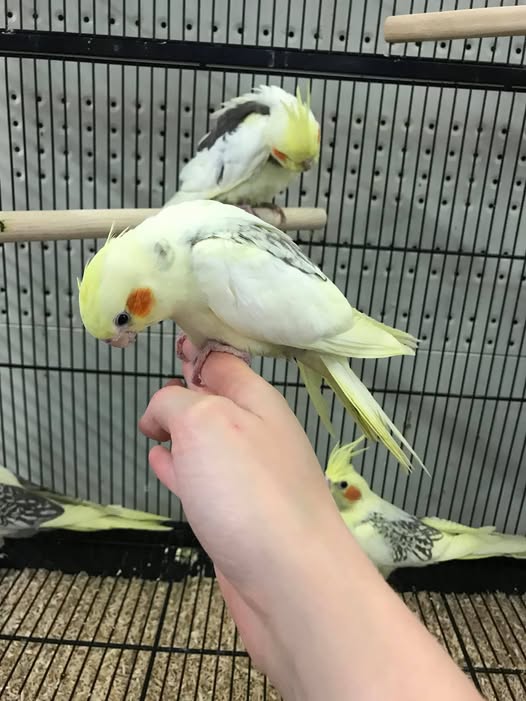
The tail is less commonly discussed than the crest or wings but it carries genuine information, particularly regarding health and arousal state.
- Tail wagging side to side — generally a positive sign, often seen after preening or settling, and frequently interpreted by owners as similar to contentment signals in other animals; while the exact function is debated, it is widely associated with comfort and is not a concern
- Tail bobbing up and down rhythmically while the bird is at rest — this is a significant and different signal from the side-to-side wag and requires real attention; vertical tail bobbing at rest indicates respiratory effort and can be a sign of breathing difficulty; if you observe this alongside the bird sitting quietly, it warrants prompt veterinary assessment
- Tail fanned and spread — often seen during display or as part of a broader alarm or assertive posture; usually accompanies other signals such as raised crest or extended wings rather than appearing alone
- Tail held low and tucked — can indicate discomfort or a bird that is feeling vulnerable; consider this alongside other signals rather than in isolation
- Vertical tail bobbing — up and down — while the bird is sitting still is different from the side-to-side wag and is a respiratory sign, not a behavioural one
- If you see this alongside fluffed feathers, reduced activity, or the bird sitting lower than normal, this combination warrants a same-day avian vet visit
- Do not confuse this with the normal side-to-side tail wag that follows preening or settling — the direction and rhythm of the movement are the distinguishing factors
Vocalisations Alongside Body Language
Body language rarely appears in isolation from sound, and reading the two together gives a more complete picture than either alone.
- Soft chirping or warbling alongside a relaxed crest and loose wings — contentment and social engagement; the bird is comfortable and communicating positively
- Sharp, repeated alarm calls alongside a raised crest and tense body — genuine alarm; something in the environment has been identified as a potential threat
- Hissing alongside a slicked crest and spread wings — a clear defensive warning; the bird wants space and is prepared to escalate if the warning is not heeded
- Whistling and singing, often with crest movement and animated posture — a positive, engaged state; many cockatiels whistle most enthusiastically when they are content and stimulated
- Beak grinding — a soft, repetitive clicking or grinding sound, often heard as the bird settles to sleep — this is one of the clearest contentment signals a cockatiel gives; beak grinding before sleep indicates a relaxed, secure bird and is something owners should be glad to hear
- Beak clicking that is sharp and repeated, alongside a tense body — different from the soft grinding above; this is a warning sound, often preceding a bite if the situation is not de-escalated
Putting It All Together — A Combined Reading Reference
| Combined Signals | What It Means | What To Do |
|---|---|---|
| Flat crest, soft eyes, loose wings, beak grinding | Deep contentment and trust | Nothing — this is the bird at its happiest |
| Slicked flat crest, tense body, pinned eyes, forward lean | Fear or pre-bite warning | Withdraw and give space; do not push the interaction |
| Raised crest, pinning eyes, animated body, vocalising | Excitement and positive anticipation | Nothing — enjoy the engagement |
| Raised crest, wide eyes, rigid body, alarm calling | Genuine alarm — a perceived threat | Identify the trigger and remove or address it |
| Fluffed feathers, flat crest, quiet, sitting low during active hours | Illness — the bird is unwell | Avian vet assessment, particularly if other signs are present |
| Vertical tail bobbing at rest, alongside fluffed feathers | Respiratory distress | Avian vet today — do not wait |
| Spread wings, hissing, slicked crest, forward lean | Active threat display | Give space; do not handle until the bird has settled |
| Crouched body, soft crest, near a trusted person | Invitation to be picked up | Offer a hand for step-up |
Why Learning This Language Changes Everything
The practical value of understanding this communication system goes well beyond satisfying curiosity. It changes how you respond to the bird in ways that genuinely improve the relationship and the bird’s welfare.
- You stop pushing through warning signs — an owner who can read a slicked crest and pinned eyes as a warning rather than mistaking it for excitement avoids handling sessions that end in a bite, which protects trust on both sides
- You catch health changes earlier — fluffed feathers during active hours, vertical tail bobbing, half-closed eyes at the wrong time of day; these are health signals embedded in the same body language system, and an owner fluent in the language notices the deviation immediately rather than after weeks of gradual decline
- You respond appropriately to positive signals too — recognising genuine excitement and engagement means you can lean into interaction at the right moments rather than missing opportunities for connection because the signs went unread
- The bird’s trust in you increases when its signals are respected — an animal that communicates and is consistently responded to appropriately learns that its communication works; this is the foundation of the deepest trust a cockatiel can develop toward a person
Frequently Asked Questions
How do I know if my cockatiel is happy or just tolerating me?
Look for the combination of signals associated with genuine contentment — a flat, relaxed crest, soft round eyes without excessive pinning, loosely held wings, sleek but not tense feathers, and ideally beak grinding when settling to rest. A bird that is merely tolerating interaction typically shows some combination of tension — a slicked or rigid crest, tight body posture, and pinned eyes without the accompanying relaxed signals. The difference is genuinely readable once you know what to look for.
My cockatiel pins its eyes a lot. Is that bad?
Not inherently — pinning is simply a sign of high arousal, and arousal can be positive or negative. The crucial thing is what the rest of the body is doing at the same time. Pinning alongside a relaxed crest, loose wings, and an approach toward you is excitement. Pinning alongside a tense body, slicked crest, and forward lean is a warning. Never interpret pinning in isolation.
Why does my cockatiel fluff up and seem relaxed sometimes but other times the fluffing worries you?
Timing is the key distinguishing factor. A cockatiel that fluffs slightly while settling to rest, preening, or during a calm quiet moment is showing normal relaxation. A cockatiel that is fluffed during the period when it should be alert and active — and that also seems quiet, withdrawn, or less engaged than usual — is showing a sign more consistent with illness. The same physical fluffing can mean two very different things depending on when it happens and what else is going on.
What does it mean when my cockatiel grinds its beak?
Beak grinding — a soft, repetitive clicking sound, usually heard as the bird settles toward sleep — is one of the clearest and most reliable contentment signals a cockatiel gives. It indicates the bird feels relaxed and secure enough to fully settle. Hearing it regularly is a good sign about your bird’s overall wellbeing and sense of safety in its environment.
My cockatiel hisses at me sometimes. What should I do?
Hissing, particularly alongside a slicked crest and spread wings, is a clear warning signal — the bird wants space and is communicating that directly. The correct response is to respect the signal: withdraw, give the bird room, and avoid pushing the interaction further at that moment. Hissing that occurs regularly in specific, identifiable situations — such as during cage cleaning, or when a particular person approaches — is worth thinking about in terms of what might be triggering it, but in the moment, the appropriate response is always to back off rather than push through.
Can different cockatiels have different “accents” or use signals differently?
Individual birds do show some variation in how frequently they display particular signals, shaped by personality, history, and the specific relationships they have built with the people around them. A naturally bold bird may show fewer fear signals overall than a naturally cautious one. But the underlying vocabulary — what a slicked crest means, what pinning eyes combined with tension means, what beak grinding means — is consistent across the species. What varies is the frequency and the threshold for displaying each signal, not the meaning of the signal itself.
Where can I learn more about reading my cockatiel’s behaviour in Swindon?
Come in to Paradise Pets at Manor Garden Centre, Cheney Manor Industrial Estate, Swindon SN2 2QJ — or call us on 01793 512400. Bring the bird or bring a video and I am happy to talk through what you are seeing and what it means. Free advice, no obligation. That is how we have done things here for 35 years.
One Last Thing From Me
The woman with the two-year-old cockatiel I described at the start came back a few weeks later. She told me that once she understood the difference between the contented flat crest and the warning flat crest, between excited pinning and alarmed pinning, she had started noticing patterns she had never connected before. The bad days, almost always, followed a specific sequence — the cage being moved near a window with a cat visible outside, or a louder than usual television in the background just before she approached.
She had not changed anything about how she handled the bird. She had simply started understanding what it was already telling her, and once she did, she could see the cause behind the behaviour rather than experiencing it as unpredictable.
That is the whole value of this language. It was never hidden. The bird had been saying all of this the entire time. Learning to hear it is the only thing that changes.
Want To Understand Your Cockatiel Better? Come In And Talk.
Whether you have a specific behaviour you are trying to interpret or want a general understanding of what your bird is telling you, I am happy to go through it. Bring the bird or a video. Free advice, no obligation. That is how we have done things here for 35 years.