

Neil has been keeping, breeding, and selling budgies at Paradise Pets Swindon since 1988 — over 35 years of daily first-hand experience with these birds and the owners who keep them. A dirty, soiled, or matted vent area is one of the signs that owners most consistently underestimate — partly because it sounds like a hygiene issue rather than a health one, and partly because it can develop gradually enough that the severity is not obvious until it has been there for some time. This is his honest guide to what it means and what to do about it.
A young man came into the shop holding his budgie wrapped gently in a tea towel, looking deeply uncomfortable about the whole situation. He had noticed, that morning, that the feathers around his bird’s vent — the area underneath the tail — were matted, discoloured, and stuck together with what was clearly dried droppings. He had tried to clean it gently with a damp cloth the night before and it had not come away easily. He did not know how long it had been building up because, as he admitted slightly sheepishly, he did not regularly check that part of the bird.
I told him this needed a vet, and it needed one today rather than tomorrow.
He looked surprised. He had assumed this was something he could sort out himself with patience and warm water — an unfortunate hygiene problem rather than a medical one. I explained that a soiled vent in a budgie is very rarely just a hygiene problem on its own. It is almost always a symptom of something else — most commonly diarrhoea, which itself has a cause that needs identifying, and which can become a genuine emergency in its own right if the matted faeces blocks the vent opening entirely.
He went straight to a vet. The bird had a mild gastrointestinal infection, treatable with the right medication, caught early enough that there was no lasting concern. The vet also gently and carefully removed the matted material, which the young man had been right not to force.
Why This Sign Matters More Than It Looks Like It Should
Before going through the causes, I want to explain why a soiled vent area carries more medical weight than its appearance suggests — because understanding the mechanism changes how seriously you take it.
A healthy budgie produces droppings with a specific, consistent structure — a solid, coiled, dark green or brown faecal portion, a white urate cap, and a small amount of clear liquid. These droppings are formed and pass cleanly, without sticking to the surrounding feathers. A budgie maintaining normal hygiene around its vent is a budgie whose digestive output is normal in consistency.
When droppings become loose, watery, or abnormally soft — for any of the reasons I will go through below — they no longer pass cleanly. They stick to the feathers around the vent, accumulate, and dry into the matted, soiled mass that the young man found on his bird. The dirty vent is not the primary problem. It is the visible downstream consequence of abnormal droppings, which is itself a sign of something happening internally that needs investigation.
This is why I do not treat a soiled vent as a cleaning issue. It is a visible marker of a digestive or systemic problem that has been ongoing for at least as long as it has taken the mess to accumulate — which is often longer than the owner realises, because this area of the bird is not always closely observed day to day.
The Causes — What A Dirty Vent Actually Indicates
I am going to go through these in order of how commonly I see them, with the specific signs that help distinguish each one.
Cause 1 — Dietary Cause (Common — Usually Resolves With Change)
The most common explanation for a sudden onset of loose droppings, and the resulting vent soiling, is a recent dietary change or an excess of a particular food type.
- Recently introduced fresh fruit or vegetables — a sudden increase in moisture-rich food, particularly if introduced quickly rather than gradually, can produce temporarily loose droppings as the digestive system adjusts
- Excess fruit specifically — the sugar content in fruit, given in larger quantities than the bird is used to, frequently produces loose stools; this resolves when the quantity is reduced
- A new food item the bird has not had before — any dietary change introduced too quickly, even a beneficial one, can cause short-term digestive upset
- What it looks like — droppings become looser than normal but the bird otherwise behaves completely normally — active, vocal, eating, no other signs of illness; the change correlates clearly with a specific recent dietary change
- What to do — remove the suspected food item, return to the established diet, and monitor; droppings should normalise within 24 to 48 hours; gently clean the soiled feathers with a warm, damp cloth once the underlying cause is addressed, being careful not to pull at matted material
- When to be concerned despite a dietary explanation — if droppings do not normalise within 48 hours of removing the suspected food, or if the bird shows any other signs of illness, this is no longer a simple dietary explanation and needs vet attention
Cause 2 — Bacterial Or Parasitic Gastrointestinal Infection (Vet Required)
This is the cause the young man’s bird turned out to have, and it is one of the more common medical explanations for persistent loose droppings and vent soiling in UK pet budgies.
- What it looks like — persistently loose or watery droppings not explained by a recent dietary change; may be accompanied by a change in dropping colour or smell; the bird may show reduced activity, reduced appetite, or quieter vocalisation alongside the digestive signs
- Common causative organisms — bacterial infections including E. coli and other gram-negative bacteria; parasitic causes including Giardia and coccidia; yeast infections (candidiasis) particularly in birds with weakened immune function
- What to do — vet within 24 hours; diagnosis typically requires a faecal sample analysis to identify the specific organism involved, which determines the correct treatment; home treatment without diagnosis is not appropriate because different causes require different medications
- Why prompt action matters — gastrointestinal infections in small birds can cause rapid fluid and nutrient loss; what looks like a manageable issue on day one can become a more serious one within 48 hours if untreated
Cause 3 — Liver Disease (Vet Required)
Liver disease, often resulting from a long-term seed-only diet, can affect the consistency and colour of droppings and is a cause worth knowing about specifically because it tends to develop silently over a long period before becoming visible through signs like this one.
- What it looks like — droppings may be abnormally green, watery, or inconsistent; often alongside other subtle signs that have been building for some time — reduced activity, changes in feather condition, possible mild weight changes
- Which birds are at risk — birds that have been on a seed-only diet for an extended period; this is one of the long-term consequences of the dietary pattern I describe in detail in our article on budgie lifespan
- What to do — vet assessment; liver function can be evaluated and the underlying dietary cause addressed; earlier identification produces better outcomes, as is the case with most liver conditions across species
Cause 4 — Egg Binding Or Reproductive Issues In Females (Emergency)
A female budgie experiencing reproductive complications can show changes in droppings and vent area soiling alongside other more specific signs. This is included here because the combination of signs matters and because reproductive emergencies in female budgies require urgent recognition.
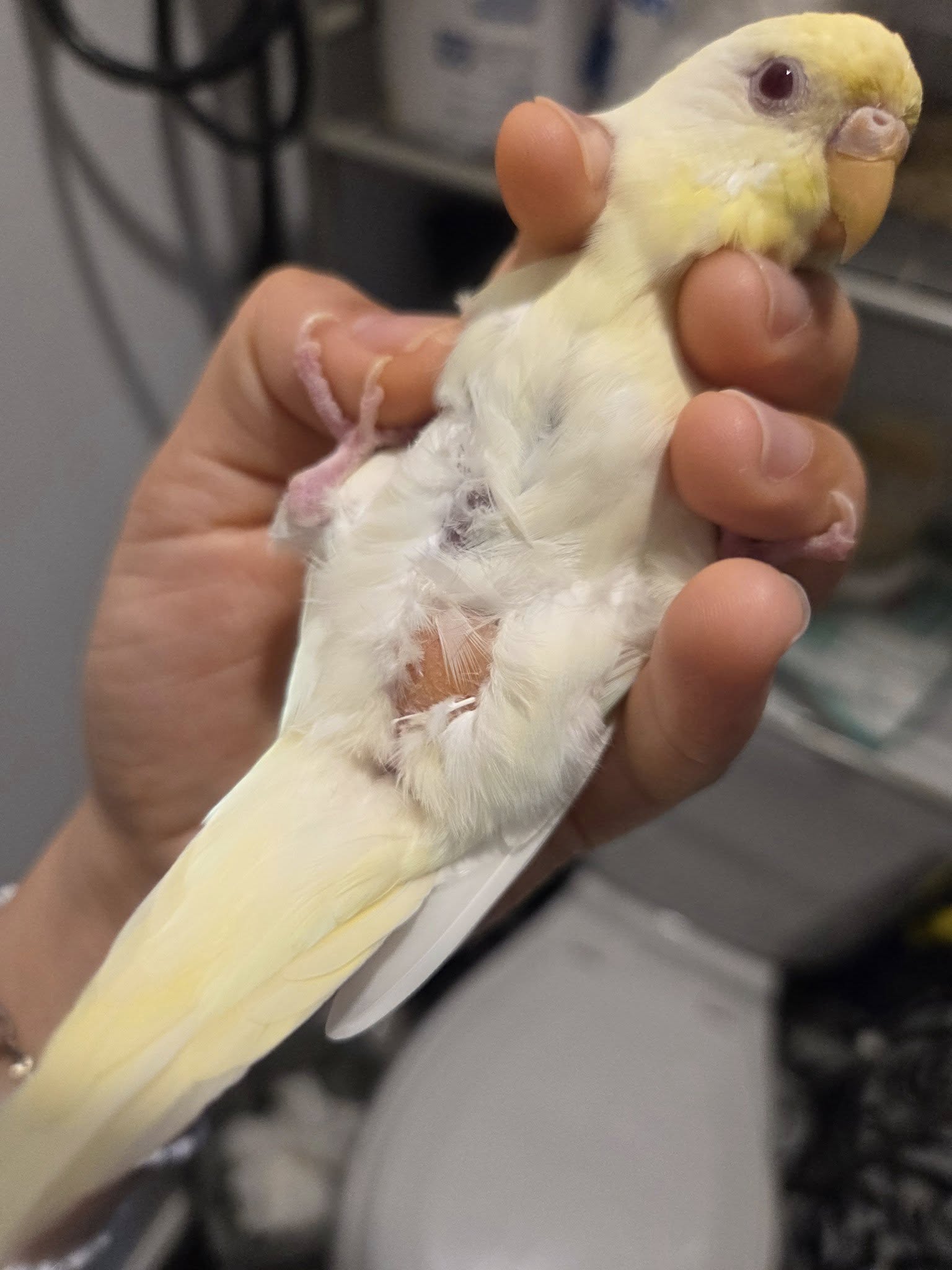
- Vent area appears swollen, distended, or different in shape from normal, alongside soiling
- The bird is straining, particularly visible if she is spending time on the cage floor in an unusual posture
- Reduced or absent droppings alongside visible discomfort
- Weakness, lethargy, or an unsteady appearance accompanying any of the above
- Any of these signs in a female budgie require same-day emergency veterinary attention — egg binding can be life-threatening within hours
Cause 5 — Kidney Problems (Vet Required)
Kidney dysfunction, more common in older budgies, can affect the consistency of the urate portion of droppings specifically — producing an abnormally watery or discoloured urate component that contributes to vent soiling over time.
- What it looks like — the white urate portion of the droppings may appear unusually watery, yellow-tinged, or otherwise altered from its normal chalky white appearance; often a gradual change over weeks rather than a sudden onset
- Which birds are at risk — older budgies, typically over four to five years
- What to do — vet assessment, particularly important in an older bird; kidney function can be supported with appropriate dietary and management changes once identified
Cause 6 — Stress (Usually Resolves, But Monitor)
Acute stress — a house move, a new pet introduced to the household, an unusually disruptive event — can produce a temporary increase in dropping frequency and looseness in budgies, similar to a stress response in many species.
- What it looks like — loose droppings that correlate clearly with a specific recent stressful event; the bird is otherwise behaving normally aside from some additional wariness consistent with the stressor
- What to do — reduce stressors where possible, maintain a calm and consistent environment, monitor closely; droppings should normalise within a few days as the bird settles
- When to move past this explanation — if the loose droppings persist beyond a few days, or if there was no clear stressful trigger to begin with, stress is not a sufficient explanation and a vet check is needed
How To Clean A Soiled Vent Safely — What To Do And What Not To Do
Regardless of the underlying cause, you will likely need to clean the affected area while you address the cause, particularly if the matting is significant. This needs to be done carefully.
- Use warm water, not cold — a cold compress against this sensitive area causes unnecessary discomfort and stress; warm water softens dried material more effectively
- Apply gently with a soft cloth or cotton wool — hold the warm, damp material against the affected feathers for a minute or two to soften dried matter before attempting to remove anything
- Never pull or pick at matted material — this can pull feathers out and cause genuine pain and injury to a sensitive area; if material does not come away easily with gentle softening and wiping, stop and let a vet handle it
- Dry the area gently afterwards — a damp vent area left wet, particularly in a cool room, can contribute to the bird becoming cold; pat gently with a dry cloth or hold the bird briefly near (not directly under) a gentle warm air source, taking care not to overheat or frighten the bird
- If the matting is severe, leave it for the vet — significant, hardened matting that does not soften readily is best removed by a vet who can do so without causing pain or stress, and who is already assessing the underlying cause at the same visit
- Check that the vent itself is not blocked — this is the single most important thing to check; if dried material has completely sealed the vent opening, the bird cannot pass droppings at all, which becomes an emergency in its own right; if you cannot tell whether the vent is clear, treat this as urgent and seek same-day vet attention
When Vent Soiling Becomes An Emergency In Its Own Right
I want to separate this out clearly because it is the single most important practical point in this article.
A budgie’s vent must remain clear for the bird to pass droppings normally. If matted, dried faecal material builds up to the point where it physically blocks the vent opening, the bird cannot eliminate waste. This is a medical emergency independent of whatever originally caused the loose droppings — a blocked vent can become life-threatening within a relatively short period regardless of the underlying cause.
- Signs of a blocked or significantly obstructed vent — a large, hardened mass of matted material around the vent area; the bird straining without producing droppings; visible distress, restlessness, or repeated attempts to clean the area itself without success
- What to do — this is a same-day emergency; do not attempt to forcibly remove a large hardened mass yourself, as this can cause significant pain and tissue damage; a vet can safely soften and remove the obstruction
- While arranging the vet visit — you can gently apply warm, damp cloth compresses to begin softening the area, but stop if the bird shows significant distress and let the vet complete the process
The Quick Reference — Reading What You Are Looking At
| What You See | Most Likely Cause | What To Do |
|---|---|---|
| Loose droppings starting after a new food introduced. Bird otherwise completely normal. | Dietary — benign | Remove the food. Monitor 48 hours. Clean gently with warm water. |
| Persistent loose, watery droppings. No dietary explanation. Bird quieter than usual. | Bacterial or parasitic infection | Vet within 24 hours. Faecal testing needed for diagnosis. |
| Abnormally green or watery droppings. History of seed-only diet. Gradual onset. | Possible liver disease | Vet assessment. Review and improve diet immediately. |
| Female bird. Vent area swollen or distended. Straining. Weakness. | Possible egg binding — emergency | Vet same day, immediately. |
| Watery or discoloured urate portion. Older bird (4+ years). Gradual change. | Possible kidney issue | Vet assessment within 24–48 hours. |
| Loose droppings following a clear stressful event. Otherwise normal behaviour. | Stress response — usually benign | Reduce stressors. Monitor. Vet if not resolved in a few days. |
| Large, hardened mass blocking vent opening. Straining without producing droppings. | Vent obstruction — emergency | Vet today, immediately. Do not force removal yourself. |
Preventing Vent Soiling From Becoming A Recurring Problem
- Check your bird’s vent area regularly — make this a habit during routine handling or cage cleaning, not something you only notice when it has become severe; early detection of mild soiling allows much simpler intervention
- Maintain a varied, balanced diet from the start — moving away from seed-only feeding reduces the risk of several of the causes described in this article, particularly liver-related issues
- Introduce new foods gradually — reduces the likelihood of dietary-related digestive upset
- Maintain a stable, low-stress environment — consistent routine, appropriate positioning of the cage, and minimising unnecessary disturbance reduces stress-related digestive symptoms
- Annual vet checks — catch developing liver or kidney issues before they progress to the point of producing visible symptoms like this one
Frequently Asked Questions
Is a dirty bottom on a budgie always serious?
It is always worth taking seriously, though the underlying cause ranges from mild and easily resolved to genuinely urgent. The vent soiling itself is a visible sign of abnormal droppings, which always has a cause that needs identifying. In many cases the cause is a simple dietary issue that resolves quickly once addressed. In others it indicates an infection, organ issue, or reproductive emergency that needs prompt veterinary attention. The right response is always to investigate the cause rather than just cleaning the area and hoping it resolves on its own.
Can I just clean my budgie’s vent area myself without a vet?
You can and should gently clean the area with warm water to remove matted material and keep the bird comfortable, but cleaning alone does not address the underlying cause of the soiling. If the soiling is mild, has a clear and resolved explanation such as a specific recent food, and the bird is otherwise behaving completely normally, monitoring after cleaning is reasonable. If the cause is unclear, if it persists, or if the bird shows any other signs of being unwell, a vet visit is needed regardless of how successfully you have cleaned the area.
How urgent is it if my budgie’s vent appears blocked?
This is a same-day emergency. A budgie that cannot pass droppings due to a blocked vent is in a genuinely dangerous situation that can deteriorate quickly. Do not attempt to forcibly remove a large, hardened blockage yourself — this risks significant pain and tissue injury. Contact an avian vet immediately. You can gently apply warm, damp compresses while arranging transport, but stop if the bird shows distress.
My budgie’s droppings are loose but the bird seems completely fine otherwise. Should I still worry?
Monitor closely rather than panicking immediately. If you can identify a likely dietary cause — a recently introduced food, an increase in fruit, a new treat — remove it and watch for improvement within 24 to 48 hours. If the droppings normalise once the suspected food is removed, this confirms a benign dietary cause. If there is no obvious dietary explanation, or if the loose droppings persist despite removing suspected foods, a vet check is warranted even if the bird otherwise seems well — some of the causes in this article do not produce other obvious symptoms in their early stages.
Could stress alone cause my budgie’s bottom to get dirty?
Yes, acute stress can produce a temporary increase in loose droppings in budgies, similar to a stress response seen in many species. This typically resolves within a few days as the bird settles, provided the stressor is identified and reduced where possible. If there was no clear stressful event, or if the loose droppings persist beyond a few days despite a calmer environment, stress is not a sufficient explanation on its own and other causes need to be considered.
Is this more serious in older budgies?
It can be, because some of the underlying causes — particularly kidney issues and liver disease — become more common as budgies age. A vent soiling presentation in an older bird, particularly one over four to five years, warrants a slightly more prompt and thorough veterinary assessment than the same sign in a young, otherwise healthy bird, even if the bird is not showing other obvious signs of illness.
What should I feed my budgie if it has loose droppings?
While you are identifying and addressing the cause, avoid introducing any new foods, reduce or remove fruit and high-sugar treats, and ensure fresh water is always available. Do not attempt to treat the underlying cause with dietary changes alone if there is no clear benign explanation — a vet needs to identify whether the cause is infectious, organ-related, or otherwise, because the correct treatment depends entirely on the specific cause.
Where can I get advice about my budgie’s dirty bottom in Swindon?
Ring us on 01793 512400 and describe what you are seeing — how the area looks, how long it has been there, whether the bird seems otherwise well, and any recent changes to diet or environment. We can help you assess whether this looks like something to monitor or something that needs a vet today. Paradise Pets is at Manor Garden Centre, Cheney Manor Industrial Estate, Swindon SN2 2QJ. For anything that sounds like it could be a blocked vent or an emergency — ring the vet first.
One Last Thing From Me
The young man who came in with his budgie wrapped in a tea towel rang a few days later to update me. The infection had cleared with treatment, the matted feathers had grown back in normally, and the bird was back to its usual self. He had also started checking the vent area regularly as part of handling the bird, which he told me slightly ruefully he had never thought to do before.
“I just didn’t know it was something I should be checking,” he said. “I thought as long as the cage was clean, that was the main thing.”
That is the honest gap this article is trying to close. A clean cage matters, but it does not tell you what is happening inside the bird. The vent area does — it is one of the more reliable visible windows into a budgie’s digestive and systemic health, and it deserves the same kind of regular attention that owners learn to give to a bird’s eyes, breathing, and posture.
If you notice your budgie’s vent area is soiled, do not treat it as an untidiness problem to be solved with a damp cloth and moving on. Treat it as the health sign it is. Identify what might be causing it. Clean gently if needed, but get to the actual cause — through monitoring if it looks benign, through a vet if it does not resolve quickly or if anything else seems off.
That distinction, more than anything else in this article, is what I want every budgie owner to take away from it.
Worried About Your Budgie’s Vent Area? Come In Or Ring Us
Describe what you are seeing — how it looks, how long it has been there, what else seems different about the bird. We will tell you honestly whether we think it needs a vet today or whether monitoring is reasonable. Free advice, no obligation. That is how we have done things here for 35 years.
⭐ Customer Reviews
Amazing Bird Selection
Had a lovley visit today,staff were very friendly and very helpful,such a great petshop,their selection of birds is incredible,really impressed,thank so much to the staff at Paradise Pets

Friendly Helpful Staff
I have been coming to this place for years and they have a great stock of food for all types of pets. Have a great selection of small mammals and a lot of birds. Staff are friendly and helpful.

Great Quality Hutch
Bought a guinea pigs hutch and run combo, very happy with the service, the hutch was put in my car for me without even asking for help. The wood quality is very good, the instructions easy to follow and we are extremely happy with the fully built hutch. A good size for 2 guinea pigs

Response from Paradise Pets | Wiltshire
Thank you Melanie Latus Nice to provide services to you.
Best Bird Shop Around
It’s the best pet shop in and around Swindon. They always have an amazing selection of birds and all you need to keep them happy. I keep birds myself and the guys there are happy to answer questions and really know their stuff. I have seen budgies etc. in chain pet shops in the area looking really unhealthy and ill – I wouldn’t go anywhere else than Paradise Pets for animals.

Highly Recommended Bird Shop
I could not praise this shop enough. Really helped my Grandson buy his first bird and he’s loving it. Travelled from Somerset and was welcomed with open arms.

Great Shop with Competitive Prices
Great shop with amazing selection for small animals, hamsters, mice ect, highly recommend!
Also has a great selection for dogs & cats too & very competitive prices! 💖

