


Neil has been keeping, breeding, and selling budgies at Paradise Pets Swindon since 1988 — over 35 years of daily first-hand experience with these birds and the owners who keep them. In that time, he has sold budgies that went on to live fourteen years, and he has spoken to owners whose birds died at four. The birds came from the same stock. They were kept by equally well-intentioned owners. The difference between them was not genetics, not luck, and not anything exotic. This article is his honest account of what that difference actually was.
Two women came into the shop within a fortnight of each other, about four years ago. Both had lost budgies. Both were upset in the quiet, slightly embarrassed way that people sometimes are when they are grieving an animal and feel they ought not to make too much of it.
The first woman had owned her budgie for four years. It had always seemed healthy. One morning she found it at the bottom of the cage. The vet, when she went, told her the liver was in poor condition — almost certainly a long-term dietary issue. She had fed seed. She had not known there was anything wrong with that.
The second woman had owned her budgie for thirteen years. It had slowed down in its final months, eaten less, been quieter. When it went, it went peacefully, on its perch. She came in not because she was confused about what had happened, but because she wanted another bird and she wanted to do the same things right again.
I asked the second woman what she had fed her bird. Fresh greens every second day, she said. A seed mix, but also pellets. Apple occasionally. She changed the water every morning without fail. She had taken the bird to the vet once a year since she got it. She had never clipped its wings.
The first woman, sitting nearby and hearing this, said quietly: “I didn’t know any of that.”
In 35 years of selling budgies and watching what happens to them in different homes, I have learned exactly what separates the birds that reach four years from the ones that reach fourteen. This article is that knowledge, laid out as honestly as I can manage.
The Numbers First — What Budgie Lifespan Actually Looks Like
Let me give you the honest picture of what is possible and what is typical, because most owners have no accurate frame of reference for either.
A budgie in the wild — in Australia, where the species originates — lives approximately 5 to 8 years. The Australian interior is not a gentle environment. Predators, heat, drought, competition for food. A captive budgie, removed from all of that and given consistent food, water, shelter, and care, has every structural reason to live significantly beyond wild lifespan.
In genuinely good captive conditions, budgies regularly live 12 to 15 years. Some beyond that. This is not exceptional. It is what the species is capable of when kept correctly. The oldest verified captive budgies have reached their late teens, though these are outliers.
In practice, across UK households, the average is somewhere between 5 and 8 years — roughly equivalent to a wild bird, despite the absence of predators, drought, and competition. The conditions that should be extending life are not, in most cases, doing so.
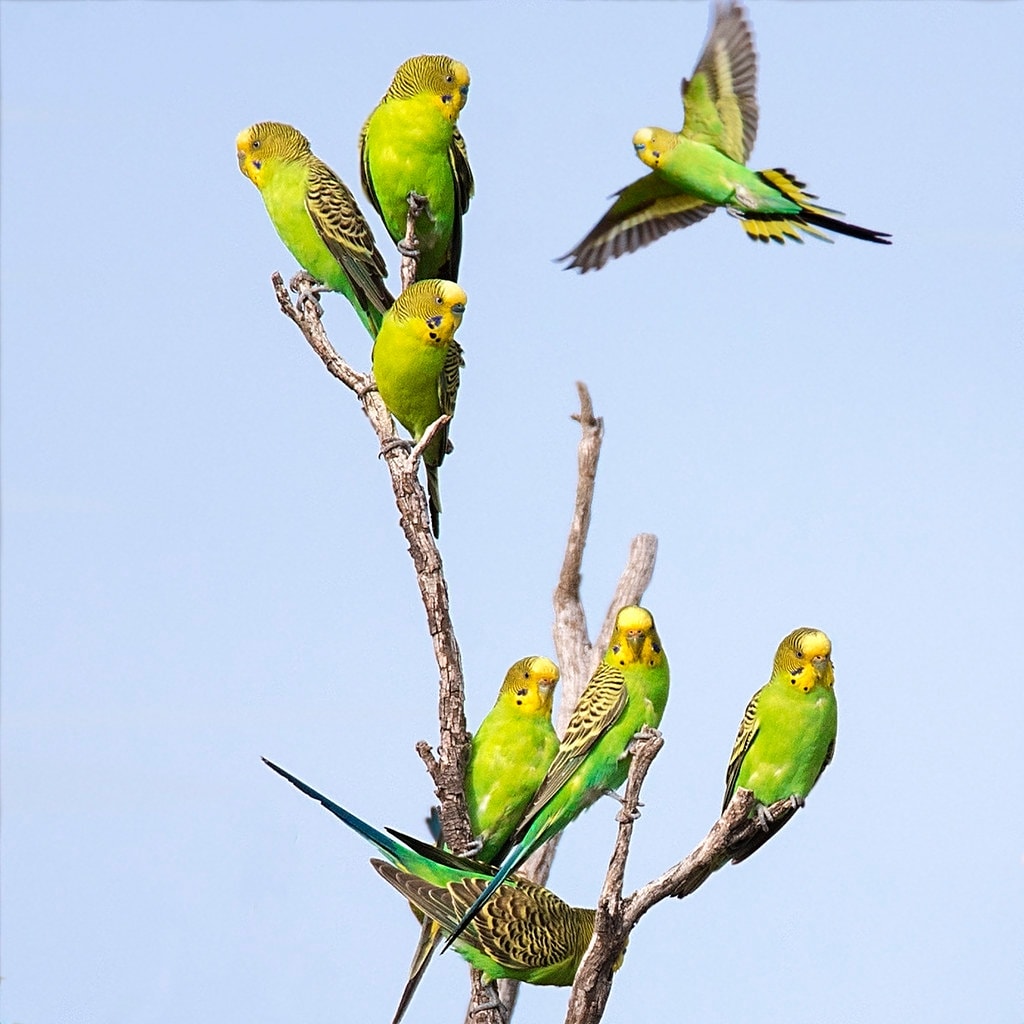
The uncomfortable truth in those numbers is this — on average, UK pet budgies live no longer than their wild counterparts despite having none of the wild’s hardships. The protection of captivity is not translating into extended life, because the care being provided is not good enough to compensate for what captivity also removes — natural varied diet, flight space, and the physical demands that keep a wild bird’s body working at full capacity.
Understanding this is the starting point for understanding why some birds live four years and others live fourteen.
The Real Reason The Gap Exists
I want to address something before I go through the specific differences, because it changes how you should think about everything that follows.
Most owners who lose a budgie at four or five years did everything they were told to do. They fed seed — because seed was sold as budgie food. They kept the bird in the cage that came with the package — because the package was sold as complete. They did not take the bird to a vet — because the bird seemed fine, and the economics of a vet bill for a small bird are uncomfortable. They followed the standard advice available to them, and the standard advice was not good enough.
This is not a story about bad owners. It is a story about incomplete information reaching well-intentioned people at the point where it would have made a difference — which is before they bought the bird, not after they lost it.
The gap between four years and fourteen is not explained by a long list of exotic interventions. It is explained by a small number of basic things, done consistently, from the start. Most of them cost nothing beyond the knowledge that they matter.
Difference 1 — Diet Is The Single Biggest Factor
I have said this in every article I have written about budgie health, and I will keep saying it because it keeps being the thing most owners do not know.
Seed is not a complete diet for a budgie. It is marketed as one, it is sold as one, and it is what the majority of UK budgie owners feed exclusively — but it is nutritionally insufficient as a sole food source, and the consequences of that insufficiency accumulate silently over years before they become visible.
The specific mechanism is this. Seeds are high in fat and deficient in the range of vitamins, minerals, and proteins that a budgie’s body needs to function well over a long life. The most consistent long-term consequence of a seed-only diet is fatty liver disease — a condition that develops slowly, without obvious symptoms, and that dramatically shortens the bird’s effective lifespan. By the time a bird fed exclusively on seed shows visible signs of liver compromise, the condition has typically been present for months or years.
The woman whose budgie lived four years was feeding seed. The woman whose budgie lived thirteen was not feeding only seed. That difference, sustained across the entire lifespan of both birds, is the single largest explanation for the gap between them.
What the diet of a long-lived budgie actually looks like:
- A quality seed mix as a base — not as the entire diet; as one component of a varied daily intake
- Fresh greens every day or every other day — spinach, kale, broccoli, cucumber, chickweed; introduce slowly if the bird resists initially; most come around within weeks of consistent gentle offering
- Quality pellets alongside seed — a good pellet formulation provides balanced micronutrition that seed cannot; the transition from seed-only can take time but is worth the effort
- Occasional fresh fruit — apple, pear, a few blueberries; not daily, but as regular variety
- Fresh water changed every single morning — not every two or three days; daily; water containers grow bacteria quickly, and a bird drinking contaminated water is under constant low-level immune stress
- Cuttlefish bone always available — calcium source and natural beak maintenance
- Nothing toxic — avocado, onion, garlic, caffeine, alcohol, chocolate; all harmful to birds
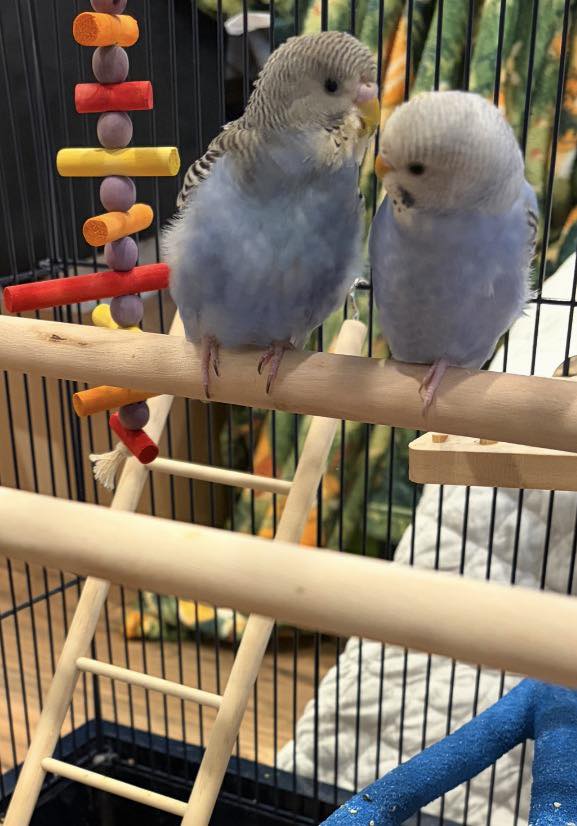
This is not an elaborate or expensive feeding regime. It is a modest expansion of what most owners are already doing, applied consistently over years. The difference it makes to lifespan is not modest.
Difference 2 — Space And Flight
The second most consistent difference I see between long-lived and short-lived budgies is how much room the bird has to actually fly.
Budgies are birds. This sounds obvious, but its implications are consistently underestimated. Flight is not a luxury for a budgie — it is the physical activity that keeps its cardiovascular system, its musculature, and its respiratory capacity in the condition they need to be in over a long life. A budgie that cannot fly properly is, over years, a budgie whose physical health declines in ways that compound gradually and rarely announce themselves until significant damage has been done.
Most commercially sold budgie cages are too small for proper flight. They are sized to allow the bird to exist, to turn around, to hop between perches. They are not sized to allow the bird to fly — which requires enough horizontal space to take several full wing-beats in sequence.
- Width and length matter far more than height — budgies fly horizontally; a tall narrow cage is largely wasted space from a flight perspective
- The minimum useful length for a single budgie is around 60–70cm — enough for real wing-beats between perches; for a pair, considerably more
- Daily supervised out-of-cage time in a bird-proofed room adds significant physical benefit — even 30 minutes of genuine free flight daily makes a real difference over years
- Natural wood perches of varying diameter rather than smooth uniform dowels — foot health is part of overall physical condition; varied perch diameter prevents the pressure issues that develop on identical smooth perches
- The cage should not be overcrowded with accessories — toys and enrichment are valuable, but a cage that is so full of objects that the bird cannot fly between perches defeats the purpose

The woman whose budgie lived thirteen years let it out every day into a bird-proofed sitting room. She told me this as if it were an obvious thing to do. In my experience, it is not obvious to most owners — and the physical difference it makes over a decade of daily flight is significant.
Difference 3 — Veterinary Care, Or The Absence Of It
This is the difference that gets the most uncomfortable reaction at the counter, because the economics are genuinely difficult for many owners. A budgie costs £30 to £50. An annual vet check costs more than the bird. The logic of not going to a vet when the bird seems healthy is understandable, and I am not dismissing it.
But I am going to be honest with you about what it costs.
The conditions that most reliably shorten a budgie’s life — fatty liver disease, respiratory infections in early stages, developing tumours, nutritional deficiencies, early kidney compromise — are either invisible or produce only very subtle signs in their early stages. A budgie with developing liver disease looks like a healthy budgie for a long time. A bird with an early respiratory infection often shows almost nothing to an untrained eye. By the time these conditions become visible, they have typically been developing for months — and the window for effective intervention has narrowed or closed.
An annual check with a vet who has genuine avian experience catches these things at stages when they are treatable. It also provides a baseline of what normal looks like for your specific bird, against which future changes can be measured. This matters more than most owners realise.
- Once a year with a vet who has genuine bird experience — not a general small animal vet if you can avoid it; avian and exotic specialists have significantly more relevant knowledge
- Preventive, not just reactive — the annual check is not for when the bird looks ill; it is for the months before that when something fixable is developing quietly
- Act quickly on early signs rather than waiting — a budgie that seems slightly off should be seen within 24 to 48 hours, not watched to see if it improves; with small birds, conditions escalate faster than most owners expect
- Find your avian vet before you need one urgently — having a number you can call on a Thursday afternoon when something seems wrong is different from searching for an emergency avian vet while your bird sits at the bottom of its cage

The woman whose budgie lived thirteen years had taken it to the vet every year. She mentioned this in a matter-of-fact way, as if it were the obvious thing to do. The woman whose budgie lived four years had not taken it to the vet once. I am not drawing a direct line of causation — there were other differences too. But the pattern is one I have seen enough times over 35 years to be confident it is not coincidence.
Difference 4 — Environment And Position
This is the difference that surprises owners most, because it is not something that appears in most budgie care guides prominently enough.
Where you put the cage matters. Not in a vague way — in specific, measurable ways that affect health over months and years.
- Near a window — direct sunlight causes overheating; cold draughts from window frames are a consistent respiratory risk; temperature fluctuation between sunny and cold periods creates chronic stress; this is one of the most common avoidable environment mistakes
- Near an external door — every time the door opens in cold weather, the bird receives a cold blast; repeated across months and years, this causes chronic respiratory stress that accumulates invisibly
- In the kitchen — this is the most serious positioning mistake; non-stick cookware containing PTFE produces fumes when overheated that are acutely lethal to birds; even low-level repeated exposure to cooking fumes causes gradual respiratory damage; the kitchen is not a safe room for a budgie
- In isolation — a cage in a rarely-used room where the bird sees almost no activity; the bird is not suffering dramatically, but the under-stimulation and social isolation have quiet long-term effects on health and behaviour
- At floor level — birds feel most secure at height; a cage at floor level, with foot traffic and other animals below it, is a source of ongoing low-level stress

The right position is a stable, draught-free wall in a room the household uses regularly — not the kitchen, not near an external door or window, at eye height or above, with consistent temperature and normal household light patterns. This costs nothing to change and has a real effect on long-term health.
Difference 5 — Routine And Stability
This difference is the least dramatic-sounding and the most consistently underestimated. Budgies thrive on predictability. Not because they are simple animals, but because their biology is built around reliable environmental patterns — the rhythms of day and night, the predictable timing of flock activity, the consistent availability of food and water.
A budgie in an unpredictable environment is a budgie in low-level chronic stress. The uncovering that happens at different times each morning. The feeding that comes at varying hours. The loud music that starts without warning. The lights that go on and off without pattern. The nights that are eight hours sometimes and twelve hours others.
None of these things is individually devastating. All of them together, sustained over years, produce a measurable toll — on immune function, on sleep quality, on the body’s ability to maintain itself over time.
- Same uncover time each morning — within 30 minutes of the same time daily
- Fresh food and water at a consistent time
- Interaction at roughly the same daily period — the bird anticipates it and is calmer for the predictability
- 10 to 12 hours of quiet darkness each night — consistent sleep pattern is not optional; it is a biological requirement
- Same cover time each evening
- Normal household sounds are fine — budgies adapt to them; sudden unpredictable loud noises are the problem, not steady background sound

Difference 6 — Social Environment
The last difference, and one that is rarely framed in health terms despite having real health implications.
Budgies are flock animals. Their biology assumes the presence of other birds. A budgie kept singly without significant daily human interaction is a budgie experiencing chronic social isolation — not as a complaint, not visibly, but as a physiological state that has quiet long-term consequences.
- Two birds are almost always better than one for long-term health — they regulate each other’s stress, they provide the constant social background noise and activity that a single bird cannot provide for itself
- A single bird needs more from you — significant daily interaction, genuine presence, the kind of sustained engagement that substitutes for flock life; this is achievable for owners who are genuinely home and engaged, but it requires honesty about what the commitment actually involves
- A single bird left alone for long hours regularly is a bird under chronic social stress; the effects accumulate; they are not as dramatic as illness, but they are real
- The concern that two birds will not bond to you is largely unfounded — a pair that is handled consistently will still develop a genuine relationship with their owner; the bond is different from a single bird’s dependence, but it is real and often more sustainable

What The 14-Year Budgie’s Life Actually Looked Like
I want to make this concrete, because I think lists of things to do can feel abstract when you are actually standing in front of a cage trying to decide what matters.
The woman whose budgie lived thirteen years — and I have spoken to many owners like her over 35 years, so I am drawing on a wider picture than just her — was not doing anything elaborate. She was doing simple things consistently, from the start, because she understood from the beginning that she had brought home a living animal that needed more than a cage and a seed tray.
| Factor | The 4-Year Bird | The 14-Year Bird |
|---|---|---|
| Diet | Seed only, changed regularly, fresh water every few days | Seed mix, daily greens, pellets, occasional fruit, water changed every morning |
| Cage size | Standard retail cage — adequate for movement, not for flight | Larger cage plus daily free flight in bird-proofed room |
| Cage position | Near a window in the kitchen | Draught-free wall in sitting room, away from cooking fumes |
| Veterinary care | Never — the bird always seemed fine | Annual check with avian-experienced vet; prompt attention when anything changed |
| Routine | Variable — feeding and uncovering at different times depending on the day | Consistent daily routine — same times for uncovering, feeding, interaction, covering |
| Social environment | Single bird, owner out most of the day | Kept as a pair; owner regularly home and engaged with the birds |
| Knowledge of early warning signs | None — the bird never looked ill until it was seriously ill | Knew the early signs; had acted quickly twice on subtle changes; both resolved with treatment |
None of the differences in the right-hand column required unusual resources or specialist knowledge. They required knowing what to do and doing it consistently. That is the honest summary of what separates the two outcomes.
The One Thing Most Owners Change Too Late
There is a pattern I see at the counter that I want to name directly, because it is painful and it is preventable.
An owner loses a budgie at four or five years. They come in, they ask what might have gone wrong, and we have the conversation I have been writing about in this article. The diet, the vet care, the environment. They understand. They are genuinely upset — not just about losing the bird, but about the gap between what they provided and what they now know they could have provided.
They buy another bird. They do everything differently. That second bird lives twelve years.
This is not an unusual story. I have had versions of it from owners over and over across 35 years. The knowledge exists. The difference it makes is real and documented. But it almost always reaches people after the first bird, rather than before it.
The reason I write articles like this one is to try to close that gap — to get the honest information to owners before they need it rather than after. A budgie whose owner reads this before buying it, rather than after losing it, has a genuinely better chance of reaching the lifespan it is actually capable of.
Frequently Asked Questions
Is 4 years a normal age for a budgie to die?
It is common, but it is not what a budgie is capable of with good care. Most UK budgies live between 5 and 8 years — roughly equivalent to wild lifespan despite the absence of predators and other wild hardships. A well-kept budgie should live 12 to 15 years. A bird that dies at 4 has almost certainly died earlier than it needed to, and the cause is almost always a combination of the factors I have described in this article rather than genetics or bad luck.
What is the most important thing I can do to extend my budgie’s life?
Change the diet. Move away from seed-only feeding and introduce fresh greens regularly, quality pellets alongside seed, and daily fresh water. Of all the differences between short-lived and long-lived budgies, this is the single most consistent one and the one with the most direct causal relationship to common early causes of death, particularly fatty liver disease.
My budgie is 6 years old and I have been feeding seed only. Is it too late to change?
No. The dietary changes are worth making at any age. A bird that has been on seed-only for six years will have accumulated some nutritional deficit, but introducing variety now will reduce further accumulation and support the body’s function going forward. The transition may take time — some birds resist new foods initially — but consistent gentle offering over weeks usually produces acceptance. Do not switch abruptly; introduce new foods alongside the existing seed rather than replacing it suddenly.
Do budgies from pet shops live shorter lives than those from breeders?
The source matters, though not always in the way people expect. A bird from a reputable UK breeder who handles birds from an early age and maintains healthy breeding stock will generally start with stronger foundations than a bird from a large-scale commercial supply chain. At Paradise Pets we only stock birds from UK breeders we know personally — the starting point of the bird’s life is part of what we take responsibility for. That said, the care the bird receives after purchase is the larger determinant of lifespan. A well-sourced bird given poor care will not outlive a commercially-sourced bird given excellent care.
How do I know if my budgie’s lifespan is being shortened by something I am doing?
The honest answer is that you often cannot know from observing the bird — because birds hide illness and the consequences of poor diet and environment accumulate silently. The most reliable way to know is to have an annual check with an avian-experienced vet who can assess internal health beyond what external observation allows. Beyond that, comparing your current care against the differences I have described in this article will identify whether there are changes worth making.
Can a budgie live past 15 years?
Yes, though it is uncommon. Documented cases of budgies reaching their late teens exist. The oldest verified cases are in the high teens. These are outliers, but they demonstrate what the species is capable of at the upper end. A realistic and genuinely achievable target for a well-kept UK budgie is 12 to 15 years. Reaching this consistently requires the combination of factors I have described — diet, space, veterinary care, environment, routine, and social wellbeing — all applied consistently across the bird’s life.
Is it the bird’s genetics that determine how long it lives?
Genetics play a role — as they do in any species — but they are far less significant than care in determining whether a captive budgie reaches its potential lifespan. In 35 years of selling birds and following up with owners, I have not seen a pattern that suggests certain bloodlines consistently produce short-lived birds. What I have seen, consistently, is that birds in good care from good sources live significantly longer than birds in poor care from good sources. The genetics set a ceiling; the care determines how close to that ceiling the bird actually gets.
Where can I get honest advice about extending my budgie’s life in Swindon?
Come in to Paradise Pets at Manor Garden Centre, Cheney Manor Industrial Estate, Swindon SN2 2QJ — or call us on 01793 512400. Bring your questions about diet, environment, or anything else you are unsure about. We have been helping UK budgie owners get this right — and sometimes, honestly, helping them understand what went wrong — for 35 years. The advice is always free.
One Last Thing From Me
The two women I described at the start of this article — the one who lost her bird at four years and the one who had just lost hers at thirteen — ended up sitting together at the counter for about twenty minutes that day. I left them to it after a while. The second woman was answering the first woman’s questions about what she had done differently, and doing it far more warmly and practically than I could have.
When the first woman left, she had decided to get another bird. She came back a week later, bought a young pair from us, and stayed to talk through the diet and the setup properly. She asked good questions. She had clearly been thinking about it.
She came back about two years after that, not for anything specific. Just to let us know the birds were doing well. She had introduced pellets alongside the seed. She was giving greens every other day. She had found an avian vet in Swindon and taken both birds for a check the previous autumn.
“I feel like I actually know what I’m doing this time,” she said.
That is the outcome this article is trying to produce. Not guilt about the bird that lived four years — that owner was doing what she had been told, and what she had been told was not enough. But knowledge, going forward, that changes what the next bird’s life looks like.
The difference between four years and fourteen is not extraordinary effort or specialist expertise. It is the right information, applied consistently, from the start. You now have the information. The rest is simply doing it.
Want To Give Your Budgie The Best Possible Chance? Come And Talk To Us
Whether you are a new owner, an experienced one who wants to do things better, or someone who has just lost a bird and wants to understand why — come in or ring us. We will be honest with you about what we think and what we would change. Free advice, no obligation. That is how we have done things here since 1988.
⭐ Customer Reviews
Amazing Bird Selection
Had a lovley visit today,staff were very friendly and very helpful,such a great petshop,their selection of birds is incredible,really impressed,thank so much to the staff at Paradise Pets

Friendly Helpful Staff
I have been coming to this place for years and they have a great stock of food for all types of pets. Have a great selection of small mammals and a lot of birds. Staff are friendly and helpful.

Great Quality Hutch
Bought a guinea pigs hutch and run combo, very happy with the service, the hutch was put in my car for me without even asking for help. The wood quality is very good, the instructions easy to follow and we are extremely happy with the fully built hutch. A good size for 2 guinea pigs

Response from Paradise Pets | Wiltshire
Thank you Melanie Latus Nice to provide services to you.
Best Bird Shop Around
It’s the best pet shop in and around Swindon. They always have an amazing selection of birds and all you need to keep them happy. I keep birds myself and the guys there are happy to answer questions and really know their stuff. I have seen budgies etc. in chain pet shops in the area looking really unhealthy and ill – I wouldn’t go anywhere else than Paradise Pets for animals.

Highly Recommended Bird Shop
I could not praise this shop enough. Really helped my Grandson buy his first bird and he’s loving it. Travelled from Somerset and was welcomed with open arms.

Great Shop with Competitive Prices
Great shop with amazing selection for small animals, hamsters, mice ect, highly recommend!
Also has a great selection for dogs & cats too & very competitive prices! 💖

