


Neil has been keeping, breeding, and selling budgies at Paradise Pets Swindon since 1988 — over 35 years of daily first-hand experience with these birds and the people who keep them. In that time, the question he has been asked more than almost any other is some version of this: my budgie will not trust me, what am I doing wrong? This is his honest answer — what actually works, what makes it worse, and why the birds that never seem to come round are almost always responding to something the owner is doing without realising it.
A couple came into the shop on a Saturday morning, slightly sheepish about it. They had a budgie they had owned for eight months. It was healthy, eating well, flying around the cage. But it had never once allowed either of them to come near without panicking. They had tried everything — the hand in the cage, the treats, the slow approach. Nothing worked. If anything, the bird seemed more frightened now than when they first brought it home.
I asked them to describe a typical interaction with the bird. The husband went first. He would come to the cage, talk to the bird, open the door, and put his hand in slowly with a piece of millet. The bird would fly to the opposite side of the cage. He would follow the bird’s movement with his hand, trying to get close enough for it to take the treat. The bird would press itself into the corner. He would keep his hand still. Eventually the bird would take a small piece and he would try to move his hand slightly closer.
“And how long does each session go on for?” I asked.
“Until it calms down,” he said. “Sometimes twenty minutes. Sometimes longer.”
I understood exactly what had happened. He had spent eight months doing a dedicated daily session of frightening his budgie. Not intentionally — he was trying to help — but from the bird’s perspective, every single one of those sessions had confirmed exactly what it feared. A large hand enters the space. The bird cannot escape. The threat persists until the bird submits. Then it ends.
That is not trust-building. That is learned helplessness. And it is one of the most common things I see.
Why Your Budgie Does Not Trust You — The Honest Explanation
Before I go through what actually works, I want to explain why untrusting budgies behave the way they do — because understanding the reason changes everything about how you respond to it.
A budgie is a prey animal. This is not a detail about budgies — it is the central fact of their psychology. Every behaviour they exhibit, every response to their environment, every decision about where to perch and when to eat and how to react to a hand approaching them, runs through a single filter: is this a threat?
You are, to a new or untrusting budgie, almost certainly classified as a threat. Not because you have done anything wrong. Not because the bird is damaged or difficult. But because you are large, you move unpredictably, you approach the cage on your schedule rather than the bird’s, and you have a hand — which is roughly the size and shape of many things that eat small birds.
The standard advice — put your hand in the cage, offer treats, persist until the bird accepts you — misunderstands this completely. It assumes the bird will eventually habituate to the hand through repeated exposure. Sometimes this happens. More often, repeated forced exposure to a perceived threat produces not habituation but sensitisation — the bird becomes more reactive, not less, because every session reinforces the lesson that the threat is real and persistent.
- Fear in birds does not reduce through exposure to the feared thing under pressure — it reduces through the gradual absence of negative experiences associated with the feared thing
- A bird that tolerates your hand is not a bird that trusts you — it is a bird that has exhausted its ability to escape; these are not the same thing and they do not produce the same long-term relationship
- Every frightening interaction makes the next one harder — trust is not a neutral starting point that can be built on despite setbacks; fear actively compounds
- The bird’s pace is the only pace that works — there is no technique that accelerates genuine trust beyond what the individual bird is capable of at any given moment

Once you understand this, the approach that works makes immediate sense. And so does why almost everything most owners have tried has made it worse.
The Reset — What To Do Before You Do Anything Else
If you have been working with an untrusting bird for weeks or months with little progress, the first thing I tell every owner to do is stop. Not permanently — but completely, for two full weeks.
No hand in the cage. No treats held near the bird. No slow approaches, no trust exercises, no structured sessions. Nothing that places any demand on the bird at all.
This is the reset. Its purpose is to give the bird’s nervous system a genuine break from the association it has built between you and threat. Two weeks of you simply existing near the cage — sitting, talking quietly from a distance, going about your life — without any interaction that requires the bird to respond, allows that association to begin to weaken.
Most owners resist this. It feels like giving up, or going backwards. It is neither. It is the most productive two weeks you will spend with a difficult bird, because the work that follows only succeeds on a foundation that this period creates.
During the reset:
- Feed and water the bird at consistent times but do not linger at the cage when you do it; place the food, move away
- Sit near the cage and do genuinely unrelated things — read, watch television, work; be present but entirely unthreatening
- Talk to the bird in passing — not sessions of sustained talking directly at the cage; normal domestic conversation that includes the bird without focusing on it
- Observe without acting on what you observe — notice when the bird watches you with curiosity rather than alarm; notice when it eats while you are in the room; these are signs the reset is working
- Do not open the cage for any reason that is not essential

By the end of two weeks, most birds that were previously highly reactive will have visibly lowered their baseline stress level. You will be able to see it in how they hold themselves, in whether they eat normally when you are present, in whether they watch you with alarm or with something closer to curiosity. That is when the next phase begins.
Phase One — Becoming Part Of The Environment
The goal of phase one is not interaction. It is not trust. It is simply this: the bird stops treating your presence as an event that requires a response.
A bird that tenses, moves away, or watches you with alarm every time you enter the room has not reached phase one. A bird that continues eating, continues preening, continues its normal activity when you walk in — that bird has reached phase one. It has reclassified you from active threat to neutral presence. That reclassification is the foundation of everything that follows.
How to get there:
- Place your chair at a comfortable distance from the cage and sit there regularly — not right in front of the cage; far enough that the bird does not react to your presence; gradually, over days and weeks, move the chair incrementally closer
- Read aloud near the cage — not to the bird, just near it; the consistent sound of your voice in a non-threatening context is doing genuine work on the bird’s association between your voice and safety
- Move slowly and predictably near the cage — sudden movements are alarming to prey animals; predictable movement is not; make a habit of being slow and deliberate in everything you do near the bird
- Avoid direct eye contact with the bird — prolonged direct eye contact from a large animal is threatening to a small prey animal; look toward the cage but not directly at the bird; peripheral observation is far less alarming
- Let the bird set the distance — if the bird moves to the far side of the cage when you sit down, that tells you where you need to be; next session, sit slightly further away; reduce the distance gradually over days

The timeline for phase one varies significantly depending on the bird’s history, its age, and the extent of previous negative interactions. For a young bird with no major trauma, two to four weeks. For an older bird or one with extensive negative history, longer — sometimes considerably longer. The measure of when you are ready to move on is the bird’s behaviour, not the calendar.
Phase Two — Your Voice As A Signal Of Safety
Phase two begins when the bird is visibly relaxed with your physical presence in the room. Now you start building an association between your voice specifically and positive experience.
This phase requires consistency more than it requires effort. The same voice, at roughly the same times, in the same calm register — over days and weeks. You are not teaching the bird words. You are teaching it that this particular sound — your voice — reliably precedes nothing bad, and occasionally precedes something good.
- Talk to the bird briefly and softly each time you come near the cage — not an interrogation, not a sustained session; a few quiet sentences, then move on
- Use the bird’s name consistently — it learns its name within weeks; hearing it in a calm context builds positive association
- Read aloud near the cage regularly — the sustained sound of your voice in a completely unthreatening context accelerates this phase significantly; I recommend this to every owner with a difficult bird
- Respond to any vocalisation from the bird — if the bird chirps, reply quietly; you are establishing a conversational pattern that the bird initiates; this is significant because it means the bird is choosing to engage
- Notice when the bird chirps or warbles in response to your voice — this is one of the clearest signs that phase two is working; the bird is beginning to treat your voice as something to interact with rather than something to be wary of

Most owners underestimate this phase because it does not look like progress. The bird is not coming to your hand. Nothing dramatic is happening. But the association being built here — your voice equals safety, your voice equals something pleasant — is the bedrock on which all physical trust is built. Skip it or rush it and the next phases are significantly harder.
Phase Three — Introducing The Hand Without Threat
This is the phase most owners skip to immediately. It is effective only when phases one and two are genuinely complete — when the bird is relaxed with your presence and positively associated with your voice. Attempted before that, it almost always fails and sets the work back.
The principle of this phase is simple: the hand becomes part of the environment before it becomes something that interacts with the bird. A hand that simply exists near the cage, doing nothing, is a very different thing to the bird from a hand that approaches, reaches, and demands.
- Start by resting your hand on a surface near the cage — not inside it; on top of it, or on a table beside it; let the bird observe the hand existing without consequence
- Move the hand slowly when you move it — never quickly, never toward the bird; slow, predictable movement that the bird can track and assess
- Do this daily, moving the hand incrementally closer to the cage over days — not sessions of ten or twenty minutes; brief, unhurried, without expectation of response
- Begin offering millet spray through the bars when the bird is visibly calm with your hand near the cage — held at arm’s length initially, not hovering at the bars; let the bird make the choice to approach
- Do not move the millet toward the bird — hold it still and let the bird decide; a bird that moves toward the food is making an active choice to reduce the distance; that is trust in action
- When the bird reliably takes millet through the bars without alarm, begin offering it with your hand at the cage door rather than through the bars; same principle — hold still, let the bird decide
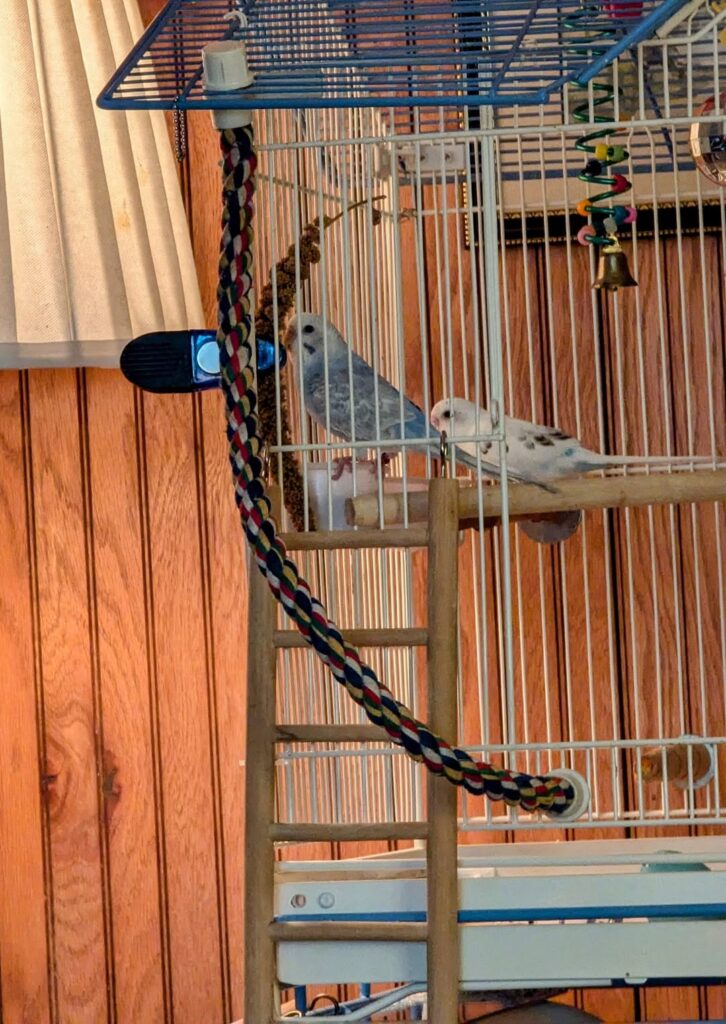
The millet is doing something specific here that other treats do not do as well. It is long enough that the bird can eat the far end while your hand holds the near end — so the bird gets the reward of eating without having to be right next to your hand. Over sessions, the bird naturally works its way along the spray toward your fingers. That progression happens at the bird’s pace, not yours, and every step of it is the bird’s own choice.
Phase Four — Hand Inside The Cage
This phase begins only when the bird reliably takes millet from your hand at the cage door without alarm or hesitation. Not occasionally — reliably, over multiple sessions across several days. If there is still hesitation, more time in phase three.
- Open the cage door and rest your hand on the door frame — not reaching inside; just present at the threshold; let the bird observe and assess
- Hold millet spray just inside the cage door — your hand barely inside the opening, the millet within the bird’s reach if it chooses to approach; do not move toward the bird
- When the bird takes millet with your hand just inside the door, move slightly further in over subsequent sessions — not in the same session; across days; incrementally, at the bird’s pace
- Keep the hand low and still — a hand below the bird’s perch level is significantly less threatening than one approaching from above; height matters to prey animals
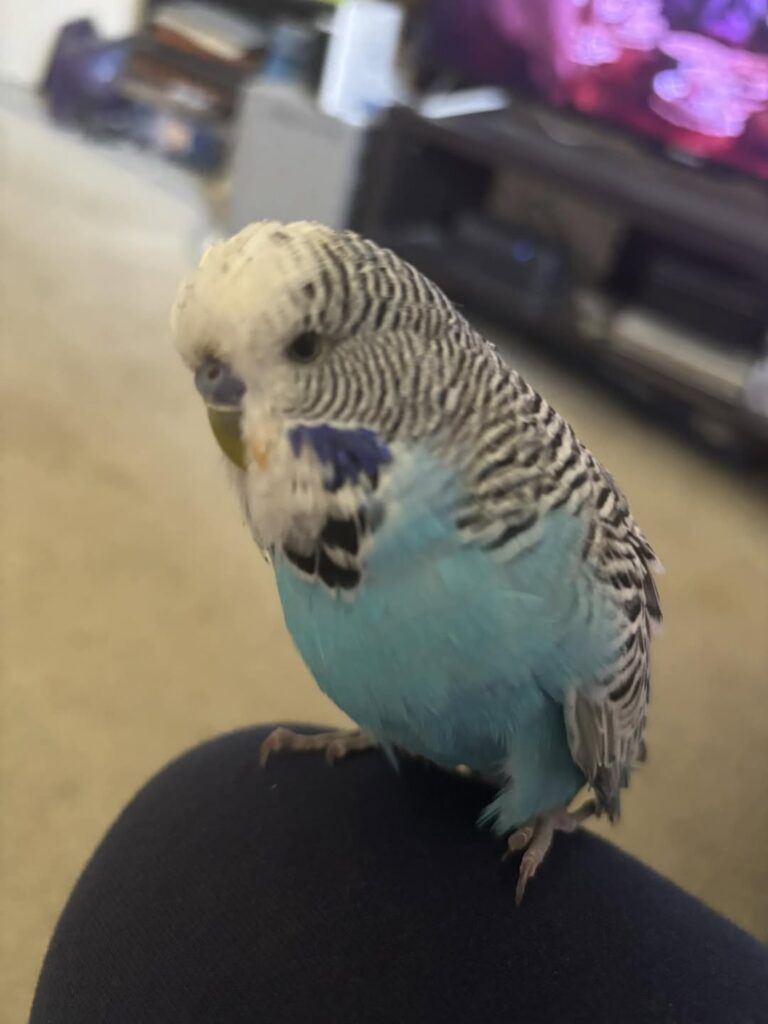
- End every session before the bird shows stress — not when you feel like the session has gone on long enough; when the bird is still calm and still engaged; ending on a positive note is what builds the association that brings the bird back next time
- Extending the session because “it was going so well” — this is the mistake that undoes weeks of progress in minutes
- A session that ends with the bird stressed teaches the bird that sessions end badly
- A session that ends while the bird is still calm and positive teaches the bird that sessions are safe
- The temptation to push a little further when things are going well is one of the hardest things to resist — and one of the most important
- Always end while you are ahead; the next session will go further than this one did
Phase Five — The Step-Up And Voluntary Contact
This is the phase that most owners think of as the goal. It is, but it is only reachable meaningfully from the foundation of everything before it. A step-up achieved through force or persistence is not the same thing as a step-up the bird offers willingly — in either the experience of building it or in what it produces long-term.
- Wait until the bird is comfortable with your hand inside the cage near its perch level — not just tolerating it; genuinely calm around it across multiple sessions
- Position your finger horizontally just below the bird’s feet, barely touching the lower belly; do not approach from above; come from below
- Apply the very gentlest forward pressure — enough that the bird’s balance shifts slightly; most birds step up automatically when their balance shifts forward; this is instinct, not compliance
- Say “step up” in the same calm voice every time — the consistent verbal cue becomes associated with the action over weeks; eventually the words alone produce the response
- The first step-up should last seconds, not minutes — step up, gentle praise, step back to the perch; done; end the session; that success is worth more than ten minutes of continued handling that ends with the bird stressed
- Practise multiple times daily but briefly — short positive repetitions build the association faster than long sessions

The step-up achieved this way — voluntarily, from a foundation of genuine trust — is qualitatively different from one achieved through persistence. The bird that steps up willingly is a bird that has decided you are safe. That decision, once made, generalises. It is the beginning of a relationship that will deepen over months and years rather than one that requires constant maintenance.
What Rebuilding Trust Looks Like With A Long-Term Difficult Bird
I want to address separately the situation some owners are in — not a new bird that has not yet trusted them, but a bird they have owned for months or years that has consistently failed to bond. Because this is a harder situation and it requires an honest conversation.
A bird with months or years of negative associations built up is not the same as a new bird starting from scratch. The fear is deeper, the associations are more entrenched, and the timeline for genuine trust is longer — sometimes significantly longer. What I tell owners in this situation:
- The reset is more important, not less — a longer history of negative association requires a longer reset; two weeks may not be enough; four to six weeks of genuine non-interaction may be needed before the foundation exists to build on
- Progress will be slower and less linear — expect setbacks; a frightened bird that has a bad day can regress significantly; this is not failure, it is the nature of rebuilding trust in a prey animal with a long memory for threat
- Redefine what success looks like — for some long-term difficult birds, full hand-tameness may not be the realistic goal; a bird that is calm in your presence, that eats normally when you are near, that vocalises without fear — that is a transformed relationship even if the bird never sits on your finger
- Every positive interaction counts, however small — a bird that watched you from across the cage without alarm today when it would have panicked last week is making progress; learn to recognise and value these small steps
- Do not compare to other birds — social media is full of budgies that bonded in days; those birds are not your bird; your bird’s pace is your bird’s pace, and it is the only one that matters
I have seen genuinely difficult birds — birds that had spent years in poor conditions, birds that had been handled badly, birds that owners had almost given up on — make remarkable progress with the right approach applied consistently. Not in weeks. Over months. But the progress was real, and the relationship at the end of it was more meaningful to the owner than almost any quick bond could have been, because it was earned.
The Signs That Bonding Is Actually Working
These are the things to look for — the signs that genuine trust is building rather than just tolerance developing. They are small, but they are real, and learning to recognise them is part of what keeps owners going through the slower periods.

| Sign | What It Means | Stage |
|---|---|---|
| Bird eats normally when you are in the room | You have been reclassified from active threat to neutral presence | Phase one progress |
| Bird watches you with curiosity rather than alarm | The bird is assessing rather than reacting — a significant shift | Phase one complete |
| Bird vocalises in response to your voice | Your voice has become a signal worth responding to — positive association building | Phase two progress |
| Bird moves toward the front of the cage when you approach | The bird is choosing to reduce the distance — trust in active expression | Phase two to three |
| Bird takes millet through the bars without hesitation | Your hand near the cage is no longer classified as threat | Phase three complete |
| Bird fluffs feathers slightly in your presence | The bird is relaxed enough to let its guard down near you — a very positive sign | Genuine trust developing |
| Bird grinds beak while you are near the cage | Contentment in your presence — beak grinding is a specific relaxation signal | Deep trust established |
| Bird steps up voluntarily without hesitation | The bird has decided you are safe — this is trust, not compliance | Phase five |
Frequently Asked Questions
My budgie has never trusted me in six months. Is it too late?
No. Six months of unsuccessful bonding is common and it is almost always the result of approach rather than the bird. In most cases the owner has been, with the best intentions, using techniques that increase fear rather than reduce it. A complete reset followed by the phased approach I have described here will produce different results. It requires patience and a genuine willingness to slow down, but it works. I have seen birds with longer difficult histories than six months make genuine progress with the right approach.
Should I use treats to bond with my budgie?
Yes, but strategically. Millet spray is by far the most useful tool — it is long enough that the bird can eat without being close to your hand, and almost irresistible to most budgies. The key is not to bring the treat to the bird, but to hold it still and let the bird make the choice to approach. A bird that chooses to come to the food is practising trust. A bird that takes food from a hand that has been pushed against it is just eating under duress.
How long does it take to bond with a difficult budgie?
For a young bird with no major negative history, meaningful progress in 6 to 10 weeks with the phased approach. For an older bird or one with established fear responses, months — sometimes four to six or longer before full trust develops. The timeline is set by the bird, not by the technique. The most useful mindset is to measure progress in small observable changes rather than in weeks on a calendar.
My budgie bites when I put my hand in the cage. What should I do?
Stop putting your hand in the cage. The bite is the bird telling you, clearly and directly, that it is not ready for that interaction. Every time a hand enters the cage and the bird bites, the bird learns that biting works — it makes the threat stop. Going back to phase one and two and building the foundation properly before hand-inside-cage work will produce a different result. A bird that has learned to trust your hand before the hand enters the cage does not bite it.
Will my budgie ever fully trust me if it had a bad start?
In most cases, yes — though the timeline and the ceiling of trust may be different from a bird that was well-handled from the start. Some birds with difficult histories reach a level of trust that surprises everyone involved. Others reach a point of genuine calm and comfort in their owner’s presence without ever becoming fully hand-tame. Both are real progress, and both produce a relationship that is genuinely worth having.
Is it normal for a budgie to trust one person and not another?
Completely normal. Budgies form specific associations — with voices, with movement patterns, with the predictability of particular people’s behaviour. A bird that trusts the person who interacts with it calmly every day and is frightened of a less frequent visitor is responding rationally to its experience. The less-trusted person needs to go through the same process — more briefly, usually, because the bird already knows the environment is safe — but the same principles apply.
What is the biggest mistake owners make when trying to bond with a frightened budgie?
Persistence. The instinct to keep trying, to push through the bird’s fear because surely it will habituate eventually, is the single most reliable way to make a frightened bird more frightened. Sustained exposure to a perceived threat under conditions the bird cannot escape does not produce habituation in prey animals. It produces increased sensitisation and, eventually, learned helplessness. The counterintuitive truth — backed by 35 years of watching this — is that doing less, more patiently, produces more genuine trust than doing more, more persistently.
Where can I get help with a budgie that won’t bond in Swindon?
Come in to Paradise Pets at Manor Garden Centre, Cheney Manor Industrial Estate, Swindon SN2 2QJ — or call us on 01793 512400. If you want to bring the bird, bring it. If you want to describe what has been happening and talk through what to change, we can do that too. We have worked through this with enough owners over 35 years to know what is usually going on and what to do about it. The advice is free.
One Last Thing From Me
The couple I mentioned at the start — the ones who had spent eight months frightening their budgie with dedicated daily taming sessions — came back about three months after our conversation.
The husband looked different. Less tense about it. He said they had done the full reset — two weeks of nothing, just sitting near the cage and reading. Then the voice work. Then the millet through the bars. They had not put a hand inside the cage at all for the first six weeks after our conversation.
“It was the hardest thing,” he said, “doing nothing. Every day I wanted to try something. But we didn’t.”
At week seven they had started offering millet through the bars. The bird had come to it on the third day. By week ten it was taking millet from a hand just inside the cage door. The week before they came back in, it had stepped up for the first time.
“Eight months of trying everything,” he said, “and three months of doing almost nothing.”
That is the honest lesson. Not that patience is a virtue in some abstract sense — that patience is the technique. That the approach that looks like doing nothing is often the most productive thing you can do for a frightened bird. That trust cannot be extracted through effort; it can only be created through the gradual and consistent absence of reasons for fear.
If your budgie does not trust you yet, you are not out of options. You may simply not have tried the one that works.
Struggling To Bond With Your Budgie? Come And Talk It Through
Tell me what you have tried and how the bird is responding. I will tell you honestly what I think is happening and what to change. Bring the bird if you want a second opinion on its behaviour. Free advice, no obligation. That is how we have done things here for 35 years.
⭐ Customer Reviews
Amazing Bird Selection
Had a lovley visit today,staff were very friendly and very helpful,such a great petshop,their selection of birds is incredible,really impressed,thank so much to the staff at Paradise Pets

Friendly Helpful Staff
I have been coming to this place for years and they have a great stock of food for all types of pets. Have a great selection of small mammals and a lot of birds. Staff are friendly and helpful.

Great Quality Hutch
Bought a guinea pigs hutch and run combo, very happy with the service, the hutch was put in my car for me without even asking for help. The wood quality is very good, the instructions easy to follow and we are extremely happy with the fully built hutch. A good size for 2 guinea pigs

Response from Paradise Pets | Wiltshire
Thank you Melanie Latus Nice to provide services to you.
Best Bird Shop Around
It’s the best pet shop in and around Swindon. They always have an amazing selection of birds and all you need to keep them happy. I keep birds myself and the guys there are happy to answer questions and really know their stuff. I have seen budgies etc. in chain pet shops in the area looking really unhealthy and ill – I wouldn’t go anywhere else than Paradise Pets for animals.

Highly Recommended Bird Shop
I could not praise this shop enough. Really helped my Grandson buy his first bird and he’s loving it. Travelled from Somerset and was welcomed with open arms.

Great Shop with Competitive Prices
Great shop with amazing selection for small animals, hamsters, mice ect, highly recommend!
Also has a great selection for dogs & cats too & very competitive prices! 💖

