
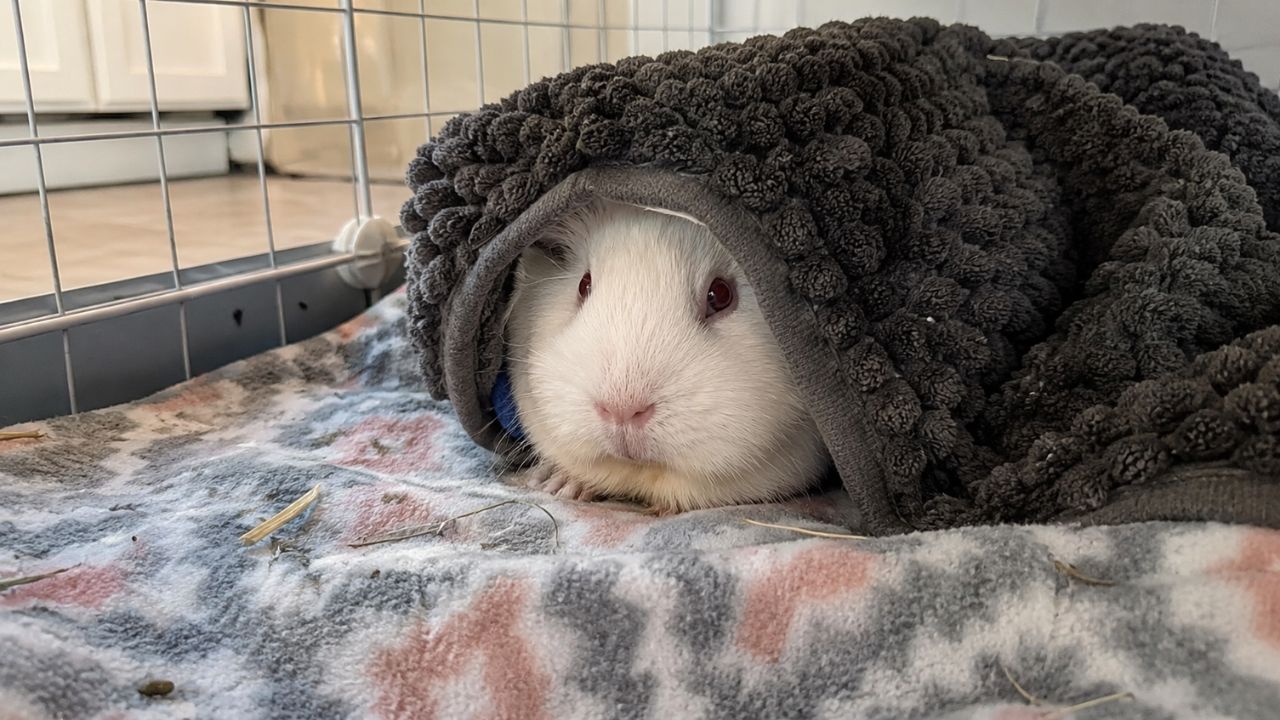

Neil has kept, bred, and sold guinea pigs at Paradise Pets Swindon since 1988 — over 35 years of first-hand experience with these animals. In that time, frightened guinea pigs have been one of the most common welfare concerns he sees. This article is his honest guide to why it happens and what to do about it.
A mother came into the shop with her daughter — about nine years old — and the daughter had a very direct question. She had two guinea pigs. She had had them for three months. Every time she went near the hutch, they ran away. Every time she picked one up, it struggled. Every time she put her hand in the cage, they froze or bolted into the hide.
“Why are they so scared of me?” she asked. “I’ve done nothing wrong.”
I told her something that I want every guinea pig owner to understand before anything else. She probably had done nothing wrong. The guinea pigs were not scared of her specifically. They were scared because that is what guinea pigs are — prey animals, wired by millions of years of evolution to be frightened of anything larger than themselves that moves toward them suddenly. The fact that she was kind and gentle and came bearing vegetables did not override that wiring. Not yet.
The word “yet” is the important one.
Because the thing about guinea pig fear is this — it is not permanent. It is not a reflection of a bad bond or a bad owner. It is the animal’s starting point. Every guinea pig begins from a place of fear when it comes to humans. What you do in the weeks and months that follow is what determines whether that fear reduces, stays the same, or gets worse.
This article is about what to do in those weeks and months.
Why Guinea Pigs Are Naturally Fearful — The Biology Explains Everything
Before I go into causes and solutions, I want to explain the biology properly — because once you understand why guinea pigs are the way they are, everything else makes much more sense.
Guinea pigs are prey animals. In the wild, they are eaten by hawks, foxes, cats, snakes, and many other predators. They have no claws, no venom, no significant speed advantage, and no defence mechanism other than running and hiding. Their entire survival strategy is based on detecting threat early and escaping fast.
This shapes their psychology in very specific ways. They have wide-set eyes that give almost 360-degree vision — specifically to spot predators approaching from any angle. They startle at sudden movements and unfamiliar sounds. They freeze when they detect something that might be a threat — because freezing makes them harder to spot. And they are instinctively fearful of being picked up — because being lifted off the ground is what a predator does to them.

To a guinea pig, a human hand coming into the cage from above looks, at an instinctive level, like a bird of prey descending. It does not matter that the hand belongs to a person who loves them. The instinct fires before the reasoning can intervene.
Understanding this does not make the fear disappear. But it changes how you approach it. You are not dealing with an animal that dislikes you. You are dealing with an animal whose survival instincts are working exactly as they should. Your job is to teach it, slowly and consistently, that you are an exception to the rule.
Reason 1: The Guinea Pig Has Not Had Enough Time to Settle
This is the most common cause I see when new owners come in concerned about a frightened guinea pig — and it is also the most easily resolved, once the owner understands that time is the primary ingredient.
A newly homed guinea pig is in an entirely unfamiliar environment. New smells, new sounds, new people, new layout, new food, new water. Everything that made sense in its previous home — the cage, the routine, the smells of the animals around it — has been removed. It is in a strange place, surrounded by giant creatures it does not know yet.
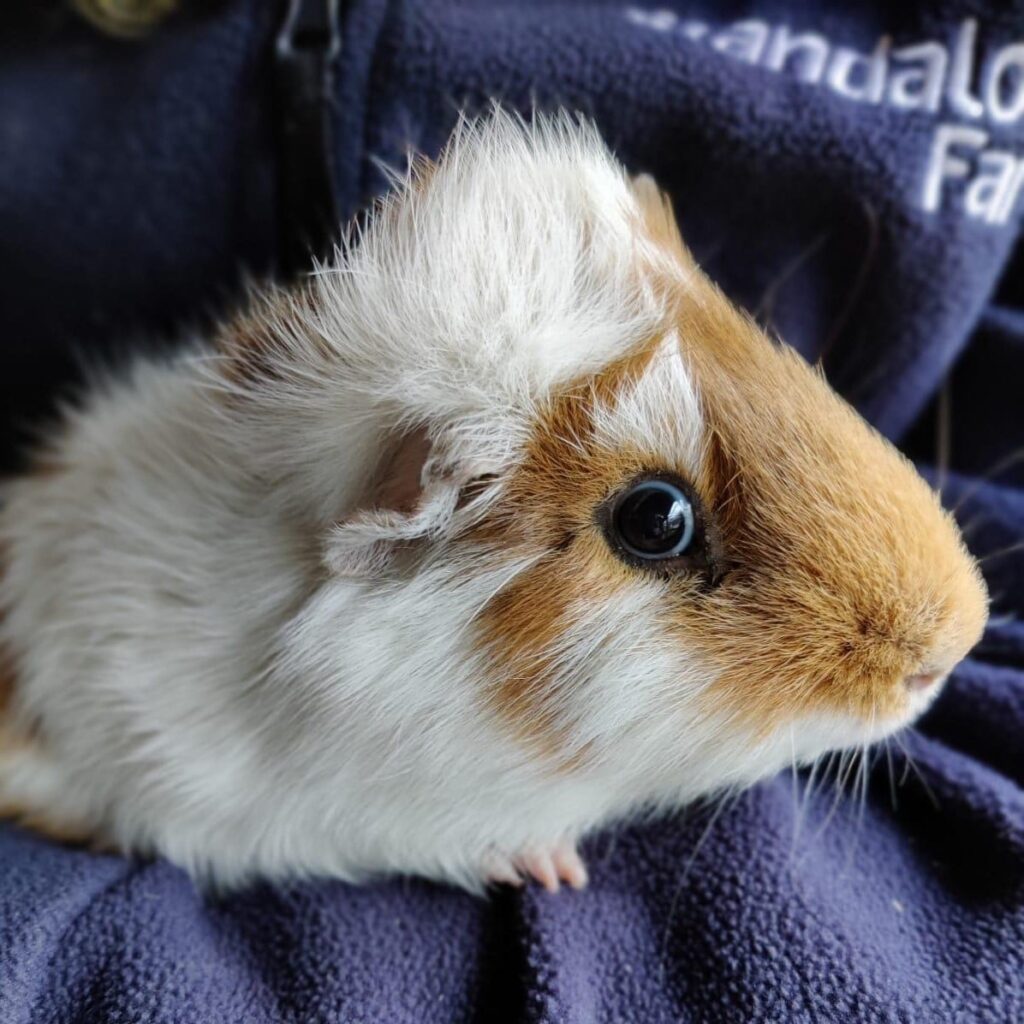
The mistake almost every new owner makes — always with the best intentions — is to try to interact with the guinea pig too quickly after bringing it home. They want to hold it, get to know it, show it to the family. The guinea pig, which has not yet established any sense of safety in the new environment, experiences this as immediate threat following immediate upheaval. The fear response is intensified before it has had any chance to reduce.
- Minimal handling for the first week — let the guinea pig explore the cage, establish its territory, find the food and water, and begin to learn the sounds and rhythms of the household. Do not pick it up. Do not put your hand in the cage unless necessary.
- Sit near the cage, not over it — spend time near the cage at floor level or sitting down, talking quietly. Let the guinea pig hear your voice and see your presence without being loomed over.
- Offer food by hand through the bars — before you open the cage at all, try offering a piece of vegetable through the bars. Let the guinea pig come to you, on its own terms, for something positive.
- Keep the environment calm and consistent — no sudden loud noises, no rapid movements near the cage, no unfamiliar visitors during the settling period.
- Do not move the cage position during settling — let the guinea pig learn where everything is before you change anything.
Most guinea pigs that are given a proper two-week settling period — minimal handling, consistent routine, hand-feeding through the bars — are noticeably less fearful at the end of it than at the start. The work of building trust happens in this early period even when it feels like nothing is happening.
Reason 2: Previous Negative Experiences
Some guinea pigs come to their new homes already frightened — not because of anything the new owner has done, but because of what happened before.
A guinea pig that was handled roughly, picked up by children who were too young or too boisterous, kept in a noisy environment, or housed in conditions that were stressful, carries that experience with it. Fear responses that have been reinforced repeatedly become deeply ingrained. The guinea pig is not being difficult — it is responding rationally to a history that taught it that humans mean unpredictable handling and discomfort.
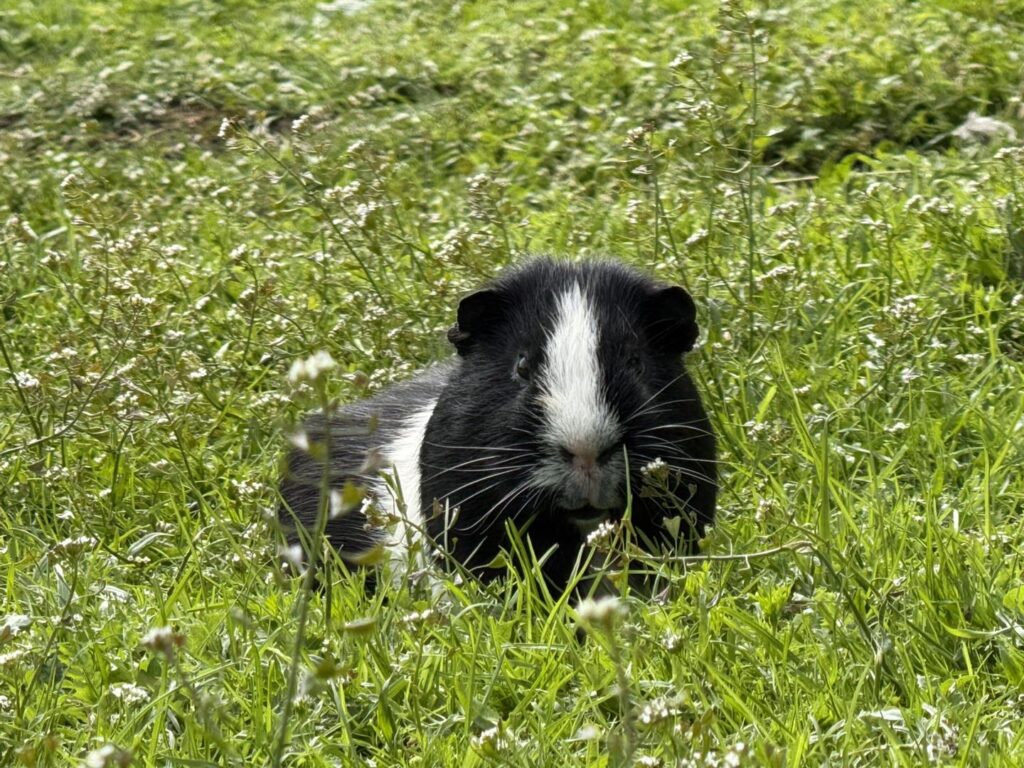
This does not mean the fear cannot be reduced. It does mean it will take longer, require more patience, and may never fully disappear in an animal with a difficult history. Realistic expectations matter here — a guinea pig with a troubled past may become tolerant of handling rather than enthusiastic about it, and tolerant is a perfectly good outcome.
The approach is the same as for any fearful guinea pig — but slower, more gradual, and with a very low threshold for backing off when the animal shows stress signals. Progress is measured in weeks and months, not days.
Reason 3: Being Handled Incorrectly
This is the cause I find hardest to raise with owners because it means telling them something is not going well. But it is common enough that I have to address it.
How you pick up and hold a guinea pig matters enormously. Guinea pigs picked up from above — scooped up quickly from the top — experience this as a predator attack every single time, regardless of how many times it happens. Even a guinea pig that has become relatively settled can be kept in a state of chronic low-level fear if the handling technique consistently triggers the prey response.

- Approach from the side, not from above — a hand approaching from the side is less threatening than one descending from above. Let the guinea pig see your hand before it touches the animal.
- Scoop from underneath, not grab from above — slide one hand under the chest and support the hindquarters with the other hand. The whole body should be supported at all times.
- Never let a guinea pig dangle — an unsupported guinea pig will struggle and become more frightened. The feeling of being suspended without support triggers the full prey response.
- Hold close to your body — a guinea pig held against your chest, with the back supported, feels more secure than one held away from the body at arm’s length.
- Keep handling sessions short initially — five to ten minutes is enough for a new or fearful animal. End the session while the guinea pig is still relatively calm, not after it has become distressed.
- Always handle at floor level with children — if a guinea pig is dropped from height, the injury can be fatal. Children should sit on the floor before the animal is passed to them.
Reason 4: The Environment Is Stressful
A guinea pig that seems chronically fearful — even after weeks in the home, even with gentle handling — may be living in an environment that is maintaining its stress response at a high level.
This is worth thinking about carefully, because the cause is sometimes something the owner has not connected to the animal’s behaviour at all.

- A predator the guinea pig can see or smell — a cat that sits near the cage, a dog that sniffs around the hutch. Even if the other animal never makes contact, its presence is a constant predator signal. The guinea pig cannot relax in a safe state when it can smell or see something that its instincts tell it will eat it.
- Too much unpredictable activity near the cage — young children running past, sudden loud noises, the cage in a high-traffic area where people move quickly and unpredictably. Guinea pigs do better in calmer environments.
- The cage is too small — a guinea pig that cannot get away from a perceived threat — including your approaching hand — is a guinea pig that is permanently in a state of alertness. Adequate space with multiple hides allows the animal to feel it has options, which reduces chronic stress.
- Kept alone — a single guinea pig without the social buffer of a companion is more anxious than a paired animal. Being part of a group, even a pair, reduces the individual animal’s vigilance burden.
- Inconsistent routine — unpredictable feeding times, handling at random moments, people approaching at unexpected times. Consistency is enormously calming for prey animals.
If your guinea pig has been in your home for months and is still highly fearful, think carefully about what it can see, hear, and smell throughout the day. The cause of chronic fear is very often environmental, and addressing it is often the missing piece.
Reason 5: The Guinea Pig Is Unwell
This is the cause I always consider when a guinea pig that was previously settled becomes suddenly more fearful or reactive — because a guinea pig in pain will be more defensively fearful than a healthy one.
An animal in pain is an animal that feels more vulnerable than usual. The threshold for the fear response lowers. It bites when it previously did not. It flinches from handling that it previously tolerated. It retreats more readily and more completely.

If your guinea pig has become noticeably more fearful recently — particularly if the change was fairly sudden — consider whether it might also be unwell or in pain. Check for other signs alongside the changed behaviour — eating less, moving differently, a change in droppings, any visible swelling or lump. If you are seeing other signs alongside the increased fearfulness, get to a vet.
How To Build Trust With a Fearful Guinea Pig — What Actually Works
Right. Here is the practical version — the approach I have seen work consistently over 35 years with even very fearful animals.
The underlying principle is always the same — let the guinea pig set the pace, make every interaction predictably positive, and never push past the animal’s comfort threshold. Progress is slow. It is also reliable, if you are consistent.

- Start with presence, not contact — sit near the cage at the animal’s level every day. Talk quietly. Let the guinea pig see you and hear you without any pressure to interact. Do this for at least a week before anything else.
- Move to hand-feeding through the bars — offer vegetables through the bars of the cage, very slowly and without sudden movements. Bell pepper, cucumber, and fresh herbs are usually taken even by nervous animals. Let the guinea pig come to your hand — never push the hand toward the animal.
- Progress to hand-feeding inside the cage — once the animal is reliably taking food through the bars, open the cage and offer food from a still, flat hand inside. Do not try to touch the animal. Just let it eat from your hand.
- Let the guinea pig climb onto your hand voluntarily — place your hand flat in the cage with food on it. Over time, a guinea pig that has become comfortable with hand-feeding will begin to step onto the hand to access food. This first voluntary step is a significant milestone.
- Begin brief, supported holds — once the guinea pig is stepping onto your hand willingly, begin brief lifts with full body support. Immediately offer food. Keep it very short — thirty seconds. Put the animal back before it becomes distressed.
- Extend gradually — as the animal becomes more comfortable, extend the handling time very gradually. Always end on a positive — food, a calm moment, a sense that the interaction was safe.
The timeline for this process varies enormously between individual animals and their history. Some guinea pigs move through these stages in a few weeks. Others take months. A guinea pig with a difficult history may take six months to reach the point where it voluntarily steps onto your hand. That is not failure. That is the process working at the pace the animal needs.
What I Tell Owners Who Are Losing Patience
I want to say something directly to owners who have been following this approach for weeks and are not seeing the progress they hoped for.
It is hard. I know it is. You bring home an animal because you want to interact with it, and instead you are sitting near a cage watching a small frightened creature hide in a cardboard tube. It does not feel like progress.
But I have watched this process hundreds of times. The owners who get there are not the ones with the most naturally bold guinea pigs. They are the ones who are consistent — who do the sitting, the quiet talking, the hand-feeding, day after day without expecting a dramatic change. And one day, without any obvious announcement, the guinea pig comes to the front of the cage when they approach. Takes the food without hesitation. Sits on the lap for a minute without struggling.
That moment, when it comes, is worth every quiet day that preceded it.
Frequently Asked Questions
Why is my guinea pig scared of me even though I am gentle?
Because guinea pigs are prey animals whose instinctive response to anything larger than themselves is fear — regardless of that thing’s intentions. Being gentle is essential, but gentleness alone does not override millions of years of prey animal evolution. What changes the fear response is repeated, consistent, positive association — the guinea pig learning through many experiences that you specifically mean food, safety, and nothing to fear. That learning takes time.
Will my guinea pig ever stop being scared?
Most guinea pigs, with patient and consistent handling, become significantly less fearful over time. Many become genuinely calm and comfortable with their owners, approaching willingly, vocalising enthusiastically at feeding time, and tolerating handling with relaxed body language. A very small number of individual animals — particularly those with difficult histories — may always be more fearful than average, though even these animals usually improve with the right approach. The process takes weeks to months, not days.
Is it normal for guinea pigs to run away when you approach?
In the early weeks, yes — this is entirely normal and expected. A prey animal’s instinct when something approaches is to move away from it. As the guinea pig learns that you are a source of food and safety rather than threat, the running reduces. A guinea pig that has been in your home for many months and still runs every time you approach needs a careful review of the environment and handling approach — something may be maintaining the fear that can be addressed.
My guinea pig lets me stroke it in the cage but panics when picked up — why?
Because being stroked in the cage and being picked up are two completely different experiences for a guinea pig. In the cage, the animal has its feet on the ground, can move away, and has control over the interaction. Being picked up removes all of that — it is suspended in the air, cannot escape, and is in a position that exactly mimics being caught by a predator. This is the most difficult part of the trust-building process and the last to resolve. Keep working at it with the step-by-step approach, with full body support and very short sessions.
Should I get a second guinea pig to help my scared one?
Yes, in most cases. Guinea pigs are herd animals and a single guinea pig is more anxious than a paired one — the social buffer of a companion reduces the individual animal’s vigilance and chronic stress levels. A companion will not make a frightened guinea pig instantly calm with humans, but it will reduce the background level of fear and make the trust-building process more likely to succeed. Introduce a companion carefully — there is a proper introduction process, and we can walk you through it at the shop.
Where can I get honest guinea pig advice in Swindon?
Come and see us at Paradise Pets, Manor Garden Centre, Cheney Manor, Swindon SN2 2QJ. Or give us a ring on 01793 512400. The advice is free and I have been doing this for over 35 years.
Worried About Your Guinea Pig? Come And See Me
Bring your guinea pig, bring a video, or just bring your questions. I will have a proper look and tell you honestly what I think. Free advice, no obligation. That is how we have done things for over 35 years.