
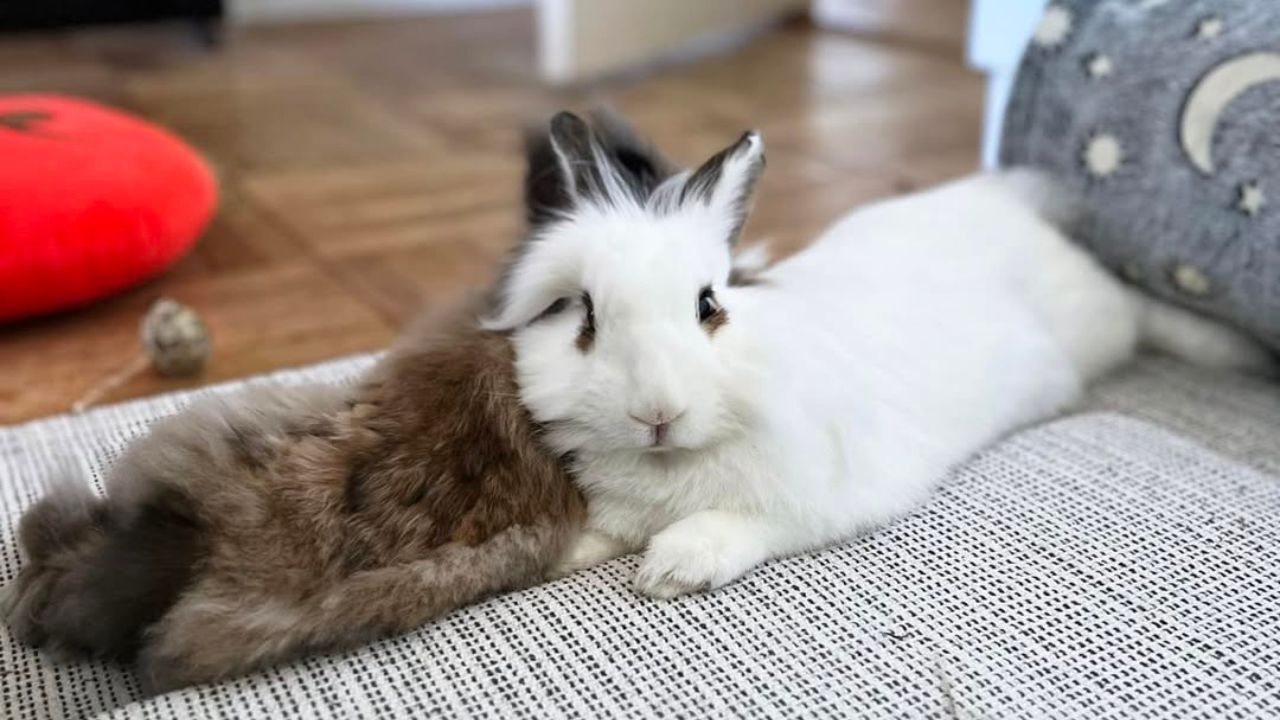

Neil has kept, bred, and sold rabbits and small animals at Paradise Pets Swindon since 1988 — over 35 years of first-hand experience with rabbits of all breeds, sizes, and temperaments. “How do I know if my rabbit is actually happy?” is a question he considers one of the most important a rabbit owner can ask. This is his honest guide to the signs most owners miss — and what genuine rabbit contentment actually looks like.
A young woman came in about six weeks ago and asked me something that I find myself thinking about still. “Neil,” she said, “my rabbit has never bitten me, she eats well, she seems healthy — but I honestly don’t know if she’s happy. She just sits there most of the time. How would I even know?”
It is a better question than most people realise. And the honest answer — the one that takes 35 years to give properly — is that rabbit happiness does not look the way most people expect it to. It does not look like a dog’s wagging tail or a cat’s purring on your lap. It looks quieter than that, subtler than that, and in many cases the owner has been looking right past it without knowing what they were seeing.
Rabbits are prey animals. They evolved to conceal vulnerability — to look composed and unreadable even when they are not, because in the wild, an animal that advertises its feelings too clearly does not survive long. That instinct runs deep in the domestic rabbit, and it means that a rabbit which is genuinely happy often shows it in ways that require you to know what you are looking for.
In 35 years of keeping, breeding, and selling rabbits, I have watched hundreds of rabbit and owner relationships at every stage — from the cautious first days to the deep, easy companionship of a rabbit that has lived with a person for years and has nothing left to prove. I know what a happy rabbit looks like. Most of what it looks like is not obvious.
This is my honest guide to the hidden signs your rabbit is genuinely happy — including the ones that most owners see every day without recognising them for what they are.
Why Rabbit Happiness Is So Easy To Miss
Before I go through the signs themselves, I want to explain why they are so easy to overlook — because understanding this makes the signs themselves make more sense.
A rabbit that freezes when it is frightened looks identical to a rabbit that is simply resting. A rabbit that is quietly content looks almost the same as a rabbit that is quietly anxious. The signals are there in both cases, but they are small, and reading them correctly requires knowing what you are looking at.
This is compounded by the fact that most people bring a rabbit home expecting it to behave something like a small dog or cat — to seek them out, to make noise when it is happy, to demonstrate its feelings clearly. When the rabbit does not do those things, the owner assumes either that the rabbit is unhappy or that rabbits simply do not have much personality. Both conclusions are usually wrong.
The rabbit has personality. It has a rich inner life. It expresses itself constantly — just not in the way most owners are watching for. And once you learn the language, a rabbit becomes one of the most expressive and readable pets there is.
The Hidden Signs Your Rabbit Is Genuinely Happy
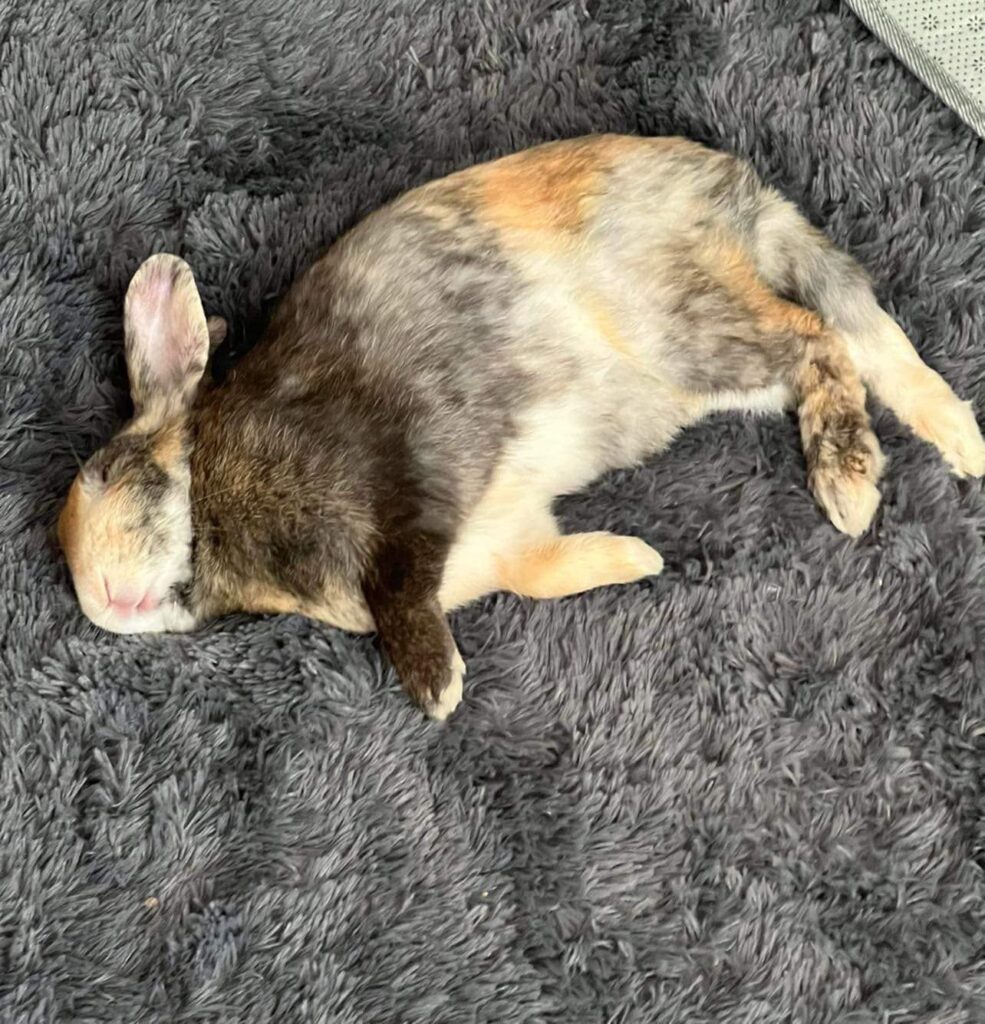
1. The Flop — The Most Dramatic Sign Most Owners Misread
I have been asked about this more times than I can count at the counter. An owner comes in looking worried. “Neil, my rabbit just threw itself onto its side and lay completely still. I thought it was dead. What happened?”
What happened is that your rabbit is utterly, completely, and demonstrably content. The rabbit flop — a sudden dramatic collapse onto one side, sometimes accompanied by a thump as the body hits the floor — is one of the clearest signs of happiness and deep relaxation a rabbit can show. It is the rabbit equivalent of melting onto the sofa after a perfect day. The rabbit feels so safe, so unbothered by the world, that it is willing to expose its vulnerable belly and lie completely still in your presence.
A rabbit that is anxious or unwell does not flop. A rabbit that does not trust its environment does not flop. A rabbit that flops near you or in your space has decided, in the clearest terms it has, that it is safe and at ease. If your rabbit is flopping and you have been worrying about whether it is happy — stop worrying.
2. The Binky — Pure Joy In Physical Form
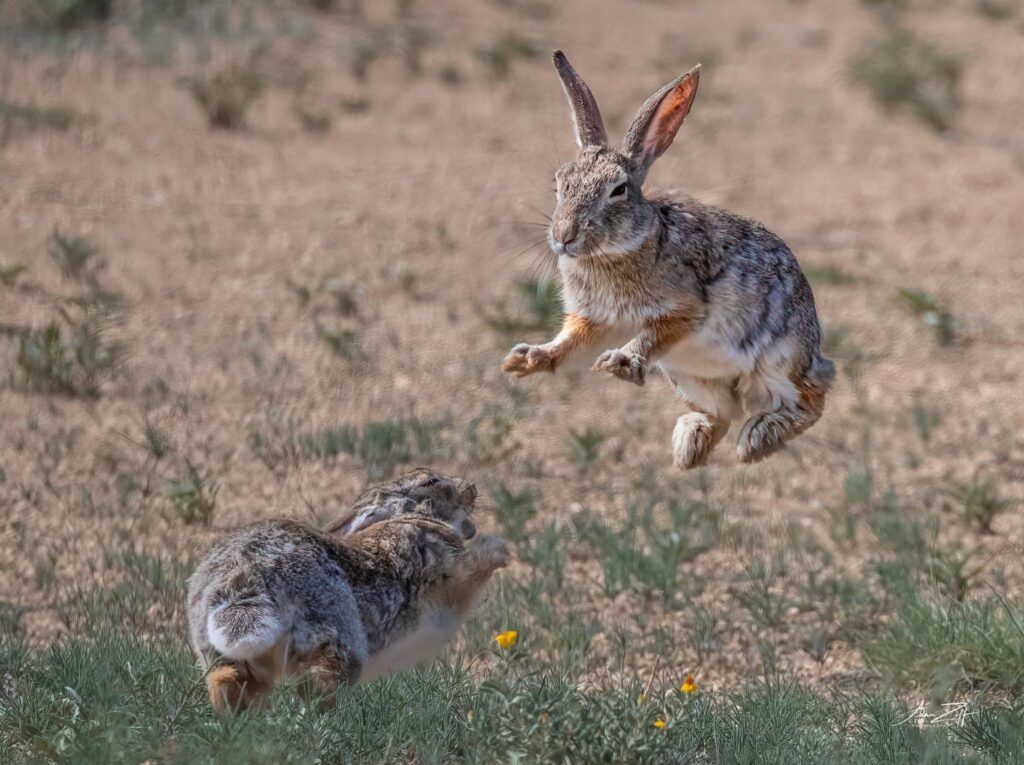
The binky is the other rabbit happiness signal that owners either miss entirely or witness once and then desperately try to see again. It is a sudden, full-body twist and leap — sometimes accompanied by a mid-air kick of the back legs — that looks completely spontaneous and slightly unhinged. The rabbit will binky in the middle of running, mid-groom, apparently for no reason, and then carry on as if nothing happened.
A binky is pure joy. It is a rabbit that is feeling so good in that moment that its body expresses it physically. It is not a sign of stress, not a sign of illness, not random — it is happiness overflowing into movement. Young rabbits binky more than older ones, and a rabbit in a larger space with room to run will binky more than one in a confined enclosure. But a rabbit that binkies, at any age and in any space, is a rabbit that is having a genuinely good time.
If you have never seen your rabbit binky, it is worth asking why — whether the space is large enough to run freely, whether the rabbit is getting enough exercise and stimulation. But if you have seen it and wondered what it meant, now you know.
3. Sitting Upright With Ears Relaxed — The Everyday Contentment Signal
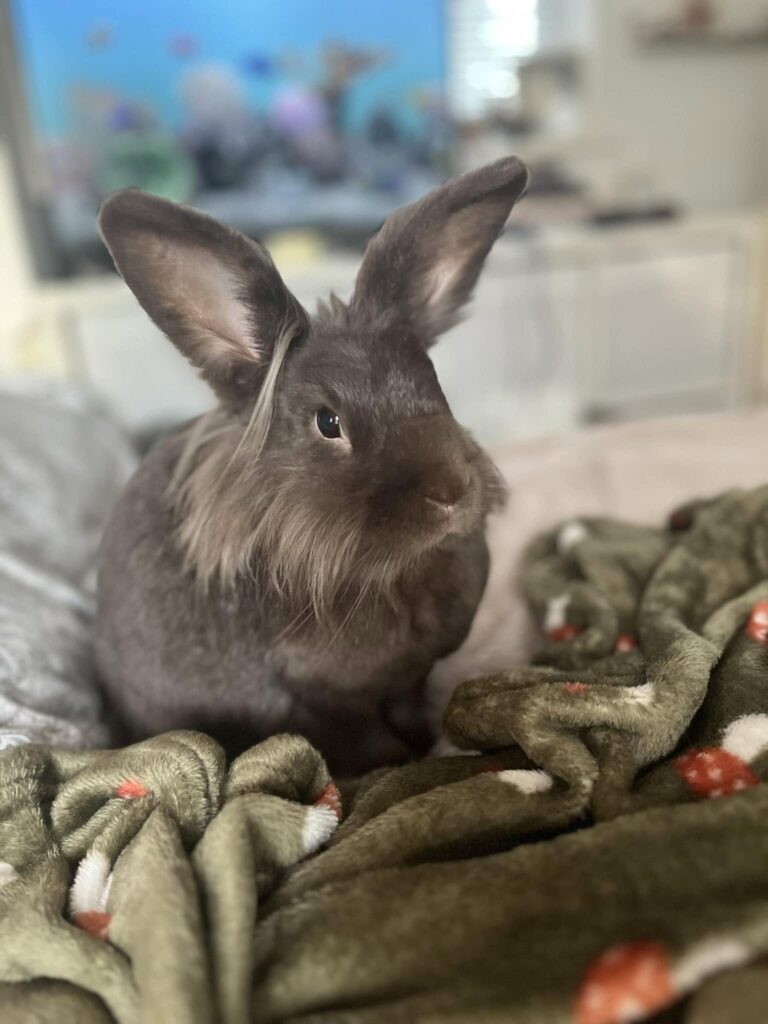
This one is subtle and it is the one most owners walk straight past. A rabbit sitting upright on its haunches with its ears in a natural, relaxed position — not flattened back, not swivelling anxiously at every sound, just resting at the angle they naturally fall — is a rabbit that is at ease. This is not the alert, tense upright posture of a rabbit that has heard something alarming. It is the comfortable, settled upright of a rabbit surveying a world it has no concerns about.
You will see this most clearly if you watch your rabbit when it thinks you are not paying attention. The ears are the giveaway — a happy, relaxed rabbit has ears that sit naturally and move only occasionally and gently. A stressed or anxious rabbit has ears that are constantly moving, constantly monitoring, constantly processing threat.
Learn your rabbit’s natural ear position in moments of genuine calm. Once you know it, you will recognise it consistently.
4. Grooming Itself In Your Presence
Rabbits groom themselves meticulously — they are clean animals with a serious investment in their own coat maintenance. What is significant for our purposes is not that they groom, but when and where.
A rabbit that sits next to you and begins grooming itself — washing its face with its paws, cleaning its ears, attending to its coat — is a rabbit that is completely relaxed in your presence. Grooming in this context is a vulnerability display. A rabbit that is nervous or alert does not groom. It watches. It waits. It keeps itself ready to move.
A rabbit that grooms itself while you are sitting nearby has made a decision that you are not a threat and the environment is safe. It is not performing contentment — it is simply too at ease to maintain vigilance. That is a deeply meaningful signal once you understand what it represents.
5. Approaching You Without Being Invited
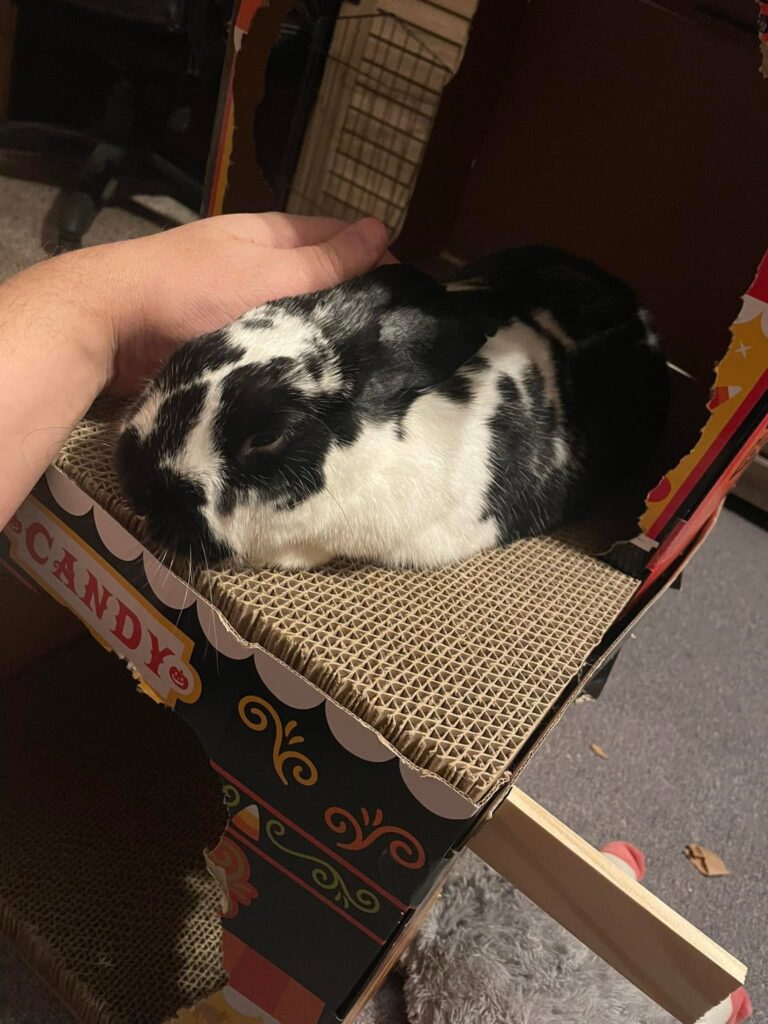
Rabbits are not obliged to approach their owners. They are not pack animals with an instinct to seek proximity to the group. They approach because they choose to — and a rabbit that chooses to come to you, to investigate you, to sit near you without being called or enticed with food, is a rabbit that has decided you are worth the approach.
This sounds obvious, but it is actually one of the most significant bonding indicators I look for. An owner who tells me their rabbit follows them around the room, comes to investigate when they sit on the floor, nudges their hand for attention — that owner has a rabbit that is genuinely bonded to them. The rabbit is not programmed to do this. It is choosing to.
Watch whether your rabbit approaches you or whether you always go to it. The direction of approach tells you a great deal about the state of the relationship.
6. Tooth Purring — The Sound Most Owners Never Notice
Unlike guinea pigs, rabbits are largely quiet animals. But they do make sounds, and one of the most significant happy sounds — tooth purring — is so quiet that many owners live with a rabbit for years without ever consciously noticing it.
Tooth purring is a very soft, rapid, gentle teeth grinding — not to be confused with the louder teeth grinding that indicates pain or discomfort. The happy version is almost inaudible, produces a barely-there vibration you might feel if your hand is resting on the rabbit, and happens during moments of deep contentment — being stroked in exactly the right place, resting after a big meal, sitting quietly in a space the rabbit loves.
If you have never heard it, sit quietly with your rabbit during a calm handling session and feel for the very subtle vibration along its jaw. Once you have felt it once, you will recognise it easily. It is the rabbit equivalent of a purr, and it means exactly what a cat’s purr means.
7. Lying Stretched Out — Not Just Flopped, But Fully Extended
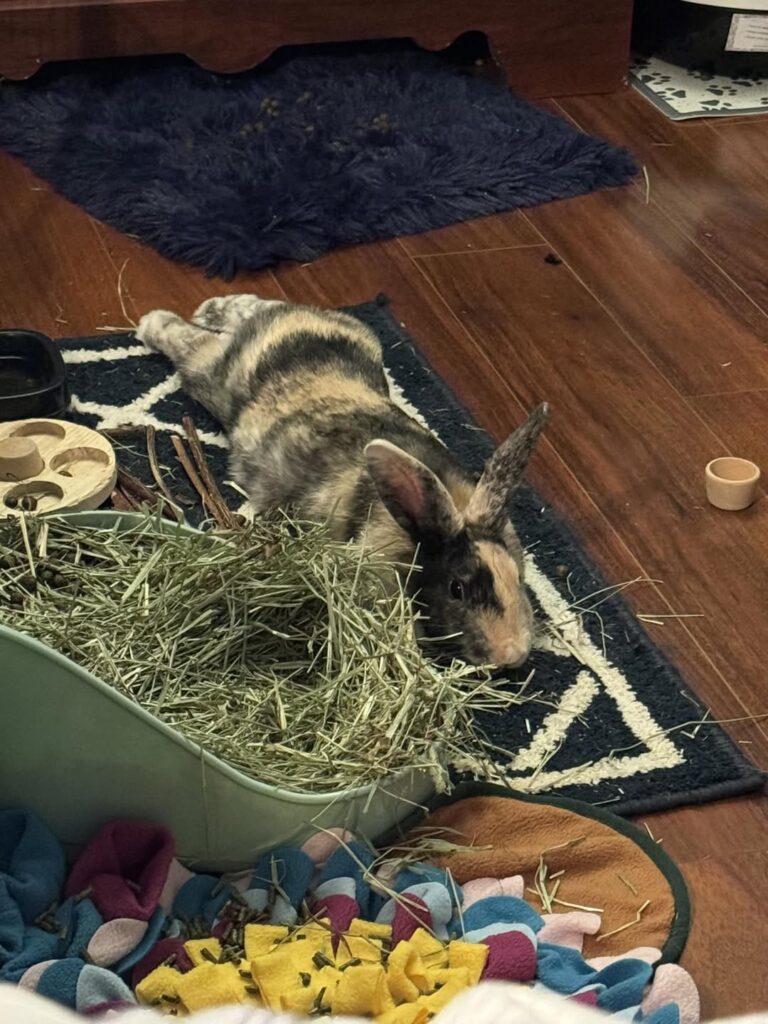
Different from the dramatic flop, the stretched-out rest is the rabbit lying on its stomach or side with its legs extended behind it — relaxed, long, taking up more space than a tight, anxious rabbit ever would. A rabbit that is resting in a fully extended position has decided it does not need to be coiled and ready. It has let go of the alert readiness that a prey animal carries constantly when it is uncertain of its environment.
You will sometimes see rabbits stretched out in patches of sunlight, or in a favourite corner of the room, or beside an owner they trust. The full extension is the body saying what the face cannot — I am not worried. This is a good place to be.
8. Using You As A Resting Place
A rabbit that chooses to rest against you, on your lap, or with its chin on your foot or leg has made a deliberate decision to use your presence as something that makes it feel more secure, not less. This is not the behaviour of an animal that tolerates you. It is the behaviour of an animal that finds you genuinely comforting.
This is more common in rabbits that have been handled gently and consistently from a young age, but it can develop at any point in a well-managed relationship. I have seen rabbits who were cautious and independent for years begin to seek contact in this way once genuine trust was fully established. When it happens, it is one of the most rewarding things in rabbit keeping.
9. Running Circuits — The Happy Run
Many rabbit owners notice that their rabbit, given floor time, will run the same circuit repeatedly — looping around furniture, dashing from one end of the room to the other, going around and around a particular course with apparent enthusiasm and no obvious purpose. This is not a problem. It is joy.
Rabbits run for the same reason children run — because movement feels good when you are in a good mood and have the space to express it. A rabbit that is given adequate floor time and runs its happy circuits is a rabbit that is benefiting from its exercise and expressing genuine wellbeing. The circuit running often ends with a binky or a flop, which is about as clear a sequence of happy rabbit behaviour as you will ever see.
10. Digging And Rearranging — The Contented Busy Rabbit
A rabbit that digs at its bedding, rearranges its hay, pushes its water bowl to a different position, reorganises the contents of its enclosure — this is a busy, engaged, mentally active rabbit. Destructive behaviour in a rabbit is usually a sign of boredom or frustration. Purposeful, energetic rearranging and digging in a rabbit that has adequate space and enrichment is something different — it is a rabbit that is investing in its environment, claiming its space, and engaging with its world.
It can be mildly inconvenient for owners — the water bowl does not need to be in that corner, and the hay did not need to be redistributed. But a rabbit that is sufficiently confident and comfortable in its environment to rearrange it is a rabbit that feels it belongs there. That is a good sign.
Signs That Look Like Happiness But Are Worth Checking
In the interest of honesty, there are a couple of behaviours that owners sometimes interpret as happiness but that warrant a closer look.
- Teeth grinding loudly — soft tooth purring is contentment; loud, audible grinding is often a sign of pain or discomfort, particularly dental problems. Know the difference — the happy version is barely audible, the pain version is clearly heard
- Sitting completely still for long periods without flopping or moving — a rabbit that sits absolutely motionless and unresponsive for extended periods, particularly if hunched, may be unwell. Stillness from contentment looks different from stillness from illness — the content rabbit is relaxed and responsive; the unwell rabbit is withdrawn and does not respond normally to interaction
- Eating compulsively and constantly — a healthy appetite is good; an obsessive focus on food at the expense of all other behaviour can indicate anxiety or boredom rather than happiness
- Circling your feet repeatedly — this can be affection-seeking, but in unneutered rabbits it is often hormonally driven behaviour related to mating instincts rather than contentment. If it is accompanied by grunting, this is particularly likely to be hormonal
What A Genuinely Happy Rabbit’s Day Looks Like
I find it helpful to give owners a picture of what genuine rabbit happiness looks like as a daily pattern rather than just a list of individual signs — because happiness in a rabbit is not one moment, it is a sustained state that shows in the rhythm of the day.
A happy rabbit wakes from its rest alert but unhurried. It grooms itself, eats hay, investigates its environment. During floor time it runs, explores, occasionally binkies. It approaches its owner at some point — nudging a hand, sitting nearby, perhaps grooming them. It rests during the middle of the day, often stretched out or flopped, and is active again in the evening. It tooth-purrs during a stroking session. It rearranges its hay before settling for the night.
None of those things are dramatic. None of them shout “happy rabbit.” But together, they form the picture of an animal that is secure, stimulated, bonded to its owner, and genuinely content with its life. That is what you are aiming for. That is what 35 years tells me rabbit happiness actually looks like.
What Gets In The Way Of Rabbit Happiness — The Honest List
Understanding what happiness looks like is one side of this. Understanding what prevents it is the other, and I want to be direct about the most common barriers I see.
- Not enough space. A hutch, however well-appointed, is not enough living space for a rabbit. Rabbits need room to run, to binky, to express the full range of their physical and behavioural repertoire. Confined rabbits are not happy rabbits — they are surviving rabbits, which is not the same thing.
- No companion. Rabbits are social animals. A single rabbit with good owner interaction can thrive, but a single rabbit left alone for most of the day is a lonely rabbit. A bonded companion provides something an owner simply cannot — constant company from another rabbit, mutual grooming, the security of shared vigilance.
- Insufficient floor time. A rabbit that spends all or most of its time in an enclosure, however good that enclosure is, is not getting what it needs. Daily free-roaming time in a safe space is essential for physical and psychological wellbeing.
- Being picked up too often or incorrectly. Many rabbits genuinely dislike being picked up — being lifted off the ground triggers a fear response in a prey animal whose main predators attack from above. A rabbit that is regularly picked up against its will is a rabbit that has learned to dread its owner’s hands. This is not happiness. Interaction at ground level, on the rabbit’s terms, builds a very different relationship.
- Lack of enrichment and stimulation. A bored rabbit is not a content rabbit. Hay to forage in, things to investigate, safe things to chew and rearrange — these are not luxuries, they are necessities for a species with an active, curious mind.
- Not being neutered. An unneutered rabbit, particularly a female, is subject to hormonal drives that cause significant behavioural and sometimes physical problems. Neutering dramatically improves quality of life for most rabbits and makes the relationship with the owner considerably easier.
Quick Reference — Happy Rabbit Signals At A Glance
| What You See | What It Means | Happiness Signal? |
|---|---|---|
| Dramatic flop onto side | Deep relaxation and safety | ✅ Very strong yes |
| Binky — leap and twist mid-run | Pure joy in the moment | ✅ The clearest sign there is |
| Grooming itself near you | Completely relaxed in your presence | ✅ Strong yes |
| Approaching you unprompted | Genuine choice to seek your company | ✅ Strong yes |
| Soft tooth purring | Deep contentment during contact | ✅ Yes — feel for the vibration |
| Lying fully stretched out | Relaxed, no vigilance, fully at ease | ✅ Yes |
| Resting against or on you | Finds your presence comforting | ✅ Strong yes |
| Running happy circuits | Physical expression of good mood | ✅ Yes |
| Rearranging and digging in enclosure | Engaged, confident, claiming space | ✅ Yes — in a rabbit with adequate space |
| Relaxed ears in natural position | No threat detected, at ease | ✅ Yes — especially combined with other signs |
| Loud teeth grinding | Pain or discomfort — not happiness | ❌ Check for dental or health issues |
| Motionless and unresponsive | May be unwell — not the same as a relaxed flop | ❌ Investigate if persistent |
Frequently Asked Questions
How do I know if my rabbit is happy or just tolerating me?
The clearest indicators are whether the rabbit approaches you voluntarily, whether it grooms itself in your presence, whether it flops near you, and whether it tooth-purrs during contact. A rabbit that merely tolerates you will be passive during handling but will not seek you out, will not relax fully near you, and will not show the unprompted behaviours that indicate genuine positive association. The direction of approach — who goes to whom — is perhaps the simplest single indicator.
My rabbit never binkies — should I be worried?
Not necessarily — binkying frequency varies significantly by age and personality, and some rabbits are simply less demonstrative than others. However, if your rabbit has adequate space and exercise and you have genuinely never seen even a hint of a binky or a floor-running circuit, it is worth looking at the environment. Rabbits in spaces that are too small, or that lack sufficient exercise time, often do not binky because they do not have the room or the impetus to. A rabbit with plenty of space and daily floor time that still never binkies may simply have a more contained personality — which is fine.
My rabbit is not affectionate — does that mean it is unhappy?
Not at all. Rabbits vary enormously in personality. Some are naturally more interactive and contact-seeking than others, and a rabbit that is reserved or independent can still be entirely content. The signs of happiness in a reserved rabbit will look slightly different — more about the absence of stress signs than the presence of dramatic happiness signals — but they are still there. Watch for the flop, the relaxed ears, the grooming in your presence, the willingness to be in the same space as you without tension. Those matter as much as overt affection.
At what age do rabbits start showing happiness signals clearly?
Young rabbits often binky frequently and are physically expressive — they have energy and less caution than older animals. The deeper bonding signals — the tooth purring, the choice to rest against you, the grooming of you — tend to come with time and the development of real trust, which for some rabbits takes months. An older rabbit that shows these signals has usually earned them through a relationship built carefully over time, and they are arguably more meaningful for that.
Can a rabbit be happy without being handled?
Yes — and this is important for owners to understand. Some rabbits genuinely prefer minimal handling and express their contentment in other ways — binkying in their space, flopping near their owner, approaching for brief contact rather than sustained holding. A rabbit’s happiness is not measured by how much it tolerates being picked up. It is measured by the quality of its life, the security of its environment, the adequacy of its space and stimulation, and the calibre of its relationship with its owner — which can be warm and genuine even without much physical handling.
Where can I get honest rabbit advice in Swindon?
Come and see us at Paradise Pets, Manor Garden Centre, Cheney Manor, Swindon SN2 2QJ. Or give us a ring on 01793 512400. The advice is free and we have been doing this for 35 years.
One Last Thing From Me
The young woman who came in not knowing if her rabbit was happy — I asked her to describe her rabbit’s day in as much detail as she could. And as she talked, it became clear that her rabbit flopped regularly, ate well, groomed herself in her owner’s presence, and had recently started approaching her in the evenings when she sat on the floor. She had simply not known what she was seeing.
By the end of the conversation she had not changed anything about how she kept her rabbit. She had just learned to read what was already there. She left with the realisation that her rabbit had been showing her, every single day, that it was content — and she had been walking past the evidence without recognising it.
That is what I want for every rabbit owner who reads this. Not necessarily a dramatic change in how they keep their rabbit — though for some owners, thinking about space, companionship, and floor time will lead to positive changes. But at the very least, the ability to sit with their rabbit and see what is actually being communicated, rather than looking for the wrong signals and concluding that nothing is there.
Something is always there. You just need to know how to look.
Come and see us if you want to talk through your rabbit’s behaviour or setup. We have been helping owners understand their animals for 35 years, and there are few conversations I enjoy more.
Not Sure If Your Rabbit Is Happy? Come And Talk It Through
Bring your questions and a description of your rabbit’s daily behaviour. I will help you read what you are seeing and tell you honestly whether the signs point to a content rabbit — and if not, what to change. Free advice, no obligation. That is how we have done things for 35 years.