


Neil has kept, bred, and sold hamsters and small animals at Paradise Pets Swindon since 1988 — over 35 years of first-hand experience with Syrian hamsters, dwarf hamsters, and every breed in between. “My hamster has a bald spot — what does it mean?” is one of the questions he takes most seriously at the counter. This is his honest diagnostic guide to what causes bald spots in hamsters, how to tell one cause from another, and what to do about each one.
A woman came in last month holding her hamster cupped carefully in both hands, clearly worried. “Neil,” she said, “I noticed this morning that he has got a bald patch just behind his ear. It wasn’t there last week. I don’t know if I should be rushing him to a vet or if it’s nothing.”
I asked her to let me have a look. The patch was small, roughly circular, the skin underneath looked slightly pink but not broken or inflamed. The hamster himself was bright-eyed, not scratching, and had been eating normally. Within a minute or two I had a fairly clear picture of the most likely cause — and I was able to tell her what to do next with some confidence.
But I was also honest with her about something I always say in this situation: a bald spot on a hamster is not something to ignore and hope goes away. It has a cause, and the cause matters — because some of them are straightforward and resolve on their own, and some of them need treatment, and a few of them need prompt veterinary attention. The mistake is assuming you know which category yours falls into without looking properly.
In 35 years of keeping and selling hamsters, I have seen bald spots caused by a long list of different things — some minor, some serious, some that were obvious immediately and some that took careful observation to identify. This guide is my attempt to give you the diagnostic framework I use at the counter, so that you can look at your hamster’s bald spot with some understanding of what you are actually looking at — and respond appropriately.
First — How To Examine Your Hamster’s Bald Spot Properly
Before you can work out what is causing the bald spot, you need to look at it carefully — and there are specific things to look for that will help you narrow down the cause significantly. This is the examination I do at the counter when an owner brings a hamster in.
Find a warm, well-lit place to examine your hamster. Hold it gently but securely. Look at the bald patch itself and answer the following questions as clearly as you can.
- Where exactly is the bald spot? Location is one of the most useful clues — behind the ears, on the flanks, around the face, across the back, near the base of the tail. Each location has different common causes.
- What does the skin underneath look like? Is it normal-coloured and intact? Pink and slightly irritated? Broken, scabbed, or bleeding? Thickened or crusty? The condition of the skin under the missing fur is a critical indicator.
- Is the bald spot symmetrical? A symmetrical bald area — the same on both sides — is often a different cause from a single asymmetric patch.
- How big is it and what shape? Roughly circular and defined? Irregular and spreading? A small precise patch? Shape can indicate cause.
- Is the hamster scratching, rubbing, or grooming the area excessively? Watch for any repeated attention the hamster is paying to the bald area.
- Has anything else changed? Appetite, weight, activity level, coat condition in other areas, any other lumps or changes anywhere on the body.
- How old is your hamster? Age is a significant factor — what is common in an older hamster is different from what is common in a young one.
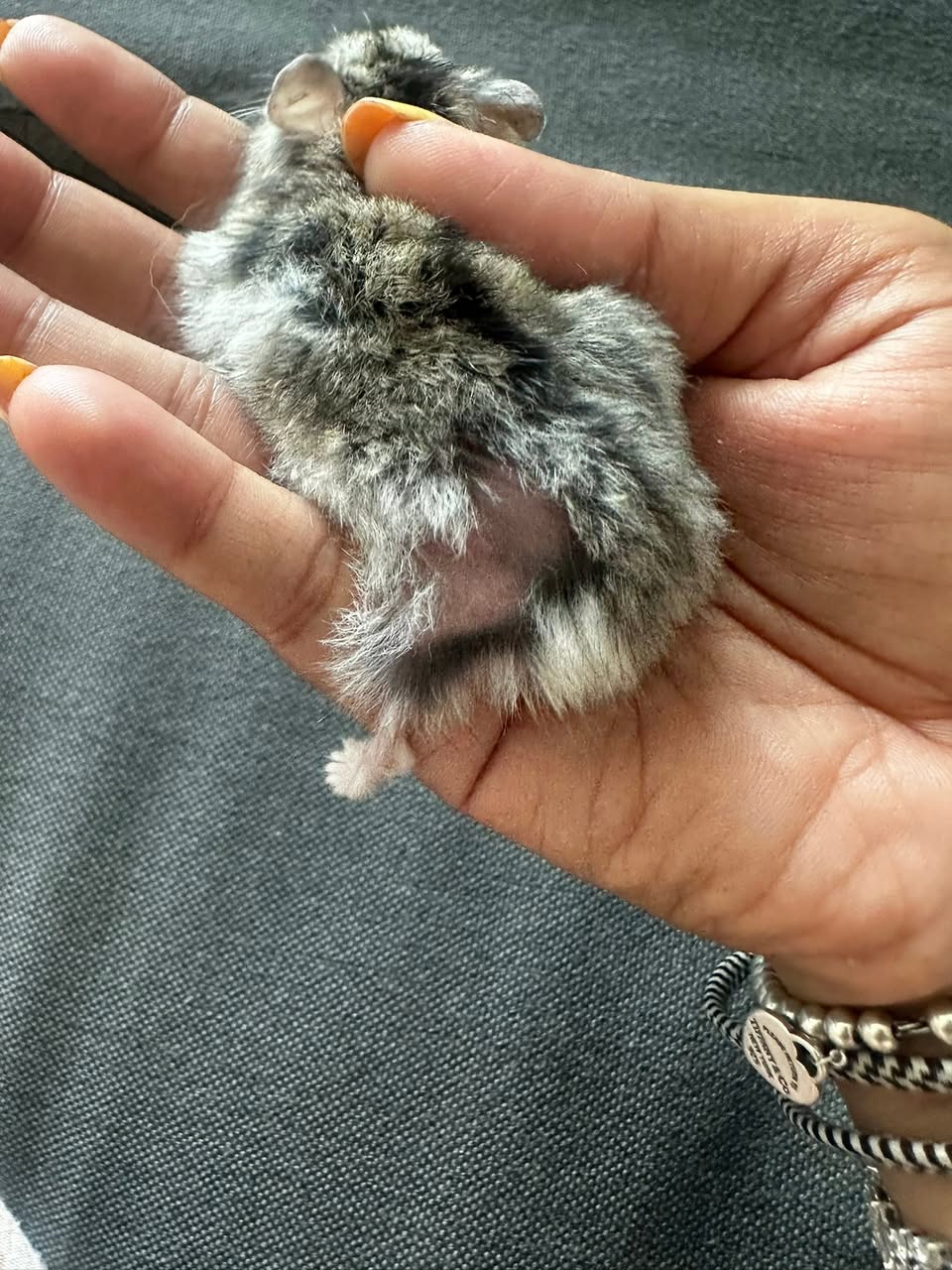
With those observations in hand, you can start working through the most likely causes. I will go through them in order of how commonly I see them.
The Most Common Causes Of Bald Spots In Hamsters
1. Friction And Rubbing — The Most Common Cause Overall
The single most common cause of bald spots in pet hamsters, in my experience, is simple friction — the hamster repeatedly rubbing against something in its enclosure. Bar-rubbing, repeated contact with a water bottle nozzle, a rough edge on a hideout or tunnel, a wheel that is too tight — any of these can cause localised fur loss from repeated mechanical contact.
The bald spot from friction tends to appear in a predictable location relative to whatever is doing the rubbing. A patch on the nose or face often points to bar-rubbing — a stereotypic behaviour where the hamster repeatedly pushes against the cage bars, usually a sign of an enclosure that is too small or understimulating. A patch on the flank or belly where the hamster regularly squeezes through a tunnel or entrance hole is another classic presentation.
The skin underneath a friction bald spot is usually normal in colour and intact — it is fur loss from mechanical wear, not from the skin itself being affected. There is typically no inflammation, no flaking, and no apparent discomfort from the hamster.
What to do: identify the source of the friction and remove or modify it. If bar-rubbing is the cause, the enclosure almost certainly needs to be larger and better enriched. If the source is something physical — a tunnel entrance, a rough edge, a water bottle position — adjust it. The fur will often regrow once the friction stops.
2. Scent Glands — The Bald Spot That Is Not A Problem At All
This one catches a lot of owners off guard, particularly those with Syrian hamsters, and it is worth covering clearly because it causes unnecessary panic.
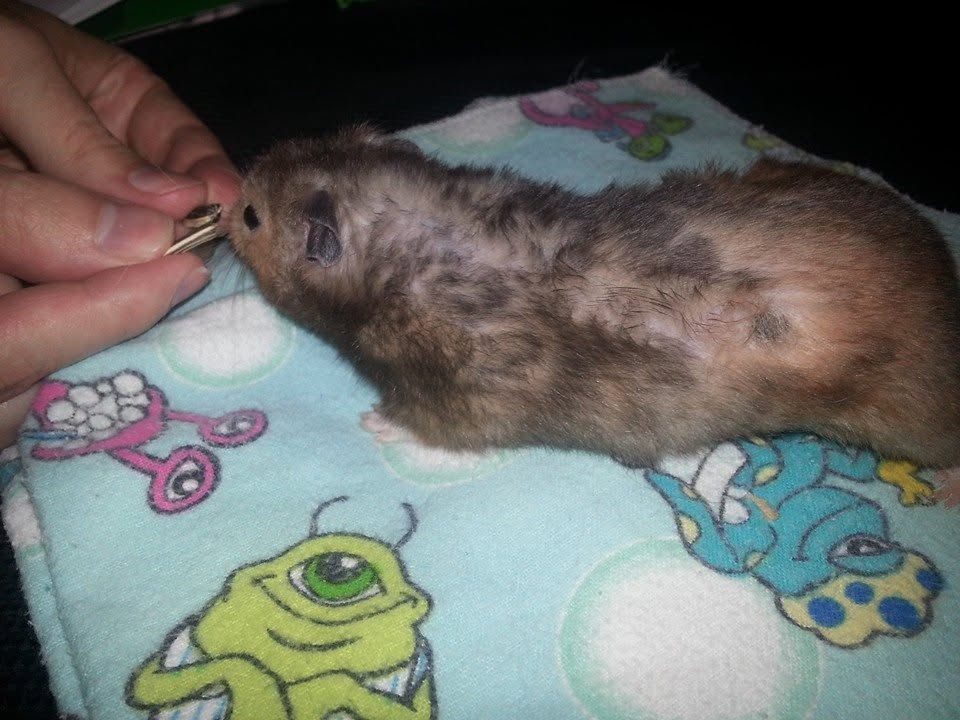
Syrian hamsters have paired scent glands on their flanks — one on each side — that appear as small, slightly darker, slightly hairless or thinly-haired patches on the sides of the body. These are completely normal structures. In males they are often more prominent, and in older males especially, the area around them can become quite noticeably bald and slightly waxy in appearance.
These are not a skin problem. They are not a sign of illness. They are normal hamster anatomy. The glands are used for scent-marking and territorial behaviour, and their prominence simply varies between individual animals.
If you are seeing symmetrical bald patches on the flanks of a Syrian hamster, particularly in a male, this is almost certainly the scent glands. Check the other side — if there is a matching patch, that confirms it. No action needed.
3. Ringworm — The One To Rule Out Early
Despite the name, ringworm is not a worm — it is a fungal infection of the skin, and it is one of the causes of bald spots in hamsters that I take most seriously at the counter, for two reasons. First, it needs treatment — it will not resolve on its own. Second, it is zoonotic, meaning it can spread from your hamster to you and other members of the household.
Ringworm in hamsters typically presents as a roughly circular or oval bald patch, often with slightly scaly or crusty skin at the edges. The skin underneath may look slightly reddened or inflamed. The patch tends to have a reasonably defined edge — it is not just gradual thinning, it is a distinct loss of fur in a particular area. Multiple patches can occur.
The hamster may or may not scratch at the area. Some hamsters with ringworm seem unbothered by it; others scratch frequently.
If you suspect ringworm, handle your hamster carefully and wash your hands thoroughly after contact. See a vet — diagnosis is usually by examination and sometimes a skin scraping, and treatment is with antifungal medication. Do not assume a circular bald patch is ringworm without a vet confirming it, but do not dismiss the possibility either.
4. Mites — Small Parasites, Significant Effects
Mite infestations are another cause of fur loss in hamsters that I see regularly, and they are worth knowing about in some detail because the presentation can vary.
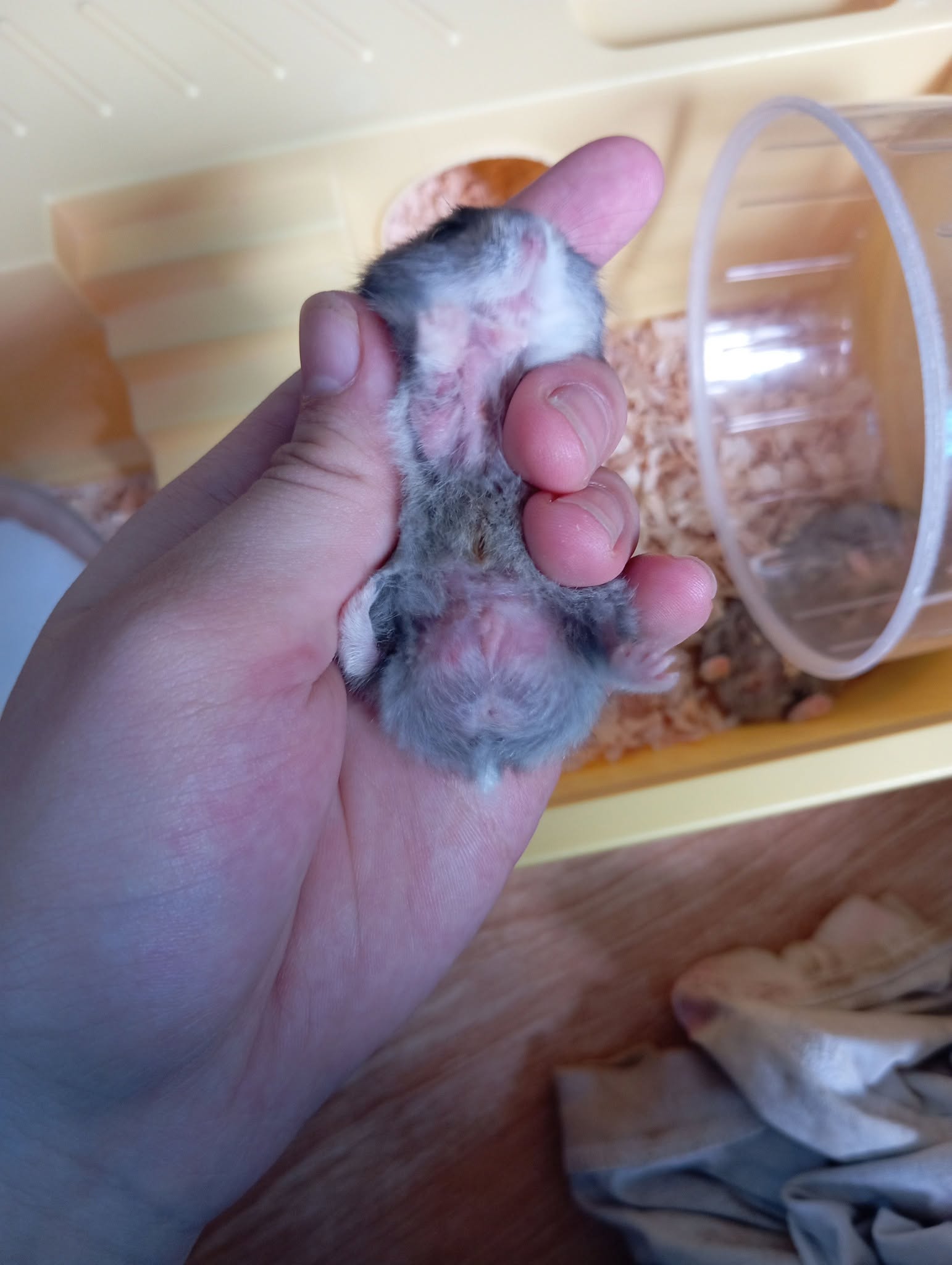
Hamsters can carry mites — particularly Demodex mites, which are actually present on most hamsters in small numbers without causing problems. It is when the mite population increases — often because of stress, illness, an underlying health problem, or old age weakening the immune system — that symptoms appear. This is called demodicosis, and it typically presents as fur loss, often starting on the back or face, with the skin underneath looking slightly thickened, scaly, or greasy in appearance.
A hamster with a significant mite infestation will often also be scratching, and the skin may have a roughened or flaky texture under the bald area. In more severe cases the skin can appear reddened or have small crusts.
Other mites — such as Notoedres — cause a different presentation, typically more inflamed and intensely itchy, often affecting the ears and face first.
Mite infestations need veterinary diagnosis and treatment. Do not attempt to treat at home with products not specifically licensed for hamsters — many over-the-counter treatments for other animals are toxic to hamsters.
5. Barbering — When A Cage-Mate Is The Problem
If you keep more than one hamster together — which, for Syrian hamsters, I would strongly advise against, as they are solitary animals that fight — barbering is a cause of bald spots worth knowing about. Barbering is when one hamster chews or plucks the fur of another, usually a more dominant animal targeting a subordinate.
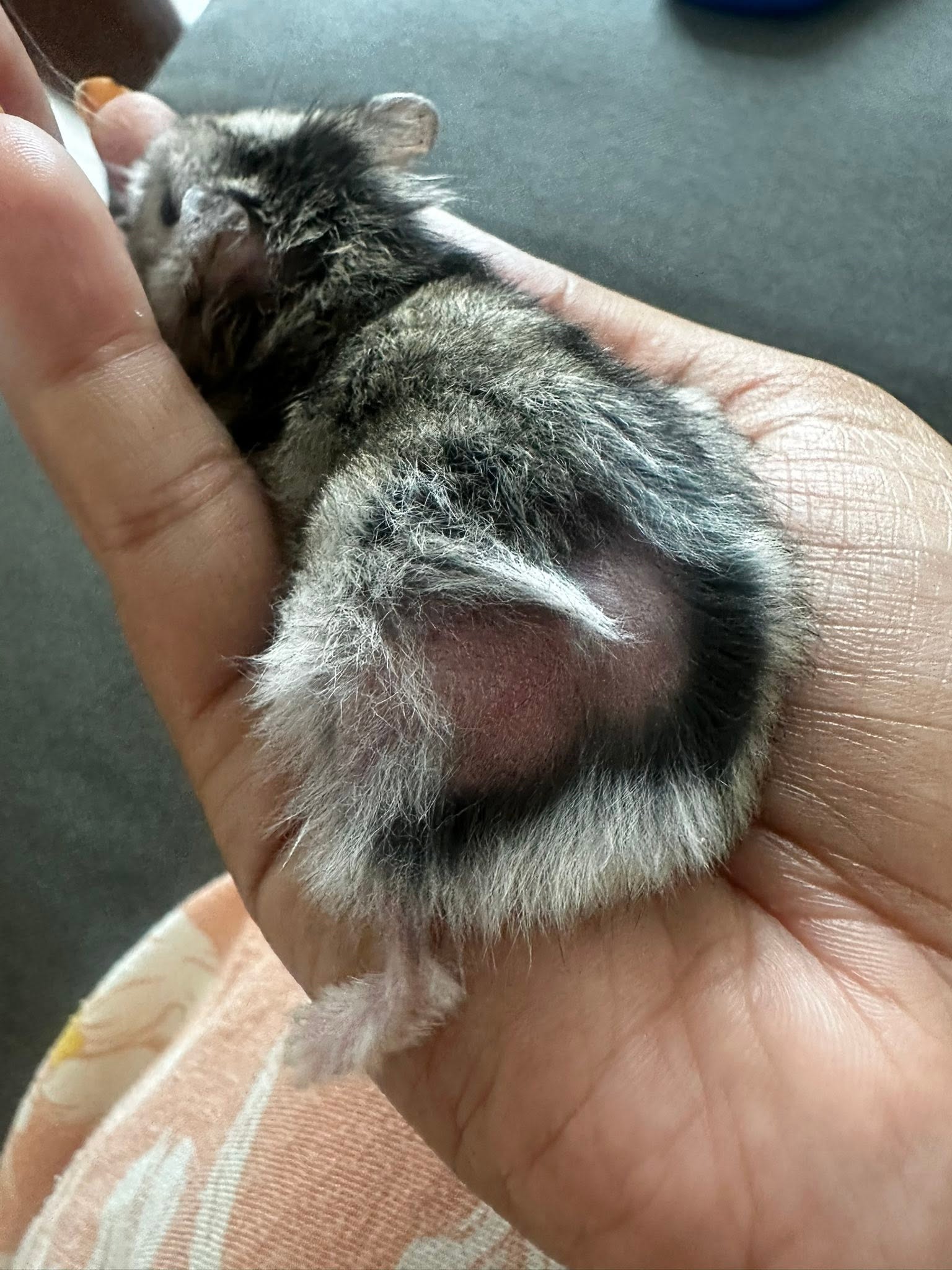
The bald patches from barbering tend to appear in locations the hamster cannot reach to groom itself — the top of the head, the back, the shoulders. The skin underneath is usually intact and normal — it is fur removal rather than skin damage. The affected hamster may appear otherwise healthy but may also be showing signs of stress or weight loss from being bullied.
If you are seeing bald patches in these locations on a hamster that is housed with another, separate them immediately and examine both animals carefully.
For dwarf hamsters, which can sometimes be kept in same-sex pairs if introduced correctly, barbering between them is still possible and the same approach applies — separate and assess.
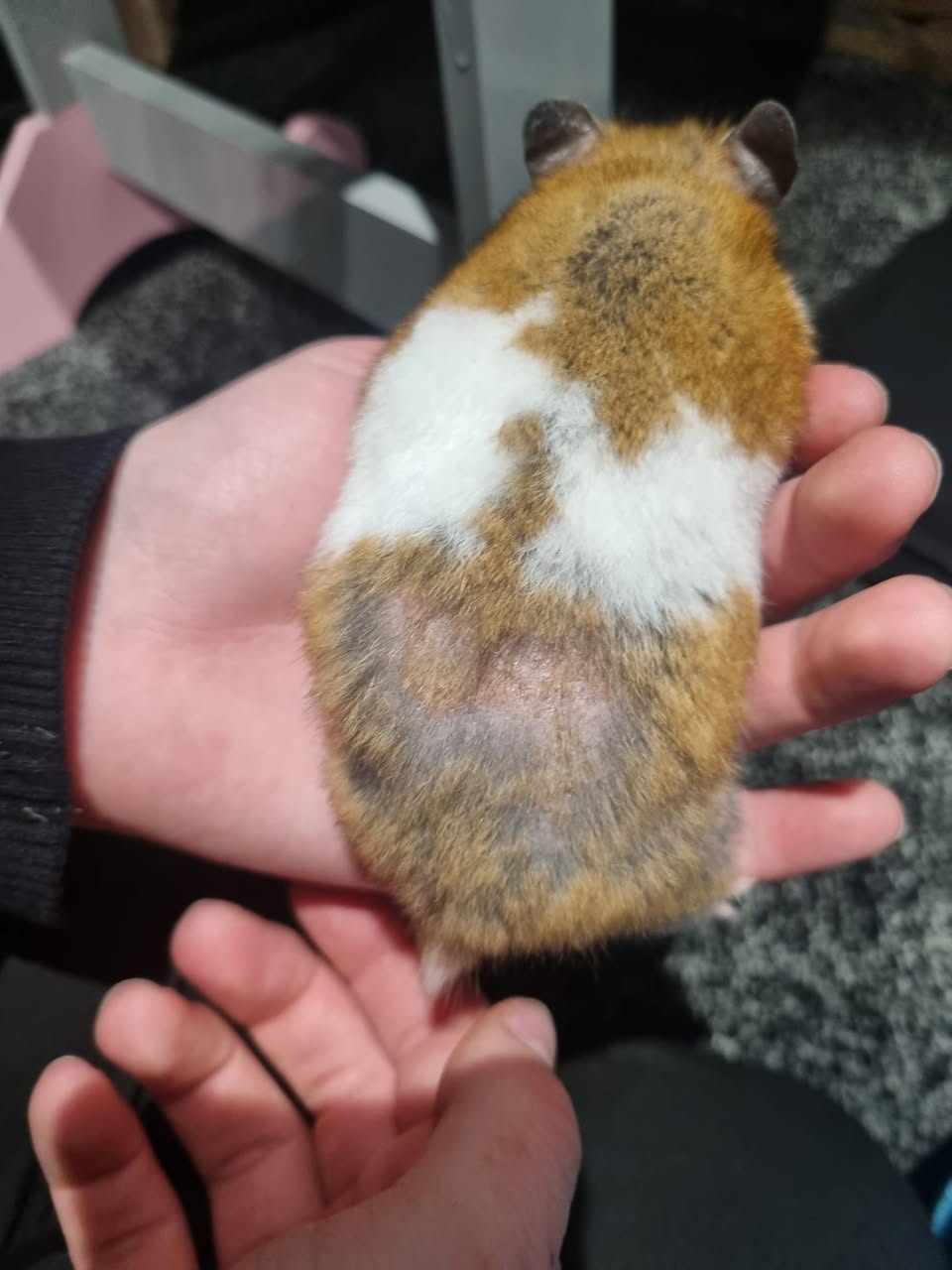
6. Cushing’s Disease — The Hormonal Cause That Affects Older Hamsters
Hyperadrenocorticism — Cushing’s disease — is a condition I see more often than most pet owners expect in older hamsters, and fur loss is one of its most visible symptoms. It occurs when the adrenal glands produce too much cortisol, and in hamsters it tends to produce a characteristic pattern of fur loss — often bilateral and symmetrical, starting on the flanks and trunk, with the skin underneath becoming thin, darkened, and sometimes with small blackhead-like spots.
Other signs alongside the fur loss that point towards Cushing’s include a pot-bellied appearance, increased thirst and urination, and general lethargy or reduced activity. The hamster may seem older than its age.
This condition is most common in hamsters over 18 months old, which in hamster terms is approaching middle to old age. It requires veterinary diagnosis — usually based on clinical signs, as the diagnostic testing used in dogs and cats is rarely practical in hamsters — and management options are limited but do exist.
If your hamster is older and developing symmetrical fur loss on the flanks and trunk alongside any of the other signs I have described, Cushing’s disease belongs on the list of possibilities and a vet visit is warranted.
7. Thyroid Problems
Hypothyroidism — underactive thyroid — can also cause fur loss in hamsters, typically producing a more general thinning of the coat rather than distinct bald patches. The hamster may also be lethargic, feel cold to the touch, and be gaining weight despite normal food intake.
This is less common than the other causes I have described but worth including because it is occasionally overlooked. A vet can investigate if other causes have been ruled out and the presentation fits.
8. Wounds, Injuries, And Abscesses
A bald spot that appears suddenly and is accompanied by a visible wound, swelling, discharge, or obvious injury is a different matter entirely from the causes above, and needs prompt veterinary attention.
Hamsters can injure themselves on cage furniture, in wheels, or in conflict with other hamsters. An abscess — a walled-off pocket of infection — can develop under the skin following a bite or wound, and may appear as a swelling with fur loss over the top. Abscesses in hamsters need veterinary drainage and often antibiotics.
If the bald area is accompanied by any swelling, warmth, discharge, or obvious physical damage, treat it as urgent and contact a vet.
9. Allergic Reactions And Environmental Irritants
Occasionally, fur loss in hamsters is caused by an allergic or irritant reaction to something in the environment — a new bedding substrate, a cleaning product used on the cage, a new food, or a scented product nearby. The presentation tends to be more generalised than a single patch, often affecting the belly or areas most in contact with the bedding.
If the bald spot or fur thinning appeared after a change to something in the hamster’s environment, that is the first thing to reverse and observe. Go back to the previous bedding, the previous cleaning approach, and see whether the fur loss stabilises or improves.
Location Guide — What The Position Of The Bald Spot Suggests
| Location Of Bald Spot | Most Likely Causes To Consider | Action |
|---|---|---|
| Symmetrical patches on both flanks | Scent glands (normal anatomy), Cushing’s disease | ✅ Scent glands — no action. ⚠️ Cushing’s — vet if other signs present |
| On the nose or face | Bar-rubbing, friction from water bottle, ringworm | ⚠️ Check enclosure and enrichment. 🔴 Vet if ringworm suspected |
| Behind or around the ears | Mites, ringworm, friction | 🔴 Vet recommended — mites and ringworm both need treatment |
| On the back or shoulders | Barbering by cage-mate, mites, ringworm | ⚠️ Separate cage-mates. 🔴 Vet if skin is affected |
| On the belly or underside | Bedding irritation, allergic reaction, mites | ⚠️ Review bedding. 🔴 Vet if skin looks inflamed |
| Spreading symmetrically from flanks to trunk | Cushing’s disease, thyroid problem | 🔴 Vet — particularly in hamsters over 18 months |
| With swelling, discharge, or obvious wound | Abscess, injury, infected wound | 🔴 Vet urgently |
When To See A Vet — And When To Watch And Wait
- Broken, scabbed, or bleeding skin under or around the bald area
- Redness, swelling, or warmth around the bald patch
- Any discharge — wet, crusted, or discoloured material at the site
- Persistent scratching or the hamster repeatedly attending to the area
- Rapid spread — the bald area is visibly growing over days
- Multiple patches appearing in different locations
- The hamster is also unwell — reduced appetite, weight loss, lethargy, or any other change in behaviour alongside the fur loss
- Suspected ringworm — particularly if anyone in the household has developed an unexplained circular, itchy rash on their skin, as ringworm can transfer from hamster to human
- The hamster is over 18 months old and developing symmetrical fur loss — Cushing’s disease becomes significantly more likely with age
- Any uncertainty — if you have examined the bald spot and you genuinely cannot identify a clear, innocent cause, a vet visit is the right call
The situations where a watch-and-wait approach is reasonable are narrower than most owners assume. A small, stable bald patch in a young healthy hamster, with intact normal-looking skin underneath, no scratching, no other symptoms, that appeared at a location consistent with a friction source you can identify and remove — that is a reasonable candidate for monitoring. Everything else deserves at minimum a phone call to a vet.
Hamsters have short lifespans — a two-year-old hamster is an elderly animal. Problems that might be relatively minor in a younger animal can escalate quickly in an older one. Acting promptly is always better than waiting.
What To Tell Your Vet — Making The Most Of The Appointment
Because hamsters are small and appointments are short, having the right information ready makes the consultation significantly more useful. Here is what I tell owners to prepare before they go.
- When you first noticed the bald spot — and whether it has changed in size or appearance since then
- The hamster’s age — as precisely as you know it
- What the enclosure contains — type of cage, bedding substrate, wheel, water source, hide, toys
- Whether anything has changed recently — new bedding, new food, new products used near the cage, a cage clean with a different product
- Whether the hamster lives alone or with others
- The hamster’s current weight if you know it — weekly weighing is something I always recommend, and if you have recent weights, they are useful
- Any other changes in behaviour, appetite, or appearance — however small they seem
- A photograph of the bald spot in good light — taken before the appointment, in case the hamster is too stressed at the vet for a clear examination
Can Bald Spots In Hamsters Grow Back?
The honest answer is — it depends entirely on the cause.
Fur lost from friction, once the source of friction is removed, will often regrow over several weeks. Fur lost from barbering, once the cage-mate is removed, will often regrow. Fur lost from ringworm or mites, once successfully treated, will usually regrow as the skin recovers — though it may take time.
Fur loss associated with Cushing’s disease or thyroid problems is more complex — the underlying hormonal cause is the issue, and fur regrowth depends on how well the condition is managed.
Fur loss in a very old hamster may be partly simply age-related thinning, which is not fully reversible.
The key point is that regrowth is possible in many cases when the cause is identified and addressed promptly. This is another reason not to leave a bald spot and hope it resolves on its own — the sooner the cause is identified, the sooner it can be addressed, and the better the chances of recovery.
Frequently Asked Questions
Is it normal for hamsters to have a small bald patch on their sides?
If you are seeing a small, symmetrical bald or thinly-haired patch on both flanks of a Syrian hamster — one on each side — that is almost certainly the scent glands, which are completely normal anatomy. They are more prominent in males and tend to become more obvious with age. The skin underneath should look normal. If the bald area is on one side only, spreading, or accompanied by any skin changes, that is a different matter and worth investigating.
Could my hamster’s bald spot be stress-related?
Stress does not directly cause fur loss in hamsters the way it can in some other animals, but stress can indirectly contribute — particularly by suppressing the immune system and allowing mite populations to increase, which then causes fur loss. More directly, a stressed hamster may bar-rub or over-groom, both of which can cause localised bald patches. The stress itself needs addressing — which usually means looking at enclosure size, enrichment, and handling.
My hamster has a bald spot but seems completely fine otherwise — should I still worry?
A hamster that seems fine is reassuring, but I would not let it make you complacent about the bald spot. Hamsters are prey animals and they hide signs of illness extremely well — by the time a hamster looks visibly unwell, it has often been struggling for some time. A bald spot in an otherwise-apparently-healthy hamster still deserves proper investigation to identify the cause, because some of the things that cause bald spots — ringworm, early Cushing’s disease, mites — will progress if left unaddressed.
Can I catch something from my hamster’s bald spot?
If the cause is ringworm, yes — ringworm is zoonotic and can spread from hamster to human and between humans in the household. If you notice a circular, itchy, slightly scaly rash on your own skin — or anyone else in the family — at the same time as your hamster has an unexplained bald patch, mention it to both your vet and your GP. Ringworm in humans is very treatable, but you need to treat both the hamster and any affected people, otherwise re-infection occurs.
My hamster has a bald spot near its tail — what could cause that?
A bald spot near the base of the tail is worth looking at carefully. In females, it can sometimes be associated with hormonal changes or uterine problems — particularly in older female hamsters. In any hamster, a bald patch in that area warrants a vet check, as the tail and hindquarter region can be affected by internal conditions that are not obvious from the outside.
Where can I get honest small animal health advice in Swindon?
Come and see us at Paradise Pets, Manor Garden Centre, Cheney Manor, Swindon SN2 2QJ. Or give us a ring on 01793 512400. We can help you assess what you are seeing and tell you honestly whether we think it needs a vet. That advice is free and we have been giving it for 35 years.
One Last Thing From Me
The woman who came in cradling her hamster went away with a clear plan. The location of the bald spot — behind the ear, slightly pink skin, no scratching — pointed most likely toward either early mite activity or possibly early ringworm, and I told her to get to a vet to find out which. She called me a few days later to say the vet had confirmed mites, prescribed the appropriate treatment, and that the hamster was already looking better.
The thing that struck me was what she said next. “I’m glad I didn’t just wait and see. I thought about leaving it for a week.” A week of untreated mites in a hamster is a week of unnecessary discomfort and a week of the problem progressing. She did the right thing by coming in, and the vet did the right thing by treating it promptly.
That is the honest message I would leave you with. A bald spot on a hamster is not automatically an emergency, but it is never nothing. It has a cause, and the cause matters. Look at it properly, use the framework in this guide to understand what you are seeing, and if you have any doubt at all — call a vet.
If you want a second opinion before you do, come and see us first. We will look at your hamster, tell you what we think, and tell you honestly whether we think it is urgent. That is what we are here for, and it is what we have been doing since 1988.
Concerned About Your Hamster’s Bald Spot? Come And See Me First
Bring your hamster in and let me have a look. I have been diagnosing skin and coat problems in small animals for 35 years and I will give you an honest, straight answer — including telling you clearly when you need a vet and when you do not. Free assessment, no obligation.