
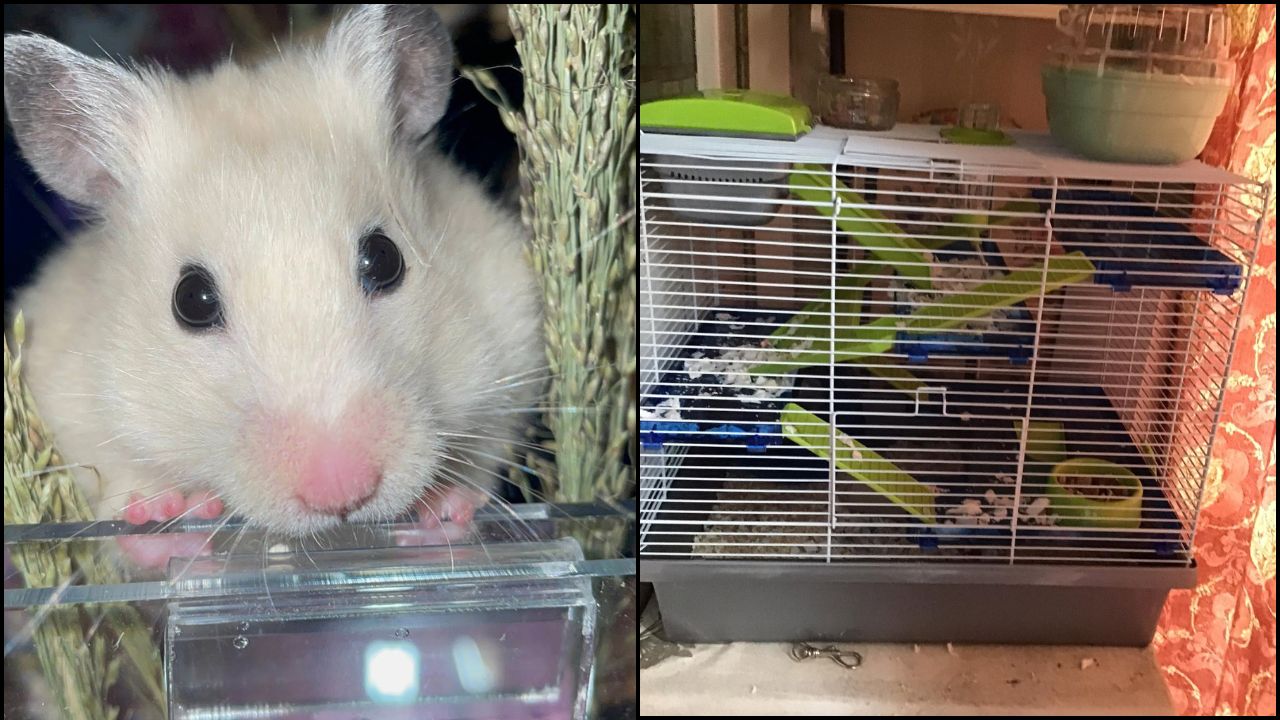

Check the source of any cage-size claim: floor area, enclosure height and the hamster species all matter. This guide summarises current published charity advice and practical checks for your own setup.
Which Guidance Should You Use?
A cage labelled “for hamsters” still needs to be assessed for usable space, ventilation, security and enrichment. Do not assume an extra level replaces floor space or that a dwarf hamster needs only a small enclosure.
- PDSA’s hamster guide cites a minimum floor area of 100cm by 50cm, while acknowledging limited evidence for an exact size.
- Woodgreen’s care guide gives species-specific enclosure dimensions and recommends individual housing.
- RSPCA’s housing guide covers a secure enclosure, suitable bedding, shelter and cleaning. Its general housing page does not give a numerical cage minimum.
Enclosure Dimensions and Everyday Housing
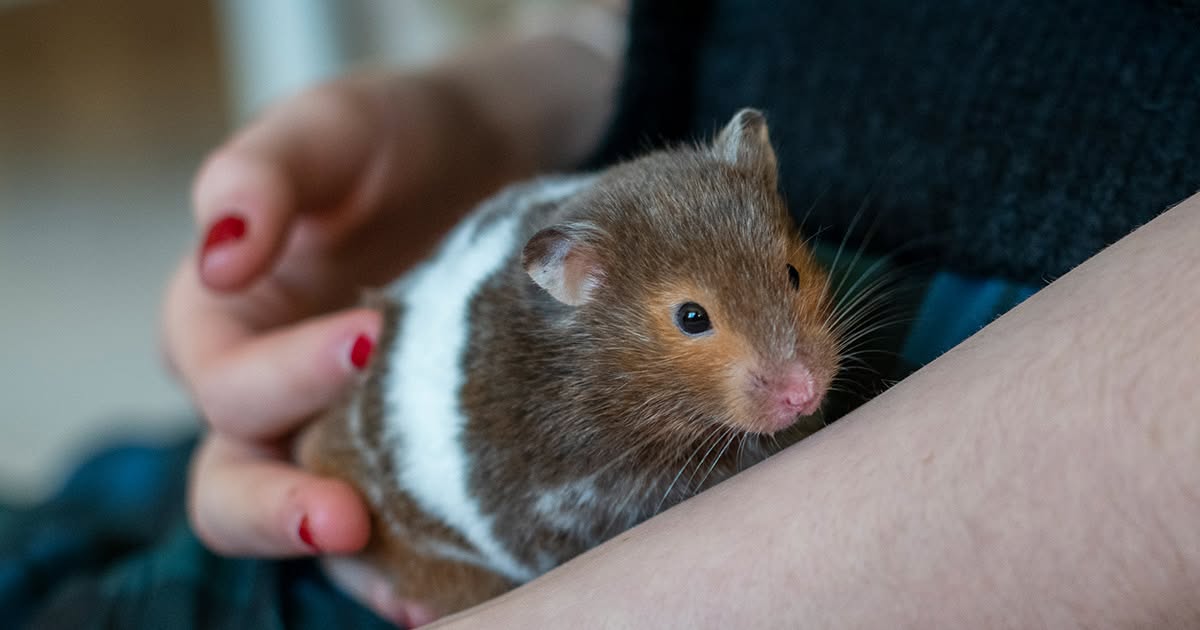
Woodgreen’s care guide lists the following enclosure dimensions (length by width by height):
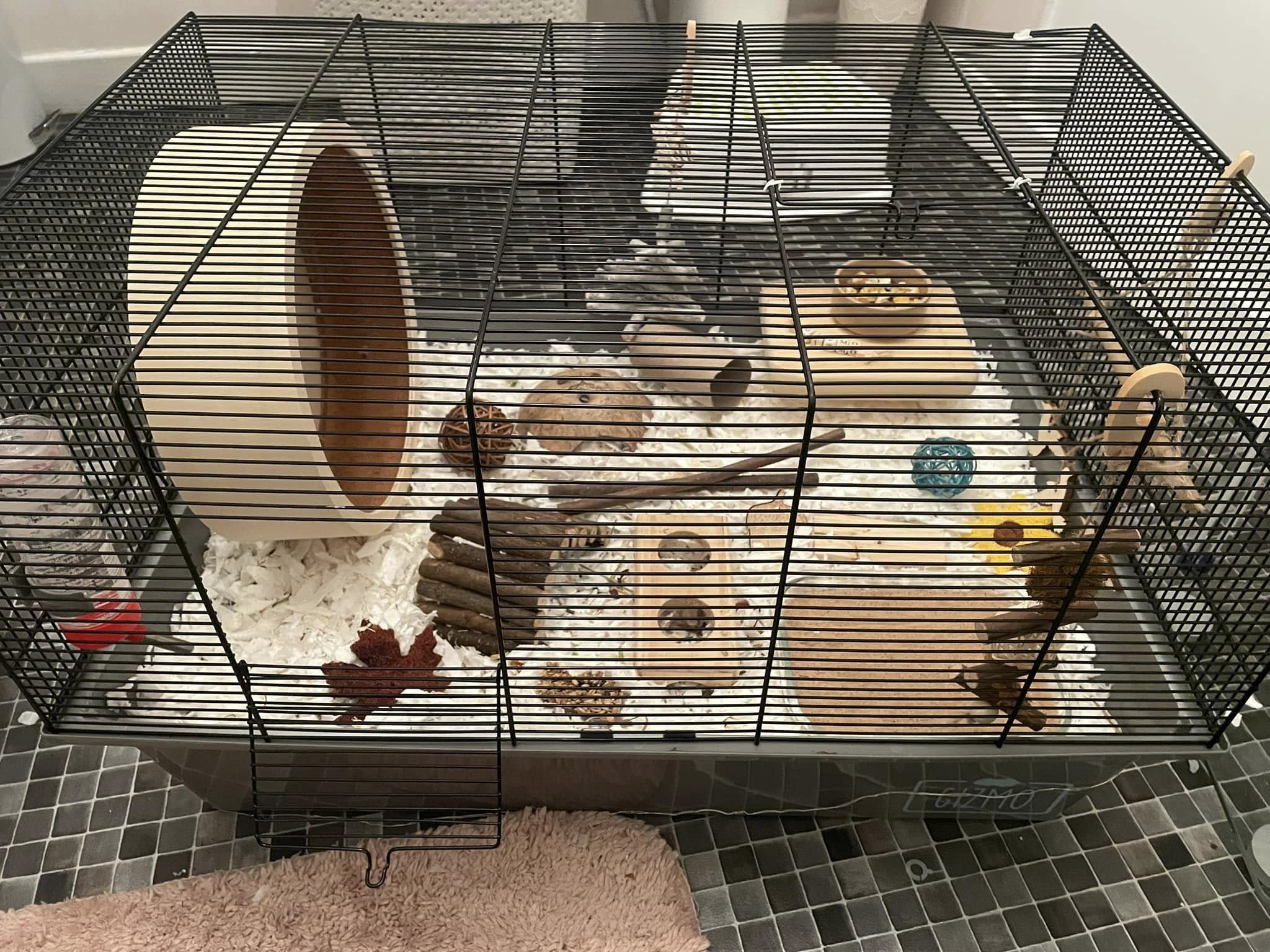
- Syrian and Chinese hamsters — 100cm by 50cm by 50cm.
- Dwarf and Roborovski hamsters — 100cm by 50cm, with a height of at least 40cm.
- Individual housing — follow PDSA and Woodgreen’s recommendation to house each pet hamster separately, rather than treating a larger cage as permission to keep a pair.
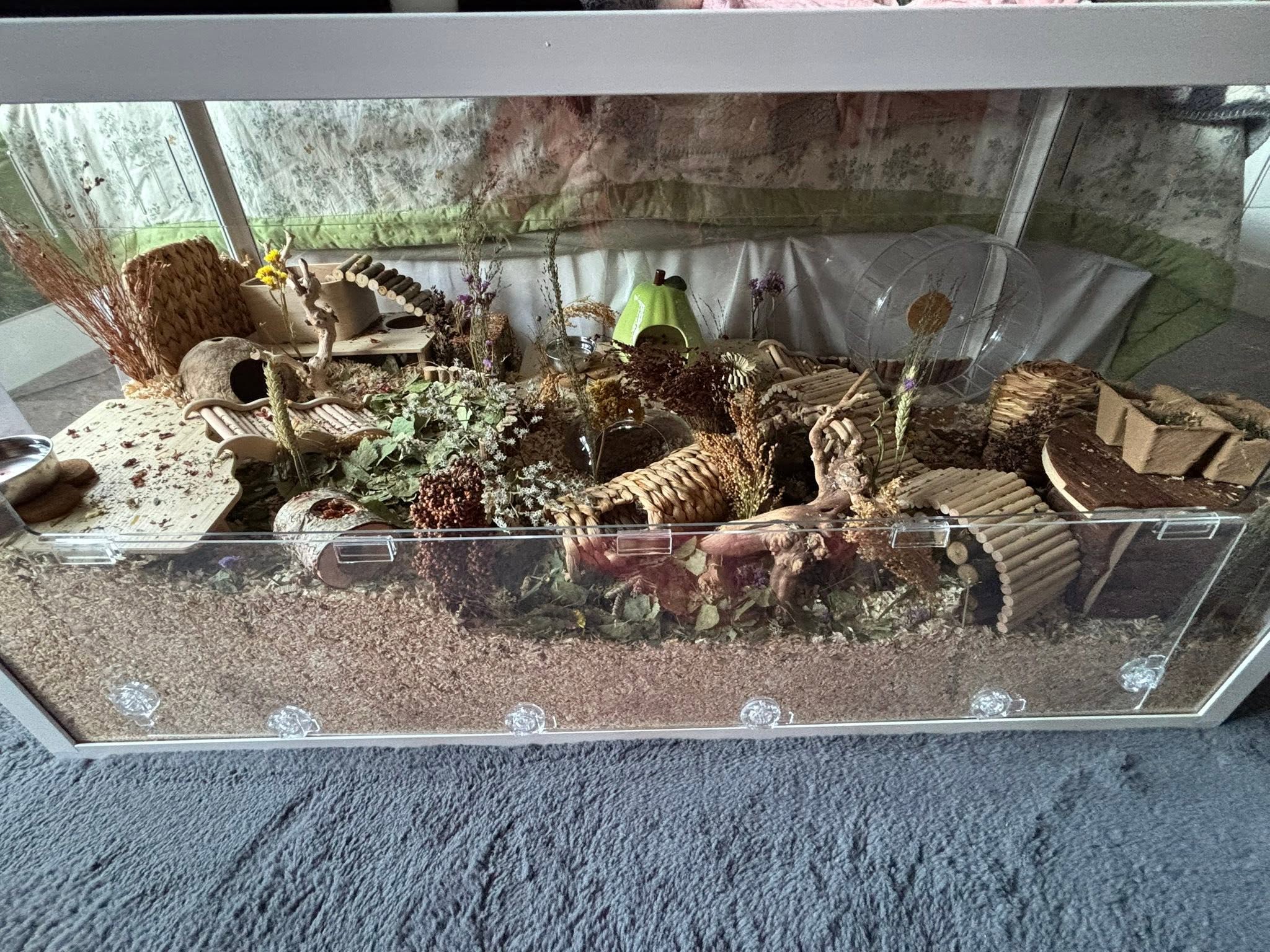
- Bedding — PDSA recommends at least 25cm of suitable bedding for burrowing.
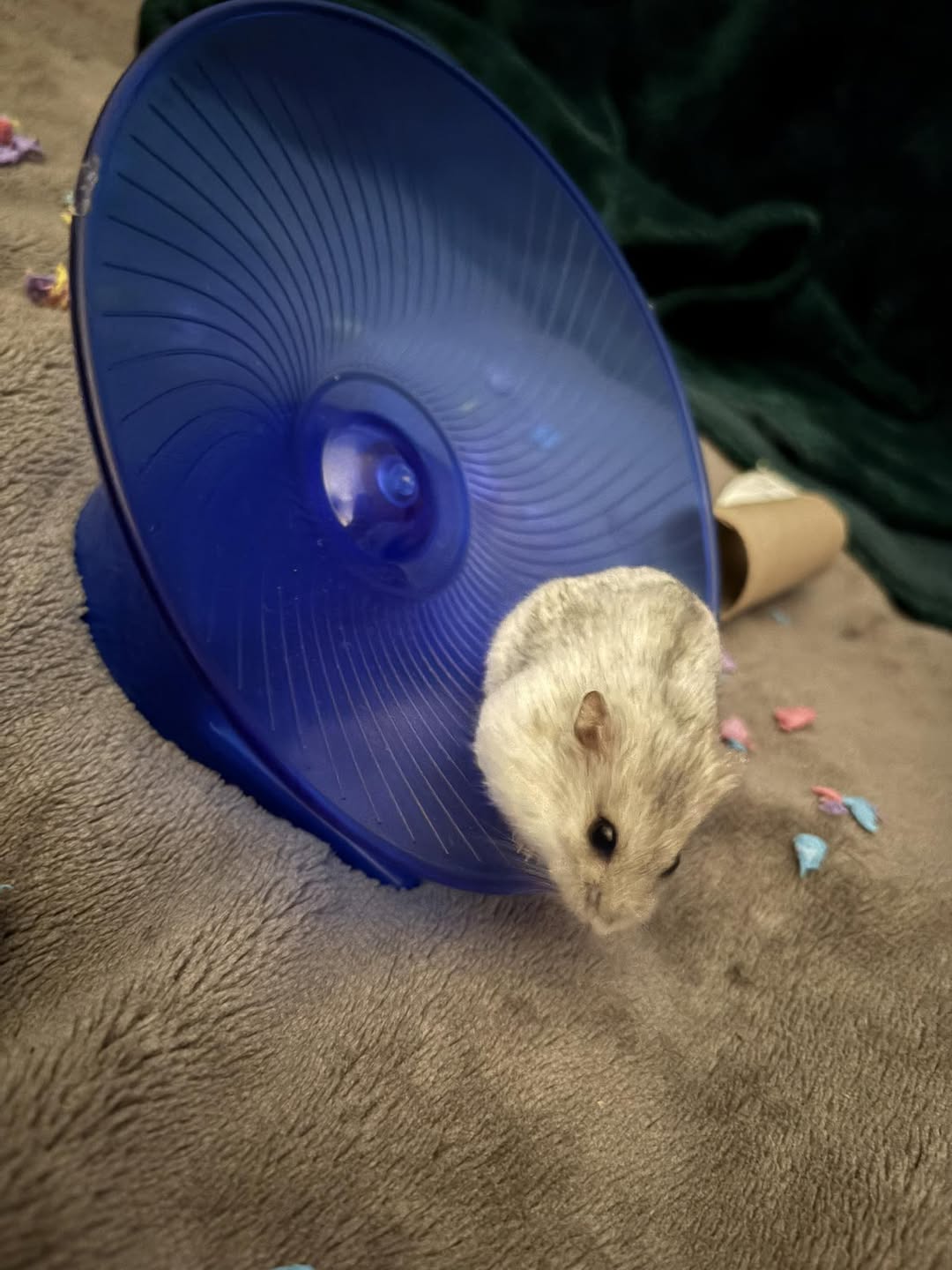
- Exercise wheel — use a solid running surface and a wheel large enough for the hamster to run without bending its back. PDSA gives at least 30cm diameter for Syrians and 20cm for dwarf hamsters; check species-specific advice and the individual animal’s posture.
- Enrichment — provide hiding places and opportunities to dig, forage and explore.
These are recommendations from the named sources, not one uniform numerical rule shared by every organisation. Provide more space where possible, and check that the enclosure safely accommodates the bedding, wheel and enrichment together.
For a practical measurement check, see the cage size rule most hamster owners break without knowing.
Why Space and Enrichment Matter
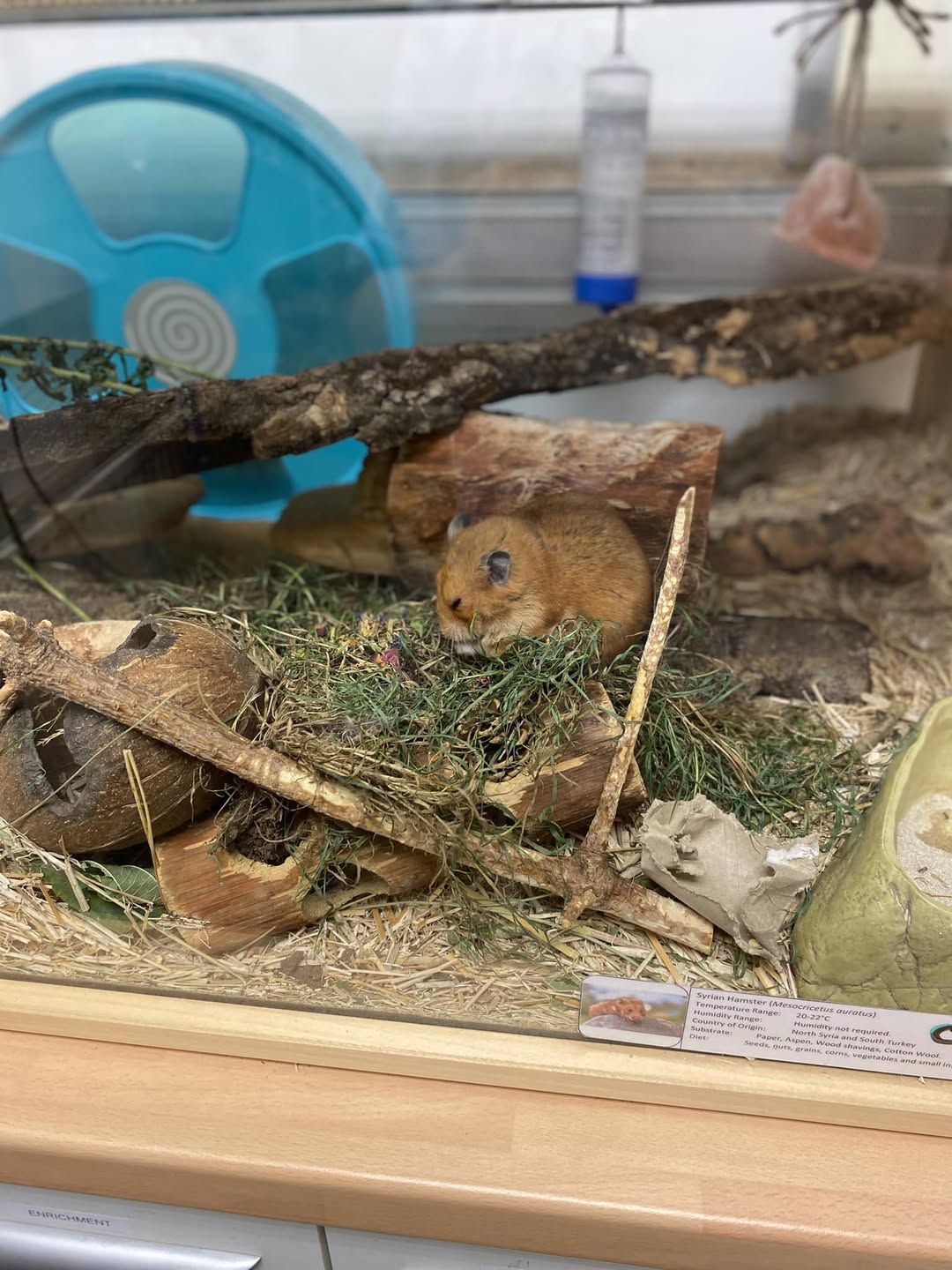
Hamsters need room to explore and bedding that supports burrowing. Floor area is only one part of a suitable home: security, ventilation, hiding places and access to enrichment matter too. A wheel cannot make up for an otherwise unsuitable enclosure.
Behaviour such as persistent bar-chewing is a reason to check the setup and seek advice. It does not, by itself, establish the cause or rule out illness.
Why Charity Recommendations Can Differ
The RSPCA’s general housing page describes suitable accommodation without specifying a numerical floor area. Use the measurements explicitly given by PDSA or Woodgreen when planning your enclosure, rather than treating an omitted number as approval of a small cage.
Advice on dwarf-hamster companionship also differs: the RSPCA describes conditional pair or group housing, whereas PDSA and Woodgreen recommend individual housing for pet hamsters. This guide follows the individual-housing recommendation to reduce the risk of fighting and injury. Syrian and Chinese hamsters should live alone.
Checking a Cage Before You Buy
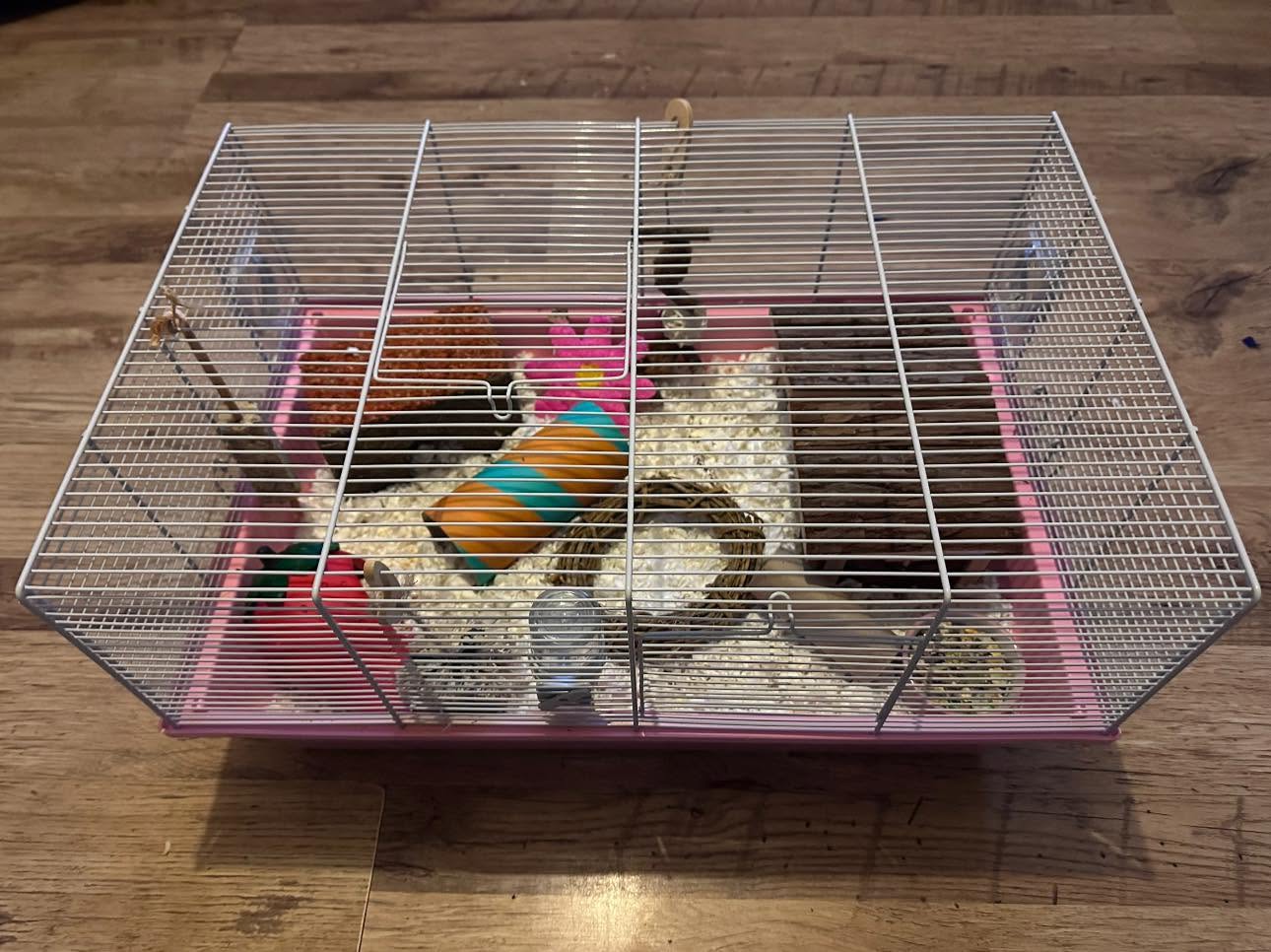
Measure the usable internal floor area and height. Check that the lid is secure, ventilation is adequate and openings do not allow the hamster to escape. Allow room for a deep bedding area, suitable wheel and hiding places. A product label or retailer category cannot confirm these details.
For wider shop-selection questions, see why pet shop animals cost more than free ones and what happens to pet shop animals that don’t sell.
A Practical Housing Check
- Measure the enclosure — compare floor area and height with the species-specific guidance above.
- Check the wheel — the hamster should run with a straight back on a solid surface.
- Check bedding depth — PDSA recommends at least 25cm of suitable bedding.
- Check security and ventilation — assess these again after any enclosure alteration.
- Plan improvements — choose equipment that works together; do not rely on a particular product name or an unverified cost estimate.
- Keep hamsters separately — provide each animal with a complete suitable setup.
- Seek veterinary advice for health changes — housing changes must not delay care for an injured or unwell hamster.
Related care discussions: the 60p mistake that shortens most pet hamsters’ lives and how long hamsters really live.
Choosing an Exercise Wheel
PDSA advises a wheel large enough to avoid a curved running posture, with a solid surface rather than slats or bars. Its size guide gives at least 30cm diameter for Syrian hamsters and 20cm for dwarf hamsters. The hamster’s size and running posture still need checking; a nominal diameter alone is not enough.
Choose a wheel that fits securely in the enclosure alongside deep bedding and other enrichment. If your hamster appears painful or has difficulty moving, contact a vet rather than assuming a new wheel will resolve the problem.
Keeping Your Information Current
Recheck the linked charity guides when choosing equipment or reviewing your setup. Guidance can change, and organisations may explain their recommendations differently. Compare the source, species and measurements before repeating a claim about a “new standard”.
Common Housing Misunderstandings
- A “starter cage” label does not establish suitability.
- Extra levels do not replace adequate usable floor area.
- Dwarf hamsters still need a spacious enclosure.
- A large cage does not make pair housing risk-free.
- A correctly sized wheel does not replace bedding, hiding places and enrichment.
- Numerical advice should be attributed to its source; do not present every charity recommendation as the same rule.
Frequently Asked Questions
What cage size should I plan for?
Use the linked species-specific guidance: Woodgreen gives 100cm by 50cm by 50cm for Syrian and Chinese hamsters, and a 100cm by 50cm footprint with at least 40cm height for dwarf and Roborovski hamsters. Provide more space where possible.
Can dwarf hamsters share a cage?
This guide follows PDSA and Woodgreen’s recommendation to house pet hamsters separately. The RSPCA describes some conditional dwarf group housing, but even compatible animals can fight. Syrian and Chinese hamsters should live alone.
What if my current setup falls short?
Measure it, compare it with the sources above and plan a secure, well-ventilated replacement that accommodates deep bedding and suitable enrichment. Seek help from an experienced rescue or veterinary practice if you need individual advice.
Does the RSPCA’s general housing page set a numerical minimum?
The linked general housing page describes suitable accommodation without giving a numerical floor area. That does not establish that a smaller cage is suitable.
Where can I discuss hamster supplies in Swindon?
Contact Paradise Pets at Manor Garden Centre, Cheney Manor, Swindon SN2 2QJ, on 01793 512400. Bring the internal dimensions of your current enclosure so that space, bedding and equipment can be discussed together.
Review Your Hamster’s Home
Measure floor space and height, check bedding and wheel fit, and provide room for hiding, exploring and foraging. Follow the named sources above and keep the whole setup in view. If a hamster is injured, unusually inactive or otherwise unwell, seek veterinary advice promptly.
Discuss Your Hamster’s Housing at Paradise Pets
Bring your enclosure measurements and equipment details when asking about hamster housing. Contact the shop to check current stock and discuss suitable cages, wheels and bedding.