

Neil has kept, bred, and sold cage and aviary birds at Paradise Pets Swindon since 1988 — over 35 years of watching the relationship between captive bird keeping and wild bird conservation, and understanding why the two are not as separate as they might appear. The emergency fight to save the Javan green magpie is one of the most significant conservation efforts happening in the bird world right now. This is his honest account of what it is, why it matters, and what the story tells every person who keeps a bird at home in the UK.
I have been thinking about a story this week that started in Indonesia and ended, for me, right here at this counter.
It started with survey teams — scientists, conservationists, experts — searching across twelve mountains in Java, looking for a bird called the Javan green magpie. Twelve mountains. Hundreds of hours of fieldwork. The Ekek Geling, as it is known locally, was once found in upland forests across West Java. It had a song that made it famous throughout the Indonesian songbird trade — a complex, distinctive, deeply musical call that made it one of the most prized birds in the competition culture that drives that trade.
The survey teams found nothing. Not one bird. Across twelve mountains where this species had previously been present, the teams came back empty.
Chester Zoo is playing a central role in an international emergency plan to save one of the world’s rarest birds, with fewer than 250 Javan green magpies believed to survive on the planet. Survey teams searching across 12 mountains in Java failed to find a single Javan green magpie in the field.
When I read that — twelve mountains, not one bird — I thought about what the absence of a species actually looks like. Not in statistics. Not in population graphs. In the specific fact of experienced people climbing mountain after mountain and coming back with nothing to report.
And I thought about what drove that absence. Because the Javan green magpie did not disappear through habitat loss alone. It did not disappear through a single catastrophe. It disappeared the way the greenfinch is disappearing from British gardens — through a human behaviour that was widespread, normalised, and profitable, long after the consequences had become irreversible.
What the Javan Green Magpie Is — The Bird Behind the Emergency
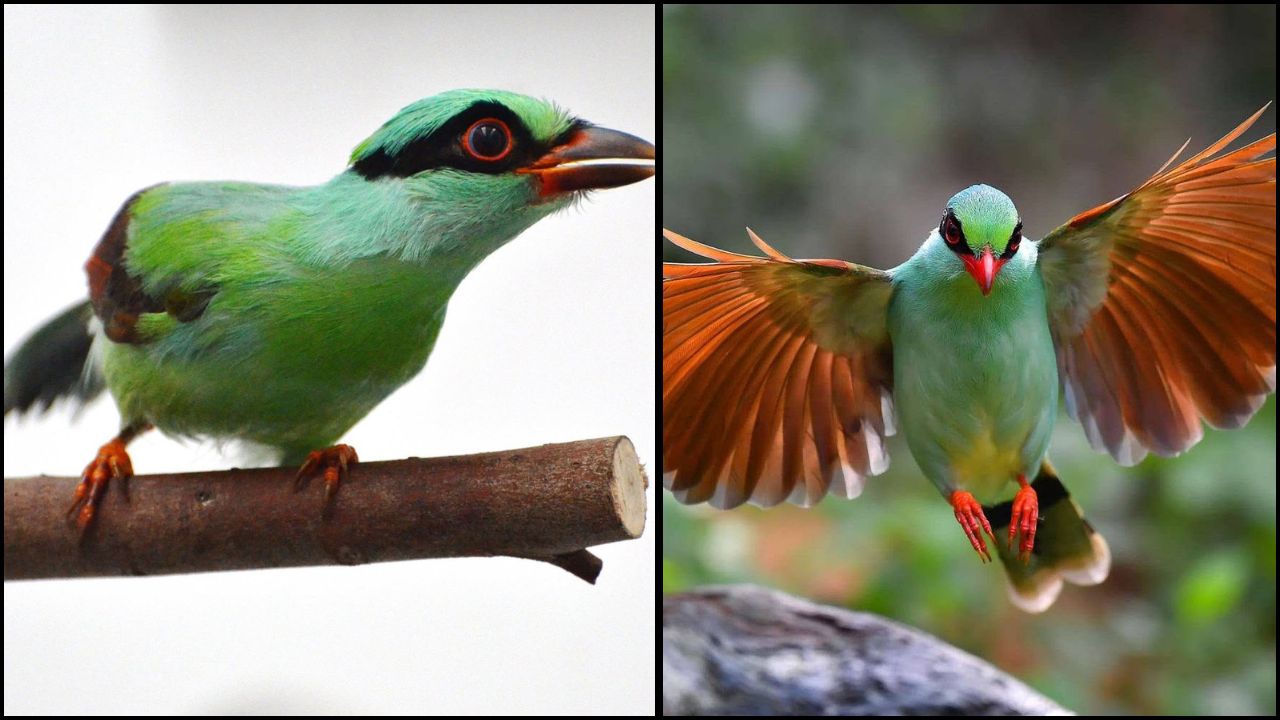
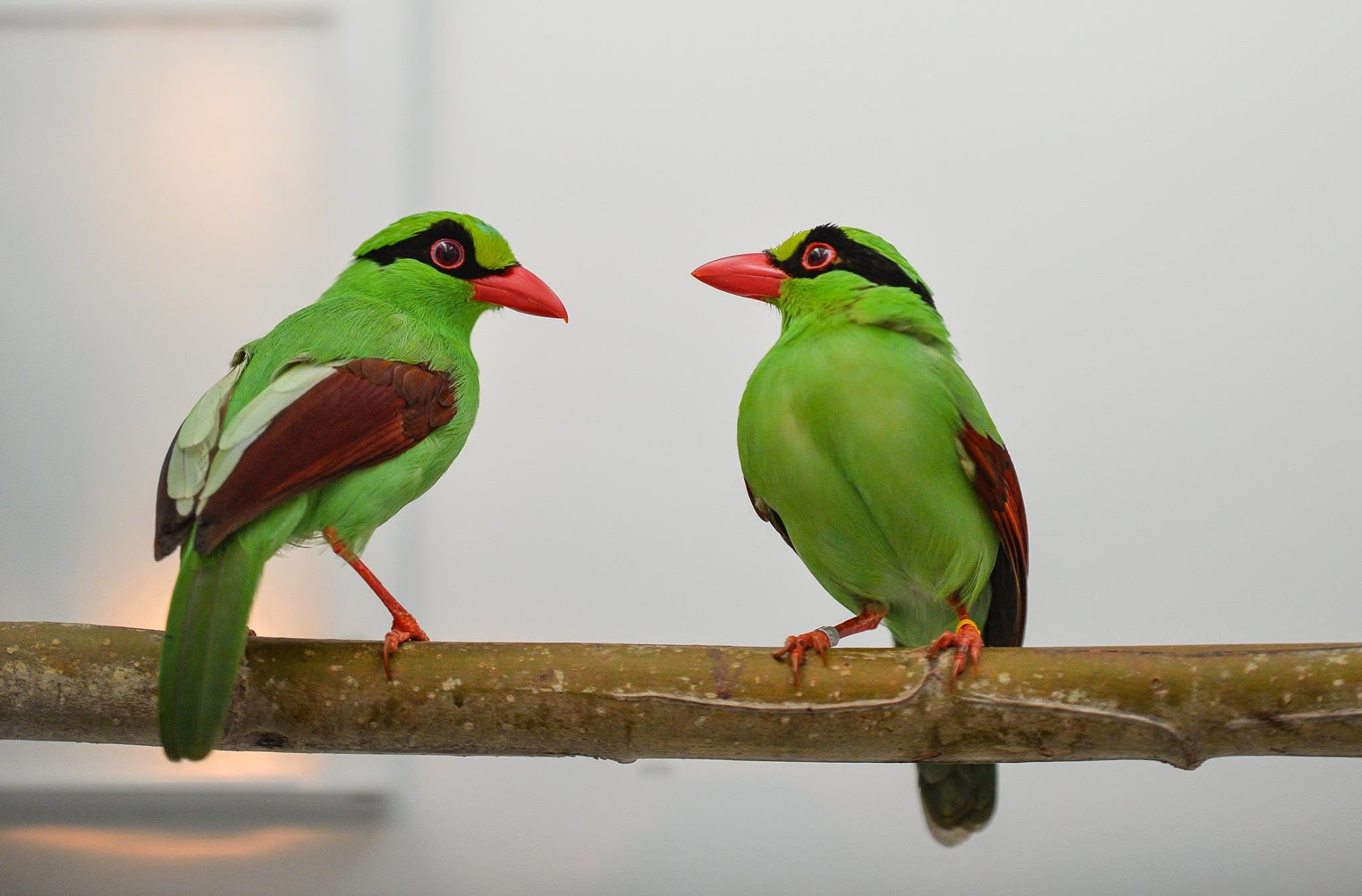
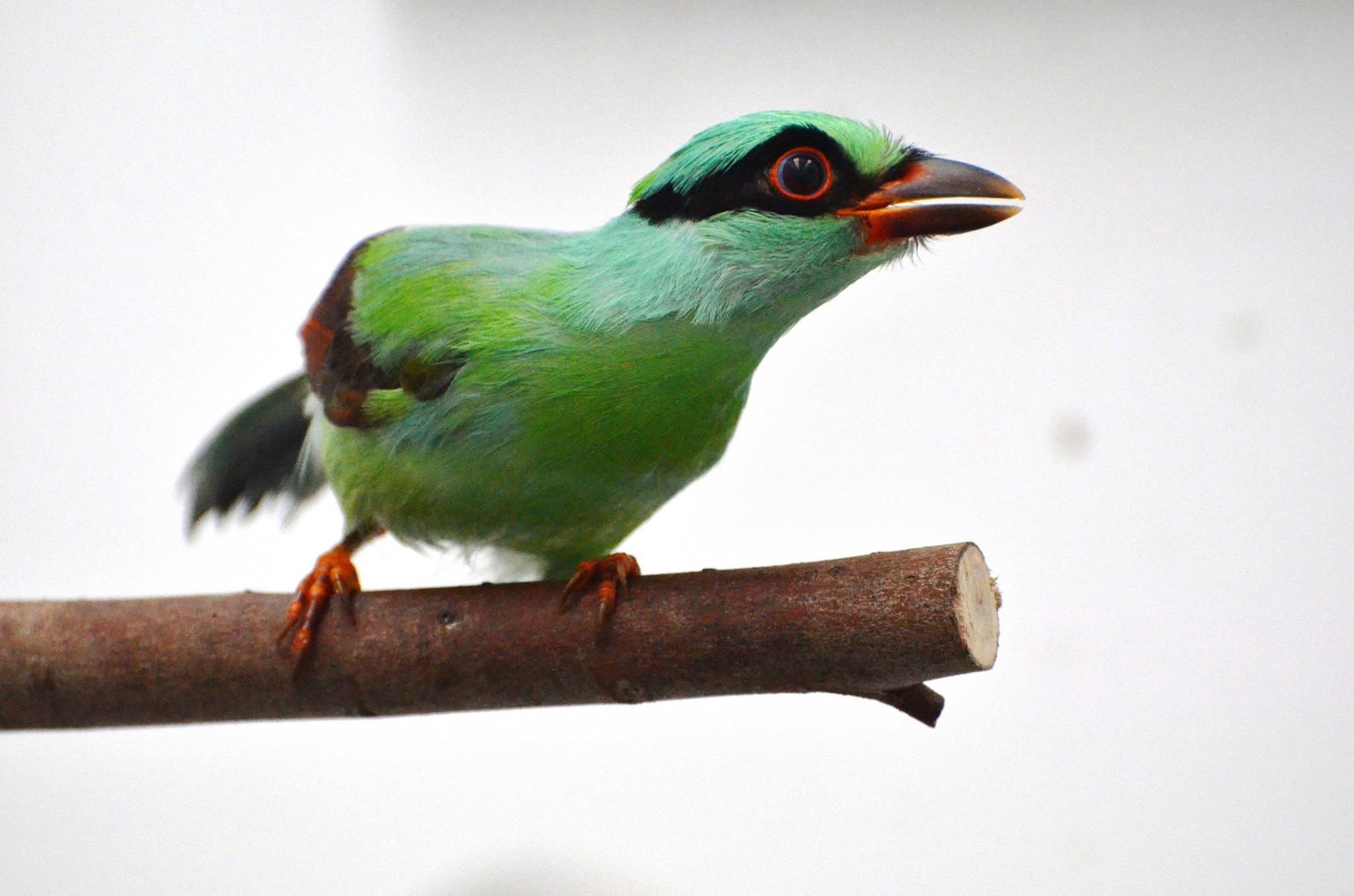
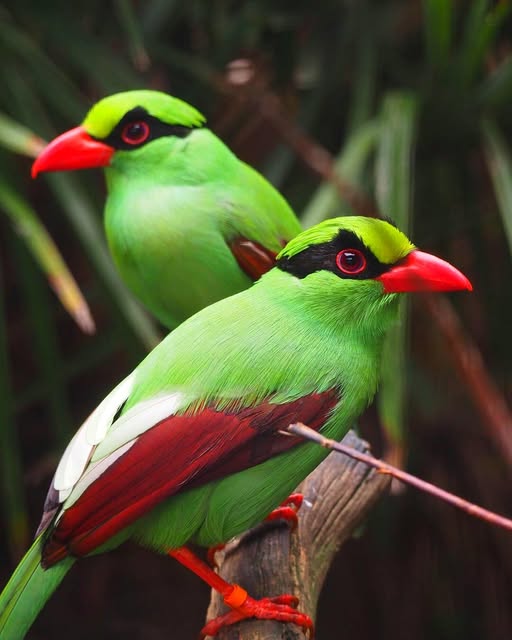
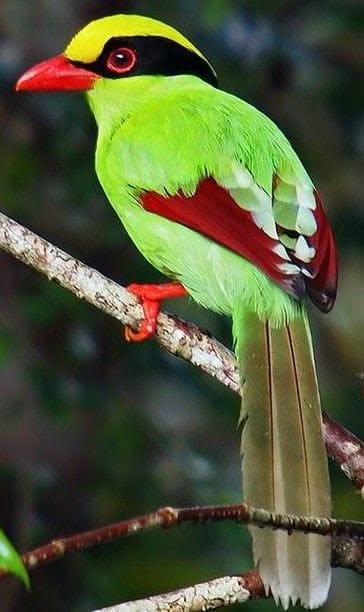
The Javan green magpie — Cissa thalassina — is a medium-sized bird endemic to the island of Java in Indonesia. Its plumage is a vivid emerald green that fades in captivity, changing colour as the bird ages away from its natural diet, which provides the carotenoid pigments that maintain its colour. It has a coral-red bill, red eye rings, and black markings on the face and wings. It is, by any standard, a visually extraordinary bird.
Once widespread in West Java’s upland forests, the species has been driven to the brink by habitat loss and trapping for the songbird trade, with surveys between 2018 and 2021 failing to find any birds at many former strongholds.
A 2023 study attributed declines in the species due to excessive trade as ‘master birds’ in the songbird trade.
The Indonesian songbird trade is a cultural phenomenon of enormous scale. Songbird keeping is deeply embedded in Indonesian society — birds are kept in elaborate cages, their songs are judged in formal competitions, and the status associated with owning a particularly gifted singer is real and significant. The Javan green magpie, with its distinctive and complex call, became one of the most sought-after birds in this trade. The demand was not malicious in origin — it came from a genuine appreciation of the bird. But the consequence of that demand, at the scale at which it operated, was the stripping of wild populations faster than they could recover.
As few as 50 individuals may remain in the wild.
Fifty birds. In the wild, across the entire island of Java.
The Emergency Action Plan — What Chester Zoo and the World’s Conservationists Are Doing
The response to the near-extinction of the Javan green magpie is one of the most coordinated conservation efforts currently underway for any bird species.
The Conservation Action Plan for the Javan Green Magpie (2026–2035) was developed at a workshop held in late 2025 at IPB Bogor Convention Centre, Indonesia. It was jointly organised by the IUCN SSC Asian Songbird Trade Specialist Group, the IUCN SSC Indonesia Species Specialist Group, and facilitated by the IUCN SSC Conservation Planning Specialist Group, with support from the EAZA Silent Forest Campaign. The action plan sets out more than 80 actions to be implemented over the next ten years.
Chester Zoo cares for 12 of the approximately 130 birds held within the entire global conservation breeding population, a programme it helped establish at the Cikananga Wildlife Centre in West Java more than a decade ago. Bird specialists from Chester Zoo were among 48 international experts who travelled to Indonesia to help shape the new ten-year action plan.
The action plan includes proposals to work with local communities, disrupt illegal wildlife trade networks and prepare protected habitats for the eventual release of birds bred in conservation programmes. Chester Zoo’s head of birds Andrew Owen said: “The Javan green magpie is running out of time — and running out of places to hide. When survey teams searched across mountain after mountain in Java and found nothing, it brought home just how desperate the situation has become. Chester Zoo has been fighting for this species for over a decade. We helped build the breeding programme that now holds almost every individual known to exist. But while conservation breeding buys time, it isn’t a solution on its own. This new action plan is about giving the species a future in the wild. That’s what drives us.”
The plan covers habitat protection, community engagement, enforcement against illegal trade, captive breeding programme expansion, and the eventual reintroduction of captive-bred birds into protected wild habitats. Researchers note a cascading effect on other species could ensue, benefiting the critically endangered rufous-fronted laughingthrush and threatened montane ecosystems.
The Trade Connection — Why This Is Not Just an Indonesian Story
I want to spend time on this because it is the part of the Javan green magpie story that connects most directly to the world of pet bird ownership, and because I think the connection is understood by fewer people than it should be.
Wild birds continue to turn up in the bird trade — on rare occasion in physical markets, but by far more commonly on the web trade.
The illegal songbird trade that drove the Javan green magpie to fewer than fifty wild individuals is not a closed system operating only in Indonesia. It is a global network, and it includes online platforms that ship birds internationally. The birds that appear in this trade — mislabelled, without proper documentation, sometimes dead on arrival, sometimes representing the last members of a critically endangered population — are not being kept by people who consider themselves wildlife criminals. They are being kept by people who wanted a bird.
This is the uncomfortable truth at the centre of the Javan green magpie story, and I will not soften it: the desire to own a beautiful bird with a remarkable song is what brought this species to the point where twelve mountains in Java yielded not one individual. The desire was real. The appreciation was genuine. The consequences were catastrophic.
I am not making an argument against all pet bird keeping. I have been selling cage birds for 35 years. I believe in the relationship between people and birds, in the welfare value of that relationship, in the genuine joy and companionship that a well-kept bird brings to a household.
What I am making an argument for is awareness. Specifically, the awareness that how a bird came to be in a cage matters — and that the difference between a bird that was bred in captivity by a responsible source and a bird that was taken from the wild at the cost of its population is not a small or academic distinction. It is the distinction between bird keeping that supports species survival and bird keeping that undermines it.
The Captive Breeding Lifeline — What Zoos Are Actually Doing
Chester Zoo helped establish the Cikananga Wildlife Centre breeding programme in West Java more than a decade ago and now cares for 12 of the approximately 130 birds held within the entire global conservation breeding population.
That number — 130 birds in the entire global captive breeding population — is the lifeline. When wild populations collapse to a point where natural recovery is no longer possible without human intervention, the captive population becomes the reservoir from which reintroduction can eventually happen. The Cikananga Wildlife Centre in West Java, partnered with Chester Zoo, holds this species in managed captivity specifically so that a reintroduction programme can one day happen if and when the wild habitat can be made safe enough to receive birds.
This is the positive side of captive bird keeping done right: not birds taken from the wild to sit in cages, but birds bred in managed conditions specifically to preserve the genetic diversity and behavioural repertoire needed for eventual return to the wild. It is slow, expensive, and demanding work. Chester Zoo has been doing it for the Javan green magpie for over a decade, with no guarantee that the wild habitat will ever be sufficiently protected to make reintroduction viable.
What drives that commitment? Exactly what Andrew Owen described — the belief that this bird deserves a future in the wild. That the absence of it from those twelve mountains is not an acceptable endpoint.
What This Story Tells a UK Budgie Owner, Canary Keeper, or Cockatiel Owner
This is the question the article title promises to answer, and I want to answer it honestly rather than with the kind of easy connection that makes people feel good without making them think.
The UK pet bird owner reading about the Javan green magpie is almost certainly not keeping a wild-caught Indonesian songbird. They are keeping a budgie bred in Swindon, or a canary from a reputable UK breeder, or a cockatiel from captive stock. The specific threat facing the Javan green magpie is not the threat they are contributing to.
But the story tells something that is relevant regardless.
What It Tells You About the Value of Legal, Reputable Sources
The trade that destroyed the Javan green magpie wild population began with a demand for birds and was sustained by supply chains that were unregulated, undocumented, and prioritised availability over sustainability. The individuals who bought those birds were mostly not asking where they came from or whether the population could sustain the harvest.
When you buy a bird from a reputable source — a breeder who can tell you the bird’s history, a licensed pet shop selling captive-bred stock — you are participating in a supply chain that does not create that demand on wild populations. When you buy from sources that cannot verify captive breeding, or from informal online sellers with no documentation, you may be doing something quite different. This matters.
What It Tells You About Why Good Captive Husbandry Matters
The captive breeding programme that now holds almost every Javan green magpie known to exist works because the people running it understand what the bird needs — its diet, its environment, its social structure, its health requirements. The birds that can eventually be reintroduced to the wild are the birds that were kept in conditions that maintained their behavioural and physical health.
This is a direct parallel to what good pet bird keeping looks like. Not a cage too small for flight. Not a seed-only diet that creates nutritional deficiencies. Not a lone bird without social contact. Not a species kept in conditions that produce chronic stress. The principles that make conservation breeding viable are the same principles that make pet bird keeping ethically sound.
What It Tells You About the Fragility of Wild Bird Populations
The Javan green magpie was not a rare bird twenty years ago. It was found across its range. The speed with which a species can go from common to critically endangered — from widespread to fifty wild individuals in fewer than two decades — is the most important thing the story tells.
Britain’s greenfinch is on the same trajectory, for different reasons. Many of the species whose wild counterparts people admire and value are under pressures that were not visible until the populations had already fallen to dangerous levels.
“This is a bird that most people have never heard of, and that’s part of the problem,” said Chester Zoo’s head of birds. The Javan green magpie’s near-extinction happened largely unnoticed by the world outside the specialist community. That invisibility — the way species can disappear without most people realising — is the broader warning the story carries.
The Silent Forest — The Wider Crisis Behind One Bird
The Javan green magpie does not exist in isolation. It is one of dozens of species caught in what conservationists have named the Silent Forest crisis — the collapse of Southeast Asian songbird populations through the combination of habitat loss and the songbird trade.
The species faces severe threats, primarily driven by unsustainable trapping and trade, which have significantly reduced its population in the wild. As with many songbirds in the region, the Javan Green Magpie has become emblematic of the broader songbird crisis in Southeast Asia.
The EAZA Silent Forest Campaign — the European zoo conservation initiative that partly funds the Chester Zoo work on the Javan green magpie — takes its name from the image of a forest from which all the birds have been removed. Not a forest that has been cut down. A forest that still stands, still looks intact from the outside, but from which every bird has been taken. Silent.
That image is the distillation of what the Javan green magpie’s story represents. The habitat can exist. The forest can look like it should be there. And the bird can still be gone.
What You Can Actually Do — From a Pet Shop Counter in Swindon
I want to be honest about the distance between reading this article and affecting the fate of a bird in Java. That distance is significant and I will not pretend it is not.
But there are things that matter, that are within reach of anyone who keeps birds or cares about them.
Know where your bird came from. Ask the question at the point of purchase. A captive-bred bird with a documented source is a categorically different purchase from an undocumented bird from an unclear source. The difference is worth asking about.
Support organisations doing the conservation work. Chester Zoo’s work on the Javan green magpie — and more broadly, the EAZA Silent Forest Campaign — is funded partly by visitor revenue and public support. The British Trust for Ornithology, the RSPB, and Wildlife Trusts doing domestic wild bird conservation work similarly depend on public engagement and support.
Keep your pet birds well. The story of the Javan green magpie is, in part, a story about what happens when the conditions that birds need are not provided — in this case, freedom and wild habitat, but the parallel to domestic keeping is real. A bird kept in conditions that meet its welfare needs is a bird whose keeping contributes something positive to the human-bird relationship. A bird kept badly is not.
And pay attention to the birds in your garden. The greenfinch that was there and is now absent. The swift that returned in May and will leave in August. The things that are present and the things that are no longer present. These things are not background information. They are the story of what is happening, told in the specific evidence of your own daily life.
Frequently Asked Questions
What is the Javan green magpie?
The Javan green magpie (Cissa thalassina) is a critically endangered Indonesian songbird endemic to the upland forests of Java. Once widespread in West Java, the species has been driven to the brink of extinction by habitat loss and trapping for the songbird trade, with surveys between 2018 and 2021 failing to find any birds at many former strongholds. As few as 50 individuals may remain in the wild.
Why is the Javan green magpie endangered?
A 2023 study attributed declines in the species to excessive trade as ‘master birds’ in the songbird trade. The bird’s distinctive and complex song made it highly prized in Indonesian songbird competition culture, driving unsustainable levels of trapping from wild populations over decades. Habitat loss in Java has compounded the trade pressure.
What is Chester Zoo doing to help?
Chester Zoo helped establish the Cikananga Wildlife Centre breeding programme in West Java and now cares for 12 of the approximately 130 birds held within the entire global conservation breeding population. Chester Zoo specialists were among 48 international experts who helped shape the new ten-year Conservation Action Plan (2026–2035), which sets out more than 80 actions covering illegal trade networks, habitat protection, community engagement, and eventual reintroduction of captive-bred birds to protected wild habitats.
What does this story have to do with my pet budgie or canary in the UK?
The direct connection is limited — the Javan green magpie’s situation is not the situation facing UK captive-bred budgies or canaries. The indirect connections are more important: understanding the difference between captive-bred and wild-caught birds, maintaining high welfare standards in pet bird keeping, and understanding that wild bird populations can disappear faster than most people realise. The Javan green magpie’s near-extinction happened within two decades and largely without public awareness. The greenfinch’s dramatic decline from British gardens is following a comparable trajectory.
How can I find out more about the Javan green magpie and the conservation effort?
Chester Zoo’s website has detailed information about their work on this species and the EAZA Silent Forest Campaign. The IUCN SSC Asian Songbird Trade Specialist Group also publishes updated information on the Conservation Action Plan. These are authoritative sources with current information on the conservation effort.
Where can I buy cage birds from reputable captive-bred sources in Swindon?
Come and see us at Paradise Pets — Manor Garden Centre, Cheney Manor, Swindon SN2 2QJ. All birds I sell are captive-bred UK stock. I am happy to tell you about the source of any bird before you buy. Call 01793 512400.
Interested in Birds — Wild or Pet? Come and Talk
Whether you are thinking about getting a cage bird, or whether the Javan green magpie story has made you think differently about the birds you already keep, or the birds in your garden — come in. I have been thinking about these questions for 35 years and the conversation is always welcome.