

Neil has been keeping, breeding, and selling cage birds at Paradise Pets Swindon since 1988 — over 35 years of watching birds interact with their environments, and thinking about what those interactions reveal about what birds genuinely need. New research published by the RSPB on 25th June 2026 confirms something remarkable about the common swift: that 94 percent of swifts tracked across a 15-year study returned to the same nesting site year after year — choosing their location over even their partner when the two came into conflict. This article is Neil’s honest account of what that finding means, and what it tells us about the role of routine and place in the welfare of any bird, wild or captive.
A customer came in earlier this week, having read about the swift study in the news. She was struck by the detail that swifts turned out to be more loyal to their nesting site than to their breeding partner — that given a choice between returning to the same place and returning to the same individual, the place won.
“It seems like a strange thing to value more than a relationship,” she said.
I told her I did not think it was strange at all, and that after 35 years of watching how cage birds respond to changes in their environment, the swift’s prioritisation of location made complete sense to me. Not as sentiment, but as biology.
What The RSPB Study Actually Found
The 15-year study found that swifts have greater loyalty to their nest site than to a previous partner, with nine out of ten (94%) birds using the same nesting site as a previous year.
Scientists studied 190 different Swifts from 243 nests over 15 years and found that 94% of Swifts reused the same nesting site as the previous year, but only 59% of nesting attempts were with the same partner.
In cases where both birds in a pair were identified over multiple seasons, just 5.5% were found to have separated and formed new pairings.
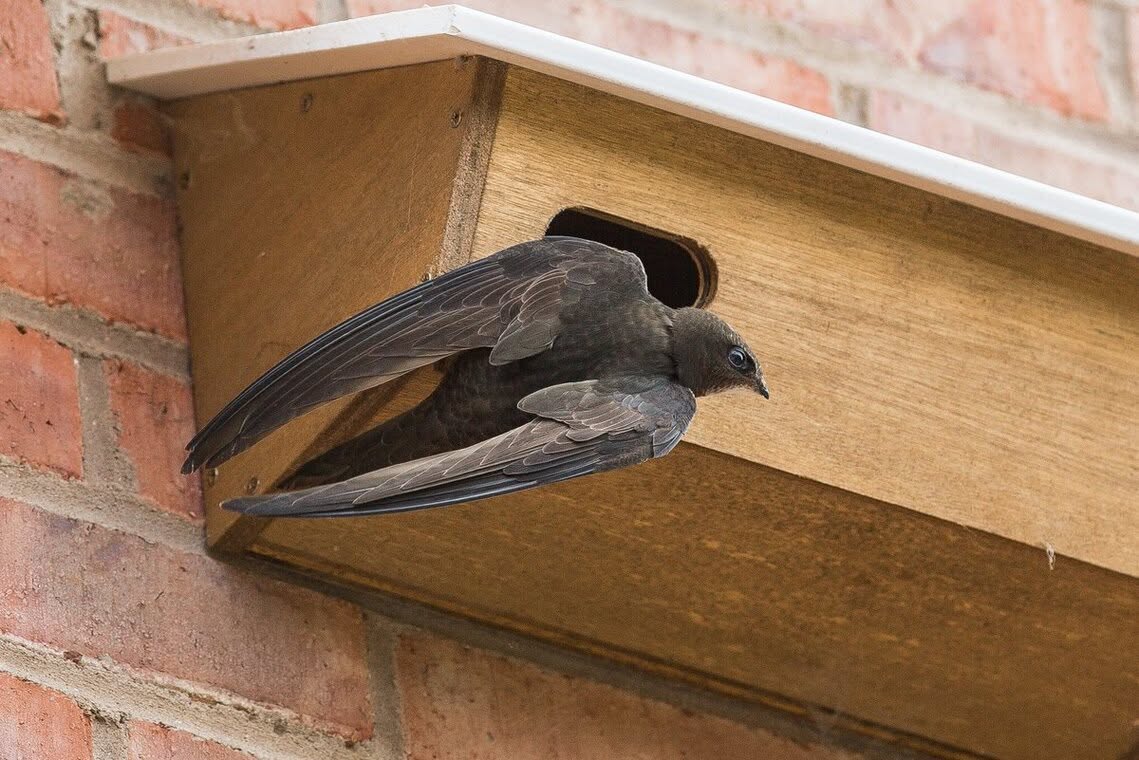
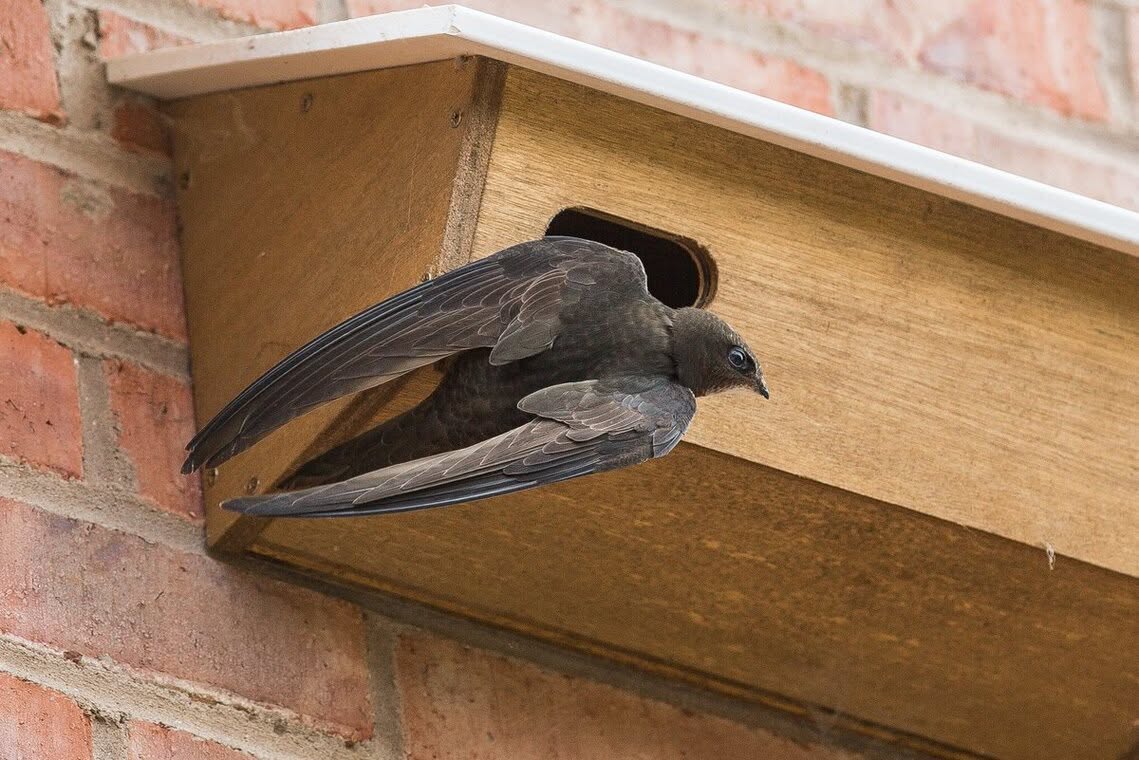
The study was conducted in and around Drewsteignton, Devon, tracking breeding swifts in nest boxes over the period 2010 to 2024. Breeding swifts were identified by uniquely numbered leg rings that enabled scientists to track which birds bred together and which nest box each swift used every year.
The finding that place loyalty exceeds partner loyalty is the detail that caught most public attention, and it deserves the attention it received. But the more practically significant finding, from the perspective of this article, is the 94 percent figure itself — the near-universal consistency with which individual swifts, year after year, across a decade and a half of observation, returned to a specific location rather than simply finding an available nesting site.
Swifts have greater loyalty to their nest site than to a previous partner. This is not casual familiarity with a general area. Breeding Swifts were fitted with uniquely numbered leg rings. These enabled scientists to track which birds bred together and which nest box each Swift nested in every year. The same individual birds, in the same individual nest boxes, year after year.
Why Swifts Choose Place Over Partner — The Biology Behind The Finding
The finding that swifts prioritise location over partner is not arbitrary. It reflects a biological logic that becomes clear once you understand what finding and retaining a suitable nesting site actually represents for this species.
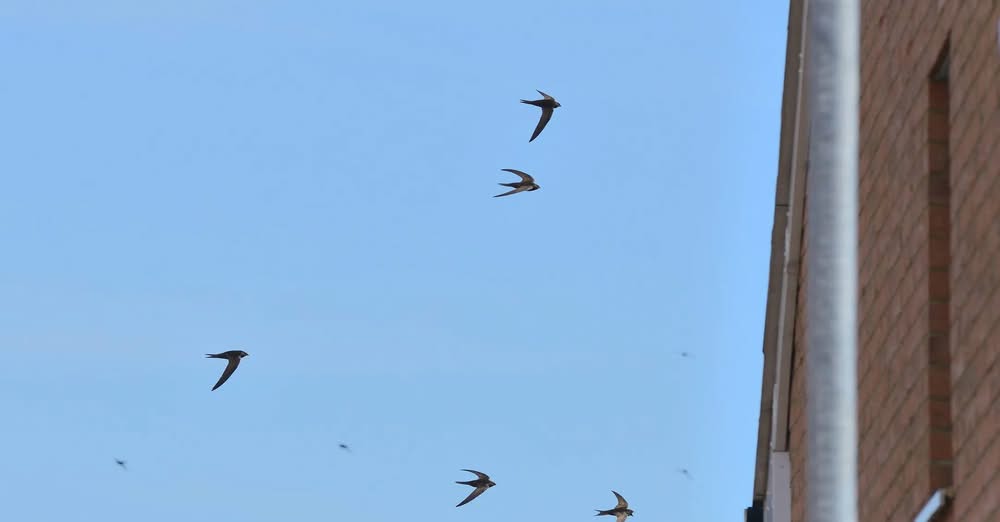
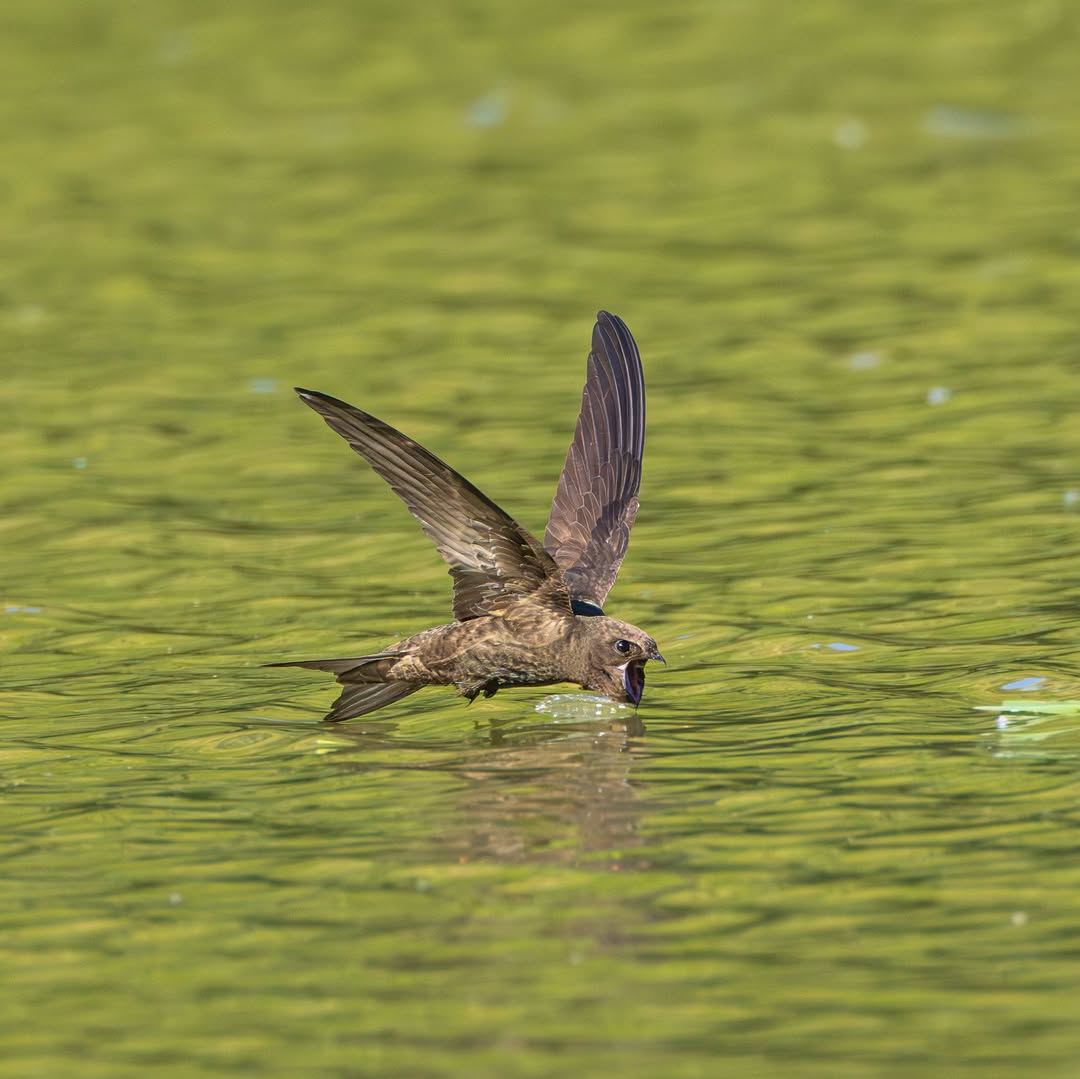
Swifts are not simply choosing a convenient hole in a wall. They are returning to a site that has already proved suitable — that has been tested by successful breeding, that has known dimensions and characteristics, that is located within an established territory the bird knows from the air. The investment in finding such a site, and proving it works, is enormous. Swifts are one of the UK’s most threatened species, declining by 70% over the last 30 years, so this research reinforces why protecting their nesting sites and providing suitable new ones is a vital part of helping the species’ recovery.
Increasingly, many Swifts return from their long migration to find their traditional nest site blocked up or gone entirely. This is not an inconvenience. For a bird whose place-attachment is 94 percent consistent across 15 years of tracking, losing a nest site is not simply finding a new location. It is the loss of the specific, proven, known place to which the bird’s biology has been oriented for its entire adult life.
The partner, by contrast, is replaceable in a way the proven nest site is not. The site has been tested. Another suitable partner can be found. Another suitable site, in a world where swift nesting sites are declining at the rate the study documents, may not be.
What This Tells Us About The Biology Of Place-Attachment In Birds
The swift study is dramatic because the numbers are dramatic — 94 percent over 15 years is not a mild preference, it is a near-universal biological priority. But the underlying principle — that birds have a specific, physiologically meaningful relationship with the places they inhabit — is not unique to swifts. It is visible across species, including the species most commonly kept as cage birds in UK homes.
- Budgies in the wild maintain established roosting sites and foraging routes — wild budgerigars in Australia are highly mobile, responding to rainfall and food availability, but within their range they maintain specific, known locations and return to them; the mobility is in response to resource availability, not a preference for novelty
- Cockatiels show strong fidelity to established roosting trees and colony nesting sites — wild cockatiels maintain consistent group roosting locations and return to the same sites across seasons; the social and locational stability of these sites is part of how the species manages the vulnerability of roosting in open woodland
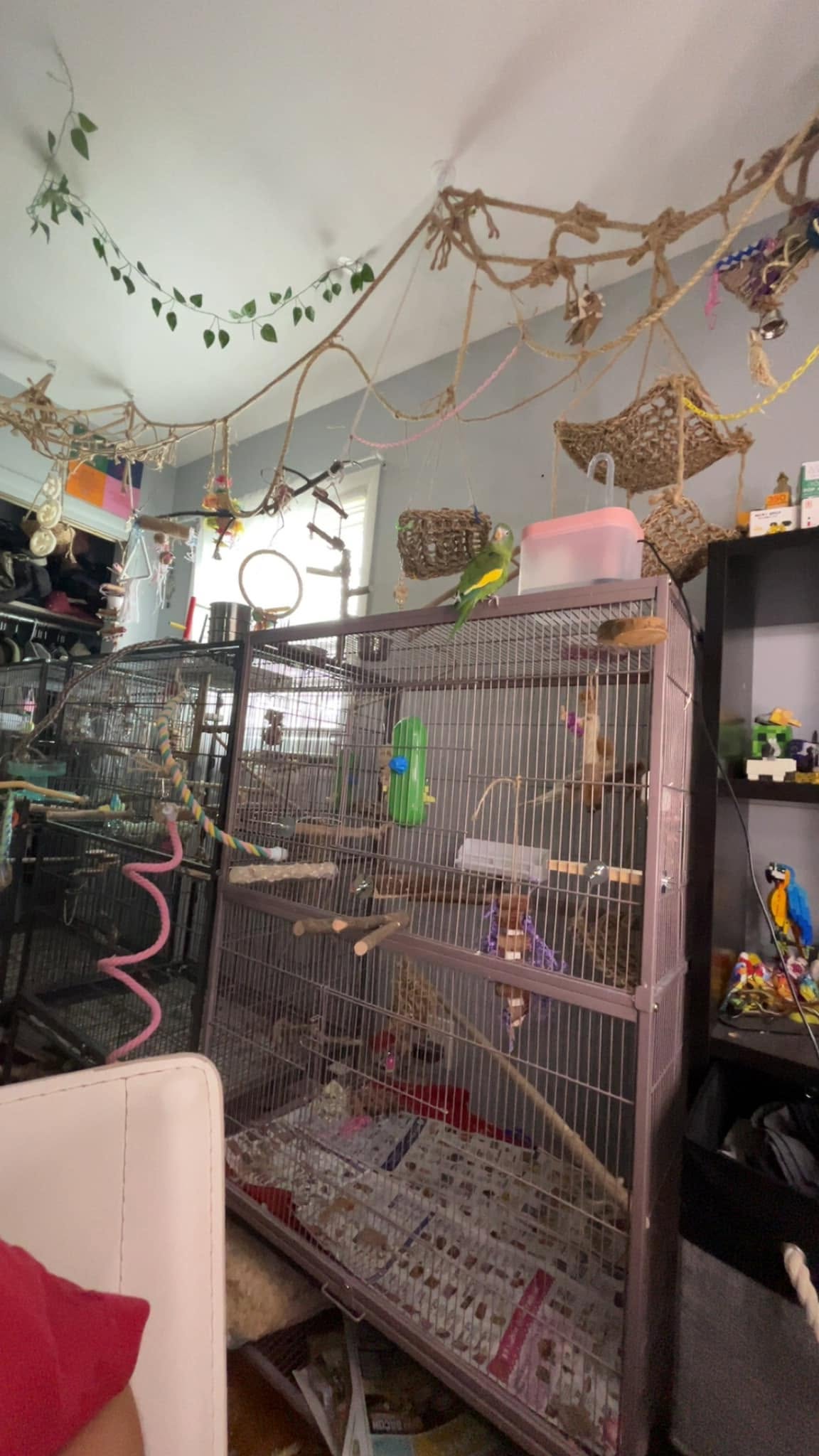
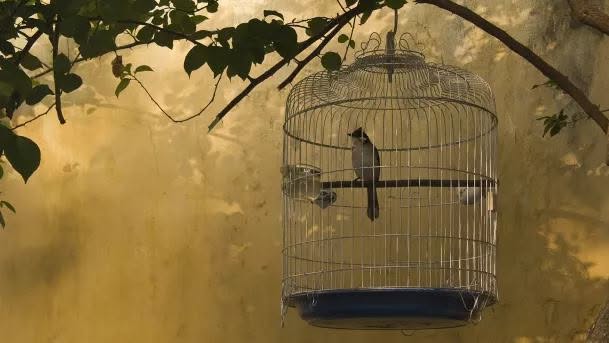
- The cage bird equivalent of this biology is its relationship with its specific cage and its established daily routine — the cage is, for a pet bird, the equivalent of the swift’s nesting site; the daily routine of uncovering, feeding, interaction, and covering is the equivalent of the predictable seasonal cycle the swift’s biology has evolved to depend on
- Disruption to this established place and routine is not a minor inconvenience for a cage bird — it is a genuine biological stress — the same way that arriving back from a 10,000 kilometre migration to find your specific nesting site blocked is not an inconvenience for a swift, moving a cage bird’s cage to a new position, changing its routine substantially, or introducing new elements to its established environment produces a measurable stress response in the animal
The Routine That Cage Birds Actually Need — What The Swift Study Illuminates
I want to be specific about what this means practically, because the abstract connection between swift nest site fidelity and cage bird routine can seem philosophical rather than actionable. It is not. The implications are direct.
- Cage position should be established and maintained, not frequently changed — a cage that moves regularly between rooms, or that is repositioned seasonally, is a cage whose occupant is repeatedly reorienting to a new environment; this is not neutral; a bird that has established its relationship with a specific position in a specific room — the light patterns, the sounds, the human movements it can observe from that position — is a more settled, less stressed animal than one whose environment changes regularly
- The daily routine of covering and uncovering matters more than most owners appreciate — the swift’s biology is organised around the annual return to the same site; the cage bird’s biology is organised, at a smaller scale, around the daily cycle of its routine; consistent uncovering at roughly the same time, consistent feeding, consistent covering — these are not simply convenient habits for the owner, they are the predictable cycle the bird’s hormonal and behavioural systems use to organise daily function
- Disruption to sleep routine is the most physiologically significant routine disruption — the 10 to 12 hours of dark, quiet covered sleep that cage birds require is not a preference, it is the period during which hormonal regulation, immune function, and neurological restoration happen; a bird whose sleep is disrupted by inconsistent covering times, by late household activity, or by light coming under the cover is not simply a tired bird — it is a bird whose basic physiological maintenance is being chronically disrupted
- Changes to the cage environment should be introduced gradually and one at a time — new toys, new perches, new cage positions should be introduced individually, with time for the bird to habituate before anything else changes; this is not excessive caution, it is appropriate acknowledgement of what the swift study confirms about birds’ investment in the known over the novel
- Holidays and household changes deserve specific management — a bird left with a house-sitter who does not know its routine is a bird in a genuinely more stressed situation than owners typically appreciate; briefing anyone who cares for a cage bird on its specific daily routine — uncovering time, food timing, covering time, interaction expectations — is welfare-relevant, not just convenient
The Swift Decline — And What Every Garden Owner Can Do
The study’s conservation context deserves direct attention alongside the cage bird welfare angle, because the two are not unrelated. The same species whose biology illuminates something important about all birds’ relationship with place is itself losing the specific places its biology depends on.
A 70% decline in the UK between 1995 and 2024 is attributed to loss of nest sites and availability of insects.However, they fall far short of what is needed if we are to halt and reverse the decline in our Swifts. The fitting of Swift bricks in accordance with the relevant British Standard wherever possible should be a legal requirement.
- Swift bricks — the single most effective individual action — a swift brick integrated into a house wall or extension costs approximately £35 and provides the kind of nesting cavity that new building methods have systematically removed; if you are having building work done, specifying swift bricks in the design is now straightforward and the cost is minimal relative to the conservation benefit
- Never block existing swift nesting sites — swifts and their active nests are protected under the Wildlife and Countryside Act 1981; the act of blocking a nest site during the breeding season is illegal, but the practical point is broader — any gap or crevice in an older building being renovated should be checked for swift activity before being sealed
- Swift boxes in the garden — freestanding swift boxes positioned high on a house wall can attract prospecting birds; they work best when accompanied by a swift call playback during the prospecting season in May and June; they are not a quick fix — it may take two or three years for birds to take them up — but they work and they matter
- Report swift activity to RSPB or local swift groups — data on where swifts are nesting is central to conservation planning; noting and reporting where you see screaming parties and observing nest site use contributes to the evidence base that is needed to protect those sites
Frequently Asked Questions
What did the RSPB swift study actually find?
The study, published 25th June 2026 and conducted over 15 years in Drewsteignton, Devon, found that 94 percent of tracked common swifts returned to the same specific nesting site year after year. By comparison, only 59 percent returned to the same breeding partner. The finding that swifts prioritise place over partner — choosing the known nesting site over the known companion when the two came into conflict — is the detail that attracted most attention, but the 94 percent figure itself is the more significant welfare and conservation finding.
What does swift nest site fidelity have to do with pet bird welfare?
The direct connection is the biology of place-attachment in birds. Swifts’ near-universal return to specific nest sites reflects a biological orientation toward the known, the stable, and the predictable that is not unique to swifts. Cage birds share this biology — their established cage position, their daily routine, their known environment represent the same biological investment in a specific place that the swift’s 15-year site fidelity demonstrates dramatically. Disruption to a cage bird’s established routine and environment is not a minor inconvenience; it is a genuine biological stress, for the same reasons that a swift returning from migration to find its nest site blocked is not simply disappointed.
How serious is the swift decline in the UK?
Very serious. Swift numbers in the UK have declined by approximately 70 percent between 1995 and 2024, primarily due to the loss of nesting sites as building renovation and new construction methods seal the crevices and roof spaces swifts use, and due to reduction in insect populations. The RSPB’s June 2026 study reinforces how significant site protection is, given that 94 percent of swifts depend on returning to a specific known site — losing those sites does not simply reduce the housing stock, it eliminates the specific locations that individual birds’ entire adult lives are oriented around.
What can I do to help swifts in my area?
The most impactful individual action for most homeowners is installing a swift brick during any planned building or renovation work — a specialised hollow brick integrated into a wall that provides a nesting cavity; these cost approximately £35 and provide permanent habitat. Existing nest sites should never be blocked, and anyone undertaking renovation work should check for swift activity before sealing any gaps or crevices. Freestanding swift nest boxes mounted high on a house wall can also attract prospecting birds over time. Reporting swift sightings and known nesting locations to RSPB or local swift conservation groups contributes to the monitoring data that supports site protection.
Does changing a cage bird’s cage position cause it genuine stress?
Yes, and the swift study illuminates why. A cage bird’s established cage position represents a known, tested, specific location to which its biology has oriented — the light patterns, the sounds, the observable human movements, the predictable daily routine in that space. Moving the cage, particularly frequently or abruptly, repeatedly disrupts this established orientation in a way that produces a measurable stress response. This is not excessive caution about distressing sensitive animals; it is the cage bird version of what happens to a swift that returns from migration to find its specific nesting site gone.
Why does daily routine matter so much for cage birds?
Birds use predictable environmental cycles — day length, temperature, routine — to organise their hormonal and behavioural systems. The daily routine of covering and uncovering, consistent feeding times, and predictable interaction is the cage bird’s equivalent of the seasonal and diurnal cues its biology evolved to use. Inconsistency in this routine — covering at different times, feeding unpredictably, inconsistent sleep — disrupts the physiological regulation that depends on predictable cycling, producing chronic low-level stress that affects immune function, hormonal balance, and behavioural stability over time.
Where can I get advice about my cage bird’s routine and environment in Swindon?
Come in to Paradise Pets at Manor Garden Centre, Cheney Manor Industrial Estate, Swindon SN2 2QJ — or call us on 01793 512400. We are happy to talk through your bird’s specific environment and daily routine and help you assess whether it is meeting the bird’s genuine welfare needs. The advice is always free.
One Last Thing From Me
The customer who had been struck by the swifts’ prioritisation of place over partner came back to this point as she was leaving.
“It makes me think differently about what matters to my budgie,” she said. “I always thought routine was just something that made things easier for me. I didn’t think it might genuinely matter to the bird.”
That reframing is exactly what the swift study makes possible. The numbers — 94 percent over 15 years — are a scientific confirmation of something that any observant bird keeper has noticed intuitively: that birds are profoundly oriented toward the specific, the known, and the predictable in a way that goes considerably deeper than simple habit.
The swift flying back across ten thousand kilometres of migration to the same crevice in a Dartmoor wall is not doing something different in kind from the budgie that comes to the front of its established cage when it hears the familiar footsteps of its familiar person at the familiar time of day. Both are the expression of the same biological fact about birds — that place and routine are not background conditions of their welfare. They are among its central requirements.
The swifts’ 70 percent decline is happening because the specific places their biology depends on are disappearing. The cage bird’s equivalent of this — the disrupted routine, the repeatedly repositioned cage, the inconsistent sleep — is a smaller and more correctable version of the same problem. After 35 years of watching birds in both contexts, the swift study says something I have believed for a long time rather more clearly and specifically than I have been able to say it myself.
Questions About Your Cage Bird’s Environment And Routine? Come And Talk To Us
Whether you want to assess your bird’s cage position, daily routine, or general environment against what it genuinely needs — come in or ring us. Free advice, no obligation. That is how we have done things here for 35 years.