
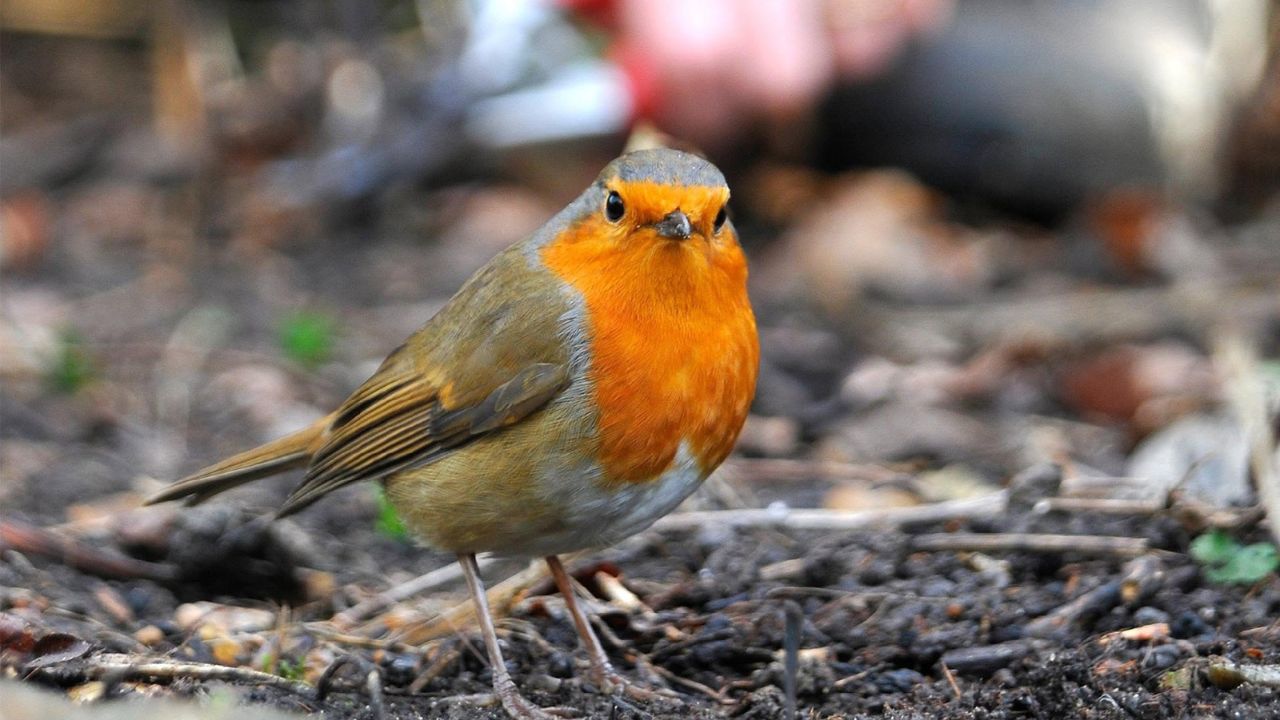

Neil has been keeping birds and watching garden wildlife at Paradise Pets Swindon since 1988. The robin is the garden bird most UK owners feel they know best — and in some ways the one they understand least. The RSPB and BTO’s Climate Change and UK Birds report, published 1st July 2026, contains specific findings about how climate change is already reshaping the robin’s behaviour, breeding patterns, and population trajectory. This article is Neil’s honest account of what those findings mean for anyone watching robins in a Swindon garden right now.
A customer came in last week, the day after the climate report had made the news. She had a specific question that none of the coverage had answered. She had been watching the robin that had frequented her garden for the past two winters, and she wanted to know whether the changes she was noticing — earlier singing, different foraging patterns, an apparent second brood late in the season — were normal, or whether they reflected something the report was describing.
It was one of the sharpest questions I had been asked about garden birds in some time, because the honest answer is that what she was observing was almost certainly both.
What The July 2026 Report Found About Common Garden Birds
The RSPB and BTO’s Climate Change and UK Birds report, published 1st July 2026, makes a distinction that most news coverage flattened — between the species facing severe decline (primarily seabirds and upland specialists) and the species showing more complex, mixed responses to a changing climate.
The robin falls into the second category. It is not among the species facing the catastrophic projected declines that dominated the headlines. It is among the species whose behaviour and population are already shifting in ways that are visible, specific, and worth understanding.
- Warmer winters have boosted survival rates for many resident species including the robin — the report specifically notes that reduced winter severity has improved annual survival of resident bird species; the robin, which historically suffered significant winter mortality in harsh conditions, has benefited from this in terms of population numbers
- Earlier spring temperatures are shifting breeding timing — one of the most consistently documented effects of climate change on UK birds is the earlier timing of key life events; robins in southern England are now initiating breeding earlier in the year on average than they were two or three decades ago, with knock-on effects for when juveniles appear and how many broods are attempted in a season
- Disruption to insect emergence timing creates a new challenge — the robin’s diet is heavily dependent on invertebrates, particularly earthworms and soil invertebrates; climate change is altering the timing and abundance of these prey populations; where the robin’s breeding timing and insect availability align, this is beneficial; where they do not, it creates a mismatch that can reduce breeding success even when individual robins appear healthy and active
- The robin is benefiting from climate change in some respects and facing new pressures in others — this is the nuanced picture the report presents for many common resident species, and it is more useful than either “robins are fine” or “robins are in trouble”
What You Are Actually Seeing In Your Garden — The Honest Explanation
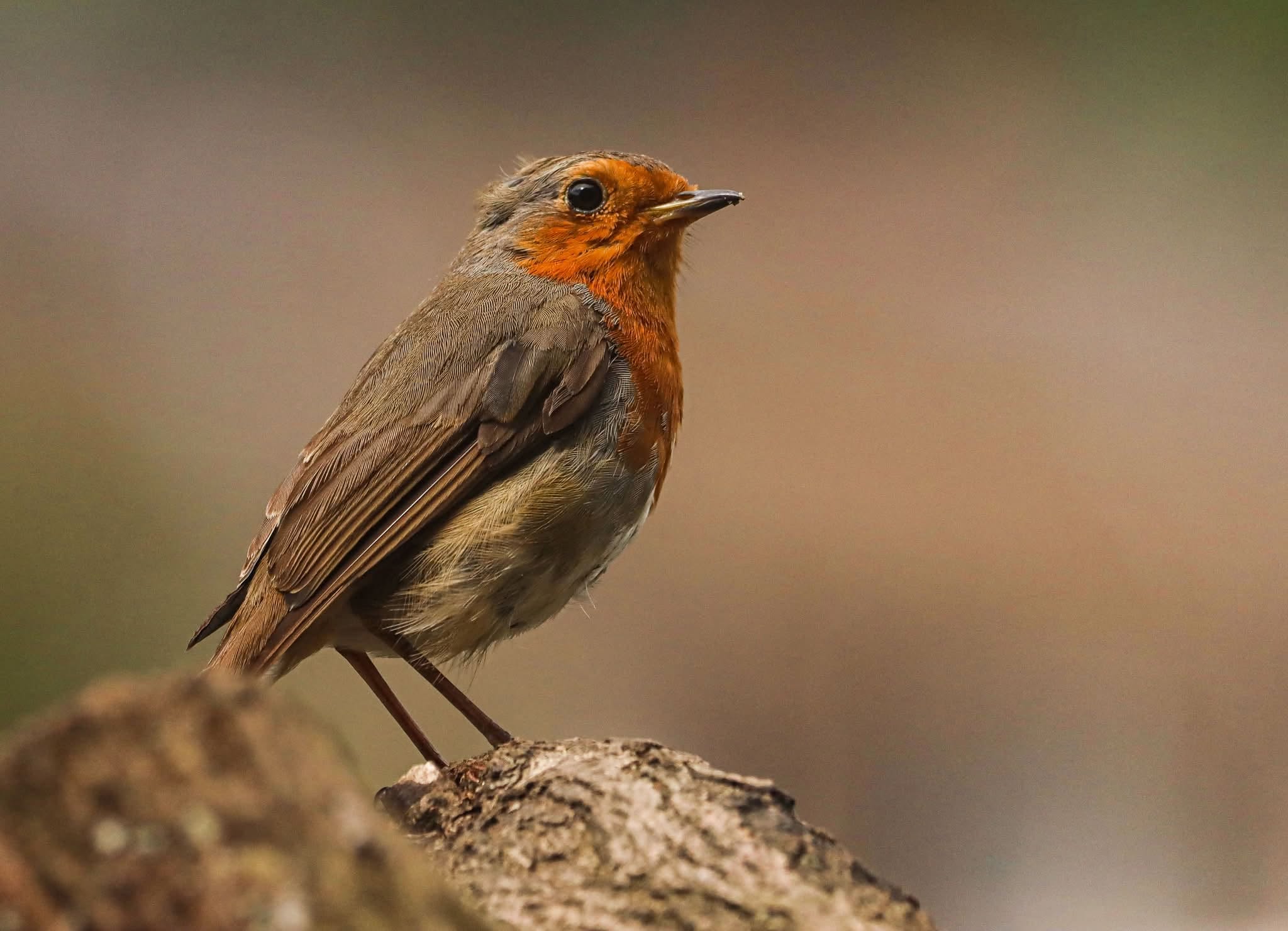
The customer’s observations — earlier singing, late-season second broods, different foraging patterns — are consistent with what the climate science documents at population level, expressed in one individual bird in one Swindon garden. This is worth unpacking specifically.
Why The Robin Sings Earlier Now
- Robins sing to establish and defend territory before breeding begins — earlier song reflects earlier initiation of the breeding cycle, which in turn reflects earlier spring conditions signalling to the robin that the season has begun
- The robin is one of the few UK birds that sings year-round, including at night — the territorial song heard on a mild January morning is a genuine response to conditions that are now reliably milder in January than they were a generation ago; this is not unusual behaviour, it is the bird responding accurately to its environment
- What this means in your garden — if your resident robin is singing earlier in the year than you remember from previous years, you are not imagining it; you are observing one specific, local manifestation of the population-level change the report documents
Why Second Broods Are Appearing Later In The Season
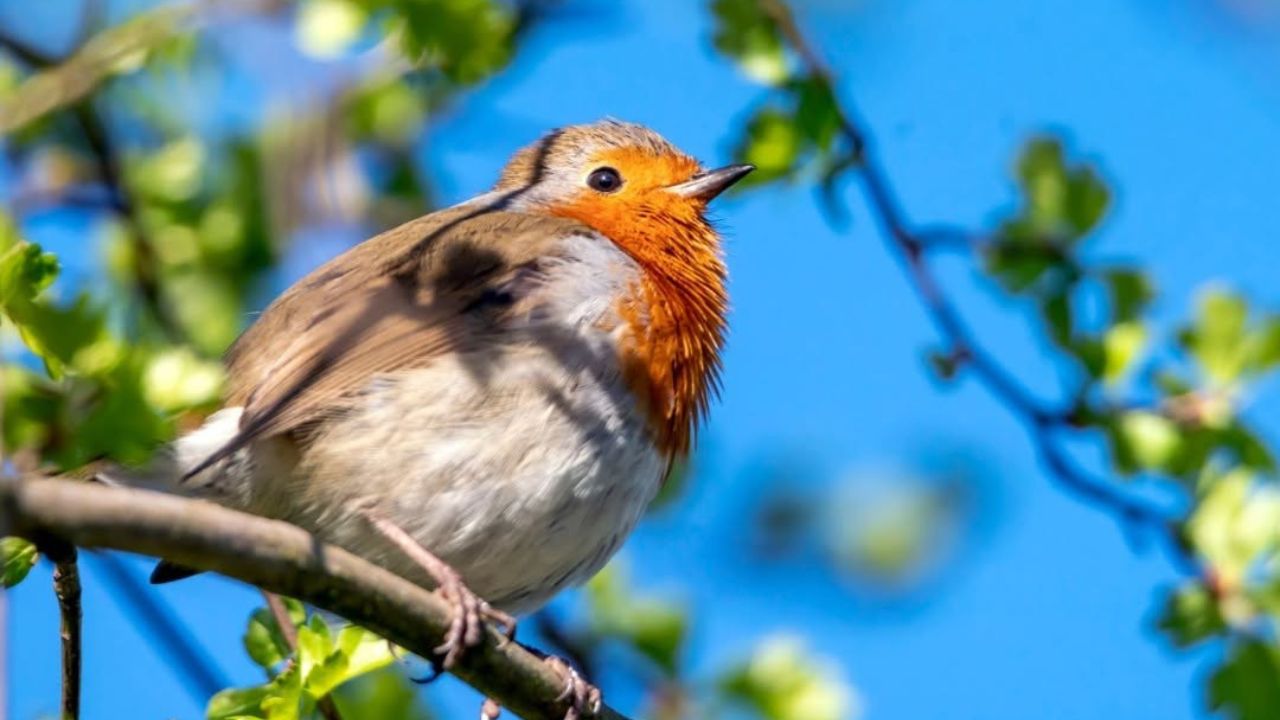
- Robins typically attempt two to three broods per season — warmer conditions extending the effective breeding season in both spring and autumn mean that second and even third broods are being attempted and completed later into summer than was previously common
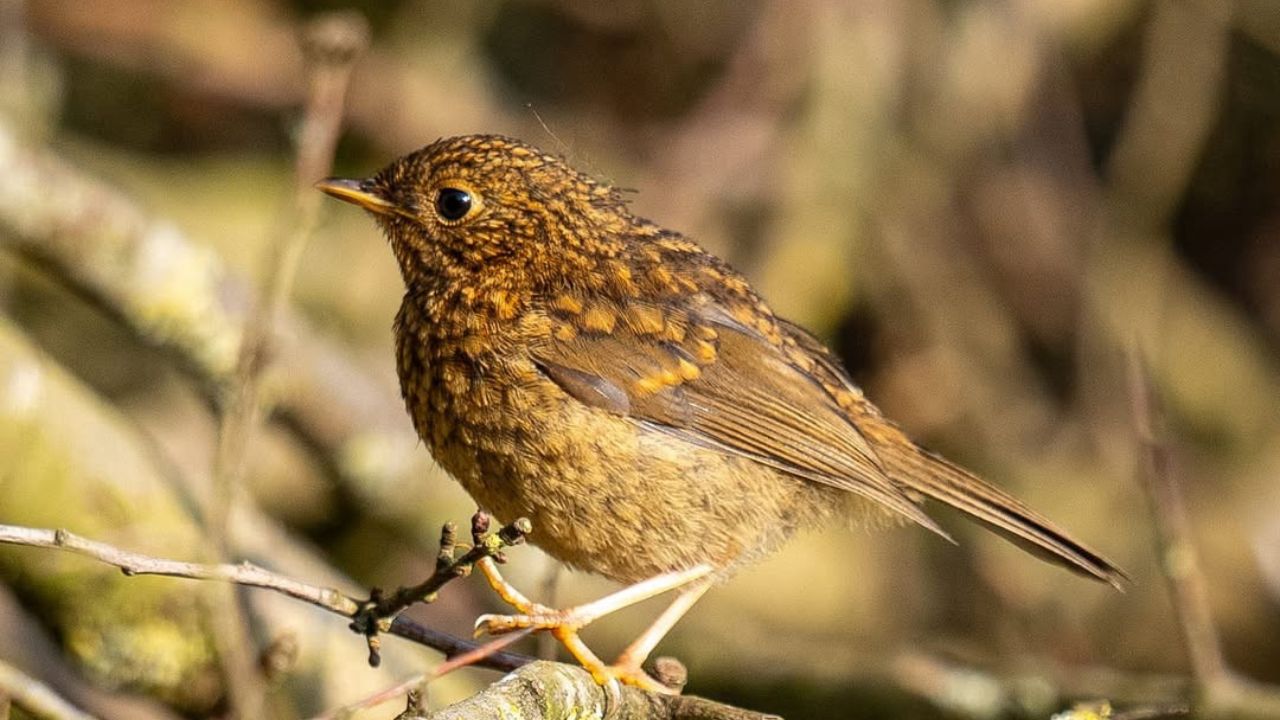
- Late-season fledglings in August and September are increasingly common in southern England — this is visible in gardens as juveniles — spotted, lacking the adult red breast — appearing considerably later in the year than traditional wildlife calendars would suggest
- The implication for garden bird feeders — juvenile robins in late summer and early autumn have different food requirements from adults; protein-rich foods such as mealworms support fledgling development more effectively than seed-based feeding, and understanding that juveniles may be present and needing support later in the year than previously is practically useful information
Why Foraging Patterns Are Shifting
- The robin’s primary natural food is soil invertebrates, particularly earthworms — earthworm availability is affected by soil moisture levels, which are in turn affected by rainfall patterns and temperature; drier summers reduce surface earthworm availability precisely when robins are most actively feeding fledglings
- Garden watering and lawn management have become more important for robins — a garden that maintains some soil moisture through dry summer periods — through watering, mulching, or simply having areas of cover that retain moisture — supports earthworm populations that robins can access; the increasingly arid summer conditions documented in the climate report make this more rather than less important
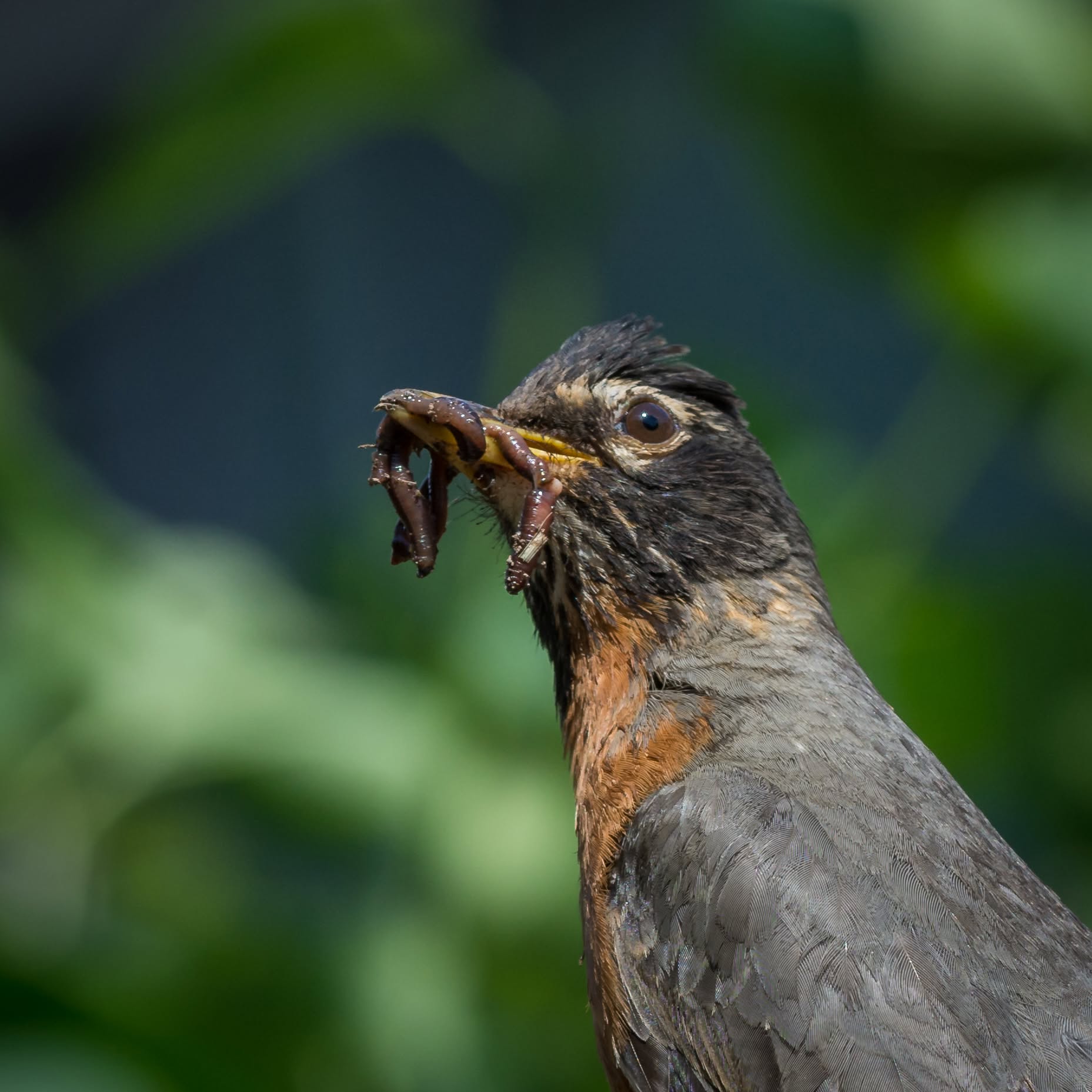
- The robin’s familiarity with garden digging is a documented behaviour pattern — the robin that follows a gardener digging a bed is exploiting a reliable opportunity to access earthworms and other invertebrates exposed by soil disturbance; as surface invertebrate availability reduces in dry conditions, this behaviour becomes more pronounced rather than less, which is why robins in dry summer periods appear to become more rather than less confiding around human activity
The Robin’s Relationship With Humans — What The Science Actually Says
This is a dimension of robin behaviour that deserves more than the sentimental treatment it usually receives, because the scientific basis for it is genuinely interesting and connects directly to what garden bird owners observe.
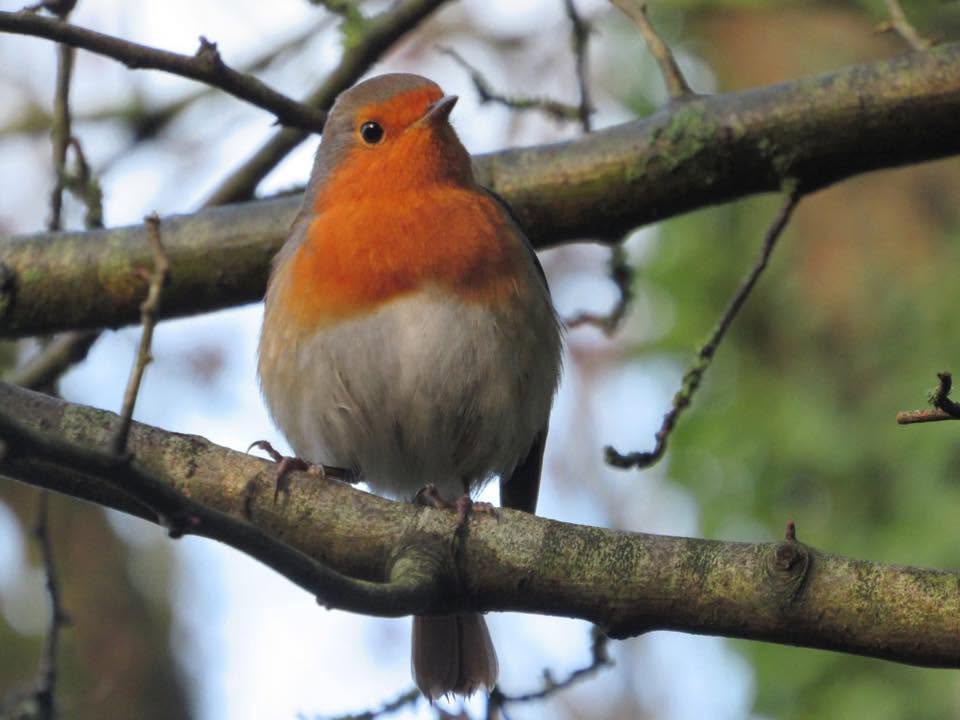
- Robins do recognise and remember individual humans — this is not anthropomorphism; it is documented behaviour; robins distinguish between humans in their territory and respond differently to familiar individuals than to strangers; the garden owner who has gardened in the same space for years is genuinely treated differently by the resident robin than a visitor the bird has not encountered before
- The following-a-gardener behaviour is opportunistic, not affectionate — the robin that sits on the spade handle is exploiting a food opportunity provided by soil disturbance; understanding this correctly does not diminish the behaviour, but it does explain why it becomes more reliable as invertebrate availability becomes more variable — the robin is increasingly dependent on these created opportunities in drier conditions
- Territory is maintained against other robins with genuine aggression — the robin’s famously bold relationship with humans is not extended to other robins; it is among the most aggressively territorial of common garden birds, and the individual that sits tamely on your fence is simultaneously capable of sustained, aggressive defence of its territory against any conspecific that enters it
- What climate change means for this relationship specifically — as conditions become more variable, the garden owner who provides reliable soil disturbance, reliable water, and reliable invertebrate-supporting habitat is increasingly valuable to the local robin population; the relationship that garden owners experience as personal is also, from the robin’s perspective, a reliable resource in an increasingly uncertain environment
What This Means Practically For Your Garden This Summer
- Mealworms are the single most valuable food you can offer a robin right now — during summer, when soil invertebrate availability is reduced by dry conditions and when adults are supporting late broods or moulting, dried or live mealworms provided at a consistent location and time are a genuinely significant support; robins learn to associate specific times and places with food availability very quickly
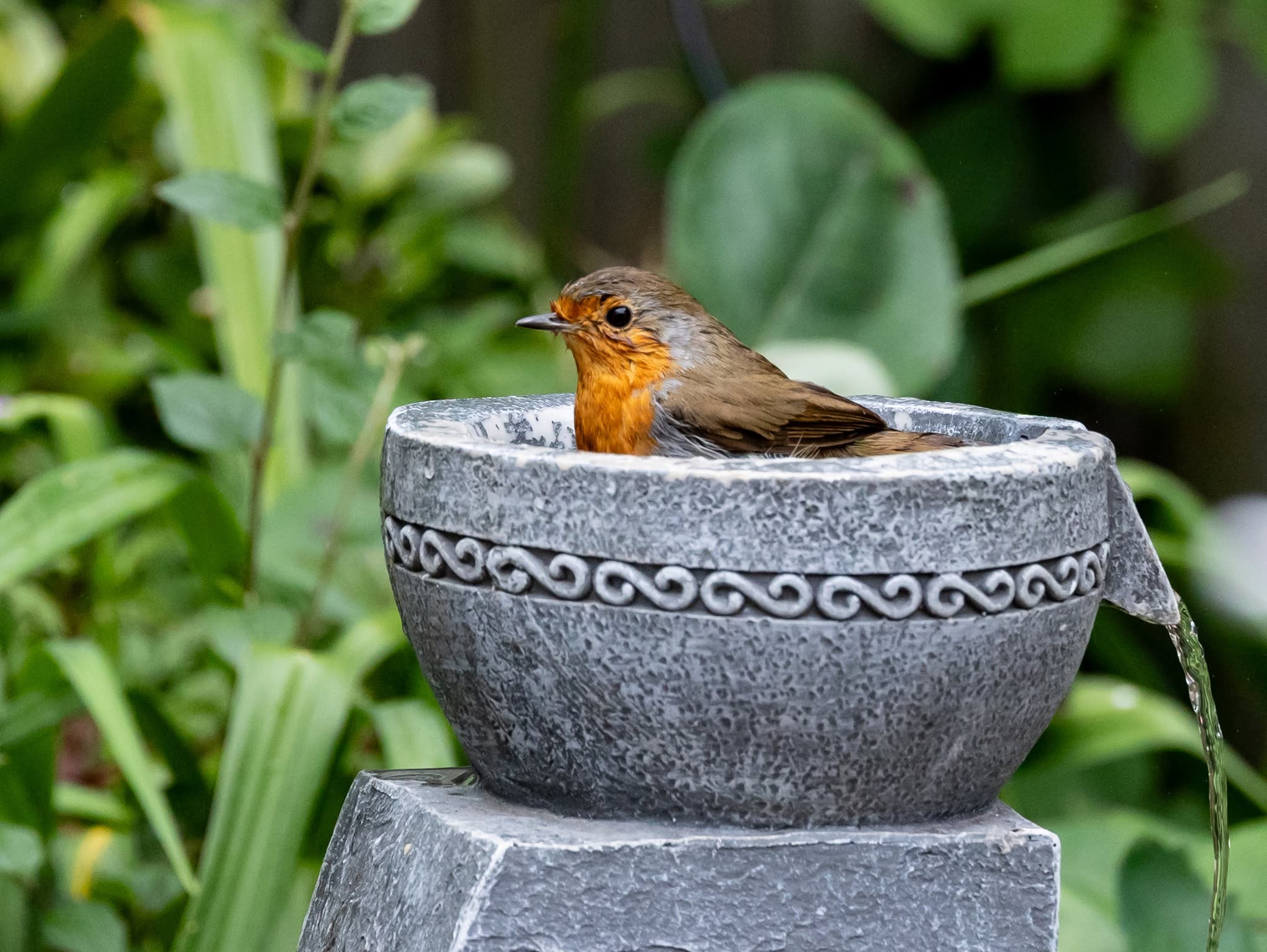
- Fresh water matters specifically for robins — robins bathe frequently and reliably use garden water sources; a consistently available, clean shallow bird bath is not simply nice to have for robins but is an important resource, particularly during the dry periods that are becoming more common and more prolonged in UK summers
- Maintain soil moisture where possible in summer — watering an area of the garden that the robin regularly forages supports the earthworm and invertebrate populations the bird depends on; this does not require significant effort — watering a small border area that the robin has established as part of its foraging route provides disproportionate benefit
- Leave some areas of the garden less managed — short grass, bare soil areas, and leaf litter all support the invertebrate populations that robins feed on; the very tidy garden that looks most attractive to humans is often the least useful to a foraging robin; a small area of leaf litter or undisturbed ground near an established feeding point is a practical habitat improvement
- Watch for juveniles through the summer and into autumn — spotted, lacking the red breast, and often clumsy compared to the adult bird; these are this season’s young, and in warmer years they may appear as late as September or October; providing mealworms during this period specifically supports successful fledgling development
The Robin In Winter — What Is Changing
- Milder winters have reduced winter mortality — this is one of the ways the robin population has genuinely benefited from recent climate conditions; fewer robins dying in hard frosts means more adults entering the breeding season each spring, which contributes to population stability
- Migrant robins from the continent still arrive in autumn — UK robins are largely resident year-round, but the robins seen in gardens in October and November are not always the same individual that bred there in summer; continental robins migrate to the UK for winter, and what appears to be “your” robin returning may occasionally be a different bird
- Winter feeding remains genuinely important despite milder conditions — a milder average winter still contains cold snaps, and the robin’s small body size makes it particularly vulnerable to short periods of frost when invertebrates become inaccessible; maintaining winter feeding through January and February regardless of ambient temperature remains worthwhile
Frequently Asked Questions
Is the UK robin population declining because of climate change?
The picture is more nuanced than a simple yes or no. The RSPB and BTO’s July 2026 report found that robins, as a common resident species, have in some respects benefited from warmer winters through improved survival rates. The risks come primarily from the mismatch between earlier breeding and the timing of invertebrate availability, and from the drier summer conditions that reduce accessible soil prey. The robin is not among the species facing catastrophic projected decline — that picture applies primarily to seabirds and upland specialists — but it is a species whose environment is changing in ways that make garden support more valuable than it was previously.
Why does the robin in my garden follow me around when I garden?
This is well-documented opportunistic behaviour rather than affection, though the two are not mutually exclusive from the robin’s perspective. Digging soil exposes earthworms and other invertebrates that the robin can access far more easily than by probing undisturbed soil. The robin that sits on your spade handle has learned, through observation, that your digging reliably produces accessible food. As drier summer conditions reduce surface invertebrate availability in undisturbed soil, this following behaviour typically becomes more pronounced rather than less.
Do robins actually recognise individual people?
Yes, in the sense that they distinguish between familiar and unfamiliar humans in their territory and respond differently to each. This is documented observational behaviour rather than inference. The garden owner who spends regular time in a space where a robin is established is treated differently from a stranger entering the same space — the familiar person is approached more closely, tolerated at closer range, and associated more directly with food opportunities. This is individual recognition based on repeated observation, not abstract familiarity with humans as a category.
What is the best food to offer a robin in summer?
Mealworms — dried or live — are the single most valuable food for robins in summer. They directly substitute for the invertebrate prey that forms the natural diet and are particularly useful during dry periods when soil invertebrates are less accessible, and when adults are feeding fledglings or undergoing moult. Robins will also take berries and small fruit pieces, and some individuals will take suet pellets. Seed mixes are largely ineffective for robins, whose beaks are not adapted for seed husking in the way finch beaks are.
Why is my robin singing so early in the morning, and earlier in the year than I remember?
Earlier and more sustained singing reflects earlier initiation of territorial and breeding behaviour, which in turn reflects the earlier spring conditions documented in the climate report. Robins respond to day length and temperature cues to begin singing, and as those cues arrive earlier in the year on average, the singing follows. What you are observing is a specific, local expression of the population-level pattern the July 2026 report documents.
Should I be feeding my garden robin year-round?
Yes, with some seasonal variation in what you offer. Mealworms in summer when soil invertebrates are less accessible; suet and energy-dense foods in winter during cold snaps; fresh water and consistent provision year-round. The robin returns to reliable food sources and learns feeding patterns quickly, so consistency of location and timing matters as much as what you offer.
Where can I get advice about garden birds in Swindon?
Come in to Paradise Pets at Manor Garden Centre, Cheney Manor Industrial Estate, Swindon SN2 2QJ — or call us on 01793 512400. We stock mealworms, bird baths, and other garden bird supplies, and we are happy to talk through what your specific garden and resident birds need. The advice is always free.
One Last Thing From Me
The customer who asked about her robin came back into the shop a few days after our first conversation. She had been watching more deliberately — noticing the timing of the song, paying closer attention to the foraging patterns, looking out for the spotted juveniles she now knew to expect later in the season than she had previously anticipated. She seemed, honestly, more engaged with her garden and its robin than she had been before, rather than more alarmed.
“I’d been watching it for two years without really understanding what I was seeing,” she said. “Now I feel like I actually know what’s going on.”
That shift — from watching to understanding — is what I wanted this article to produce. The robin is the most watched garden bird in Britain, and probably the least scientifically understood by the people watching it. The climate report published this week contains findings that make that understanding more important, not less. The robin in your garden is already navigating a changed environment. Knowing specifically what has changed, and what you can do in your specific garden to support the bird navigating it, is both more useful and more satisfying than any number of alarming headlines about the state of UK bird populations in general.
Questions About Your Garden Robin Or Garden Bird Setup? Come And Talk To Us
We stock mealworms, bird baths, and garden bird supplies — and we are always happy to talk through what your specific garden birds need. Free advice, no obligation. That is how we have done things here for 35 years.