

Neil has been keeping, breeding, and selling cockatiels at Paradise Pets Swindon since 1988 — over 35 years of daily first-hand experience with these birds and the owners who keep them. Cockatiel diet is one of the topics where the gap between what most UK owners actually feed and what the bird genuinely needs is largest, most consistent, and most consequential for long-term health. This is his honest, complete guide to what a cockatiel should actually be eating, and why most seed-based diets fall significantly short of it.
A woman came in about three years ago with her cockatiel in a travel carrier. She had owned him for six years. He had been on a seed mix throughout — the same one she had bought from the beginning, on the advice of the shop she had originally purchased him from. He had always eaten well, always seemed active enough, and she had assumed, reasonably, that a bird eating readily and behaving normally was a bird being fed appropriately.
She had come in because of his feathers. They had never looked quite right — slightly dull, with a texture that her avian vet had described as consistent with nutritional inadequacy — and she had finally decided to ask directly about what she might be doing wrong.
I spent about twenty minutes with her going through the diet her cockatiel had been on for six years, and what it had and had not been providing. She left with a clear picture of the changes to make and a realistic timeline for what improvement in feather condition and overall vitality to expect as the diet improved.
She came back about four months later. The difference in his plumage — colour depth, structural integrity, overall condition — was visible from across the counter.
Why Seed-Only Diets Fall Short — The Honest Explanation
I want to explain this clearly before moving to the practical diet guide, because understanding why seed is insufficient makes the rest of the advice considerably more logical.
Seeds are high in fat and carbohydrates. They are low in protein, calcium, vitamin A, vitamin D, and a range of other micronutrients that cockatiels need for healthy feather production, immune function, bone density, and overall metabolic health. Wild cockatiels eat seeds as part of a diet that also includes grasses, bark, flowers, berries, and insects — the seeds are one component of a genuinely varied nutritional intake, not the entirety of it.
A captive cockatiel on seed-only faces two compounding problems. First, it receives insufficient quantities of the nutrients listed above, producing the slow, cumulative deficiency that eventually shows in feather quality, immune susceptibility, and reduced lifespan. Second, it typically develops strong preferences for specific high-fat seeds — sunflower seeds and millet are the most common — and selectively eats these while leaving the less palatable components of the mix, making a mixed seed diet even less nutritionally balanced than it appears.
The result, seen at the counter in six-year-old cockatiels and three-year-old cockatiels alike, is a bird that has been eating enthusiastically for years and has been slowly, invisibly, under-nourished throughout.
- Seeds are high in fat, low in the key micronutrients cockatiels need — vitamins A and D3, calcium, and complete protein are among the most significant deficiencies in a seed-based diet
- Selective eating makes seed mixes worse than they appear — most cockatiels will preferentially eat sunflower seeds and millet, leaving the more nutritious components; what looks like a varied diet is often a high-fat monotony in practice
- Wild cockatiels do not eat seed-only — the natural diet includes grasses, plant matter, bark, berries, and insects; captive seed-only diets bear little relationship to this variety
- The deficiency accumulates invisibly — there is no immediate dramatic sign; the consequences appear in feather condition, immune function, and longevity over months and years
What A Cockatiel’s Diet Should Actually Look Like
The honest target for cockatiel nutrition has three main components, each serving a distinct role. The goal is variety and balance, not a rigid formula.
Component 1 — High-Quality Pellets As The Dietary Base
Pellets — extruded, nutritionally complete formulated food — are the most reliable single dietary improvement most UK cockatiel owners can make, and converting a seed-addicted bird to accepting them is the most common and most worthwhile dietary challenge I advise owners through.
- What pellets provide that seed cannot — a complete, consistent nutritional profile including vitamins, minerals, and amino acids in balanced proportions; the bird cannot selectively eat the high-fat components because pellets are uniform; every bite delivers the same complete nutrition
- How much of the diet pellets should represent — the general guidance from avian nutritionists is that pellets should make up approximately 60 to 70 percent of a cockatiel’s total diet; this is the dietary base, not a supplement to an otherwise seed-based diet
- What to look for in a pellet — specifically formulated for cockatiels or medium parrots; check that the first listed ingredient is a grain or legume source rather than a filler; avoid pellets with high sugar content or artificial colours, which are unnecessary and can cause their own problems; coloured pellets are particularly worth avoiding as the dyes serve no nutritional purpose
- The conversion challenge — a cockatiel raised on seed will not automatically accept pellets; the conversion process requires patience and a specific transition approach, which I cover in detail below
Component 2 — Fresh Vegetables And Some Fruit
Fresh food is the component most consistently underrepresented in UK cockatiel diets, partly because owners are uncertain which foods are safe and partly because offering fresh food daily feels more effortful than topping up a seed dish. The nutritional return on that effort is, however, significant.
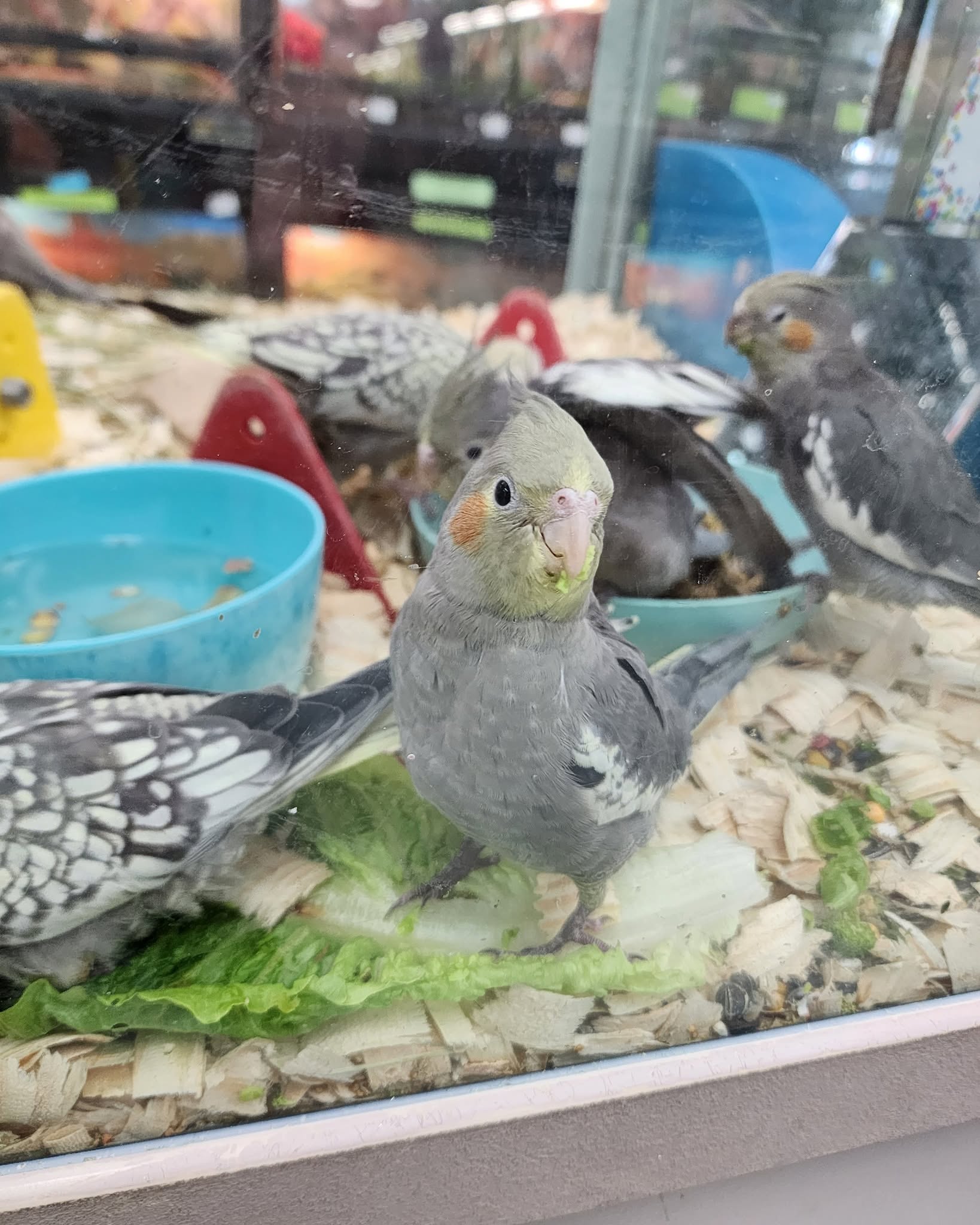
- Dark leafy greens — the highest priority — kale, spring greens, spinach in moderation, broccoli leaves, rocket, cavolo nero; these provide vitamins A and K, calcium, and a range of micronutrients that seed and pellets together do not fully replicate; offer these daily or near-daily as the primary fresh component
- Other vegetables worth offering regularly — carrot and carrot tops, sweet pepper (red and orange varieties are highest in vitamin A), courgette, peas in the pod, sweetcorn, cucumber in small amounts; variety matters more than consistency of the same single vegetable
- Herbs — coriander, parsley, basil, dill; most cockatiels find these highly palatable and they add genuine nutritional variety; a sprig of fresh coriander offered alongside the daily vegetables is one of the simplest high-value additions
- Fruit — beneficial but limited — cockatiels enjoy fruit and it provides useful variety, but the sugar content means it should be a smaller component of the fresh food offering rather than a dominant one; apple, pear, mango, melon, and berries are all appropriate; grapes in very small quantities; always remove pips and stones from fruit before offering
- How much fresh food and how often — a portion of fresh vegetables approximately the size of the bird’s head, daily or near-daily, is a reasonable guide; remove uneaten fresh food after a few hours rather than leaving it to deteriorate
- Fresh food the bird refuses at first — many cockatiels, particularly those with limited prior exposure to anything other than seed, will initially ignore or reject fresh food; persistence and variety of presentation — offered alongside familiar foods, hung from the cage bars, or eaten visibly by the owner in the bird’s presence — tends to produce acceptance over weeks, though some individuals take longer than others
Component 3 — Seed As A Small Part Of The Diet, Not The Foundation
Seed has a legitimate role in a balanced cockatiel diet — as a small component that provides enjoyment, foraging opportunity, and some caloric density, particularly at times of increased energy demand such as moult. The problem is exclusively its current role in most UK cockatiel diets, which is as the dietary foundation rather than a supplementary component.
- How much seed is appropriate — approximately 10 to 20 percent of total daily food intake; a small daily measure, not an ad-lib supply from which the bird can preferentially eat the highest-fat components throughout the day
- Which seeds are better choices within that portion — a varied mix including canary seed, oat groats, and small amounts of grass seeds is preferable to a sunflower-heavy mix; sunflower seeds and safflower seeds are very high in fat and should be offered only in small quantities or used specifically as occasional training treats rather than as a regular diet component
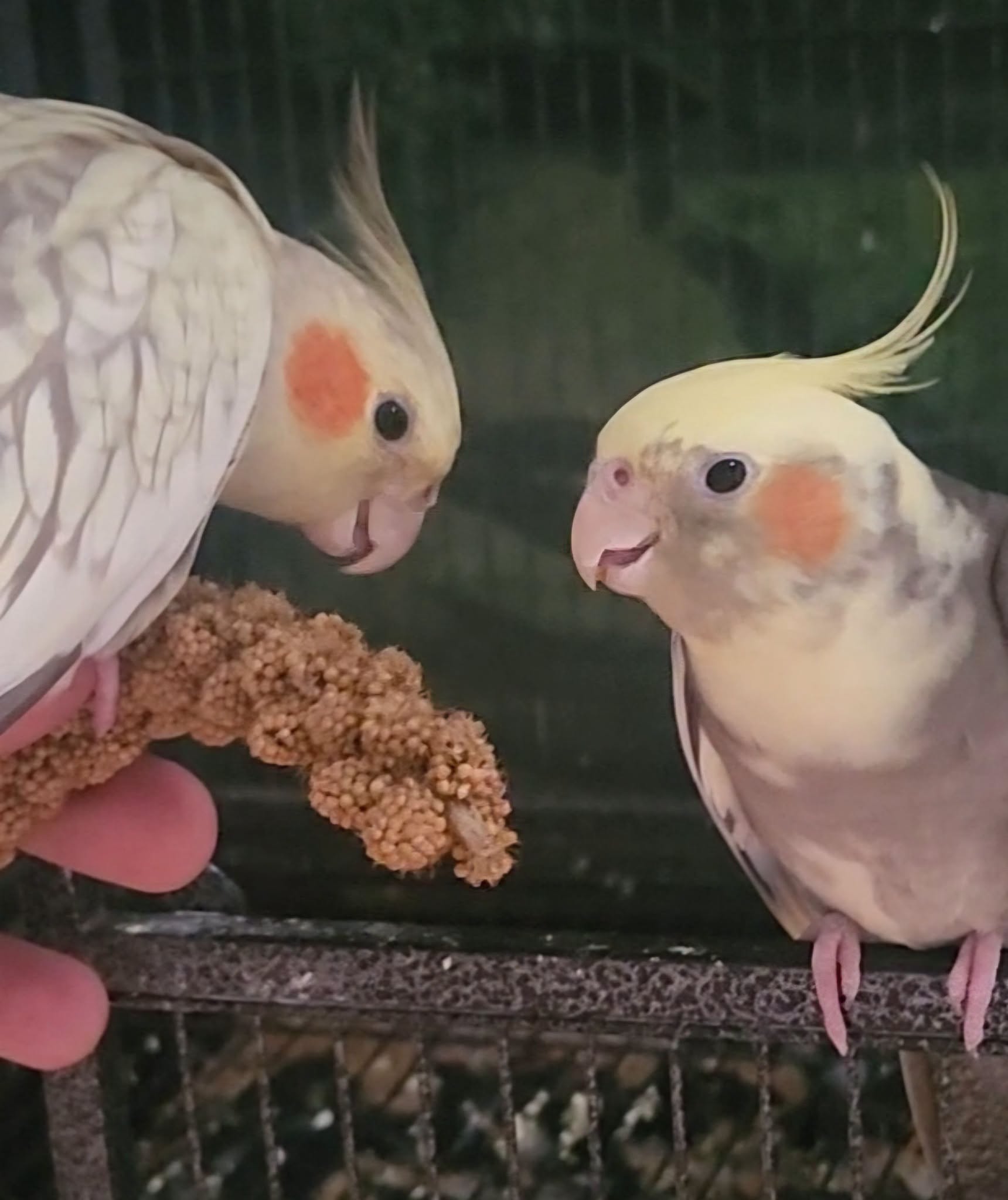
- Millet sprays — a useful taming and training tool, and genuinely enjoyed by most cockatiels; high enough in sugar and carbohydrate that they work best as an occasional treat or reward rather than a daily food item freely available at all times
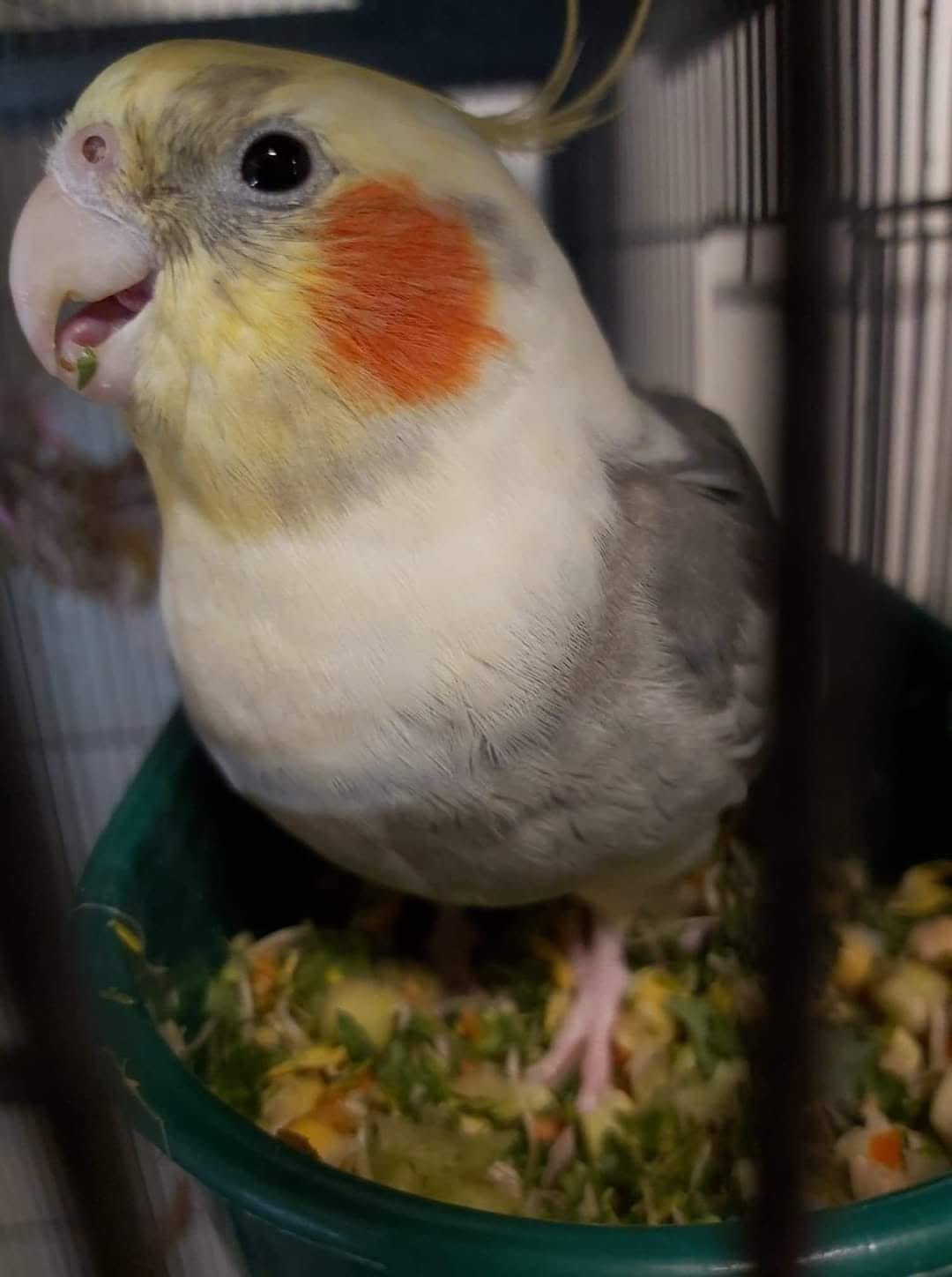
Foods To Avoid Completely
| Food | Why To Avoid | Level Of Risk |
|---|---|---|
| Avocado | Contains persin, toxic to birds; can be fatal even in small quantities | Never feed — toxic |
| Onion, garlic, leek, chive | Sulphur compounds cause red blood cell damage in birds | Never feed — toxic |
| Chocolate and caffeine | Toxic to birds; theobromine and caffeine cause serious harm | Never feed — toxic |
| Fruit pips and stones | Apple pips, cherry stones, peach stones contain cyanogenic compounds; always remove before offering fruit | Never feed — toxic |
| Salt | Kidneys of small birds cannot process salt in the quantities found in human foods; avoid all processed human foods | Never feed |
| Alcohol | Toxic to birds even in very small amounts; obvious but worth stating | Never feed — toxic |
| Mushrooms | Some species cause liver damage; not worth the risk with available alternatives | Avoid |
| Rhubarb | High oxalic acid content; toxic to birds | Never feed — toxic |
| Raw potato and green potato | Solanine in raw and green potatoes is harmful to birds; cooked plain potato in very small amounts is lower risk but not necessary given available alternatives | Avoid |
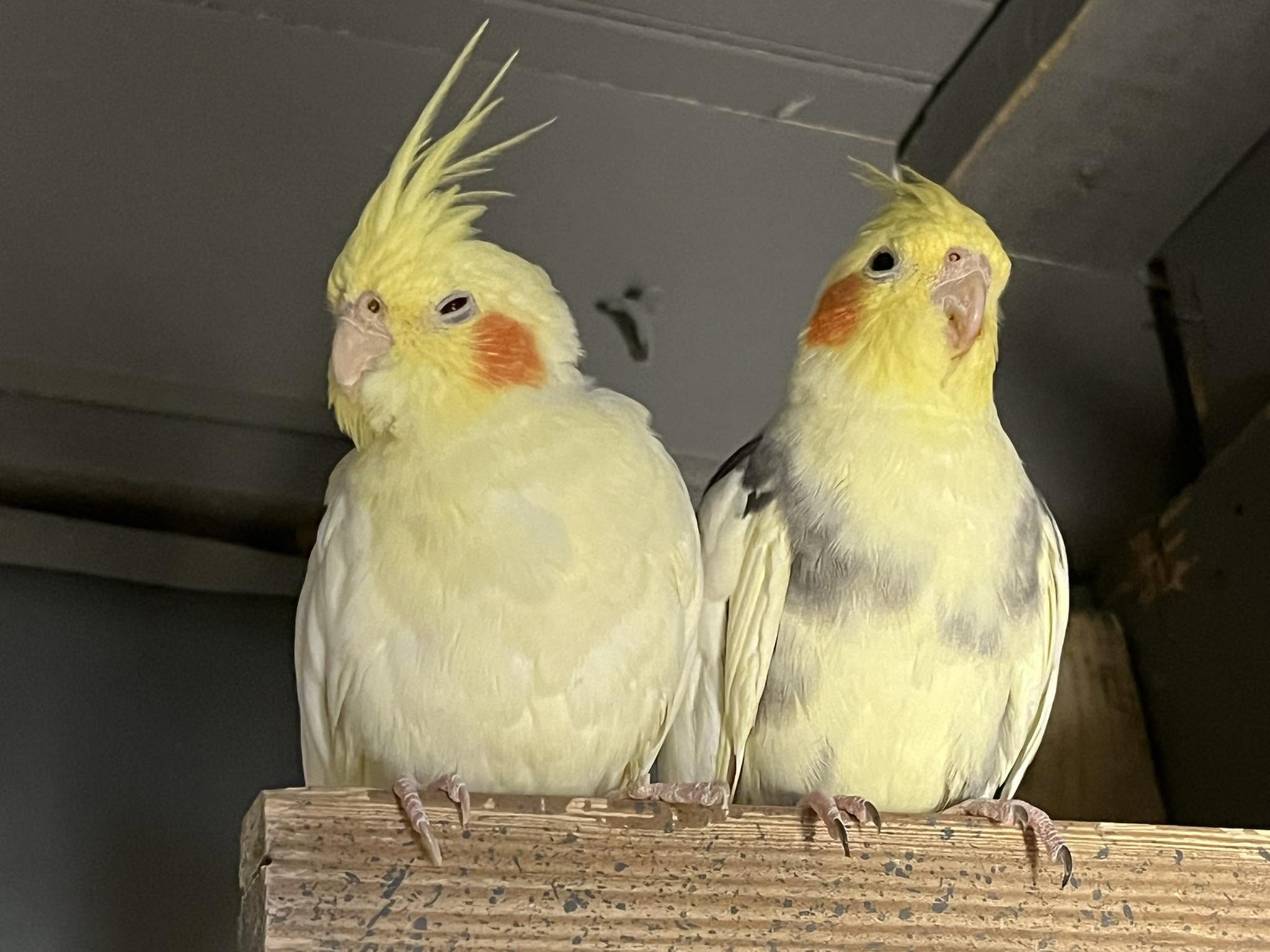
Converting A Seed-Addicted Cockatiel To A Better Diet
This is the practical challenge most UK cockatiel owners face after reading a diet guide like this one, and it is worth treating specifically because it is genuinely the hardest part of improving an established bird’s nutrition — not because pellets and fresh food are unavailable, but because a cockatiel that has spent years on seed can be remarkably stubborn about accepting anything different.
- Never abruptly remove seed entirely — the risk of a bird refusing new foods and declining to eat at all for long enough to cause genuine harm is real; transition should be gradual rather than sudden regardless of how confident you are that the new diet is better
- The gradual mix approach for pellets — begin by mixing a small proportion of pellets into the seed dish, perhaps 10 to 20 percent pellets; over several weeks, gradually increase the proportion while decreasing the seed; the transition typically takes weeks to months depending on the individual bird
- Offer fresh food alongside existing food, not instead of it — during the transition, fresh vegetables should appear in the diet before they are expected to replace anything; many birds initially ignore fresh food for days or even weeks before investigating it
- Eat the food yourself in the bird’s presence — cockatiels are highly social and observational; a bird watching its owner eat a piece of carrot or a piece of broccoli with apparent enjoyment is considerably more likely to investigate the same food than a bird offered the item cold without context
- Offer fresh food in different ways — hung from the cage bars, placed in a separate foraging dish, threaded onto a skewer, offered from the hand; variety of presentation can break through resistance that a single consistent presentation has not managed
- Monitor weight during any significant dietary transition — a bird losing weight during a transition from seed to pellets is a bird that is not yet eating enough of the new diet; if weight loss is occurring, slow the transition further or temporarily maintain a higher proportion of seed while continuing to offer pellets alongside
- Be patient with timelines — some cockatiels accept pellets within days; others take months; an individual bird’s pace is not a reliable indicator of whether the transition will ultimately succeed, provided you do not give up and revert to the previous diet
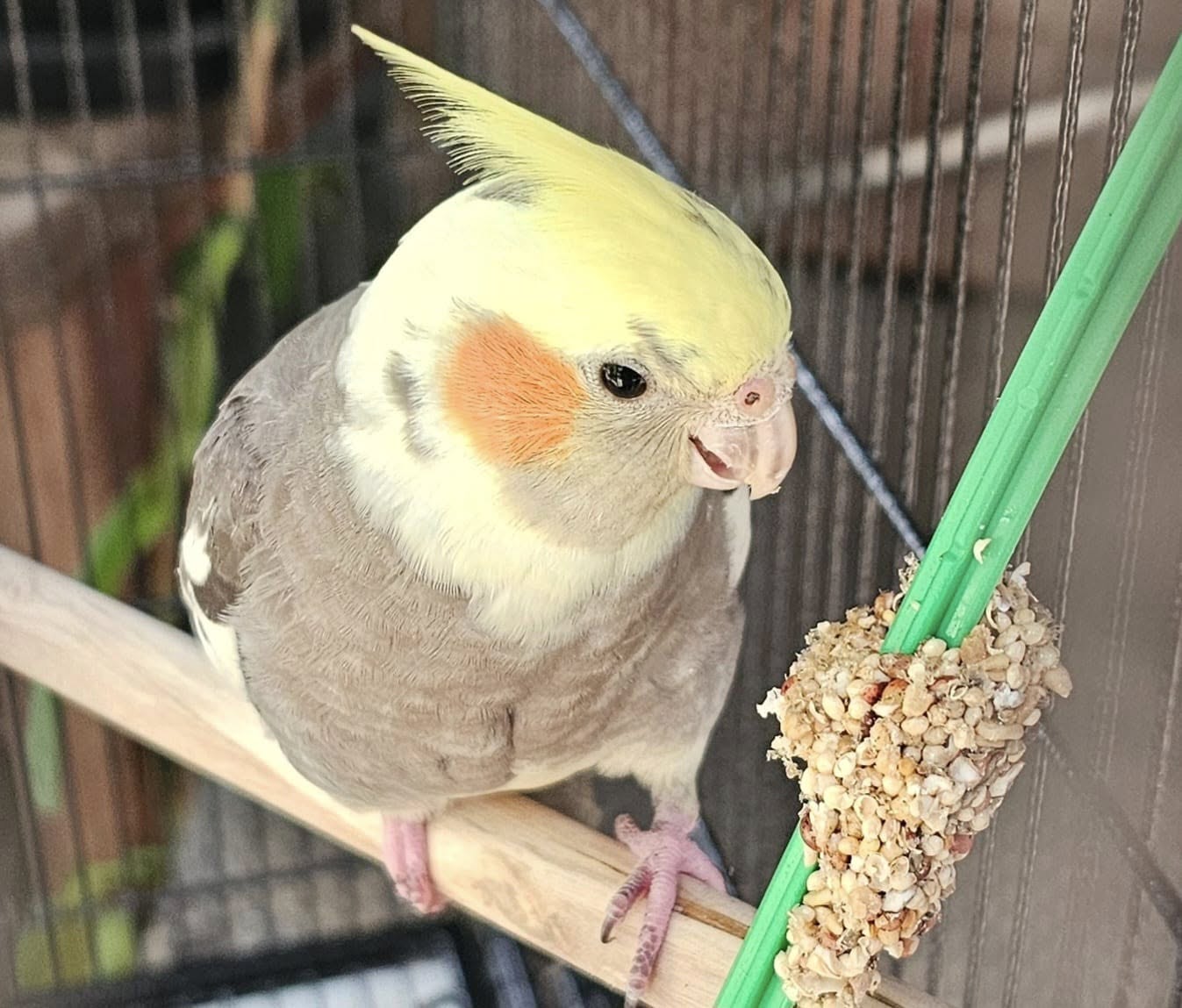
Water — Fresh, Daily, Always Available
- Fresh water daily, not every two or three days — water sitting in a bowl or bottle for several days accumulates bacteria, seed husks, and droppings at a rate that makes it genuinely unsuitable well before it visually looks like a problem
- Both a bowl and a bottle where possible — some cockatiels drink significantly more readily from an open bowl than from a sipper bottle; offering both ensures adequate water intake regardless of the individual bird’s preference
- Check bottle spouts daily — a blocked sipper spout means the bird has no access to water; check that water flows freely every day, not assumed
- Wash water dispensers regularly — the biofilm that develops inside poorly cleaned water containers is a genuine health risk; wash and rinse properly, not just rinse and refill
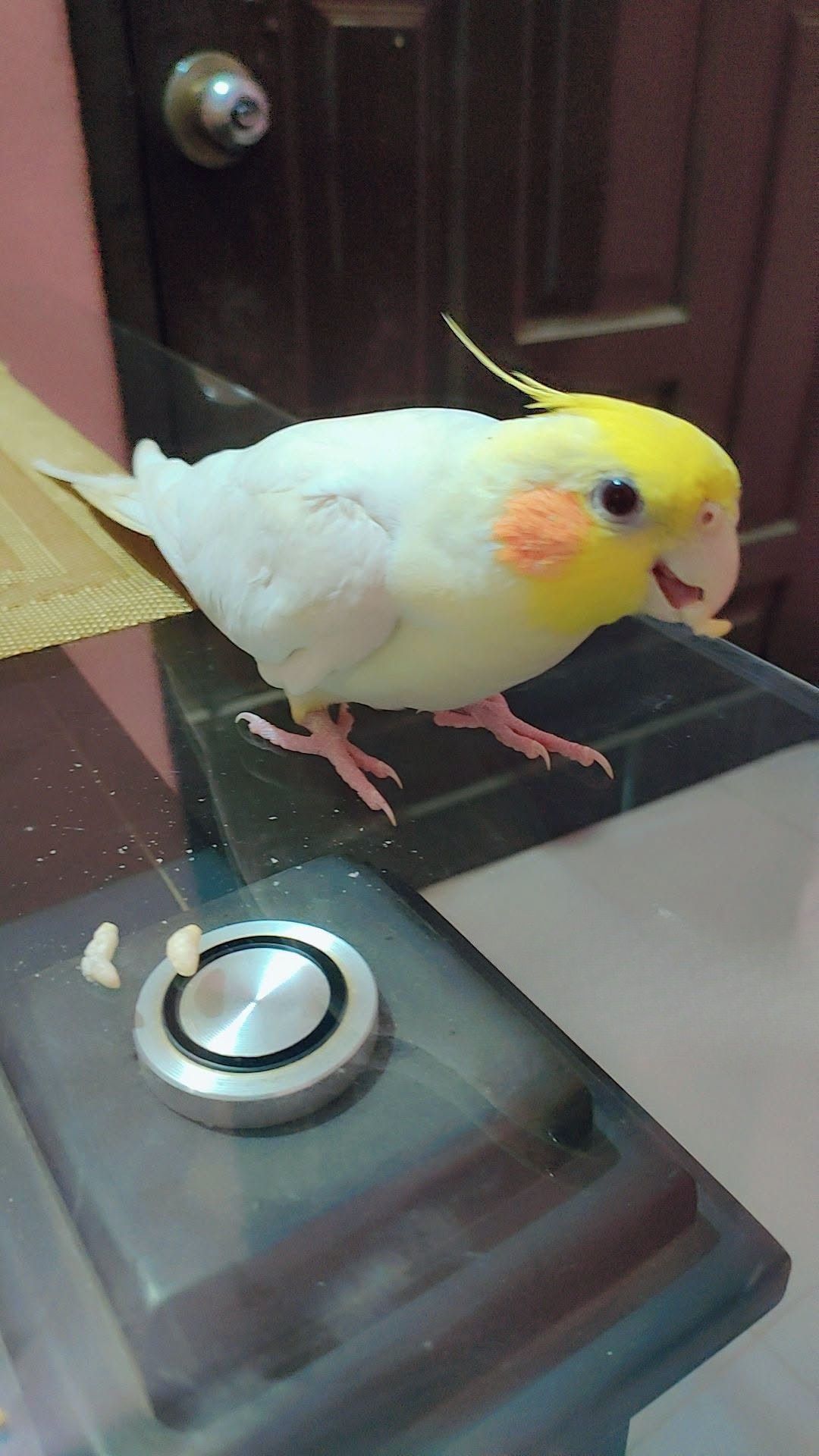
The Daily Diet — What It Should Actually Look Like
| Food Component | Proportion Of Diet | How Often |
|---|---|---|
| High-quality pellets | 60–70% of total intake | Available daily, in measured portions |
| Fresh vegetables — dark leafy greens, peppers, carrot, herbs | 20–25% of total intake | Daily or near-daily; remove uneaten fresh food after a few hours |
| Seed mix | 10–20% of total intake | A small daily measure; not ad-lib from an always-full dish |
| Fruit | Small amounts only | Several times a week; not daily in large quantities due to sugar content |
| Cooked grain or legumes | Occasional addition | Cooked brown rice, quinoa, or lentils a few times a week if the bird accepts them; nutritious variety |
| Egg food or protein-rich supplement | Small amounts during moult | Useful during moult when protein demand for feather production is higher; not necessary year-round in large quantities |
| Sunflower seeds, millet spray | Treats only | Occasional or used as training rewards; not as a regular daily food component |
Frequently Asked Questions
Can cockatiels eat the same seed mix as budgies?
Not ideally, and the same fundamental dietary limitations apply to both species — a seed-only diet is insufficient nutrition for a cockatiel just as it is for a budgie. Cockatiels are larger birds with somewhat different proportional requirements from budgies, and a cockatiel-specific or medium parrot pellet formulation is a better choice than a budgie mix as the pellet component of the diet. The principles of the diet described in this article — pellets as the base, fresh vegetables daily, seed as a small component — apply equally to budgies, though the specific proportions and pellet size differ.
My cockatiel refuses pellets entirely. What should I do?
Be patient and persistent, and ensure the transition is gradual rather than sudden. Most cockatiels that have been raised on seed resist pellets initially — some for weeks, some for months. The gradual mix approach described in this article, reducing seed slowly over time while increasing the pellet proportion, is the most reliable method. Eating pellets visibly in the bird’s presence, or crumbling pellets onto fresh food so the bird encounters them while investigating something familiar, can also help break through initial resistance. Do not abruptly remove seed until the bird is clearly eating pellets readily.
Are sunflower seeds really as bad as people say for cockatiels?
Not bad in the sense of toxic — sunflower seeds will not harm a cockatiel acutely. The problem is their nutritional profile and the selective eating they encourage. Sunflower seeds are very high in fat and low in the vitamins and minerals a cockatiel needs, and most cockatiels, given the choice, will eat sunflower seeds to the exclusion of more nutritious components in a mixed diet. This produces the chronic nutritional deficiency described at the start of this article — not from toxicity, but from displacement of appropriate nutrition by a highly palatable, nutritionally poor option. Small quantities as part of a genuinely varied diet are fine; as a significant dietary component they are not.
How do I know if my cockatiel’s diet is already causing problems?
Feather condition is the most visible early indicator — dull, structurally poor, or oddly textured feathers in a bird that is not currently in moult often reflect nutritional inadequacy. Moults that seem prolonged, incomplete, or that produce feathers of visibly lower quality than previously are also a signal. Over a longer timescale, susceptibility to illness, reduced energy and vocalisation, and changes in droppings can indicate a diet that has not been supporting the bird adequately. An avian vet can assess blood values and overall condition if specific concerns exist.
Can cockatiels eat cooked food?
Yes, and some cooked grains and legumes are a genuinely nutritious addition to the diet. Cooked brown rice, quinoa, lentils, and chickpeas are all appropriate in moderate quantities and add protein and variety that a seed and pellet diet may not fully provide. Avoid any cooking oils, salt, or seasoning — these are harmful to birds in the quantities used in typical human cooking. Cooked plain food, offered in small amounts and removed before it spoils, is a worthwhile occasional addition.
How important is calcium for cockatiels specifically?
Very. Cockatiels, particularly females, have significant calcium requirements — females who lay eggs, even infertile ones, deplete calcium rapidly and can develop egg-binding or other calcium-related conditions on an inadequate diet. A cuttlebone available at all times provides calcium and also serves a beak conditioning purpose; mineral blocks offer additional trace minerals. Dark leafy greens contribute dietary calcium. On a seed-only diet, calcium intake is typically inadequate for a female cockatiel’s requirements.
Should I give my cockatiel vitamin supplements on top of its food?
If the diet is balanced — pellets as the base, fresh vegetables daily, seed as a small component — additional vitamin supplementation is not necessary and can, in some cases, produce over-supplementation of fat-soluble vitamins that store in the body. Supplements become more relevant when a bird is on a predominantly seed-based diet and the dietary improvement process is still in progress. An avian vet can advise on specific supplementation needs based on the individual bird’s diet and condition.
Where can I get cockatiel food and advice about diet in Swindon?
Come in to Paradise Pets at Manor Garden Centre, Cheney Manor Industrial Estate, Swindon SN2 2QJ — or call us on 01793 512400. We stock appropriate cockatiel pellets, seed mixes, and fresh food supplements, and we are happy to talk through transitioning your bird to a better diet or assessing what your current diet might be missing. The advice is always free.
One Last Thing From Me
The woman whose cockatiel had been on seed-only for six years came back one more time, about a year after that first conversation. He was, by her description, a different bird — not in personality or temperament, but in condition. The feathers that had prompted her original visit were now what her avian vet described as genuinely excellent. His vocalisation had increased. His energy through the day was noticeably higher.
“Six years,” she said, with a tone that was somewhere between satisfied and slightly rueful. “Six years of thinking I was doing it right because he was eating well.”
This is the most consistent thing I hear from owners who make this dietary shift — not surprise that it worked, but mild regret at the time it took them to encounter the information to try. Most UK cockatiels on seed-only diets are not obviously suffering. They are eating, moving, and appearing to function. What they are not doing, in most cases, is thriving — and the difference between the two becomes visible only once an owner has seen a bird on a genuinely appropriate diet and has something to compare against.
If your cockatiel has been on seed-only, or something close to it, this article is the starting point for changing that. The transition is the hard part, and it is worth it.
Questions About What Your Cockatiel Should Be Eating? Come And Talk To Us
Whether you are starting from scratch or trying to improve an established seed-based diet, come in or ring us. We can walk through a realistic transition plan for your specific bird. Free advice, no obligation. That is how we have done things here for 35 years.