
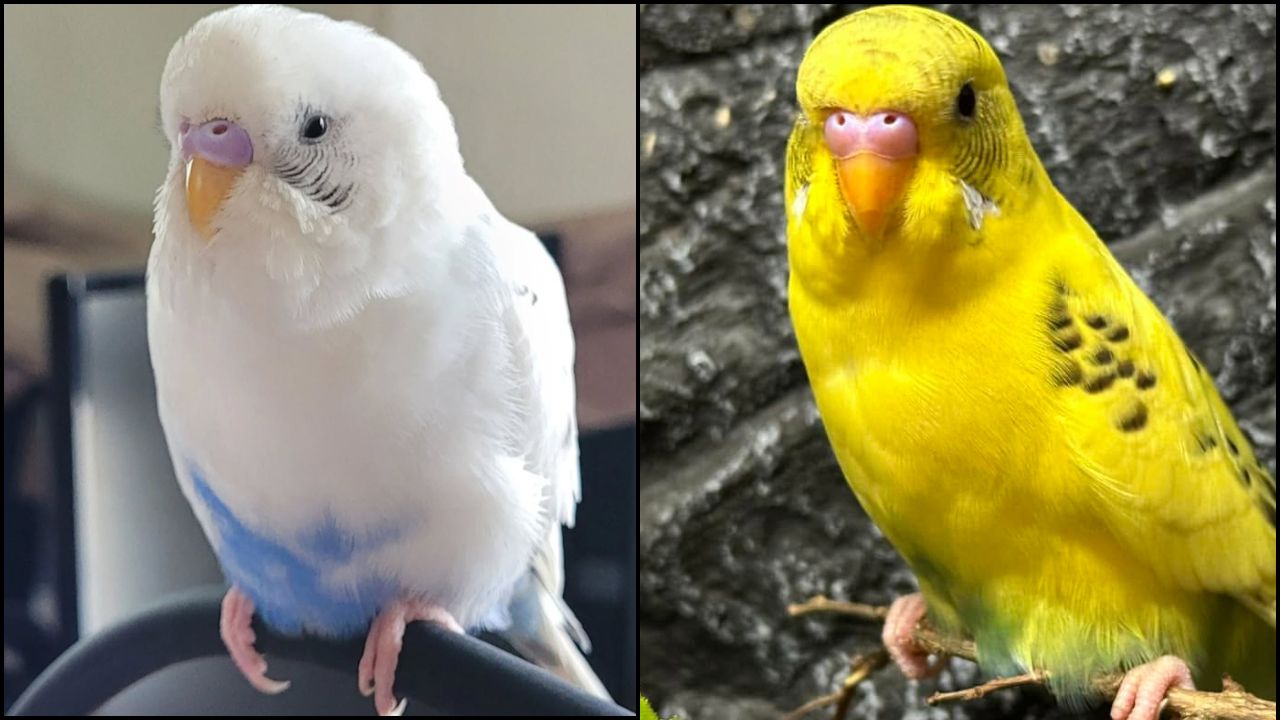

Neil has kept, bred, and sold cage and aviary birds at Paradise Pets Swindon since 1988 — over 35 years of first-hand experience with budgerigars, cockatiels, canaries, finches, and dozens of other species. The Avian Influenza Prevention Zone in England has now been lifted. The government says mandatory biosecurity measures remain in place. This is Neil’s honest guide to what the lifting actually means, what it does not mean, and what every indoor pet bird owner should be doing right now.
The announcement came on 4 June 2026. The avian influenza prevention zone for poultry and captive birds in England, Wales and Scotland has been lifted. The housing requirements are gone. Birds can go outside again. The formal zone restrictions that have been in place through a difficult season are over.
And at the counter, the phone calls started almost immediately. Not worried calls — relieved ones. “Is it all clear now, Neil?” “Can we relax?” “Does this mean bird flu is done?”
I understand the relief. A season of heightened restrictions, biosecurity requirements, and the low-level anxiety that comes with knowing the disease was active in the country — people want to hear that it is over. I wish I could tell them that.
What the government actually said, in the same announcement that lifted the zone, was this: all bird keepers should continue to take steps to prevent bird flu and stop it spreading at all times and be vigilant for signs of disease.
And the Royal Pigeon Racing Association, in their summary of the same announcement, put it plainly: strict biosecurity is still vital to protect the health and welfare of your birds.
This is not a technicality or government caution-by-default. It is an accurate description of the current risk. The zone is lifted. The disease has not gone away. And in 35 years of watching what happens in the period after a bird flu alert — when owners relax, when habits erode, when the news moves on — I know that the weeks after a lifting announcement are often the most dangerous for the birds in people’s care.
This article is my honest account of what has changed, what has not changed, and what every indoor pet bird owner should be doing today.
What Has Actually Changed — And What Has Not
Let me be precise about this, because the distinction matters for how you respond.
What has changed: mandatory housing measures for poultry and captive birds have been lifted in England. Birds that were required to be kept indoors no longer need to be. The formal zone designation that brought with it specific legal requirements has ended.
What has not changed: the Avian Influenza Prevention Zone mandatory biosecurity measures will remain in place until the wild bird risk falls further. This means bird keepers are still legally required to follow enhanced biosecurity standards. These are not voluntary guidelines. They are mandatory requirements that remain in force.
Birdkeepers are legally required to adhere to the highest biosecurity standards with an Avian Influenza Prevention Zone mandating strict biosecurity remaining in place in England, Scotland and Wales. This includes measures such as disinfecting footwear, clothing and vehicles and equipment before and after entering premises.
What else has not changed: the underlying risk from wild bird populations. The disease that drove the housing measures has not been eradicated. Wild bird populations — particularly migratory waterfowl and coastal birds — remain reservoirs of highly pathogenic avian influenza. Whilst we are seeing risk levels reducing, bird flu has not gone away.
The correct way to read the lifting announcement is this: the formal emergency phase has ended, but the ongoing requirement for responsible management of the risk has not. For indoor pet bird owners, whose birds were not directly subject to the housing requirements anyway, the practical implication is simpler — the biosecurity habits that responsible owners maintained during the alert should continue, because the conditions that make those habits necessary have not been resolved.
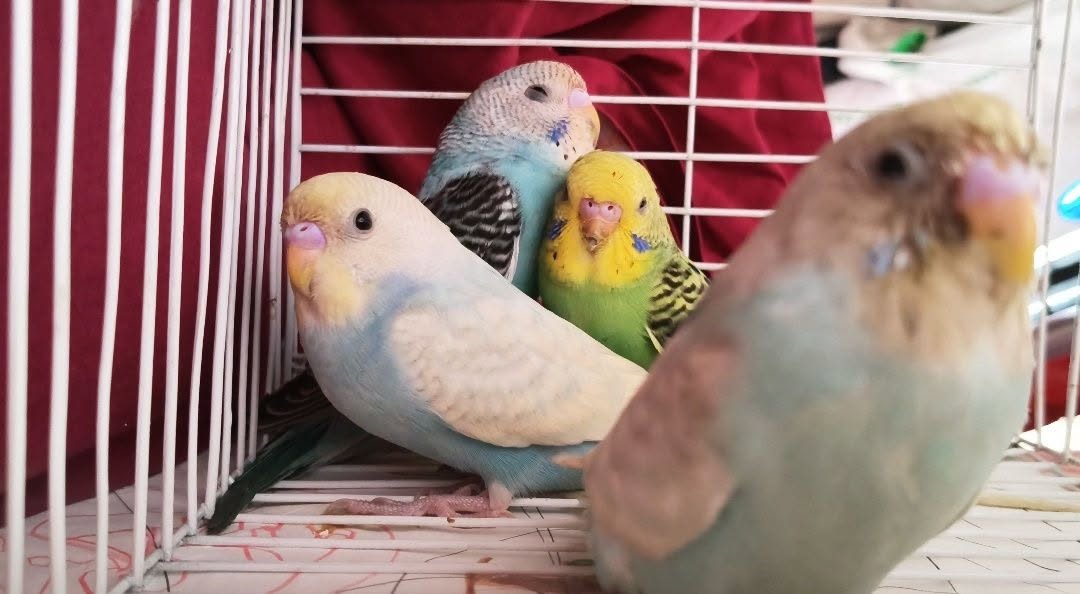
Why This Matters Specifically For Indoor Pet Bird Owners
The public conversation about bird flu focuses almost entirely on commercial poultry and outdoor flocks. Indoor pet birds — budgies, cockatiels, canaries, finches, lovebirds — are essentially invisible in the coverage. The housing measures were directed at keepers of outdoor birds. Indoor pet bird owners were not legally required to do anything different.
But this creates a risk of its own — the risk that indoor pet bird owners, not being directly addressed by either the restrictions or the lifting, conclude that none of this is relevant to them. That conclusion is wrong.
Indoor pet birds face a lower direct risk from wild bird contact than outdoor flocks. But they face real and ongoing indirect risks that do not change with the zone designation. The most significant of these is the introduction of disease through a new bird acquired from an unscreened source — a risk that is present regardless of whether an AIPZ is active, and that is historically most likely to be neglected in the period when public attention to bird flu is low.
The second significant indirect risk is contamination through human contact — on clothing or footwear that has been near wild bird concentrations or poultry — which is a route of transmission that avian influenza can spread by, and one that the biosecurity requirements have consistently addressed.
These risks do not disappear when the zone is lifted. They are managed by the same habits that responsible bird owners should maintain year-round, not only when a zone is in place.
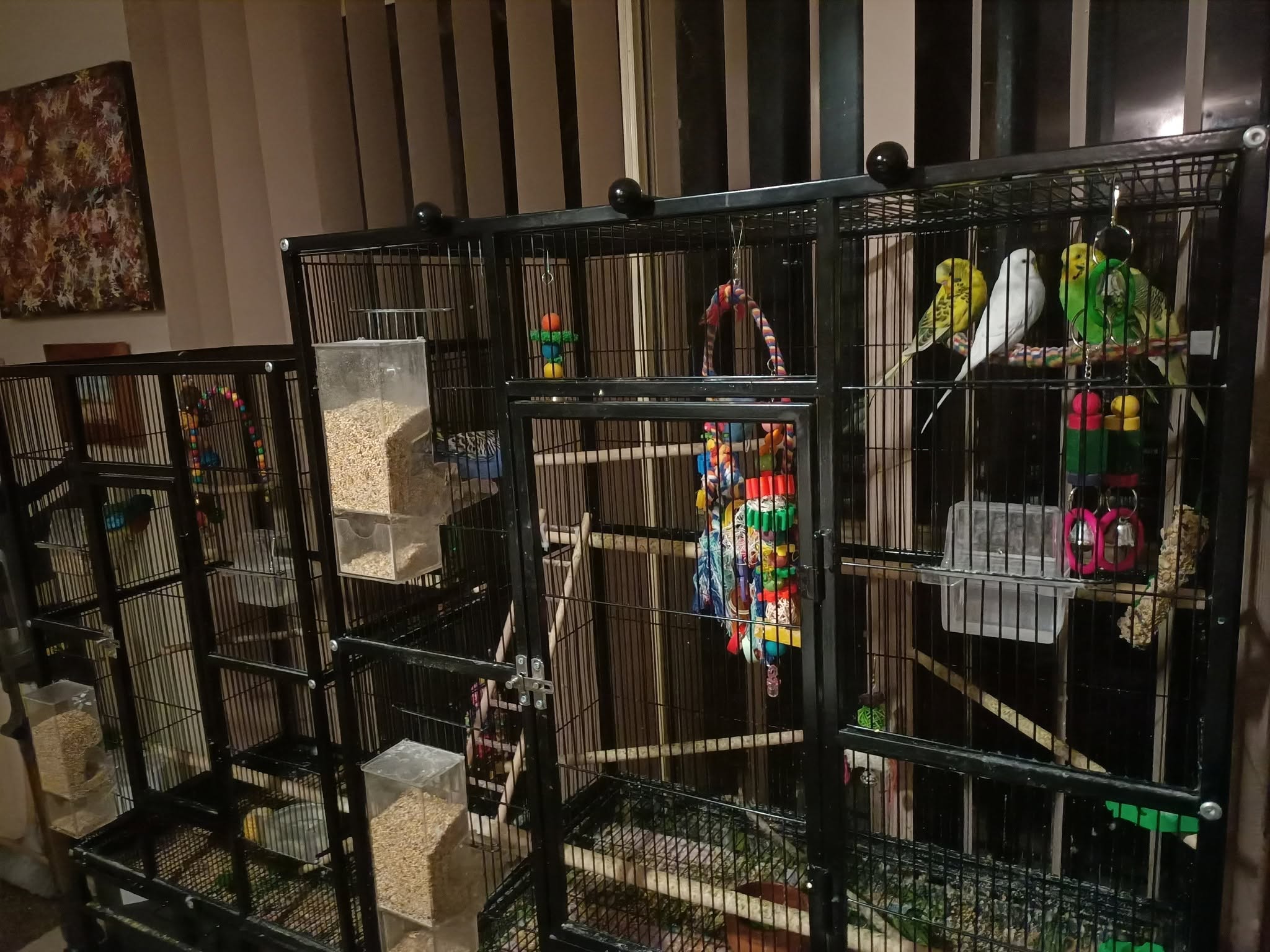
The Habits That Protected Your Birds During The Alert — Keep Them
- Quarantine any new bird before introducing it to existing birds — always, not only during alert periods. A new bird from an unscreened source is a biosecurity event regardless of whether an AIPZ is active. Thirty days in a separate airspace is the minimum that constitutes meaningful quarantine. This is the most important biosecurity habit and the one most likely to be dropped when the formal pressure lifts.
- Source birds carefully. Birds from reputable, screened sources with clear records represent a different risk profile from birds from unscreened private sellers, bird fairs, or sources that cannot tell you what biosecurity they apply. The zone lifting does not change this calculation.
- Continue to change footwear or clean it before going near the birds if you have been near areas with wild bird concentrations. This is one of the mandatory biosecurity measures that remains in force. It applies whether you keep three budgies indoors or fifty chickens outdoors.
- Keep cages and their environments clean. Hygiene in the immediate bird environment is the first line of defence against the range of pathogens — not only avian influenza — that can reach a caged bird. Regular substrate changes, daily water changes, periodic disinfection of cage furniture. These habits do not have an alert-period version and an off-alert version. They are continuous.
- Do not allow wild birds to access the same space as your indoor birds. For the vast majority of indoor pet bird owners this is automatic. But for those with outdoor aviaries, or with windows that are regularly left open with birds inside, it is worth being conscious of.
- Know the signs of respiratory illness in your birds and act promptly. A bird with breathing difficulties, nasal discharge, lethargy, or loss of appetite during a period when avian disease pressure remains elevated in wild bird populations should be seen by an avian vet without delay. Early intervention consistently produces better outcomes than waiting.
- Have an avian vet identified before you need one. Not only during alert periods. An emergency with a bird always arrives unexpectedly. Knowing where you would go and having the number saved removes a step at a moment when every minute matters.
The Pattern I Have Watched Repeat For 35 Years
I want to be honest about what I observe at the counter after every bird flu alert cycle, because it is directly relevant to what I am recommending here.
During the alert period — when housing measures are in force, when the news is covering bird flu, when there is a formal zone on the government map — owners pay attention. They ask questions. They are careful about new birds. They clean more diligently. They think about footwear.
In the weeks after the alert lifts, that attention fades. Not through carelessness — through natural human psychology. The threat is less visible. The formal requirement is gone. Life returns to normal rhythms and the specific habits that felt urgent during the alert feel less essential.
And then, six months or a year later, when the next season’s avian influenza pressure begins to build in wild bird populations, the owners who maintained their habits through the quiet period are the ones whose birds are best protected. The ones who did not are the ones who find themselves making decisions under pressure that should have been made calmly in advance.
Bird flu has not gone away. That sentence is not mine — it is from the government’s own announcement of the lifting. I did not add it for dramatic effect. I am repeating it because it is the most important context for everything I have said in this article.
What The 2025–26 Season Tells Us About What Comes Next
The 2025–26 season was significant. The first case of HPAI H5N1 of the 2025 to 2026 outbreak season was confirmed in a premises near Pickering, Yorkshire on 3 March 2026. The season involved multiple confirmed cases across England, housing measures that were extended repeatedly as new outbreaks emerged, and a national AIPZ that remained in place from November 2025 through to early June 2026.
This pattern — annual or near-annual outbreak seasons, with housing measures coming in and out, and the underlying disease pressure persisting in wild bird populations year-round — is the new normal for UK bird keepers. It is not a temporary situation that will eventually resolve. The disease is endemic in wild migratory bird populations and that is not going to change.
For indoor pet bird owners, the practical implication is this: the period between outbreaks is not a safe period when biosecurity does not matter. It is a period when the foundation for surviving the next outbreak is either being laid or being neglected. The habits that work are year-round habits, not reactive ones.
A Note On Registering Your Birds
One requirement that has been consistently reinforced throughout the alert period and that remains in place is the legal requirement to register kept birds with APHA. If you keep poultry, you must, by law, follow specific disease prevention measures. These apply to all keepers of birds, regardless of flock size or if your birds are pets.
If you keep any birds — including indoor pet birds — and have not registered them with APHA, this is worth looking into. The registration requirement for captive birds in England has been in place and has been actively enforced during outbreak periods. It is not something that applies only to commercial poultry keepers. It applies to anyone keeping birds in England, with limited exceptions for very small numbers of pet birds for personal use.
Check the current APHA guidance at gov.uk/birdflu for the exact requirements applicable to your situation. If in doubt, register — the process is straightforward and the legal risk of non-compliance is real.
Quick Reference — What Changed On 4 June 2026 And What Did Not
| Requirement | Before 4 June 2026 | After 4 June 2026 |
|---|---|---|
| Housing measures for outdoor birds | 🔴 Mandatory in areas covered by AIPZ | ✅ Lifted — birds can go outside |
| Mandatory biosecurity measures | 🔴 In force nationwide | 🔴 Still in force — not lifted |
| Disinfecting footwear and clothing | 🔴 Mandatory | 🔴 Still mandatory |
| Bird gatherings and fairs | 🔴 Subject to licence | ⚠️ Check current gov.uk guidance — conditions apply |
| Quarantining new birds (best practice) | ✅ Strongly recommended | ✅ Still strongly recommended — unchanged |
| Vigilance for disease signs | ✅ Recommended | ✅ Still explicitly recommended by APHA and Defra |
| Registration of kept birds with APHA | 🔴 Legal requirement | 🔴 Still a legal requirement |
Frequently Asked Questions
Does the AIPZ lifting mean bird flu is over in England?
No. The lifting means that the formal housing restrictions have ended because risk levels have reduced sufficiently to justify their removal. It does not mean the disease has been eradicated or that the risk to birds has returned to zero. Bird flu has not gone away. Mandatory biosecurity requirements remain in place, and bird keepers are still legally required to follow enhanced biosecurity standards.
Do the mandatory biosecurity measures apply to owners of indoor pet budgies and cockatiels?
The AIPZ biosecurity requirements formally apply to bird keepers generally, though their practical application varies by circumstance. The measures relevant to indoor pet bird owners include biosecurity around footwear and clothing if you have been near wild bird concentrations or poultry, and care around the introduction of new birds. Regardless of the formal legal position, the biosecurity habits that protect indoor pet birds are the same habits that are recommended as mandatory — and they are good practice at all times, not only during alert periods.
Should I now relax the biosecurity habits I adopted during the alert?
No — and this is the most important message in this article. The period after an alert lifts is when habits are most likely to erode, and it is also the period when the foundation for surviving the next outbreak is either being built or being neglected. The habits that protected your birds during the alert should continue as permanent year-round practice, not be dropped because the formal pressure has reduced.
Can I now attend or take birds to a bird fair or gathering?
Bird gatherings were subject to specific licensing conditions during the AIPZ period, and conditions may still apply following the lifting. Check the current guidance at gov.uk/birdflu before attending or taking birds to any gathering. Do not assume that the zone lifting has automatically cleared all restrictions on bird fairs and gatherings — the position requires specific verification.
What should I do if I think my bird might be showing signs of avian influenza?
Contact your avian vet immediately and notify APHA by calling the Defra Rural Services Helpline on 03000 200 301. Avian influenza is a notifiable disease. If you suspect it in any kept bird, you are legally required to report it. Do not wait to see if signs resolve — report immediately and follow the guidance you receive.
Where can I get honest bird advice in Swindon?
Come and see us at Paradise Pets, Manor Garden Centre, Cheney Manor, Swindon SN2 2QJ. Or give us a ring on 01793 512400. We will tell you honestly what the current situation means for your birds and what we think you should be doing. Free advice, no obligation — that is how we have done things for 35 years.
One Last Thing From Me
The zone has been lifted. That is good news and I mean that genuinely. A season of heightened restrictions, multiple outbreaks across England, and the anxiety that comes with monitoring a live disease situation — the lifting of the formal zone is a real and meaningful moment of relief.
But it is a relief that comes with a condition, which the government stated clearly in the same breath as the announcement: strict biosecurity is still vital to protect the health and welfare of your birds.
I have watched this cycle enough times to know what usually happens next. Attention fades. Habits relax. The habits that felt urgent in December feel optional by July. And the birds that come through the next outbreak best are the ones whose owners never quite let themselves believe the problem was completely over.
Your birds do not know the zone has been lifted. They cannot register the relief you feel or adjust their vulnerability accordingly. What protects them is what has always protected them — the habits you maintain consistently, the sourcing decisions you make carefully, the vet number you have saved before you need it.
Keep those things. They cost you almost nothing and they are the difference between your birds being protected and being exposed when the next season brings new pressure. And it will. It always does.
Questions About What The Zone Lifting Means For Your Birds? Come And Ask Me
I will tell you honestly what has changed, what has not, and what I think you should be doing to protect your birds through the rest of this year and into the next season. Free advice, no obligation. That is how we have done things for 35 years.